
The best patio wicker furniture is almost always made with a powder-coated aluminum frame and high-density polyethylene (HDPE) resin wicker weave, paired with solution-dyed polyester or acrylic cushions. That combination handles rain, UV, and freeze-thaw cycles far better than natural rattan, costs less to maintain, and realistically lasts 10 to 20 years in most climates.
Best Patio Wicker Furniture: How to Choose the Right Set

Marcus Kellerman
2 May 2026
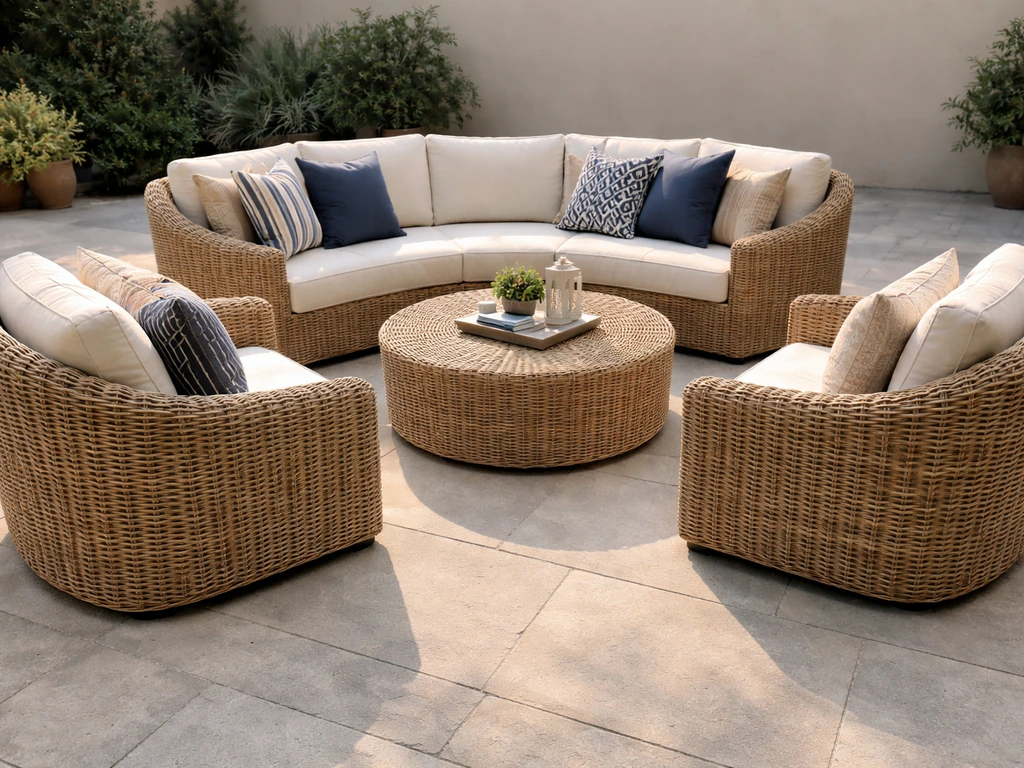
For anyone weighing whether to pay up for true all-weather performance, resin wicker built for rain and UV is the closest match to the best all weather wicker patio furniture goal. If you're shopping today and want one clear starting point, that's it. Everything below helps you dial in the details for your specific climate, patio size, and budget.
Once you know what materials to prioritize, you can narrow down to the best outdoor wicker patio furniture for your specific weather and comfort needs.
What 'best' actually means for wicker patio furniture
Most people search 'best wicker patio furniture' and land on listicles that rank sets by price or aesthetics. But best is really a function of five things working together: durability (does the frame and weave hold up to your local weather?), weather resistance (can it handle rain, UV, salt air, or hard freezes?), comfort (seat depth, cushion thickness, and ergonomics), maintenance effort (how often do you realistically want to clean or cover it?), and long-term value (cost per year of use, not just sticker price). A $400 set that falls apart in three seasons is a worse deal than a $1,200 set that's still solid in year twelve. That's the lens this guide uses throughout.
Style fit matters too, but it's secondary to the above. Wicker furniture has broad aesthetic range, from tight geometric weaves that look almost modern to loose, rustic patterns that read traditional. Once you've narrowed down your material and quality tier, you'll have plenty of style options within that shortlist.
Wicker types explained: resin (PE), natural rattan, and other contenders
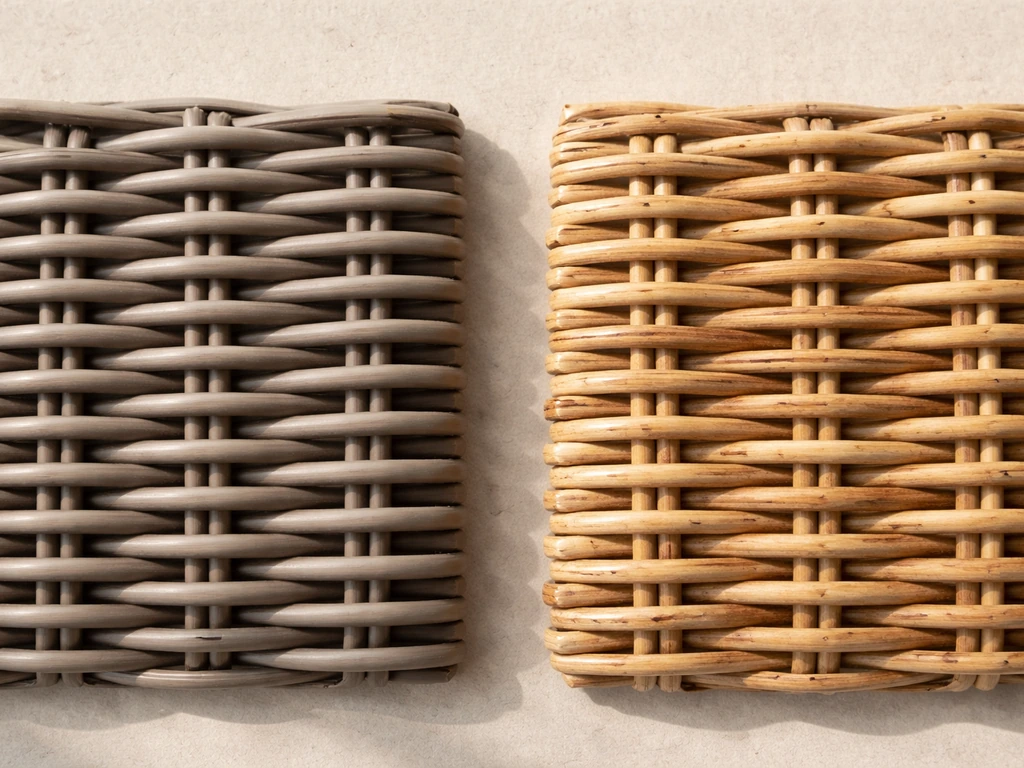
The word 'wicker' describes a weaving technique, not a material. That's why you'll see the label applied to everything from delicate rattan to tough HDPE plastic. Understanding what's actually woven makes all the difference.
Resin wicker (PE/HDPE): the clear outdoor workhorse
Resin wicker, specifically made from polyethylene (PE) or high-density polyethylene (HDPE), is the dominant choice for serious outdoor use. Brands like Polywood build their all-weather wicker entirely from 100% HDPE with UV inhibitor compounds integrated directly into the material, which means the color resistance isn't a surface coating that can wear off.
It's moisture-resistant, fade-resistant, easy to clean, and backed by warranties up to 5 years for residential and commercial use. HDPE doesn't absorb water, won't rot, and holds up to freeze-thaw cycles without cracking the way natural materials do. If you're looking at all-weather wicker furniture, this is the category to focus on. Related guides on best all-weather wicker patio furniture and best resin wicker patio furniture go deeper into this specific segment if you want the full breakdown.
Natural rattan and traditional wicker: beautiful indoors, risky outside
Natural rattan is the original wicker material, and it looks genuinely beautiful. The problem is that it absorbs moisture, swells and shrinks with humidity changes, and breaks down quickly when left exposed to rain or harsh sun. Even with covers and seasonal storage, natural rattan outdoor furniture rarely survives more than a few seasons in humid or rainy climates. It's a legitimate choice for covered porches with minimal moisture exposure, and it's hard to beat the warm, organic look. But for an open patio in most North American climates, it's a short-term investment. If you're committed to the natural look, a covered porch or screened lanai changes the calculus significantly.
Other contenders: vinyl, PVC-wrapped, and blended weaves
You'll also encounter vinyl wicker and PVC-core weaves at the lower end of the market. These are technically weather-resistant, but the quality range is enormous. Thin PVC strands become brittle in UV-heavy environments and can crack or fray within a few years. The weave tightness and strand thickness on budget sets often means they look tired well before they structurally fail. When a product listing says 'resin wicker' without specifying PE or HDPE, it's worth digging into the material details. IKEA's own guidance categorizes plastic rattan alongside aluminum and steel as 'maintenance-free,' which is broadly true, but the durability ceiling of budget plastic wicker is much lower than quality HDPE.
| Material | Weather Resistance | UV Resistance | Lifespan (Open Patio) | Maintenance Level | Best For |
|---|---|---|---|---|---|
| HDPE/PE Resin Wicker | Excellent | Excellent (inhibitors baked in) | 10–20 years | Low | All climates, open patios |
| Natural Rattan | Poor | Moderate | 2–5 years | High | Covered porches only |
| Vinyl/PVC Wicker | Moderate | Fair (thins out) | 4–8 years | Low-Moderate | Budget, low-UV areas |
| Synthetic Rattan (blended) | Good | Good | 6–12 years | Low | Semi-covered patios |
Quality checklist: what to evaluate before you buy
A product photo can make almost anything look premium. Here's what to actually check when you're evaluating a wicker set in person or reading a product listing online.
Frame material
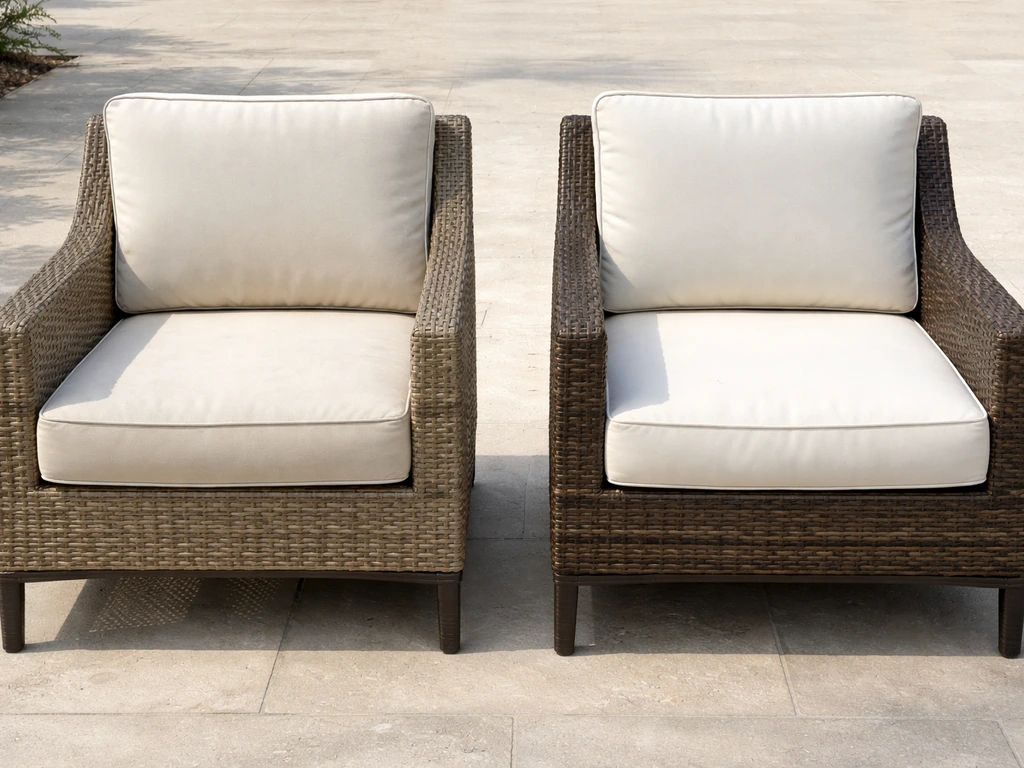
Powder-coated aluminum is the gold standard for outdoor wicker frames. It's lightweight, won't rust, holds up to coastal salt air, and won't add significant weight when you need to move pieces around. Steel frames are heavier and cheaper but can rust through scratches in the powder coat, especially in humid or coastal environments. Wood frames (typically used with natural rattan) add warmth but require sealing and maintenance. When a listing just says 'metal frame,' push for specifics. Aluminum means aluminum.
Weave quality
A tight, consistent weave is a visual indicator of construction quality. Look for strands that are evenly spaced with no gaps, no loose ends, and no visible staples or clips holding the weave to the frame. On HDPE sets, strand thickness matters: thinner strands look more delicate but are more prone to breaking under weight or UV stress over time. Premium sets use thicker, rounder strands that feel substantial when you press them.
Hardware and connection points
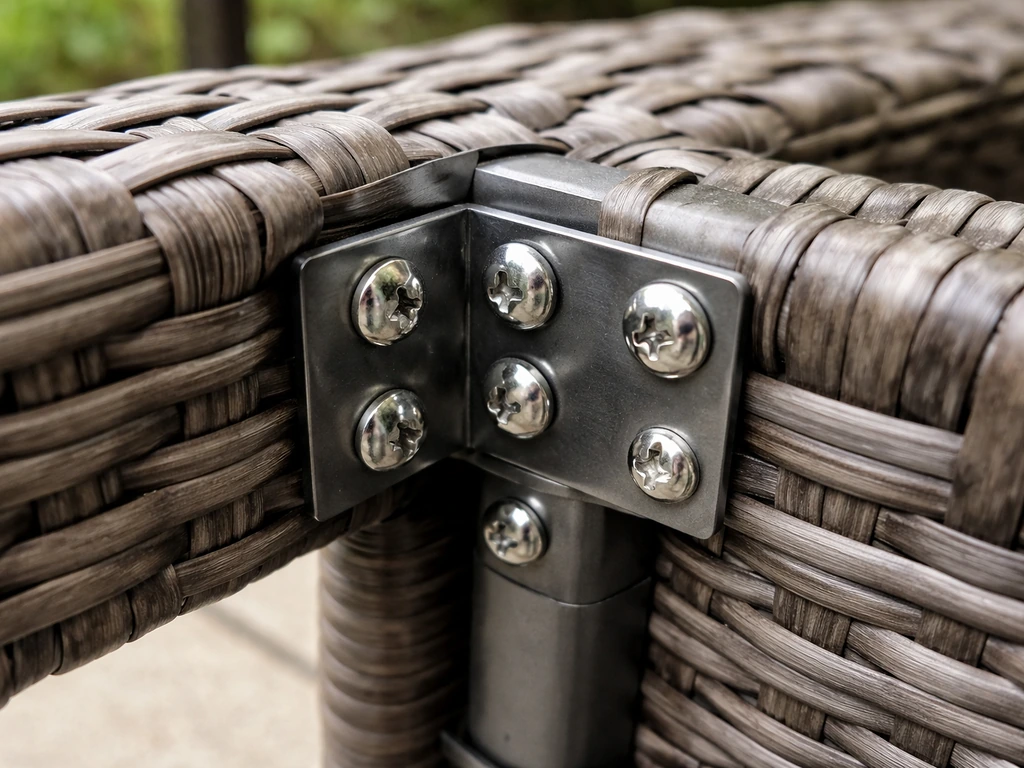
Bolts, screws, and connection hardware are often overlooked. Stainless steel or marine-grade hardware resists corrosion far longer than zinc-plated or standard steel fasteners. This becomes especially important in coastal environments or anywhere with heavy rainfall. Check the connection points where legs meet the seat frame: these take the most stress and are usually where budget sets first show wear.
Cushions and fabric
Cushion quality is where a lot of otherwise decent wicker sets fall short. The fabric specification matters more than thickness alone. Solution-dyed polyester and solution-dyed acrylic (Sunbrella is the most recognized brand in this category) are the materials you want. The dye goes all the way through the fiber rather than sitting on the surface, which means the color stays true under heavy UV exposure and the fabric can be cleaned with diluted bleach without damaging it.
Sunbrella and similar performance fabrics also don't promote mildew growth, which is a major advantage if your cushions occasionally get wet. Look for lock-stitch construction at the seams, which resists wear and maintains seam strength over time. And measure cushion dimensions if you ever plan to replace them: height, width, and depth should be noted so replacements fit correctly.
UV and weather ratings
For HDPE weave, look for language about UV inhibitors being 'integrated' or 'built in' rather than applied as a coating. For frame finishes, powder coat thickness matters in high-UV or coastal environments. For cushion fabric, any reference to the Martindale or abrasion rating is a good sign that the manufacturer has actually tested the material. A warranty that covers the frame separately from the weave and separately from the upholstery tells you the manufacturer is confident enough in each component to stand behind it individually.
Best choices by climate and patio conditions
Climate is the single biggest variable in which wicker set will hold up longest for you. Here's how to match material and construction to your actual conditions.
Rainy climates (Pacific Northwest, Gulf Coast, Southeast)
In consistently wet environments, moisture resistance is everything. HDPE resin wicker on an aluminum frame is non-negotiable here. Natural rattan and even PVC wicker will show deterioration within a few seasons. Look for sets with drainage holes in seat cushions or quick-dry foam inserts so water doesn't pool and breed mold. Solution-dyed fabrics that don't promote mildew (like Sunbrella) are worth the premium over standard polyester. If your patio has no overhead cover, budget for a quality furniture cover as well.
Freeze-thaw climates (Midwest, Northeast, Mountain West)
Freeze-thaw cycles are brutal on porous materials because water expands when it freezes. HDPE handles this well since it doesn't absorb moisture. Natural rattan cracks and splits. Even some lower-grade resin weaves can become brittle in sustained subzero temperatures. For these climates, look for sets with a manufacturer's claim of freeze resistance or tested cold-weather performance. More practically, plan to bring cushions indoors for winter and consider covering or storing frames during the harshest months. blank" rel="noopener noreferrer">Make sure cushions are completely clean and dry before you cover or store them, moisture sealed in with a cover accelerates mold growth.
High-UV sun (Southwest, Florida, Southern California)
In high-sun regions, UV degradation is the primary enemy. Wicker strands that fade and become brittle, frame finishes that chalk and peel, and cushion fabrics that fade and rot are all UV-driven failures. HDPE with integrated UV inhibitors is the right call for the weave. For cushions, solution-dyed acrylic outperforms solution-dyed polyester in sustained UV environments, which is why Sunbrella (acrylic) dominates in Florida and the Southwest. Frame color matters too: darker powder-coat colors absorb more heat and can accelerate finish degradation, so lighter finishes are smarter in extreme sun climates. Ethan Allen's guidance specifically calls out sun exposure as a primary selection factor.
Coastal environments (salt air, humidity)
Salt air corrodes metal faster than almost any other environmental factor. Aluminum frames are strongly preferred over steel in coastal settings because aluminum doesn't rust. Stainless steel hardware is essential: standard zinc-plated hardware can fail within a single season near the ocean. Rinse furniture with fresh water periodically to remove salt buildup, and pay attention to the weave-to-frame connection points, which can trap salt and moisture. Ethan Allen explicitly flags saltwater exposure as a key factor in material selection, and it's one of the clearest cases where frame material choice makes or breaks long-term durability.
Covered patios and screened porches
If your furniture lives under a solid roof or in a screened enclosure, you have more flexibility. Natural rattan becomes viable. PVC wicker sets hold up better with overhead protection. You can invest more in aesthetic details like cushion patterns and weave styles since durability requirements are lower. That said, even covered patios get humid air, so moisture-resistant fabrics and rust-resistant frames are still worth prioritizing.
Sizing, layout, and comfort: getting the right fit for your space
Buying the right style is only half the job. A set that's too large makes your patio feel crowded and limits movement; one that's too small looks lost and doesn't serve your actual seating needs. Measure before you shop.
Calculating patio size and clearance
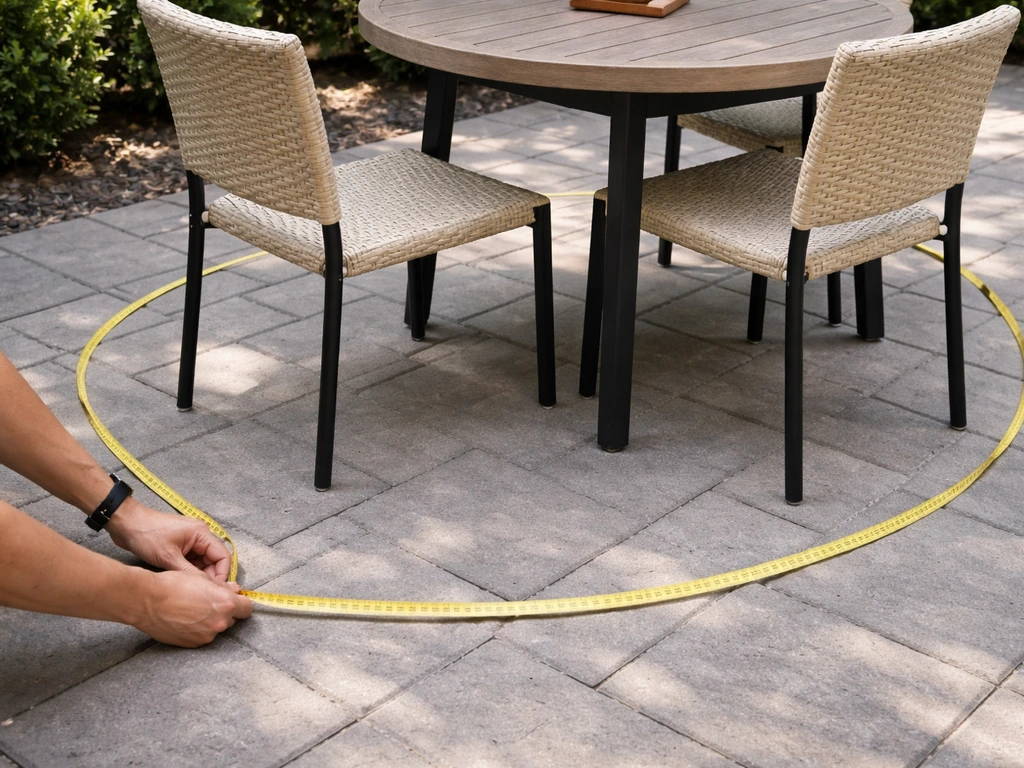
A useful rule of thumb from landscaping professionals: take your table diameter, add the chair depth on each side, and then add at least 12 to 18 inches of clearance around the perimeter for walkways. That gives you the minimum patio footprint needed for a dining set. For a conversation grouping with a sofa and chairs, the recommended clearance between the sofa and coffee table is 18 to 24 inches, which is enough to comfortably cross your legs or set down a drink without it feeling cramped. When in doubt, tape out the footprint on your patio before ordering.
Table and seating heights
Outdoor dining typically comes in two heights: standard (around 30 inches) or bar/counter height (around 42 inches). Mismatching chair and table heights is a surprisingly common mistake when buying pieces separately, so confirm that chairs are spec'd for the table height you're ordering. For conversation sets, seat depth and back height are more relevant comfort variables: a seat depth of 20 to 24 inches is comfortable for most adults without feeling like you're perching, and a higher back provides more head and neck support for extended lounging.
Seating capacity and per-person spacing
For dining layouts, allow at least 24 inches of elbow room per person at a table. A 48-inch round table comfortably seats four; a 60-inch round seats five to six. For conversation sets, a standard 3-seat sofa covers roughly 84 to 90 inches and pairs best with two single chairs and a coffee table for a grouping that seats five without feeling jammed. If you entertain frequently, size up on the table and use stackable or foldable accent chairs for overflow.
Maintenance and protection: making your wicker last
HDPE wicker is genuinely low-maintenance, but 'low maintenance' doesn't mean 'zero maintenance.' A basic care routine dramatically extends the life of even the best sets.
Regular cleaning
For the wicker frame, a mix of warm water and a few drops of dish soap handles most dirt and grime. Apply with a soft brush, work into the weave to dislodge trapped debris, rinse thoroughly, and let it dry completely in the sun or with a fan. For stubborn mold or mildew spots (more common on natural or lower-grade PVC wicker), a diluted white vinegar solution works well. On HDPE, you can use mild bleach solutions without damaging the material. The key is always thorough rinsing: soap residue left in the weave can attract dirt and degrade materials over time.
Cushion care
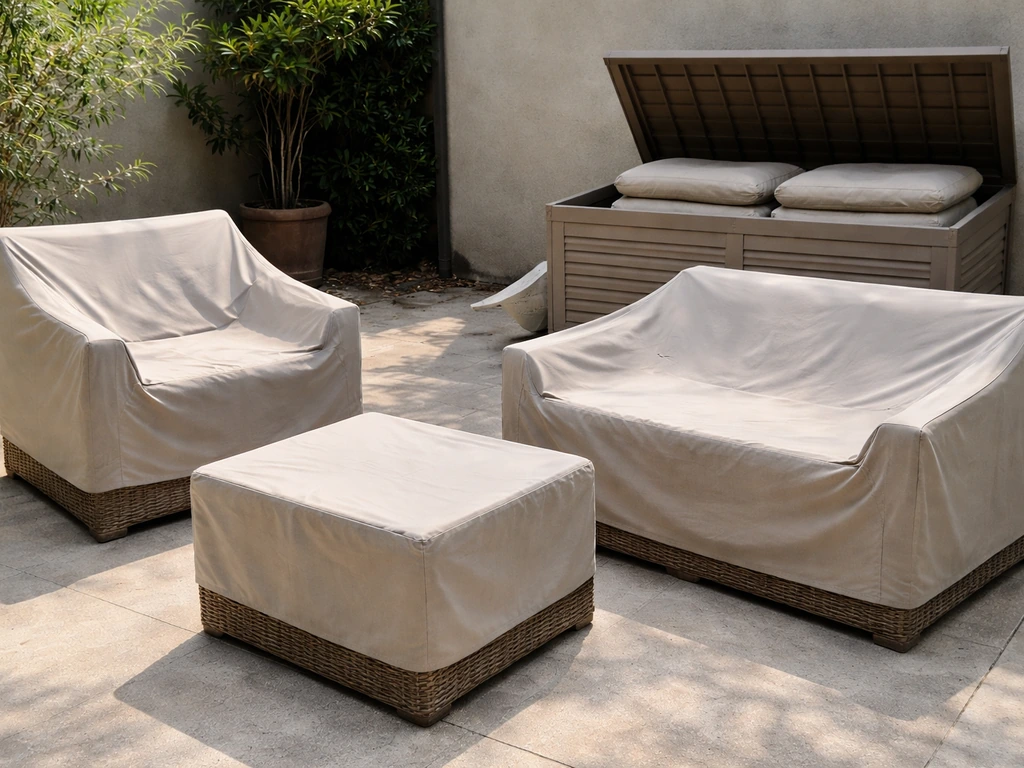
Brush off dry dirt before it works into the fabric. For spills, soap and water applied quickly prevents staining. Rinse completely and always let cushions air dry fully before stacking or storing them. Before you cover or stack cushions, Ethan Allen advises drying them promptly if you notice standing water so air can circulate until they are thoroughly dry [air dry fully before stacking or storing them](https://www.
ethanallen. com/en_US/shop-outdoor-buying-guide). Restoration Hardware's guidance is worth repeating here: if you're covering your furniture for more than a few days, remove the cushions first. Cushions sealed under a cover with any residual moisture are mold waiting to happen.
Solution-dyed Sunbrella and similar fabrics can be cleaned with a diluted bleach solution (about 1 cup bleach per gallon of water) for mold or stubborn stains without harming the fabric.
Covers and seasonal storage
A quality fitted furniture cover extends frame and weave life significantly, especially in climates with heavy UV, salt air, or winter precipitation. Look for covers with vents to prevent moisture buildup underneath. For freeze-thaw climates, bringing cushions indoors for winter is the single most impactful step you can take for longevity. Frames can stay outside in most climates if covered, but natural rattan frames should always come inside for winter. Before covering or storing anything for the season, make sure every piece, frame and cushion alike, is completely clean and dry.
Repairs: fraying weave and loose strands
On HDPE wicker, loose strand ends can be re-secured with a small amount of outdoor-rated adhesive and tucked back into the weave. More significant fraying usually means a low-quality strand gauge was used and will recur. On natural rattan, fraying is harder to repair durably and often signals the end of the piece's outdoor life. For cushion seams, a UV-resistant outdoor thread and a basic lockstitch repair can extend cushion life by several seasons if caught early. The practical advice: address small repairs as soon as you notice them. A single loose strand becomes a larger structural problem if it's allowed to unravel through a season of use.
A quick pre-season and post-season checklist
- Inspect the frame for rust spots, scratched powder coat, or corrosion at hardware points. Touch up scratches on aluminum frames with matching outdoor paint.
- Check weave for loose strands or fraying, especially at seat edges and arm rests where stress concentrates.
- Clean the full frame with warm water and dish soap, rinse completely, dry before covering.
- Inspect cushion fabric for mold, mildew, or seam separation. Clean thoroughly with appropriate solution based on fabric type.
- Confirm cushions are fully dry before storage. Store in a dry, ventilated space, not in a sealed plastic bin.
- Apply a fitted, vented furniture cover to frames if leaving them outside for the off-season.
- Check hardware (bolts, screws, connection points) for looseness or corrosion and tighten or replace as needed.
If you're still narrowing down which category of wicker furniture fits your needs, it's worth looking at the distinctions between outdoor wicker options, high-quality wicker furniture specs, and how all-weather versus standard resin wicker compares in terms of construction and warranty. If you're still unsure where to start, compare the key criteria that define the best wicker patio furniture for your climate, budget, and space outdoor wicker options.
Those comparisons help sharpen the decision once you know your climate and budget range. The bottom line: invest in aluminum-frame HDPE wicker with solution-dyed cushions, match the set to your actual patio dimensions, and give it basic seasonal care. That's the formula for wicker furniture that genuinely earns the label 'best. '
FAQ
Is resin wicker always the best choice, or can it be a bad fit for my patio?
It is usually the best choice for open patios, but you can still end up with a poor resin-wicker product. If the listing does not clearly specify PE or HDPE (and instead uses vague wording), quality can vary a lot. Also, make sure the frame is aluminum (not generic “metal”), and confirm the cushions use solution-dyed performance fabric rather than basic polyester.
What should I look for if I want cushions that do not fade quickly?
Beyond “solution-dyed,” check whether the fabric is described as solution-dyed acrylic for high-UV locations. If you live in a very sun-intensive area, acrylic typically holds color better than polyester. Also look for seam and thread details (lock-stitch) and an abrasion rating, since those indicate the manufacturer tested the fabric rather than estimating durability.
How can I tell whether a wicker set is truly all-weather versus “water-resistant”?
Read for integration language, not just coating claims. For the weave, prioritize wording like UV inhibitors integrated or built in for HDPE. For moisture handling, look for construction notes like quick-dry foam or drainage features in cushion design. If you only see claims like “stain resistant” or “water repellent,” treat that as marketing, not proof of weather performance.
Do I need to bring the whole set in during winter, or only the cushions?
For HDPE wicker on aluminum frames, many climates allow leaving frames outside if they are covered and kept clean and dry. The most important move is bringing cushions indoors if your area has hard freezes, since trapped moisture under covers accelerates mold. Natural rattan generally should be brought inside for winter, even with covers.
What kind of patio cover is actually worth buying for wicker furniture?
Choose a fitted cover that has vents to prevent moisture buildup underneath. Avoid covers that are airtight and sit directly on top of cushions for long periods, since any humidity gets trapped. In freeze-thaw or rainy climates, use the cover mainly to reduce direct exposure, but still remove cushions before extended storage periods.
How should I clean resin wicker to avoid damaging the weave or leaving residue?
Use warm water with a few drops of dish soap, scrub gently with a soft brush to loosen debris, and rinse thoroughly. Soap left in the weave can attract dirt and degrade surfaces over time. Let everything dry completely before using or covering. For mold spots, diluted vinegar works well as a first attempt, then mild bleach can be used on HDPE if needed.
Can I repair a loose or frayed strand, or is replacement the realistic option?
Small loose strand ends on HDPE can often be re-secured and tucked back into the weave with outdoor-rated adhesive. If fraying is spreading or the strands keep breaking, it usually points to weak strand gauge, and repair will likely recur. On natural rattan, repairs are harder to make durable, and fraying often signals end-of-life.
What’s the most common mistake when buying wicker sets separately (not as a bundle)?
Mismatched height and seating proportions. For dining, confirm chair height works with your specific table height, since mix-ups are common when shopping pieces individually. For conversation sets, prioritize seat depth and back height so people are not perching or slipping forward.
How do I estimate the right patio size for a wicker conversation set?
Measure the footprint with real clearance, not just furniture dimensions. For conversation groupings, plan for 18 to 24 inches between the sofa and coffee table for comfortable movement and drink placement. If your patio is tight, tape out the layout, then reassess walkway space before ordering.
What’s the best way to protect wicker furniture near the ocean?
Treat it as a corrosion problem. Prefer aluminum frames, and insist on stainless or marine-grade hardware. Standard zinc-plated fasteners can fail quickly in salt spray. Periodically rinse the furniture with fresh water, and pay extra attention to connection points where salt and moisture can get trapped.
How do I calculate whether a higher-priced wicker set is actually better value?
Use a cost-per-year approach based on expected lifespan in your climate, not the purchase price alone. For example, if one set is half the cost but you expect replacement in about three seasons, it is usually worse value than a higher-priced set that holds up for a decade or more. Factor in cushion replacement needs too, since upholstery can age faster than frames.
Next Articles
Is Teak Patio Furniture Good? Durable, Smart Buying Guide
Is teak patio furniture good? Evidence-based verdict, lifespan, care, buying tips, comparisons, and eco guidance.
How Long Does Teak Patio Furniture Last? Lifespan Guide
Teak patio lifespan ranges, factors that shorten or extend durability, and a maintenance plan to protect joints and fini
High Quality Teak Patio Furniture: How to Choose and Care
Checklist for buying high quality teak patio furniture, spot real construction, compare materials, and maintain it by cl