
The best teak patio furniture comes from brands that use Grade A teak, kiln-dried to around 8–10% moisture content, joined with mortise-and-tenon construction, and fastened with stainless steel hardware. If a piece checks those four boxes, you are starting from a genuinely durable foundation. The brands that consistently deliver that combination at different price points are Kingsley Bate, Gloster, Westminster Teak, Royal Teak Collection, Country Casual Teak, and Goldenteak. Which one is right for you depends on your budget, your climate, and how you want the furniture to age.
Best Teak Patio Furniture: Top Brands and Buying Guide

Marcus Kellerman
4 May 2026
What 'best teak' actually means before you spend a dollar
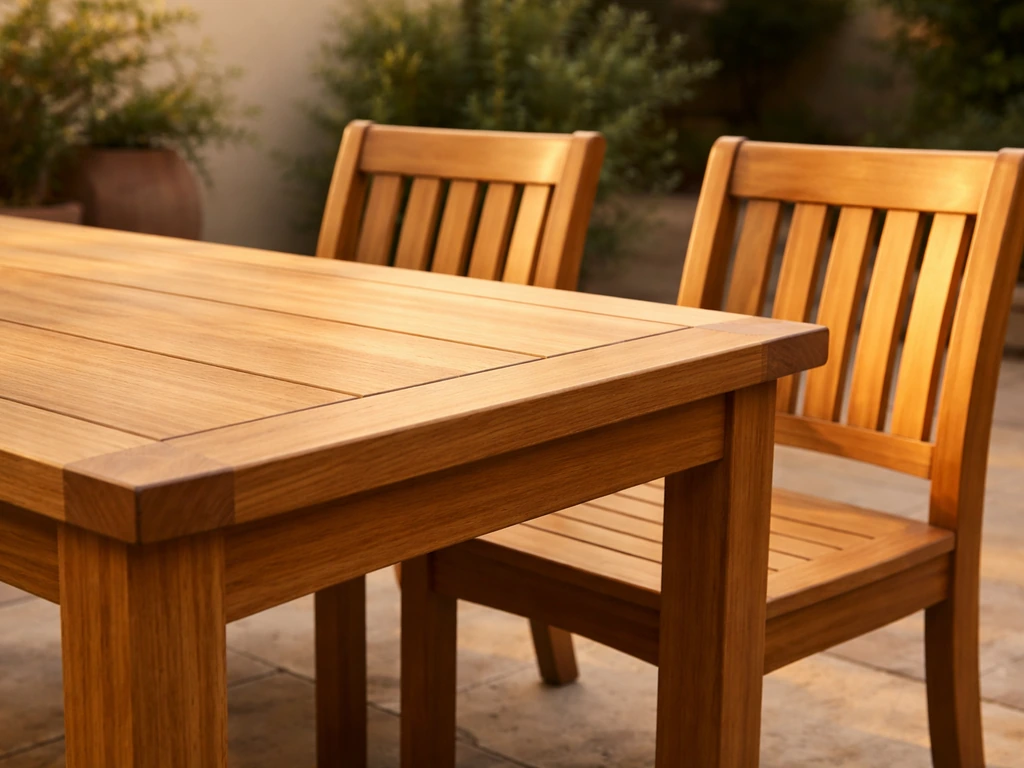
Teak is not a single quality level. The wood is graded by where it comes from within the log, and Grade A (also called First Grade) is the only grade worth buying for outdoor furniture that needs to survive years of weather exposure. Grade A is cut from the heartwood at the center of the log. It has the highest natural oil content, tight grain, and the silica compounds that give teak its legendary rot and insect resistance. Grade B and Grade C teak come from outer sections of the log, have less oil, more sapwood, and will weather, crack, and degrade significantly faster.
Beyond grade, kiln drying matters more than most buyers realize. Teak that is not properly dried to around 8% internal moisture content before manufacturing is a problem waiting to happen. The moment you bring that furniture into a dry climate or a sunny patio, the wood continues releasing moisture unevenly and starts warping or splitting from the inside out. Reputable brands either kiln-dry their own stock or source from mills with documented kiln processes, typically around three weeks in a controlled environment.
Construction method is the third pillar. Mortise-and-tenon joinery, where a tenon cut into one piece fits into a matching cavity in another, creates mechanical strength that glue alone cannot replicate. Finger joints and lapped joints at stress points add further stability. If a manufacturer cannot tell you what joinery method they use, that is a red flag. Stainless steel hardware (Grade 304 or 316) is non-negotiable for anything exposed to humidity or coastal air. Zinc or low-grade steel fasteners will rust and stain the wood within a season or two.
Finally, finish choice affects both looks and long-term care. Teak naturally weathers from its warm honey-gold color to a silver-gray patina over six to twelve months of sun exposure. That gray is protective and completely stable, but it is not everyone's preference. You can preserve the golden color with a water-based sealer applied annually. Teak oil is a different story: several reputable manufacturers explicitly warn against it, and for good reason. If you want the best teak oil for patio furniture, prioritize a water-based teak protector instead, since many reputable brands explicitly advise against teak oil. Oil-based products can interfere with teak's natural oils, encourage mildew growth, and create uneven color over time. The finish question also has warranty implications, which comes up in the buying section below.
Match the furniture to your climate and patio setup
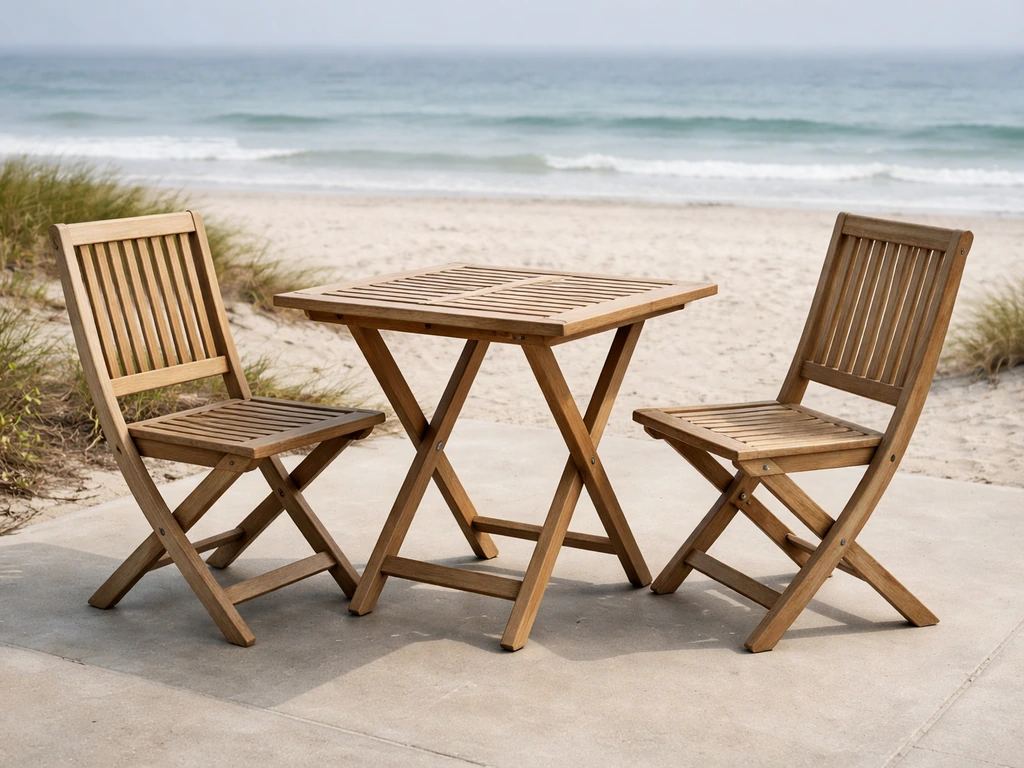
Teak is one of the few wood species that performs well in almost every outdoor climate, but how you buy and configure it should still reflect where you live and how your patio is oriented. That is also why many people find that teak patio furniture is good once they match the wood grade, joinery, and maintenance plan to their specific climate is teak patio furniture good.
Coastal and salt-air environments
If you are within a mile or two of the ocean, salt air is the primary threat to your hardware and any metal components. Grade A teak wood itself handles salt air without issue, but zinc fasteners will corrode quickly. Prioritize brands that specify marine-grade (316) stainless steel hardware. Slat design also matters more here: open slatted seating and table tops with gaps allow salt-laden moisture to drain rather than pool. Avoid upholstered pieces unless the cushion fabric is solution-dyed and the frame has fully exposed drainage slats underneath.
Humid inland and subtropical climates
High ambient humidity means mildew is your primary maintenance concern, not drying and cracking. Teak handles humidity well structurally, but surfaces that stay damp for extended periods can develop surface mildew and discoloration. Annual cleaning with a dedicated teak cleaner and a light application of a water-based sealer with mildew inhibitors (like the type Country Casual Teak formulates into its Golden Sealer) helps significantly. Choose designs with adequate airflow around the wood, and do not stack cushions directly against the wood without ventilation.
Cold and wet winters
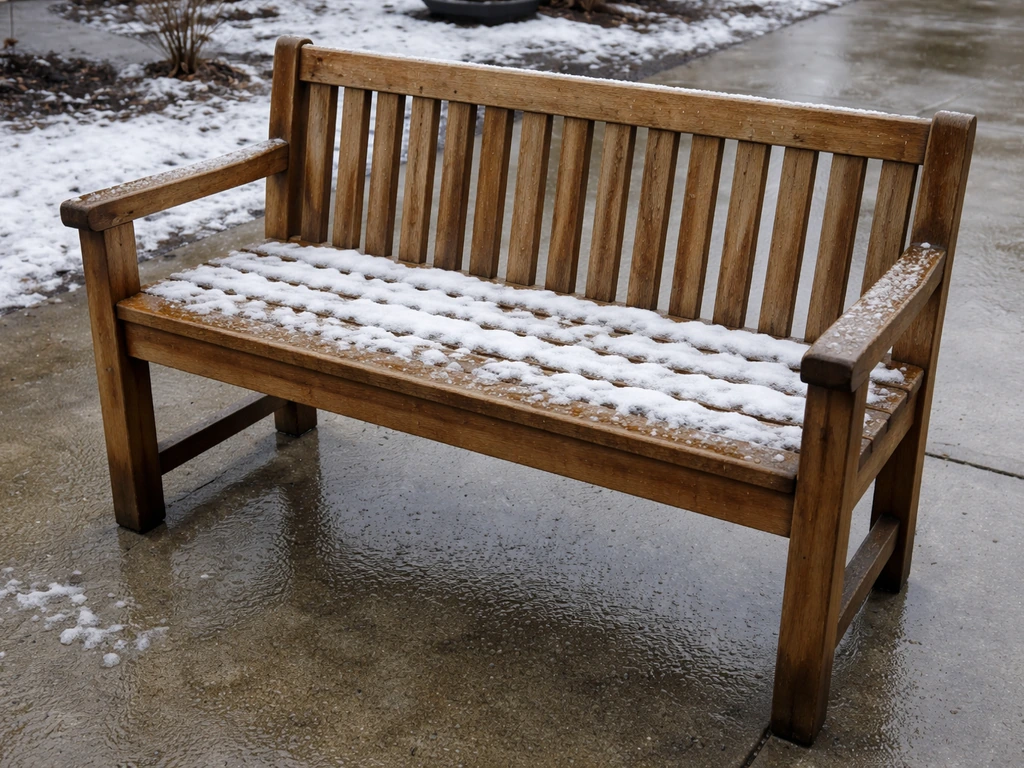
Teak handles freeze-thaw cycles better than almost any other outdoor wood because of its low moisture absorption rate, but leaving furniture flat on a wet surface all winter is still not ideal. Use furniture feet or leg caps that keep the base off standing water. If you have the storage space, bringing teak indoors or stacking it under breathable covers for winter extends the hardware life substantially, even if the teak itself would survive without it.
Full sun versus shaded patios
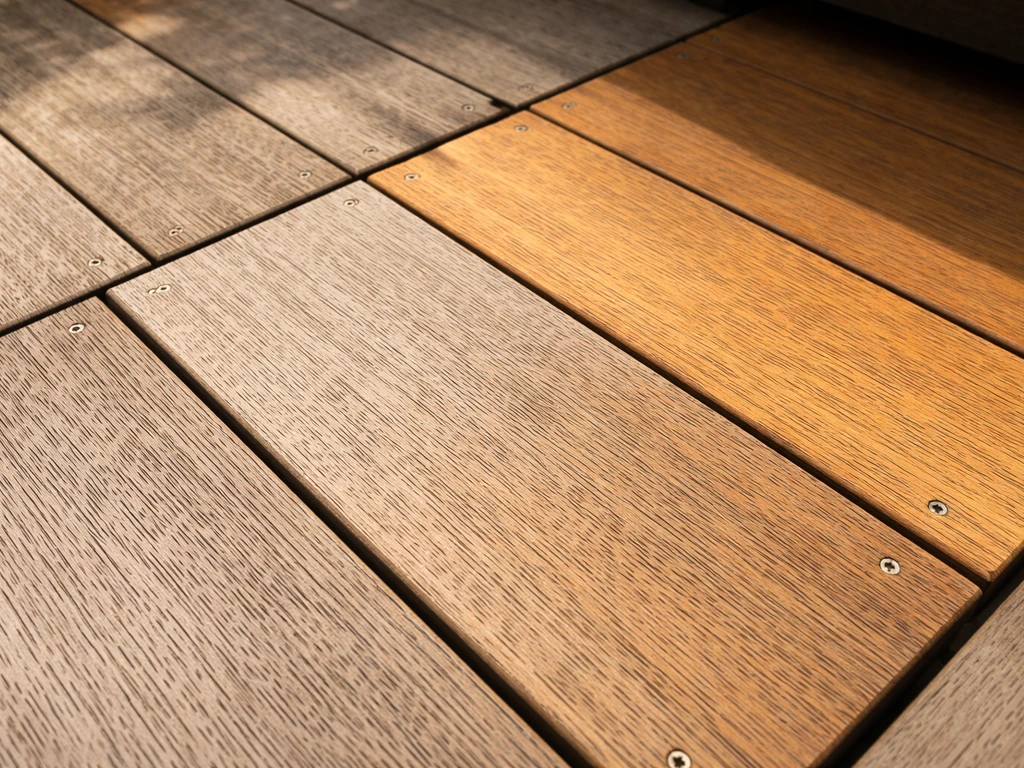
Full-sun patios accelerate the weathering from gold to gray, which is fine if you prefer the patina. If you want to keep the original color, you will need to apply a UV-protective sealer more frequently, potentially twice a year. Shaded patios stay cooler and retain moisture longer, which slightly increases mildew risk but slows surface weathering. Neither is a reason to avoid teak, but it adjusts your maintenance calendar.
Patio size and layout: take measurements before you browse
Before you compare brands, measure your usable patio space and leave at least 36 inches of clearance around dining tables for chair pull-out and traffic flow. For lounging areas, allow 18–24 inches between seating pieces. Standard teak dining tables run 36 inches wide; deep-seating sectionals can extend 30–35 inches in seat depth. Know your dimensions before you fall in love with a set that physically will not fit your space.
The best teak patio furniture brands: honest picks by budget and style
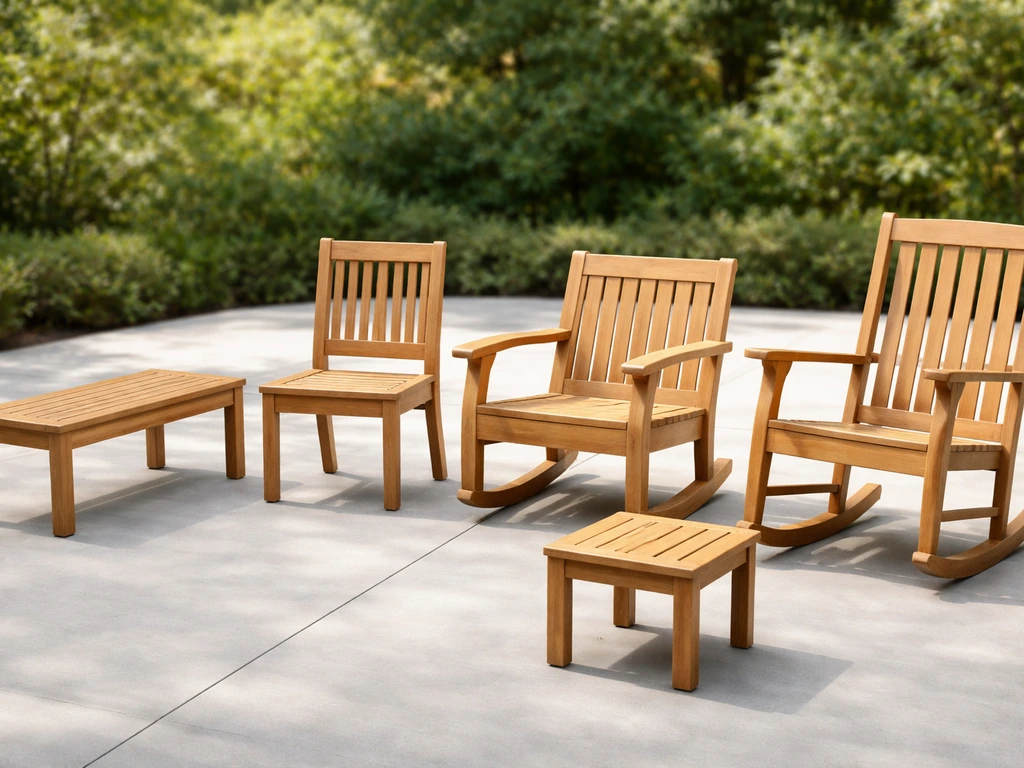
These brands have demonstrated consistent use of Grade A teak, documented construction standards, and real after-sale support. They are not the only reputable options, but they are the ones I would point someone to without hesitation.
| Brand | Best For | Price Tier | Style Range | Notable Strengths |
|---|---|---|---|---|
| Kingsley Bate | Classic and transitional designs, contract-grade durability | Premium ($$$) | Traditional to transitional | Deep product line, strong dealer network, explicit anti-oil care guidance with water-based protector |
| Gloster | Modern and contemporary aesthetics, mixed-material designs | Premium to Luxury ($$$$) | Modern, minimalist, Scandinavian-influenced | Designer collaborations, high-performance sling fabrics (Ferrari Batyline), exceptional build quality |
| Westminster Teak | Direct-to-consumer value, custom sizing, large sets | Mid to Premium ($$$) | Classic and transitional | Factory-direct pricing, custom size options, parts availability, kiln-drying transparency |
| Royal Teak Collection | Budget-conscious buyers who still want solid construction | Mid ($$$) | Classic, traditional | Kiln-dried, mortise-and-tenon joints, stainless hardware, 3-year warranty |
| Country Casual Teak | Buyers who want full repair and parts support over decades | Mid to Premium ($$$) | Classic American garden style | Extensive replacement parts inventory, in-house repair service, 3-year warranty, comprehensive care system |
| Goldenteak | Direct buyers who want Grade A teak at transparent pricing | Mid ($$$) | Classic and functional | Detailed sourcing transparency, kiln-drying documentation, solid value-to-quality ratio |
Kingsley Bate
Kingsley Bate has been producing solid teak outdoor furniture for decades and is one of the most recommended brands among outdoor designers. Their product line spans dining, deep seating, and occasional pieces in classic and transitional styles. They are one of the few brands that explicitly states they do not recommend oiling teak furniture and instead supply their own water-based Teak Protector, which they recommend applying one to two times per year. The dealer network is extensive, which is helpful if you want to see pieces in person before buying.
Gloster
Gloster is the right call if you want a modern aesthetic and are willing to pay for it. They work with notable designers and produce teak furniture that blends with contemporary architecture. Their mixed-material pieces, which often combine teak with high-performance sling fabrics like Ferrari Batyline (a PVC-coated polyester mesh that is solution-dyed for UV and mildew resistance), are particularly well-regarded. If clean lines and design credibility matter as much as durability, Gloster is at the top of the category.
Westminster Teak
Westminster Teak sells factory-direct, which cuts out the dealer markup and makes their pricing more competitive than many comparable brands. They are transparent about their kiln-drying process and target a moisture content of 8–10%. They also offer custom sizing options on several pieces, which is genuinely useful for non-standard patios or oversized dining needs. The one note: replacement parts are available but limited to Westminster Teak furniture specifically, so keep that in mind if cross-brand repairs matter to you.
Royal Teak Collection
Royal Teak Collection sits in the mid-premium tier and delivers solid construction fundamentals at a price that is more accessible than Gloster or high-end Kingsley Bate. Their pieces are kiln-dried, use mortise-and-tenon joinery, and are fastened with stainless steel hardware. They describe their production as fully machine-made, which ensures dimensional consistency across pieces. The 3-year warranty covers furniture, material, and workmanship defects. It is a reliable choice for buyers who want proven construction without paying for a designer name.
Country Casual Teak
Country Casual Teak's strongest differentiator is its parts and repair infrastructure. They maintain an extensive inventory of individual replacement components (teak parts, dowels, plugs, hardware, even umbrella canopies) and offer carpentry and repair services at their Maryland headquarters. If you plan to keep furniture for 20-plus years and want a brand that will still be able to fix it in year 15, that matters. Their 3-year limited warranty covers furniture, materials, and workmanship, with a separate 1-year term for fabric and covers. They also have a well-documented care system built around their own cleaner and water-based Golden Sealer with UV protectants and mildew inhibitors.
Goldenteak
Goldenteak is a strong direct-to-consumer option for buyers who have done their homework and want Grade A teak without paying a brick-and-mortar retail premium. They publish detailed information about their kiln-drying process and make the case clearly for why moisture content at manufacturing affects long-term performance. Their style range is functional and classic rather than design-forward. If you want honest value and transparency about what you are buying, Goldenteak earns its place on this list.
What to verify before you buy
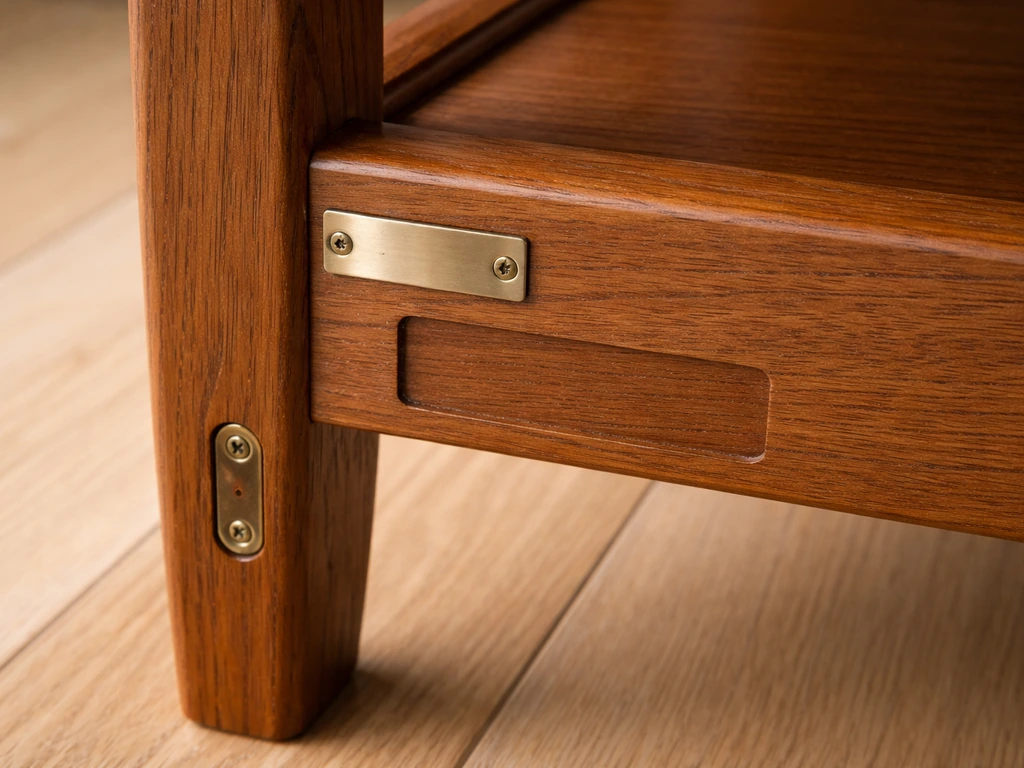
Marketing copy on teak furniture pages is often vague or misleading. Here is what to actually verify before handing over money.
Quality signals to check directly
- Grade A teak: Ask specifically. If the brand cannot confirm Grade A heartwood, walk away.
- Kiln drying: The target moisture content should be around 8–10%. If they do not mention kiln drying at all, that is a warning sign.
- Joinery method: Mortise-and-tenon is the standard for quality structural pieces. Finger joints at stress points are also a positive signal.
- Hardware specification: Stainless steel, ideally Grade 304 or 316 for coastal use. Avoid zinc or unspecified 'metal' hardware.
- Slat spacing: For tables and chair seats, look for gaps of at least 3/8 inch to allow drainage and airflow.
- FSC certification: Not all quality teak is FSC-certified, but certification from brands like Otazen (which also offers a 5-year structural warranty) is a positive indicator of sourcing accountability.
Warranty and replacement parts: what the fine print reveals
Warranty terms tell you a lot about how confident a brand is in its product. A 3-year warranty on furniture and workmanship is reasonable and common among mid-to-premium brands like Country Casual Teak and Royal Teak Collection. Otazen offers a 5-year structural warranty on teak components, which is notably strong. Pay attention to what voids the warranty: Sullivan Furniture, for instance, explicitly states that applying teak oil, teak stain, or certain cleaners voids warranty coverage entirely. That policy is not inherently a red flag (their furniture may simply perform best without treatments), but you need to know it before you start applying products.
Ask about replacement parts availability before you buy, not after something breaks. Country Casual Teak stocks individual teak components, dowels, hardware, and more. Westminster Teak supplies parts but only for its own products. Some brands have no parts program at all, which means a broken arm or a cracked slat five years in requires either a creative workaround or a full replacement piece.
How to avoid low-grade teak and copycat products
- Be skeptical of any teak furniture priced below $300 for a side chair or below $800 for a full dining chair. Grade A teak is expensive raw material.
- Watch for terms like 'teak-style,' 'teak-look,' or 'teak finish' applied to what may be plantation-grown low-grade wood or a different species entirely.
- Engineered and laminated teak products exist; they can be legitimate but are not equivalent to solid Grade A for outdoor longevity. Confirm 'solid teak' explicitly.
- Avoid sellers who cannot name their teak source region or provide any documentation on drying and milling processes.
- Check reviews for mentions of cracking, splitting, or warping within the first two years, which almost always indicates improper kiln drying before manufacturing.
Maintenance that actually extends the life of teak furniture
Teak does not require constant fussing, but a little deliberate care once or twice a year makes a meaningful difference in how it looks and how long the hardware and joints hold up. The biggest decision is whether you want to maintain the golden color or let it silver naturally.
Letting teak weather naturally
If you prefer the silver-gray patina, the maintenance load is genuinely minimal. Clean the furniture once a season with a soft brush and mild soap solution to remove surface dirt, mildew spores, and grime. Let it dry fully before covering or stacking. That is basically it. The gray color is stable and protective. Teak that weathers naturally to silver is not degrading; it is just oxidizing on the surface while the internal oil content keeps the wood dimensionally stable.
Preserving the golden color with a sealer
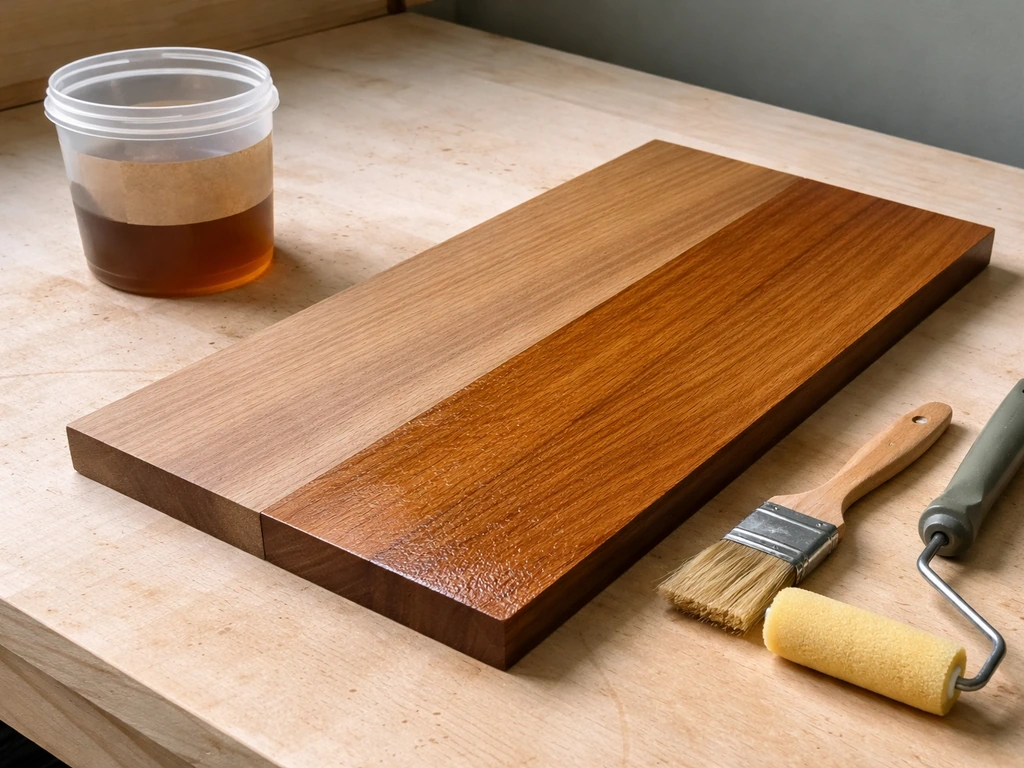
If you want to keep the honey-gold tone, use a water-based teak sealer with UV inhibitors, applied to clean, dry wood. The process is: clean thoroughly with a dedicated teak cleaner (a two-part cleaner may be needed if the wood has already greyed or developed surface mildew), allow the wood to dry completely for 24–48 hours, then apply the sealer. Plan to repeat this once a year in most climates, or twice a year in full-sun or coastal conditions. Kingsley Bate recommends their water-based Teak Protector on this same schedule. Country Casual Teak uses a similar workflow with their cleaner and Golden Sealer, which includes mildew inhibitors.
Skip teak oil. Multiple manufacturers, including Kingsley Bate and Vincent Sheppard, explicitly advise against it. For a teak patio, the best stain for teak patio furniture is one that protects against UV and mildew while preserving the wood’s natural look. Oil-based products can clog the wood's pores, interfere with its natural oil chemistry, encourage mildew growth in humid conditions, and create uneven, blotchy color over time. If a brand's warranty coverage includes language about oil applications voiding coverage, that is further confirmation that oils create problems that reputable makers do not want to be responsible for.
Covers, storage, and seasonal care
Breathable furniture covers are worth using when furniture sits unused for weeks at a time, especially in winter or rainy seasons. Non-breathable plastic covers trap moisture and accelerate mildew. For cold climates, elevating furniture off the ground (even just on rubber feet) to prevent standing water contact is a simple step that significantly reduces joint stress over time. If you have the storage space, bringing teak chairs indoors for winter is not strictly necessary for the wood, but it extends hardware and cushion life considerably. Cushions should always be stored indoors or in a ventilated deck box during extended wet or cold periods.
Your buying checklist: use this before you order
- Measure your patio and map out the layout with 36-inch clearances around dining areas and 18–24 inches between lounge pieces.
- Confirm Grade A solid teak heartwood, not Grade B, Grade C, or engineered teak composites.
- Verify kiln drying to 8–10% moisture content: ask the brand directly if the product page does not state it.
- Check joinery: mortise-and-tenon at structural connections is the benchmark. Finger joints at stress points are a positive bonus.
- Confirm stainless steel hardware (Grade 316 preferred for coastal use).
- Read the warranty terms in full: note the duration, what is covered, and specifically what voids coverage (including finish products).
- Ask about replacement parts availability before purchasing, not after.
- Decide on your finish preference (natural silver patina vs. maintained gold) and factor the annual maintenance time and cost into your total ownership picture.
- Compare price per year of expected lifespan, not sticker price alone. Quality teak furniture lasting 25 years at $3,000 is $120/year. A cheaper set that lasts 5 years at $800 is $160/year.
- Order swatches or request samples of any cushion fabric before committing, especially for coastal or high-UV environments.
FAQ
How can I tell if a piece is truly Grade A teak patio furniture (not just “solid teak”)?
Look for paperwork or product specs stating “Grade A” (First Grade) and kiln drying to about 8 to 10% moisture content. If the listing only says “solid teak” or “premium teak” without grade and drying targets, assume you cannot verify the two biggest predictors of warping resistance.
Can a high-end brand still be a bad choice for my patio if I live near the coast?
Yes, but only if you are matching the full system. A product can have Grade A teak but still fail early if it uses zinc or low-grade fasteners, or if cushions are sealed against the wood. Verify stainless hardware type (316 near the ocean) and confirm drainage and airflow under any seating or cushions.
Is teak oil ever the best option for the best teak patio furniture
Not usually. For outdoor teak, many manufacturers discourage teak oil because it can interfere with teak’s natural oils, raise mildew risk in humid conditions, and lead to patchy color. If you want a “golden” look, use a water-based sealer or protector with UV inhibitors and follow the brand’s schedule.
What should I do if my teak already looks silver-gray or has mildew spots before sealing?
If you already have gray teak, do not rush to seal immediately. First clean, then confirm the surface is fully dry. For existing mildew or heavy weathering, you may need a two-step cleaner approach before applying a UV-protective water-based sealer.
How do I choose the right covers so they prevent mildew instead of causing it?
Avoid tight-fit covers and solid plastic that traps moisture, especially in humid climates. Choose breathable covers and make sure furniture is dry before covering. If your covers come in contact with cushions, store cushions separately rather than letting them remain wet under the cover.
Should I bring teak patio furniture indoors for winter, or is covering enough?
At minimum, elevate the base using furniture feet or leg caps so rain and meltwater do not pool directly under the joints. For long winter storage, the best approach is still to cover with breathable protection and keep cushions indoors, because the cushions and metal frames tend to suffer first.
Why does joinery type matter more than just “solid teak” for outdoor durability?
Yes, and it matters for longevity. Mortise-and-tenon joinery handles movement better than designs that rely heavily on glue or unclear joints. If a manufacturer will not state the joinery method, treat that as a higher risk for looseness or separation over time.
What’s the best way to handle rust, loosened joints, or cracked slats after a few years?
Replace or repair as soon as you find loose hardware or cracked slats. Use stainless-compatible replacement fasteners and do not substitute zinc hardware, because it can stain and corrode quickly while leaving the wood looking uneven. Also ask the brand about compatible dowels and plugs rather than improvising.
How often should I clean and reapply sealer or protector for the best teak patio furniture?
Schedule maintenance based on sun exposure and humidity. In full sun or coastal air, plan on cleaning and reapplying UV protection more often, sometimes twice per year. In shaded regions, once per year is commonly enough if you keep the surface clean and dry.
What patio layout mistake causes the most frustration after buying teak dining sets?
Measure the clearance for real usage, not just walking paths. For dining, leave enough room for chair pull-out, aim for about 36 inches around the dining table area, and confirm door swings or grill access do not block seating movement during normal use.
How should I choose between keeping the golden tone versus letting teak weather naturally?
If you plan to maintain the honey-gold look, choose products that explicitly support water-based protection. If you are okay with the silver patina, maintenance load is lower. Either way, confirm the warranty does not require avoiding specific cleaners or treatments, since some brands void coverage for certain product types.
Does replacement parts availability really matter, and what should I ask before buying?
Ask about replacement parts availability before purchase, especially if you want the ability to replace slats, dowels, or hardware rather than replace entire pieces. If a brand limits parts to its own products, keep that in mind for future repairs and consider whether you are okay with full-piece replacement if a part becomes unavailable.
Next Articles
Home Good Patio Furniture Guide: Choose, Buy, Maintain
Step-by-step guide to choosing home good patio furniture by use, climate, and materials, plus maintenance and rust prote
Best Outdoor Wicker Patio Furniture: How to Choose
Choose the best outdoor wicker patio furniture by material, frame, weather resistance, comfort, and real climate tips.
Best Patio Wicker Furniture: How to Choose the Right Set
No-fluff guide to choosing the best patio wicker furniture with material, quality, sizing, and care tips for any climate