
Ohana patio furniture is a solid mid-range option for most homeowners, particularly if you choose the right cushion and fabric upgrades. The powder-coated aluminum frames and hand-woven PE resin wicker are legitimately durable for everyday outdoor use, and the no-assembly delivery is a genuine convenience win. Where Ohana falls short is cushion longevity in humid and wet climates: standard cushion packages have a documented mold and water-intrusion problem that you need to plan around before buying. Go in with the Sunbrella or Rainshield upgrade, buy a set of spare covers, and Ohana delivers good long-term value. Skip those upgrades and you may be replacing cushion covers within 12 to 18 months.
Is Ohana Patio Furniture Good? Honest Review, Durability & Value

Marcus Kellerman
15 Jul 2026
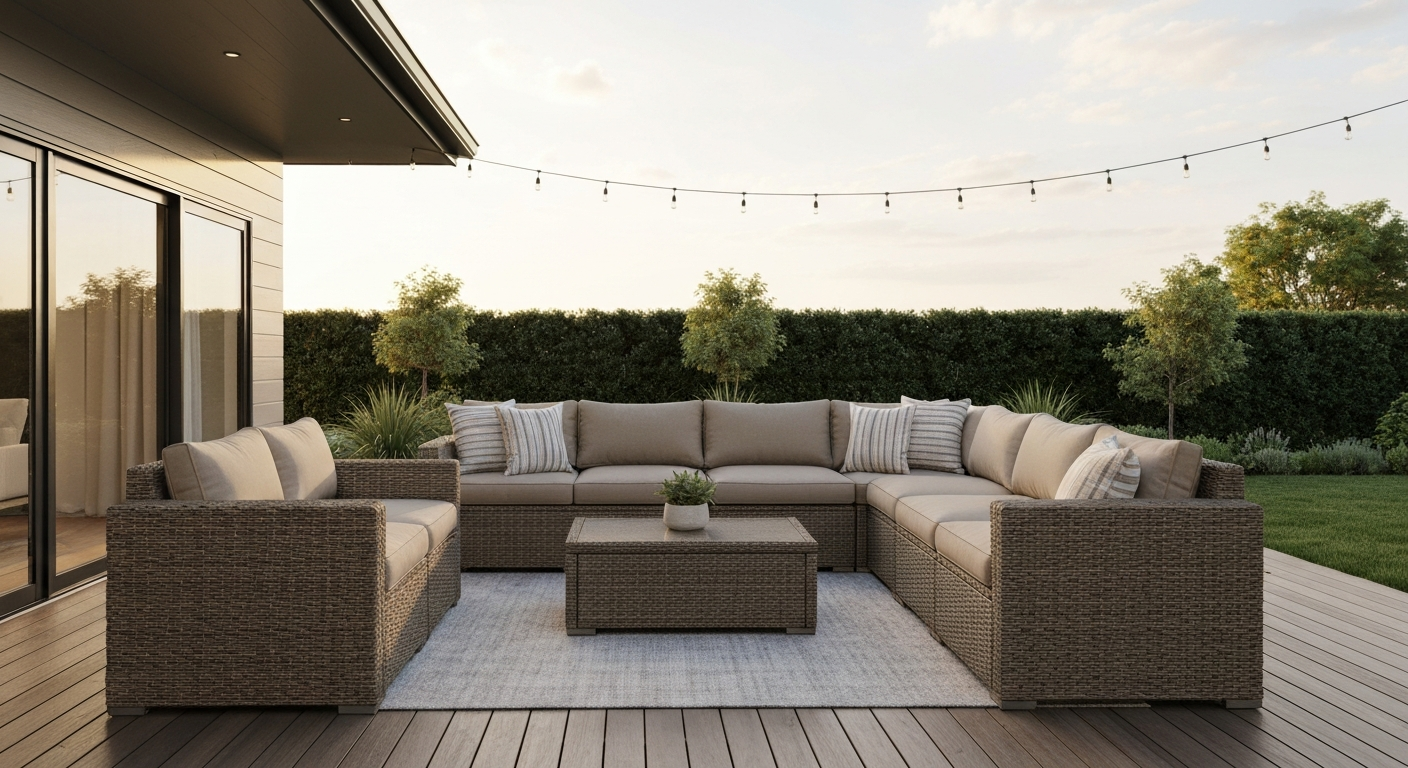
Quick verdict: Is Ohana patio furniture good?
For the price range (conversation sets roughly $1,700 to $2,500, individual chairs $500 to $540), Ohana punches at or slightly above its weight on frame quality but at or slightly below on base cushion performance. The frames are rust-free aluminum with powder-coat finishes, the wicker is all-weather PE resin rather than natural rattan, and the brand sells direct so you avoid retailer markup on replacement parts. That said, there are no published independent lab tests, no ASTM or ISO certifications on the product pages, and the warranty is limited: 3 years on structural frames, just 1 year on cushions and chrome finishes. Independent testing coverage of Ohana is limited: most third‑party content consists of retailer product pages, blogs, and consumer posts rather than established lab tests from outlets like Wirecutter or Consumer Reports. If you treat Ohana like a premium mid-range brand and budget for the Sunbrella upgrade, it earns its asking price. If you expect luxury-grade durability without putting in any maintenance, you will be disappointed.
Brand overview: who makes Ohana and who is it really for?
Ohana is a direct-to-consumer brand operated by Ohanadepot, Inc. OHANA DEPOT - Trademark Details (Justia Trademarks / USPTO data) shows the OHANA DEPOT mark is a registered trademark assigned to Ohanadepot, Inc. (registered trademark), selling primarily through its own websites (ohanadepot.com and ohanawickerfurniture.com) as well as Wayfair, Overstock, and Walmart. That multi-channel presence means pricing can vary by seller, but replacement parts and covers are available directly through Ohana's own site, which matters a lot for long-term upkeep. The brand targets homeowners and outdoor designers who want a contemporary, fully assembled wicker-look set at a price well below high-end brands like Brown Jordan or Restoration Hardware, but above entry-level import furniture. Their lineup covers deep-seating conversation sets, dining sets, modular sectionals, chaise lounges, and occasional pieces, with configurations ranging from 4-piece to 11-piece sets.
The target buyer is someone furnishing a deck, patio, or pool area who wants the look of natural wicker without the maintenance, does not want to spend a weekend assembling furniture, and is willing to spend a bit more on fabric upgrades to protect their investment. Ohana is not the right brand for buyers who want certified commercial-grade durability, teak's natural oil resistance, or the warranty backing of a full-service contract furnishings brand.
Materials and construction: what to evaluate across the range
Ohana's product range is built around two core material combinations: powder-coated aluminum frames with PE resin wicker weave, and powder-coated aluminum frames with fabric cushion seating (no wicker shell). A smaller selection includes teak and wood accent options. Before buying any set, you should evaluate five things: the frame gauge and weld quality, the weave tightness and attachment method, the cushion foam density and cover fabric, the fastening hardware, and the finishing details on glides and joints. Ohana's product pages provide enough detail on the first three to make a reasonable pre-purchase judgment; for the last two, you are largely relying on retailer photos and customer reviews unless you can inspect the piece in person.
Aluminum frames: construction, finishes and expected performance
Ohana consistently describes its frames as rust-free powder-coated aluminum across wicker and non-wicker collections. Powder coating, when properly applied, creates a bonded polymer barrier that resists corrosion, UV degradation, and chipping far better than spray paint. For an aluminum frame with good powder-coat coverage, you can realistically expect 8 to 12 years of structural life with basic care, even in coastal or humid environments. Aluminum does not rust, so saltwater air is less of a concern at the frame level than it would be with steel. The main risk with powder coat over time is micro-cracking and chip propagation at stress points: corners, weld joints, and anywhere the frame flexes under load. Ohana's 3-year structural warranty covers manufacturing defects but not finish wear from normal use.
One practical limitation is that Ohana does not publish frame wall thickness (gauge) specifications on its product pages. For a conversation chair at the $500 price point, you should expect 1.2mm to 1.8mm wall thickness, which is adequate but not commercial-grade (commercial outdoor typically runs 2.0mm and above). If you are furnishing a high-traffic hospitality-style space or want genuine contract durability, this is a gap worth investigating by contacting Ohana directly before purchase.
Wicker and synthetic weave: quality, frame integration and longevity
Ohana's wicker products use PE (polyethylene) resin weave, hand-woven directly around the aluminum frame. PE resin is the correct material for outdoor wicker: it resists UV, moisture, and temperature swings far better than natural rattan or PVC-based wicker. A well-made PE weave on a powder-coated aluminum skeleton should last 6 to 10 years before visible UV fading or strand brittleness sets in, assuming it is not in full-sun desert conditions year-round. The 'hand-woven around the frame' construction is actually a quality indicator: it means the weave wraps structural members directly rather than being a pre-made panel clipped on. That reduces the chance of panel separation over time, which is the most common failure mode on cheaper wicker-look furniture.
What Ohana does not specify publicly is the strand diameter and UV stabilizer content of the PE resin used. These matter: thicker strands (5mm and above) and high-quality UV stabilizer packages extend weave life significantly, while thin strands and minimal UV protection will show brittleness and fading within 3 to 5 years in direct sun. Without independent test data, you should treat Ohana's weave as mid-range quality: better than the cheapest imports, not as long-lasting as the premium PE weaves used by brands like Gloster or Kettal.
Teak and wood options: availability, durability and care
Ohana's teak and wood offerings are a smaller part of the range compared to aluminum and wicker sets. Teak is the gold standard for outdoor wood furniture because of its natural silica content and high oil density, which resist rot, insects, and moisture without annual treatment. However, true Grade A teak comes at a price premium that often pushes it well above what Ohana's typical price point covers. If Ohana lists teak in a collection, verify whether it is Grade A plantation teak (the most durable) or Grade B/C material, which has less oil and requires more frequent care. For any Ohana wood product, the care protocol is the same as for any outdoor hardwood: clean with a soft brush and mild soap, allow to dry fully before covering, and apply teak oil or sealer annually if you want to maintain the honey color rather than let it silver-gray naturally.
If wood aesthetics are your priority, you should compare Ohana's wood options directly against dedicated wood furniture brands before committing. Ohana's core strength is aluminum and PE wicker, so wood pieces in the lineup are worth scrutinizing more carefully for joinery quality and wood grade.
Cushions, fabrics and fastening systems: the part that needs the most attention
This is where Ohana's value story gets complicated. The brand offers several fabric tiers: standard olefin or Supercrylic at base price, Sunbrella as a paid upgrade, and Sunbrella Rain for the highest wet-weather performance. Sunbrella is a legitimate outdoor fabric standard: solution-dyed acrylic that resists fading, mildew, and staining, with fabric weights typically in the 8 to 9.25 oz/sq yd range. Sunbrella Rain adds a backing layer that slows water penetration further. Both are meaningfully better than standard polyester-blend covers for humid, rainy, or coastal environments.
The documented problem is with the foam core and the cushion assembly as a whole, not just the cover fabric. Reviewer complaints (including a detailed review on Walmart's platform) describe mold growth inside cushions after approximately one year in humid conditions. Mold in the foam core means moisture is getting past the cover and being retained in the foam, which happens when foam drainage and airflow are inadequate. Ohana's Rainshield upgrade addresses this with a triple-layer, 6-inch cushion design intended to reduce water intrusion, and this upgrade is worth the additional cost in any climate that sees regular rain. That said, all outdoor cushions benefit from vertical storage when not in use during rain events: this is a maintenance habit, not a design flaw exclusive to Ohana, but it matters more with standard cushion packages.
On the fastening side, Ohana does not prominently advertise tie-down tabs or cushion anchoring systems on most product pages. In windy locations, this is worth checking before purchase. Cushion ties sewn into the cover at the back corners prevent cushions from shifting or blowing off, and their absence is a minor but real quality indicator.
Frames, joinery and hardware: structural details to check before buying
Beyond the frame material, quality joinery is what separates furniture that holds up for a decade from furniture that starts wobbling within two years. On aluminum outdoor furniture, the key things to evaluate are weld consistency (smooth, even beads with no porosity), the type and material of connecting hardware, and the finish on glides and feet. Stainless steel hardware is strongly preferable over zinc-plated or plain steel fasteners, which will corrode at the joint even on an aluminum frame. For glides, nylon or rubber-capped feet protect both the frame and your decking surface.
Ohana's fully assembled delivery model (marketed as 'no assembly required' across many product listings) is a practical benefit, but it also means you receive the furniture in its final configuration without the opportunity to inspect fastener quality at assembly. When your furniture arrives, run a quick check: look at every weld point, tug gently on the wicker weave at frame intersections, and check that all glides are flush and secure. Document any issues photographically and report them to Ohana within 48 hours, which is the warranty's stated timeline for shipping damage claims.
Durability and weather-resistance: how Ohana performs in real conditions
Without published ASTM B117 salt-spray test data or AATCC UV-resistance reports from Ohana, durability ratings have to be inferred from material specifications and customer-reported experience. Based on available data, here is a practical performance guide by condition type.
| Condition | Frame Performance | Wicker Weave | Cushions (Standard) | Cushions (Sunbrella/Rainshield) |
|---|---|---|---|---|
| Direct sun / UV | Good (powder coat) | Moderate (UV stabilizers unspecified) | Poor to fair (fading likely within 2 yrs) | Good (Sunbrella is solution-dyed) |
| Salt air / coastal | Good (aluminum, no rust) | Good (PE resin) | Fair (mildew risk) | Good with regular cleaning |
| Freeze/thaw cycles | Good (aluminum flexes without cracking) | Good (PE resin handles cold) | Fair (foam can compress over time) | Fair (same foam limitations) |
| High humidity / rain | Good | Good | Poor (documented mold issues) | Good (Rainshield reduces intrusion) |
| High heat / arid | Good | Moderate (heat accelerates UV degradation) | Fair (fabric fades faster) | Good |
The consistent pattern here is that frames and wicker perform well across most climate types, while cushion durability varies sharply based on which fabric and cushion package you select. This is not unique to Ohana: foam-core outdoor cushions are the weakest link in virtually every mid-range brand. The difference is that Ohana gives you a clear upgrade path to address it.
Climate-specific suitability: coastal, hot/arid, cold, and humid regions
If you are in a coastal environment (salt air, high humidity, occasional tropical storms), Ohana's aluminum and PE wicker frame is a genuinely good choice because neither material rusts or rots. Prioritize the Sunbrella Rain cushion upgrade and plan to store or cover cushions when not in use. The powder-coat finish may show micro-chipping faster near the coast due to airborne salt particulates, so an annual rinse-down of the entire frame is worthwhile.
In hot and arid climates (desert Southwest, high-UV regions), the biggest risk is UV-accelerated weave brittleness and fabric fading. Sunbrella holds color far better than olefin or standard polyester in high-UV conditions, so the upgrade is worth it here too. Consider placing sets under a pergola or shade sail during peak summer hours to extend weave life. The frame itself handles heat well.
In cold climates with freeze/thaw cycles, aluminum and PE resin both perform reliably because they do not absorb moisture and expand like wood or corrode like steel. Cushions should be brought indoors for winter storage, not left outside under a cover, as trapped moisture and freeze cycles accelerate foam breakdown. Ohana's fully assembled format makes seasonal indoor storage somewhat awkward for large sectionals, so consider a dedicated outdoor storage solution if you live in Zone 6 or colder.
In hot and humid climates (Southeast US, Gulf Coast, Pacific Northwest), the cushion mold problem is at its most acute. This is where the documented customer complaints originated. If you live in a climate with regular summer rain and humidity consistently above 70%, either budget for the Rainshield upgrade from day one, commit to a strict bring-inside-when-raining routine, or consider a brand that offers better foam drainage in its base package.
Common failure modes: what breaks first and what you can actually fix
- Cushion mold and mildew (most common): moisture penetration into foam core, most often in humid or rainy climates; addressable with Rainshield upgrade and dry-storage habits
- Cushion cover fading: standard olefin/Supercrylic covers fade significantly within 2 to 3 years in full sun; Sunbrella resists this well
- Wicker weave brittleness at frame corners: UV and repeated flex stress can cause strand cracking at tight bends after 5 to 7 years; not typically repairable, but localized damage can be partially concealed
- Powder-coat chipping at stress joints: most likely at armrest/leg connections and at feet; touch-up paint rated for outdoor aluminum can slow oxidation under chips
- Hardware corrosion at joints: if non-stainless fasteners are used, joint wobble can develop within 3 to 5 years in coastal environments; replacing with marine-grade stainless hardware is usually straightforward
- Foam compression: all foam flattens with use over time; high-density foam lasts longer but all foam-core cushions eventually need replacement
Maintenance and repair: what you actually need to do each season
Ohana's aluminum and PE wicker combination is about as low-maintenance as outdoor furniture gets, but 'low maintenance' still requires some annual attention if you want the furniture to last its full expected lifespan. Here is a practical seasonal routine.
- Spring startup: rinse the entire frame and wicker with a garden hose, then wash with mild dish soap and a soft brush; rinse thoroughly and let dry fully before reattaching cushions
- Cushion covers: machine wash (Sunbrella covers are machine washable in cold water) or hand wash with mild soap; do not put cushions back on furniture until fully dry
- Hardware check: inspect all visible bolts and screws; tighten any loose fasteners and apply a light coat of anti-seize lubricant to steel fasteners in coastal environments
- Powder-coat touch-up: address any chips or scratches immediately with outdoor aluminum touch-up paint to prevent oxidation spreading under the coating
- Fall shutdown: store foam cushions indoors or in a waterproof storage box; if covering the frame outdoors, use a breathable furniture cover (not a sealed plastic tarp, which traps moisture)
- Winter (cold climates): bring cushions fully indoors; a light spray of UV-protectant on the wicker before covering can slow winter UV exposure if the furniture is stored in a sun-exposed garage or shed
Ohana sells replacement cushion covers directly through its website, which is a meaningful long-term convenience. When a cover wears out, you do not need to replace the whole set: purchase a replacement cover set (listed at varying prices depending on set size and fabric choice) and reuse your existing foam inserts if they are still in good condition. This is a much better ownership experience than brands that sell no replacement parts.
Warranty, customer service and price-to-value: what you are actually getting
Ohana's Limited Product Warranty covers structural framing for 3 years and cushions/chrome finishes for 1 year. The warranty is non-transferable (it dies with the original purchaser) and requires shipping damage to be reported within 48 hours. The 3-year frame warranty is reasonable for this price tier, matching or slightly exceeding what you get from many comparable brands. The 1-year cushion warranty is standard but short given that cushion quality is the most common complaint point.
Customer service is reachable by phone (1-866-374-8195) and email ([email protected]). Ohana reports over 1,300 reviews and a 4.9-star aggregate rating on its own site, which should be taken as directional rather than fully independent given that it is a company-curated figure. Third-party retailer reviews on Wayfair and Walmart are a more reliable signal and show a mix of high praise for aesthetics and assembly convenience alongside the cushion durability complaints noted earlier.
On price-to-value, the math works in Ohana's favor if you factor in upgrade costs honestly. A 7-piece conversation set at around $1,700 to $2,000 with a Sunbrella upgrade costs perhaps $200 to $400 more than the base price, bringing a realistic all-in cost of $1,900 to $2,400. If the frame lasts 10 years and you replace cushion covers once (say $300 to $500 for a replacement set), your cost-per-year comes out to roughly $220 to $290 per year across the set. For furniture of this aesthetic quality, that is a reasonable long-term value proposition compared to fast-fashion outdoor brands that need full replacement every 3 to 4 years.
How Ohana compares to Ovios, Agio, IKEA and Outsunny
Ohana sits in an interesting middle position when you compare it directly to the brands homeowners most often cross-shop. Each has a distinct profile worth understanding before you commit.
| Brand | Frame Material | Cushion Fabric Options | Assembly | Warranty (Frame) | Price Range (Sets) | Best For |
|---|---|---|---|---|---|---|
| Ohana | Powder-coated aluminum | Olefin, Supercrylic, Sunbrella, Sunbrella Rain | No assembly required | 3 years | $1,700–$2,500 | Buyers who want no-assembly convenience, Sunbrella upgrades, and replacement parts support |
| Ovios | Powder-coated steel or aluminum (varies by collection) | Standard polyester or upgraded fabrics | Partial assembly typically required | 1–3 years (varies) | $800–$2,000 | Budget-conscious buyers who want modern styling |
| Agio | Aluminum and cast aluminum | Higher-end fabric options, some Sunbrella included | Partial to full assembly | Limited warranty (varies by retailer) | $1,500–$4,000+ | Buyers who want heavier cast aluminum and higher-end aesthetics |
| IKEA | Steel or aluminum (varies) | Basic polyester; very limited outdoor fabric options | Full self-assembly required | 1 year | $200–$800 | Budget buyers, renters, or those who want easily replaceable pieces |
| Outsunny | Steel or aluminum (varies) | Basic polyester or olefin | Full assembly required | 1 year | $300–$1,200 | Entry-level buyers; short-term or secondary space use |
Agio is the strongest competitor to Ohana on quality grounds: cast aluminum pieces are heavier and more substantial than extruded aluminum, and some Agio collections include Sunbrella as standard rather than an upgrade. If budget allows and you want a step up in frame weight, Agio is worth the comparison. Ovios offers a compelling price point but uses steel frames in several collections, which introduces rust risk that aluminum avoids entirely. For more on Ovios' materials and whether is ovios patio furniture good quality, see our dedicated Ovios review. For buyers focused purely on price, IKEA and Outsunny deliver functional furniture but neither the material quality, the warranty depth, nor the replacement-parts support that makes Ohana a better long-term investment. If you're specifically wondering "is Outsunny patio furniture good", it's a budget-friendly option with lower material and warranty standards compared with Ohana and can be a reasonable short-term choice if you expect to replace furniture within a few years. If you’re asking "is IKEA patio furniture any good", consult our dedicated comparison of IKEA patio pieces to see how they perform on materials, warranties, and long-term value. Ovios, Agio, IKEA, and Outsunny each suit different buyer profiles, and the right choice depends heavily on your climate, your budget, and how long you expect to keep the furniture.
Model and collection types: dining sets, deep-seating, sectionals and chaises
Ohana's lineup covers four main configuration types, and which one suits your project depends on how you actually use the space. Deep-seating conversation sets (the most popular category, typically 4 to 9 pieces) are designed for lounging and socializing: seats are lower, cushions are thicker, and the layout is conversation-oriented. These are ideal for a main living area on a deck or patio. Dining sets trade cushion depth for upright ergonomics: if you eat outdoors regularly, a dining set is more functional than trying to eat at a coffee table from a deep-seating sofa. Modular sectionals give you the most layout flexibility: individual pieces can be reconfigured as your space or needs change, which is particularly useful for larger patios or L-shaped spaces. Chaises are pool and sun-deck specific: look for the aluminum-framed chaise options with adjustable backs and verify that the cushion fabric is Sunbrella or equivalent before buying, since chaises get more direct sun and water exposure than covered seating.
Ohana's larger collections (9-piece and 11-piece sets) work well for homeowners furnishing a full outdoor room rather than a single seating group. At this scale, the no-assembly delivery is particularly valuable since coordinating delivery and assembly of an 11-piece aluminum sectional is a real logistical headache with other brands. For outdoor designers specifying furniture for client projects, the direct-channel replacement parts access and consistent SKUs across the Wayfair and Overstock listings make Ohana easier to reorder and coordinate than some brands.
Buyer's checklist: what to confirm before you order
- Measure your space with a tape measure and add at least 36 inches of walkway clearance around the furniture perimeter; verify set dimensions on the product spec sheet before ordering
- Identify your climate type (coastal, humid, arid, cold) and choose the appropriate cushion upgrade: Sunbrella Rain for humid and coastal, standard Sunbrella for hot/arid, Rainshield for high-rainfall zones
- Budget for the cushion upgrade in your total cost calculation; do not compare base-price Ohana to base-price competitors without accounting for comparable fabric tiers
- Confirm whether your preferred set includes cushion tie-down tabs or ask Ohana's customer service directly before purchasing
- Note the 48-hour damage reporting window: have your phone ready to photograph the entire delivery before assembly or unpacking
- Check current prices across Ohana's direct site, Wayfair, and Overstock; the same SKU occasionally carries different pricing across channels
- Order replacement cushion covers at the time of purchase if you are in a humid climate; having them on hand before you need them prevents the frustration of waiting on lead times
- For large sectionals, verify your delivery address can receive freight-size packages and that the delivery team can navigate your access path
- Ask about current lead times before ordering: patio furniture often runs 4 to 8 week lead times depending on season and stock
- Confirm warranty registration process with Ohana at time of purchase; the non-transferable warranty should be registered in the primary buyer's name
Final recommendation: who should buy Ohana and who should look elsewhere
Ohana is a genuinely good choice for homeowners who want a complete, no-assembly outdoor furniture set at a mid-range price, are willing to invest in the Sunbrella or Rainshield cushion upgrade, and live in a climate where regular cushion maintenance is feasible. The aluminum-and-PE-wicker construction is the right material combination for most outdoor conditions, the direct replacement-parts channel extends the furniture's practical life, and the price-to-value ratio holds up when you calculate cost per year over a realistic 10-year frame life.
If you are in a persistently wet and humid climate and cannot commit to storing cushions when it rains, consider whether Agio's heavier aluminum with standard Sunbrella might be worth the additional budget. If you want the lowest possible entry price and plan to replace in 4 to 5 years, Outsunny or a basic IKEA set may serve your actual needs better without the spend. And if you are comparing on frame quality alone, Ohana holds its own against Ovios and Outsunny and is broadly comparable to similarly priced Agio collections. For the majority of homeowners buying for a primary outdoor living space, Ohana with the right upgrades is a smart, practical investment.
FAQ
Short verdict — is Ohana patio furniture good?
Verdict: Ohana offers solid value for homeowners and designers who want ready‑to‑use, modular outdoor seating built from powder‑coated aluminum frames and PE/resin wicker with optional Sunbrella or Rainshield cushion upgrades. It’s a direct‑to‑consumer, midrange option with strengths in appearance, no‑assembly convenience, and available replacement parts — but buyers should weigh limited independent lab testing and some customer reports of cushion water/mildew issues in very wet or humid climates.
Brand overview — who is Ohana and what do they sell?
Ohana Depot (d.b.a. Ohana/Ohana Wicker Furniture) is a direct‑to‑consumer patio furniture manufacturer/retailer selling wicker, aluminum, and mixed‑construction sets via its site and marketplaces (Wayfair, Overstock, Walmart). Many sets are marketed as fully assembled, modular, and available with upgraded cushion fabrics (Sunbrella, Rainshield, olefin, etc.). Customer service contact and a published limited warranty are provided on the company site.
Materials and construction — what does Ohana use (aluminum, wicker/rattan, teak/wood, cushions, frames)?
Typical construction: powder‑coated aluminum frames (marketed as ‘rust‑free powder‑coated aluminum’) with hand‑woven PE/polyethylene (resin) wicker over the frames. Ohana also sells pure aluminum collections (no wicker). Cushion options include standard covers, Sunbrella (paid upgrade), Rainshield multi‑layer water‑resistant cushions, and other fabrics (olefin, Supercrylic). Ohana does not appear to sell natural teak/solid‑wood as a primary material in its main catalog.
Durability and weather resistance — how do the materials perform?
Durability summary: powder‑coated aluminum frames resist corrosion better than bare steel; PE/resin wicker is UV‑stable and suitable for outdoor exposure if quality is good. Sunbrella and other marine‑grade fabrics improve fade and moisture resistance. However, Ohana does not publish third‑party ASTM/AATCC/UV or salt‑spray test reports on product pages, so lab‑verified performance claims are limited. Real‑world retailer reviews cite generally good aesthetics and longevity for many users, but some customers report cushion water intrusion and mold/mildew in humid/wet settings.
Durability & weather‑resistance ratings (quick reference)
High (frames/wicker): Powder‑coated aluminum + PE resin wicker — good for sun, moderate rain, and coastal areas when rinsed and maintained. Medium (cushions): With Sunbrella/Rainshield upgrades — better UV and water resistance; without upgrades — higher risk of water intrusion and mildew in very wet/humid climates. Unknown (accelerated lab testing): No public independent lab certificates found on product pages.
Which climates or regions are best suited to Ohana furniture?
Best: temperate inland and arid climates, suburban patios, covered porches, and seasonal outdoor use. Acceptable with precautions: coastal or humid regions if you select powder‑coated aluminum frames, choose Sunbrella/Rainshield cushions, store cushions when not in use, and rinse salt/sand regularly. Caution or additional maintenance recommended: year‑round rainy or high‑humidity climates — cushions may need more frequent drying, storage, or replacement covers to avoid mildew.
Next Articles
Is IKEA Patio Furniture Any Good? Honest Quality Check
Practical verdict on IKEA patio furniture quality, durability, materials, rust risk, and what to buy or avoid for your c
Is OUTsunny Patio Furniture Good? Durability, Value, Fit
Evaluates whether OUTsunny patio furniture is good by durability, materials, fit, value, and climate suitability, plus b
Is Ovios Patio Furniture Good Quality? Honest Checks
Honest checks on whether Ovios patio furniture is good quality, covering materials, durability, weather resistance, and