
For most climates and patios, the best outdoor wicker patio furniture is resin wicker (specifically HDPE fiber) over a powder-coated aluminum frame. That combination gives you genuine UV resistance, water resistance, structural strength, and low maintenance that natural rattan or bamboo-based wicker simply cannot match outdoors. If you go with that foundation and pay attention to a few key features, you can realistically expect 7 to 10 years of solid performance, sometimes more.
Best Outdoor Wicker Patio Furniture: How to Choose

Marcus Kellerman
3 May 2026
What 'best' actually means for outdoor wicker
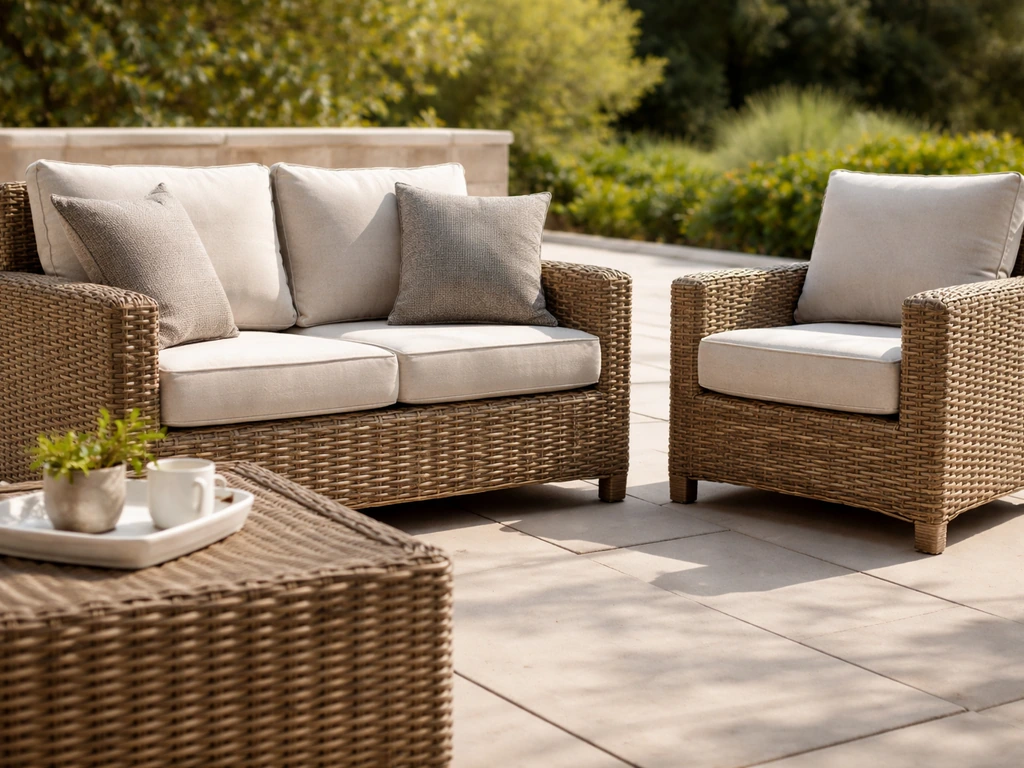
Best outdoor wicker furniture is not the set that looks most impressive on a showroom floor or a product page. It is the one that survives your specific climate, requires maintenance you will actually do, and holds up structurally after a few seasons of real use. A piece that looks great in year one but starts cracking, fading, or wobbling by year three is not a good buy, regardless of its original price.
The framework I use when evaluating wicker patio furniture comes down to three things: how well it resists weather degradation over time, how solid the underlying construction is, and whether the price reflects genuine durability or just aesthetics. Reputable buyer guidance generally agrees that quality outdoor furniture should last at least five years, even in commercial environments where it gets heavy use. For residential patios, you should expect more. If a set you're considering can't credibly promise that, it's not the best pick, no matter how it's marketed.
The material reality: wicker vs rattan, natural vs resin, and what's underneath
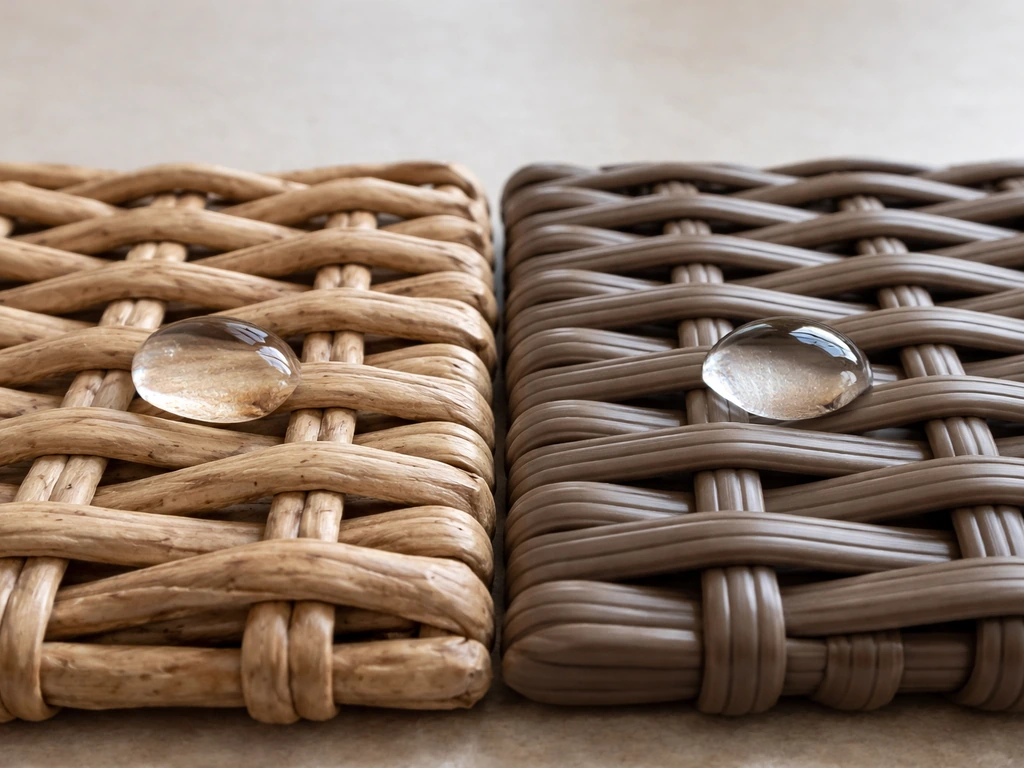
The word 'wicker' describes a weaving technique, not a material. Rattan, bamboo, and reed are all natural plant fibers that can be woven into wicker. Resin or synthetic wicker is a polyethylene fiber, also woven, but engineered from scratch. That distinction matters enormously outdoors.
Natural wicker and rattan: where it works and where it fails
Natural wicker from rattan or bamboo is porous, which means it absorbs and holds water. Left exposed outdoors without protection, it deteriorates quickly. It is also not UV-resistant, so sun exposure causes fading and brittleness. Natural wicker is genuinely beautiful and appropriate for covered outdoor areas, screened porches, or climates that are consistently dry. If you are shopping for a covered lanai in a mild climate, natural rattan can be worth considering. But for an exposed patio, deck, or anything that sees real rain and direct sun, natural wicker is not your friend.
Resin wicker: the practical outdoor choice
Resin wicker, when made from high-density polyethylene (HDPE), is UV-stabilized, water-resistant, and resistant to natural decomposition. It does not absorb moisture the way natural fibers do, which eliminates the main failure mode of outdoor wicker. HDPE is genuinely the better material here, not just a marketing claim. Lower-cost sets often use PVC fiber instead of HDPE, and PVC tends to become brittle and crack in cold temperatures and fade faster under UV. HDPE with UV inhibitors is the spec to look for. Some premium manufacturers, like Forever Patio and Summer Classics (N-Dura resin), test their HDPE fiber at 4,000 or more hours in accelerated UV chambers, which gives you a real performance benchmark to compare against vague claims.
The frame underneath is just as important
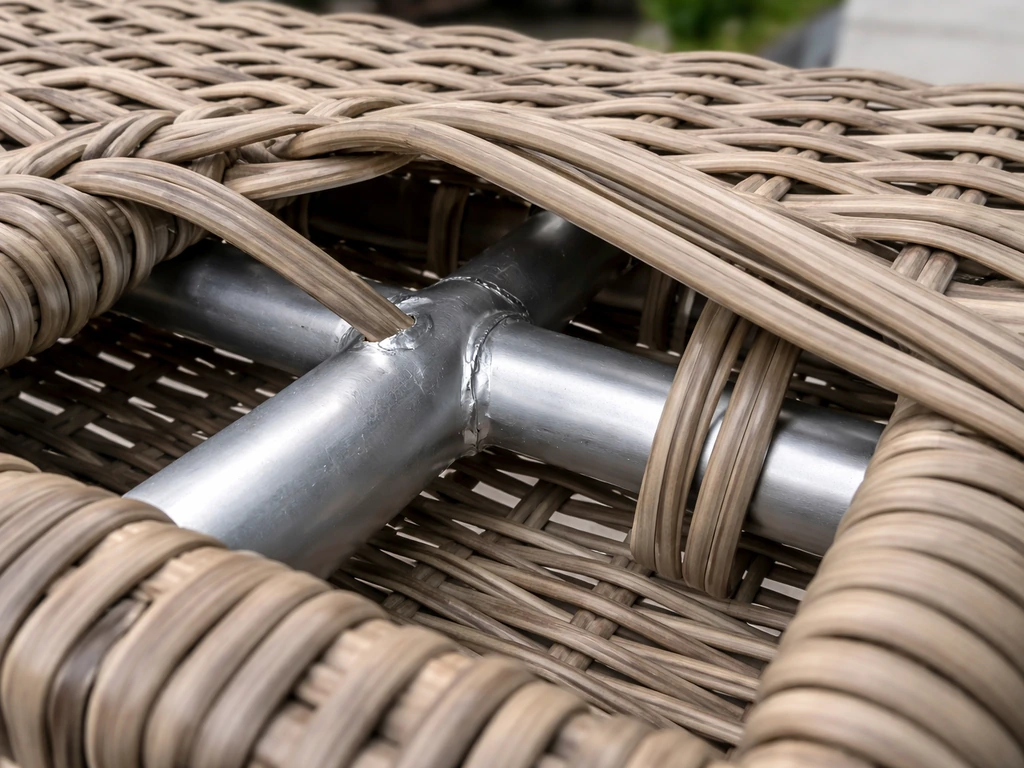
Resin wicker is always woven over a structural frame. That frame is typically either aluminum or steel. Aluminum wins for outdoor use in almost every situation. It does not rust, it is lightweight (which matters for moving furniture around and for reducing stress on the wicker weave), and a quality powder-coated aluminum frame will outlast most steel alternatives, especially in humid or coastal environments. Steel frames are heavier and less expensive to manufacture, but unless they have very thorough rust-proofing, they will start to corrode, and that rust will work its way outward and damage the wicker over the frame. A multi-stage powder coat finish on aluminum, ideally 60 to 80 microns thick, is the standard that separates furniture built for real outdoor performance from furniture that just looks outdoor-capable.
| Material | UV Resistance | Water Resistance | Best Use Case | Main Risk |
|---|---|---|---|---|
| Natural rattan/wicker | Poor | Poor (absorbs water) | Covered porches, dry climates | Rot, mold, brittleness outdoors |
| PVC resin wicker | Moderate | Good | Mild climates, budget sets | Brittleness in cold, faster fading |
| HDPE resin wicker | Excellent (UV-stabilized) | Excellent | All exposed outdoor climates | Higher upfront cost |
| Powder-coated aluminum frame | Excellent | Excellent (rust-free) | All outdoor conditions | Finish can chip if abused |
| Steel frame | Moderate | Fair (rust risk) | Covered, dry environments | Rust in humidity/coastal air |
Top features to actually check before you buy
Once you have confirmed the core material (HDPE fiber, aluminum frame), the remaining features determine how comfortable, stable, and maintenance-friendly the set will be day to day.
UV and fade resistance
Look for sets that specify UV inhibitors in the resin fiber and a UV-stable powder coat on the frame. If a brand publishes UV test hours (4,000 hours is a strong benchmark), that is a meaningful spec. If the listing just says 'fade resistant' with no elaboration, treat it skeptically.
Frame finish quality
A multi-stage powder coat on aluminum is meaningfully better than a single-coat finish, especially for coastal and humid environments where coatings take more punishment. Warranty terms are a useful proxy here. A finish warranty covering peeling, blistering, and cracking for two or more years (like OASIQ's two-year powder-coat warranty) suggests a manufacturer that stands behind their process. A one-year finish warranty is more typical for mid-range sets.
Cushions and upholstery
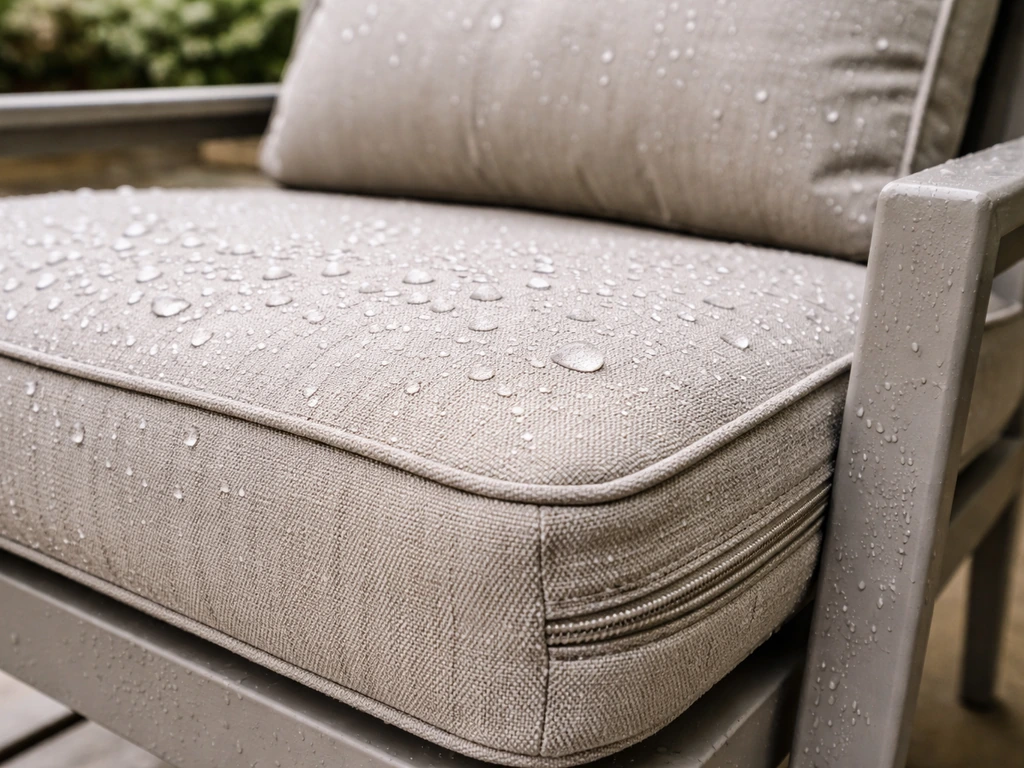
Outdoor cushions are water-resistant, not waterproof. That is an important distinction. Quality cushion fabric, like Sunbrella's solution-dyed acrylic, is engineered so water beads up and rolls off rather than saturating the fabric, and Sunbrella warrants against fading and mildew-related issues under normal outdoor exposure. The foam inside matters just as much: look for open-cell (Dry Fast or reticulated) polyurethane foam, which drains quickly after rain instead of holding moisture and developing mold. Closed-cell foam feels fine at first but becomes a mold factory in any climate with regular rain.
Structural stability and joinery
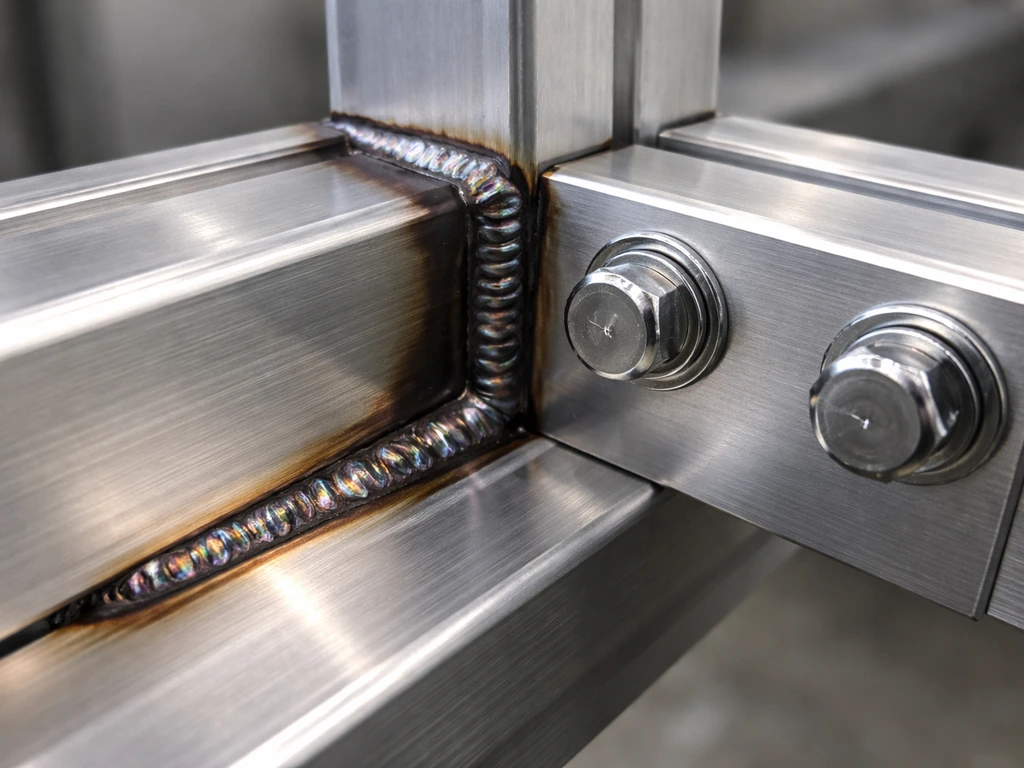
Sit in the piece if you can, or read reviews specifically mentioning stability over time. Welded aluminum joints are stronger than bolted connections for long-term use. Wobble in a new piece is a red flag; furniture that wobbles when new will only get worse. Heavier frames are not automatically better (remember, aluminum is lighter than steel), but a frame that feels flimsy when you press on it is a warning sign regardless of what the spec sheet says.
Maintenance requirements
Good resin wicker over aluminum requires very little upkeep: periodic cleaning with mild soap and water, rinsing, and drying. If a set requires annual sealing, refinishing, or painting to stay in good condition outdoors, factor that labor and cost into your total ownership calculation.
Matching your choice to your climate
Climate is the single biggest variable that separates a good wicker furniture decision from a bad one. The same set that performs flawlessly in Phoenix might fail in two seasons in coastal Maine. Here is how to think through it.
Hot, dry climates (Southwest, desert regions)
Intense UV is your primary threat. Prioritize HDPE fiber with documented UV inhibitors and a UV-stable powder coat on the frame. Color fading shows fastest in dark colors under desert sun, so lighter-colored fiber or UV-rated dark fiber matters. Cushion fabric rated for high UV exposure (like Sunbrella) is worth the extra cost here. Sunbrella fabrics are made with solution-dyed acrylic (color is locked into the fiber) and are covered by a Sunbrella limited warranty for fade and mildew-related issues under normal outdoor exposure Sunbrella) is worth the extra cost here..
Rainy and humid climates (Southeast, Pacific Northwest)
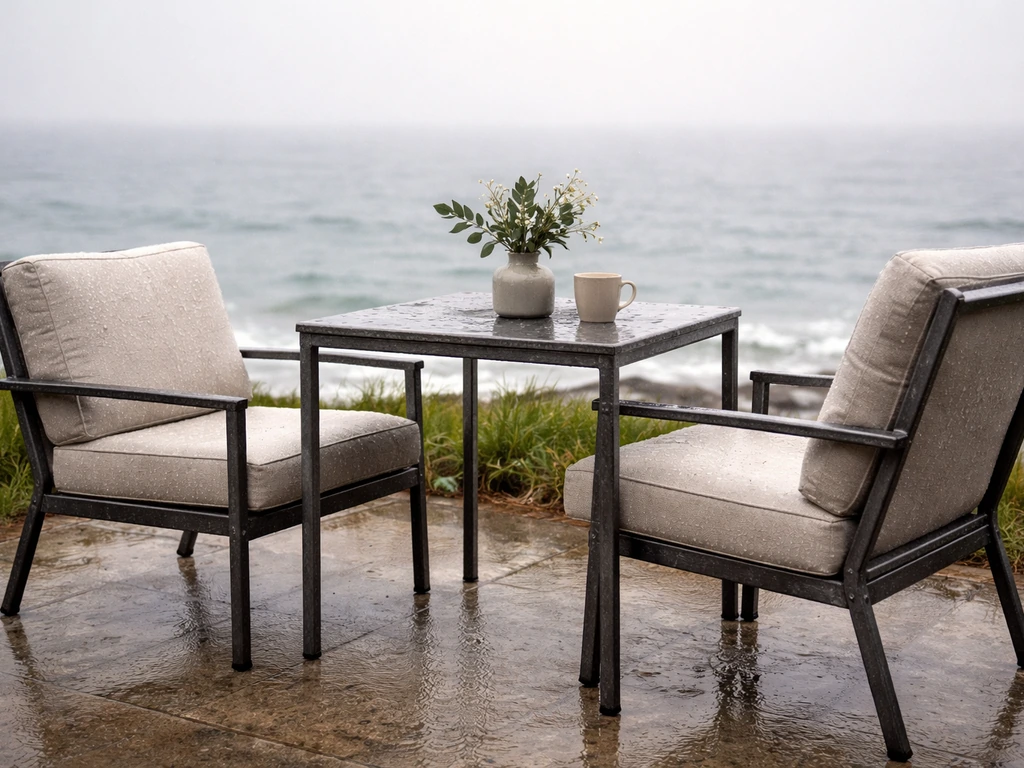
Moisture management is the priority. HDPE resin wicker handles rain well because it does not absorb water, but cushion care becomes important. Open-cell Dry Fast foam and solution-dyed cushion fabrics help significantly. Make sure your set's frame finish is rated for sustained humidity, and avoid any steel-framed sets. Covered storage or furniture covers during extended rainy periods extend lifespan meaningfully.
Coastal environments (salt air, oceanside)
Salt air is extremely aggressive on metal finishes. A single-coat powder finish on aluminum starts failing faster in coastal conditions. Here you want a multi-stage powder coat of at least 60 to 80 microns thickness. Marine-grade aluminum frames are ideal. PVC resin fiber is less appropriate here than HDPE, which holds up better to the combined stress of salt, humidity, and UV. Rinse frames with fresh water regularly to remove salt deposits. For this climate, looking at all-weather wicker furniture specifically positioned for coastal use is worth your time.
Freeze and snow climates (Midwest, Northeast, mountain regions)
Freeze-thaw cycling is hard on furniture. PVC resin wicker becomes brittle in cold and can crack, which is one of the biggest reasons HDPE is the better choice in cold climates. Bring cushions inside before the first hard freeze. For frames, powder-coated aluminum handles freeze-thaw better than steel, which is more prone to expansion and corrosion damage at the coating level. Storing sets under a covered area or using quality furniture covers through winter significantly extends frame and finish life.
How to compare brands, models, and price
Price is an unreliable indicator of quality in this category. There are overpriced sets with mediocre frames and underpriced sets that punch above their weight. Here is a practical framework for making the comparison.
Read the warranty terms, not just the length
Warranty terms tell you what the manufacturer is actually confident about. Look for separate coverage for the frame (structural failure), the finish (peeling, bubbling, cracking), and the fiber (cracking, fading). A five-year frame warranty like HOUE offers on powder-coated aluminum signals real engineering confidence. A one-year blanket warranty on everything signals less confidence. The failure modes covered matter too: if the warranty explicitly covers powder-coat peeling, that tells you the brand knows this is a real risk and is taking responsibility for it. If the warranty is vague, that is a red flag.
Ask what the fiber and frame actually are
Any reputable brand will tell you if the fiber is HDPE or PVC, and whether the frame is aluminum or steel. If a listing or salesperson cannot answer that directly, walk away. Those two specs have more impact on long-term performance than any styling feature.
Price tiers and what to expect
- Under $500 for a set: Typically PVC fiber over steel frames, minimal warranty coverage, acceptable for covered patios in mild climates but expect 3 to 5 years of life with care.
- $500 to $1,500: The quality begins to rise. Mid-range sets often feature HDPE fiber and aluminum frames. Warranty terms typically cover 1 to 3 years for frames and finish. A solid sweet spot for most homeowners.
- $1,500 to $3,000+: Premium territory with multi-stage powder coatings, high-quality HDPE fiber with documented UV testing, and longer warranties. Worth the investment in harsh climates or for long-term value.
- Above $3,000: High-end commercial-grade construction. Frame and finish warranties often run 3 to 5 years or more. Justified for coastal homes, heavy use, or when you are buying once and done.
Think in cost-per-year terms. A $1,200 set that lasts 10 years costs $120 per year. A $600 set that needs replacing in four years costs $150 per year, and you also have the hassle of replacing it. Viewed that way, spending more for documented quality in your climate usually makes financial sense.
Brand red flags and green flags
- Green flag: Brand publishes UV test hours (4,000 hours or more for HDPE fiber).
- Green flag: Frame and finish warranted separately with explicit failure modes listed.
- Green flag: Cushion fabric is named (Sunbrella, Olefin) with its own warranty.
- Green flag: Brand specifies HDPE (not just 'resin' or 'synthetic') and aluminum (not just 'metal') in product specs.
- Red flag: Warranty is one blanket year covering everything with no specifics.
- Red flag: Listing says 'weatherproof' without specifying fiber or frame material.
- Red flag: DIY painting or coating is encouraged. Quality HDPE manufacturers like POLYWOOD explicitly warn that applying coatings voids the warranty because the material does not need them.
- Red flag: Steel frames marketed as outdoor without robust rust-proofing documentation.
Cleaning, care, and weatherproofing your investment
The good news about quality resin wicker over aluminum is that the maintenance routine is genuinely simple. Here is what actually works and what to avoid.
Routine cleaning
Use mild dish soap or laundry detergent with warm water and a soft-bristle brush or sponge. Work the soap into the wicker weave to dislodge debris, then rinse thoroughly with cool water from a regular garden hose, not a pressure washer. High-pressure washing can force water into joints, drive debris under the weave, and damage powder-coat finishes. After rinsing, let the furniture dry completely in open air before covering or storing. Multiple sources, including KETTLER's care guidance and The Home Depot's resin wicker care instructions, agree on this basic approach.
Never use bleach or abrasive cleaners on resin wicker. KETTLER explicitly warns that bleach and abrasives can permanently damage all-weather wicker. Stick to mild soap and soft tools.
Seasonal care and storage
Before storing furniture for winter or extended periods, clean everything and allow it to air-dry completely. Cushions need 24 to 48 hours of drying time before storage. Storing damp cushions causes mold, mildew, and odor that is difficult to reverse. In freeze climates, bring cushions indoors. The frames themselves can often stay outside if covered, but furniture covers that allow some airflow (to prevent trapped moisture) are better than completely sealed covers.
For coastal environments, hose down aluminum frames with fresh water every few weeks to remove salt deposits before they work into the powder-coat finish. This single habit dramatically extends the life of the finish in marine environments.
What not to do
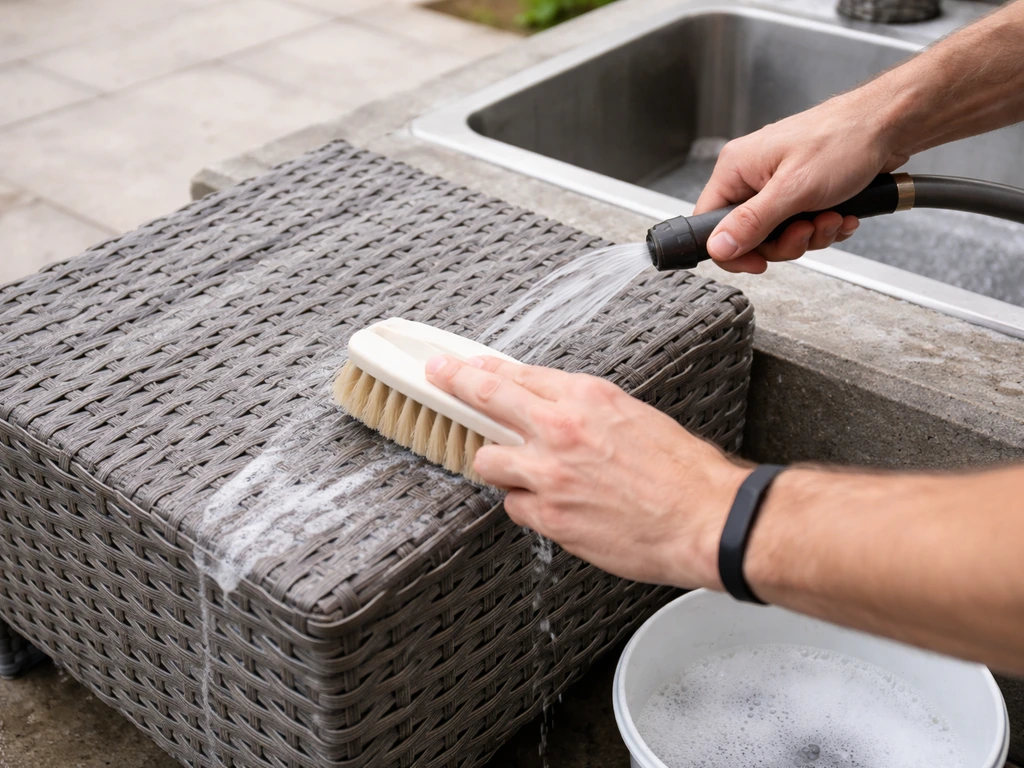
- Do not apply paint, sealant, or waterproofing coatings to HDPE resin wicker. Quality material does not need it and some brands void your warranty if you do.
- Do not use a pressure washer. Medium-pressure hose rinsing is fine; high-pressure washing damages weave and finish.
- Do not store cushions before they are fully dry. Forty-eight hours of air drying is safer than guessing.
- Do not use bleach or abrasive scrubbing pads on wicker fiber or powder-coated frames.
- Do not ignore small chips in the powder-coat finish on steel-adjacent areas. Touch up chips on aluminum frames promptly to prevent corrosion at the breach point.
Sizing, layout, and choosing the right set type
Even the best outdoor wicker furniture underperforms if it is the wrong size, wrong configuration, or wrong style for your actual patio. If you are shopping for the best resin wicker patio furniture, focus first on HDPE fiber, a powder-coated aluminum frame, and UV-stabilized materials. Getting this right upfront saves you a lot of frustration.
Measure your space first
The classic planning mistake is buying a set that looks proportionate in a showroom or on a website and then discovering it overwhelms a small patio or looks tiny on a large deck. Measure your usable outdoor space (not just the total patio square footage) and then map out your furniture on paper or digitally before ordering. Allow at least 18 inches of clearance around seating pieces for comfortable movement, and 30 to 36 inches of clearance for main walkways.
Set types and what they actually fit
- Conversation sets (two chairs, loveseat, coffee table): Best for patios of 120 to 200 square feet. Good for morning coffee, casual lounging, and smaller social gatherings.
- Sectional sets: Work well for larger patios (200 square feet or more). Modular L-shaped or U-shaped sectionals give flexibility and can be reconfigured. Great for entertaining but require significant space to avoid feeling cramped.
- Dining sets (table plus chairs): Best for covered patios or patios with defined dining zones. A 4-person dining set needs roughly 8 x 10 feet minimum of usable space; a 6-person set needs closer to 10 x 12 feet.
- Loveseat sets: A compact two-person loveseat with a side table is the right call for balconies, small urban patios, or as a secondary seating zone on a larger patio.
- Deep-seating sets: Chairs and sofas with thick, lounge-depth cushions. These are for relaxation rather than dining. They require more clearance than standard chairs and are best matched with a low coffee table.
Style and color decisions that age well
Wicker furniture comes in a wide range of weave patterns and colors, from honey brown and natural tones to charcoal, espresso, and black. Lighter-colored HDPE fiber shows dirt more easily but stays cooler in direct sun. Darker fiber hides surface debris better but absorbs more heat. For cushion fabric, neutral tones in high-performance fabrics tend to photograph well and coordinate easily with changing decor, but the more important factor is the fabric rating, not the color.
If you are drawn to a particular style (bohemian, coastal, modern minimalist), keep in mind that all-weather resin wicker comes in enough weave patterns and frame finishes that you can usually find the look you want without sacrificing material quality. If you want the best all-weather wicker patio furniture, focus on HDPE resin wicker and a powder-coated aluminum frame so it can handle rain, UV, and humidity with minimal upkeep all-weather resin wicker. Do not let aesthetics lead you away from the material specs that will determine whether you are still happy with this furniture in year six.
A quick planning checklist before you order
- Measure your usable patio space and map out clearance zones.
- Decide on your primary use (lounging, dining, entertaining, all three).
- Confirm the fiber is HDPE with UV inhibitors, not just 'resin' or 'synthetic.'
- Confirm the frame is powder-coated aluminum, not steel.
- Check the warranty terms: separate coverage for frame, finish, and fiber is a good sign.
- Verify cushion fabric (name brand like Sunbrella is worth paying for) and foam type (Dry Fast or open-cell for rain-prone climates).
- Account for covers or storage needs based on your climate.
Once you work through that checklist, the noise of brand marketing, style trends, and inflated price tags gets much easier to cut through. The best outdoor wicker patio furniture for you is the set that matches your climate, fits your space, and is built from materials that will hold up without demanding constant attention. That combination exists at multiple price points, and now you know exactly what to look for to find it.
FAQ
Can I use resin wicker patio furniture as-is in a fully exposed outdoor space with frequent rain?
Yes, but only if the unit is “outdoor” rated for upholstery and has a drainage approach you can maintain. For cushions, look for solution-dyed (or otherwise high-performance) fabric plus open-cell foam, then plan to let cushions dry flat in a sheltered area after storms. If your cover traps moisture or has no airflow, even the best materials can develop mildew.
What’s the best way to cover wicker patio furniture for winter or extended rainy periods?
Avoid storing furniture under airtight plastic. Use breathable covers (or cover only when it is fully dry), and keep cushions indoors in freeze climates. If you must cover frames outside, leave some ventilation so condensation does not collect at joints.
What part of wicker patio furniture typically fails first, cushions or the resin weave?
Wicker itself can survive outdoors, but cushions are the usual failure point. Use open-cell or “dry fast” foam, ensure fabric can shed water, and store cushions dry. In practical terms, expect cushion replacement earlier than the frame and weave, even with the best HDPE resin wicker.
How can I tell if a resin wicker set is structurally stable before buying?
It is usually the opposite of what people expect. Pressing on the structure can reveal flex at joints, especially around seats and table tops. If the frame feels wobbly while new, it often indicates weaker welds, lighter gauge metal, or poor assembly hardware, which worsens with daily use.
What wording should I look for to make sure the set is truly HDPE resin wicker over an aluminum frame?
Many retailers use “resin wicker” broadly. Confirm the fiber is HDPE (not PVC) and check whether the listing mentions UV inhibitors and the frame material is aluminum. If they cannot state HDPE vs PVC and aluminum vs steel clearly, treat it as a quality red flag.
Do “water-resistant” cushions stay dry enough during storms?
Look for cushion care and foam type rather than just fabric brand names. “Water-resistant” means it will repel for a time, not that it will not absorb. If your region has regular hard rain, prioritize open-cell foam that drains quickly, and plan to manage cushions after storms.
Is it worth rinsing aluminum frames in coastal areas even if I use covers?
Yes, but it depends on how the cover is designed and how you clean first. Wash off salt and debris, let frames fully dry, then cover in a way that allows airflow. In coastal areas, also rinse aluminum periodically to prevent salt buildup from accelerating coating failure.
Can I use a pressure washer to clean outdoor resin wicker?
Use a soft brush and mild soap, and always rinse thoroughly with a regular hose. Do not pressure wash because it can force water into joints and under the weave, which can hasten frame finish breakdown and loosen debris trapped in corners.
How do I interpret warranty language when shopping for the best outdoor wicker patio furniture?
If the warranty is separated into frame, finish, and fiber, it is easier to judge confidence in durability. Pay special attention to whether it covers peeling or cracking of the powder coat and the coverage length for the frame, since those are often the most expensive failure modes.
Does the color of resin wicker or cushions matter for durability?
Color can affect heat and dirt visibility, but it should not replace material specs. Darker cushions and fiber can get hotter in sun, while lighter colors show dust more. Choose color based on your comfort preference, but make sure UV inhibitors and the aluminum coating quality match your climate.
Could natural rattan be a good option if my patio is covered?
Sometimes. If a patio is covered and your area is consistently dry, natural rattan can work. But for exposed patios with direct sun and frequent rain, natural wicker’s water absorption and low UV tolerance typically shorten lifespan compared with HDPE resin wicker.
Is aluminum framing always better than steel framing for wicker patio furniture?
Generally, yes if you need to move the furniture often and you want less long-term stress on the weave. Aluminum frames are typically lighter and do not rust, but also confirm the powder coat is multi-stage and thick enough for your humidity and salt exposure.
Next Articles
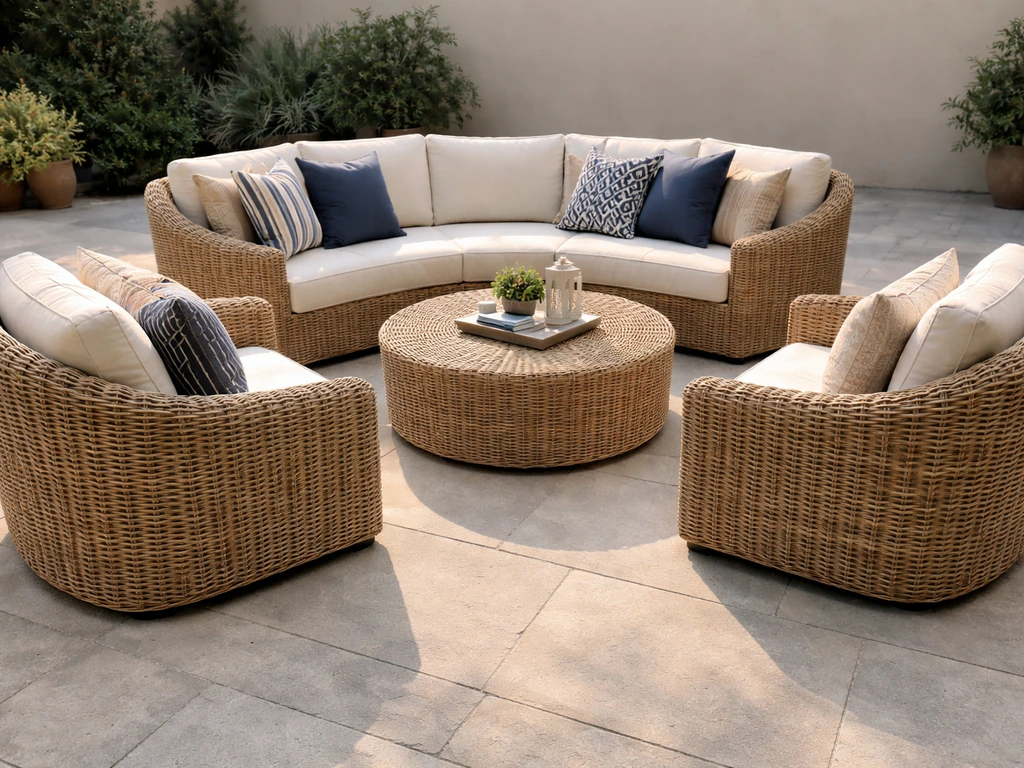
Best Patio Wicker Furniture: How to Choose the Right Set
No-fluff guide to choosing the best patio wicker furniture with material, quality, sizing, and care tips for any climate
Is Teak Patio Furniture Good? Durable, Smart Buying Guide
Is teak patio furniture good? Evidence-based verdict, lifespan, care, buying tips, comparisons, and eco guidance.
How Long Does Teak Patio Furniture Last? Lifespan Guide
Teak patio lifespan ranges, factors that shorten or extend durability, and a maintenance plan to protect joints and fini