
The best overall patio furniture brand available in Canada right now is Brown Jordan for premium buyers, Harmonia Living for mid-range aluminum and wicker, and Keter for budget-conscious shoppers who want genuine weather resistance without babysitting their furniture every autumn. If you want a single honest answer: for most Canadian climates, powder-coated aluminum frames paired with Sunbrella-fabric cushions give you the best combination of freeze-thaw tolerance, corrosion resistance, and realistic maintenance expectations. What changes by region is how much extra protection you need and which materials to flat-out avoid. See our patio furniture top rated guide for detailed buying tips and brand rankings.
Best Patio Furniture Brands Canada: Top Picks & Buying Guide

Marcus Kellerman
12 Jul 2026
Quick Picks for Canadian Buyers
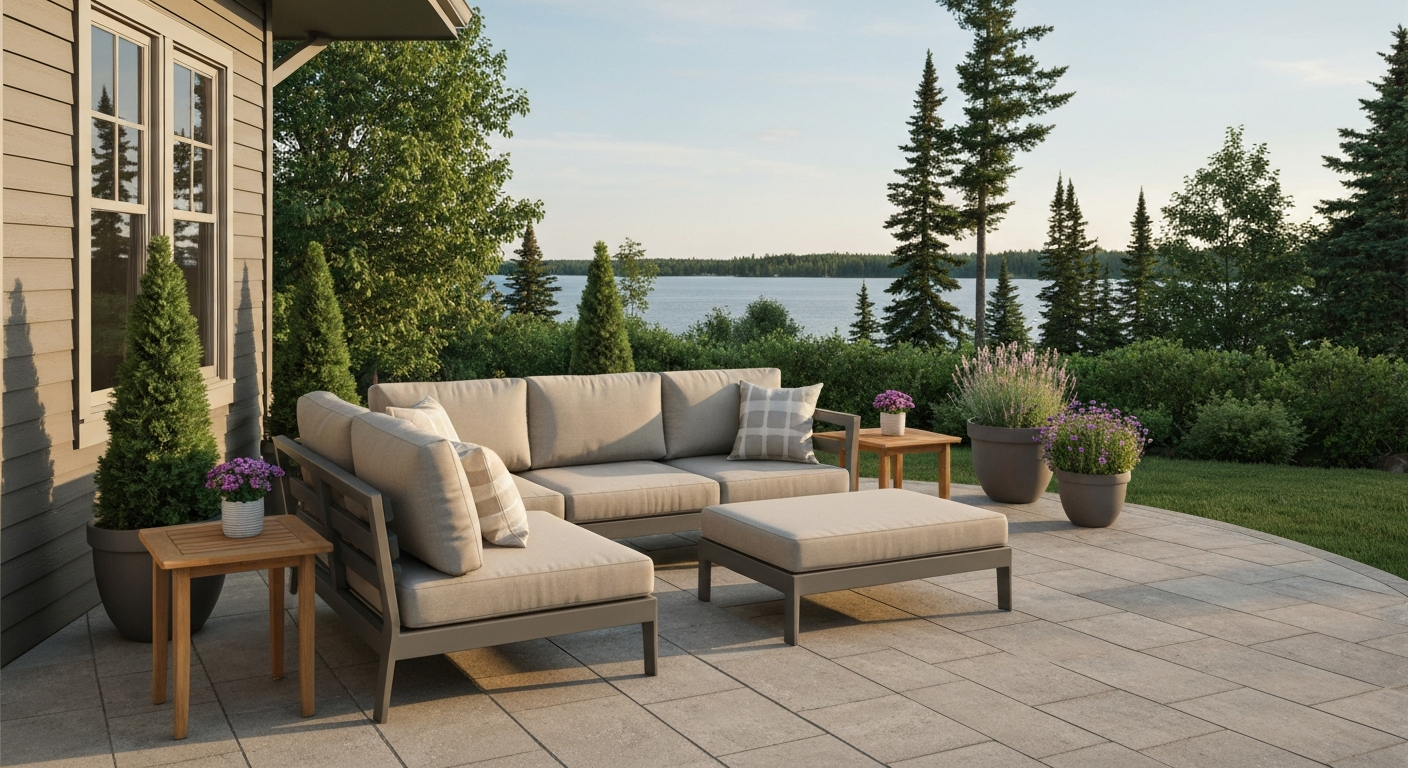
These picks are based on material durability in Canadian climate conditions, Canadian availability, warranty terms, and realistic price-to-lifespan ratios. Full brand details follow in the ranked section below. For detailed brand-by-brand analysis, see the top 10 patio furniture brands for Canada (internal reference: ca97c854-b4a0-4d28-a90d-a1bd45a25726). See our ranked list of top rated patio furniture brands for curated picks and concise buying notes.
- Best overall: Harmonia Living — powder-coated aluminum frames, all-weather wicker wrapping, available at major Canadian retailers including The Home Depot Canada, 3-year structural warranty
- Best value: Keter — high-density resin and polypropylene construction, freeze-thaw stable, sold at Costco Canada, Canadian Tire, and Home Depot; entry sets from roughly CAD $299
- Best for teak: Westminster Teak — sustainably sourced Grade-A teak, 25-year structural warranty, ships to Canada, expected lifespan of 30+ years with minimal maintenance
- Best for aluminum: Telescope Casual — marine-grade aluminum, tested to ASTM B117 salt-spray standards, strong coastal suitability, available through Canadian specialty dealers
- Best for harsh winters (zones 0–4): Muskoka Chairs / Adirondack-style HDPE sets from Polywood — recycled HDPE lumber rated to -40°C, will not crack, splinter or absorb moisture through freeze-thaw cycles
- Best for coastal salt air: Telescope Casual or Brown Jordan aluminum lines — powder-coat finishes with documented salt-spray resistance; avoid raw steel and untreated iron on any BC coast or Atlantic property
- Best for small budgets (under CAD $500 for a full set): IKEA TÄRNÖ or Keter Geneva sets — practical, weather-tolerant, and backed by national availability across Canada
How I Scored These Brands
Ratings here are based on five weighted criteria applied consistently across every brand: material durability (30%), weather and freeze-thaw resistance relevant to Canadian climate zones (25%), warranty terms and manufacturer support (20%), Canadian availability and retailer presence (15%), and value-for-money measured as expected cost-per-year of useful life (10%). I cross-referenced manufacturer specs, retailer product listings with current CAD pricing from The Home Depot Canada and Wayfair.ca, Sunbrella fabric warranty documentation, and aggregated customer sentiment from review platforms. No brand paid for placement. See our full outdoor patio furniture ratings for detailed scores, methodology, and brand-by-brand breakdowns.
Top 10 Patio Furniture Brands in Canada, Ranked
1. Harmonia Living
Harmonia Living consistently earns the top overall spot for Canadian buyers because it hits the sweet spot between genuine outdoor-grade construction and accessible pricing. Their frames are powder-coated aluminum, which resists the salt and freeze-thaw stress that destroys cheaper steel frames within two or three seasons. The all-weather synthetic wicker wrapping is UV-stabilized and does not absorb moisture, which matters enormously in humid eastern Canadian summers and wet Pacific coast winters. Cushions use Sunbrella or equivalent solution-dyed acrylic fabrics rated to resist mould, fading, and moisture. Available at The Home Depot Canada and Wayfair.ca. Sets range from CAD $800 to $2,500.
2. Brown Jordan
Brown Jordan is the benchmark for premium patio furniture and has been manufacturing outdoor pieces since 1945. Their aluminum and wrought-aluminum collections are built to commercial hospitality standards, meaning they are over-engineered for residential use in ways that matter over a 20-year ownership period. The finishes are durable even in coastal conditions, and the company offers formal warranty documentation. In Canada, Brown Jordan is sold through select specialty outdoor furniture dealers and higher-end home furnishing stores. Sets start around CAD $3,000 and climb well past $15,000 for complete dining or lounge configurations.
3. Westminster Teak
If your preference is natural wood and you want something that will genuinely outlast you, Westminster Teak is hard to beat. They use Grade-A teak, the dense, high-oil heartwood that weathers to a silver-grey patina without rotting or cracking through decades of outdoor exposure. Their 25-year structural warranty is among the most generous I have seen in this category, and they back it with real documentation. Westminster Teak ships to Canada and is available through Canadian specialty dealers. Expect to pay CAD $400 to $800 per chair and CAD $1,200 to $3,500 for dining tables.
4. Telescope Casual
Telescope Casual has been making aluminum outdoor furniture in the United States since 1903 and their marine-grade aluminum frames are a legitimate choice for Canadian coastal properties. The company's finishes are tested against ASTM B117 salt-spray protocols, which is the industry standard test for corrosion resistance, and their sling-fabric collections require almost no maintenance beyond a seasonal wipe-down. Available through Canadian specialty outdoor retailers and some online dealers. Pricing runs from CAD $250 per sling chair to $2,500 for complete sets.
5. Polywood
Polywood makes Adirondack chairs, dining sets, and rockers from recycled high-density polyethylene (HDPE) lumber. For buyers in Canada's colder zones, think northern Ontario, the Prairies, or anywhere that sees -30°C winters, HDPE is one of the most genuinely cold-resistant materials available. It does not crack, split, absorb moisture, or degrade through freeze-thaw cycles the way wood or composites often do. It also does not need sealing, staining, or winter storage. Polywood products ship to Canada through Wayfair.ca and select retailers. Sets start around CAD $500 for two Adirondack chairs with a side table.
6. Keter
Keter is an Israeli manufacturer that produces resin and polypropylene furniture designed specifically to handle outdoor exposure. Their products are not luxurious, but they are honest about what they are: practical, weather-resistant furniture available at Costco Canada, Canadian Tire, and Home Depot at prices that let most buyers replace a set if it eventually wears out. The resin construction handles UV exposure reasonably well and tolerates freezing without cracking in normal residential use. Budget sets start under CAD $300 for a table-and-chairs combination.
7. Yardbird
Yardbird is a direct-to-consumer brand that has built a following among buyers who want clean-lined aluminum furniture with well-padded cushions using Sunbrella fabrics. Their frames are recycled aluminum, and they offer a lifetime warranty on frames and five years on cushions. The brand ships to Canada and their pricing is mid-to-upper-mid range, with sectional sets running CAD $2,500 to $6,000. The direct sales model removes retail markup, which helps the value equation.
8. Tropitone
Tropitone is a California-based commercial-grade manufacturer whose aluminum and wrought aluminum collections have a strong reputation for durability in demanding environments. Their sling and cushion collections are used in resort and hotel settings throughout North America, which gives you a realistic indicator of expected lifespan. Canadian availability is primarily through specialty dealers. Pricing is premium, with dining chairs from CAD $350 to $800 each.
9. Structube (LENNY and Select Lines)
Structube is a Quebec-based Canadian furniture retailer with national showrooms and online sales. Their outdoor lines like the LENNY dining chair use powder-coated metal frames and are priced accessibly, typically CAD $150 to $300 per chair. Quality is adequate for covered patios and mild Canadian climates like southern BC or southern Ontario. They are not built for extended outdoor exposure in harsh Prairie winters, but for urban patios with seasonal storage they represent genuine value and you can physically inspect them in-store.
10. IKEA (TÄRNÖ, FEJAN, ASKHOLMEN Lines)
IKEA's outdoor lines are a legitimate entry point for buyers who need functional patio furniture at the lowest reasonable price point in Canada. Their acacia wood pieces (ASKHOLMEN) require annual oiling but are solid enough for 5 to 8 years of use with proper care. The steel and resin lines are functional for sheltered urban use. IKEA Canada also stocks outdoor covers, cushions, and replacement parts, which is a practical advantage. Sets start under CAD $200. The TOSTERÖ outdoor furniture covers are available in CAD pricing and extend the life of most sets through Canadian winters.
Brand Summary Table
| Brand | Primary Materials | Typical CAD Price Range | Warranty Highlights | Where to Buy in Canada |
|---|---|---|---|---|
| Harmonia Living | Powder-coated aluminum, synthetic wicker, Sunbrella fabric | $800 – $2,500 (sets) | 3-year structural | Home Depot Canada, Wayfair.ca |
| Brown Jordan | Cast/wrought aluminum, premium fabrics | $3,000 – $15,000+ | Varies by line; formal documentation | Specialty outdoor retailers |
| Westminster Teak | Grade-A solid teak | $400 – $800 (chair), $1,200 – $3,500 (table) | 25-year structural warranty | Specialty dealers, ships to Canada |
| Telescope Casual | Marine-grade aluminum, sling fabrics | $250 – $2,500 (sets) | Finish and frame warranty (multi-year) | Canadian specialty dealers, online |
| Polywood | Recycled HDPE lumber | $500 – $2,000 (sets) | 20-year limited structural warranty | Wayfair.ca, select Canadian retailers |
| Keter | High-density resin, polypropylene | $299 – $800 (sets) | 1–2 year limited | Costco Canada, Canadian Tire, Home Depot |
| Yardbird | Recycled aluminum, Sunbrella fabric | $2,500 – $6,000 (sectionals) | Lifetime frame, 5-year cushion | Yardbird.com (ships to Canada) |
| Tropitone | Cast/extruded aluminum, sling and cushion | $350 – $800+ (per chair) | Commercial-grade; frame and finish warranty | Specialty dealers across Canada |
| Structube | Powder-coated steel/aluminum, acacia | $150 – $600 (pieces) | 1-year limited | Structube stores Canada-wide, structube.com |
| IKEA | Acacia wood, steel, resin/polypropylene | $50 – $600 (sets) | 1-year limited | IKEA Canada stores, ikea.com/ca |
Where to Buy Patio Furniture in Canada
Canadian buyers have more options than they did a decade ago, but retail availability still varies significantly by province. For a curated list of reputable retailers and suppliers, see best patio furniture supplier. The Home Depot Canada is the broadest national source for mid-range outdoor furniture, stocking brands like Harmonia Living, Hampton Bay, and others with CAD-priced listings and in-store availability in most provinces. Wayfair. For curated selections and comparisons of the best products patio furniture, consult our dedicated guide. ca has Canada-specific terms, Canadian fulfillment, and a large catalog that includes brands like Polywood and Yardbird that do not maintain physical Canadian stores. Costco Canada rotates in seasonal patio sets at competitive pricing, particularly from Keter and their own Pacific Coast brand. Canadian Tire carries accessible budget lines from spring through late summer. Specialty outdoor furniture dealers in larger cities (Toronto, Vancouver, Calgary, Montreal) often carry Brown Jordan, Tropitone, and Telescope Casual, and are worth visiting if you want to inspect construction quality in person before committing to premium pricing. For buyers furnishing a vacation property in southern Spain, consider local suppliers such as patio top garden furniture Fuengirola for region-specific durability options and sizing. Structube is a Canadian-headquartered option with physical showrooms across the country.
Material Comparisons: What Actually Holds Up in Canada
Canada's climate is not one thing. A patio in Victoria, BC faces cool wet winters, moderate summers, and almost no hard freezing. A patio in Winnipeg or northern Alberta faces extreme cold (sometimes below -40°C), heavy snow loads, UV intensity in summer, and dramatic humidity swings. A Nova Scotia or Vancouver Island coastal property adds salt-air corrosion into the equation. Any material recommendation that ignores these regional differences is giving you incomplete advice. The table below gives you a direct, honest comparison before I go deeper into each material.
| Material | Freeze-Thaw Resistance | Corrosion/Salt-Air Resistance | Maintenance Level | Expected Lifespan | Rough CAD Cost (set) |
|---|---|---|---|---|---|
| Powder-coated aluminum | Excellent | Good (marine-grade: excellent) | Low | 20–30 years | $600 – $4,000 |
| Grade-A teak | Excellent | Excellent | Low–Medium (oiling optional) | 30–50+ years | $2,000 – $8,000 |
| HDPE / recycled resin lumber | Excellent | Excellent | Very low | 20–30 years | $500 – $2,500 |
| Pressure-treated wood / cedar | Good (cedar better) | Poor–Medium | Medium–High (annual sealing) | 10–20 years | $400 – $2,500 |
| Synthetic (resin) wicker on aluminum | Good | Good | Low | 10–20 years | $700 – $3,500 |
| Natural wicker / rattan | Poor | Poor | High | 3–8 years (covered use) | $300 – $1,500 |
| Cast iron / wrought iron | Good (with paint) | Poor (ruse without treatment) | High (annual painting) | 15–30 years (if maintained) | $500 – $3,000 |
| Galvanized / raw steel | Fair | Poor | Very high | 5–15 years | $200 – $1,500 |
| High-density polypropylene resin | Excellent | Excellent | Very low | 10–20 years | $200 – $1,000 |
Material Deep-Dive: Wood (Cedar, Pressure-Treated, Common Softwoods)
Cedar is the best-performing softwood for Canadian outdoor furniture and it is genuinely worth the premium over cheaper softwoods like pine or spruce. Western red cedar contains natural tannins and oils that resist decay, repel insects, and give it a meaningful advantage in wet and humid climates. It handles freeze-thaw cycles reasonably well because of its low density and low moisture uptake compared to denser softwoods. Properly sealed and stored or covered during the deepest winter months, a cedar Adirondack chair or dining set can last 15 to 20 years. Without any treatment, expect degradation within 5 to 8 years in most Canadian climates.
Pressure-treated lumber is resistant to rot and insects because of chemical preservative treatment, but it is not automatically a superior outdoor furniture material. It tends to be heavier, it can warp and check as it dries after treatment, and the treatment itself does not prevent surface weathering or UV graying. It is more appropriate for structural elements like pergola posts or raised decking than for furniture that will be sat on and moved around. It also requires regular sealing with a penetrating oil or exterior stain to maintain appearance and slow surface checking.
For Canadian climates specifically: wood furniture in zones 0 to 4 (most of the Prairies, northern Ontario and Quebec, and the territories) needs to come indoors or under genuine weatherproof cover for winter. Wood that sits under a tarp on a deck through a -30°C Prairie winter will crack and check regardless of species. The freeze-thaw cycling, water entering wood grain cells, freezing, expanding, and cracking the cell walls, is cumulative and irreversible. Cedar outperforms other softwoods in this environment because its lower moisture uptake reduces the water available to freeze, but it is not immune. The honest recommendation: if you want wood furniture in a harsh-winter climate, build winter storage into your ownership plan.
- Best wood for Canadian outdoor furniture: Western red cedar
- Maintenance schedule: Apply penetrating oil or exterior wood sealer annually in late spring before the season
- Winter protocol in zones 0–5: store indoors or in a dry, enclosed garage; use fitted waterproof covers at minimum
- Expected lifespan with proper care: 15–20 years for cedar; 10–15 years for pressure-treated pine
- Avoid: untreated pine or spruce furniture marketed as 'outdoor' — these will degrade within 3–5 years in most Canadian climates
- Cost reality: good cedar sets start around CAD $500 and can reach $3,000 for dining configurations from quality Canadian manufacturers
Material Deep-Dive: Teak and Tropical Hardwoods
Grade-A teak is the closest thing to a maintenance-free natural wood available for outdoor furniture. The high silica and oil content in dense teak heartwood makes it naturally resistant to moisture, decay, insects, and UV breakdown in ways that softwoods simply cannot replicate. Left untreated outdoors, it weathers from honey-gold to a silver-grey patina over one to two seasons. That patina is not damage, it is a stable, protective surface layer. If you want to preserve the golden colour, apply teak oil once or twice a year. If you are comfortable with the silver-grey, the furniture genuinely asks almost nothing of you.
In Canadian winters, teak handles freeze-thaw cycles exceptionally well. Its low moisture uptake means there is less water in the wood grain to freeze and cause cracking. I have seen Grade-A teak sets left uncovered through moderate Canadian winters (zones 5 to 6, southern Ontario or southern BC) with no structural damage, though a breathable cover is still worth using to keep debris off and slow the greying process. In the deepest winter zones, covered or indoor storage is still a reasonable precaution.
A word on sourcing: not all teak sold as 'outdoor teak' is Grade-A plantation-grown teak. Grade-B and Grade-C teak contains sapwood and more knots, has less natural oil content, and will not perform the same way. When buying teak, ask specifically for Grade-A plantation teak and look for FSC certification or equivalent sustainable sourcing documentation. Westminster Teak and similar specialty manufacturers are transparent about this. Generic teak sets sold at mass-market pricing (under CAD $800 for a dining set) are almost certainly not Grade-A teak and should be evaluated skeptically.
Eucalyptus is sometimes positioned as a teak alternative at lower price points. It is a genuinely dense hardwood with reasonable outdoor performance, but its oil content and decay resistance do not match Grade-A teak, and it requires more consistent maintenance (annual oiling is non-negotiable in wet Canadian climates). It is a reasonable choice at the mid-price tier if you confirm it is properly dried and kiln-treated, but I would not count on 30-year performance the way you can with quality teak.
- Expected lifespan for Grade-A teak: 30–50+ years with basic care
- Maintenance: annual teak oil if you want to preserve colour; none required for the silver-grey patina
- Ethical sourcing: look for FSC certification; avoid unverified 'plantation teak' claims without documentation
- Freeze-thaw performance: excellent — low moisture uptake protects against cracking
- Cost: high upfront (CAD $2,000–$8,000 for quality sets) but cost-per-year over 30–40 years is competitive with cheaper alternatives replaced every decade
- Teak vs. eucalyptus: teak wins on longevity and maintenance requirements; eucalyptus is a reasonable budget compromise if oiled annually
Material Deep-Dive: Aluminum and Powder-Coated Metals
Powder-coated aluminum is the material I recommend most often to Canadian buyers because it handles the widest range of Canadian climate conditions with the least maintenance burden. Aluminum does not rust. The powder-coat finish protects the underlying metal from UV degradation, scratches, and surface oxidation, and it comes in a range of colours and textures that hold up well over years of exposure. Lightweight aluminum sets are easy to move, reposition seasonally, or store in a garage during winter without a team effort.
For coastal properties, the distinction between standard aluminum and marine-grade aluminum matters. Research in materials science confirms that aluminum corrosion rates and pitting increase measurably with salt loading and ionic exposure, particularly in humid coastal environments. This is what ASTM B117 salt-spray testing is designed to evaluate: the test runs parts through a continuous salt-fog environment to simulate accelerated coastal exposure. If you are furnishing a property on BC's coast, Nova Scotia, PEI, or Newfoundland, look for brands that specifically reference ASTM B117 testing in their product documentation, or buy marine-grade aluminum lines from makers like Telescope Casual who test explicitly for this.
Steel furniture, including cast iron and wrought iron, is heavier and more vulnerable to corrosion than aluminum. It is not inherently bad, wrought iron furniture can last decades with proper annual painting and rust treatment, but it demands more from you in terms of maintenance. A wrought iron bistro set left through a wet Pacific coast winter without treatment will show rust within two seasons. In the Canadian context, where many buyers want low-maintenance outdoor furniture, aluminum is simply a more honest recommendation for most use cases.
- Best use for aluminum: any Canadian climate, especially coastal and harsh-winter zones
- Maintenance: wipe down seasonally, inspect powder-coat for chips annually, touch up chips with matching paint to prevent underlying oxidation
- Weight advantage: lightweight aluminum is easy to stack and store, important in climates requiring seasonal storage
- Coastal buyers: specify marine-grade aluminum and look for ASTM B117 salt-spray test references in product documentation
- Steel and iron: suitable for sheltered patios if you commit to annual maintenance; avoid in high-humidity or coastal conditions without a consistent rust-prevention schedule
- Lifespan: 20–30 years for quality powder-coated aluminum with basic care
Material Deep-Dive: Natural Wicker and Rattan
Natural wicker and rattan are beautiful materials, and I am not going to pretend otherwise. The problem is they are not outdoor materials in the honest sense of that phrase, and in Canada specifically they are a poor investment for any space that is not fully covered and protected from precipitation and direct sun. Natural rattan is a palm-derived material. It absorbs moisture readily, swells and contracts with humidity changes, weakens with UV exposure, and will crack, split, and delaminate within a few seasons of real outdoor use in most Canadian climates. Mould growth in the weave is a common failure mode in the humid Canadian summer-fall transition.
If you love the aesthetic of wicker and want it on a covered porch, sunroom, or deep covered veranda where it will not see rain or extended direct sun, natural rattan can work and can last 5 to 8 years with reasonable care. Clean it with a mild soap solution, dry it thoroughly, and apply a protective spray sealant once a season to slow moisture uptake. Never leave it in direct rain. In the Canadian context, this means it is a covered-space-only material and even then it needs to come indoors or into a climate-controlled space for winter.
The alternative that gives you the wicker look without these limitations is synthetic all-weather wicker, typically UV-stabilized resin strands woven over powder-coated aluminum frames. Brands like Harmonia Living use this construction. It handles moisture, UV, and freeze-thaw cycles far better than natural rattan, is easier to clean, and does not support mould growth the way organic materials do. For most Canadian buyers who want the wicker aesthetic, synthetic wicker on an aluminum frame is the correct answer.
- Natural wicker / rattan: covered spaces only, no direct rain exposure, bring indoors for winter in all Canadian zones
- Lifespan outdoors (covered): 5–8 years with consistent care; shorter without
- Maintenance: mild soap cleaning, thorough drying, protective sealant spray once per season
- Repairability: natural rattan can be rewoven by specialist furniture repair services, but replacement is often more economical for damaged sets under CAD $800
- Synthetic all-weather wicker: strongly preferred for most Canadian outdoor use — UV-stabilized resin on aluminum frames handles conditions natural rattan cannot
- Mould warning: any moisture trapped in natural wicker weave in warm weather will develop mould; this is a common failure mode in Canadian summers and is not recoverable once established
Climate Zones and Regional Recommendations
blank" rel="noopener noreferrer">Canada's Plant Hardiness Zone map, published by Natural Resources Canada, runs from zone 0 in the extreme north to zone 8b in the mildest coastal areas of BC. The Government of Canada Open Data portal hosts the Plant Hardiness Zones dataset (downloadable shapefiles and static maps) that article authors can use to build regional recommendation maps for Canada blank" rel="noopener noreferrer">Plant Hardiness Zones dataset (Government of Canada Open Data portal). For patio furniture purposes, the relevant factors are minimum winter temperatures, freeze-thaw cycle frequency, coastal salt-air exposure, UV intensity, and precipitation type and volume. Here is how material choices map to the major Canadian outdoor-living regions.
| Region | Climate Challenge | Recommended Materials | Materials to Avoid |
|---|---|---|---|
| Prairie provinces (zones 0–4) | Extreme cold (-30 to -40°C), low humidity, heavy UV in summer | HDPE resin lumber (Polywood), powder-coated aluminum, Grade-A teak with winter cover | Natural wicker, raw steel, untreated softwoods left outdoors year-round |
| Ontario / Quebec (zones 4–6) | Moderate to harsh winters, humid summers, freeze-thaw cycling | Powder-coated aluminum, synthetic wicker on aluminum, cedar with annual sealing | Natural rattan, untreated pine/spruce, galvanized steel without maintenance |
| BC Interior (zones 3–6) | Cold dry winters, hot dry summers, UV intensity | Aluminum, HDPE, teak | Natural wicker, cheap resin composites that UV-degrade |
| Coastal BC / Gulf Islands (zones 7–8b) | Mild wet winters, cool summers, moderate salt air | Marine-grade aluminum, teak, synthetic wicker, cedar | Raw iron and steel without annual paint; natural wicker in open exposures |
| Atlantic Canada (zones 4–6, coastal) | Moderate cold, high humidity, significant salt-air exposure | Marine-grade aluminum (ASTM B117 tested), Grade-A teak, HDPE resin | Cast iron without annual maintenance, natural wicker, cheap powder-coat finishes |
| Northern Canada (zones 0–2) | Extreme cold, short season, UV exposure | HDPE resin lumber (rated to -40°C), bring everything else indoors for winter | All wood, natural wicker, iron, aluminum sets not rated for extreme cold |
Maintenance and Care: Making Your Investment Last
The most expensive furniture mistake Canadian homeowners make is not buying the wrong brand, it is failing to winterize correctly. A CAD $3,000 aluminum-and-synthetic-wicker set left uncovered through a Prairie winter without cushion removal will age three to five years in one season. A CAD $800 cedar set given annual oiling and a dry winter storage spot can outlast a neglected premium set easily. Maintenance is where the real cost-per-year calculation happens.
- End of season (September–October): remove all cushions, wash covers per manufacturer instructions (Sunbrella fabrics can be machine washed on cool gentle cycles; IKEA Canada recommends the same for their outdoor textiles), dry completely before storage in a dry indoor space
- Clean frames with mild soap and water; rinse thoroughly; dry aluminum and steel frames to prevent standing water under covers
- Inspect powder-coat on aluminum and steel for chips or scratches; touch up with matching touch-up paint before moisture can reach bare metal
- For cedar and teak: apply penetrating oil (teak oil for teak, exterior wood oil for cedar) in late spring before the season begins
- Cover remaining outdoor pieces with fitted waterproof-breathable covers (not plastic tarps, which trap condensation); IKEA TOSTERÖ and similar purpose-designed covers are worth the cost
- For cast iron or wrought iron: inspect for rust annually; sand to bare metal at rust spots, apply rust-inhibiting primer, repaint with outdoor metal paint before the season
- In harsh winter zones: bring all wood, natural wicker, and iron furniture indoors or into a dry garage; only HDPE resin and quality aluminum can be left outdoors in extreme cold with just a cover
Cushion care is a separate discipline. Sunbrella and equivalent solution-dyed acrylic fabrics carry a 5-year limited warranty from the manufacturer against fade and mould under normal use, but that warranty is voided by improper storage, specifically leaving damp cushions in sealed storage bags where mould develops. Always dry cushions fully before storage. For most Canadian buyers, storing cushions in a breathable cotton bag inside a dry indoor space from October to May is the simplest and most effective protocol.
Price Tiers: What to Expect at Each Level
Patio furniture pricing in Canada in 2026 spans a genuinely wide range, and the relationship between price and quality is not perfectly linear. Here is a realistic breakdown of what your CAD budget actually buys.
| Budget Tier | Typical CAD Spend (full set) | What You Get | Honest Lifespan Expectation |
|---|---|---|---|
| Entry / Budget | Under $500 | Resin/polypropylene sets (Keter, IKEA), basic steel bistro sets; functional but not premium construction | 5–10 years with basic care; replacement likely within a decade |
| Mid-range | $500 – $2,000 | Powder-coated aluminum frames, synthetic wicker, entry teak pieces; Harmonia Living, Structube, Telescope Casual entry lines | 15–20 years with seasonal maintenance |
| Upper mid / Premium | $2,000 – $5,000 | Better aluminum construction, Sunbrella fabrics confirmed, Grade-A teak pieces, Yardbird, Westminster Teak entry sets | 20–30 years; cost-per-year becomes competitive with mid-range |
| Luxury | $5,000+ | Brown Jordan, Tropitone full sets, bespoke teak configurations; commercial-grade construction | 25–40+ years; genuine generational furniture if maintained |
Decision Checklist Before You Buy
Before you finalize any patio furniture purchase for a Canadian property, run through these questions. They will save you from the most common and costly buying mistakes.
- What is my Canadian climate zone, and what are the minimum winter temperatures where this furniture will live?
- Do I have space to store cushions, and ideally frames, indoors or in a dry garage during winter?
- Is this property coastal or within a few kilometres of salt water? If yes, specify marine-grade aluminum or teak only for metal-framed pieces.
- What is my honest maintenance commitment? Be realistic: if you will not oil wood furniture annually, do not buy wood.
- What frame material is the set built on? Reject any set where the frame material is not clearly specified.
- Does the brand offer a formal written warranty in Canada, and what does it specifically cover? Get the document, not just a verbal claim.
- Are replacement parts (cushion covers, hardware, frame pieces) available from this manufacturer or retailer in Canada?
- What is the cost-per-year of this purchase over the realistic lifespan of the material, not just the sticker price?
- Have I confirmed current CAD pricing from a Canadian retailer (not USD converted at a rough exchange rate)?
- If buying online, what are the Canadian-specific return and delivery terms from this retailer?
What to Look for in Warranties (Canadian Context)
Warranty terms for outdoor furniture sold in Canada are not standardized, and the gaps between what sounds good and what is actually covered can be significant. A '5-year warranty' on a cheap steel frame that excludes rust, UV fading, and damage from outdoor use is essentially worthless paper. Look for warranties that specifically cover structural defects in the frame material, finish degradation under normal outdoor use, and fabric fading (the Sunbrella 5-year limited warranty is a specific, documented benchmark for fabric). Confirm the warranty is honourable in Canada, some American brands offer warranties that require US shipping for warranty service, which makes them impractical for Canadian buyers. Westminster Teak's 25-year structural warranty and Yardbird's lifetime frame warranty are among the strongest formal commitments available. Always request the warranty document itself before purchasing; retailers who cannot provide it are telling you something about their confidence in the product.
Ratings Methodology: How These Brands Were Evaluated
Every brand and material in this guide was evaluated against the same five criteria, weighted to reflect the practical priorities of Canadian outdoor furniture buyers. Material durability (30%) assessed the inherent weather resistance, UV stability, and freeze-thaw performance of the primary frame and surface materials, cross-referenced against manufacturer specs and available materials testing data. Climate and weather resistance specific to Canadian zones (25%) evaluated freeze-thaw tolerance, salt-air corrosion resistance referenced against ASTM B117 standards, and documented performance in high-precipitation and high-UV environments. Warranty terms and manufacturer support (20%) examined actual warranty documents for coverage scope, duration, and Canadian serviceability. Canadian availability and retailer presence (15%) confirmed that brands are genuinely purchasable in Canada at CAD prices through major retailers or direct shipping, not just theoretically available. Value-for-money as cost-per-year of expected useful life (10%) calculated approximate annual cost based on realistic lifespan rather than sticker price alone. No advertising relationships or sponsored placements influenced rankings.
FAQ
What high-level topic areas must I research to build an evidence-based, Canada-focused guide to the best patio furniture brands and where to buy them?
Climate and regional exposure; material science and corrosion/weather performance; brand and model availability in Canada; pricing and price-tier benchmarks (CAD); warranties and written exclusions; manufacturer care/maintenance guidance; retailer shipping/returns/policies in Canada; independent lab tests and standards (ASTM, salt-spray); peer-reviewed studies on material durability (coastal corrosion, UV degradation); aggregated consumer reviews/complaints/recalls (Health Canada, Trustpilot); retail inventory snapshots (major Canadian retailers and marketplaces); localized practical maintenance/repair techniques; photo assets and staging examples; reproducible testing/evaluation methodology for your ratings.
Which climate and geospatial data sources should be consulted to produce region-specific recommendations across Canada?
Environment and Climate Change Canada (Canadian Climate Normals and historical datasets) for temperatures, freeze–thaw frequency, precipitation and UV indices; Natural Resources Canada / Plant Hardiness Site and the Government of Canada Open Data portal (Plant Hardiness Zones shapefiles and maps) to map minimum temperatures and climate zones; provincial road-salt/coastal salinity studies and local municipal salt-application guides where relevant for coastal/salt-spray exposure.
What material‑science and test‑standard references are required when evaluating materials (aluminum, wood, teak, cast iron, wicker/rattan, synthetic wicker) for Canadian climates?
Peer-reviewed corrosion/materials research (e.g., studies on aluminum corrosion and salt loading); ASTM/ISO test standards used by labs (ASTM B117 salt-spray, UV weathering standards) and Intertek or similar lab pages documenting those tests and Canadian lab locations; manufacturer technical sheets (alloy specs, powder-coating details, teak grade definitions); third-party durability testing reports from reputable media or labs.
Which types of manufacturer and retailer documentation must I collect for each brand/model to confirm Canadian suitability and availability?
Canadian product pages with model names and material specs; Canadian CAD pricing and SKUs from major retailers (Home Depot Canada, Wayfair.ca, Structube, IKEA Canada, Rona/Lowes, etc.); Canadian-specific warranty PDFs and terms; care and maintenance guides from manufacturers (Sunbrella, Teak-care brands, powder-coat maintenance); shipping, returns and assembly policies specific to Canada.
What warranty and legal/regulatory sources should I consult to accurately report coverage and exclusions for buyers in Canada?
Manufacturer limited-warranty documents (PDFs) and explicit Canadian regional statements; retailer warranty pages for Canadian purchases; Health Canada / Consumer Product Safety Program recall and incident reports for outdoor furniture; provincial consumer-protection pages where warranty/return law differs (if applicable).
How should I research price tiers (budget / midrange / premium) and ensure CAD‑relevant benchmarks?
Sample live CAD prices across multiple Canadian retailers and marketplaces (IKEA Canada, Home Depot Canada, Wayfair.ca, Staples/Structube, local specialty stores) for representative models per material and category; record range statistics (median, 25/75 percentile) for common product types (2‑seat set, 4‑seat dining set, sectional, chaise); include shipping/assembly/cover costs to reflect landed cost in Canada.
Next Articles
Top Rated Patio Furniture: How to Choose Best Options
Buy top-rated patio furniture fast with material fit, durability checks, measurements, maintenance tips, and repair vs r
Top 10 Patio Furniture Brands: Best Picks by Material and Climate
Ranked top 10 patio furniture brands by material and climate, with what to verify, price value, and care tips.
Outdoor Patio Furniture Ratings: How to Choose Fast
Use outdoor patio furniture ratings to compare materials and pick durable, weatherproof, comfortable patio sets fast for