
If you want brands that consistently hold up across material types, a handful of names keep earning their reputation through real build quality rather than marketing: Brown Jordan and Summer Classics for premium cast aluminum, POLYWOOD for recycled lumber alternatives, Gloster and Sutherland for teak, and Castelle for high-end aluminum frames backed by a 15-year residential warranty. But the honest answer is that the 'best' brand depends entirely on your material, your climate, and how much you actually want to maintain it. A teak set from Gloster will outlast almost anything in a coastal humid environment if you oil it annually, while a POLYWOOD set needs almost no maintenance and still carries a 20-year warranty. Getting to the right choice means understanding what top rated actually signals, which materials suit your region, and what those warranty documents say in the fine print.
Top Rated Patio Furniture Brands by Material and Climate

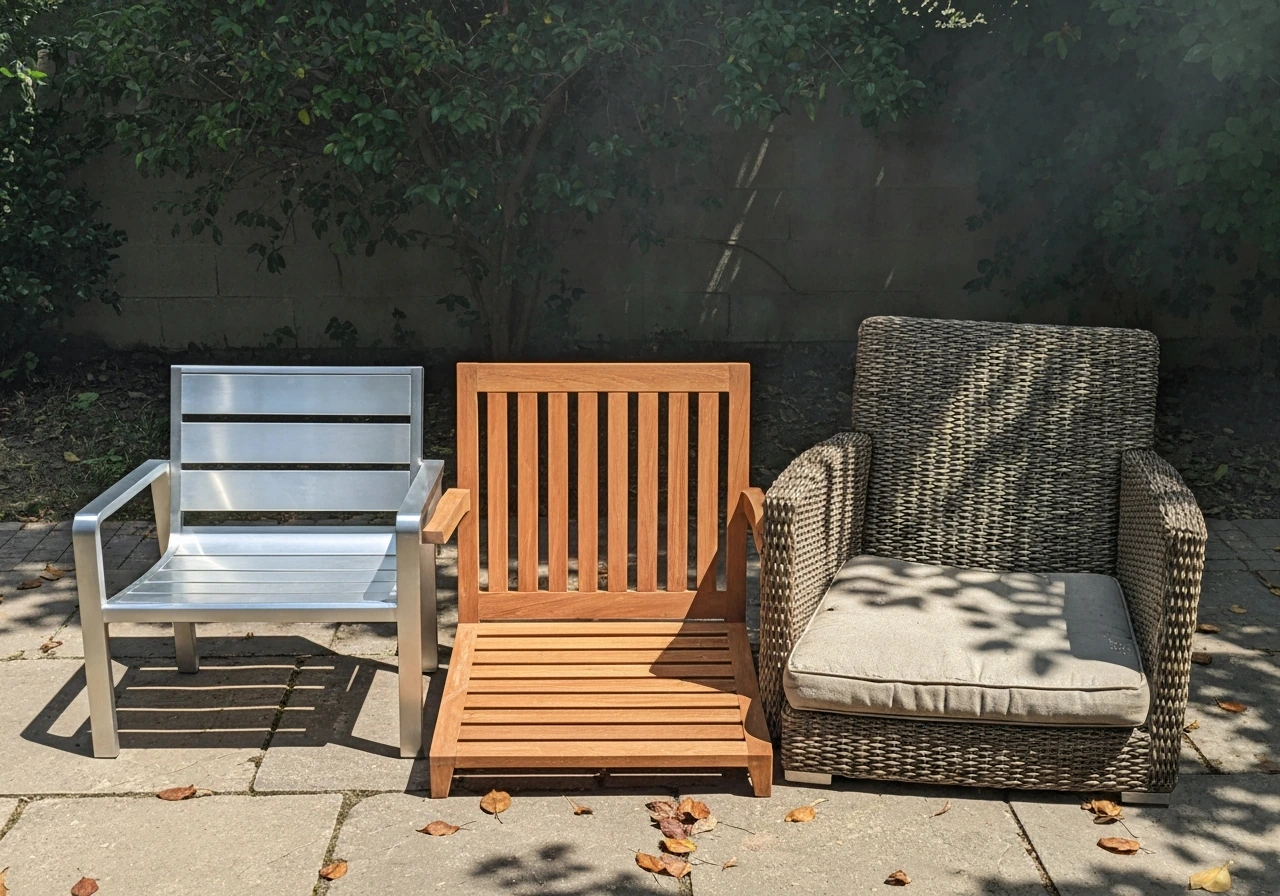
How to actually read 'top rated' without getting burned
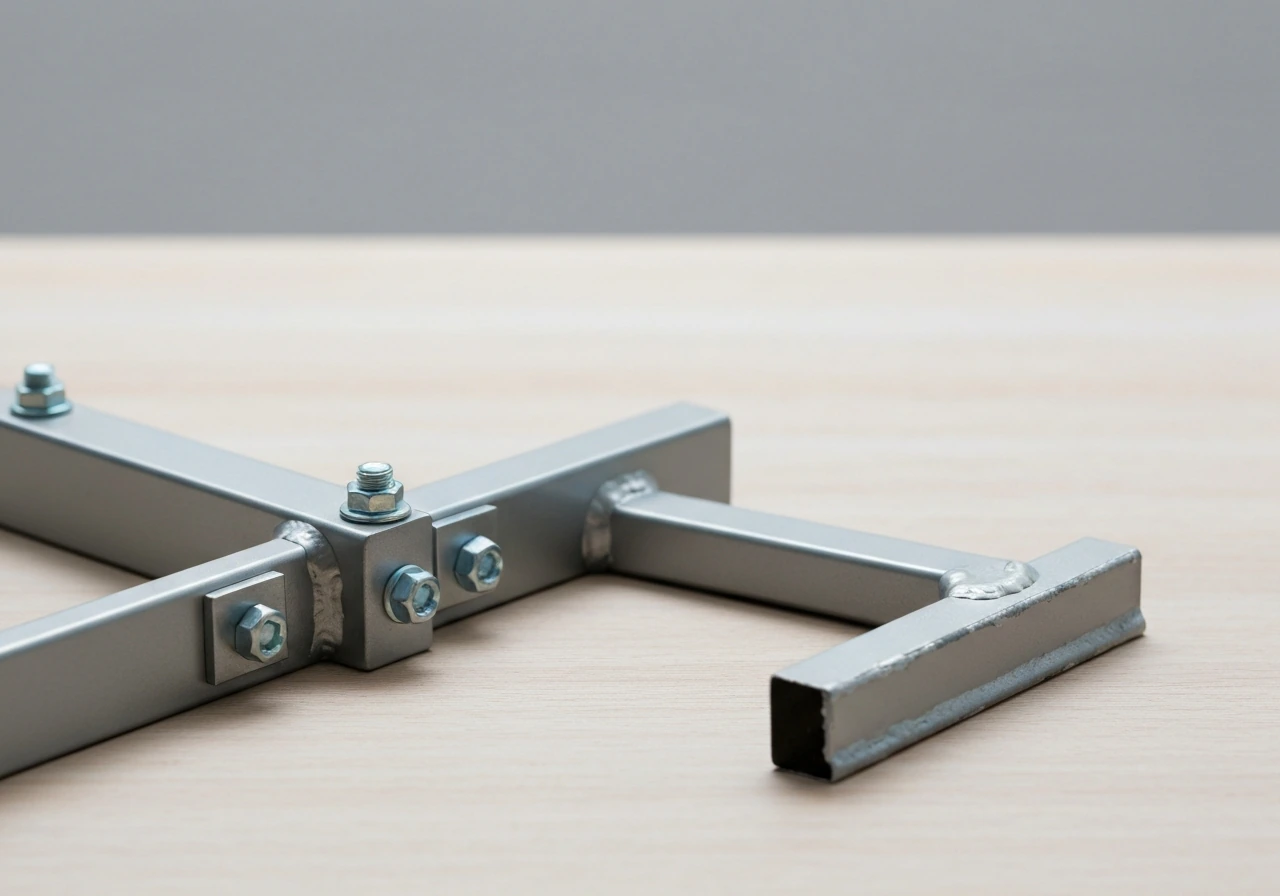
Star ratings alone will get you nowhere. A five-star product with 12 reviews from people who have owned it for two weeks tells you almost nothing about how a chair holds up through three New England winters or two summers in coastal Florida. What actually matters when evaluating brands is a combination of build signals, warranty terms, and return policies, looked at together.
Start with frame construction and finish quality. For aluminum, look for powder-coated finishes over a chrome conversion pre-treatment (Gloster, for example, uses that process on their aluminum extrusions specifically to enhance corrosion resistance). For wicker and rattan, the tightness and UV-stability of the weave matters more than the visual style. For wood, joint construction and the specific species used tell you more than the word 'teak' on the label.
Next, read warranty terms like a contract, because they are one. A 15-year frame warranty from Castelle on aluminum is genuinely meaningful. A 20-year warranty from POLYWOOD on their lumber product is extraordinary, though note their warranty explicitly excludes rust or corrosion of stainless steel or zinc-coated hardware. Brown Jordan covers structural frame and weld failures under normal residential use but explicitly excludes normal fading, scratching, or chipping of the finish, and also excludes damage from freezing or high winds.
blank" rel="noopener noreferrer">Brown Jordan’s Residential Warranty covers cast and extruded aluminum frames for 15 years, including structural deterioration or structural failures under normal residential use, subject to the warranty schedule and exclusions structural frame and weld failures under normal residential use.
Summer Classics covers defects in materials and workmanship and defines 'significant rust' as rust covering more than one inch by one-half inch that recurs after required maintenance. That definition matters if you are in a salt-air environment. Knowing exactly what is and is not covered tells you far more about a brand's confidence in their product than any star rating.
Return policies are the often-ignored third leg. POLYWOOD offers a 30-day return window if you are not satisfied, with a clear workflow through their customer service team. Fewer brands than you might expect offer that kind of clean return path on large outdoor furniture. Consumer Reports has long argued that low price does not automatically predict poor quality, and the reverse is equally true: premium pricing does not guarantee premium performance. Look at value as the combination of build quality, warranty depth, customer service responsiveness, and realistic price-per-year across the expected lifespan.
Top rated brands by material
The right brand changes entirely based on what material you are buying. Here is how the landscape breaks down by material type, with the brands that genuinely earn their reputation in each category.
Aluminum (cast and extruded)
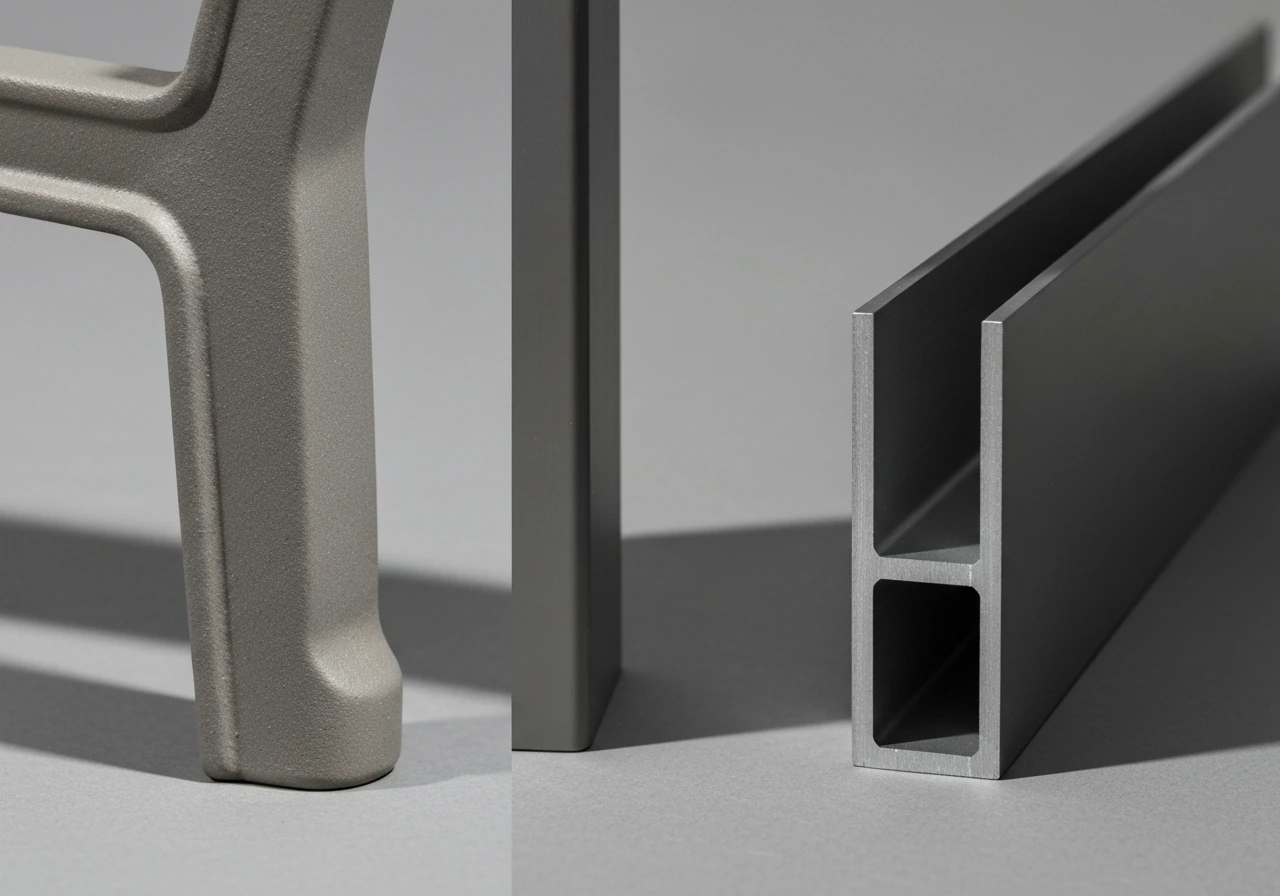
Cast aluminum is arguably the best all-around material for most climates. It does not rust, it is heavy enough to feel substantial without being unmanageable, and quality powder-coat finishes hold up for years. Brown Jordan is the legacy name here, with frames built for structural integrity and a warranty covering weld failures under normal use.
Summer Classics produces beautifully detailed cast aluminum at the premium tier with a 1-to-5-year warranty structure (they cover freight in year one, you cover it in years two through five). Castelle offers a 15-year residential warranty on aluminum frames and fire pit frames, which is among the strongest in the category. HOUE sits at a more accessible price point with a 5-year warranty covering structural integrity and resistance to environmental factors on their powder-coated aluminum pieces.
For serious longevity, the Gloster approach of pre-treating extrusions with a chrome conversion coating before powder coating is the kind of manufacturing detail that separates premium aluminum from the mass-market versions.
Wicker and all-weather rattan
Genuine rattan belongs indoors or in covered porches. What most people call outdoor wicker is synthetic resin wicker over an aluminum frame, and quality varies enormously. The frame underneath is everything: if the aluminum core is thin or steel (which can rust at the cut ends), the whole piece fails even if the weave looks fine. Look for brands that specify the frame gauge, use rust-resistant aluminum cores, and offer UV-stabilized resin weaves.
Brown Jordan and Summer Classics both offer high-quality resin wicker. At the mid-tier, Polywood and Telescope Casual produce reliable all-weather wicker with aluminum frames. Weave tightness and UV stabilization in the resin fiber are the two specs to press brands on, because that is where cheaper versions fail first.
Teak
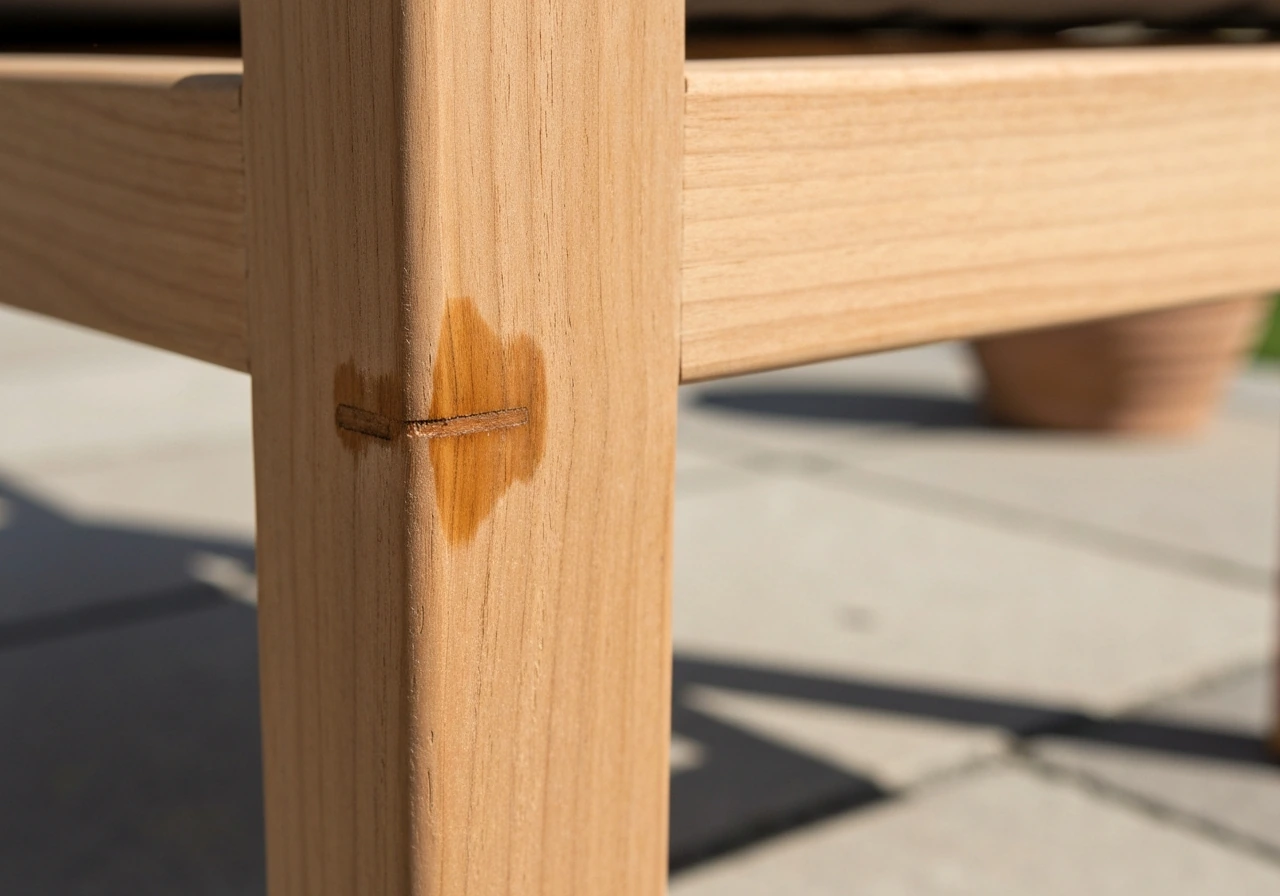
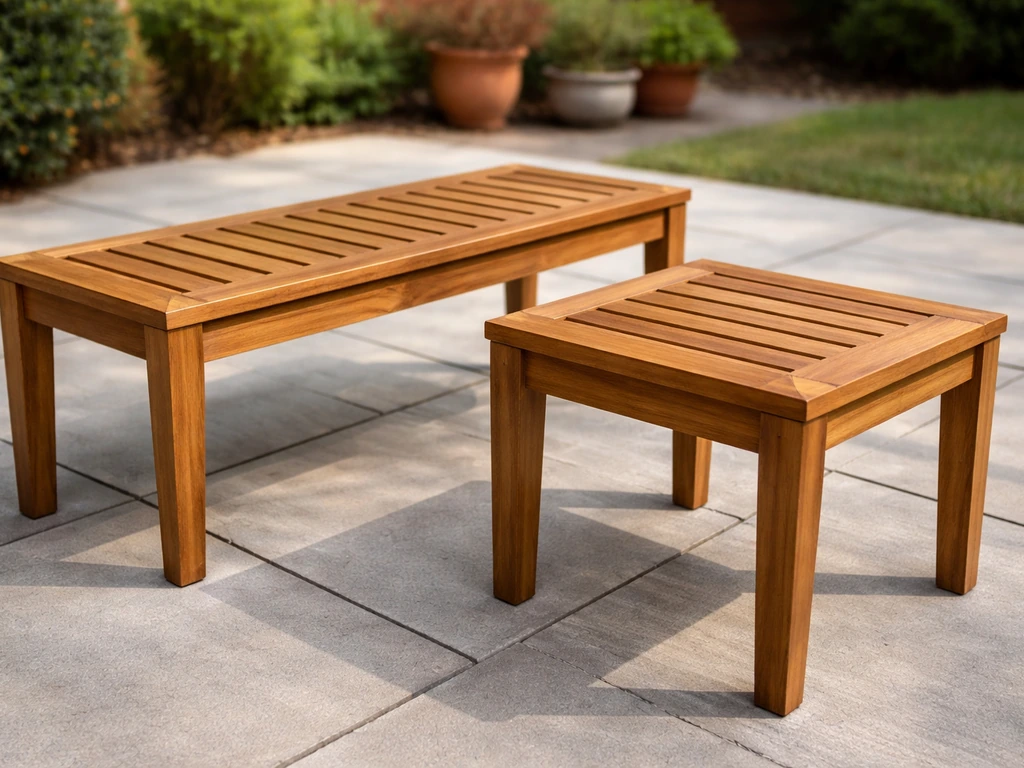
Teak is the benchmark for outdoor wood because of its natural oil content and tight grain, which resist water, rot, and insects far better than most species. Gloster is the name most serious buyers point to at the premium level, and their warranty explicitly acknowledges that small end-grain cracks and weathering color changes are natural teak characteristics, not defects. That kind of transparency in a warranty signals a brand that understands their material.
Summer Classics also offers teak, though their 2024 warranty documentation notes that teak-oil stain coverage is excluded, so factor in the ongoing oiling maintenance cost. Sutherland and Barlow Tyrie are other names well respected in the category. If you let teak weather to its natural silver-gray, the maintenance burden drops considerably but Summer Classics' warranty language specifically notes that silver-gray weathering begins after exposure, so understand what you are signing up for either way.
Other woods (eucalyptus, shorea, acacia)
Teak is expensive, and several alternative hardwoods perform well if sourced and finished correctly. Eucalyptus is dense and naturally resistant to rot. Shorea (sometimes sold as Philippine mahogany) is another solid performer. Acacia is widely available at lower price points but needs more consistent sealing to hold up. The honest caveat with any wood alternative is that FSC certification and sourcing matter both ethically and for quality consistency. Brands selling certified, responsibly sourced hardwoods tend to use better-graded lumber, which directly affects longevity.
POLYWOOD and recycled lumber alternatives
POLYWOOD deserves its own category because it behaves unlike wood or metal. Made from recycled high-density polyethylene lumber, it will not splinter, crack, chip, peel, rot, or suffer structural damage from insect infestation under normal use conditions, per their own warranty terms. Their 20-year limited residential warranty is the longest in the outdoor furniture category by a wide margin. It is heavier than aluminum and the aesthetic is more casual, but for buyers who want zero-maintenance furniture backed by a serious warranty, POLYWOOD is genuinely hard to beat. It works particularly well in climates with extreme seasonal swings because the material is dimensionally stable.
Cast iron and steel
Cast iron is heavy, classic-looking, and genuinely durable but it requires consistent rust prevention. Raw cast iron needs to be painted or sealed, checked annually, and touched up wherever the finish chips. Wrought iron is similarly demanding. For most buyers, cast aluminum delivers comparable visual weight and classic styling with far less maintenance. If you genuinely want the look and heft of iron, buy from a brand that uses high-quality paint systems and be prepared to do annual touch-ups. Steel furniture (often powder-coated) is common at the mid-price tier but is more vulnerable to rust at cut edges and welds than cast aluminum.
Durability and weather resistance: what actually holds up by climate
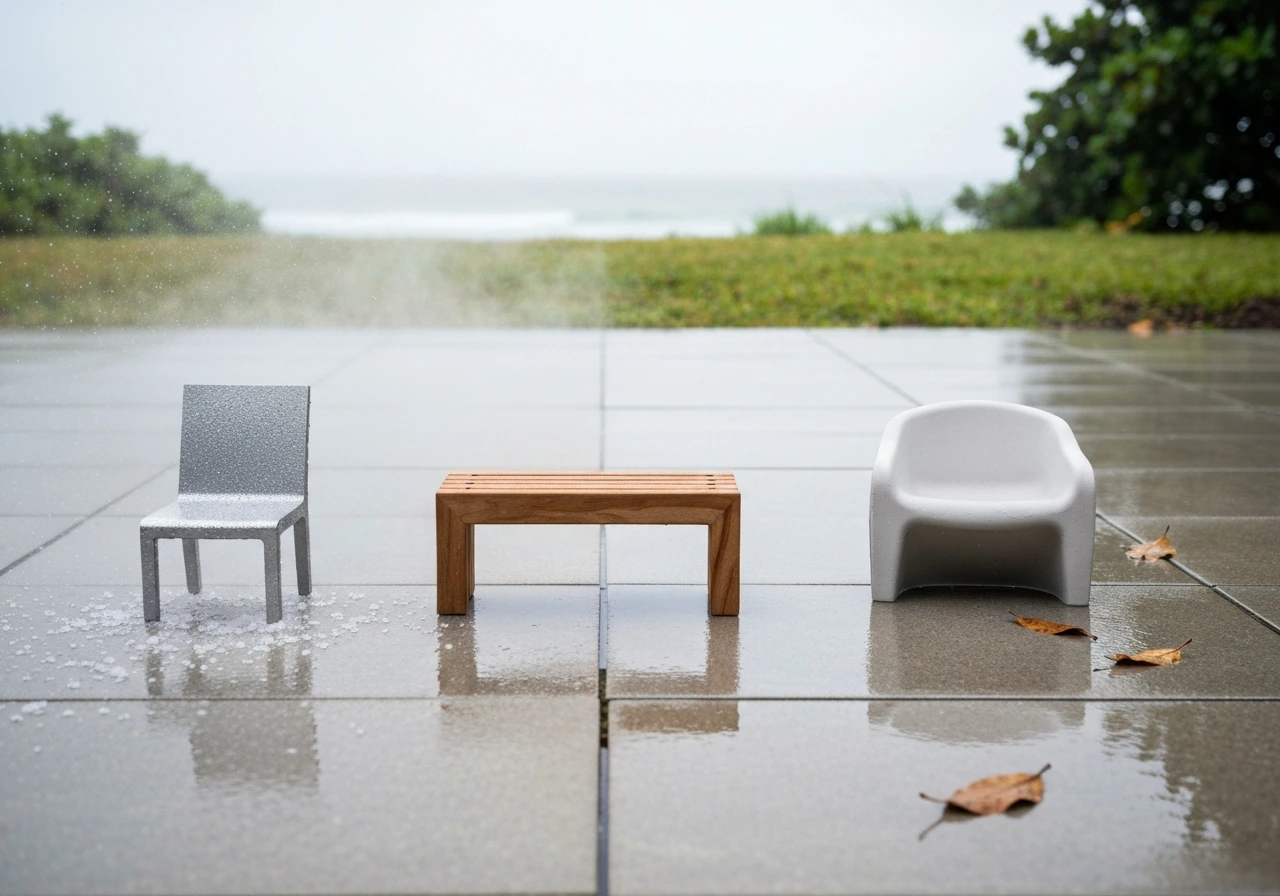
Material choice should follow your climate first, brand second. Here is how different conditions map to material performance.
| Climate / Condition | Best Material Choice | Watch Out For |
|---|---|---|
| Humid coastal / salt air | Cast aluminum, teak, POLYWOOD | Steel hardware corrosion, resin wicker frame rust, iron oxidation |
| Hot and dry / full sun | Powder-coated aluminum, POLYWOOD, solution-dyed cushions | UV degradation on cheap resin weaves, wood drying and cracking |
| Cold winters / freeze-thaw cycles | POLYWOOD, cast aluminum, covered teak | Wood joint failure, iron rust expansion, cushion mold if not stored |
| Rain-heavy / Pacific Northwest | Teak, POLYWOOD, aluminum with quality drainage | Mold on standard cushion foam, rattan weave moisture retention |
| Frequent storms / high winds | Heavy cast aluminum, concrete-base pieces, anchored sets | Lightweight aluminum scatter chairs, tall sling chairs, umbrella damage |
Cushion fabric is where most otherwise-good furniture fails in harsh conditions. The difference between solution-dyed acrylic (like Sunbrella, which carries its own fabric warranty) and cheaper polyester is dramatic over three to five years. Solution-dyed acrylic is rated for 1,500-plus hours of UV exposure in fade resistance testing. The dye is part of the fiber itself, not applied to the surface, so it cannot wash or fade off in the same way.
POLYWOOD uses quick-drying blended polyester fiber in their cushion fills with weather-resistant performance fabric, which is a practical middle ground. If you are buying from any brand and the cushion fabric is not specified as solution-dyed acrylic or high-quality olefin (which also has strong colorfastness and UV resistance), plan to replace the cushions within a few seasons or upgrade them immediately.
Comfort, size, and style: matching the furniture to your actual space
Even the most durable furniture is a bad purchase if it does not fit the space or how you actually use it. The most common sizing mistake is buying a dining set that is too large for the patio, leaving inadequate clearance around chairs for people to pull out and move around. If you are shopping by comfort first, also consider the patio furniture top rated options that match your chair and table size so movement is easy. A general rule is 36 inches of clearance on all sides of a dining table for comfortable traffic flow. For conversation sets, 18 to 24 inches between a sofa and coffee table is the working minimum.
Seat height and depth matter more outdoors than most people account for. Standard patio dining chairs sit at 17 to 19 inches, which works with most 28- to 30-inch tables. Deep-seating sectionals and lounge chairs typically have 20-plus-inch seat depths, which feel luxurious but can be uncomfortable for shorter adults who end up without back support. If multiple people with different body types use the furniture regularly, test ergonomics before you buy whenever possible, or buy from a brand with a realistic return policy.
Style fit is more personal, but a practical consideration is whether your furniture style will look dated in five years. Classic designs in neutral finishes (charcoal, weathered gray, natural teak) photograph well and age gracefully. Trend-driven pieces in bold colors or very specific aesthetic niches are harder to update around when your taste changes. If you are investing at the premium tier, lean toward timeless over trendy.
Sets vs. single pieces: how to build your outdoor space
Buying a matched set makes sense when you have a clear, defined space and want coordinated aesthetics. A dining set or conversation set from a single collection guarantees scale, finish, and material consistency. The tradeoff is flexibility: if you buy a six-piece set and later want to add a chaise or a different accent chair, matching finishes and weave styles across collections from even the same brand can be surprisingly difficult.
Buying single pieces gives you more flexibility and can let you mix premium investments where it matters (a high-quality sofa or dining table) with more affordable supporting pieces (side tables, accent chairs). This approach works well for upgrade paths: start with a solid, high-quality anchor piece from a top-tier brand, then add complementary pieces over time. A teak dining table from Gloster paired with more affordable aluminum chairs is a legitimate strategy that keeps total spend manageable without sacrificing the centerpiece durability.
If you are completely new to outdoor furniture and working with a limited budget, one well-made conversation set or dining set from a brand with a strong warranty beats an entire patio of lower-quality pieces. If you are shopping for patio top garden furniture in Fuengirola, start by matching the material to your coastal sun and salt air conditions, then verify the warranty and return policy for peace of mind.
POLYWOOD's sets are a sensible starting point: the warranty is extraordinary, the maintenance requirements are minimal, and you are not locked into an aesthetic that requires replacing everything if you want to upgrade one element. Consider that decision alongside what is covered in guides focused specifically on top 10 patio furniture brands and best patio furniture brands in Canada, where climate considerations can shift the calculus considerably. If you want a quick starting point, check guides that summarize the top 10 patio furniture brands by material and value.
If you want a quick way to compare options, a guide to the best patio furniture brands in Canada can help you narrow down choices based on your climate and maintenance preferences. If you want a quick starting point, check our guide to the top 10 patio furniture brands and compare them by material and climate.
Maintenance and protection: how to actually extend the life of good furniture
The Washington Post has noted it plainly: using appropriate covers and higher-quality materials are the two most reliable practices for furniture longevity. That is exactly right. Even the best teak or the most carefully powder-coated aluminum will degrade faster without basic protective care.
Aluminum care
Powder-coated aluminum needs almost no maintenance beyond occasional cleaning with mild soap and water. The one thing to stay ahead of is any chips or scratches in the finish, particularly in salt-air environments. Touch up chips with matching powder-coat paint or a quality furniture touch-up pen before oxidation can start underneath. Avoid abrasive cleaners that can scratch the finish and compromise the protective layer.
Teak and hardwood care
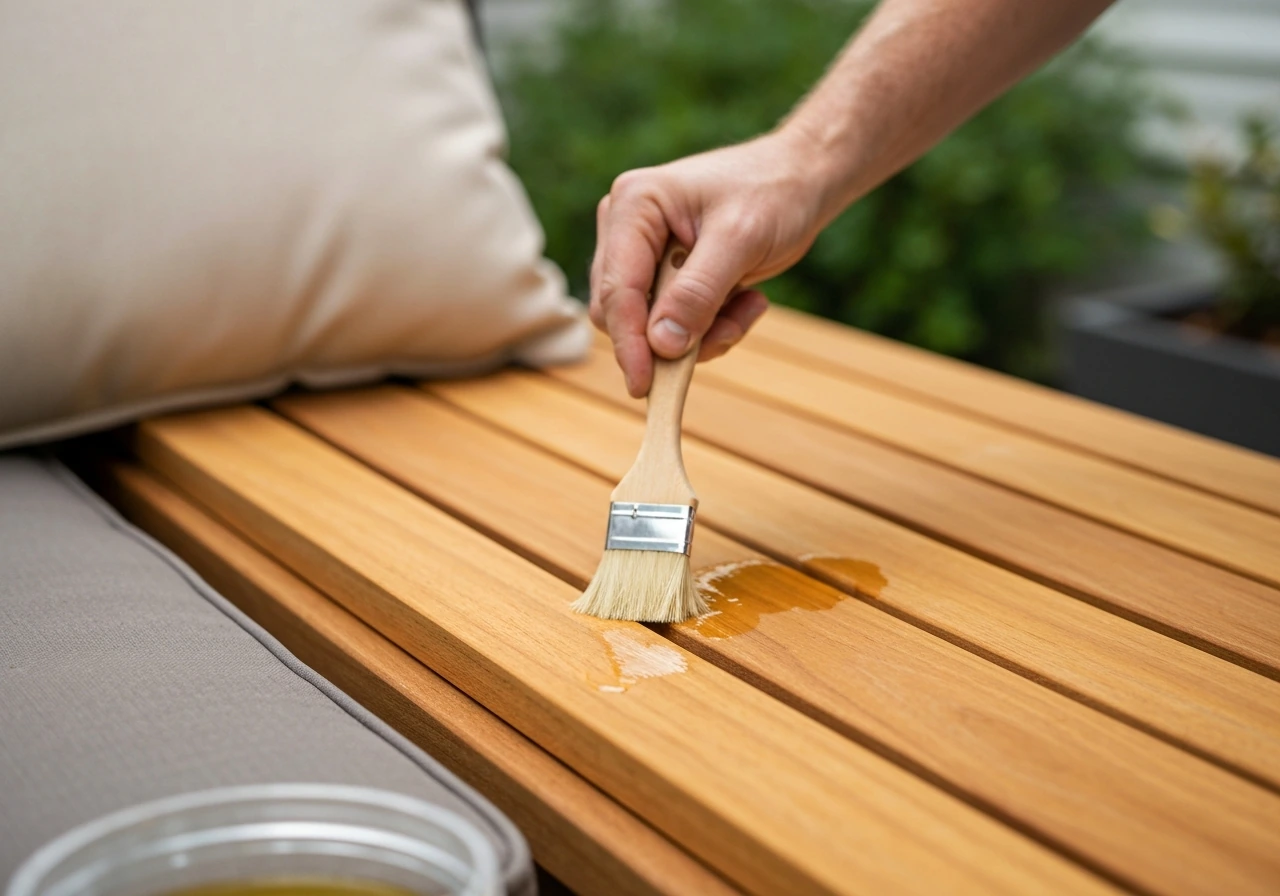
Teak that you want to keep its honey-golden color needs annual oiling. Use teak oil or teak sealer and clean the wood thoroughly before applying. If you prefer the silver-gray patina, teak can be left to weather naturally and only needs occasional cleaning. For other hardwoods like eucalyptus or acacia, sealing or oiling at least once per season is important to prevent drying and cracking. Inspect joints annually, particularly mortise-and-tenon connections, for any loosening. Most quality brands sell touch-up products specific to their finishes.
Cushion and fabric care
Cushions are the most maintenance-intensive component. Bring them indoors or into covered storage during extended rainy periods and at the end of the season. If your cushions use Sunbrella or another solution-dyed acrylic, spot cleaning with a mild bleach solution (per the manufacturer's guidelines) is safe and effective. Quick-drying foam inserts reduce mold risk but are not elimination-proof in sustained wet conditions. Store cushions in breathable bags rather than sealed plastic to prevent mildew. If you notice mold developing, address it immediately with appropriate fabric cleaner before it penetrates the fill.
Cast iron and steel care
Annual inspection for any rust spots is non-negotiable with iron. Sand any rust back to bare metal, prime with a rust-inhibiting primer, and repaint with outdoor-rated enamel. Doing this once a year takes an hour and extends the furniture life by decades. Skipping it for two or three seasons means the rust penetrates structurally. Quality furniture covers are worth the investment for iron and steel pieces left outdoors year-round.
POLYWOOD care
POLYWOOD genuinely requires minimal maintenance. Clean with soap and water or a diluted bleach solution for stubborn stains. The material does not need sealing, staining, or painting. Hardware connections, which use stainless steel or zinc-coated steel, should be checked periodically since POLYWOOD's own warranty notes that hardware rust/corrosion is excluded from coverage. A light application of a stainless hardware cleaner or protector on exposed fasteners is simple insurance.
Price ranges and total cost: what you are actually paying for
The most useful way to think about patio furniture cost is price per year of expected life, not sticker price. A $3,000 cast aluminum dining set that lasts 20 years with minimal maintenance costs $150 per year. A $900 set that needs replacing in five years costs $180 per year and also costs you the time and hassle of shopping again. That math is not hypothetical; it is the reality most people discover only after buying cheap once.
| Price Tier | Typical Range (per set) | What You Get | Expected Lifespan |
|---|---|---|---|
| Budget | $200–$700 | Steel or thin aluminum frames, polyester cushions, limited warranty | 3–6 years with care |
| Mid-range | $700–$2,500 | Quality aluminum or resin wicker, better cushion fabric, 5-year warranty typical | 8–15 years |
| Premium | $2,500–$6,000+ | Cast aluminum, teak, or high-end HDPE; solution-dyed cushions; 15–20-year warranty | 15–25+ years |
Within those tiers, a few specific things drive price. Frame construction (cast vs. extruded vs. welded), finishing process (multi-stage powder coat vs. single coat), cushion fill quality (quick-dry marine foam vs. standard polyester), and design complexity all layer into the final price. At the premium tier, you are also paying for brand warranties, customer service infrastructure, and the ability to get replacement parts years later. That last point is underrated: Brown Jordan and Summer Classics both maintain parts availability for their collections, which means a damaged arm or a worn sling can be replaced without buying a whole new set.
When you are evaluating specific brands across these tiers, it also helps to look at guides that focus on outdoor patio furniture ratings and best products in the patio furniture category more broadly, since hands-on testing and aggregated reviewer experiences can surface quality signals that brand pages alone will not tell you.
The price you pay for a top-rated brand is ultimately the price you pay for not having to think about your furniture for the next decade or two. If you are ready to shop, a reliable way to find the best patio furniture supplier is to compare warranty depth, return terms, and customer service responsiveness for the materials you plan to buy.
If you want a quick starting point, look for a best patio furniture brand recommendation that matches your material and your climate, then verify the warranty and return policy details. For a practical starting point, focus on the best patio furniture brand for your material, your climate, and how much maintenance you can realistically handle. If you are searching for patio furniture top rated options, focus on material, warranty depth, and return policies, not just star counts top-rated brand.
If you want to land on the best products patio furniture has to offer, use the material, warranty depth, and return policy checklist above to narrow your shortlist quickly. If you are shopping for the best products patio furniture, use this material and warranty approach to compare brands with confidence.
FAQ
How can I tell if a “top rated” brand’s cushions will actually hold up in sun and rain?
If you are comparing top rated patio furniture brands, check the product listing for the exact cushion fabric and fill, not just the brand name. “Solution-dyed acrylic” or “olefin” and marine-grade quick-dry foam are meaningful specs, while unspecified polyester usually means shorter color life and more frequent cushion replacement.
Can I replace parts like slings, cushions, or arm frames instead of buying a whole new set?
Yes, some brands let you replace worn parts without swapping the whole set, but the options vary by collection. Before buying, ask whether replacement slings, cushions, arms, or specific frame components are stocked for your model year, and whether the warranty covers parts shipping and labor.
Why do warranties differ even when two brands both claim long coverage periods?
Not necessarily. A brand can have an excellent warranty for aluminum while excluding corrosion of stainless or zinc-coated hardware (or limiting rust coverage by size and frequency). Confirm whether the warranty covers the thing most likely to fail first in your environment, such as fasteners, welds, or frame joints.
What should I look for on day one to avoid “looks great, fails later” furniture?
For aluminum, the practical “tell” is finish integrity at stress points: check for a durable powder coat over properly treated extrusion or tubing, and inspect the weld areas and cut ends for complete coating. For resin wicker, check whether the resin is UV-stabilized and whether the frame is rust-resistant aluminum rather than thin steel.
Which brands are safest for regions with freezing winters, and what’s the biggest failure risk?
When freeze-thaw is part of your climate, the main risk is finish damage that exposes metal, plus water trapping in crevices. Choose brands with warranty language that addresses freezing impact if you expect snowmelt intrusion, and plan to inspect and touch up chips right after winter season before corrosion spreads.
Should I commit to teak oiling, or will silver-gray weathering be “good enough” for warranty and maintenance?
For teak, the easiest decision lever is how you want it to look over time. If you want the honey-gold color, budget for annual oiling and be sure the warranty does not exclude oil-related stain or sealer coverage. If you accept the silver-gray patina, maintenance drops, but confirm the warranty wording about weathering beginning after exposure.
What return-policy details matter most for seating comfort and patio fit (not just satisfaction)?
Return policies can matter more than you think for fit and comfort because outdoor ergonomics is different from indoor. Look for a return window that covers bulky items, requires no “restocking” language, and gives you enough time after delivery to test clearance and seat depth.
Is it a mistake to buy a matched set if I might add a chair or chaise later?
Yes, “matched sets” reduce styling mismatch but can create a repair problem later if you want to add pieces. If you plan to expand, ask whether the brand can match finish color and weave timing years later, because even within the same brand, replacement lots can vary.
Do high-end brands still need covers, and how does cover quality affect warranty outcomes?
It depends on the climate and how often the furniture stays exposed. If you leave items uncovered year-round in humid or coastal areas, you should prioritize powder coat quality, touch-up availability, and warranty wording that addresses environmental damage. For iron or steel, covers are often the difference between surface rust and structural rust.
What is the best approach if I want “leave it out” furniture with the least upkeep?
If you need furniture that you can leave out with minimal effort, prioritize materials with proven dimensional stability and corrosion resistance, like high-density polyethylene (POLYWOOD) or well-finished cast aluminum. If you go with wood alternatives or other hardwoods, confirm the brand specifies recommended sealing/oiling frequency and whether the warranty requires maintenance to stay valid.
Is teak patio furniture good? Evidence-based verdict, lifespan, care, buying tips, comparisons, and eco guidance.
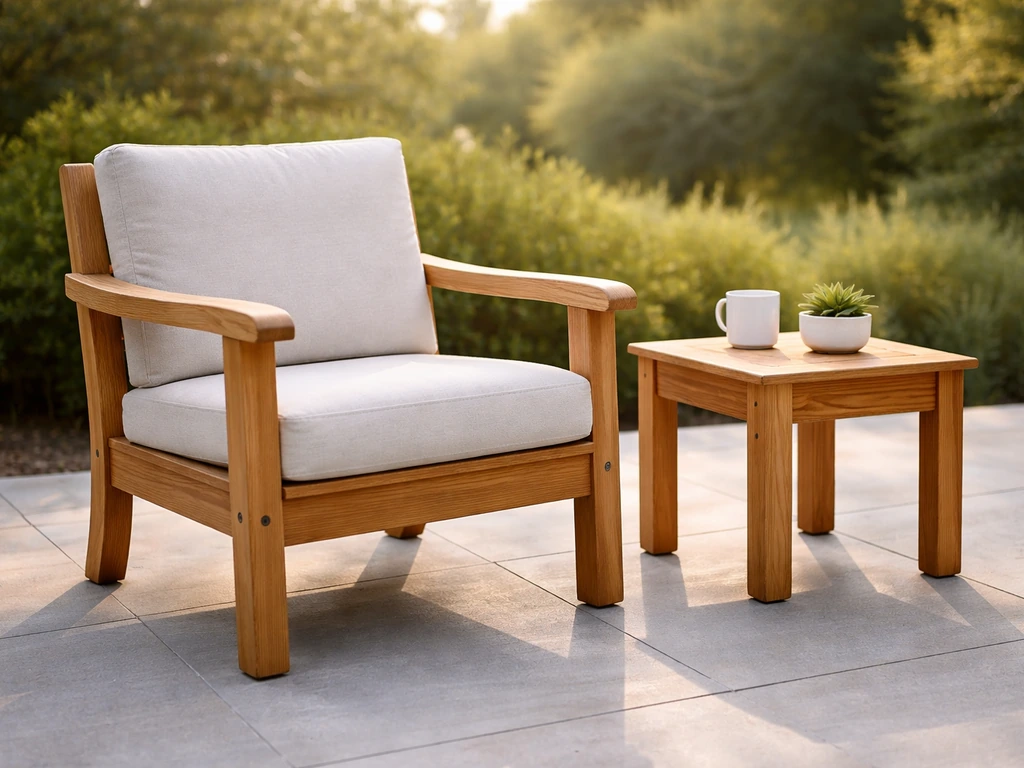
Teak patio lifespan ranges, factors that shorten or extend durability, and a maintenance plan to protect joints and fini
Checklist for buying high quality teak patio furniture, spot real construction, compare materials, and maintain it by cl