
Outdoor patio furniture ratings are only useful if you know what they're actually measuring. A 4.7-star score on a resin chair and a 4.7-star score on a teak dining set mean completely different things, because the materials, failure modes, and buyer expectations are nothing alike. What you really need is a way to decode those numbers, filter out the noise, and match ratings to your specific climate, budget, and how you actually use your patio. That's what this guide does.
Outdoor Patio Furniture Ratings: How to Choose Fast

Marcus Kellerman
28 Apr 2026
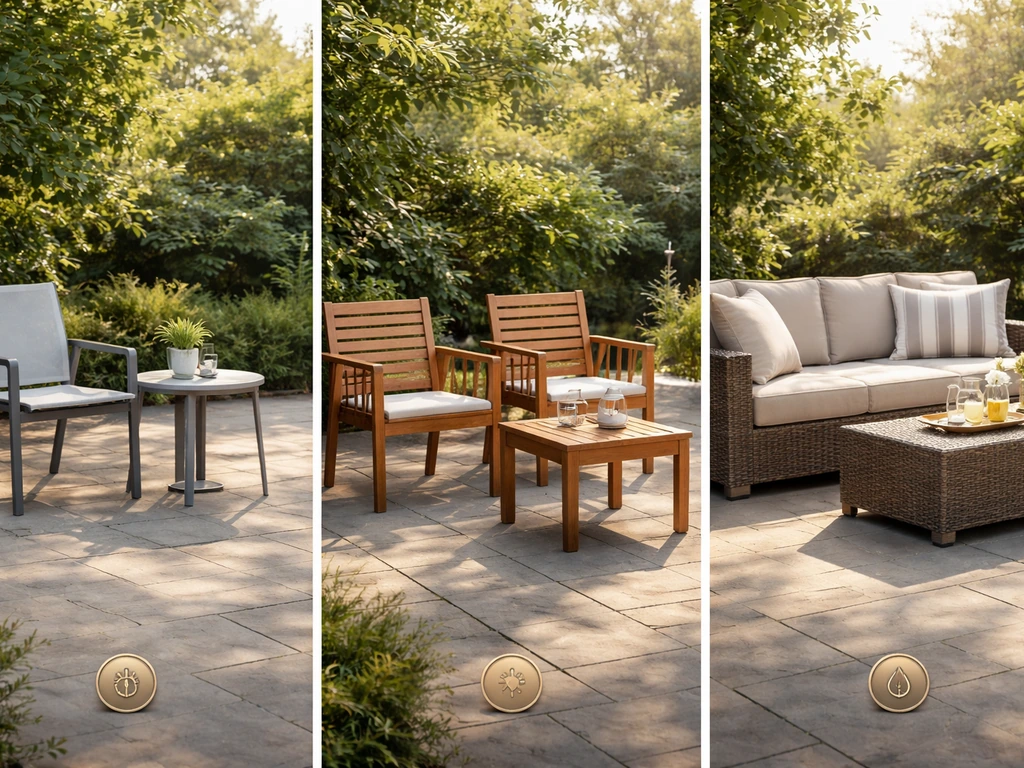
What patio furniture ratings really mean
Most rating systems blend together several performance dimensions into a single score, which makes them easy to scan but hard to trust without digging deeper. At their core, outdoor furniture ratings are meant to capture durability, weather resistance, comfort, stability, material quality, frame construction, cushion performance, and design, but not every rating system weighs these equally, and many don't separate them at all.
There are two main types of ratings you'll encounter. The first is expert or lab-tested evaluation, where a team physically stress-tests pieces, exposes them to UV, salt spray, and load cycles, then scores them against defined benchmarks. Consumer Reports uses this approach. The second is customer sentiment aggregated into a star average, which is what you see on Amazon, Wayfair, and Home Depot. The first type is more reliable but covers fewer products. The second covers almost everything but is vulnerable to manipulation, recency bias, and the fact that most buyers review their furniture within weeks of receiving it, long before durability problems show up.
When retailers like Home Depot label products as 'Highly Rated' and let you filter by 'Weather-Resistant,' they're combining customer star scores with attribute tags added by the manufacturer. That filter isn't verified by testing, it's a claim the brand made. Understanding this distinction matters a lot when you're comparing options online.
How to interpret reviews and rating scores (and spot red flags)

A headline star average is the least useful number on a product page. What matters more is the distribution of scores, the timing of reviews, and the language reviewers use. Here's how to read them properly.
Look at the histogram, not just the average
A product with 300 five-star reviews and 80 one-star reviews tells a different story than one with 380 four-star reviews. The bimodal pattern (lots of fives and lots of ones) often means the product performs great for some buyers and catastrophically for others, usually because of a specific durability or assembly failure. That's a risk flag, not a green light.
Watch for review timing spikes
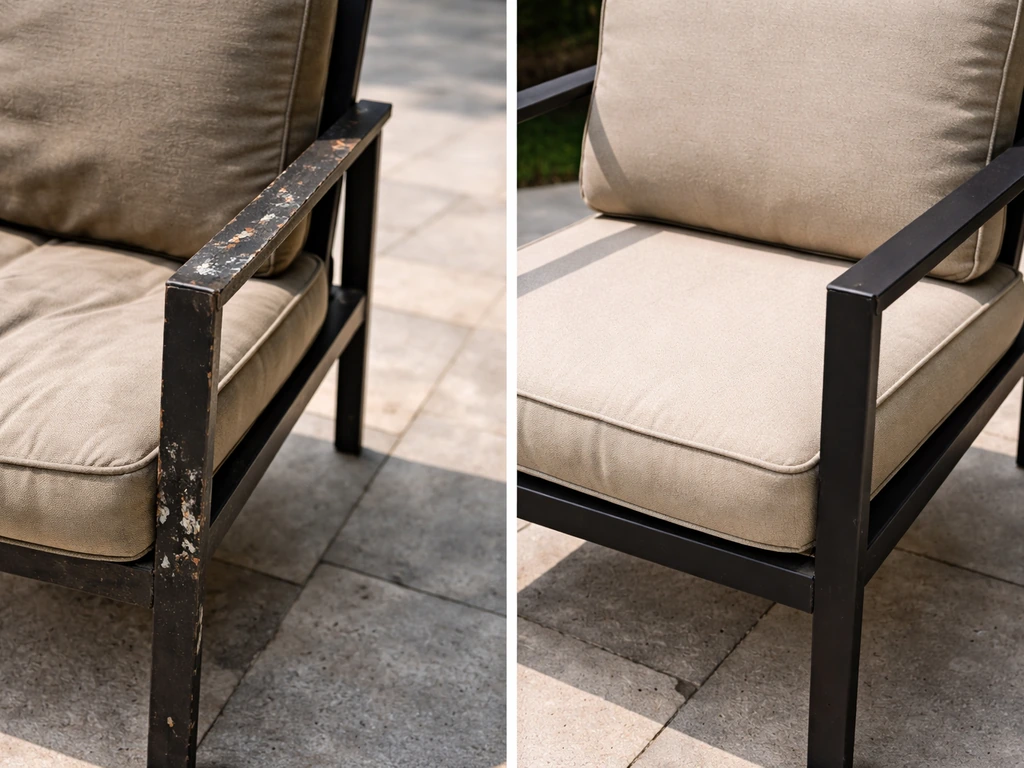
Amazon has publicly documented the problem of fake review brokers who solicit customers with money or free products to write positive reviews. Wayfair has run promotions where reviews submitted during a sweepstakes period are tied to a prize entry, which can inflate volume and skew sentiment. If a product has 200 reviews posted in a single month and almost nothing before or after, that's a red flag worth taking seriously. Genuine, organically collected reviews accumulate gradually over time.
Read the one- and two-star reviews first
Low-star reviews are where the real durability data lives. Look for patterns: do multiple reviewers mention rust after one season? Cushion foam that collapsed within a year? Welds that cracked under normal use? If three unrelated buyers describe the same failure, it's almost certainly real. Ignore one-off complaints about shipping damage or color being slightly different, those aren't furniture quality issues.
Verify the rating source
Wayfair uses a 'Verified' badge to signal review credibility. Home Depot publishes terms of use for its ratings and reviews system, which affects what actually shows up on product pages. Neither platform is immune to gaming, but platforms with explicit verification policies and review moderation rules are modestly more trustworthy than those without. If a product has a 4.9 average with thousands of reviews and almost no variation in language across the reviews, be skeptical, that pattern is consistent with coordinated fake review campaigns.
Material-specific rating breakdowns
Ratings mean different things depending on what the furniture is made of. A '4-star durability' rating on aluminum is not the same promise as a '4-star durability' rating on natural wicker. Here's how to think about each material.
| Material | Durability Strengths | Key Weaknesses | What to Look for in Ratings |
|---|---|---|---|
| Teak | Naturally dense, oil-rich grain; resists rot and insects | Expensive; needs periodic oiling to maintain color (grays naturally otherwise) | Ratings should mention grade (Grade A is best); look for reviews at 2+ years |
| Aluminum | Rust-proof, lightweight, holds powder coat well | Can dent; cheaper frames flex under load | Look for 'powder-coated' and gauge thickness; corrosion resistance is a genuine strength |
| Synthetic Wicker (Resin) | Most weather-durable wicker; won't mold, fade slowly | Can crack in extreme UV over many years; quality varies widely by resin type | Home Depot describes resin/PVC wicker as most durable; check UV exposure ratings |
| Natural Wicker / Rattan | Attractive, lightweight, comfortable | Deteriorates fast outdoors without protection; not suitable for rain or high humidity | Ratings that look good often reflect indoor or covered patio use only |
| Cast Iron | Extremely heavy and stable; classic look | Heavy to move; will rust if coating chips; not ideal for coastal salt air | Look for reviews mentioning rust timeline; ask about coating type |
| Wood (Other than Teak) | Attractive; repairable; many species available | Needs regular sealing, staining, or painting; prone to cracking in freeze-thaw cycles | Ratings drop steeply after year 2 without maintenance; check long-term reviews |
A note on teak vs. other hardwoods
Teak is rated highly across durability categories because its natural oils make it genuinely resistant to moisture, insects, and rot without the annual sealing that eucalyptus or shorea require. The trade-off is price. If a 'teak' product is rated very highly but priced dramatically lower than the market average, check whether it's actually plantation-grown Grade B or C teak (smaller cuts, more knots, less oil density) or a different wood marketed with the teak label.
Aluminum vs. steel
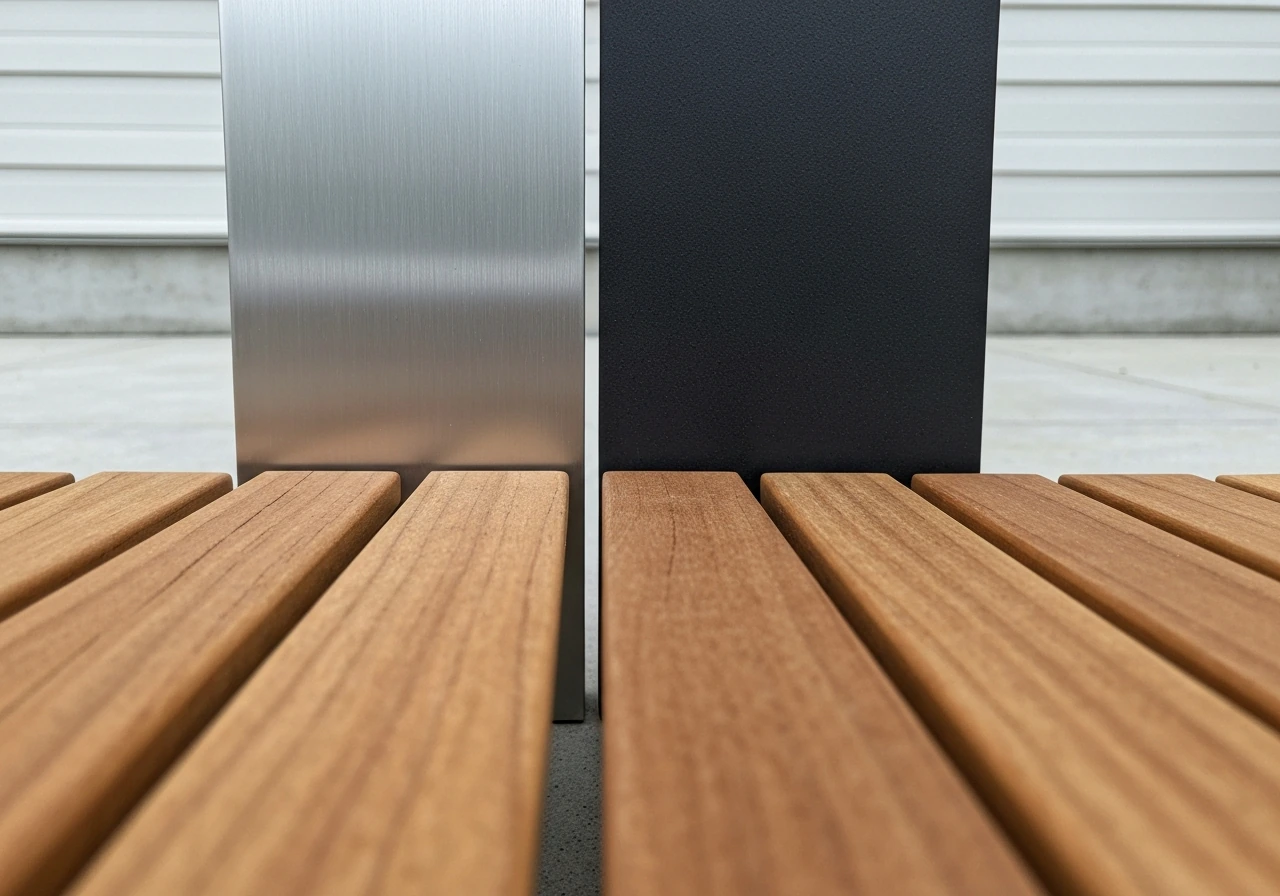
In ratings comparisons, aluminum consistently outperforms steel on corrosion resistance because aluminum doesn't rust. Steel frames with powder coating can be excellent, but once that coating chips, from impact, UV degradation, or salt air, rust begins. The ASTM B117 salt spray test is the industry-standard method for measuring how long a coating resists corrosion in saline conditions. If a manufacturer cites ASTM B117 results for their frame coating, that's a more meaningful claim than 'rust-resistant.' For coastal buyers especially, aluminum frames with powder coating rated to ASTM B117 specs are worth prioritizing.
Synthetic wicker vs. natural rattan
This is one of the most misread distinctions in outdoor furniture ratings. Natural rattan and natural wicker look beautiful but aren't made for exposed outdoor use, they swell, mold, and degrade quickly in humidity or rain. Synthetic wicker (resin over an aluminum frame) is a completely different product that handles weather well. Many rating systems don't distinguish between these two, so a product listed as 'wicker' with excellent ratings might be synthetic or natural, and that changes its durability ceiling dramatically. When in doubt, check whether the frame underneath is aluminum and whether the weave is labeled as 'all-weather resin.'
Choosing based on your climate and conditions
The single most important filter to apply to any rating is whether the reviewers share your climate. A set of wooden chairs rated 4.5 stars in Phoenix is a very different product than that same set rated 4.5 stars by buyers in Seattle. Here's how to match material ratings to conditions.
Hot and sunny climates
UV degradation is your biggest enemy. Prioritize materials and finishes rated against UV exposure, ideally ones citing ASTM G154 testing, which uses fluorescent UV lamp exposure to simulate accelerated weathering. Powder-coated aluminum, solution-dyed fabrics like Sunbrella, and high-density polyethylene (HDPE) resin products like POLYWOOD hold up best. Vague marketing language like 'UV resistant' without any testing reference is worth ignoring. Look for cushion fabrics specifically called out as solution-dyed or UV-stabilized, surface-dyed fabrics fade much faster.
Coastal and salt-air environments
Salt air accelerates corrosion on any unprotected metal and degrades certain finishes within a single season. Aluminum frames (not steel), high-quality powder coating rated to ASTM B117 salt spray standards, HDPE resin, and teak are the safest material choices here. If you want patio top garden furniture in Fuengirola, prioritize aluminum or teak plus weather-ready coatings and review evidence from similar coastal conditions patio top garden furniture Fuengirola. Cast iron rusts aggressively near the coast without heavy maintenance. Check reviews specifically mentioning 'beach house,' 'oceanfront,' or 'coastal', those buyers are living your conditions.
Wet and high-humidity climates
Mold, mildew, and wood rot are the primary failure modes. Synthetic wicker (resin over aluminum), HDPE resin furniture, and teak all handle persistent moisture well. Cushions become a real liability in humid climates unless they use quick-drying foam and mold/mildew-resistant fabric, POLYWOOD, for example, specifies that its cushion fill uses quick-drying blended polyester fiber and fabric resistant to salt, sun, mold, and mildew. That's the kind of detail that separates a high-humidity-appropriate cushion from one that'll smell within a season.
Freezing winters and freeze-thaw cycles
Porous materials (natural wood, concrete, ceramic) absorb moisture and then crack as water freezes and expands. HDPE resin explicitly resists this, POLYWOOD's warranty states the material will not splinter, chip, peel, or rot and will not suffer structural damage from insect infestation. Aluminum handles freeze-thaw cycles well. Wood requires either full winterization (sealing and covering) or indoor storage. If you're in a cold-winter region, look for ratings from buyers in similar zones and prioritize products with warranty language covering structural failure.
Comfort, construction, and cushion ratings, what to prioritize
Comfort ratings are the most subjective category in outdoor furniture reviews, but there are objective markers you can use to evaluate them more reliably.
Frame construction quality
For seating, structural integrity under load is the most important construction factor. Look for aluminum frame thickness (heavier gauge = more stable), welded versus bolted joints (welded is generally more durable), and any mention of BIFMA-standard testing, BIFMA standards define multiple test procedures for chair durability and structural performance, and a product that cites them has at least been evaluated against an industry benchmark. Ratings that mention 'wobble,' 'flex,' or 'feels cheap' in the reviews are telling you about frame gauge and joint quality, which are real construction failures.
Cushion foam and fill
Cushion comfort ratings drop significantly after the first season if the foam is low-density. High-density outdoor foam is more supportive and structure-preserving, with proper care, quality outdoor foam cushions can last roughly 4 to 7 years before significant compression sets in. Foam density can be tested to ASTM D3574 standards; some manufacturers publish this data. If a product listing doesn't mention foam density and the reviews start mentioning 'flattened out' or 'no longer comfortable' after year one, that's a low-density foam product.
Cushion fabric performance
Sunbrella is the most commonly cited benchmark for outdoor fabric performance, and it carries a genuine 10-year limited warranty covering fade, mold, and weather exposure for its shade and marine fabrics. If a cushion listing says 'Sunbrella fabric,' that's a real durability signal. If it says 'Sunbrella-like' or 'similar to Sunbrella,' verify the actual fabric spec. Home Depot's own buying guides call out UV and weather-resistant fabric as a key cushion consideration for uncovered patios, that's useful baseline advice, but the difference between a fabric that claims UV resistance and one that actually carries warranty-backed UV coverage is significant.
Value, warranty, and long-term durability: deciding what's worth it
Sticker price is the wrong way to evaluate outdoor furniture. Cost per year of usable life is a much better frame. A $400 resin set that lasts 3 years costs $133/year. A $1,200 teak set that lasts 15 years costs $80/year, and likely has resale or repair value at the end. Ratings that don't factor in expected lifespan are nearly useless for this kind of calculation.
How to read warranty language
Warranty length is one of the most honest signals of a manufacturer's confidence in their product. POLYWOOD backs its HDPE lumber with a 20-year limited residential warranty covering defects, structural damage, rot, and insect infestation, that's a manufacturer betting two decades on their material. Sunbrella's 10-year limited warranty on shade fabrics is another strong, time-bound signal. Keter offers a shorter warranty and structures claims as replacement of defective parts or a prorated refund for the remaining warranty life, useful to understand, because that prorated structure means the value of their warranty coverage declines each year you own the product.
When evaluating any furniture purchase, ask these three questions about the warranty: What exactly does it cover (frame only? fabric? all components?)? What voids it (improper storage, commercial use, power washing)? And what does the brand actually do when you file a claim, replace parts, replace the whole piece, or offer a depreciated refund?
Building a shortlist from ratings
- Filter by material first based on your climate. Don't consider natural wicker for uncovered rainy patios regardless of star rating.
- Set a minimum review count threshold (at least 50 genuine reviews) before trusting a score.
- Read the one- and two-star reviews for failure patterns, not individual complaints.
- Check review dates—look for reviews from buyers who've owned the product for at least one full outdoor season.
- Look for explicit warranty language in the product listing and verify it on the manufacturer's own site.
- Compare cost per year: price divided by expected lifespan based on material type and warranty coverage.
- Cross-check with expert-tested sources (Consumer Reports, independent reviews) where available.
When a higher price is actually worth it
Price premiums are worth paying when they come with: verified material quality (Grade A teak, solid aluminum frame with appropriate gauge, genuine Sunbrella fabric), manufacturer-backed long warranties with real replacement coverage, and a track record of positive reviews specifically from buyers in harsh conditions similar to yours. They're not worth paying for brand name alone, premium aesthetics on low-grade materials, or warranties that exclude nearly every real-world failure scenario.
How to maintain and repair to keep performance
Even the highest-rated furniture underperforms its rating if you don't maintain it correctly. Maintenance requirements vary dramatically by material, and understanding them upfront helps you choose products whose upkeep actually fits your lifestyle.
Maintenance by material
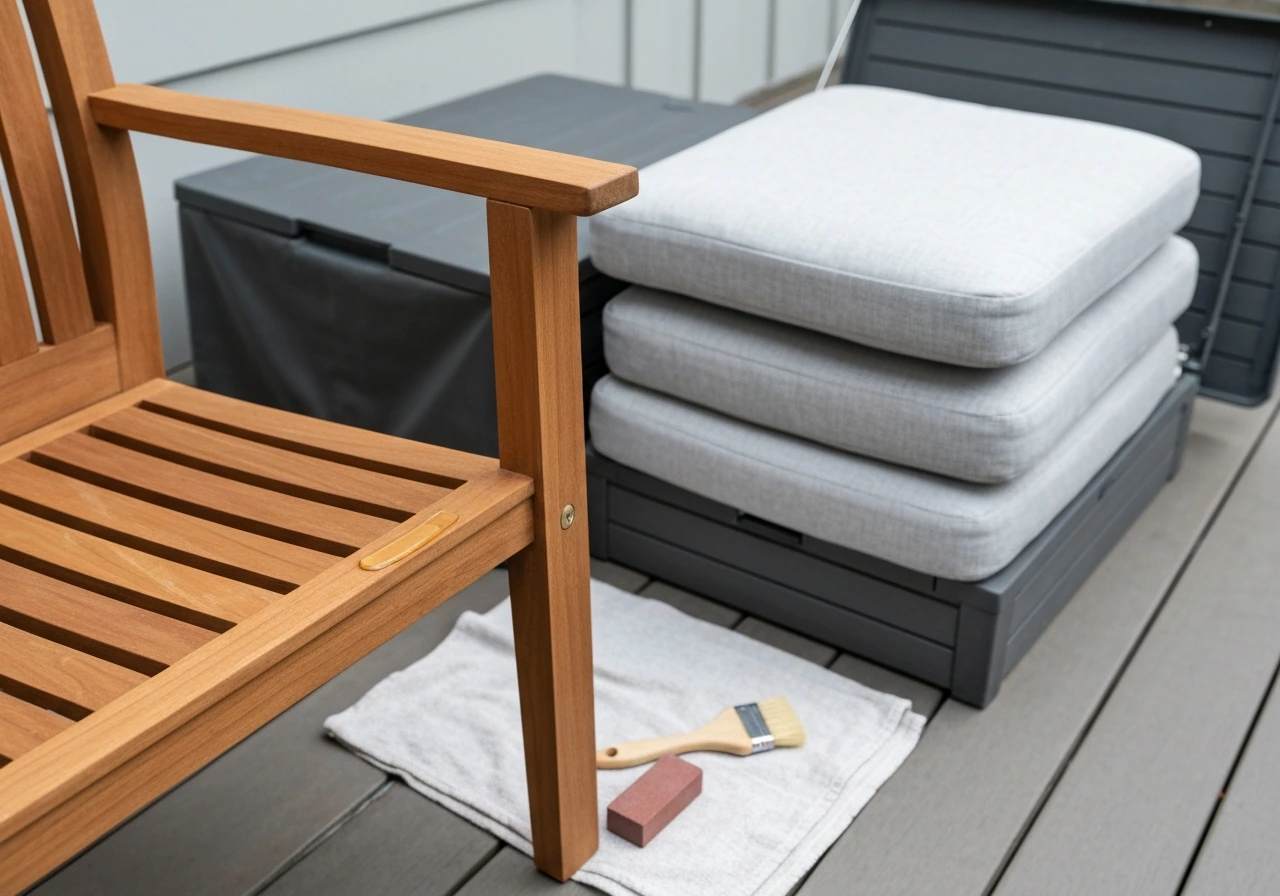
- Teak: Annual or biannual oiling to retain its golden color (if desired—it grays naturally and safely without oil). Sand lightly before oiling to open the grain. No painting or staining needed.
- Aluminum (powder-coated): Rinse with mild soap and water once or twice a season. Inspect for chips in the powder coat and touch up immediately—bare aluminum near a chip won't rust, but the exposed edge can still degrade.
- Synthetic wicker (resin over aluminum): Hose down and scrub with a soft brush. Avoid high-pressure washing on the weave. Store or cover in winter to prevent UV-driven brittleness over many seasons.
- Natural wicker/rattan: Wipe clean and keep covered or indoors. Not a practical outdoor material without a protected space.
- Cast iron: Repaint or re-coat chipped areas immediately. Store indoors or cover through wet seasons. Rust that has already developed needs to be sanded back to bare metal before recoating.
- Untreated wood: Seal, stain, or paint annually—or every two years at minimum. Cover or store through winter in freeze-thaw climates. Sand down and refinish any areas showing cracking or peeling before the season starts.
- HDPE resin (like POLYWOOD): Rinse with soap and water; no annual treatment needed. Keter notes resin doesn't require annual painting or treatment the way wood does, which is its core maintenance advantage.
Cushion maintenance to protect your investment
Cushions are the part of a rated set most likely to fail first. Bring them indoors or store them in a deck box when not in use, UV and moisture exposure are cumulative, and even high-quality Sunbrella fabric ages faster if it's left out in the elements year-round. Spot-clean fabric with mild soap and water; avoid bleach unless the manufacturer specifically approves it. Air-dry cushions flat after rain to prevent the foam core from retaining moisture, which leads to mildew even in mold-resistant foams.
Repairs that extend furniture life
Most frame failures, loose joints, cracked welds, surface rust, are repairable if caught early. Resin wicker strands that break can be rewoven with replacement material available from the manufacturer or third-party suppliers. Aluminum frames can be re-welded by a local metal shop. Wood furniture can almost always be refinished and structurally repaired as long as the joinery hasn't rotted through. Before buying, check whether the brand sells replacement parts, cushions, feet, brackets, because that repairability is what separates a 15-year piece from a 3-year throwaway.
Questions to ask before you buy
- Does the manufacturer sell replacement cushions, feet, and hardware individually?
- What specific fabric is used in the cushions, and does it carry its own warranty?
- What does the frame warranty cover, and what voids it?
- Has the product been tested to any ASTM or BIFMA standards (ASTM B117 for corrosion, ASTM G154 for UV, ASTM D3574 for cushion foam)?
- Are there reviews from buyers who've owned the piece for more than one full season in a climate similar to mine?
Getting the right outdoor patio furniture isn't about finding the highest star average, it's about knowing what those stars were earned for, and whether the conditions that produced them match your patio, your climate, and how long you expect the furniture to perform. Use ratings as a starting point, not a final answer, and you'll make a much smarter purchase. If you want to go one step further, aim to buy from the best patio furniture supplier for your region and material preferences so you get better selection and support. If you're comparing options across styles and budgets, focusing on the <a data-article-id="CA97C854-B4A0-4D28-A90D-A1BD45A25726">top rated patio furniture brands</a> can help you shortlist products with strong performance records. When you shortlist the top 10 patio furniture brands, use the rating-source and review-timing checks in this guide so you can spot inflated averages and focus on long-term performance. If you want patio furniture top rated options, focus on ratings tied to durability and weather resistance for your specific conditions, not just the star count. A good way to narrow your search is to look for the best patio furniture brand that consistently delivers durable, weather-ready materials for your conditions. If you're shopping in Canada, you can also use these criteria to compare the best patio furniture brands Canada has available.
FAQ
How can I tell if a “4.8-star” outdoor patio furniture rating is mostly durability, comfort, or style?
Check whether the site shows category ratings or review bullets that repeat the same themes. If most high mentions are about looks or “looks great on my porch” with few references to rust, wobble, fading, or cushion compression, the score is likely being driven by aesthetics and early impressions rather than long-term performance.
Is it better to buy based on the overall star average, or should I focus on the lowest ratings for outdoor patio furniture ratings?
Focus on the one-star and two-star comments more than the overall average. Outdoor failures often surface in the first seasonal cycle, so repeated mentions of “weld cracked,” “rust after rain,” “mold smell,” or “foam flattened after a year” are more predictive than how many reviewers gave four or five stars immediately after setup.
What review timing pattern should make me suspicious in outdoor patio furniture ratings?
Be wary if a large share of reviews arrived during a short promotional window and then stopped abruptly, or if nearly all negative reviews are clustered in the first few weeks while later reviews are uniformly positive. Authentic durability narratives usually spread across months and seasons, not just an immediate delivery honeymoon period.
When retailers show “Verified” badges or “weather-resistant” filters, how do I verify what’s actually tested?
Treat attribute filters as marketing unless the listing includes test references or warranty language tied to that claim. A practical check is whether low-star reviews mention the same weather issue the filter claims to prevent, such as fading, cracking, rust, or mold within a realistic timeframe.
How do I compare outdoor patio furniture ratings between resin, aluminum, steel, and wood without mixing apples and oranges?
Compare like-for-like failure modes. Resin and HDPE are mainly about UV and moisture stability, aluminum is mainly about coating durability, steel is about coating chip-and-rust risk, and wood is about rot resistance versus maintenance. If the rating site does not separate these dimensions, use low-star text patterns to map the likely material failure to your conditions.
Should I trust ASTM test claims (like salt spray or UV testing) when evaluating outdoor patio furniture ratings?
Yes, but verify specificity. Look for whether the manufacturer cites a recognized test method and whether the rating claim is about the actual component (frame coating, fabric finish, cushion fabric) rather than vague “resistant” language. If the claim is about the brand in general but the product details omit the test reference, give it less weight.
What’s a good way to estimate “cost per year” from outdoor patio furniture ratings and review expectations?
Use the warranty length and review timing to form a realistic usable-life estimate. For example, a warranty that covers structural defects longer than the average review lifespan usually signals the brand expects real durability, which makes the cost-per-year calculation more meaningful than sticker price.
How can I tell if cushion comfort ratings are hiding low durability?
Look for “flattened,” “bottoming out,” “no longer supportive,” or “foam compressed after winter storage mistakes” in the timeline. Comfort scores can stay high early if the foam feels good on day one, then drop later when compression sets in, so the phrasing in 9 to 24 month reviews matters more than the star score.
What outdoor patio furniture ratings details matter most for coastal or high-humidity climates?
Prioritize reviews that mention “oceanfront,” “beach house,” “salt air,” “salt spray,” or “humid smell,” and check whether the product uses aluminum or teak (not unprotected steel). For high humidity, pay special attention to cushion foam and fabric notes about quick drying and mildew or mold resistance, not just “water resistant” claims.
Is it worth buying “natural wicker” furniture based on outdoor patio furniture ratings?
Only if your use pattern matches indoor or covered conditions. Natural wicker and rattan typically absorb moisture and degrade faster under rain and humidity, so even a good star average may reflect sheltered patios. Confirm whether the listing distinguishes natural wicker from synthetic resin wicker with an aluminum frame before relying on ratings.
How do I use outdoor patio furniture ratings to decide whether a product is repairable?
Look for evidence of replacement parts availability (cushions, feet, brackets, chair components) and whether reviews mention easy replacement after failures. A product can have a great star average but still be hard to repair if replacement parts are not sold, so review language about “couldn’t get parts” is an important caution.
What warranty questions should I ask to interpret outdoor patio furniture ratings correctly?
Confirm whether the warranty covers the specific part that reviewers complain about (frame, cushions, fabric, welds) and whether it excludes normal outdoor exposure. Also note the claim process, does it replace components, send parts, or require shipping the entire piece, because the hassle level can change your real cost and ownership experience.
Next Articles
Best Patio Furniture Brand: How to Choose and Top Picks
Learn how to pick the best patio furniture brand, compare top manufacturers, materials, durability, value, and maintenan
Top Rated Patio Furniture Brands by Material and Climate
Compare top rated patio furniture brands by material and climate, with durability, warranty, and buying tips for lasting
Top 10 Patio Furniture Brands: Best Picks by Material and Climate
Ranked top 10 patio furniture brands by material and climate, with what to verify, price value, and care tips.