
The truly top-rated patio furniture for most people comes down to powder-coated aluminum frames, Grade A teak, or all-weather resin wicker built on an aluminum frame. Those three materials consistently outperform the rest in real-world durability tests, owner reviews, and long-term cost comparisons. Everything else depends on your climate, your patio layout, and how much upkeep you're willing to do. This guide walks you through all of it so you can shortlist the right set in under an hour. If you're still comparing options, these top rated patio furniture brands are a good starting point before you confirm materials, warranties, and durability signals. This guide walks you through all of it so you can shortlist the right set in under an hour top 10 patio furniture brands.
Top Rated Patio Furniture: How to Choose Best Options

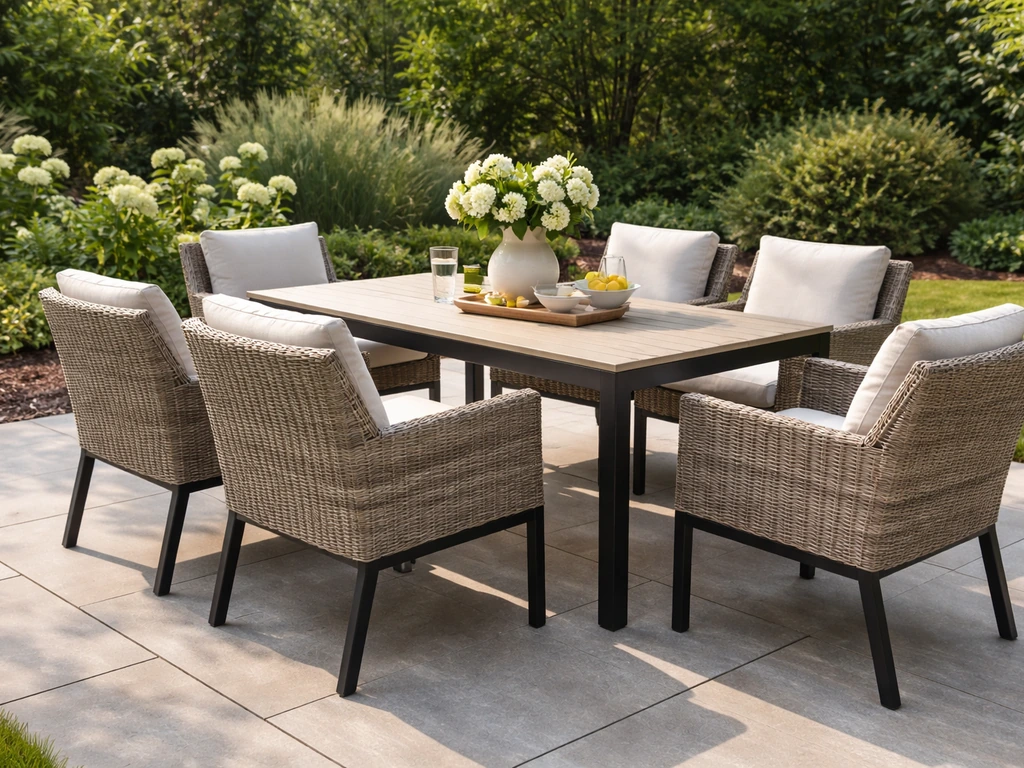
What 'top-rated' should actually mean to you
Most online ratings tell you whether a product arrived undamaged and looked good in the unboxing photos. They rarely tell you how a chair holds up after two summers of UV exposure, three winters of freeze-thaw cycles, or a season of coastal salt air. A sofa with 4.7 stars and 2,000 reviews could still be a terrible long-term investment if those reviews are six months old and the frame is thin-wall steel with a cheap spray finish.
Consumer Reports advises shoppers to physically inspect or research specific durability signals: smooth, even welds at all frame joints; rustproof hardware (stainless or marine-grade); and a proper powder-coated finish rather than spray paint. They also specifically flag that traditional wicker made from natural fibers on a metal frame is not designed for outdoor use at all, regardless of how it's marketed. These are the details that separate genuinely durable furniture from furniture that photographs well.
When you see 'top-rated' on a retailer page, it usually means it sells well or has high short-term satisfaction scores. Wayfair's Verified program, for example, involves a 10-point inspection and some lab checks on shortlisted items, which is better than nothing, but it's not a multi-year corrosion or weld-failure test. Treat retailer quality badges as a starting filter, not a final verdict. If you want to compare brands responsibly, use outdoor patio furniture ratings as a starting point, then verify the materials, warranty, and real-world durability signals. The real durability signal comes from warranty length, frame material, finish type, and what independent reviewers say after year two or three of real use.
- Look for frame warranties of at least 3 years for aluminum and wicker, 5+ years for teak or cast iron
- Check that welds are smooth and fully closed, not porous or spattered
- Confirm hardware is stainless steel or marine-grade aluminum, not zinc-plated carbon steel
- Verify finish is powder-coated (electrostatically bonded) rather than spray-painted
- Read the 2- and 3-star reviews specifically, since those tend to surface real durability complaints
- Avoid any listing where the seller can't clearly name the frame material or finish type
Measure your space and pick the right layout first

Buying top-rated furniture that doesn't fit your patio is one of the most common and expensive mistakes homeowners make. Before you look at a single product listing, measure your usable outdoor space and note where doors, walkways, and any fixed features like fire pits or built-in planters sit. A common rule of thumb: leave at least 36 inches of clearance around dining tables for chair pull-out, and at least 18 inches between a sofa and a coffee table for comfortable leg room.
For small patios under 150 square feet, a bistro set (two chairs plus a small table) or a compact loveseat with a side table typically works better than a full sectional. Medium patios in the 150 to 400 square foot range can usually support a four- to six-piece dining set or a three-piece conversation grouping. Large patios over 400 square feet can handle a sectional plus a dining zone, but anchor both areas with outdoor rugs so the space doesn't feel scattered.
| Patio Size | Recommended Layout | Furniture Type to Prioritize |
|---|---|---|
| Under 150 sq ft | Bistro set or loveseat + side table | Folding or stackable chairs, lightweight frames |
| 150–400 sq ft | 4–6 piece dining OR 3-piece conversation set | Fixed dining table, armchairs, small sofa |
| 400–700 sq ft | Dining zone + lounge zone | Full dining set, 3-seat sofa, coffee table, side tables |
| 700+ sq ft | Multiple zones (dining, lounge, bar/grill area) | Sectional, dining set, bar stools, weather-resistant storage |
Also think about how you actually use the space. If you host dinner parties, prioritize a dining set with extension capability. If you mostly relax outdoors with morning coffee or evening drinks, a deep-seat conversation set with plush cushions matters more than a dining table. Getting this right before you shop means you only evaluate furniture that genuinely fits your lifestyle, which makes the material and brand decisions much easier.
Material showdown: which ones actually hold up
Every major patio furniture material has a real-world performance ceiling and floor. Here's an honest breakdown of how each performs over time, with no marketing gloss.
Aluminum
Powder-coated aluminum is the most consistently high-performing patio furniture frame material available at almost every price point. If you’re shopping for patio top garden furniture in Fuengirola, prioritize aluminum frames and weather-ready finishes that handle coastal sun and salt air patio furniture. It doesn't rust, it's lightweight enough to move easily, it holds a finish well, and quality pieces carry 5- to 10-year frame warranties. Cast aluminum (poured into molds) is denser and more rigid than extruded aluminum (tube frames) and better resists denting. The weakness: thin-wall extruded aluminum can flex noticeably in chairs and sofas, so check wall thickness if you can. For most climates and most budgets, aluminum is the safest default choice.
Teak
Grade A teak is the gold standard for wood outdoor furniture. Its natural silica and oil content make it highly resistant to rot, warping, and insect damage without any treatment. Left untreated, it weathers to a silver-gray patina over two to three seasons. Treated with teak oil annually, it holds its honey-brown color. A quality teak dining set bought for $1,500 to $3,000 can realistically last 25 to 30 years with basic maintenance, making the cost-per-year one of the best of any material. The caution: Grade B and C teak uses wood from younger trees with more sapwood, which doesn't carry the same natural oils and degrades much faster. Always confirm Grade A certification before buying.
Wicker and rattan
This is where the most confusion lives. Natural rattan and wicker are not outdoor materials, full stop. blank" rel="noopener noreferrer">Consumer Reports is explicit on this: traditional wicker made from natural fibers will crack, split, and deteriorate quickly when exposed to rain and UV light. What you want is all-weather resin wicker, which is synthetic polyethylene fiber woven over a powder-coated aluminum or steel frame. High-quality resin wicker (look for HDPE or virgin resin fiber rather than recycled) resists UV fading, won't absorb moisture, and bounces back from rain without cracking. The frame underneath matters just as much as the weave, so confirm it's aluminum, not steel, if you're in a coastal or high-humidity environment. In a Reddit discussion, people also warn that furniture marketed as “aluminum” may actually use steel under a coating, so you should check hardware and the frame for true corrosion resistance blank" rel="noopener noreferrer">confirm it's aluminum, not steel.
Cast iron
Cast iron patio furniture is extremely durable and handles weight and wind well because of its mass, but it comes with two real trade-offs. First, it's heavy, so moving it indoors for winter or rearranging your layout is genuinely difficult. Second, any chip or scratch in the finish exposes bare iron to moisture and rust forms quickly. If you buy cast iron, you need to touch up nicks with rust-inhibiting paint every season and store it covered or indoors during wet winters. For a covered porch or dry climate where the furniture stays in one place year-round, cast iron is a legitimate long-term choice. For anywhere with wet winters or salt air, it's a maintenance burden.
Wood alternatives: eucalyptus and teak comparisons
FSC-certified eucalyptus is a popular teak alternative at a lower price point, typically 30 to 50 percent less than comparable Grade A teak. It's a legitimate hardwood with decent natural oil content and good weather resistance, but it requires more frequent oiling (two to three times per year vs. once for teak) and has a shorter expected lifespan of around 10 to 15 years with good care versus 25 to 30 for teak. For a buyer on a tighter budget who's willing to do the maintenance, eucalyptus is a solid choice. For a buyer who wants to buy once and largely forget about it, teak justifies the premium.
| Material | Rust/Rot Resistance | Weight | Maintenance Level | Expected Lifespan | Best For |
|---|---|---|---|---|---|
| Powder-coated aluminum | Excellent | Light | Low | 15–25 years | Most climates, most budgets |
| Grade A teak | Excellent | Heavy | Low–Medium | 25–30 years | Premium buyers, all climates |
| All-weather resin wicker (on aluminum) | Very Good | Medium | Low | 10–15 years | Covered patios, dry/moderate climates |
| Cast iron | Poor without upkeep | Very Heavy | High | 20+ years (with diligent care) | Covered porches, dry climates |
| Eucalyptus | Good | Heavy | Medium–High | 10–15 years | Budget-conscious buyers, moderate climates |
| Natural wicker/rattan | Poor | Light | Not viable outdoors | 1–3 years outdoors | Indoor/covered screened porches only |
Matching your furniture to your climate
Climate is probably the single most important filter when choosing patio furniture, and most buying guides underweight it. The material that's genuinely 'top-rated' in coastal Florida is not the same as what holds up best in coastal Maine or dry Phoenix.
Coastal and salt-air environments
Salt air accelerates corrosion on any metal with even a minor finish failure. In coastal zones within a mile or two of the ocean, marine-grade 316 stainless steel hardware is the minimum spec for fasteners on any furniture. For frames, cast or extruded aluminum with a thick powder coat is ideal because aluminum doesn't rust. Avoid steel frames entirely in coastal environments, even galvanized ones, unless the furniture is fully covered year-round. Teak and eucalyptus perform well in coastal conditions from a wood perspective. Resin wicker on an aluminum frame is also a good coastal choice. Cast iron is a poor fit because salt air accelerates rust aggressively on any exposed metal.
Cold and wet climates (freezing winters)
Freeze-thaw cycles are brutal on moisture-absorbing materials. Cushion foam that gets wet and then freezes can crack and degrade rapidly. Fabric with poor UV and moisture resistance will mildew and break down within a season or two. For cold-climate buyers, the priorities are: furniture frames that don't need to be moved indoors (heavy teak or aluminum benches, for example), cushions with Sunbrella or equivalent solution-dyed acrylic fabric that resists mildew and dries quickly, and storage for cushions during winter. Sunbrella says its performance fabrics are made of 100% solution-dyed acrylic and are inherently fade resistant and UV protective, and are designed to resist mold and mildew cushions with Sunbrella or equivalent solution-dyed acrylic fabric that resists mildew and dries quickly. If you don't have a storage solution, look for furniture with Quick Dry foam inserts rather than standard polyester fill. Resin wicker holds up fine through cold winters as long as cushions are stored, since the wicker itself doesn't absorb water.
Hot, dry, and high-UV climates
In desert climates or anywhere with intense year-round sun, UV degradation is the main enemy. Resin wicker made from lower-grade recycled HDPE fades and becomes brittle much faster than virgin-resin wicker. Fabric fades rapidly unless it's solution-dyed (color locked into the fiber rather than applied on top). Powder-coated aluminum can fade in intense sun if the coating is thin, so look for furniture with at least 80 microns of coating thickness or a UV-stable topcoat spec. Teak handles UV very well and simply grays out rather than degrading structurally.
Covered vs. uncovered patios
If your patio is fully covered (pergola, roof overhang, or screened enclosure), you have much more flexibility on materials. Natural rattan and wicker are still not advisable for covered porches that get any wind-driven rain, but you can comfortably use materials like painted steel, which would require more maintenance in a fully exposed location. Uncovered patios demand stricter material standards: aluminum or teak frames, solution-dyed acrylic fabric on cushions, and waterproof or quick-dry cushion fills. Any furniture left fully exposed year-round also benefits from high-quality UV-resistant furniture covers during off-season months, regardless of the material.
How to evaluate reviews, brands, and warranties before buying
Sorting by 'highest rated' on any major retailer gives you a popularity ranking dressed up as a quality ranking. A good way to narrow your search is to compare the best patio furniture brand options that publish clear specs, warranties, and real durability evidence. Here's a more reliable evaluation process. If you want the best patio furniture brand, focus on companies that clearly publish material specs and back them with longer, more dependable warranties. To find the best patio furniture supplier for your needs, prioritize companies that publish clear material specs and back them with dependable warranties. If you want the best patio furniture brands in Canada, start by checking whether each company clearly publishes material specs and offers strong warranties.
- Read the 2- and 3-star reviews first. One-star reviews often cover shipping damage; 5-star reviews are often left immediately after unboxing. Two and three-star reviews more frequently describe actual durability failures like paint chipping, welds cracking, or cushions losing shape after one season.
- Check the review date distribution. If 80% of the reviews are from the past six months, you have no idea how the furniture holds up after year two. Look for products with a meaningful number of reviews that are 12 to 24 months old.
- Confirm the warranty terms in writing before purchasing. A 1-year warranty on a patio set priced over $1,000 is a red flag. Quality brands offer 3 to 5 years on frames minimum, with some offering lifetime frame warranties on cast aluminum.
- Verify the return policy covers structural defects separately from cosmetic issues. Some retailers allow returns only within 30 days for any reason but will cover structural warranty claims for longer periods. Know which applies before you commit.
- Look up the brand independently rather than relying only on retailer listings. Established outdoor furniture brands with a manufacturing history, published material specifications, and identifiable customer service contacts are lower-risk purchases than white-label or drop-shipped products.
- Ask about replacement parts. Cushion replacement availability and hardware repair kits are a signal of brand commitment to longevity. If a brand doesn't sell replacement cushions separately, that's a short-term product lifecycle by design.
When researching specific brands, look for ones that publish clear material specs (frame wall thickness, finish micron rating, fiber denier for wicker, or teak grade certification) rather than relying on vague claims like 'commercial-grade' or 'professional quality.' Brands worth taking seriously have this information readily available either in the product listing or by request from customer service. If a brand can't or won't confirm the material grade, that tells you something important.
Maintenance and repairs that protect your investment
Even the best patio furniture needs basic upkeep. The good news is that maintenance for most top-rated materials is straightforward and infrequent if you keep up with it.
Aluminum
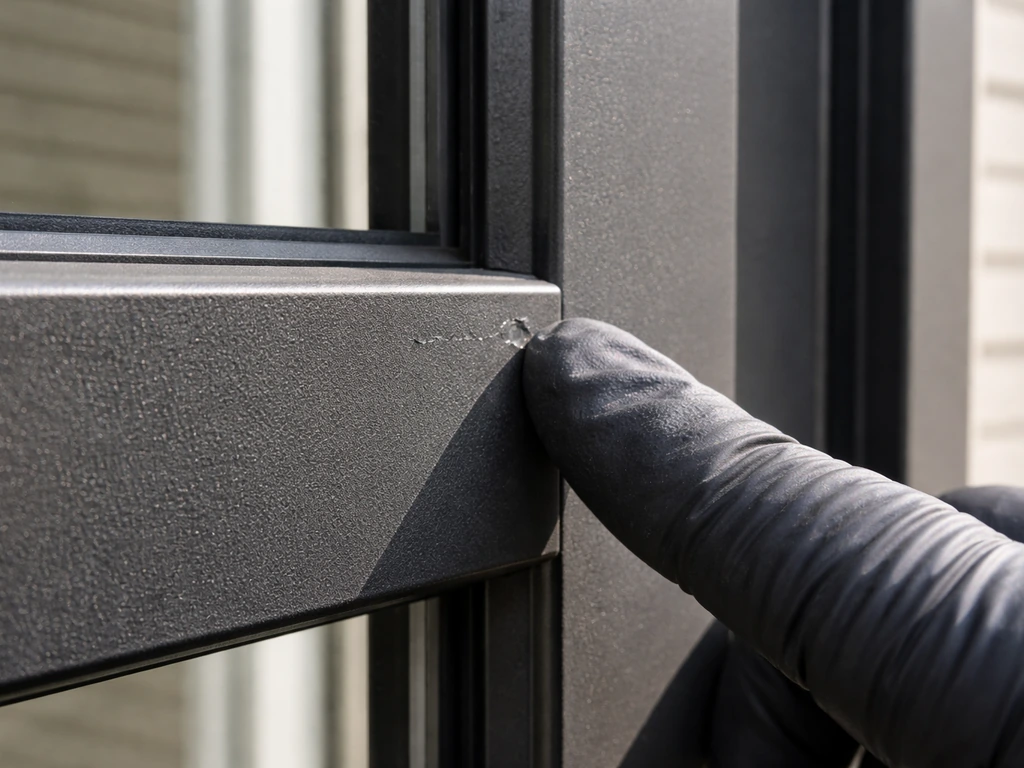
Clean annually with mild soap and water. Inspect the powder coat for chips or scratches after each winter. If you catch a chip early, touch it up with matching powder-coat-compatible touch-up paint to prevent oxidation underneath. Oxidation on aluminum doesn't rust the same way steel does, but it creates a chalky white residue that weakens the finish bond over time. A quick coat of car wax after cleaning can extend the finish life significantly.
Teak
If you want to maintain the golden-brown color, clean with a teak cleaner once or twice a year and apply teak oil or a sealant rated for outdoor wood afterward. If you're happy with the natural gray weathering, you can skip the oil entirely and simply wash it down with a mild soap solution when it looks dirty. Never use a pressure washer on teak at high pressure because it opens the wood grain and accelerates drying and cracking. Sand lightly with 220-grit sandpaper if the surface develops rough patches, then re-oil.
Resin wicker
Rinse with a garden hose and scrub with a soft brush and mild soap solution annually or after heavy pollen or debris accumulation. Avoid pressure washing directly on the weave, as sustained high pressure can loosen the fiber at the ends. If individual strands start to unravel at the edges, you can re-tuck them with a flat tool and a small amount of outdoor-rated adhesive. Most quality resin wicker can be re-woven professionally if a section is significantly damaged, though that repair makes the most sense on higher-end pieces.
Cast iron
Inspect the entire surface at the start of each season for rust spots or paint chips. Sand any rust back to bare metal with 120-grit sandpaper, apply a rust-inhibiting primer, then a matching color topcoat. Don't skip the primer step or the rust will return within one season. Keep cast iron covered during wet weather whenever possible, and always store it indoors or under a fitted waterproof cover during winter in freeze-thaw climates.
Cushions and fabric
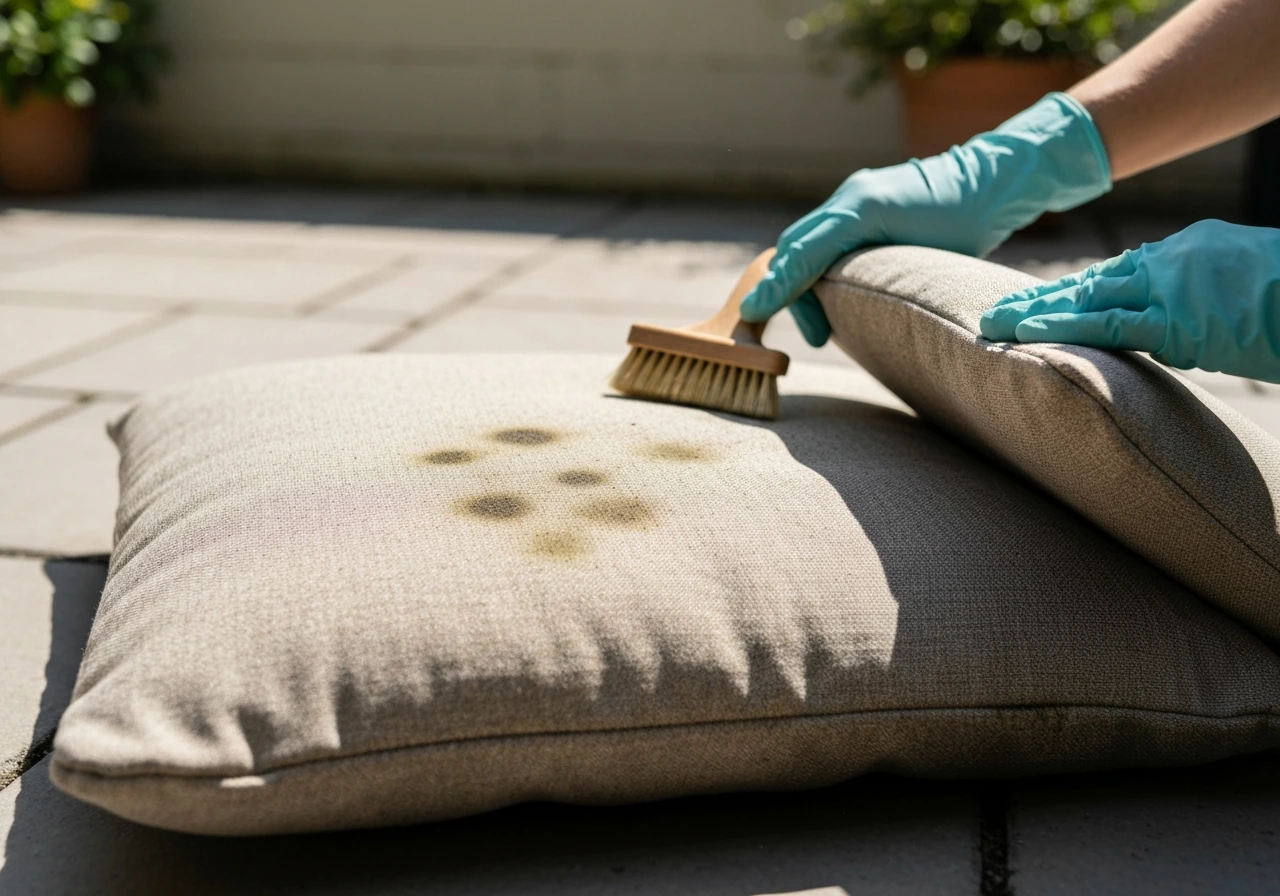
Mildew on cushions is the most common complaint across all furniture types, and it's almost always preventable. Store cushions indoors or in a vented outdoor storage box when not in use for more than a few days. If you can't store them, choose cushions with Quick Dry foam or open-cell foam that drains and dries in a few hours rather than standard polyester fill that holds moisture for days. For existing mildew, a solution of one tablespoon dish soap and one tablespoon white vinegar per quart of warm water, scrubbed in and rinsed thoroughly, removes most surface mildew without damaging Sunbrella or acrylic fabrics. Bleach solutions work on mildew but should be used at very low concentration (1/4 cup per gallon) and rinsed completely to avoid fiber degradation.
When to repair vs. replace
Repair is worth it when the core structure is sound. A teak table with sun-faded finish but solid joints is worth refinishing. A cast aluminum sectional with a broken weld is worth professional repair if the piece is otherwise intact. Replace when the frame is structurally compromised beyond reasonable repair cost (roughly, if repair exceeds 40 to 50 percent of current replacement value, buying new makes more financial sense) or when the material itself has failed (deep UV brittleness in cheap resin wicker, widespread structural rust on steel, or rot that has penetrated into load-bearing joints). Cushions and fabric are almost always worth replacing before the frame is, since new cushions on a solid frame can make a good piece feel brand new for 20 to 30 percent of a full replacement cost.
FAQ
If a patio furniture set is labeled “top rated” on a retailer page, is it automatically the best buy for longevity?
Yes, but only if you verify what the “top rated” claim is measuring. Look for a material-spec statement (frame type, finish type, fiber grade, cushion fabric composition) and a warranty that covers structural parts for multiple years. If the listing only shows star ratings and return counts, treat it as a popularity filter, not a durability guarantee.
What measurement mistakes lead to buying patio furniture that doesn’t actually fit?
Start with clearance, then check access paths. Use the widest chair footprint, plus how far chairs slide when pulled out, and confirm doors and railings won’t block movement after you set the furniture in place. A common miss is measuring “today’s layout” instead of “future seated positions,” especially for dining chairs and arm-heavy conversation sets.
Is powder-coated aluminum always durable, even for larger, heavier seating like sectionals?
Not necessarily. Look for wall thickness or construction details, like extruded aluminum profile thickness for chairs and frame cross-bracing for sofas. Thin-wall extruded aluminum can flex and loosen hardware over time even if the overall material is aluminum, so prioritize products that state frame dimensions or include engineering details.
Can all-weather resin wicker survive freezing winters in climates with freeze-thaw cycles?
In most cases, yes for long-term performance, but only if the cushions are managed correctly. Resin wicker can handle wet weather, but the cushions can still mildew if they trap moisture, then freeze or sit damp. For freeze-thaw areas, choose solution-dyed, quick-dry cushion systems and plan cushion storage.
How should coastal salt air change what I should look for when buying patio furniture?
Coastal exposure changes the rules for metal hardware and frame finish. If you’re within a few miles of the ocean, confirm marine-grade fasteners (for example, 316 stainless) and ensure the frame finish is a true powder-coated system designed for corrosion resistance. If a brand won’t specify hardware, assume it is a weaker point and factor that into your decision.
Do I have to oil Grade A teak every year to make it last?
Teak can still be a good choice without oiling, but your expectations should shift. Expect faster visual weathering (silver-gray) and possibly more surface roughness, but the wood can remain structurally sound if it’s genuine Grade A teak and joints are well made. If you want color stability, budget for seasonal cleaning plus oil or a compatible sealant.
Why do natural rattan and traditional wicker products fail outdoors, even when they’re marketed for patios?
Yes. Natural-fiber rattan or traditional wicker can look fine at delivery but typically fails in outdoor conditions, cracking and splitting after UV and repeated rain. If the product description doesn’t clearly say all-weather resin (and specify fiber type like HDPE or virgin resin), treat it as a mismatch for uncovered use.
What cushion features matter most for preventing mildew and breakdown?
Check cushion fill type and drainage behavior, not just the fabric name. Quick Dry foam and open-cell foam dry much faster, which is crucial for preventing mildew during cold snaps and humid storms. Also confirm the cushion system allows airflow, if it uses removable covers, and whether you can store cushions easily.
When should I replace cushions instead of the whole patio furniture set?
If the frame is sound, replacing cushions is often the cheapest way to extend the life of a “top rated” set. A practical threshold is when the frame is not corroded, not wobbly, and joints are intact, but cushions are faded or soft. New cushions can refresh comfort at a fraction of full replacement cost.
How do I handle small chips or scratches in powder-coated aluminum without worsening corrosion?
For aluminum touch-ups, catch the damage early, clean off debris, then use touch-up paint compatible with powder-coated surfaces. The key detail is preventing oxidation at the chip edge, because aluminum corrosion often shows up as chalky residue that undermines adhesion. Don’t skip cleaning before applying touch-up.
If my cushions claim they’re quick-dry, do I still need to store them indoors or covered?
Don’t rely on “Quick Dry” marketing alone. Confirm the foam type (Quick Dry/open-cell), the cover fabric’s mildew resistance, and whether you have a real storage plan during storms or winter. The best cushion strategy is dryness first, then protection, using an enclosed but vented storage box or indoor storage when possible.
Is cast iron a good low-maintenance choice if I live in a region with wet winters?
You can store cast iron outdoors only if your environment is relatively dry and the piece stays protected. In wet-winter or high-humidity regions, plan for indoor or fully covered storage because chips in the finish can expose bare metal and rust can return quickly. Use a fitted, waterproof cover for off-season periods if indoor storage isn’t possible.
Is it worth repairing a broken frame instead of replacing a “top rated” patio set?
In many situations, yes, but only if the issue is cosmetic or localized. If welds or structural parts are compromised, professional repair can restore function, but if the damaged area keeps reappearing (for example, rust returning through paint chips), replacement may be more cost-effective. Use the cost-to-repair versus replacement value rule of thumb (repair around 40 to 50 percent of replacement) as a decision aid.
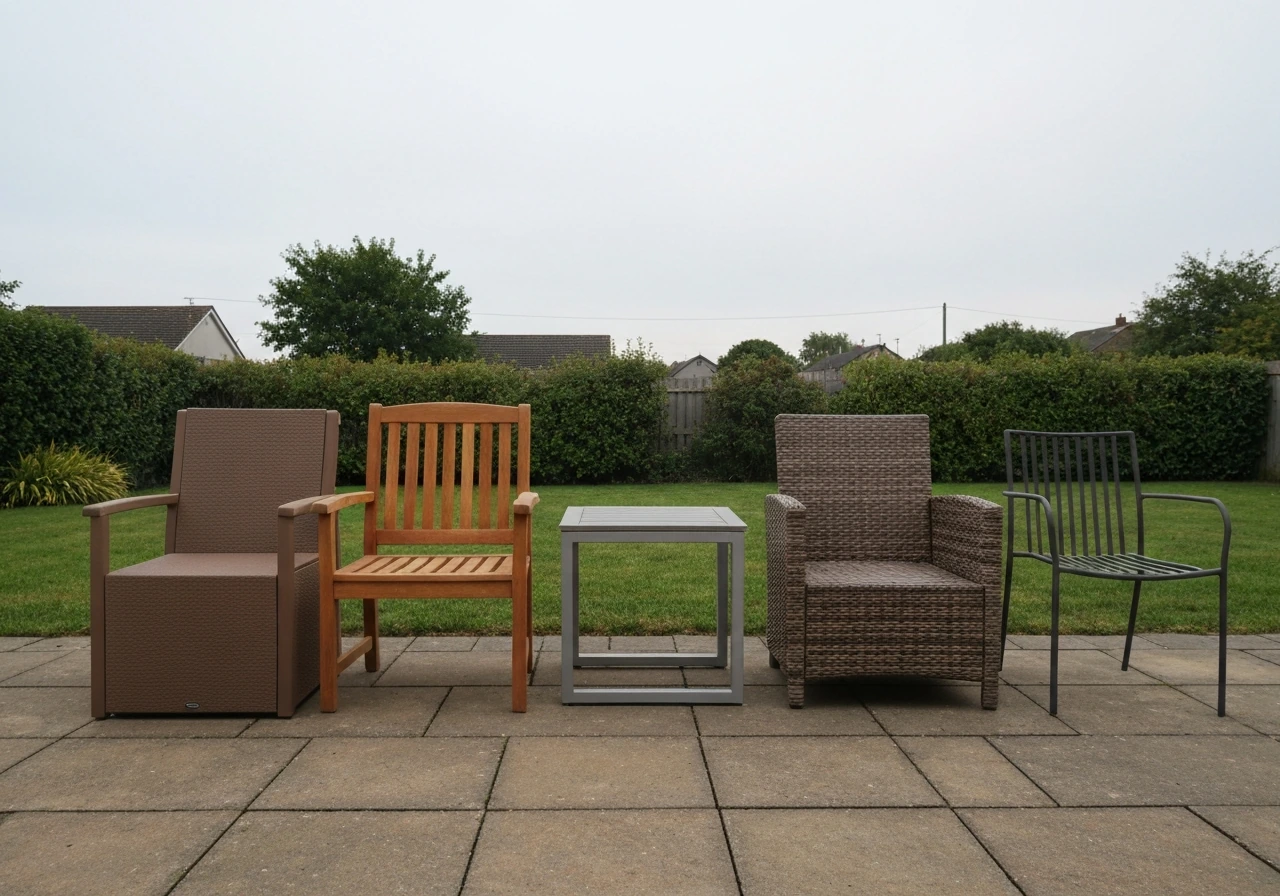
Ranked top 10 patio furniture brands by material and climate, with what to verify, price value, and care tips.
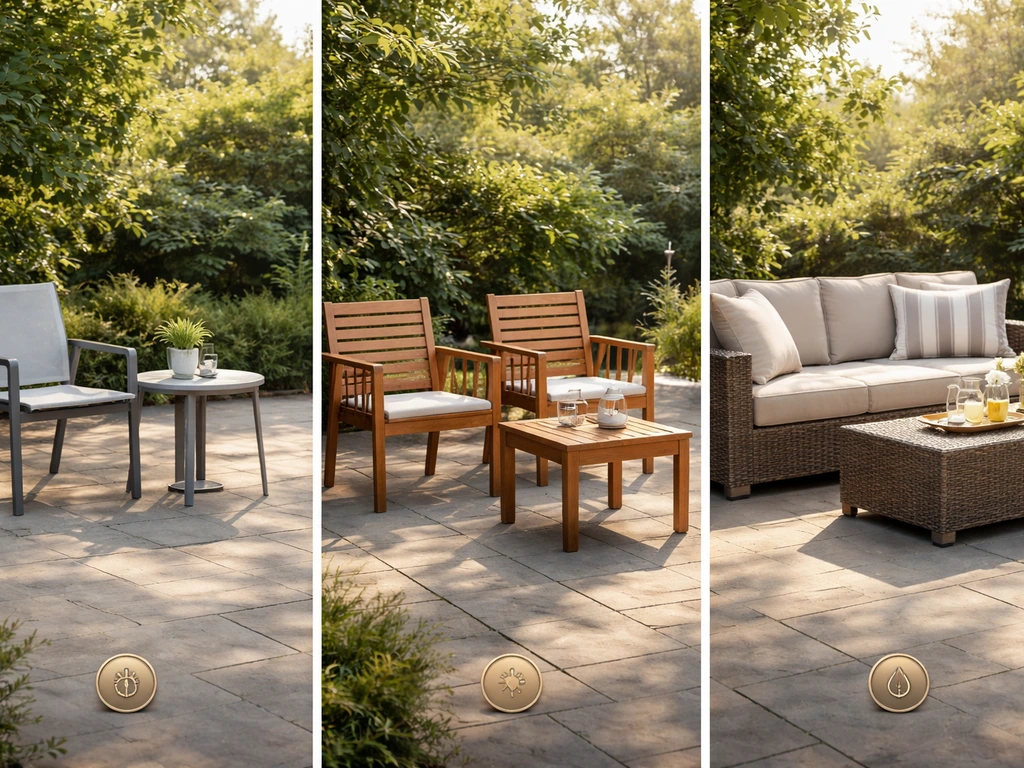
Use outdoor patio furniture ratings to compare materials and pick durable, weatherproof, comfortable patio sets fast for
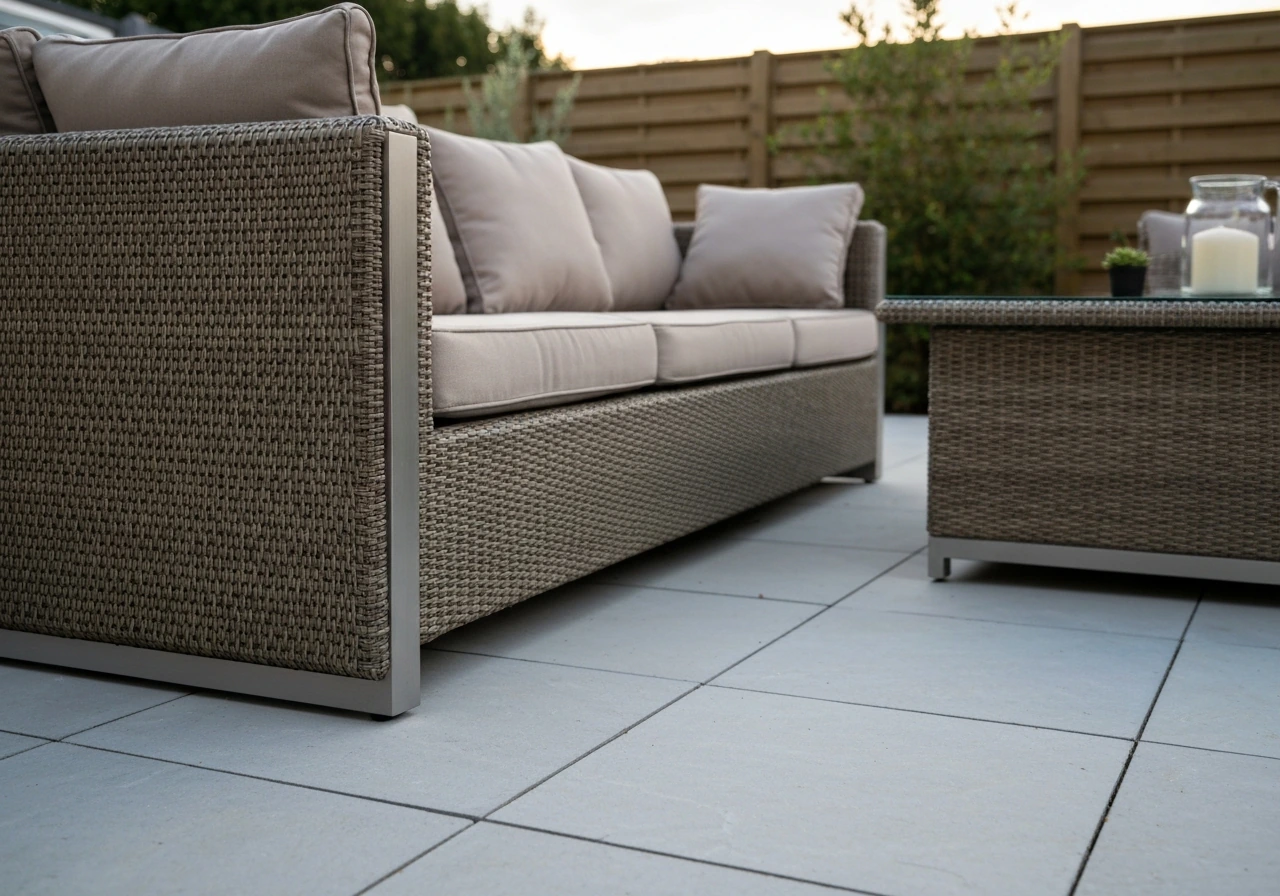
Learn how to pick the best patio furniture brand, compare top manufacturers, materials, durability, value, and maintenan