
Cheap quality patio furniture is a real thing, but you have to define both words carefully. "Cheap" means you're not overspending relative to what you're getting. "Quality" means it actually lasts, handles your climate, and doesn't fall apart at the joints after one season. The practical goal is a cost-per-year that beats a fast-fashion patio set that rusts out in two summers. A $400 aluminum set that lasts 10 years beats a $150 set that needs replacing every 18 months. That's the math you should be doing, not just looking at the sticker price. If you want a higher standard of commercial quality patio furniture, focus on warranties, alloy or coating specs, and joint construction instead of just the sticker price.
Cheap Quality Patio Furniture: How to Buy Durable Sets

Marcus Kellerman
30 Jun 2026
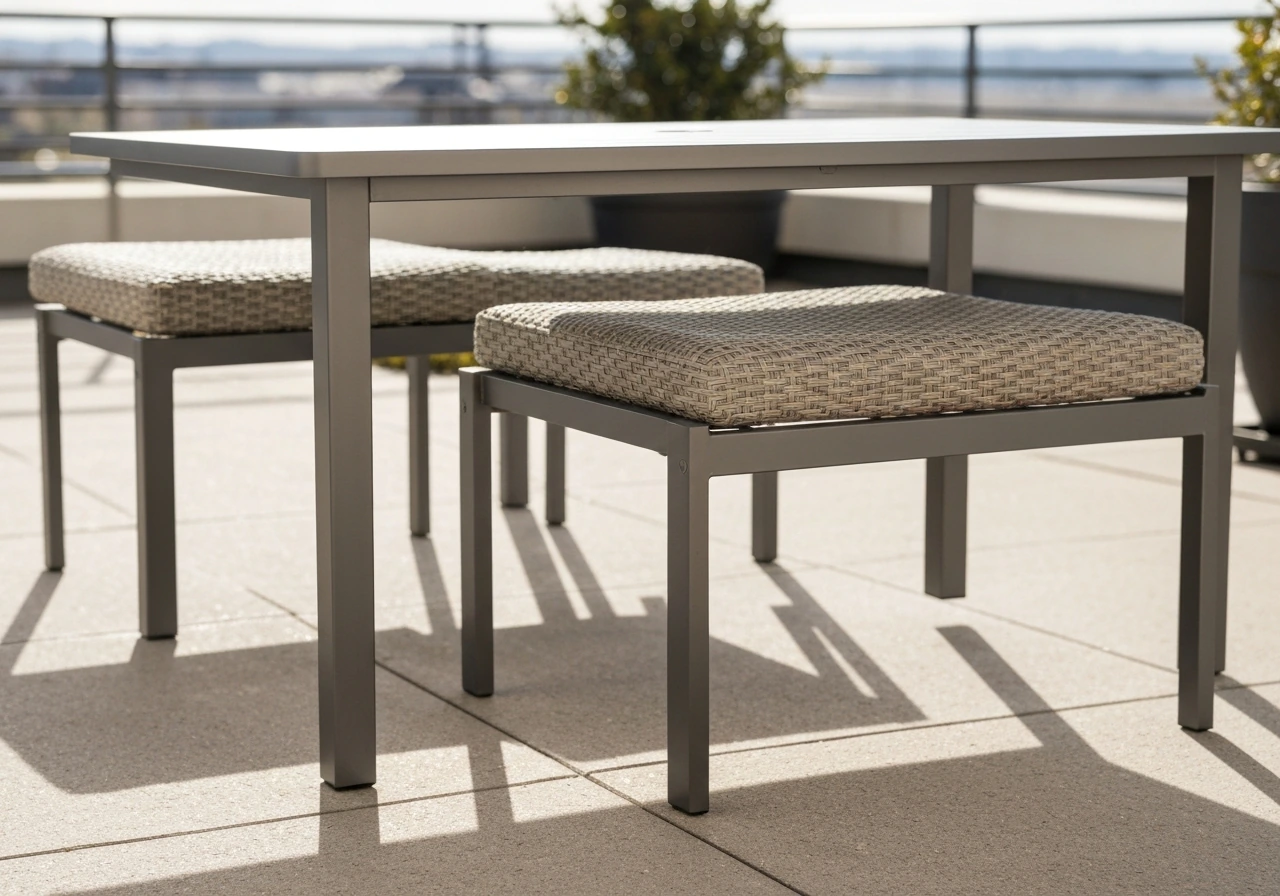
What "cheap quality" actually means for patio furniture
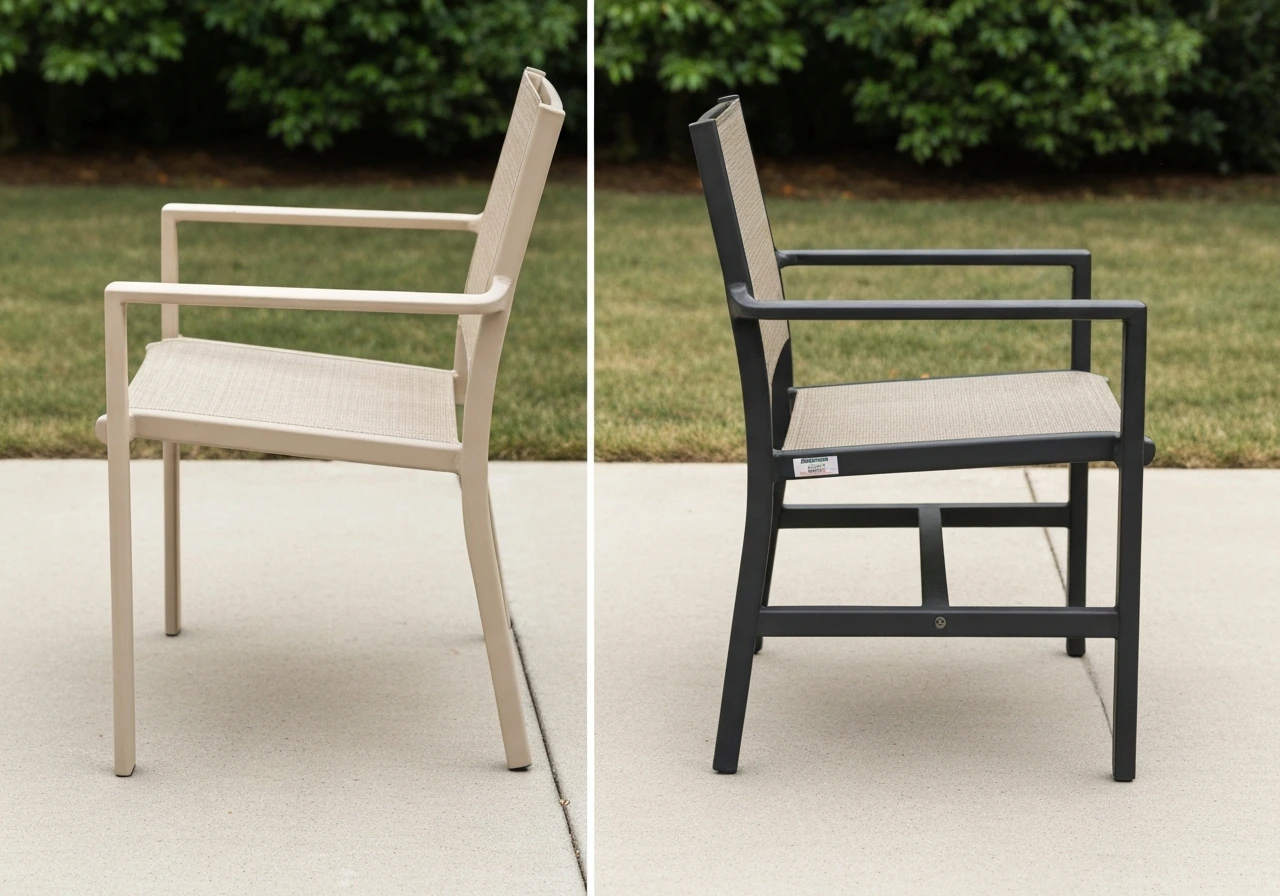
In the outdoor furniture world, value and quality are two separate signals that only matter together. A piece with a genuine warranty tells you something concrete. Entry-level brands like Lowe's house-label sets carry a 1-year frame warranty on aluminum, which is a baseline floor. Step up to purpose-built outdoor brands like POLYWOOD or HOUE and you'll see 5-year warranties on welds, joints, and powder-coat finish. That gap isn't just marketing. It reflects real differences in alloy grade, coating thickness, and joint construction. When you're evaluating a budget piece, the warranty period is one of the fastest ways to calibrate expected lifespan before you even look at the piece in person.
Build quality comes down to three things: the frame material, how the joints are made, and what protects the surface. A frame can be made from great material and still fail because the joints are only held by friction or decorative connectors rather than actual fasteners. Surface coatings matter enormously outdoors because UV, moisture, and temperature cycles attack everything. And lifespan is ultimately a product of all three working together, not any single factor in isolation.
How quality shows up in each material type
Each material has its own set of quality signals. Knowing what to look for in aluminum is useless when you're evaluating teak, and vice versa. Here's how to read quality across the six most common outdoor furniture materials.
Aluminum
Aluminum is the best all-around value material for outdoor furniture in most climates. It doesn't rust, it's light enough to move around easily, and when it's properly coated it's extremely low maintenance. The quality signals to look for are alloy grade and powder-coat thickness. Good outdoor furniture aluminum uses 6000-series alloys, specifically 6061 or 6063, which offer a meaningful strength-to-weight advantage over cheaper generic aluminum extrusions. The powder coat should be at least 60 microns thick and should be applied over a chromate pretreatment layer, not bare metal. That pretreatment is the step cheap manufacturers skip. On budget pieces, look for any mention of the alloy series or coating process in the product specs. If the listing just says "aluminum frame" with no further detail, assume it's on the lower end.
Wicker and resin wicker
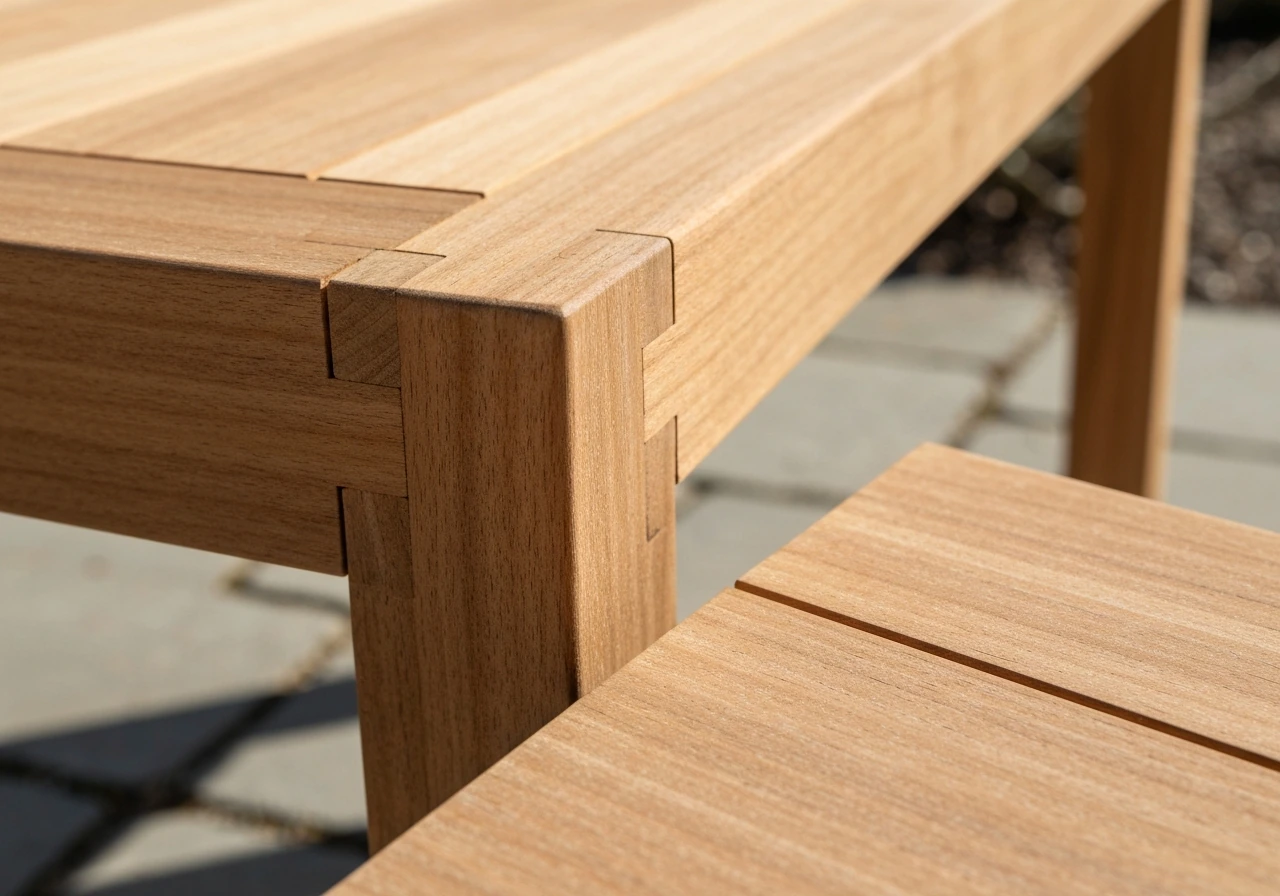
Natural wicker and rattan are indoor materials. If you see them advertised for outdoor use, walk away. Genuine outdoor wicker is synthetic resin wicker, and within that category the material matters enormously. HDPE (high-density polyethylene) is the standard you want. It's extruded into flat or round strands, woven over a metal frame, and it genuinely handles UV and moisture well, with realistic lifespans of 10 to 25 years in good conditions. PVC-based wicker is cheaper to produce and degrades faster under UV exposure. A practical visual tell: HDPE resin typically has a matte finish, while cheaper resins tend to look glossier. If a listing doesn't mention HDPE or high-density polyethylene anywhere, that's a red flag. Quality HDPE wicker sets typically come with a minimum 3 to 5 year warranty, and premium pieces often carry 10 to 15 year expectations.
Teak
Teak is expensive upfront but earns its cost-per-year value through exceptional longevity when properly maintained. Real quality in teak construction means mortise-and-tenon or similarly reinforced joinery, not just dowels or decorative connections. Hardware is where budget teak furniture often cuts corners: anything less than 316-grade stainless steel fasteners and hinges is a liability. Grade 304 stainless will corrode in coastal or high-humidity environments. Teak naturally weathers to a silver-gray, and that's normal, not damage. The key maintenance reality is that teak requires periodic treatment with teak oil or sealer to preserve color if you want it to look fresh, but even untreated it holds structural integrity for decades. Any warranty language from reputable teak sellers will explicitly note that normal weathering is expected and not a defect.
Wood (non-teak)
Eucalyptus, shorea, and acacia are the most common budget-friendly hardwood alternatives to teak. They're solid options if the piece is well-sealed and the hardware is stainless. The quality failure mode for budget hardwood outdoor furniture is almost always the finish: if the wood arrives with a thin oil finish or unprotected end grain, moisture gets in and warping and cracking follow quickly. Check that the piece specifies a proper UV-resistant sealant or marine-grade finish, not just "oiled" or "treated." Softwoods like pine can work in covered or sheltered patios but are genuinely poor choices for exposed outdoor use.
Cast iron
Cast iron outdoor furniture is heavy, beautiful, and potentially very long-lasting, but its coating system is everything. Iron rusts aggressively when coatings fail, and cheap cast iron furniture often arrives with minimal paint over bare metal. A proper coating system for cast iron starts with a rust-inhibiting primer, followed by enamel, epoxy, or urethane topcoat. That's the system used in serious preservation work. On budget cast iron pieces, check for any chipping or bubbling near joints or edges before buying, because those are the first failure points. Cast iron's weight is actually an advantage for wind-prone spaces, but plan on touching up the coating every few years to prevent rust infiltration.
Rattan
Natural rattan is an indoor material, full stop. It absorbs moisture, swells, cracks, and grows mold when used outdoors. If you see "rattan" on an outdoor furniture listing, it almost certainly means the frame is rattan-shaped but made from synthetic wicker or resin, which is fine. Clarify that before buying. If it's genuinely natural rattan, it belongs in a covered sunroom, not an exposed deck.
Buying for your climate, not just your budget
Material quality interacts directly with your local climate. A material that performs well in Phoenix can fail quickly in Miami, and vice versa. Matching material to climate is one of the highest-leverage decisions you can make when shopping on a budget.
| Climate | Best Material Choice | What to Avoid | Key Quality Check |
|---|---|---|---|
| High humidity / frequent rain | Powder-coated aluminum, HDPE wicker, teak with 316 SS hardware | Bare steel, natural wicker/rattan, untreated softwood | Check drainage holes in frames and seat surfaces; verify hardware grade |
| Freezing winters / freeze-thaw cycles | Powder-coated aluminum, teak, HDPE wicker | Cast iron with thin coatings, hollow-leg aluminum with poor drainage | Ensure hollow tubes have drain holes so water doesn't freeze and expand inside |
| Intense sun / high UV exposure | HDPE wicker, powder-coated aluminum with UV-stable coating, teak | PVC wicker, cheap painted steel, low-grade resin furniture | Look for UV-inhibitor additive mention in wicker/resin specs; check powder coat warranty |
| Coastal / salt air | Marine-grade aluminum (6061/6063), teak with 316 SS hardware | Any steel without marine-grade coating, chrome hardware, cast iron | Verify 316 SS hardware (not 304); check powder coat for pretreatment layer |
| High wind | Cast iron (weight), cast aluminum, teak (weight) | Lightweight hollow steel, thin-gauge aluminum, resin furniture without anchor points | Check weight ratings and whether the design allows tie-down or stacking |
If you're in a wet or coastal environment, stainless steel hardware is not optional. Teak brands like Windsor Teak specify 316-grade stainless as the minimum for good reason: it's the marine-grade alloy that resists chloride corrosion. Note also that stainless steel hardware has its own maintenance routine, separate from wood care. Teak.com’s stainless steel care guide also emphasizes that stainless hardware needs dedicated cleaning and protection steps rather than the same maintenance used for wood, helping prevent corrosion-related failure stainless steel hardware has its own maintenance routine, separate from wood care. Salt deposits and organic matter build up on stainless in coastal settings and need periodic cleaning to prevent crevice corrosion. It sounds like a small detail but it's how solid teak furniture develops rusty streaks that look terrible and eventually cause structural issues.
Budget shopping checklist: what to look at before you buy
Whether you're shopping online or in a store, this is the list of things that separate budget furniture that lasts from budget furniture that doesn't. Most of these take under two minutes to check.
- Frame material spec: Look for alloy grade on aluminum (6061 or 6063), HDPE on wicker, or hardwood species on wood. Generic "aluminum" or "resin" with no further detail is a yellow flag.
- Powder coat details: Any mention of pretreatment (chromate or phosphate) and coating thickness (60 microns or above) indicates higher-grade finishing. If absent, it's basic.
- Hardware grade: Look for 316 stainless steel on coastal, humid, or wet-climate pieces. 304 SS is acceptable in dry climates. Zinc or chrome hardware is a budget cut worth noting.
- Joint construction: Welds should be clean and continuous, not tacked. Mechanical fasteners through joints (screws, bolts) are stronger than friction or glue alone.
- Drain holes: Hollow aluminum tube frames and seat surfaces should have drainage holes so water doesn't pool. Absence of drain holes in wet climates leads to corrosion and mold.
- Cushion foam density: Look for foam density of 1.8 lbs/ft³ or higher. This is the threshold associated with longer-lasting outdoor cushions. Most budget listings won't list this, which tells you something.
- Cushion fabric: Sunbrella (solution-dyed acrylic) is the gold standard for outdoor fabric: mildew-resistant, UV-stable, and cleanable. Generic polyester fades and molds faster. Look for the brand name or "solution-dyed acrylic" in the spec.
- Warranty period: 5-year frame warranty is achievable at mid-budget price points. Less than 1 year on frames is a signal of low confidence in durability.
- Measurements: Check actual seat height, depth, and width against your space. Budget pieces often run small. Standard outdoor dining seat height is 17 to 19 inches; comfortable lounge depth is 24 inches minimum.
- Weight: Heavier usually means thicker material (more metal, denser wood). Suspiciously light furniture in categories that should have some heft is a sign of thin-gauge construction.
Common traps: what looks cheap but fails fast
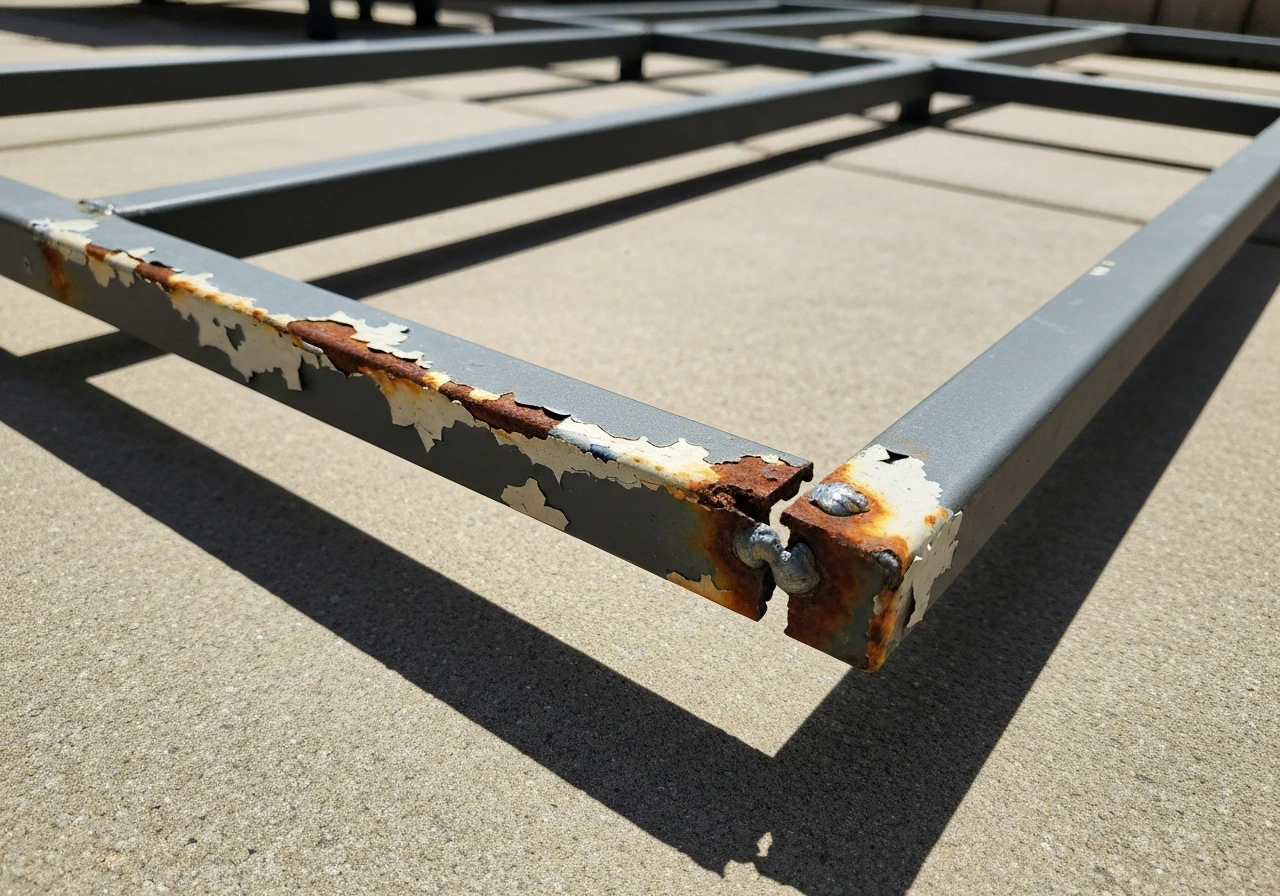
The most frustrating outdoor furniture purchases aren't the obviously bad ones. They're the sets that look reasonable, arrive okay, and then degrade visibly within 12 to 24 months. Here are the patterns that cause this.
- Thin-gauge steel frames painted to look like cast iron: These rust from the inside out. The paint chips at bends and welds first, and once moisture gets under it there's no stopping it. Tap the frame; hollow thin steel sounds different from solid or heavy-gauge material.
- Glossy resin wicker: As mentioned, glossy finish is a visual tell for cheaper PVC-based resin. It looks fine in the store or in photos, but UV degrades it faster, it becomes brittle, and the weave starts separating within a few seasons.
- Cushion foam below 1.5 lbs/ft³: Budget cushion foam compresses flat quickly and holds moisture. The combination means you end up with wet, flat, uncomfortable cushions by year two. This is extremely common in entry-level patio sets.
- Generic polyester cushion covers: They feel fine initially but start fading and growing mildew within one humid season. Once the fabric fails the entire cushion usually needs replacement, which can cost more than the original price difference would have been.
- Powder coat over bare metal (no pretreatment): The coating looks identical at purchase but starts peeling at edges and corners within a few years. Without the chromate pretreatment layer, there's nothing bonding the coat to the metal at a molecular level.
- Cheap zinc or pot-metal hardware: Zinc alloy bolts and hinges corrode and seize, especially in humid or coastal environments. Seized hardware makes folding chairs dangerous and disassembly for storage impossible.
- Natural wicker or rattan sold as "outdoor": This bears repeating. It will mold, crack, and fall apart. No amount of spray sealant changes the fundamental moisture absorption of natural plant fibers.
- Unfinished or thinly oiled wood end grain: End grain is where wood absorbs moisture fastest. If the piece has exposed, unsealed end grain at the bottom of legs or at cut joints, expect cracking and splitting within one to two freeze-thaw cycles.
Best bang-for-buck piece types and how to match them to your life
Not all outdoor furniture categories offer equal value at budget price points. Some piece types are easier to do well cheaply; others almost always require more investment to get lasting quality.
Powder-coated aluminum dining chairs and tables are the single best value category in budget outdoor furniture. The material is genuinely low-maintenance, the construction is simple enough that mid-range manufacturers can execute it well, and the category is competitive enough to drive pricing down. If you're furnishing a patio on a tight budget and need to prioritize one category, start here. A solid 4-person aluminum dining set from a credible brand can be found in the $300 to $600 range with 3 to 5 year warranties if you shop off-season (late August through October, or February before spring inventory arrives).
HDPE wicker lounge sets and sectionals are the second best value category, especially for households that entertain or want a comfortable outdoor living room feel. If you want good used patio furniture, focus on the material and warranty signals like HDPE resin wicker that hold up over time. The material cost is higher than aluminum, but HDPE wicker ages gracefully and doesn't require the same obsessive maintenance as wood. The catch is cushions: even a great HDPE wicker frame paired with low-quality cushions will feel like a budget purchase within two years. If you find a good wicker frame at a great price but the included cushions are thin polyester, budget to replace them with Sunbrella-covered cushions immediately. The frame investment is worth protecting.
Teak side tables and accent pieces are the smart budget entry point into teak furniture. You get the material's longevity and weather resistance without the full investment of a teak dining set. A quality teak side table can last 20-plus years with minimal care, and they hold up better to benign neglect than almost anything else outdoors. This is also the category where used and reclaimed teak pieces (see the topic of good used patio furniture) offer exceptional value, since teak's durability means older pieces often have decades of life left. If you are comparing patio sets, remember that good patio furniture is often about getting the right materials and maintenance routine for your specific setup.
Cast iron benches and accent seating offer great longevity for covered or semi-protected spaces, and they're often found affordably at estate sales and resale shops. Their weight makes them wind-resistant without anchoring, which is genuinely useful on covered porches and patios. The maintenance commitment (periodic coating touch-ups) is manageable if you like the aesthetic and are willing to do a 30-minute annual inspection and touch-up.
Where budget choices almost always disappoint: lounge chairs with reclining mechanisms and complex folding pieces. The more moving parts, the more hardware, and budget-tier hardware fails. If you need loungers, spend more or buy a simple non-folding frame. For those who want something closer to resort quality patio furniture or commercial quality patio furniture aesthetics without the price, focus on frame quality over brand name and replace the cushions with premium fabric. If you want restaurant quality patio furniture, prioritize construction details like frame material, joint design, and weather-resistant coatings to get true long-term performance.
Maintenance and repair: making budget furniture last
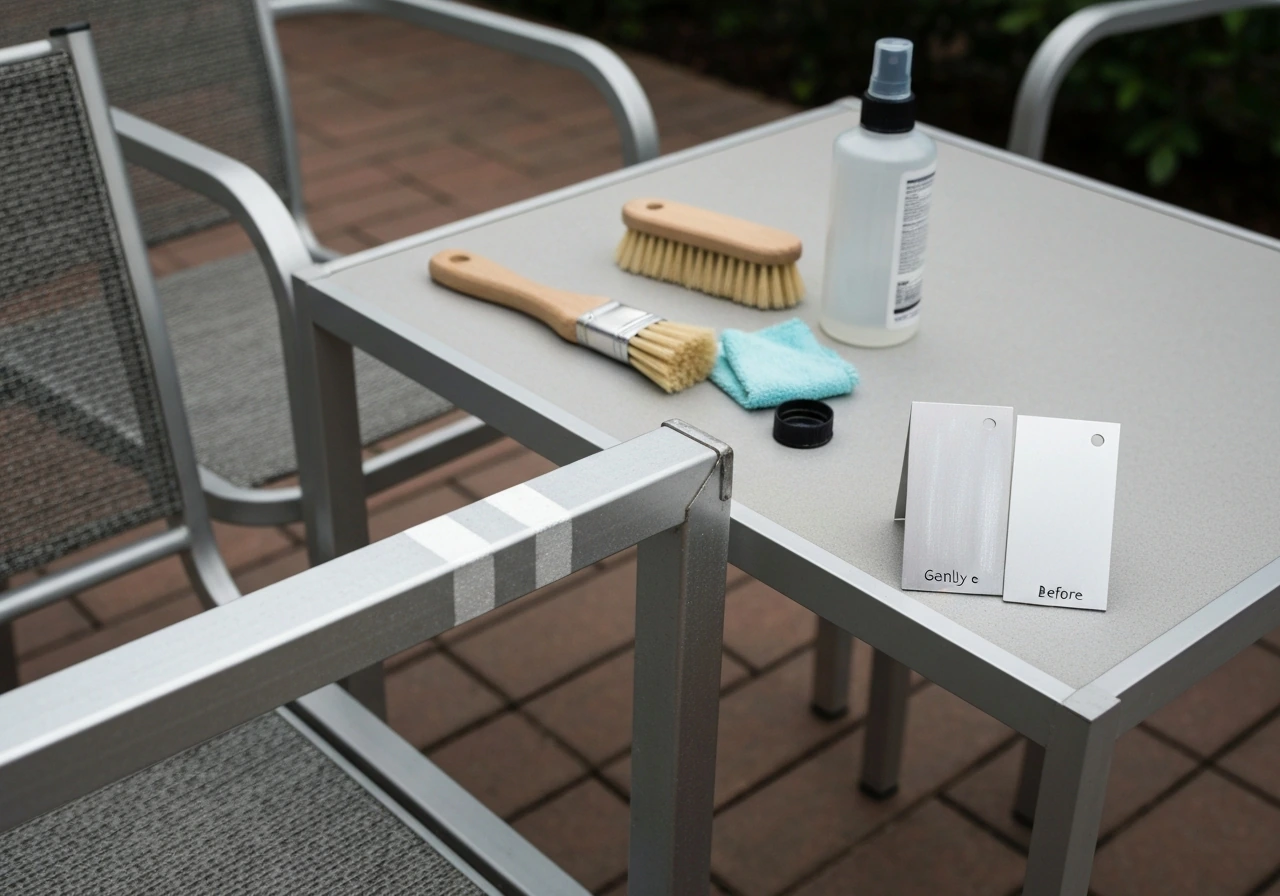
Budget furniture has less tolerance for neglect than premium furniture. That's just the honest reality. The coatings are thinner, the hardware is less corrosion-resistant, and the cushions are less forgiving of moisture. But with a basic annual maintenance routine, you can dramatically extend the lifespan of almost any budget patio piece and push that cost-per-year number way down. If you want to buy life is good patio furniture, focus on warranties, material quality, and simple yearly maintenance so it stays comfortable and stable outdoors budget patio piece.
Aluminum and powder-coated frames
Clean powder-coated aluminum once or twice a season with mild soap and water. Avoid abrasive cleaners that scratch the coating. If you find chips or scratches, touch them up immediately with matching powder coat touch-up paint (available from most furniture retailers) before rust can start underneath. Use furniture covers during off-season storage, especially in freeze-thaw climates. HOUE and similar brands recommend covers during extended non-use regardless of climate, because UV and moisture cycling degrades even good coatings faster than normal use alone.
Teak and hardwood
Teak's maintenance is more involved but very manageable. Clean it annually with a teak cleaner or mild oxalic acid solution to remove surface grime and the gray patina if you want to restore color. Then apply teak oil or sealer to end grain and any cut surfaces. Check hardware annually: tighten any loose fasteners and clean stainless steel components with a stainless steel cleaner to remove salt and organic deposits. If a joint starts to wobble, address it immediately with a properly sized bolt rather than waiting. Teak is repairable in ways that most synthetic materials simply are not, which adds real long-term value to the material.
Resin wicker
HDPE wicker requires very little maintenance. Rinse it with a garden hose seasonally to clear debris from the weave. For deeper cleaning, mild dish soap and a soft brush work well. The underlying metal frame (usually steel or aluminum) is what to monitor: if you notice the frame showing through at worn spots in the weave, check for rust on steel frames and address it before it spreads. Replacing individual broken strands is possible but tedious; if weave failure is widespread, it's usually time to replace rather than repair.
Cushions
Cushion longevity is almost entirely about storage and drying. Bring cushions inside or into a storage box when not in use for extended periods. If they get wet, stand them on edge to dry rather than lying flat so moisture drains out. Sunbrella fabric can be cleaned with a dilute bleach solution (1 cup bleach per gallon of water) for mold and mildew, which is genuinely unusual performance for an outdoor fabric. If you bought a budget set with generic polyester cushions and they're already showing wear, replacing them with Sunbrella-covered cushions from a third-party cushion maker is often the single highest-return maintenance investment you can make. You can replace cushions for most standard-sized furniture for $50 to $150 per chair and dramatically extend the perceived and functional life of the entire set.
Cast iron
Inspect cast iron annually for paint chips, bubbling, or rust spots. Sand any rust back to bare metal with fine sandpaper, prime with a rust-inhibiting primer, and apply an enamel or epoxy topcoat. This takes 30 to 60 minutes per piece once a year and is the entire difference between cast iron that lasts generations and cast iron that becomes a rusty eyesore in five years. Never leave cast iron sitting in pooled water or direct contact with wet soil.
The big picture on budget outdoor furniture is this: you're not locked into a choice between cheap-and-disposable or expensive-and-durable. By focusing on the right materials and construction signals, you can find affordable quality patio furniture that holds up for years instead of seasons. The middle path is real. It means knowing which materials genuinely perform at lower price points (aluminum and HDPE wicker, primarily), understanding what quality signals to look for in listings, buying for your specific climate, and committing to the basic annual maintenance that keeps a good-value piece performing well for a decade or more. That approach beats both the "just buy the cheapest thing" and "you get what you pay for so spend more" advice you'll hear everywhere else.
FAQ
How can I tell if cheap quality patio furniture will last, without seeing it in person?
Look for a written warranty that specifies what it covers (frame, welds, powder coat, cushions) and the exact term length, not just “limited warranty.” Then cross-check that the warranty categories match the construction you’re buying, for example, aluminum dining sets should mention frame coverage and powder coat durability. If the listing only offers a general promise with no parts named, treat the risk as higher and budget for earlier replacement.
Is price-per-year the only way to compare cheap options?
Use cost-per-year, but also add a realistic “replacement friction” cost, like time to shop again, disposal, and cushion reupholstery. A $300 set that needs new cushions after 2 seasons may still lose to a $500 set that can go 6 to 8 years with only touch-ups, especially if you’re in a wet climate where fabrics degrade faster. If you can’t estimate years, start with the warranty term as your best-available proxy.
What’s the biggest mistake people make when evaluating aluminum patio furniture quality?
For aluminum, yes, verify both the alloy family and the coating system. If the product does not mention an alloy series like 6061 or 6063, and it does not state powder coat thickness or pretreatment steps, assume it is closer to generic extrusions and thinner coatings. That doesn’t always mean it will fail quickly, but it raises the odds of chips turning into rust at the first scratches.
Can I buy a cheap quality HDPE wicker set and keep it looking good?
For cushions, check two things: whether the listing specifies fabric type (for example, Sunbrella) and whether it mentions cushion water resistance and construction. Even a great HDPE wicker frame can look budget in 12 to 24 months when paired with thin polyester cushions. If the listing is vague about fabric, plan to upgrade or store cushions aggressively.
How do I avoid accidentally buying natural rattan for outdoors?
Yes, but “natural” labels are often used loosely. If it’s sold as outdoor rattan, the safe move is to confirm it’s synthetic resin wicker, ideally HDPE resin strands woven over a metal frame. If the listing does not explicitly say HDPE or high-density polyethylene, treat it as a higher-failure-risk purchase for outdoor use.
What should I look for in stainless hardware for coastal patios?
In coastal and very humid areas, upgrade hardware before you buy. For teak or any outdoor furniture using stainless components, insist on 316-grade stainless fasteners and hinges when the furniture sits near salt air, pools, or sprinklers. Also know that stainless still needs cleaning, salt deposits can cause ugly streaking and eventually crevice corrosion even when the steel is “stainless.”
Is cast iron patio furniture a good cheap choice, or is it usually a maintenance trap?
Cast iron is durable, the failure usually starts at damaged coating edges and joints where water traps. Before purchase, inspect for paint bubbling, chips at corners, and rust freckles near weld points or attachment points. After purchase, avoid pooled water and wet soil contact, and keep touch-up paint on hand for quick fixes after storms.
What should I do if my patio set starts to wobble after a season?
When furniture wobbles, don’t assume it’s “settling.” Wobble is often a fastener issue, damaged joinery, or an undersized bolt that’s loosening due to moisture cycles and repeated use. For teak, tighten or re-bolt promptly with properly sized hardware, for aluminum and cast pieces follow the manufacturer’s recommended fastener approach if parts are replaceable.
How do I handle scratches or chips on powder-coated aluminum?
Powder coat touch-up works best when you do it immediately after chips, before rust has time to spread under the coating. Use a matching touch-up paint intended for powder-coated finishes, apply a thin layer, and let it cure fully before putting the furniture back in heavy wet exposure. Waiting until “next season” often turns a small chip into a larger rust repair.
What’s the best way to extend the life of outdoor cushions on budget sets?
Cushions are the part most likely to shorten the usable life of an otherwise good frame. A practical rule is to store cushions in a dry, ventilated area when rain or cold weather is prolonged, and dry them on edge if they get wet. If your set is using generic polyester and you see early fading, flattening, or mildew spots, upgrading to higher-grade outdoor fabric often gives the highest return versus replacing the whole furniture.
Next Articles
Affordable Quality Patio Furniture: Buy Smart for Long Life
Guide to buying affordable quality patio furniture: materials, specs, climate fit, and maintenance for long-lasting comf
Home Good Patio Furniture Guide: Choose, Buy, Maintain
Step-by-step guide to choosing home good patio furniture by use, climate, and materials, plus maintenance and rust prote
Best Stain for Teak Patio Furniture, Top Picks by Climate
Best stain for teak patio furniture: expert picks, climate-based choices, prep, application, and maintenance tips.