
Well-made teak patio furniture lasts 25 to 75 years outdoors, with 30 to 50 years being the realistic sweet spot for high-grade solid teak that gets reasonable care. That is not a typo. Teak is genuinely one of the longest-lasting materials you can put on a patio, which is why the price tag is what it is. But the 75-year ceiling and the 15-year floor are both real, and the difference between them comes down to wood quality, construction, your climate, and how much attention you pay to maintenance.
How Long Does Teak Patio Furniture Last? Lifespan Guide

Marcus Kellerman
3 Jun 2026
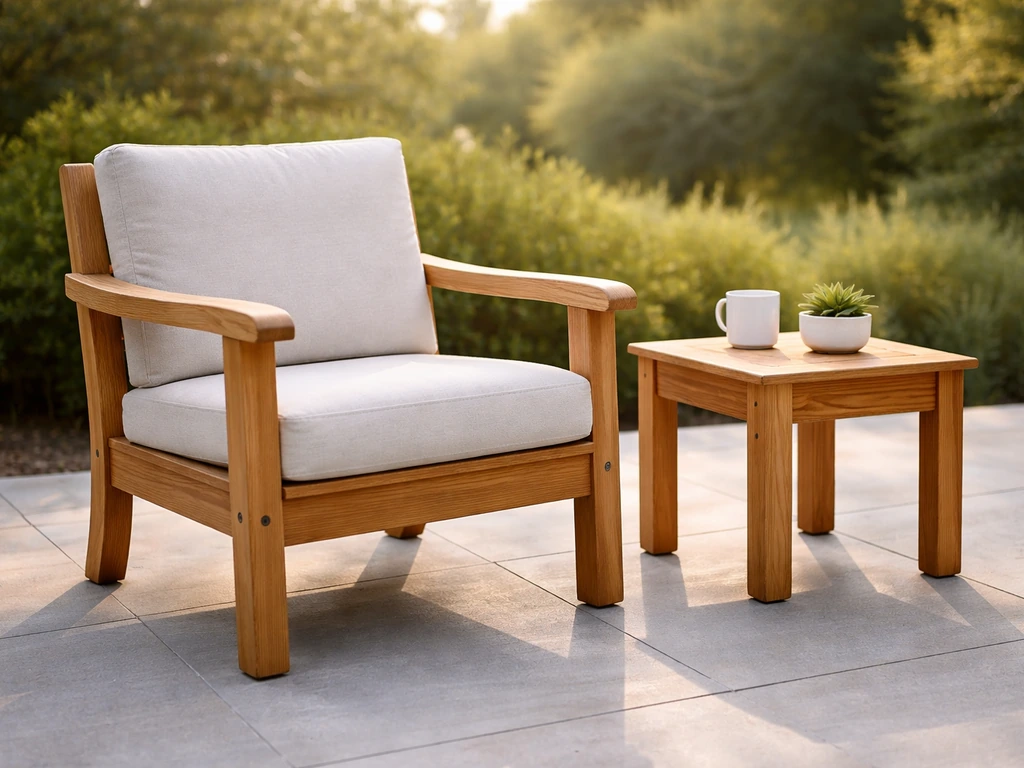
Realistic lifespan ranges for teak patio furniture
Grade A solid teak from the heartwood of a mature tree, well-built and maintained, regularly outlasts the homeowner who bought it. Top-grade pieces from reputable brands often carry lifetime structural warranties for residential use, which tells you something about the confidence manufacturers have in the material. Even conservative estimates from experienced dealers put 30-plus years in reach with proper care.
Where things get shorter is when the wood is lower grade, the construction is sloppy, or the piece is essentially teak veneer over a cheaper core. In those cases you might get 10 to 15 years before joints fail or the surface degrades past the point of refinishing. A 10-year warranty from some sellers reflects exactly that: they expect the piece to hold up for a decade under normal conditions, but they are not making promises beyond that.
Think of teak longevity in three tiers. Budget teak or teak-blend pieces: 10 to 20 years with care, maybe less if you are rough on them or live in a punishing climate. Mid-grade solid teak: 20 to 40 years. Grade A solid teak from a quality builder: 40 to 75 years, sometimes more. The wood itself is durable enough for any of those timelines; it is usually the construction and grade that set the ceiling.
What actually determines how long teak lasts
Wood grade and where it comes from
Not all teak is equal. Grade A teak comes from the heartwood of a mature tree, typically 40 to 80 years old at harvest. Heartwood is dense, naturally oily, and packed with silica and tectoquinone, which are the compounds responsible for teak's famous resistance to water, rot, and insects. Grade B and C teak comes from outer rings closer to the sapwood. It is lighter in color, less oily, and noticeably less durable outdoors. When you are comparing prices and one piece is significantly cheaper, grade is usually part of the explanation.
Watch out for marketing that uses vague terms. Some manufacturers substitute Shorea, acacia, or other tropical hardwoods and market them loosely as teak-like or use them in blended pieces. These woods can perform decently, but they do not have teak's natural oil content or the same proven outdoor track record. If you cannot confirm that a piece is 100% solid teak, treat the lifespan expectations accordingly.
Kiln-drying and moisture content
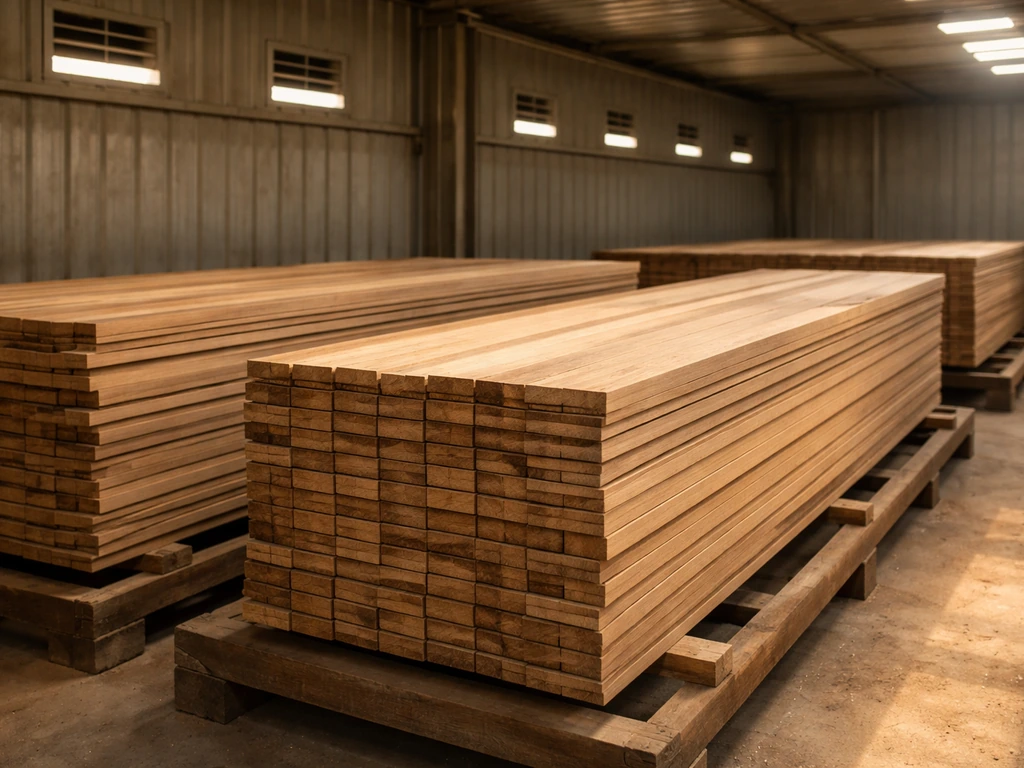
Properly kiln-dried teak is more dimensionally stable than green or air-dried wood. When teak is dried correctly before it is milled and assembled, it has already done most of its shrinking and shifting. That means less checking, fewer split joints, and better long-term fit at connection points. Kiln-dried material is a mark of quality in any solid teak furniture; ask about it directly if a seller cannot tell you.
Joinery and fasteners
The wood can be perfect, but if the joinery is weak or the fasteners corrode, the piece falls apart prematurely. Well-built teak furniture uses mortise-and-tenon or dowel construction with tight-fitting joints. The fasteners matter just as much. Many manufacturers use 302 or 304 stainless steel hardware, which is fine for inland environments. For coastal or high-humidity climates, 316 marine-grade stainless is the right choice because it resists chloride corrosion far better. In a salt-air environment, 304 fasteners can start to show rust bleed within a few years, and that rust stains the wood and can compromise joint integrity over time.
Solid teak vs. teak veneer
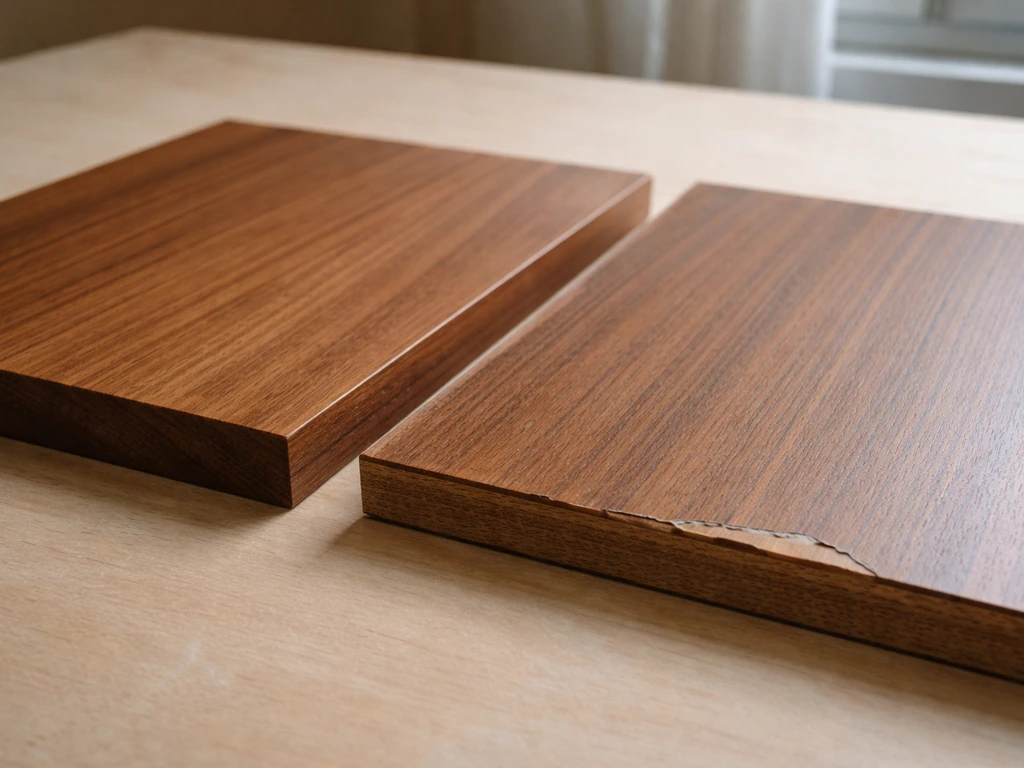
Solid teak can be sanded, refinished, and repaired repeatedly over decades. Teak veneer cannot. Once the veneer layer thins out from weathering or sanding, the piece is done. Veneer teak furniture can look identical to solid teak in a showroom photo, but it is a fundamentally different investment. If you are buying for longevity, solid construction is non-negotiable.
How your climate and environment affect the timeline
Teak handles almost every climate better than most outdoor materials, but the environment still shapes how quickly it ages and what kind of maintenance it needs.
- Sun and UV exposure: Direct, intense sun is the fastest way to drive graying and surface checking. Teak left in full sun in a hot southern climate will gray within months and develop hairline surface checks within a year or two. This is cosmetic and normal, not structural failure, but it speeds up the refinishing cycle.
- Heavy rain and moisture: Teak's natural oils resist water absorption, but repeated wet/dry cycling does cause gradual dimensional movement. Heavy rainfall combined with prolonged direct sun can contribute to minor warping or surface cracking over years. Pieces that dry out quickly fare better than those that sit in standing water.
- Freeze-thaw cycles: Cold climates add stress from expansion and contraction. Joints take more strain. The main risk is if moisture has worked into a loose joint or crack and then freezes; that can split wood more aggressively than in a mild climate. Well-maintained, tight-jointed teak handles freeze-thaw reasonably well.
- Coastal salt air and humidity: This is the toughest environment for hardware, not the teak itself. The wood holds up well, but 304 stainless fasteners in a coastal setting can corrode within a few years and bleed rust stains into the teak. Marine-grade 316 stainless is worth insisting on if you live within a mile or two of salt water. High ambient humidity also accelerates mold and mildew on the wood surface, which requires more frequent cleaning.
- Shaded vs. full-sun placement: Pieces under a pergola or covered patio gray more slowly, need less frequent refinishing, and experience less UV-driven surface cracking. If longevity with minimal upkeep is the goal, covered placement helps noticeably.
Maintenance routines that add years to teak furniture
Routine cleaning
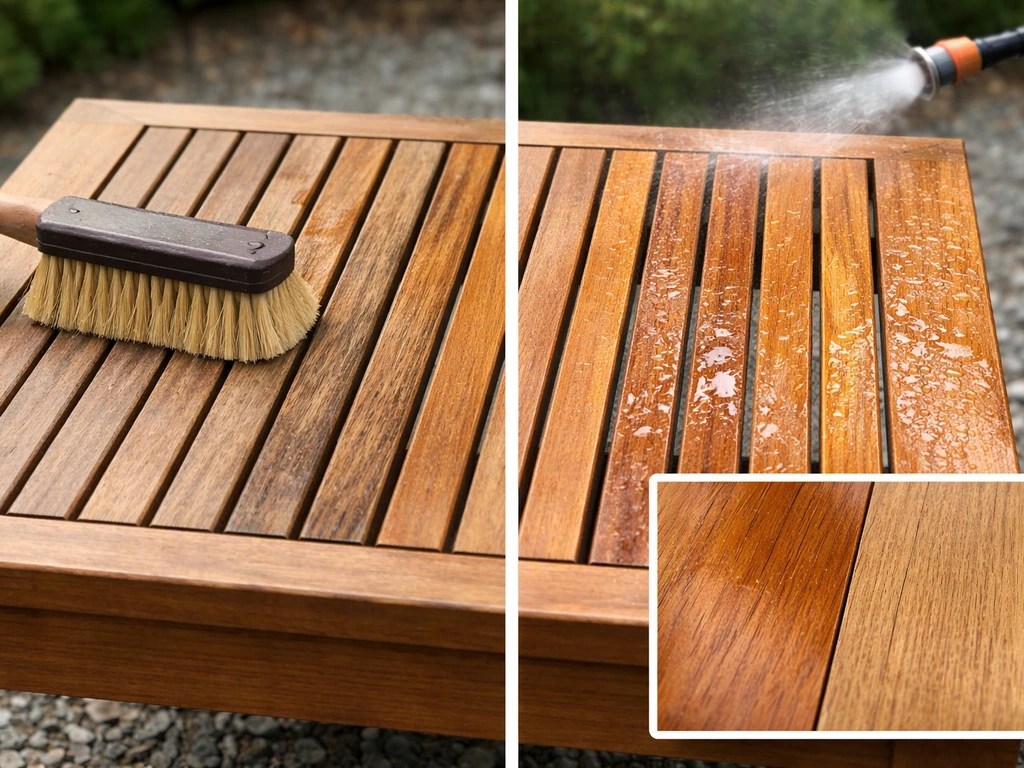
Clean teak furniture a few times a year with mild soap or a dedicated teak cleaner and a soft-bristled brush. Rinse thoroughly with a garden hose. Do not use a pressure washer; the force strips natural oils, raises the grain, and can damage the wood surface. For mold, mildew, or dark discoloration, household bleach is not strong enough to kill mildew spores embedded in wood. An oxalic-acid-based teak cleaner is a better tool for restoring discolored or mildewed surfaces. After cleaning, let the wood dry completely before applying any finish.
Oil vs. sealer: which is actually better
This is where homeowners get tripped up. Teak oil and teak sealer are different products with different performance profiles outdoors. Teak oil penetrates the wood and adds a golden, freshly-oiled look, but it requires reapplication every one to three years depending on sun exposure, and it can encourage mildew growth because it introduces organic material that mold feeds on.
Teak sealers sit closer to the surface, protect the wood's natural oils from washing or evaporating out, and generally last longer between applications. The test is simple: when water stops beading on the surface, it is time to reapply. For outdoor furniture that stays exposed to weather year-round, a quality teak-specific sealer tends to outperform oil in both protection and maintenance burden. If you do use oil, match the right product to your situation and do not over-apply.
The gray patina question
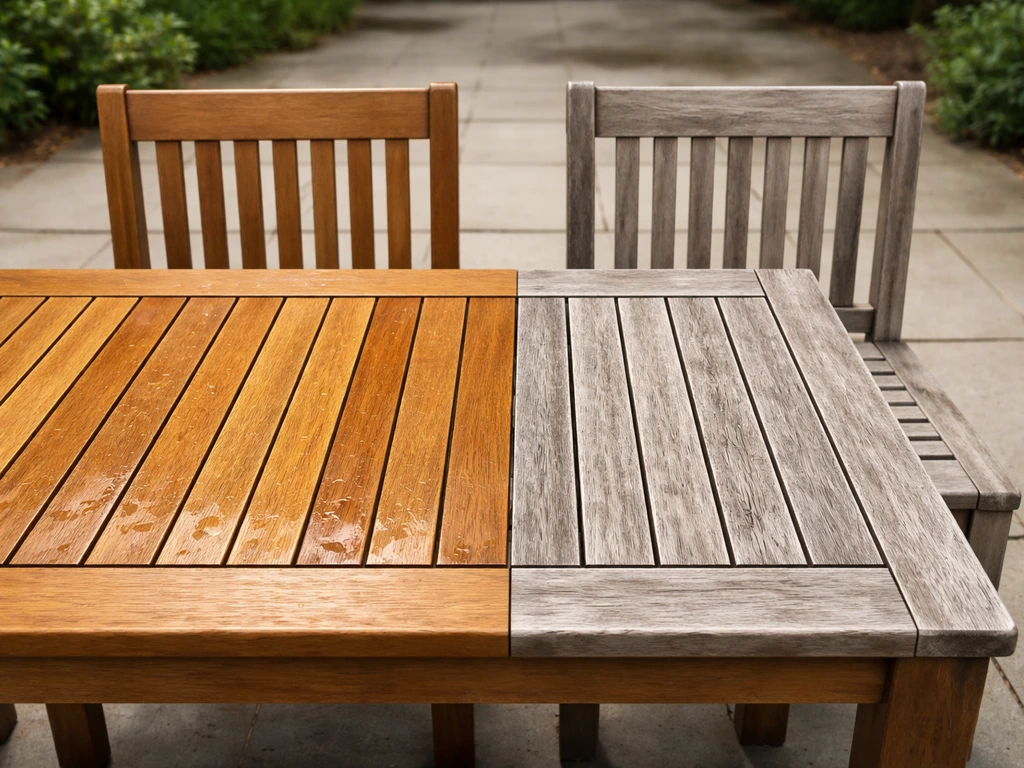
Unfinished teak left outdoors turns silvery gray over months to a few years. This is purely cosmetic and does not indicate structural damage. Many owners prefer the gray look and do nothing beyond occasional cleaning, and their furniture lasts just as long. If you want to maintain the golden-honey color, plan on cleaning and recoating every one to three years depending on how much sun the pieces get. Both approaches are valid; it is a matter of preference, not preservation.
Storage and covers
You do not have to store teak indoors for the winter; that is one of the material's real advantages. But if you live in a harsh freeze-thaw climate, bringing cushions and accessories inside, and using breathable furniture covers on the teak itself, reduces the maintenance cycle noticeably.
Walters Wicker’s cushion and fabric care guidance emphasizes humidity management and proper cushion care to help prevent mold and mildew buildup, which supports the idea that outdoor upholstered wicker/rattan longevity depends heavily on moisture control humidity management and cushion care to help prevent mold and mildew buildup.
Avoid storing teak directly on organic surfaces like soil, mulch, or rotting wood. Moisture wicking up from below is one of the faster ways to introduce mold or staining to the undersides of legs and frames. Feet pads or a hard surface underneath are worth the small effort.
Signs of wear and when to refinish or repair
Knowing what is normal aging versus what needs attention saves you from unnecessary refinishing and helps you catch real problems early.
| What you see | What it means | What to do |
|---|---|---|
| Silver-gray color | Normal weathering, purely cosmetic | Clean and reseal if you want golden color back; otherwise just clean |
| Surface checking (hairline cracks) | Natural settling as wood acclimates outdoors, usually cosmetic | Monitor; sand lightly and reseal if checks worsen or splinter |
| Black spots or streaks | Mold, mildew, or tannin bleed | Oxalic acid cleaner, thorough rinse, then reseal |
| Rust staining around hardware | Fastener corrosion, often 304 stainless in coastal conditions | Replace hardware with 316 marine-grade stainless, clean stains with teak cleaner |
| Loose or wobbly joints | Adhesive degradation or joint wear | Re-glue or tighten hardware; address early before structural failure |
| Deep cracking or splitting | Excessive drying, long-term UV damage, or moisture cycling | Sand and refinish if surface-level; structural cracks may need professional repair |
| Spongy or punky wood feel | Rot, usually from prolonged moisture contact or long-term neglect | Small spots can be cut out and treated; widespread rot may mean replacement |
For refinishing, a light clean and recoat handles most situations. Full sanding is only needed when the surface is badly checked, deeply stained, or shows old finish buildup that will not take a new coat evenly. When sanding is required, 220 to 320 grit is right for spot work; starting coarser removes too much material unnecessarily. The goal is a smooth, even surface that accepts a new coat of sealer or oil, not a factory-fresh appearance.
Loose joints should be addressed as soon as you notice them. A loose joint that wiggles for a season becomes a cracked or split joint by the next one. Tightening bolts, re-gluing with waterproof exterior adhesive, or replacing hardware costs almost nothing compared to the alternative.
Teak vs. other patio materials: long-term value comparison
Teak is expensive upfront. Whether it is worth it depends on how long you plan to keep it and how that stacks up against the alternatives. If you are wondering whether it is worth it, teak patio furniture can be a good choice when you buy solid, well-built pieces that match your climate and maintenance habits is teak patio furniture good.
| Material | Realistic lifespan | Key failure mode | Maintenance level | Long-term value |
|---|---|---|---|---|
| Grade A solid teak | 30–75 years | Neglect, poor-grade wood, bad fasteners | Low to moderate | Excellent: cost-per-year drops sharply over decades |
| Powder-coated aluminum | 15–25 years | Coating chips exposing bare aluminum; fading | Very low | Good: low upkeep but not as long-lasting as teak |
| Wrought/cast iron | 10–30 years | Rust when coating is breached by moisture | High: annual painting or sealing needed | Moderate: beautiful but labor-intensive |
| Synthetic wicker/rattan (resin) | 8–15 years | UV embrittlement, weave cracking | Low on frame, moderate on cushions | Moderate: cheaper upfront but shorter life |
| Natural rattan | 3–7 years outdoors | Moisture, mold, UV degradation | High and often futile outdoors | Poor for year-round outdoor use |
| Cedar/redwood | 10–20 years | Rot, splitting, requires regular staining | Moderate to high | Decent but notably shorter than teak |
| Teak veneer or teak-blend | 10–20 years | Veneer wear, cannot be resanded deeply | Moderate | Poor relative to price: often similar cost to solid teak |
blank" rel="noopener noreferrer">Powder-coated aluminum is the most practical alternative for pure low-maintenance longevity, though it lacks teak's warmth and tactile quality. Cast iron and wrought iron look stunning but demand consistent upkeep to stay ahead of rust. Synthetic wicker is comfortable and inexpensive but rarely makes it past 15 years in full sun without the weave showing serious wear. When you divide the total cost of quality teak by 40 or 50 years, the cost-per-year often ends up comparable to or better than materials that need replacing every decade.
How to buy teak furniture that will actually last
If you are shopping for teak today, here is what to check before you buy. These are the factors that separate a 40-year piece from a 15-year disappointment.
- Confirm it is 100% solid teak, not teak veneer, teak-blend, or a substitute wood like Shorea or acacia being sold under vague branding. Ask the seller directly and look for it in writing.
- Ask about teak grade. Grade A heartwood teak is denser, oilier, and more uniformly colored with tight grain. It is more expensive, and worth it. Grade B or C is acceptable indoors but less ideal for demanding outdoor conditions.
- Check whether the teak is kiln-dried. Kiln-dried wood is more dimensionally stable and less prone to early checking and joint separation.
- Inspect the joinery. Mortise-and-tenon or dowel construction with tight-fitting joints is the mark of quality furniture built to last decades. Avoid pieces held together primarily with metal brackets and screws.
- Look at the fastener spec. For inland climates, 304 stainless is acceptable. If you live near the coast or in a high-humidity environment, insist on 316 marine-grade stainless hardware. Ask the manufacturer specifically.
- Check the warranty terms carefully. A lifetime structural warranty for residential use signals real confidence in the build. A 10-year warranty is decent. No warranty or a very short one should make you cautious about the quality claim.
- Sit in it, push on it, and flex it. Quality teak furniture feels solid and substantial. Joints should not flex or creak when you apply normal load.
- Understand the maintenance expectations before you buy and be honest about whether you will follow through. Teak you let deteriorate for five years without cleaning will cost you real money to restore. If you want truly zero-maintenance, powder-coated aluminum is probably a more honest choice.
It is also worth thinking about what you plan to do with the furniture long-term. Teak can be refinished, repaired, and restored in ways that aluminum and wicker simply cannot. That repairability is part of the value. A piece with a wobbling joint or a weathered surface is not a write-off; it is an afternoon of work. That changes the total cost calculation significantly over a 30- or 40-year ownership period.
If you are already working through related decisions, the grade of wood you choose connects directly to questions about finishes and oils, which are worth thinking through as a package. The furniture itself is just the starting point; how you treat and maintain it determines whether you land at the high end or the low end of that 25-to-75-year range.
FAQ
How long does teak patio furniture last if I never oil or seal it?
It still lasts for decades. Unfinished teak typically turns silvery gray within months to a few years, and that cosmetic change does not mean the wood is failing. For maximum appearance retention, you would clean and recoat every 1 to 3 years, but skipping finishes mainly affects color, not basic outdoor durability.
Does the climate change how long teak lasts outdoors?
Yes. Salt-air and high humidity accelerate hardware corrosion and mildew risk, even though teak resists rot well. In coastal areas, choosing 316 marine-grade stainless fasteners (instead of 304) helps prevent rust bleed that can stain the wood and loosen joints earlier than expected.
How can I tell if a teak patio set is solid teak or veneer?
Look for clear wording like “100% solid teak” and avoid listings that only say “teak look” or “teak blend” without specifying solid wood. Veneer construction cannot be refinished the same way long term, so if the seller cannot confirm solid teak, treat the lifespan as shorter than the 30 to 50 year sweet spot.
What maintenance mistakes shorten teak’s lifespan the most?
The biggest are pressure washing, over-sanding, and using the wrong cleaner or finish. Pressure washing strips natural oils and can damage the surface, and heavy cleanup can remove protective material faster than you think. Also, applying teak oil too heavily or too often can worsen mildew because oil introduces organic material mold can feed on.
Is a teak cover enough to make furniture last longer?
It helps, especially if the furniture stays outdoors year-round. Use breathable covers so moisture does not get trapped against the wood, and bring in cushions and accessories during harsh freeze-thaw conditions. Covers are most useful when paired with occasional cleaning, since dirt buildup can still stain the surface.
If teak joints start to loosen, can I fix it without fully replacing the furniture?
Usually, yes. Tighten bolts promptly, re-glue with waterproof exterior adhesive, or replace corroded hardware. The key is timing, a joint that wiggles for one season can become a cracked or split joint by the next, which is harder and more expensive to repair.
How often should I refinish teak to reach the longest lifespan?
Plan around water beading and your color goals. If you use sealer, reapply when water stops beading on the surface. If you prefer the golden color with oil, expect reapplication every 1 to 3 years depending on sun exposure, and avoid over-application.
Does kiln-dried teak last longer than air-dried or green teak?
Often, yes. Kiln drying improves dimensional stability before assembly, which reduces later shrinking, checking, and split joints. That usually translates to better long-term fit at connection points and fewer structural issues that shorten usable life.
Why do some teak pieces fail around 10 to 15 years?
Most short lifespans come from lower-grade wood, poor construction, or wrong materials used for fasteners and assembly. If it is teak veneer over a cheaper core, or if joints and hardware are not designed for outdoor exposure, you can see early surface breakdown or joint failure, even if the color looks like teak.
Is it normal for teak to look worse before it lasts longer?
Yes, the graying phase is often normal. Silvery gray weathering is cosmetic, not a structural defect. The more important warning signs are loosening joints, deep cracking, persistent dark staining that does not respond to proper cleaning, and widespread rust bleed from hardware.
Next Articles
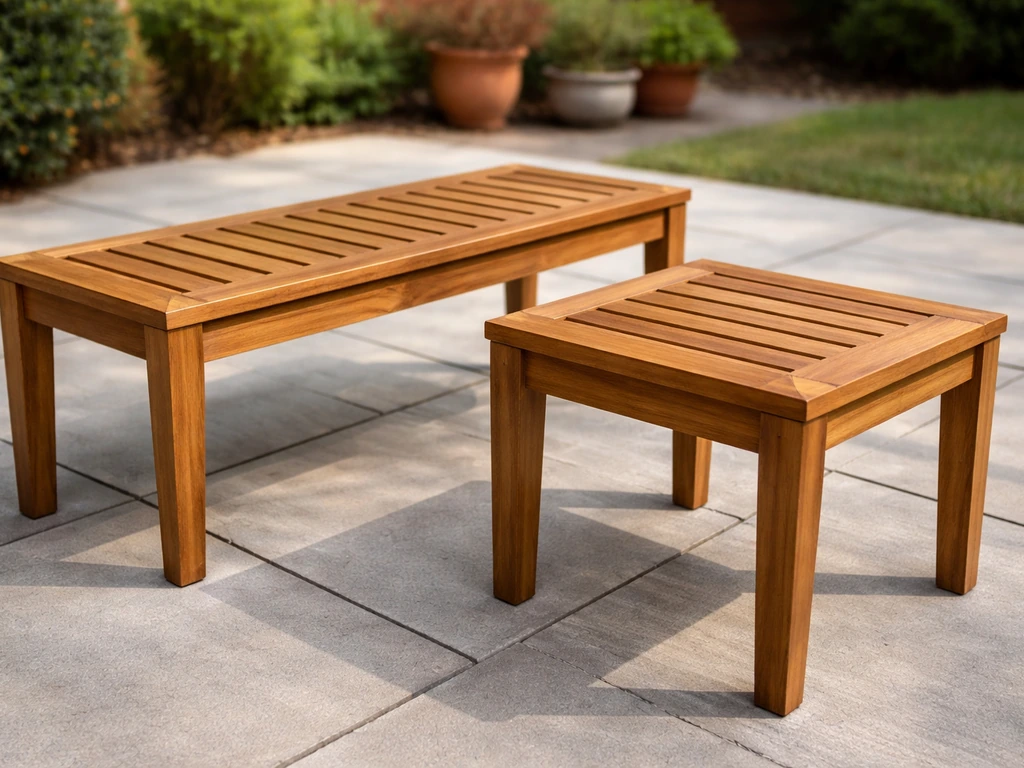
High Quality Teak Patio Furniture: How to Choose and Care
Checklist for buying high quality teak patio furniture, spot real construction, compare materials, and maintain it by cl
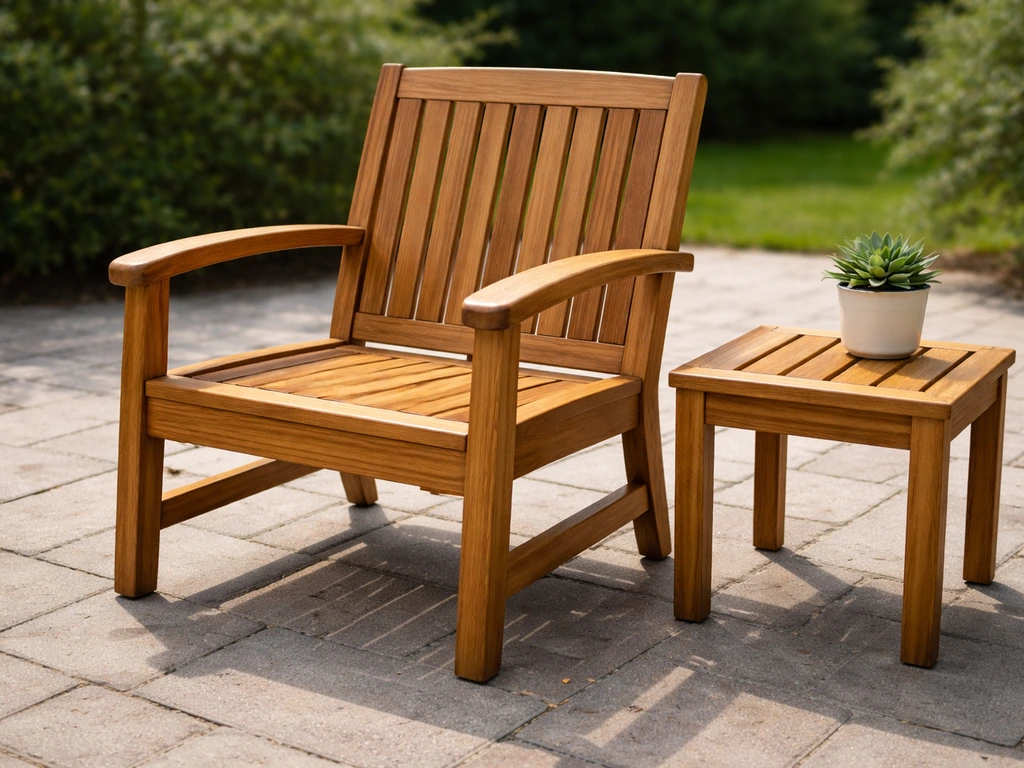
Best Teak Oil for Patio Furniture: Choose and Apply It
Pick the best teak oil for patio furniture, compare types, and follow step-by-step prep and coats for lasting finish.
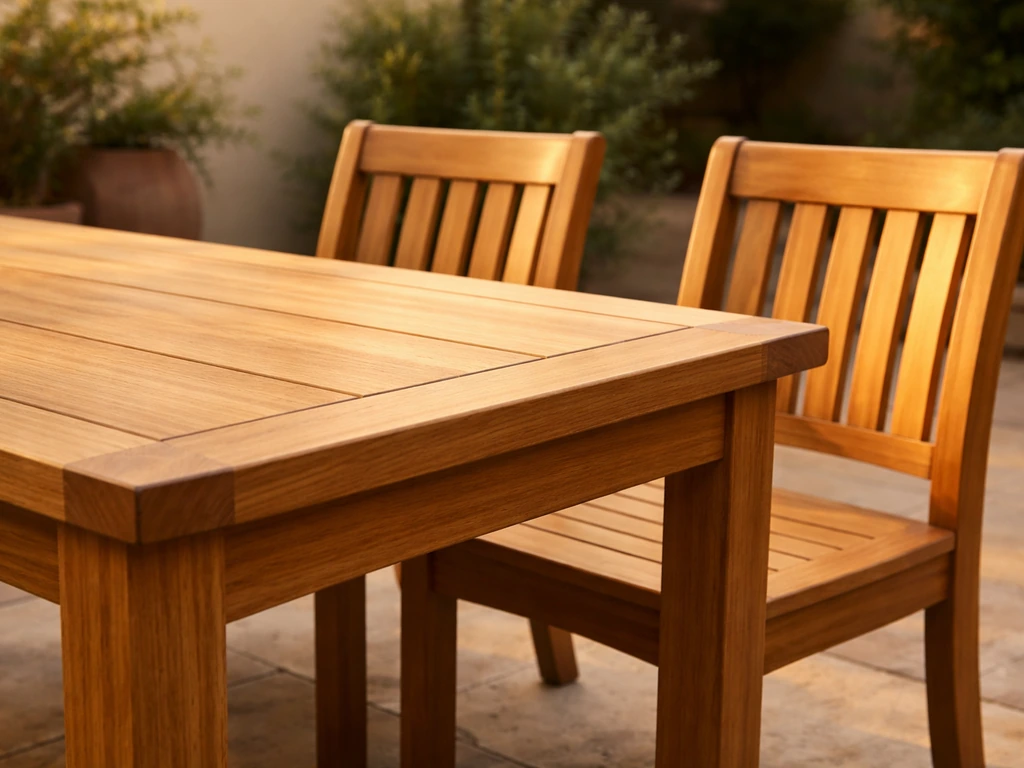
Best Teak Patio Furniture: Top Brands and Buying Guide
Curated best teak patio furniture brands and a buying checklist for solid teak, durability, and smart value.