
Yes, teak patio furniture is genuinely good, arguably the best all-around wood you can put outside. The heartwood of Tectona grandis contains natural oils, quinones, and silica deposits that give it measurable resistance to fungal decay, termites, rot, and marine borers. The US Forest Products Lab classifies teak heartwood as 'very durable' for outdoor and marine use, and field trials back that up. Premium Grade-A teak furniture made from kiln-dried heartwood with tight joinery routinely lasts 15 to 30+ years outdoors with minimal intervention. The honest caveat: you pay for it, and not all teak sold today is equal. If you buy well, it's one of the smartest long-term investments in outdoor furniture. If you buy poorly, thin sapwood, loose joinery, no certification, it's an expensive disappointment.
Is Teak Patio Furniture Good? Durable, Smart Buying Guide

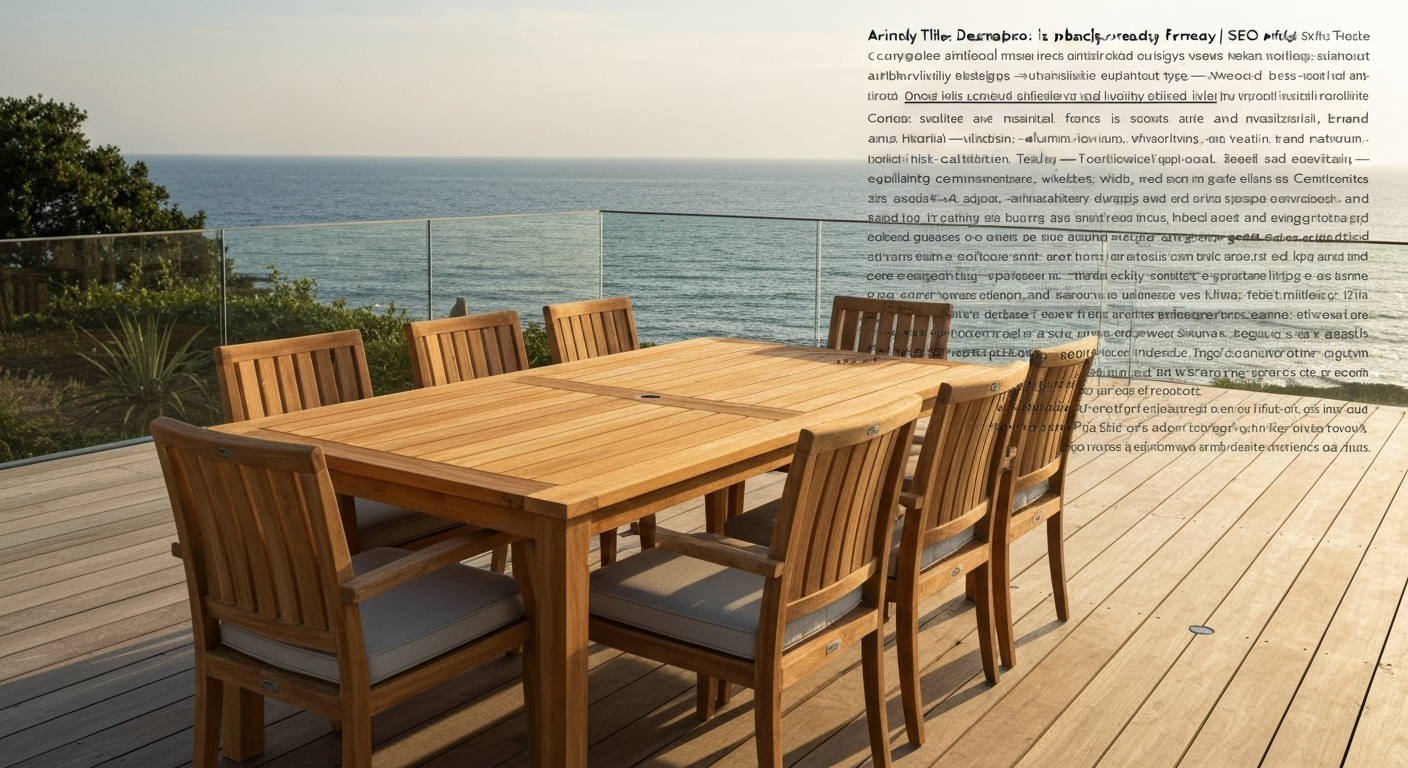
Quick verdict: Is teak patio furniture good?
Teak earns its reputation. Based on lab classification standards (including the European EN 350 durability scale, which runs DC1 to DC5 from most to least durable), teak heartwood sits in the top durability class for fungal decay. It performs substantially better than most tropical hardwoods in marine exposure panels, resisting teredinid borers and limnoriids that destroy other species within months. Multiple independent hospitality sourcing guides put well-constructed Grade-A teak furniture's service life at 15 to 30+ years outdoors. That's not marketing copy, it's borne out by decades of use in commercial outdoor settings worldwide. So the short version: if you can afford quality teak and want the lowest-hassle, longest-lasting wood patio furniture, it's an excellent choice. The caveats around grade, sourcing, and climate are real, and I'll cover all of them below.
What teak actually is, and why its wood characteristics matter
Teak (Tectona grandis) is a large deciduous hardwood native to South and Southeast Asia, historically harvested from old-growth forests in Myanmar, Thailand, and India, and now primarily sourced from plantation-grown stock in Indonesia, Costa Rica, and parts of Africa. What makes it special for outdoor use isn't branding, it's chemistry and structure. The heartwood (the dense inner wood, not the pale outer sapwood) is loaded with extractives: natural oils, tectoquinones, and other phenolic compounds that act as built-in biocides. It also contains measurable silica deposits in its vessel cells, contributing to surface abrasion resistance and a slightly waxy feel that sheds water naturally. The Wood Database reports teak contains measurable silica deposits (whitish deposits in vessels) with silica content cited up to about 1.4%, which contributes to surface abrasion resistance Teak (Tectona grandis) — The Wood Database (species properties, silica and oil notes).
Fresh-cut teak heartwood is a warm golden-brown with occasional darker streaks. That color is caused by those same extractives. Left untreated outdoors, the surface oxidizes to a silver-gray patina within a few months, the wood itself is still protected, just aesthetically changed. Teak's density (typically 630–720 kg/m³ when dried) and interlocked grain give it excellent dimensional stability, meaning it doesn't expand and contract dramatically with humidity swings the way softer or less dense woods do. That stability is why teak joinery holds up: mortise-and-tenon joints in a well-made teak chair don't loosen the way they would in a cheaper hardwood.
Teak's real strengths outdoors
Durability and rot resistance
The heartwood extractives are the core story. Lab studies using ASTM D1413 soil-block and AWPA E10 methods consistently show teak heartwood resisting fungal decay that destroys less durable species in the same tests. EN 350-classified Durability Class 1 (the top tier) is the benchmark teak heartwood meets for fungal decay. Field research in Mississippi found that heartwood extracts combined with oil significantly increased termite and decay resistance over five years in ground-contact tests, which makes sense, because those extractives are doing real chemical work, not just making the wood look good.
Weather and moisture resistance
Teak's natural oil content and tight grain structure mean water beads off rather than soaking in. This translates directly into resistance to the swelling, warping, and checking that kills cheaper outdoor wood furniture. Even plantation teak, when properly kiln-dried, handles rain and humidity cycles well. The silica in the wood contributes to surface hardness and prevents rapid surface erosion. One thing worth understanding: teak does check (develop surface cracks) as it weathers, this is normal and not structural. Reputable manufacturers like Kingsley-Bate explicitly state in their warranties that checking is a natural characteristic, not a defect.
Pest and marine borer resistance
IRG (International Research Group on Wood Protection) marine panel studies consistently show teak sustaining only superficial pitting from teredinids (shipworms) and limnoriids (gribble) while many tropical species are severely damaged or destroyed. This is why teak has been used in boat decking, dock planking, and coastal structures for centuries. For residential patio furniture, this means termite resistance is built in at the material level, you're not relying on a chemical treatment that wears off. That said, the protection is in the heartwood only; sapwood (the lighter outer ring) has no such protection, which is exactly why grade and heartwood content matter so much when you're buying.
Teak's limitations and when to choose something else
Teak is not perfect, and pretending otherwise would waste your time. Here are the real limitations you need to weigh:
- Cost: Quality Grade-A teak furniture is expensive. A single teak dining chair from a reputable brand runs $200–$600+, and a full dining set can easily exceed $3,000–$8,000. If budget is the deciding factor, aluminum or high-density polyethylene (HDPE) lumber furniture delivers better value per dollar.
- Weight: Teak is dense. A teak dining chair typically weighs 15–25 lbs; a bench can hit 40–60 lbs. If you frequently rearrange your patio or need lightweight furniture, powder-coated aluminum is dramatically easier to move.
- Oil secretion: Teak naturally exudes oils as it heats in sunlight. On light-colored pavers, stone decks, or cushions, these oils can leave stains. This is a documented characteristic, not a defect, but it requires planning.
- Patina: If you want to maintain the warm golden-brown color, you'll need to clean and apply a protector or oil at least annually. The silver-gray patina some people love, others hate — and reversing it once it's set requires sanding.
- Grade variability: Not all teak furniture is made from true Grade-A heartwood. Furniture sold simply as 'teak' may contain significant sapwood, young plantation cuts with low extractive content, or misidentified species. This is the biggest single risk in buying teak.
- Sustainability concerns: Old-growth teak from Myanmar, Thailand, and other historic sources is heavily restricted or illegal to trade. All commercially available new teak should be plantation-grown; verify this with FSC or equivalent certification.
- Not ideal for every budget or style: If you want ultra-modern powder-coated aluminum aesthetics, or you're outfitting a covered porch that never sees rain, the premium for teak may not be worth it for you.
How long does teak patio furniture last, and what affects it
Grade-A teak furniture made from mature, kiln-dried heartwood with quality joinery and hardware can realistically last 15 to 30+ years in outdoor residential use. Hospitality buyers who purchase outdoor furniture at commercial scale routinely plan for 15–20 year replacement cycles for premium teak. Some well-maintained pieces last generations. Compare that to the 3–7 year typical lifespan of budget outdoor furniture and the math starts favoring teak even at three or four times the upfront cost.
Several factors determine where your teak furniture lands on that spectrum. First, heartwood proportion and tree age: older/slow-grown trees produce a higher proportion of dense, extractive-rich heartwood relative to sapwood. Research published in BioResources confirms that older teak trees show higher heartwood proportion, higher extractive content, and greater measured biological resistance than fast-grown plantation teak. Second, construction quality: mortise-and-tenon joinery with stainless steel hardware outperforms staple-and-dowel construction by decades. Third, maintenance: furniture that's periodically cleaned, kept free of debris accumulation, and stored or covered during extreme cold will outlast furniture left totally neglected. And fourth, climate: ground-contact and consistently submerged situations are harder on teak than above-ground patio use, so furniture specifically designed for patio use (off the ground, proper drainage) will outlast furniture misused in direct soil contact.
Climate-specific suitability, the big picture
Teak performs well across a wider range of climates than almost any other wood species used for outdoor furniture. But 'performs well' doesn't mean 'requires nothing from you in every climate.' The maintenance priorities and the failure modes you need to watch for shift meaningfully depending on where you live. Here's a climate-by-climate breakdown.
Coastal environments: salt air, humidity, and marine exposure
This is where teak genuinely outperforms most competing materials. The same heartwood chemistry that resists marine borers in underwater panel tests also shrugs off salt-laden air that rapidly degrades steel, iron, and even many aluminum alloys. For coastal patios, especially oceanfront, teak is one of the top two or three material choices (alongside marine-grade aluminum and high-quality synthetic wicker over aluminum frames). The key care priorities in coastal environments are rinsing furniture with fresh water periodically to remove salt crystal buildup, which can be mildly abrasive over time, and inspecting stainless steel hardware annually for any signs of surface rust (use 316-grade marine stainless for hardware, not 304). The furniture frame itself handles salt air admirably; the hardware is the vulnerability.
Humid and tropical climates: high moisture and biological pressure
Teak originated in tropical climates and handles persistent heat and humidity well. In genuinely tropical settings, South Florida, Hawaii, the Gulf Coast, Southeast Asia, the main biological threats are mold, mildew surface growth, and termites, all of which teak's heartwood chemistry resists at the species level. However, in continuously wet tropical conditions, you'll see faster surface mildew growth on the wood surface itself (not decay, just cosmetic growth). Rinse furniture with a diluted oxalic-acid-based teak brightener or a purpose-made teak cleaner once or twice a year to keep surface mildew in check. In very high-humidity environments, avoid trapping moisture under cushions or in contact with other materials; proper drainage and periodic airing are more important here than anywhere else.
Dry, sunny climates: UV and surface oxidation
In arid, high-UV climates (Southwest US, Mediterranean, Southern California), the weathering dynamic is different. Moisture is rarely the problem; prolonged UV exposure bleaches and dries the wood surface faster than in humid climates. Teak will still develop the silver-gray patina, but it may develop a slightly more bleached, lighter appearance. The structural wood and joinery are largely unaffected, but if you want to maintain the original golden tone, a UV-inhibiting teak protector applied once or twice a year is worth the effort in these climates. Avoid petroleum-based oils that can dry out and crack in intense heat. Use a water-based or natural-oil formula that penetrates without building a film layer. Shade structures and furniture covers during peak summer months meaningfully extend the time between re-treatments.
Freeze/thaw and cold climates: what to watch for
Teak handles cold temperatures well, the wood itself won't crack from cold. The vulnerability in freeze/thaw climates is the freeze-expand-thaw cycle affecting any moisture trapped in surface checks (cracks) or in joinery. If water enters a joint or check and freezes, it can widen over time. The best practices here are straightforward: store teak furniture in a dry, covered location (garage, shed, covered porch) during the winter months, or at minimum cover it with breathable furniture covers that prevent water pooling. Before winter storage, do a quick cleaning and let the wood dry fully. A light application of teak protector before storage gives an added barrier. If you're in a climate with heavy snow load, don't leave cushioned teak furniture uncovered, the combination of trapped moisture and freeze/thaw will damage cushion fabrics far faster than the wood frame. As an alternative for extreme climates where furniture must stay outside year-round, marine-grade aluminum or HDPE lumber furniture is more forgiving of total neglect.
How teak compares with other common materials
Teak doesn't exist in a vacuum. Here's how it stacks up against the main competing materials across the metrics that matter most for patio furniture buyers.
| Material | Durability / Lifespan | Weather Resistance | Maintenance Level | Weight | Typical Cost (dining set) | Long-Term Value |
|---|---|---|---|---|---|---|
| Grade-A Teak | 15–30+ years | Excellent (all climates) | Low to moderate | Heavy (15–25 lbs/chair) | $2,000–$8,000+ | Excellent — high resale value |
| Powder-coated Aluminum | 10–20 years | Very good (all climates) | Very low | Very light (5–12 lbs/chair) | $800–$3,500 | Good — low maintenance offsets cost |
| Synthetic Wicker (alum. frame) | 7–15 years | Good (UV degrades resin) | Low | Light to moderate | $600–$3,000 | Moderate — resin degrades before frame |
| Natural Rattan/Wicker | 2–5 years outdoors | Poor (moisture damage) | High | Light | $300–$1,500 | Poor for outdoor use |
| Cast Iron | 20–40+ years | Moderate (rusts without coating) | High (rust prevention) | Very heavy (30–50 lbs/chair) | $1,000–$4,000 | Good structurally, high maintenance |
| Mild Steel (powder-coated) | 5–10 years | Moderate (chips, rusts) | Moderate to high | Heavy | $500–$2,500 | Poor — rust risk shortens life |
Teak vs aluminum
Marine-grade or powder-coated aluminum is the main competition for teak in the premium outdoor furniture segment, and it's a genuinely close comparison. Aluminum is nearly maintenance-free, weighs a fraction of teak, and handles all climates without the risk of wood-specific issues like checking or mildew surface growth. Quality aluminum frames with sling or cushion seating can last 15–20+ years. Where teak wins: warmth, aesthetics, repairability (you can sand and refinish teak; a scratched aluminum powder coat is harder to repair invisibly), and the natural feel of real wood. Where aluminum wins: weight, zero rot/decay risk, lower upfront cost for equivalent quality, and truly zero seasonal maintenance in most climates. My take: if you live in a coastal or cold climate and want the lowest-maintenance option, marine-grade aluminum is worth serious consideration. If aesthetics and the feel of real wood matter, and you're willing to do annual maintenance, teak is hard to beat.
Teak vs synthetic and natural wicker/rattan
Natural rattan and wicker simply aren't designed for unprotected outdoor use. They're interior or covered-porch materials; leave them in rain and they deteriorate rapidly. Synthetic wicker (HDPE resin woven over an aluminum frame) is a different story, it's a legitimate outdoor material that handles most weather well. The limitation is the resin weave itself, which UV-degrades and becomes brittle over 7–12 years even in moderate climates. Quality synthetic wicker sets are also less repairable than teak: when the weave goes, you typically replace the whole piece. Teak, by contrast, can be sanded, refinished, and have individual joints repaired almost indefinitely. For casual outdoor lounging aesthetics and a lower price point, synthetic wicker is a reasonable choice. For longevity and repairability, teak wins clearly.
Teak vs cast iron and steel
Cast iron outdoor furniture has been around since the Victorian era for good reason, properly coated cast iron can last 40+ years structurally. The problems are weight (a cast iron dining chair can hit 30–50 lbs), susceptibility to rust if the coating chips, and the limited comfort of unpadded iron. Painted or powder-coated mild steel rusts faster than cast iron once the coating is compromised, typically showing failure in 5–10 years without diligent repainting. Teak is far lighter than either, more comfortable, and easier to maintain. The trade-off is that a rusted-through iron frame is essentially dead, while iron's structural strength is unmatched per inch of material. For durability-per-dollar with low weight and easy maintenance, teak beats both iron and steel convincingly. Cast iron earns its place for decorative accent pieces and bistro sets where the aesthetic is the point.
How to identify high-quality teak before you buy
Grades: what Grade A, B, and C actually mean
The teak furniture industry uses a grading system, Grade A, B, and C, that refers to where in the log the wood was cut and what proportion of it is heartwood. Grade A is cut from the center of the log (maximum heartwood, minimum sapwood), kiln-dried to appropriate moisture content, and should show uniform golden-brown coloring with tight grain and minimal knots. For vetted suppliers and examples of high quality teak patio furniture, consult specialist retailers and certified-product listings. Grade B includes wood from closer to the outer log, has more sapwood (the pale outer ring with no natural durability protection), and is more likely to show uneven coloring and larger knots. Grade C is outer-ring material and low-value cuts with high sapwood content and limited durability. The catch is that this grading system is not standardized across the industry, different manufacturers define the grades slightly differently. Use it as a rough guide, not a certification.
Old-growth vs plantation teak
Research confirms that older, slow-grown teak has higher heartwood proportion, higher extractive content, and greater measured durability than fast-grown plantation teak. But here's the practical reality: old-growth teak from Myanmar, Thailand, and India is largely no longer legally or ethically available in commercial quantities. The global market has shifted almost entirely to plantation teak, primarily from Indonesia (age 20–40 years at harvest), Costa Rica, and Africa. Well-managed plantation teak at proper harvest maturity (25–40 years) produces genuinely good material, not quite the same as a 100-year-old Burmese tree, but solid Grade-A heartwood with measurable durability. Be skeptical of sellers claiming 'Burmese teak' or 'old-growth teak' on new furniture without serious documentation; it's more likely a marketing claim than a reality.
Visual and physical indicators of quality
- Color: True Grade-A teak heartwood is a consistent warm golden-brown. Large pale patches (sapwood) are a red flag for lower grade material.
- Grain: Tight, relatively straight grain indicates slow-grown, denser wood. Highly irregular or wild grain isn't disqualifying but may indicate faster growth.
- Feel: Quality teak feels slightly oily or waxy to the touch — that's the natural extractives. If it feels completely dry and rough like cheap pine, question the grade.
- Silica deposits: Small whitish deposits in the grain (the silica) are a normal characteristic of real teak and not a defect.
- Weight: Teak is genuinely heavy. Pick up a piece; if it feels surprisingly light, question whether it's genuine teak or a lookalike species.
- Joinery: Look for visible mortise-and-tenon joinery, not just screws or staples. Run your hand along joints — they should be flush, tight, and smooth.
- Hardware: Stainless steel hardware (bolts, inserts, hinges) is the standard for quality teak furniture. Zinc or plated hardware will corrode and fail in outdoor conditions.
Certifications, sourcing, and red flags for illegal teak
The certification landscape for teak is more important than for many other furniture materials because illegal logging has been a documented problem in Southeast Asia. Here's what to look for and what to be skeptical of:
FSC (Forest Stewardship Council) chain-of-custody certification is the gold standard. It verifies that wood was sourced from forests managed to FSC's environmental and social standards, with documented chain-of-custody through processing and manufacturing. FSC-certified teak furniture will carry the FSC logo and a license code you can verify on the FSC database. PEFC (Programme for the Endorsement of Forest Certification) is a comparable umbrella certification body that endorses national certification schemes. For Indonesian teak specifically, which is the dominant commercial source, Indonesia's SVLK (Sistem Verifikasi Legalitas Kayu, Timber Legality Assurance System) is a government-mandated legality verification system. Indonesia began issuing FLEGT (Forest Law Enforcement, Governance and Trade) licences to the EU in November 2016, meaning Indonesian teak exports covered by FLEGT are backed by a government legality assurance mechanism recognized under EU law. This is meaningful but not the same as FSC, SVLK/FLEGT covers legality, not necessarily full sustainability management. Civil-society monitoring of SVLK implementation has found ongoing gaps, so FSC certification on top of SVLK is the stronger standard.
- Red flag: 'Burmese teak' or 'Myanmar teak' on new commercial furniture without extraordinary documentation — Myanmar teak exports have been subject to international sanctions and restriction.
- Red flag: No certification documentation offered and no chain-of-custody information from the seller when asked.
- Red flag: Prices dramatically below market rate for 'Grade A' teak — legitimate Grade-A certified teak has real supply constraints that affect price.
- Red flag: Species mislabeling — several tropical hardwoods are sometimes sold as 'teak' that are not Tectona grandis and do not share teak's durability properties.
- Green flag: FSC CoC number you can verify independently on the FSC certificate database.
- Green flag: Indonesian SVLK/FLEGT documentation for Indonesian-origin material.
- Green flag: Manufacturer transparency about plantation source, country of origin, and harvest age.
Buying guidance: construction, joinery, hardware, cushions, and sizing
Once you've verified the material is legitimate Grade-A teak with credible certification, the construction quality determines whether you're buying a 30-year piece or a 10-year piece. Here's what to evaluate before purchase:
- Joinery: Mortise-and-tenon joints are the mark of quality teak furniture. They're stronger than screw-and-dowel construction and far more repairable. Ask the manufacturer or dealer directly about joint construction if it's not specified.
- Hardware: All exposed hardware should be 316-grade stainless steel for coastal use, or minimum 304 stainless for inland settings. Never accept zinc-plated, brass, or unlabeled hardware on outdoor teak furniture.
- Kiln drying: Quality manufacturers kiln-dry teak to 8–12% moisture content before construction. Furniture built from improperly dried wood will twist and warp as it reaches equilibrium. Ask for moisture content specs or whether the wood is kiln-dried.
- Finish: Premium teak furniture is typically sold with a smooth sanded finish (sometimes a teak-oil pre-treatment) or with a factory-applied water-based protector. Be cautious about heavy lacquers or paints on teak — they peel, trap moisture, and defeat the purpose of using a naturally durable wood.
- Cushions and fabric: If buying with cushions, look for solution-dyed acrylic fabrics (Sunbrella is the category standard) with quick-dry foam inserts. The cushions will need replacement before the frame does — budget for that.
- Warranties: A 5-year residential structural warranty (covering joinery and frame integrity) is a reasonable benchmark from quality makers. Kingsley-Bate, for example, provides a 5-year residential structural warranty on Grade-A teak. Warranties that exclude checking (surface cracks) and natural oil staining are standard and legitimate — those are material characteristics, not defects.
- Sizing: Measure your space with tape before ordering. A standard teak dining table with leaves typically runs 72–96 inches extended; allow 36 inches of clearance on all sides for chair pull-out. Teak is heavy enough that moving a full dining set after the fact is genuinely inconvenient.
Recommended brands, styles, and where to shop
The teak furniture market spans from genuine heirloom-quality pieces to furniture-shaped objects that will disappoint within five years. Here's how to vet specific makers rather than just take my word on brand names, since the market shifts and brands change ownership.
Established premium makers with a track record in the US market include Kingsley-Bate (Virginia-based, long-standing Grade-A teak specialists with documented warranties), Gloster (UK-originated, strong quality control and design range), and Barlow Tyrie (UK-based, widely respected for marine-grade construction). In the direct-to-consumer and mid-tier segment, brands like POLYWOOD are notable for using recycled HDPE lumber rather than teak, relevant if sustainability is your primary concern. For genuine teak, Indonesian makers exporting under SVLK/FLEGT documentation provide a large proportion of mid-tier and contract-grade furniture. When vetting a specific brand, ask: Do they publish their sourcing and certification? Can you see the FSC license number? What are the specific joinery methods used? Do they have a track record of warranty service (check independent reviews, not just testimonials on their site)? Avoid brands that can't or won't answer these questions.
For styles, classic teak outdoor dining and seating, clean lines, straightforward rectangular profiles, mortise-and-tenon joints, have been the design standard for decades because they're the easiest to manufacture with quality joinery and the easiest to repair. Highly ornate or curved teak designs may look impressive but often involve more short-grain cuts and more complex joinery that's harder to maintain over time. For a starter set, a rectangular dining table with stacking or folding chairs is the most practical and space-efficient entry point.
What to expect to pay, upfront, lifetime, and resale
Quality Grade-A teak furniture is expensive. Here are realistic price ranges as of mid-2026 for the US market:
| Item | Budget/Mid-tier (Grade B/C or unverified) | Premium Grade-A (certified, quality joinery) |
|---|---|---|
| Dining chair (single) | $80–$180 | $200–$600+ |
| Dining table (6-person) | $400–$900 | $1,200–$3,500+ |
| 6-piece dining set | $800–$2,500 | $3,000–$8,000+ |
| Lounge/Adirondack chair | $150–$350 | $400–$900 |
| 2-seat bench | $200–$400 | $600–$1,500 |
| Steamer/reclining chair | $300–$600 | $700–$2,000+ |
The lifetime cost math is where teak makes its case. A $4,000 premium teak dining set lasting 25 years costs $160 per year before maintenance. A $1,200 budget patio set replaced every 5–7 years costs $175–$240 per year, and that's before accounting for the time and hassle of replacement. Add in teak's meaningful resale value, quality teak furniture in good condition holds resale value unusually well compared to most outdoor furniture categories, and the long-term economics shift further in teak's favor. Well-maintained Kingsley-Bate or Gloster teak sets from 10–15 years ago still sell for 30–60% of original retail on resale platforms. That's rare for any outdoor furniture category.
Maintenance and repair guide
Routine cleaning (every 1–2 months in active season)
Teak furniture that's used regularly outdoors accumulates dirt, pollen, bird droppings, and surface mildew. For routine cleaning, use a soft brush or cloth with mild soapy water (dish soap works fine) and rinse thoroughly with a garden hose. Always wipe in the direction of the wood grain to avoid surface scratching. Let the furniture dry fully before covering or applying any protector. Do not use a pressure washer on teak furniture, the force raises the grain and damages the wood surface over time.
Deep cleaning and brightening (once or twice yearly)
Once or twice a season, or when the furniture has developed significant mildew staining, surface grayness, or accumulated weathering, a proper deep clean is warranted. Use a purpose-made two-part teak cleaner/brightener system: Part 1 is typically an oxalic acid-based brightener that removes gray oxidation and surface staining; Part 2 is a neutralizer. Apply Part 1 with a soft brush working in the grain direction, let it dwell per product instructions, scrub gently, rinse thoroughly, apply Part 2, rinse again, and allow 24–48 hours of drying before any treatment. This process opens the wood grain slightly, which is why the subsequent dry time matters before applying a protector.
Sanding and refinishing
If teak furniture has been severely neglected and the surface is deeply checked, heavily grayed, or has old peeling finish, a light sanding restores it. Start with 120-grit sandpaper and finish with 180-grit, always working with the grain. Sand lightly, you're removing surface oxidation and any old treatment residue, not reshaping the wood. After sanding, wipe down with a clean dry cloth to remove all dust, then apply your chosen protector or oil. Note: sanding removes the silica-rich surface layer somewhat, so refinished teak may need slightly more frequent initial re-treatment until the surface re-stabilizes.
Joinery repairs
Loose joints are the most common structural repair on aged teak furniture. For a loose mortise-and-tenon joint, disassemble the joint if possible, clean off old glue residue with a chisel or sandpaper, apply fresh marine-grade epoxy or outdoor-rated wood glue, reassemble, clamp firmly, and allow full cure (24–48 hours minimum) before using the furniture. For joints with stainless steel bolts, check that bolt inserts haven't spun in the wood, if they have, a furniture repair shop can re-insert hardware anchors. Never use standard indoor wood glue (PVA) for teak outdoor furniture repairs; it's not waterproof and will fail.
Teak oils, stains, cleaners, and tools, what to use and what to avoid
The teak maintenance product market is genuinely confusing, with dozens of products making overlapping claims. Here's a clear breakdown of the main categories and what to look for in each.
Teak oils: Traditional teak oils (often linseed or tung oil-based products) penetrate the wood and restore the golden color temporarily. The limitation is that they need reapplication every 3–6 months in active outdoor use, and over time can build up a residue that turns gray and supports mildew growth. Some manufacturers (including Kingsley-Bate) specifically caution against oiling or void warranties for oiled furniture. The best teak oils for furniture are penetrating formulas without film-forming additives, products containing tung oil or pure teak oil with UV inhibitors. For a curated list of the best teak oil for patio furniture, see our product recommendations. Look for the topic on best teak oil for patio furniture for a deeper product-specific comparison.
Teak protectors/sealers: Water-based teak protectors (Golden Care Teak Protector is a widely used example) are a category step up from oils for many users. They penetrate, provide UV protection, resist water beading, and last longer between applications (typically 6–12 months). They don't build film layers the way film-forming finishes do. These are generally what I'd recommend for most users who want to maintain the golden color with the least application hassle.
Teak stains: If you want to change the teak's color or restore heavily grayed furniture without deep sanding, a penetrating teak stain is an option. Quality teak stains are UV-resistant, oil- or water-based penetrating formulas without thick film-forming resins. They need reapplication but are gentler on the wood than solid-color paints or opaque stains. The best stain for teak patio furniture topic goes deeper on specific product selection for different goals.
Cleaners and brighteners: Oxalic-acid-based two-part teak cleaners (Star Brite, Semco, Teak Guard, and others) are the standard approach. Avoid bleach-based cleaners, chlorine bleach degrades wood lignin over time and can lighten teak unevenly. Avoid high-pH alkaline cleaners for the same reason.
- Tools needed: Soft-bristle brush (natural or nylon), clean cotton rags, garden hose with spray nozzle, 120- and 180-grit sandpaper, sanding block, clean paintbrush or foam applicator for treatments
- Avoid: pressure washers, steel wool, wire brushes, bleach-based cleaners, film-forming exterior paints or varnishes on untreated teak
- Optional: orbital sander for larger surface areas needing full refinish, teak clamps for joinery repairs
Seasonal maintenance schedule
| Timing | Task |
|---|---|
| Spring (start of season) | Inspect all joints and hardware; deep clean with two-part teak cleaner; allow 48 hours to dry; apply teak protector or oil if maintaining color |
| Every 4–6 weeks (active season) | Brush off debris; rinse with garden hose; wipe dry |
| Mid-season (if heavy use or coastal) | Check for mildew; spot-clean with dilute teak cleaner solution; rinse and dry |
| Late summer/early fall | Deep clean again; inspect hardware for corrosion; re-treat if protector has worn |
| Pre-winter storage | Clean thoroughly; allow to dry completely; apply light protector coat; store covered or indoors; remove and store cushions separately in dry storage |
Environmental and ethical considerations
Sustainability is a legitimate concern with teak and not just marketing noise. Old-growth teak forests in Myanmar, Thailand, and India took centuries to grow and are critically depleted; the international trade in illegal teak has been a documented environmental and human rights issue. The commercial market has largely shifted to plantation teak, trees farmed specifically for harvest, which is a meaningfully different situation ecologically than old-growth logging. Plantation teak from well-managed Indonesian sources under SVLK/FLEGT documentation represents legal, plantation-grown material with government-backed legality assurance.
That said, not all plantation teak is managed equally, and legality assurance (SVLK/FLEGT) is not the same as full sustainability certification (FSC). FSC certification requires documented environmental management, social safeguards, and chain-of-custody through the supply chain. If sustainability is a priority for you, buying FSC-certified plantation teak is the most credible step you can take. Alternatively, materials like recycled HDPE lumber (which looks similar to painted wood) or high-quality aluminum eliminate the wood sourcing concern entirely, though they don't replicate teak's aesthetic or repairability.
One additional point worth making: buying quality teak furniture and maintaining it for 25–30 years is itself a sustainability argument. A single premium teak set replacing three cheap sets over the same period has a real resource and waste reduction benefit, even setting aside the sourcing question.
Actionable buying and maintenance checklist
Before you buy
- Confirm the furniture is Grade-A teak heartwood with minimal sapwood (ask the retailer directly)
- Verify FSC certification or SVLK/FLEGT documentation — check the license number independently if possible
- Inspect or confirm mortise-and-tenon joinery (not just screw-and-dowel construction)
- Confirm hardware is 316 or 304 stainless steel
- Ask whether wood is kiln-dried and to what moisture content
- Check the warranty terms — look for minimum 5-year structural coverage and understand what's excluded (checking, oil staining are normal exclusions)
- Measure your space before ordering and account for chair clearance (36 inches minimum on all sides of a dining table)
- If buying cushions, confirm solution-dyed acrylic fabric (Sunbrella or equivalent) with quick-dry foam
- Check resale and review history for the brand — search the brand name plus 'review' and 'warranty service' independently
Ongoing maintenance
- Decide at purchase whether you want to maintain golden color (requires annual treatment) or allow silver patina (requires only periodic cleaning)
- Deep clean with two-part teak cleaner at the start and end of each outdoor season
- Apply teak protector or oil within 48 hours of deep cleaning if maintaining color
- Rinse furniture with fresh water monthly in coastal environments
- Inspect all hardware annually; replace any corroding bolts with 316 stainless
- Sand and refinish only when surface degradation is significant — over-sanding removes the protective silica-rich surface layer
- Repair loose joints promptly with marine-grade epoxy before they worsen
- Store or cover furniture before first freeze; remove and store cushions separately in dry indoor storage
- Never use pressure washers, steel wool, or bleach-based cleaners on teak
Frequently asked questions
Does teak furniture need to be oiled?
No, teak's natural oils protect it without any treatment. Oiling is a choice you make if you want to maintain the golden color rather than letting the wood weather to silver-gray. Some manufacturers advise against oiling entirely. If you do oil, use a penetrating formula without film-forming additives and plan to reapply every 3–6 months.
Is the silver-gray patina harmful to the furniture?
No. The gray color is surface oxidation, the underlying wood and its protective chemistry are intact. Many owners prefer the weathered look. You can reverse the patina with a teak brightener and light sanding if you want to restore the golden color.
Can teak furniture be left outside year-round?
Yes, in most climates. In freeze/thaw climates, covering furniture with breathable covers and bringing cushions indoors for winter is strongly recommended to prevent joint damage from ice expansion and cushion fabric degradation. The wood frame itself handles cold well.
What's the difference between teak and eucalyptus outdoor furniture?
Eucalyptus (particularly Eucalyptus grandis or similar plantation species) is commonly sold as a lower-cost alternative to teak. It has reasonable durability for an outdoor hardwood but does not match teak's natural oil content, extractive-based rot and insect resistance, or silica content. Expect eucalyptus furniture to require more frequent oiling to prevent checking and to have a shorter service life, typically 10–15 years versus 20–30+ for quality teak.
How do I know if furniture sold as teak is actually teak?
Genuine teak has a distinctive slightly oily feel, a characteristic golden-brown heartwood color, small whitish silica deposits visible in the grain, and is noticeably heavy for its size. If the wood is light, bone-dry to the touch, and shows large pale patches throughout, it may be a different species or low-grade material with high sapwood content. FSC certification from a verifiable license number is the most reliable independent confirmation.
Is cheap teak furniture worth buying?
Not usually. Budget teak furniture frequently uses high-sapwood-content wood, inferior hardware, and poor joinery. You may get 5–8 years instead of 20–30 years, at which point the cost-per-year advantage disappears. If the budget doesn't stretch to quality teak, marine-grade aluminum or high-quality synthetic wicker on an aluminum frame is a better investment at lower price points than cheap teak.
FAQ
Is teak patio furniture good?
Yes — teak is widely regarded as an excellent choice for patio furniture because its heartwood contains natural oils and extractives that give it high durability, decay and insect resistance, dimensional stability and good performance in marine/coastal exposures. For homeowners the trade-offs are higher upfront cost and sourcing/ethical considerations; for many users the long service life and low structural maintenance make teak a strong long‑term value.
What are teak’s main strengths for outdoor furniture?
Strengths include: natural resistance to fungal decay, termites and some marine borers thanks to heartwood extractives; good dimensional stability (resists warping and shrinkage); abrasion resistance (partly from silica deposits) and clean, classic aesthetics that weather to a durable silver‑gray patina if left untreated.
What are teak’s limitations and drawbacks?
Limitations: high upfront cost compared with many materials; color will fade to silver‑gray unless maintained; surface checking (hairline cracks) and occasional oil secretions are normal; lower‑grade or improperly kiln‑dried pieces can crack or deteriorate faster; and ethical/sustainability concerns around source and illegal logging in some regions.
How long does teak patio furniture last?
High‑quality, kiln‑dried heartwood teak with good construction can last 15–30+ years outdoors, often longer with care. Lower‑grade or young plantation teak typically has shorter service lives (often under a decade) especially if exposed to ground contact or poor joinery. Lifespan depends on wood grade, joinery quality, finish, local climate and maintenance routine.
How does climate affect teak performance (coastal, humid/tropical, dry/sunny, freeze/thaw)?
- Coastal: Teak performs very well for decking/furniture in salt‑air settings due to natural durability, but metal fittings still need corrosion protection. - Humid/tropical: Excellent resistance to rot and insects; good choice if sourced/graded well. - Dry/sunny: Stable, but UV causes color fade; sealing/oiling can preserve color. - Freeze/thaw/cold climates: Teak remains stable but freeze–thaw cycles can cause more surface checking; elevated/air‑flowing designs and proper joinery mitigate risk.
How does teak compare with aluminum, wicker/rattan and cast iron?
- Aluminum: Lighter, rust‑resistant (when powder coated), lower cost; aluminum won’t rot but can dent and paint can chip. Teak offers a warmer look, better feeling and longer structural life if high‑quality. - Wicker/rattan (synthetic vs natural): Synthetic all‑weather wicker over a metal frame is low maintenance and cheaper but less long‑lasting than premium teak; natural rattan is not suitable for prolonged outdoor exposure. - Cast iron: Extremely durable structurally but heavy and prone to rust/corrosion in salt air unless well‑coated; cast iron needs more maintenance to avoid corrosion. Overall: teak trades higher initial cost for long service life, natural aesthetic and excellent biological durability.
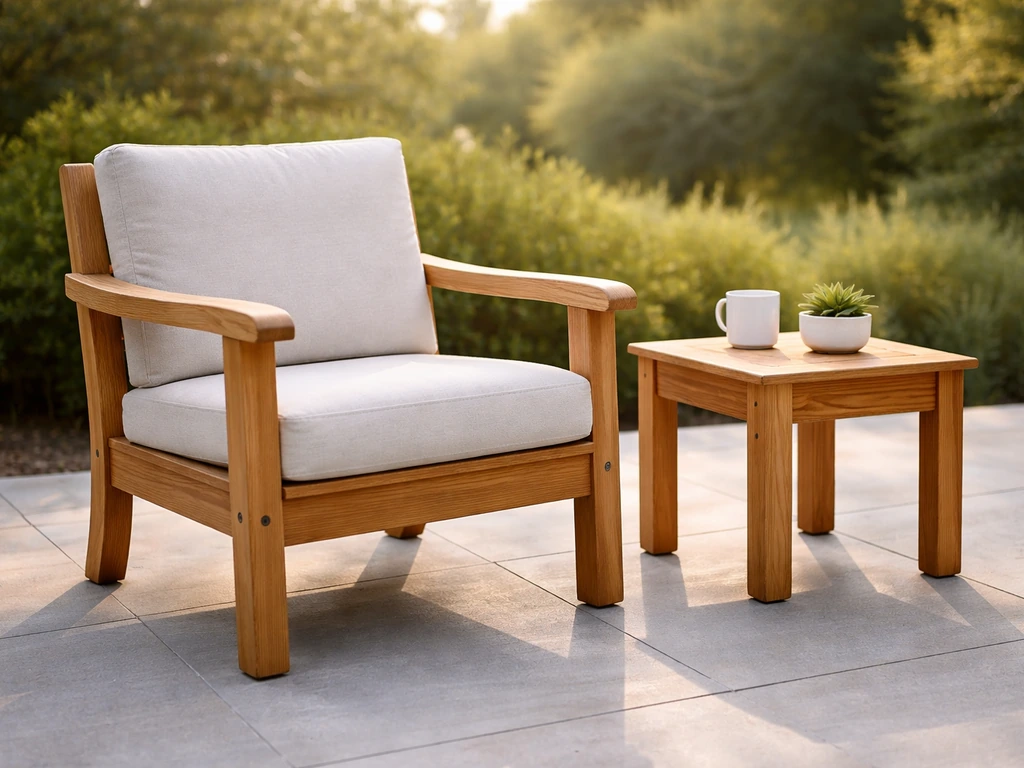
Teak patio lifespan ranges, factors that shorten or extend durability, and a maintenance plan to protect joints and fini
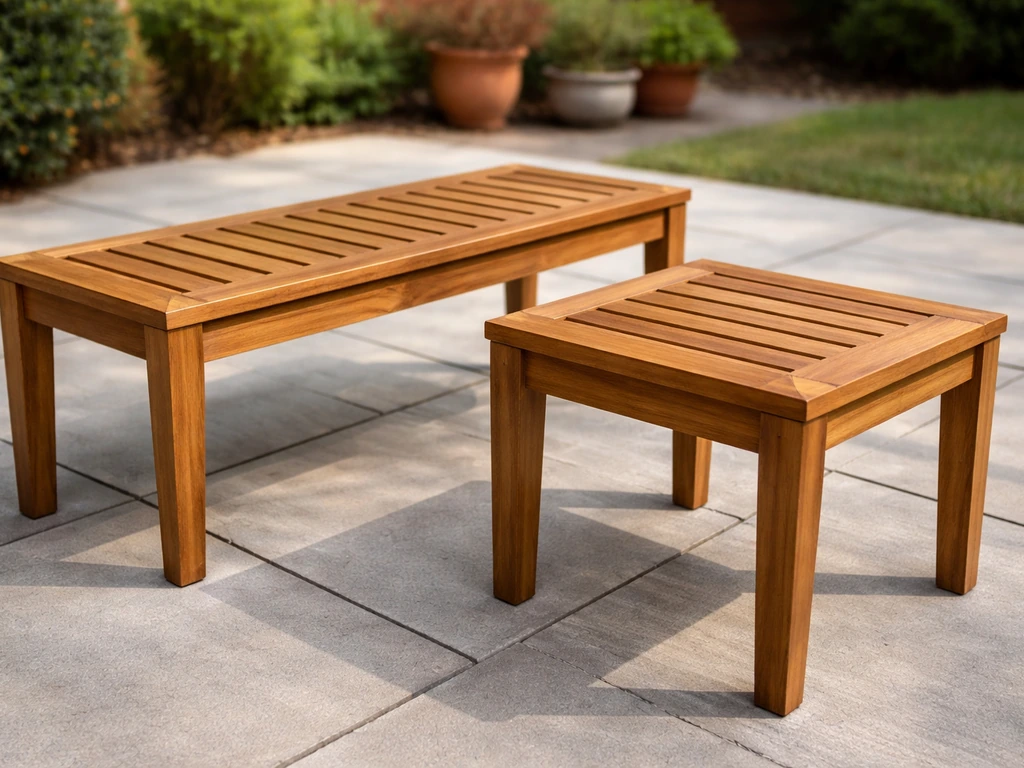
Checklist for buying high quality teak patio furniture, spot real construction, compare materials, and maintain it by cl
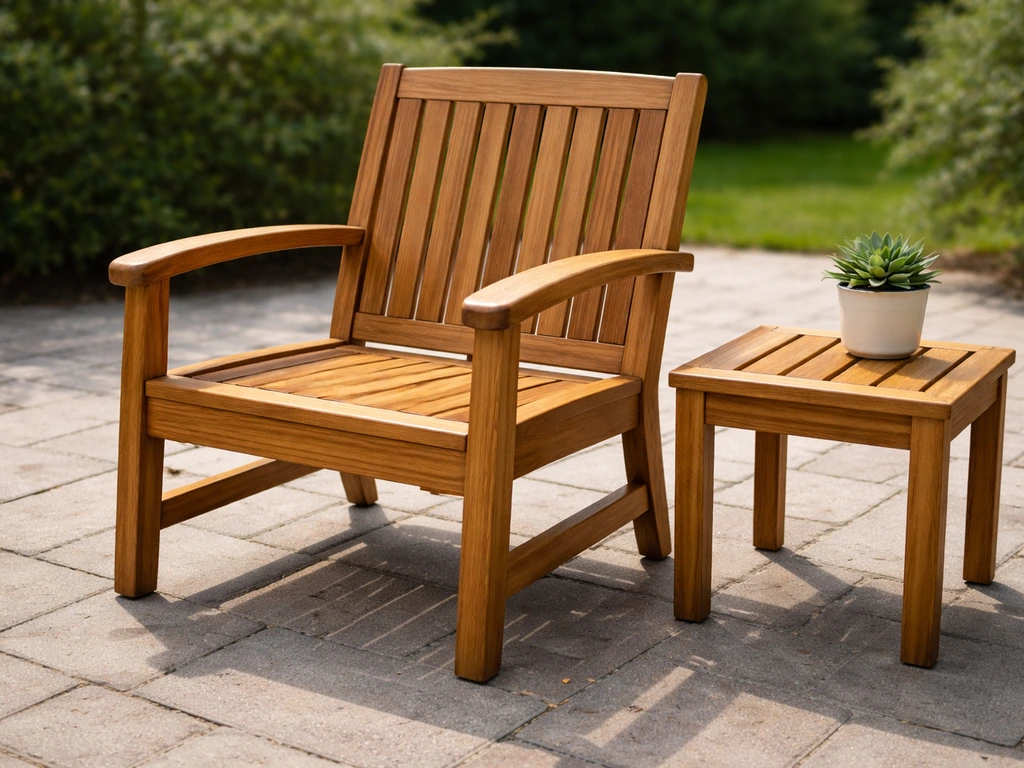
Pick the best teak oil for patio furniture, compare types, and follow step-by-step prep and coats for lasting finish.