
For most teak patio furniture, a premium penetrating hardwood oil (not a film-forming varnish or a cheap big-box teak oil) gives the best balance of protection, repairability, and natural appearance. Products like WOCA Exterior Oil or Penofin Hardwood Formula soak into the wood grain rather than sitting on top, so they won't crack or peel, and you can spot-treat worn areas without stripping the whole piece. If you're in a high-UV desert climate or want to go longer between maintenance coats, a pigmented translucent stain rated for hardwoods (such as Sikkens Cetol) steps up service life to two to four years while still letting the wood grain show. Clear film-forming finishes like marine spar varnish look stunning but are high-maintenance on teak because the wood's natural oils undermine adhesion over time.
Best Stain for Teak Patio Furniture, Top Picks by Climate

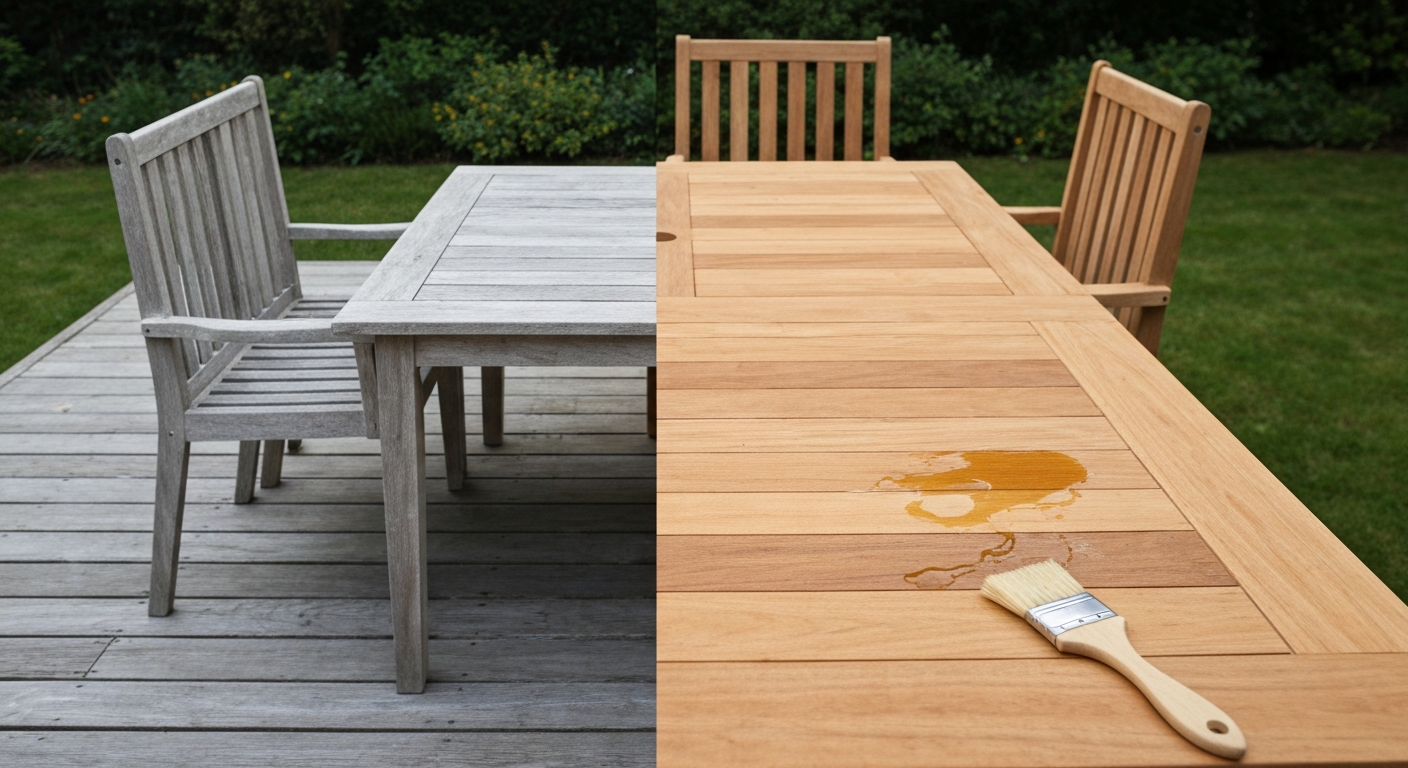
What 'best stain for teak' actually means and how to choose
The word 'stain' gets used loosely for teak finishing, and that loose language causes real problems when you're standing in a paint aisle. In practice, you're choosing between three fundamentally different approaches: penetrating oils that feed into the wood, pigmented translucent stains that add color while still showing grain, and film-forming finishes (varnishes, sealers) that create a physical barrier on the surface. Each behaves differently when it weathers, fails, and needs recoating, so picking the right one comes down to four questions.
- How much UV, moisture, and salt does your furniture face? (Coastal and humid climates punish penetrating oils faster.)
- How often are you willing to re-apply? (Penetrating teak oils can need a fresh coat every six to twelve months in direct sun.)
- Do you want to preserve the warm honey tone of teak or let it weather to a silver-grey? (Clear oils slow greying; pigmented stains maintain color longer.)
- Is your teak new, previously oiled, or already finished with a film-forming product? (Previously coated teak requires extra prep steps before any new product will bond.)
If you're still figuring out whether your furniture is worth refinishing at all, the expected lifespan of well-maintained teak and what separates high-quality grades from cheaper imports are worth understanding before you invest time and money into a finishing system. If you want specifics on expected service life and longevity, see our guide on how long does teak patio furniture last for climate-adjusted lifespan estimates and maintenance intervals. If you’re shopping, see options for high quality teak patio furniture to compare grades and prices before committing to a finishing system.
Should you actually stain teak? The honest case for and against
Teak is genuinely unique among outdoor furniture woods because it carries its own natural oils and silica that resist rot, insects, and moisture without any finishing at all. That's the whole reason Grade A plantation teak commands a premium. If you leave it unfinished, the surface oils oxidize under UV and the wood transitions to an even silver-grey patina over six to twelve months. Many designers consider that patina the point. The structural wood underneath is completely unaffected. So no, you do not have to stain or oil teak. The question is whether you want to.
Reasons to stain or oil teak
- You want to preserve the warm golden-brown color rather than transition to silver-grey.
- Your furniture is in a harsh coastal or humid environment where surface mildew and biological staining are real problems; some penetrating oils include mildewcide additives.
- You've bought mid-grade or reclaimed teak that has lower natural oil content and benefits from supplemental protection.
- The furniture is stored outdoors year-round in a wet climate where consistent moisture cycling would accelerate surface checking.
Reasons to leave it natural
- Zero ongoing cost or labor. The silver-grey weathered look is low maintenance and structurally sound.
- No risk of tacky residue, peeling film, or uneven color if application is done incorrectly.
- Oiling a surface that was already allowed to grey fully requires a cleaning and brightening step first, adding significant prep work.
- If you're planning to sell or eventually refinish, unfinished teak is far easier to work with than teak coated with an incompatible film-forming finish.
How your stain choice affects appearance, longevity, and long-term value
This is where most finishing guides gloss over the real trade-offs, so let me be direct. Penetrating oils look beautiful on fresh teak because they deepen the grain and restore warmth, but they fail visually before they fail structurally. Under direct UV, oil-based coatings lose color and gloss faster than pigmented film-formers in accelerated weathering tests (blank" rel="noopener noreferrer">ASTM G154-style QUV cycles), though their failure mode is fade-to-grey rather than cracking or peeling. See blank" rel="noopener noreferrer">Accelerated Weathering of Wood Coatings (PCI/industry report describing QUV methods) for industry QUV cycles and direct water spray procedures used to evaluate wood coatings under ASTM G154‑style accelerated tests. That matters for your decision: a faded penetrating oil is an easy fix (clean and recoat), while a cracked or peeling film-forming finish is a major stripping job.
Long-term value is best measured as cost per year, not upfront cost. A quart of Watco Teak Oil runs about $18 to $22 at big-box stores as of 2026, but if you're recoating every six to twelve months on a full dining set, that cost adds up quickly. A premium penetrating hardwood oil applied correctly may only need a maintenance coat every one to three years. A well-executed pigmented translucent stain can extend that to two to four years. Film-forming systems like marine spar varnish can theoretically go three to seven years between full refinishes, but the prep work required when they do fail (full stripping, degreasing, sanding) is significant enough that most homeowners end up hiring it out.
The main finish types for teak: what they are and what they do
The USDA Forest Products Laboratory draws a clear distinction between penetrating finishes that soak into the wood without forming a continuous surface film and film-forming finishes that create a physical barrier. That distinction drives almost every practical difference you'll encounter. Here's how each type plays out on teak furniture specifically.
Penetrating 'teak oils'
These are the most widely sold and most misunderstood products for teak. Marketed as 'teak oil,' they're typically blends of drying oils (linseed, tung, or synthetic carriers) plus solvents, sometimes with UV inhibitors and mildewcide. They don't nourish teak the way some marketing implies; they saturate the surface layer and create a thin, sacrificial layer that slows oxidation and moisture exchange. They do not form a continuous film. The critical application rule: wipe off all excess within minutes of application, or you'll get a sticky, tacky surface that takes days to clear. This is the most common application error and it's entirely preventable by following the product data sheet.
Penetrating hardwood oils (premium)
Products like WOCA Exterior Oil and Penofin Hardwood Formula are a step up from generic teak oils. They're formulated specifically for dense, oily tropical hardwoods, often with higher-quality oil bases, better UV packages, and clearer technical data sheets that give you actual drying times (typically 24 to 48 hours to harden under standard conditions) and maintenance schedules. Penofin, for example, recommends a second coat three to six months after the initial application on dense hardwoods, then maintenance cleaning twice a year. Previously oiled surfaces don't require full sanding between routine maintenance coats, which is a major practical advantage.
Pigmented translucent stains
These are film-building products with a semi-transparent pigment load, meaning they add color but still allow wood grain to show through. The Sikkens Cetol family is the most common example used on hardwood outdoor furniture. Pigment absorbs and scatters UV before it reaches the wood, which is why these products last longer between coats than clear oils in high-UV environments. Expected service life is two to four years with light maintenance recoats. The trade-off is that you're committed to a color tone, and you can't easily switch back to a natural look without full stripping.
Waterborne stains and finishes
Waterborne exterior stains have improved substantially in the past decade, and several premium lines now offer performance comparable to oil-based systems with faster dry times and easier cleanup. Their primary limitation on teak is adhesion: teak's natural surface oils can prevent waterborne products from bonding properly unless the surface has been thoroughly cleaned, degreased, and sometimes lightly abraded. If a product TDS doesn't specifically mention oily or dense tropical hardwoods, test on a hidden area first.
Clear sealers and film-forming finishes (spar varnish, polyurethane)
Marine spar varnish and high-gloss exterior polyurethane provide the strongest moisture and abrasion barrier, and they look spectacular on freshly sanded teak. They work by forming a coherent film that sits on top of the wood surface. The problem with teak specifically is well-documented: teak's natural extractive oils leach to the surface and actively interfere with adhesion. Coating manufacturers including Interlux and Hempel explicitly require degreasing with special solvents or aggressive sanding before application to avoid adhesion failure. When film-forming finishes do fail on teak (and they eventually will), they fail by cracking and peeling, which requires full mechanical removal before refinishing.
| Finish Type | Service Life | Failure Mode | Recoat Prep | Best For |
|---|---|---|---|---|
| Generic teak oil (Watco, Star brite) | 6–12 months (direct sun) | Fade, grey oxidation | Clean and recoat | Budget, low-sun environments |
| Premium penetrating hardwood oil (WOCA, Penofin) | 1–3 years | Fade, grey oxidation | Clean and recoat (no stripping needed) | Most teak furniture, all climates |
| Pigmented translucent stain (Sikkens Cetol) | 2–4 years | Fading, partial peeling at edges | Light sand or clean before recoat | High-UV climates, color uniformity |
| Waterborne exterior stain | 1–3 years (varies) | Peeling if adhesion poor | Clean, degrease, possibly abrade | Mild climates, faster dry time preferred |
| Clear film-forming (spar varnish, polyurethane) | 3–7 years | Cracking, peeling | Full strip, degrease, sand for refinish | Low-maintenance appearance priority |
Best teak oil picks and climate-specific recommendations
No single product is the best stain for teak patio furniture across every climate. For specific product recommendations tailored to outdoor seating, see our guide to the best teak oil for patio furniture. If you're choosing pieces as well as finishes, see our guide to the best teak patio furniture for buying and care recommendations. Your regional conditions should drive the product selection as much as the product reviews. Here's how I'd approach it by climate zone.
Coastal and humid climates (Gulf Coast, Pacific Northwest, Florida)
Coastal environments bring salt spray, persistent humidity, and biological growth: mildew, algae, and surface staining are the primary threats. Look for penetrating oils that explicitly include mildewcide or antifungal additives, and read the product data sheet rather than trusting label claims. Penofin Hardwood Formula includes a mildew protection claim in its TDS and is formulated for dense exotic hardwoods. WOCA Exterior Oil is another strong option. Expect to clean and recoat annually in high-humidity zones, and use a dedicated exterior wood cleaner twice yearly as the manufacturer recommends. Pigmented stains with biocide additives offer better resistance to biological growth between cleaning cycles.
High-UV and arid climates (Southwest, high desert, Arizona, Southern California inland)
UV degradation is the dominant failure mechanism here. Clear and lightly tinted penetrating oils will fade and grey faster in these environments than in moderate climates, consistent with what accelerated UV weathering studies show for oil-based coatings. A pigmented translucent stain gives you the best longevity per dollar: pigment blocks UV before it reaches the wood, and products like the Sikkens Cetol line are specifically engineered for high-UV exposure with service lives of two to four years. Avoid clear film-formers in high-UV environments unless you're willing to do the refinishing work every few years.
Temperate and mixed climates (Mid-Atlantic, Midwest, Pacific Northwest summers)
This is the sweet spot for premium penetrating hardwood oils. WOCA Exterior Oil and Penofin Hardwood Formula both perform well in moderate UV and moderate moisture, and you can realistically expect one to three years between maintenance coats with annual cleaning. These are the products I'd recommend as the starting point for most homeowners with quality teak furniture. They maintain the natural wood appearance, are forgiving to apply and repair, and have manufacturer-backed technical data to guide your schedule.
Cold climates with freeze-thaw cycles (Upper Midwest, New England, Canada)
Freeze-thaw cycling stresses any finish that traps moisture. Penetrating oils that allow the wood to breathe are generally safer here than film-forming finishes, which can crack and lift when moisture trapped beneath them expands. Store teak furniture indoors or cover it during winter if possible; even covered, apply a maintenance coat in late spring after the last freeze and inspect for surface checking. Avoid applying any oil-based product when temperatures are below 50°F (10°C), as the curing chemistry slows significantly and you risk incomplete hardening.
Surface preparation before staining: do this right or nothing else matters
Every product failure I've seen on teak comes back to inadequate prep. The wood's natural oils, environmental contamination, and previous finish residues all create adhesion barriers that new product can't bridge. Skipping steps here is how you end up with tacky surfaces, peeling finishes, or blotchy color three months after application.
- Clean the surface: Use a dedicated exterior wood cleaner (not household bleach, which can raise grain and discolor teak). Products like WOCA Exterior Wood Cleaner or the Penofin cleaner are formulated to remove dirt, biological matter, and surface contamination without damaging the wood fibers.
- Remove mildew: If mildew staining is present, a two-step approach works best: a cleaner/brightener combo (or diluted oxalic acid-based brightener) applied after the initial clean. Let it dwell per the product instructions, then rinse thoroughly.
- Brighten grey teak: If your furniture has already weathered to grey, a teak brightener (typically an oxalic acid or sodium percarbonate solution) opens the grain, neutralizes oxidation, and returns the surface closer to the natural honey tone. WOCA specifically recommends their brightener for grey teak restoration before re-oiling.
- Sand (when needed): New furniture or previously coated furniture benefits from a light sand with 120 to 150 grit to open the grain and remove surface contamination. Sand with the grain, not across it. For film-forming finish application specifically, this step is mandatory. For routine maintenance re-oiling of a previously oiled surface in good condition, sanding is usually not required.
- Degrease (film-forming finishes only): If you're applying varnish, polyurethane, or a high-build film-forming product, wipe the surface with a solvent recommended in the product TDS (often acetone or a proprietary prep solvent) to remove teak's surface extractive oils. This is a non-negotiable step; Interlux and Hempel both flag this explicitly in their product data sheets for application over oily woods.
- Allow thorough drying: The wood must be completely dry before any finish is applied. Minimum drying time after washing is 24 to 48 hours in moderate conditions. In humid climates, allow 48 to 72 hours and check moisture content if you have a meter (target below 15% for oil application, below 12% for film-forming finishes).
Applying the stain: tools, technique, and what not to skip
Application method matters as much as product choice, especially for penetrating oils where the wipe-off step is what separates a beautiful result from a sticky mess.
Tools
- Natural-bristle brush or foam applicator for penetrating oils: both work well. Brush into the grain, work in sections.
- Clean lint-free rags for wiping excess oil: keep several on hand and replace as they become saturated.
- Synthetic-bristle brush for waterborne or film-forming products: natural bristles absorb water and become limp.
- Safety note: oil-soaked rags are a fire hazard. Lay them flat to dry outdoors or submerge in water before disposal. This is not optional.
Technique for penetrating oils
- Apply a liberal first coat with a brush or foam applicator, working the oil into the grain.
- Allow the oil to penetrate for five to fifteen minutes depending on wood density and ambient temperature (follow the product TDS, not a general rule).
- Wipe off ALL excess oil with a clean rag. This step is not optional and it's the number-one mistake people skip. Excess oil left on the surface does not dry; it stays tacky for days and can attract dirt.
- Allow to dry to touch (typically four hours for Penofin-type products) and check for any remaining sticky spots. Buff with a clean rag if needed.
- Apply a second coat after the first has fully cured: Penofin recommends three to six months for the second coat on dense hardwoods; some premium oils allow a second coat within 24 hours on very dry or thirsty wood. Check the TDS.
- Full cure before heavy use is typically four to seven days. Avoid placing cushions or stacking furniture during this period.
Technique for pigmented stains and film-forming finishes
- Stir, do not shake, pigmented products to distribute pigment without introducing air bubbles.
- Apply thin, even coats. Film-forming finishes especially should be built in multiple thin coats rather than one heavy coat, which is prone to runs, sags, and adhesion failure.
- Recoat windows vary by product: most film-forming exterior products specify a window of four to twenty-four hours before the surface becomes too hard to bond without sanding. Sand lightly with 220 grit between coats if you've exceeded the recoat window.
- Apply in shade and mild temperatures (ideally 50°F to 90°F / 10°C to 32°C). Direct sun heats the wood surface and causes finish to flash too quickly, leaving lap marks.
- Ensure ventilation: solvent-based products release VOCs during application and curing. Work outdoors or in a well-ventilated area and avoid open flames nearby.
Troubleshooting: tacky surface, mildew, peeling, and uneven color
| Problem | Likely Cause | Fix |
|---|---|---|
| Tacky or sticky surface after oiling | Excess oil not wiped off during application | Wipe surface with mineral spirits or the product's recommended cleaner. Allow to dry. Apply a thinner coat next time. |
| Mildew or dark staining on finish | Biological growth in humid/coastal conditions | Clean with dedicated exterior wood cleaner and mildewcide solution. Allow to dry fully. Apply oil with antifungal additive. |
| Peeling or flaking finish | Film-forming finish failing; adhesion breakdown, often from oily wood surface | Strip completely with mechanical sanding or chemical stripper. Degrease surface. Reapply from bare wood. |
| Blotchy or uneven color | Uneven surface porosity, leftover grey patina, or insufficient cleaning before application | Strip back, apply teak brightener, sand evenly, and reapply with consistent thin coats. |
| White or milky haze under finish | Moisture trapped under film-forming finish | Allow to fully dry; in mild cases, light sanding and a fresh topcoat may fix it. In severe cases, strip and refinish. |
Maintenance schedule by finish type and climate
One of the most common questions I get is how often to re-oil teak. The honest answer is: it depends on your finish type and your climate, not a universal calendar. Here's a practical schedule based on manufacturer guidance and real-world performance data.
| Finish Type | Temperate Climate | High-UV / Arid | Coastal / Humid | Cold / Freeze-Thaw |
|---|---|---|---|---|
| Generic teak oil | Every 6–12 months | Every 3–6 months | Every 4–8 months (clean twice yearly) | Every 6–12 months (apply in spring) |
| Premium penetrating hardwood oil | Every 1–2 years | Every 12–18 months | Every 12 months (clean twice yearly) | Every 12–18 months (spring application) |
| Pigmented translucent stain | Every 2–4 years | Every 2–3 years | Every 2–3 years | Every 2–4 years (inspect spring) |
| Film-forming finish (spar varnish) | Every 3–5 years (full refinish) | Every 2–4 years (monitor for cracking) | Every 3–5 years | Every 3–5 years (remove for winter if possible) |
Seasonal care by climate zone
- Coastal and humid zones: Clean furniture twice yearly (spring and fall) with an exterior wood cleaner. Inspect for biological staining after extended wet periods. Touch up any bare spots or worn areas before the next wet season.
- High-UV and arid zones: Inspect color and surface integrity annually in early spring before peak sun exposure. A light wipe-down with a maintenance coat on worn areas extends the full recoat interval by a year or more.
- Cold climates: Apply your maintenance coat in late spring, after the last freeze and once temperatures are consistently above 50°F. Store cushions separately and consider covering furniture through winter to reduce moisture cycling.
- Temperate zones: A yearly spring inspection and cleaning, with a full maintenance coat every one to two years (for penetrating oils) or every two to four years (for pigmented stains), is sufficient for most teak furniture in good condition.
Cost breakdown: what you'll actually spend
Finishing costs are easy to underestimate if you focus only on the product price. A quart of Watco Teak Oil at $18 to $22 covers roughly one to two chairs or one small table, and if you're recoating twice a year, your annual spend on product alone adds up fast. A premium penetrating oil at $40 to $60 per liter covers similar surface area but at a longer recoat interval, often making it cheaper per year. Add to that the cost of cleaner, brightener, sandpaper, applicators, and rags: budget $30 to $60 for a full prep kit for a dining set. For film-forming finishes, add the cost of a stripper or chemical cleaner ($20 to $40) every time the finish fails, or the cost of hiring out if you don't want to do the stripping yourself.
The long-term value framing that applies to the furniture itself, where cost-per-year of ownership matters more than the sticker price, applies equally to your finishing strategy. Good teak properly maintained with a quality penetrating oil is likely to outlast the furniture category around it, which is part of what makes it worth maintaining in the first place.
FAQ
Do you need to stain or finish teak patio furniture at all?
No — teak contains natural oils and silica that make it very weather‑resistant and able to grey gracefully if left unfinished. Staining or sealing is optional and depends on desired appearance and performance: leave untreated for a natural silvery patina with minimal maintenance; use a penetrating oil or sealer to preserve original colour, improve water/soil resistance, and reduce cleaning frequency; or use a film‑forming/translucent system to maximize abrasion and UV resistance at the cost of more complex prep and potential peel issues.
What are the main finish types for teak and how do they differ?
Main types: 1) Teak/penetrating oils (linseed/tung blends, hardwood oils): soak into the wood, enhance colour, easy to maintain locally, but don’t form a surface film and need frequent re‑application in high‑UV exposure. 2) Penetrating high‑performance hardwood oils (commercial brands): similar behavior but formulated for exterior use with mildewcides and longer service life. 3) Clear/film‑forming finishes (marine spar varnish, exterior polyurethane/translucent systems): create a surface film that blocks moisture/UV better and lasts longer between full refinishings but require degreasing/abrasion for adhesion and can fail by cracking/peeling. 4) Waterborne stains/sealers: lower VOCs and easier cleanup, often pigmented for better UV protection, but may raise grain or need light sanding between coats. Choice is a trade‑off between appearance, longevity, ease of maintenance and failure modes.
Which finish is best for appearance (keeping new teak colour)?
To maintain the warm golden colour of new teak: use a penetrating teak oil or commercial exterior hardwood oil applied per manufacturer instructions (thin coats, wipe off excess). Pigmented translucent penetrating oils or lightly tinted waterborne sealers add extra UV protection while still showing wood grain. Film‑forming pigmented/translucent systems preserve colour longer but will alter the natural hand and may create a noticeable surface layer.
Which finish is best for maximum longevity and protection in harsh climates?
For greatest longevity in very sunny, high‑wear, or coastal/humid climates, a high‑quality pigmented/translucent film‑forming system (recommended exterior marine or decking finish) typically gives the longest intervals between full refinishes. In coastal/humid locations choose products with mildewcides and expect careful surface prep (degrease/sand). If you prefer the look/feel of oil, select a premium penetrating hardwood oil with mildew inhibitors and be prepared for more frequent maintenance (1–3 years).
What finish is best in humid or coastal climates prone to mildew and salt?
Pigmented film‑forming finishes or premium penetrating oils that include mildew inhibitors are preferable. Pigmented/translucent films tend to resist surface mildew staining better; penetrating oils with biocides require more frequent cleaning. Always use cleaners/brighteners periodically (every 6–12 months) to remove mildew and salt deposits and follow the manufacturer’s coastal guidance.
How does finish choice affect long‑term value and maintenance costs?
Penetrating oils: low initial cost but higher recurring maintenance (more frequent re‑applications and cleaning) — good if you want minimal surface film and easier spot maintenance. Film‑forming/pigmented systems: higher initial prep and material/labor cost but longer intervals between full refinishes; when they fail they often require more extensive prep (degreasing, sanding, or stripping) which raises restoration cost. Balance upfront budget, expected lifetime of the furniture, and willingness to maintain.
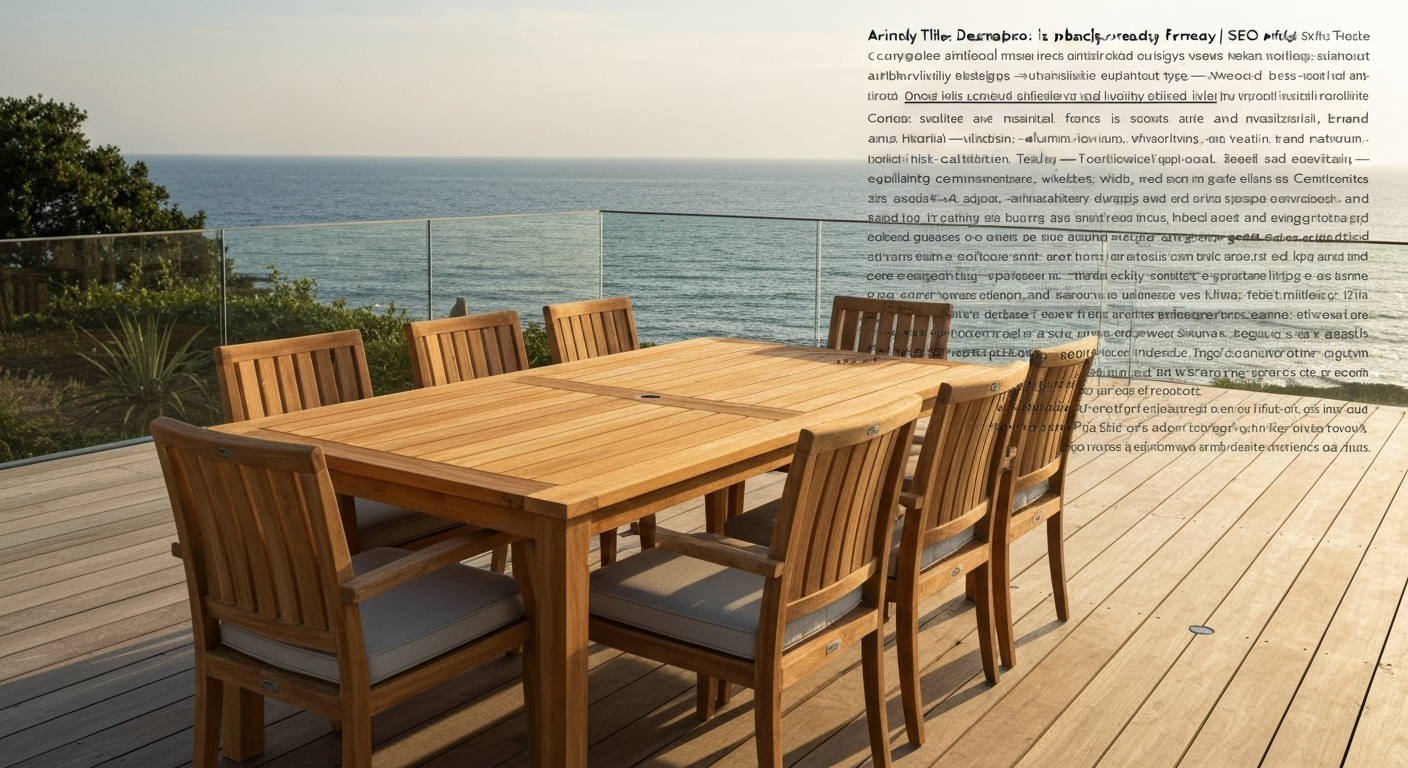
Is teak patio furniture good? Evidence-based verdict, lifespan, care, buying tips, comparisons, and eco guidance.
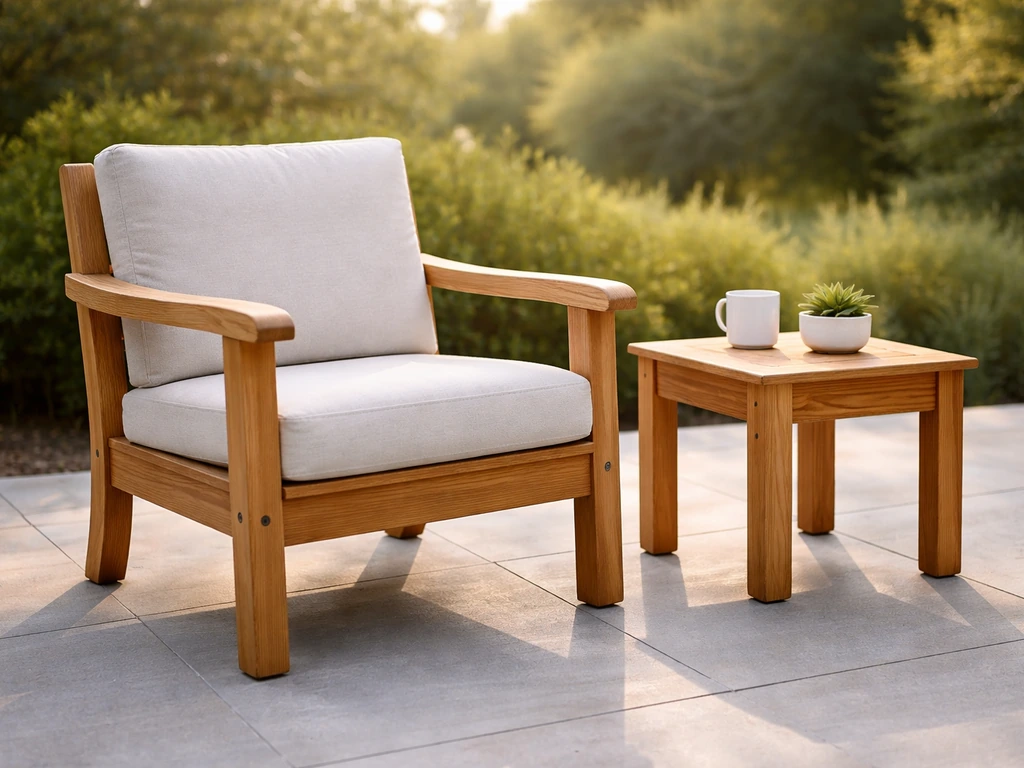
Teak patio lifespan ranges, factors that shorten or extend durability, and a maintenance plan to protect joints and fini
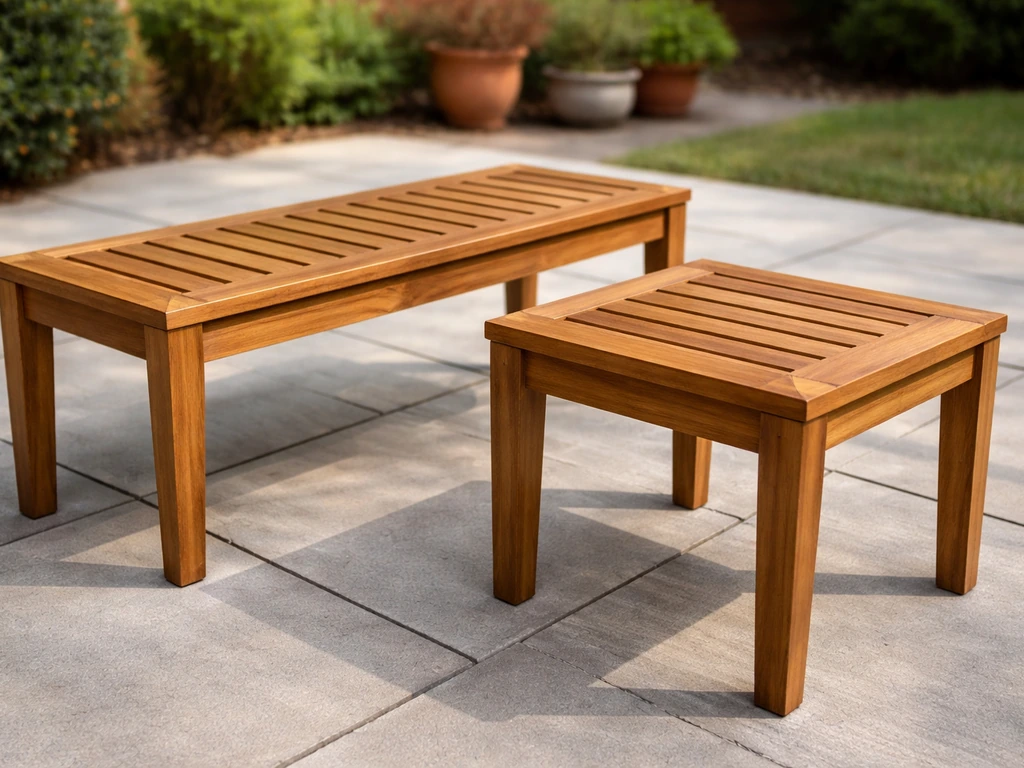
Checklist for buying high quality teak patio furniture, spot real construction, compare materials, and maintain it by cl