
If you have a piece of vintage metal patio furniture and you're wondering whether it's actually Woodard, here's the fastest answer: flip it over and look for a stamped or embossed 'Woodard' mark or a 'W' on the underside of the frame. That single check catches most genuine pieces made from the 1930s through the mid-1970s. But brand marks can be worn, painted over, or missing entirely, so this guide walks you through every reliable identification method, from visual design cues to construction tells to the photos and measurements you'll need to confirm a find with confidence.
How to Identify Vintage Woodard Patio Furniture

Marcus Kellerman
6 May 2026
What 'Woodard' Actually Means (Brand vs. Look-alikes)
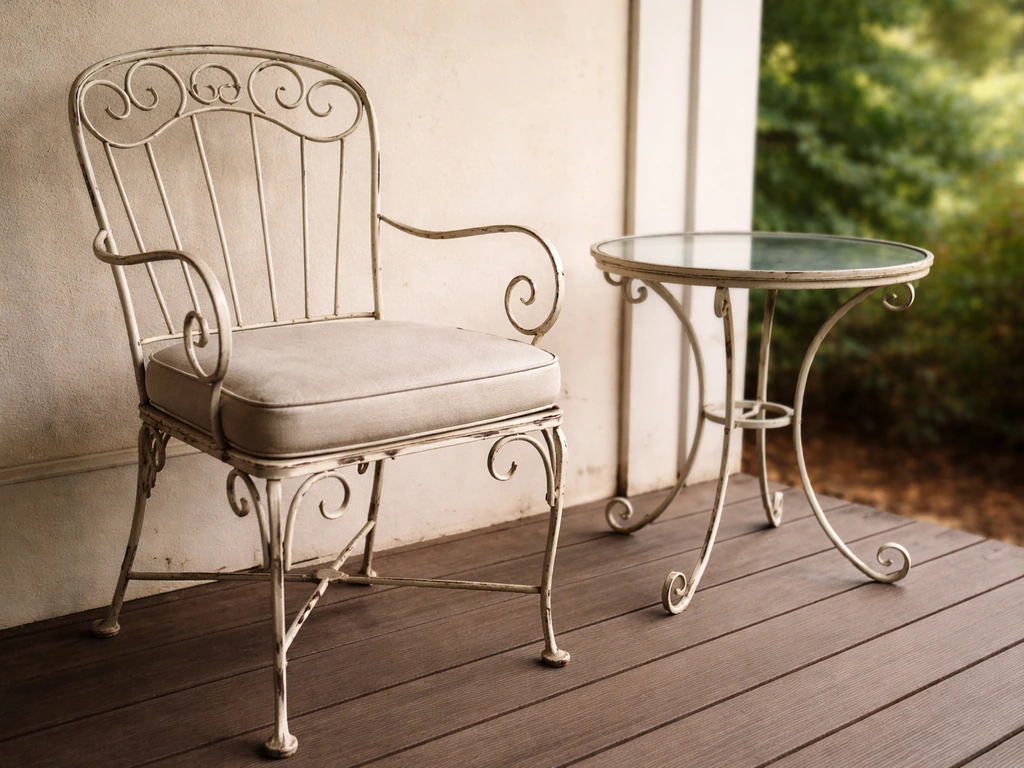
Woodard is a specific American manufacturer, not a style category. The company was founded in 1866 in Owosso, Michigan, by Lyman Woodward, who initially made wood furniture and caskets. The pivot to outdoor metal furniture happened in 1936 when Woodard debuted their wrought iron line, and that's the era most vintage hunters are chasing. Over the decades the company also produced cast aluminum and all-season wicker under the Woodard name, and at various points sold furniture under sub-brands including Woodard Landgrave and Lyon-Shaw.
The confusion comes from the fact that wrought iron and cast aluminum patio furniture with scrollwork, floral motifs, and heavy frames was widely popular from the 1940s through the 1970s, and many manufacturers copied the general aesthetic. Generic scrollwork chairs or floral-patterned iron sets are not Woodard just because they look similar. The difference is in the details: construction quality, finish application, specific pattern names, and especially brand marks. Woodard's factory in Owosso handled everything from forming and welding to sanding, painting, and finishing in-house, which produced a consistency of build that look-alikes typically lack. If you're also setting up or reassembling your find, look for fdw patio furniture instructions for the correct hardware and steps.
Quick Visual ID Checklist
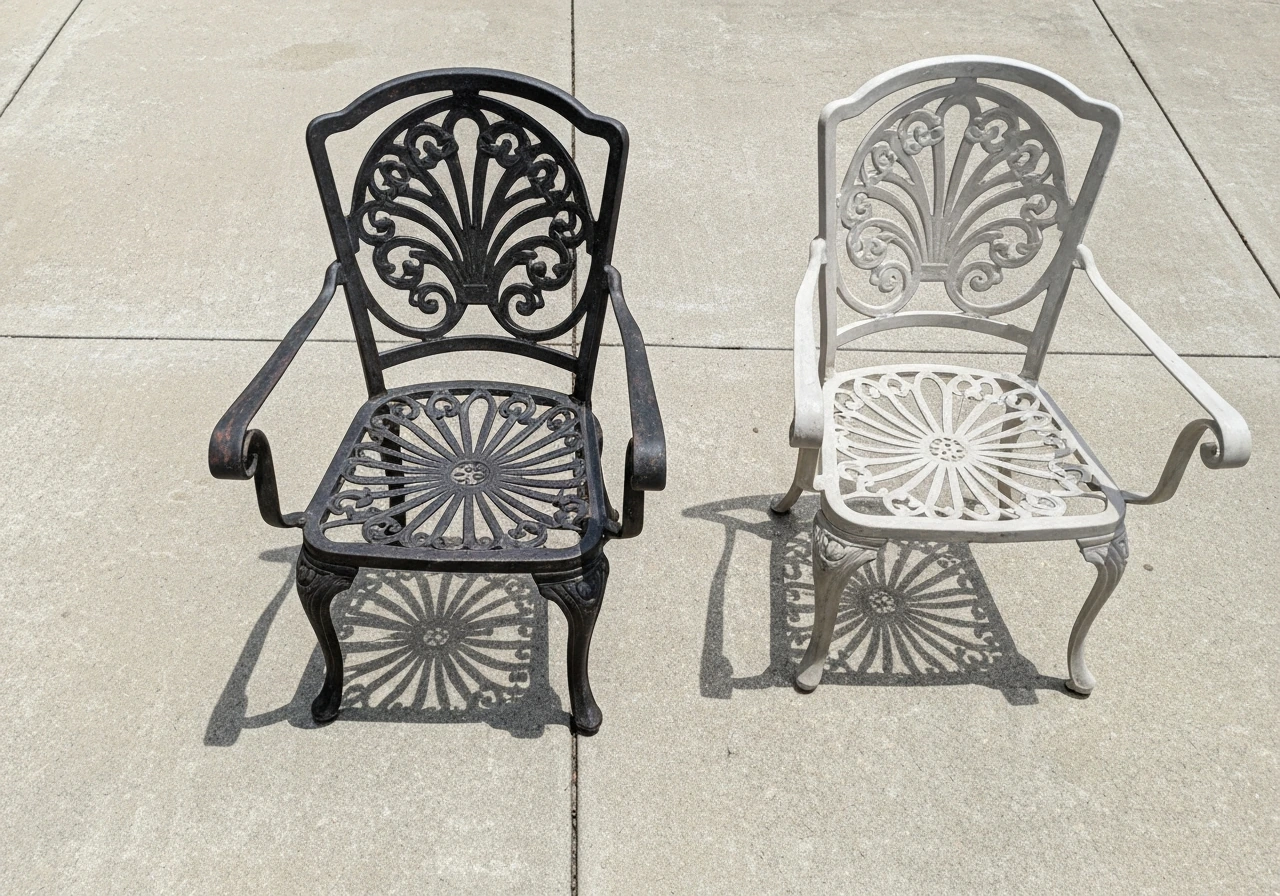
Before you go hunting for marks, do a fast visual pass. Genuine vintage Woodard pieces share a cluster of physical traits that narrow things down quickly.
- Heavy, dense frame: Wrought iron Woodard pieces have real weight. Lift a chair from one armrest. If it feels surprisingly light for its size, you may be looking at a thinner-gauge competitor piece or a later reproduction.
- Smooth, consistent welds: Woodard's factory production included multi-step sanding after welding. Look at joints under the seat and where arms meet the back. Genuine pieces show clean, finished weld points, not rough or globby seams.
- Elaborate, named design patterns: Woodard produced distinct named collections including Chantilly Rose, Orleans, Florentine, Andalusian, Trianon, Sculptura, and Chateau Lorraine. Andalusian features elaborate Spanish-style scrollwork; Chantilly Rose uses floral rose motifs. If you can match your piece's decorative elements to one of these catalog lines, that's a strong positive signal.
- Multi-layer paint or original enamel: Vintage Woodard pieces were factory-finished with durable enamel or powder coating. Older pieces that haven't been stripped often show multiple paint layers built up over decades. The underlying coat is typically applied evenly, not brush-painted.
- Cast aluminum medallion on table tops: On cast aluminum pieces, Woodard sometimes placed a branded medallion as a visible detail on the table top surface rather than just on the underside.
- Consistent hardware: Original Woodard bolts, screws, and attachment hardware tend to be uniform across a set. Mismatched fasteners often indicate repairs or non-original pieces assembled together.
Finding and Reading Brand Marks
This is the most reliable single step in the identification process, and it requires getting your hands dirty. Bring a flashlight and a stiff brush.
Where to look
- Underside of the seat frame: The most common location. Tip the chair back or fully flip it. Look at the flat or slightly curved rails that run under the seat.
- Underside of table tops: On cast aluminum tables, check both the underside and the visible top surface near the center or edge border.
- Back legs and back frame rails: Some stamps appear on the rear lower frame members, especially on older wrought iron pieces.
- Underneath armrests: Less common, but worth a look on chairs with substantial arm construction.
What the marks look like
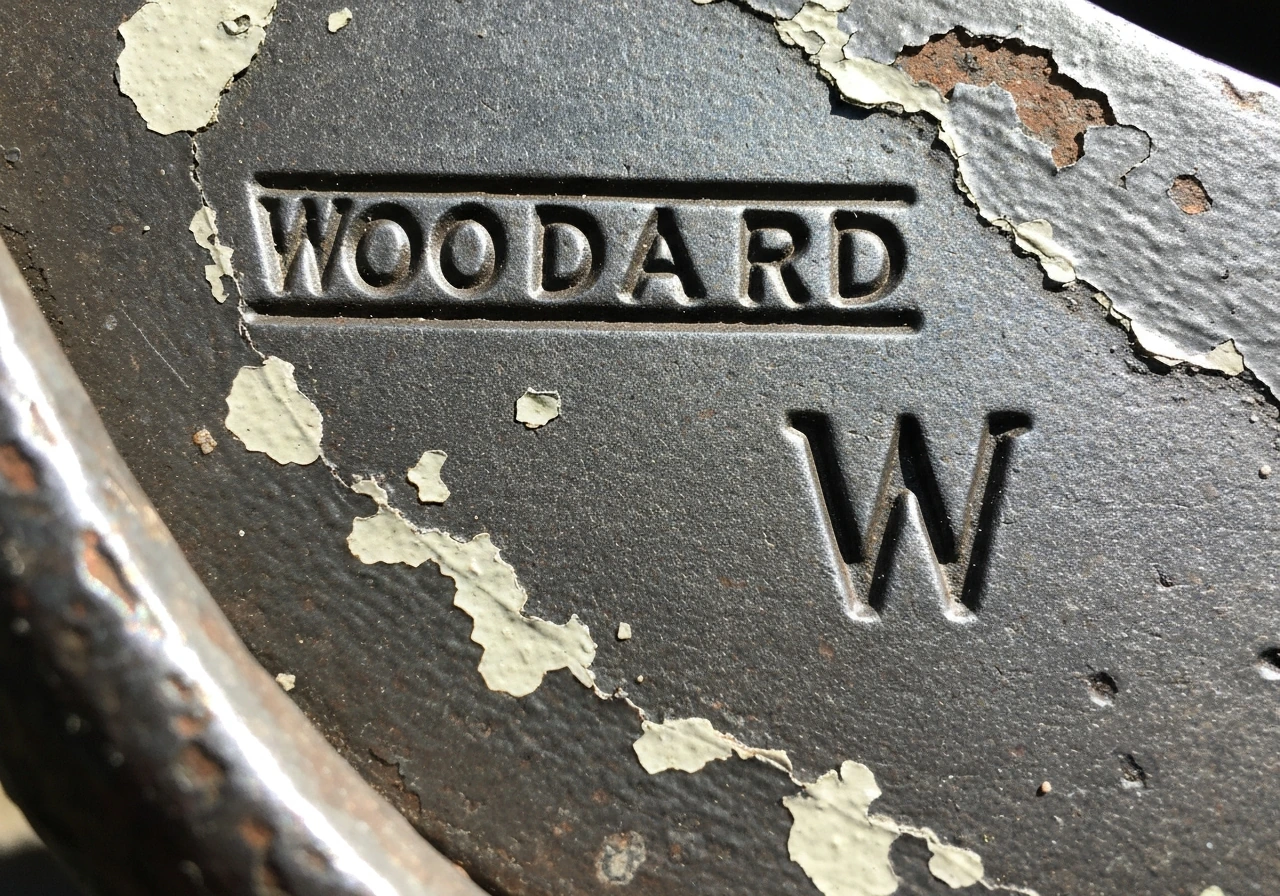
From the 1930s through the mid-1970s, Woodard typically marked pieces with a stamped or embossed 'Woodard' wordmark, sometimes abbreviated to a 'W.' On wrought iron pieces the mark is pressed directly into the metal. On cast aluminum, it may be cast into the piece during production, giving it a slightly different look, more raised or recessed uniformly rather than pressed. Medallion-style branding on cast aluminum table tops is embossed as part of the casting itself, not applied separately.
Paint buildup is your biggest enemy here. If you find what looks like a promising spot but the surface is thick with layers, gently use a plastic scraper or brass brush (not steel, which can scratch and create false marks) to clear the area. Do not use chemical stripper until you've photographed and measured the piece, since you can't un-strip paint. Sometimes just rubbing a white chalk or crayon lightly over the area and wiping it off will reveal embossed text that paint has filled.
Paper labels and tags
Some mid-century Woodard pieces shipped with paper labels or metal tags. These rarely survive decades outdoors, but they occasionally appear on pieces that were stored indoors or in covered areas for long periods. If you find a tag remnant, photograph it immediately, since even partial text or a logo fragment can be cross-referenced against catalog imagery.
Frame and Hardware Construction Tells
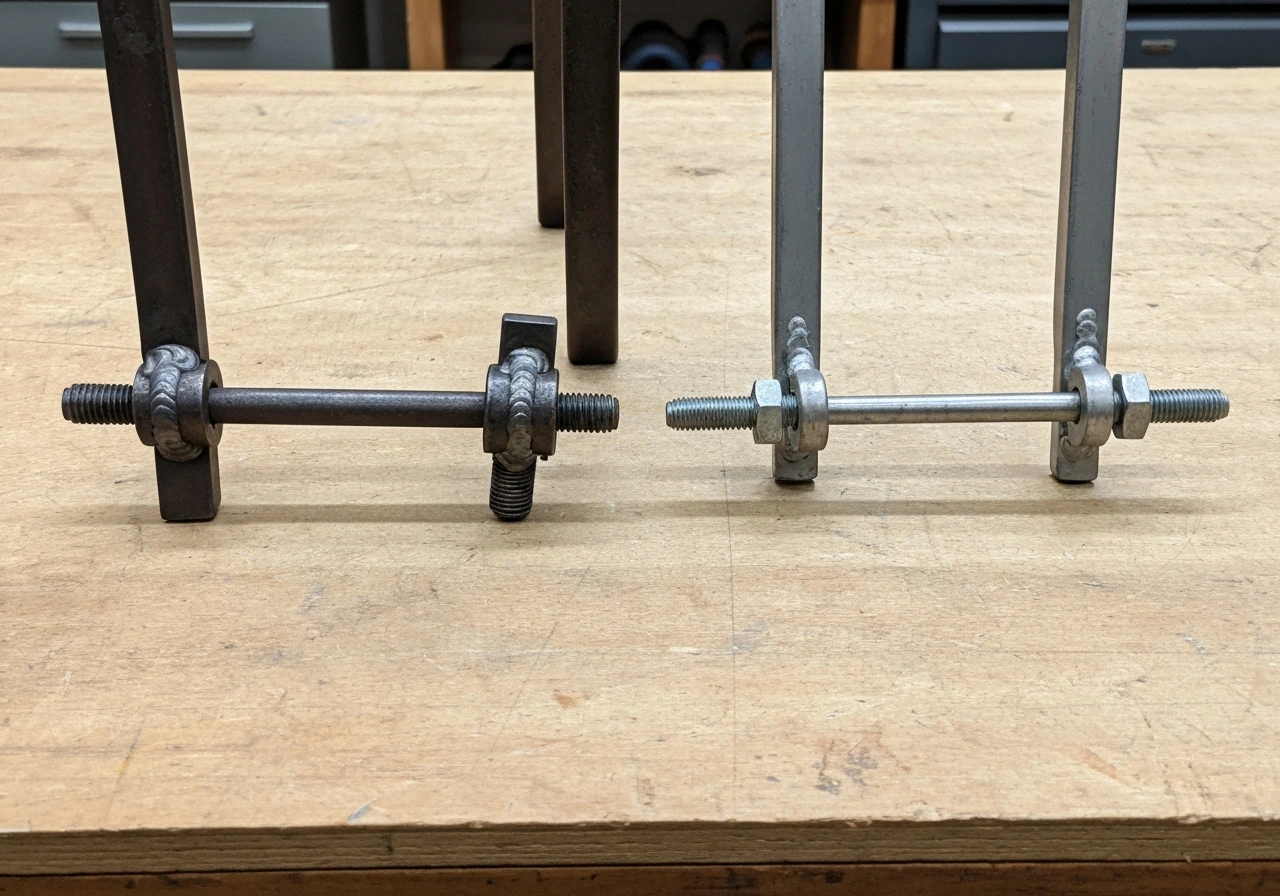
Even without a legible mark, Woodard's build quality leaves fingerprints. The company's Owosso factory handled the full production chain, which shows in the finished product. Furniture Today describes Woodard as launching in 1866 and says the company maintained an Owosso, Michigan factory where its wrought iron is crafted "from start to finish." Owosso factory handled the full production chain.
| Feature | Genuine Vintage Woodard | Typical Look-alike |
|---|---|---|
| Frame material | Solid wrought iron or high-grade cast aluminum ingots; noticeably heavy for size | Lighter tubular steel or thin-gauge aluminum; less weight |
| Weld quality | Clean, sanded, finished joints with no rough texture | Visible weld spatter or rough joint transitions |
| Design pattern | Named, catalog-documented collections with consistent motif repetition | Generic scrollwork or floral shapes without catalog-matching specificity |
| Finish application | Even factory enamel or powder coat; multiple layers visible on older pieces | Brush-painted or single-coat spray, often uneven on detail areas |
| Hardware uniformity | Matching fasteners across the set, consistent with factory assembly | Mix of fastener types or obvious replacement hardware |
| Pattern consistency | Decorative elements repeat exactly and symmetrically | Slight variations in repeat motifs suggesting hand-fabrication or casting imprecision |
One specific construction detail worth noting: Woodard's wrought iron pieces from the 1930s through the 1960s were formed and welded as solid iron, not hollow tube. If you tap a structural member on a piece you think is wrought iron and it rings hollow, that's a strong sign it's tubular steel, not wrought iron. Wrought iron gives a dull, solid thud. Cast aluminum pieces are hollow by nature but still feel dense and substantial compared to thin-wall tubular imitations.
The finish deserves its own attention. Woodard's 1961 advertising claimed their wrought iron furniture was guaranteed against rust for ten years, which speaks to the quality of the underlying finish prep. On a genuine vintage piece that hasn't been refinished, the original enamel coat typically shows even coverage in the recesses of decorative scrollwork, something that's hard to replicate with hand-applied paint.
For anyone restoring an outdoor set, getting quality interior workmanship and patio furniture repair done right can help protect the original finish and extend the life of your furniture quality interiors & patio furniture repair. If recessed areas on a supposedly original piece look obviously brush-painted or pooled, the finish has likely been redone, which doesn't make it fake, but it does complicate reading the piece's original condition.
Dating Your Piece by Era, Style, and Finish
Woodard's production history breaks into recognizable eras, and the styling, materials, and finish type of a piece can narrow down its approximate decade of manufacture.
Late 1930s to 1940s
Wrought iron dominated this period. Pieces are very heavy, designs tend toward relatively simple geometric or early floral patterns. Finish is typically baked enamel. Woodard debuted wrought iron in 1936, and a 1939 wrought iron catalog is documented at the Smithsonian, so any piece with pre-war styling characteristics (simpler ornamentation, heavier forging) likely dates from this early window.
1950s to 1960s
This is the golden era for most collectors. Woodard's most famous named collections, including Chantilly Rose, Andalusian, Sculptura, and Florentine, were produced and cataloged through this period. To learn who makes Halmu(s) patio furniture, check the brand’s own markings and compare them to the maker details used on vintage lines like Woodard Woodard's most famous named collections. A 1967 catalog documents these named lines explicitly. Wrought iron remained the dominant material, but cast aluminum began appearing. Cushions from this period (if original) often show mid-century upholstery fabrics in geometric or tropical prints, though genuine original cushions are extremely rare. The original frame finishes from this era are often black or dark green enamel.
1970s onward
Woodard began expanding more seriously into cast and tubular aluminum through the 1970s and later. Pieces from this era tend to be lighter, with cleaner modernist lines rather than heavy Victorian-style scrollwork. Powder coating replaced enamel as the primary finish method. If you have a piece with a very smooth, almost plastic-feeling finish in a wide range of colors, it's likely post-1970s production. Woodard's current line uses custom powder coat colors, so modern refinished pieces can look deceptively factory-fresh.
Document Your Find: Photos and Measurements

Once you've done your in-person inspection, document everything before you move or clean the piece further. This record is what lets you confirm your identification through catalog comparison, dealer consultation, or online collector communities, and it's exactly what an appraiser or resale buyer will ask for. If you're also tackling a newer setup, review homall 4 pieces outdoor patio furniture instructions so you can compare how modern parts and assembly records are typically documented resale buyer will ask for. If your Woodard or other vintage patio furniture needs repairs, working with patio furniture repair pros can help restore frames, finishes, and cushions without damaging original details.
Photos to take
- Full piece from the front, side, and rear, in natural light if possible
- Close-up of every decorative motif (scrollwork, floral elements, geometric patterns) from straight-on to show the pattern clearly
- All welds and joints, especially under the seat and at arm connections
- The underside of the seat frame and any other location where you found or expect to find a brand mark, with and without a flashlight to show embossing depth
- Any stamp, mark, medallion, or tag remnant with a ruler or coin in frame for scale
- The finish in areas of heavy wear to show original layers
- Hardware (bolts, screws, brackets) from close range to show type and condition
- Any original cushions, fabrics, or labels attached to the piece
Measurements to record
- Overall height, width, and depth of each piece
- Seat height from the ground
- Arm height from the ground
- Table top diameter or length and width
- Diameter of the main structural frame members (the round rod sections of the frame) to distinguish solid wrought iron from hollow tubular metal
- Weight if you have a scale, since weight-to-size ratio is a genuine differentiator between materials
- Diameter or dimensions of any brand mark or stamp found
With photos and measurements in hand, you can compare your piece directly against Woodard's historical catalogs, several of which appear in library archives and on collector sites. The 1967 catalog in particular is a useful reference for matching named collections. You can also bring this documentation to dealers who specialize in vintage patio furniture or to collector forums where pattern-matching expertise is common.
If you're also shopping for current patio furniture, look for brands or makers that produce garden treasure patio sets with similar materials and finishes patio furniture makers. If you're also trying to identify whether other metal patio furniture in your collection is wrought iron or a similar material, the same documentation method applies and cross-checking with identification guides for wrought iron patio furniture specifically can help you rule out or confirm material type before evaluating brand.
One final note: a missing or unreadable brand mark does not disqualify a piece. Construction quality, pattern matching to a documented Woodard catalog line, and material consistency all carry real weight in identification. Conversely, a readable 'Woodard' stamp on a lightweight tubular steel chair with inconsistent welds should raise questions, since mismatched evidence warrants a closer look. Use the full checklist together, not any single factor in isolation, and you'll reach a much more reliable conclusion.
FAQ
What should I do if I cannot find a readable Woodard stamp or embossed mark?
If the “Woodard” stamp or W-mark is missing, the next best proof is to compare (1) the exact scrollwork or floral pattern arrangement to a named Woodard collection in a period catalog, and (2) the welding and metal form type (solid-iron look and dull solid thud for wrought iron from the 1930s-1960s, hollow feel for tubular steel). Brand marks alone can be unreliable due to paint, wear, or refinishing.
How can I clean a piece to reveal markings without damaging evidence?
Clean gently but non-destructively. Start with a soft brush and mild soap and water to remove loose dirt, then photograph any suspected mark areas from multiple angles before scraping. If you scrape, use a plastic scraper or brass brush only, and stop as soon as the metal shows, since over-aggressive cleaning can remove shallow embossing and create confusing “false” letters.
Can a Woodard mark look different on cast aluminum than on wrought iron?
Yes. “Woodard” can be on cast aluminum in ways that look different than wrought iron, including marks that appear raised or recessed as part of the casting, and medallion branding on table tops that is integral to the cast surface. In practice, you should treat the mark’s depth and edge crispness as part of the ID, not just whether the word is present.
If the cushions look mid-century, does that help confirm Vintage Woodard?
Do not rely on comfort alone. Original Woodard cushioning is uncommon because outdoor use and storage vary, so fabric remnants and foam density are weak evidence by themselves. If cushions are present, document their date cues (tags, fabric style, cushion thickness) but expect to confirm the frame first using pattern matching, construction, and finish history.
How do I tell if a Woodard patio set has been refinished, and does that ruin the identification?
Be cautious with refinished sets. A professionally restored piece can still be genuine, but refinishing often changes how enamel sits in recesses and can hide tool marks or stamp depth. Your decision rule should be: if the decorative recesses are too uniformly “hand painted” or the underside welds and hardware don’t match the claimed era, treat the piece as uncertain until you compare named pattern details to catalogs.
What are common “tell me it’s Woodard” mistakes when a seller provides a readable stamp?
Yes, and it usually shows up as an inconsistency between the “story” and the materials. Example red flags: a light tubular steel frame with flimsy welds, a finish that looks like modern powder coating over obvious incorrect metal, or embossed lettering that appears too fresh compared with surrounding corrosion wear. In those cases, treat the readable stamp as a possible aftermarket addition and recheck construction and pattern alignment.
If I find only a partial tag or unclear pattern name, how can I still narrow it down to the right catalog line?
Woodard sub-brands and named lines can complicate catalog matching. If you find only partial text on a tag or an unclear pattern name, photograph the entire underside area and any remnants of labels, then compare the pattern’s geometry and motif sequence rather than guessing from a single phrase. Small differences in scroll placement can distinguish closely related designs.
How can I estimate the decade if I can’t confirm the exact named collection?
For dating, focus on the finish method and the overall design language. In the article’s framework, pre-1970s pieces are often darker enamel with baked/enamel characteristics and heavier, older-style ornamentation, while later-era pieces tend to be lighter with cleaner lines and smoother, more uniformly colored finishes typical of powder coating. Use those cues alongside material (solid-wrought look versus hollow tubular imitators).
How does finding patio furniture instructions help, if my goal is to identify whether it’s truly Woodard?
Reassembly instructions usually matter only for missing hardware and correct compatibility, not for proving authenticity of the original frame. If you’re missing bolts, brackets, or glides, keep original parts if any exist, document their placement, and only then source matching hardware. For identification, still prioritize the frame marks, construction tells, and catalog pattern matching.
What’s the best way to make a confident call when some evidence agrees and other evidence conflicts?
A strong approach is to treat each check as a “weight,” not a yes or no. A readable Woodard mark is high value, but it should align with metal type (solid versus tubular feel), weld quality, and pattern timing to the correct era. If one piece of evidence conflicts, document the conflict and get confirmation from pattern-matching references before paying a premium.
Next Articles

Is Teak Patio Furniture Good? Durable, Smart Buying Guide
Is teak patio furniture good? Evidence-based verdict, lifespan, care, buying tips, comparisons, and eco guidance.

How Long Does Teak Patio Furniture Last? Lifespan Guide
Teak patio lifespan ranges, factors that shorten or extend durability, and a maintenance plan to protect joints and fini
High Quality Teak Patio Furniture: How to Choose and Care
Checklist for buying high quality teak patio furniture, spot real construction, compare materials, and maintain it by cl