
Restaurant quality patio furniture means furniture built to BIFMA or equivalent commercial standards: frames rated for 250+ lbs with tested joinery, coatings that pass salt-spray tests (ASTM B117), hardware that won't rust out in a season, and a design that survives daily use, power washing, and stacking without loosening or fading. It's not a marketing tier. It's a specific set of construction specs that separate furniture lasting 10 to 20 years from furniture that wobbles by year three. If you’re shopping for home patio furniture, using the same restaurant-quality construction specs is a smart way to get longer-lasting frames and finishes home good patio furniture.
Restaurant Quality Patio Furniture: Choose, Verify, Maintain

Marcus Kellerman
7 Jul 2026
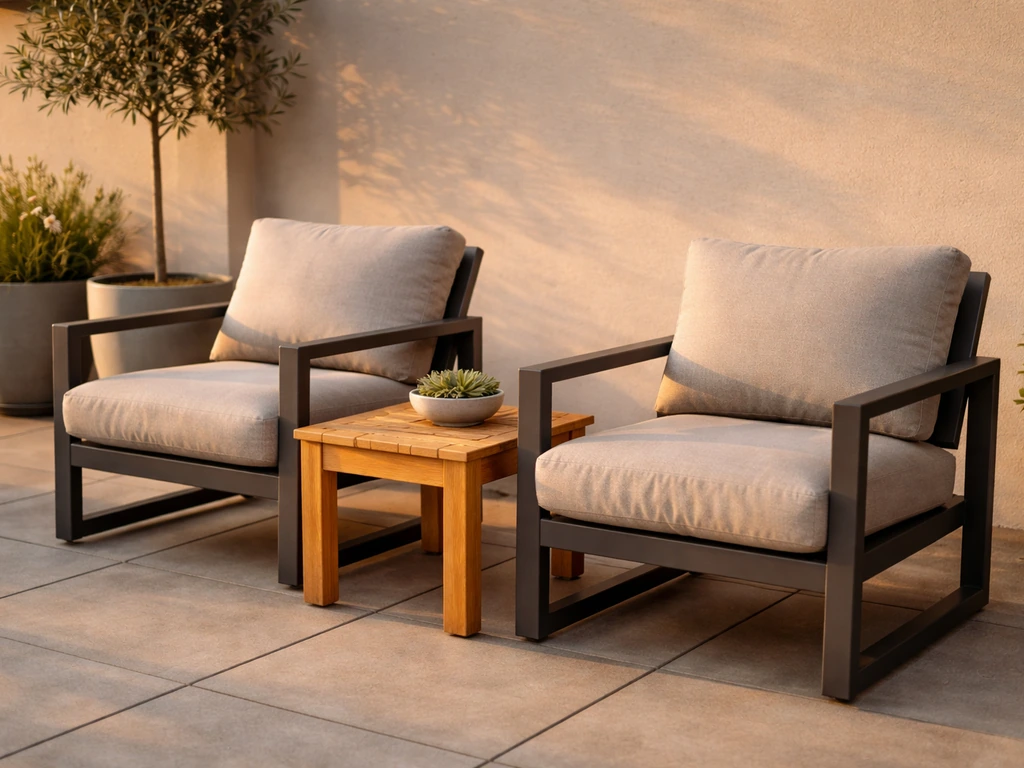
What 'restaurant quality' actually means in construction terms
The phrase gets thrown around loosely, but there's a real definition underneath it. Commercial-grade outdoor furniture designed for restaurant patios has to survive something residential furniture never faces: dozens of people sitting, standing, dragging, and stacking it every single day, plus regular hosing down with cleaners that would strip a cheap powder coat in a year. That environment forces a different set of engineering decisions.
Here's what separates genuine commercial-grade pieces from furniture that just looks heavy-duty in a showroom. If you want to balance durability with your budget, the same material and finish checks that indicate restaurant-grade construction can also help you spot cheap quality patio furniture that is actually worth buying. Frames on true commercial pieces are typically 11 to 14 gauge steel or thick-wall aluminum (0.080 inches or better). Welds are continuous, not tack-welded at stress points. Fasteners are stainless steel or hot-dipped galvanized, not zinc-plated screws that corrode and strip within two seasons. Powder coat finishes on quality pieces are electrostatically applied and cured at high heat, often 2 to 4 mils thick, and should hold up to 1,000+ hours in ASTM B117 salt-spray testing without blistering. Sling and strap seating systems, common in restaurant patios, use commercial-weight vinyl sling fabric rated for higher cycle counts because they experience far more stretching and friction than residential setups. Palm Casual notes that sling and strap systems see more daily stretching and friction, so they need commercial-grade construction built for constant use and heavy cleaning blank" rel="noopener noreferrer">sling and strap seating systems.
BIFMA (Business and Institutional Furniture Manufacturers Association) sets voluntary standards for commercial furniture, and their outdoor furniture interpretation provides a useful baseline. When a manufacturer references BIFMA compliance or ANSI/BIFMA standards, that's a meaningful signal. It doesn't guarantee quality, but it tells you the manufacturer at least tested to a recognized benchmark rather than just claiming 'commercial grade' in ad copy.
- Frame gauge: 11-14 gauge steel or 0.080-inch-wall aluminum minimum
- Welds: continuous MIG or TIG welds at joints, not spot or tack welds
- Fasteners: stainless steel (grade 304 or 316) or hot-dipped galvanized hardware
- Powder coat: 2-4 mil thickness, electrostatically applied, heat-cured
- Salt-spray resistance: 1,000+ hours per ASTM B117 for coastal or humid climates
- Load rating: 250 lbs minimum static load, documented by manufacturer
- Sling/strap fabric: commercial-weight vinyl with UV-stabilized weave
Which material is actually right for you
Every major patio furniture material can hit restaurant quality if it's done right. When you’re shopping for resort quality patio furniture, prioritize the same construction details that keep restaurant pieces standing up to daily, high-traffic use. The real question is which one matches your climate, maintenance tolerance, and aesthetic. Here's a straight-line breakdown of each material from a durability and long-term value standpoint.
Aluminum
Aluminum is the workhorse of the commercial patio world for good reason. It doesn't rust, it's lightweight enough to rearrange or stack easily, and a quality powder coat finish can hold up for 10 to 15 years with minimal maintenance. The key distinction is cast aluminum versus extruded aluminum. Cast aluminum pieces are thicker, heavier, and more rigid. Extruded aluminum is lighter and less expensive to manufacture but can flex more under load if wall thickness is thin. For restaurant-style durability, look for extruded frames with at least 0.080-inch wall thickness, or cast aluminum for statement chairs and tables where weight isn't a concern. Aluminum is the top pick for coastal and humid climates because there's no iron to rust.
Teak
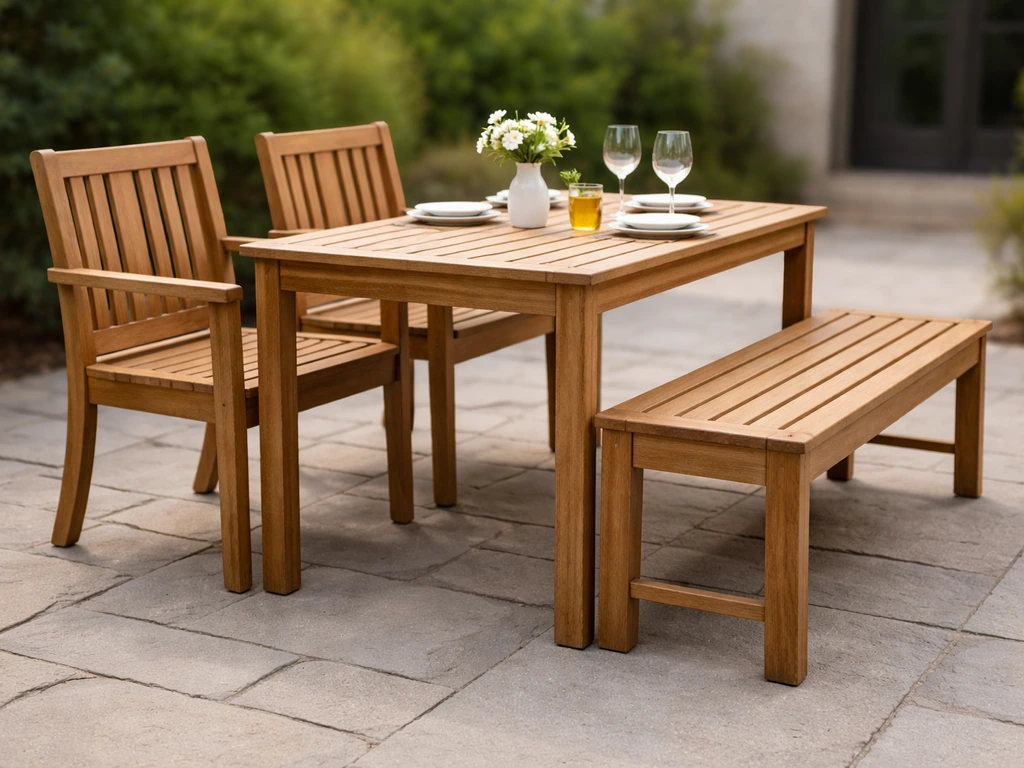
Teak is the gold standard in commercial wood patio furniture, and for good reason: its natural oil content resists moisture, insects, and UV damage without any finish applied. Grade A teak (heartwood from mature trees, tight grain, golden-brown color) is what you want. It weathers to a silver-gray patina if left untreated, which many restaurant operators actually prefer. Expect 20 to 25 years of real outdoor use from Grade A teak with minimal care. The downside is cost and weight. Teak is expensive and heavy, which makes it less practical for restaurants that rearrange or store seating frequently. It's ideal for permanent, fixed outdoor dining setups.
Wicker and Rattan
Natural rattan and wicker are not commercial-grade outdoor materials. Period. They're beautiful indoors or in covered, dry settings, but they break down fast under sun, rain, and real use outdoors. What you actually want for restaurant-style wicker aesthetics is all-weather wicker, which is resin or HDPE wicker woven over a powder-coated aluminum frame. High-quality HDPE wicker is UV-stabilized, won't unravel, and can be hosed down without damage. The frame underneath matters as much as the weave. Check that the aluminum frame is at least 0.080 inches and that the wicker is rated for commercial use. Low-end versions use thin frames and cheap resin that cracks and fades within two to three seasons.
Cast Iron
Cast iron has a legitimate commercial history, especially in bistro-style restaurant settings. Its weight is actually an asset in windy environments. The catch is rust: cast iron needs a thick, well-maintained paint or powder coat finish, and any chip or scratch left unaddressed will rust through faster than you'd expect in wet climates. Annual inspection and touch-up painting is not optional. In dry climates or covered patio settings, cast iron is an excellent long-term investment. In coastal or rainy regions, aluminum or teak will serve you much better.
Other Wood Options
Beyond teak, eucalyptus and shorea are worth considering as more affordable hardwood alternatives. Eucalyptus is close to teak in density and natural oil content, typically costs 30 to 50 percent less, and can last 10 to 15 years outdoors with occasional oiling. Shorea (also marketed as Philippine mahogany) is another dense tropical hardwood with good weather resistance. Both are solid commercial-grade options if teak's price is prohibitive. Avoid softwoods like pine or cedar in restaurant-use scenarios: they require heavy sealing, crack and warp more readily under heavy use, and simply won't last.
| Material | Rust/Rot Risk | Maintenance Level | Best Climate | Typical Lifespan | Relative Cost |
|---|---|---|---|---|---|
| Aluminum (commercial grade) | None | Low | All climates, especially coastal | 15-20+ years | Mid to high |
| Teak (Grade A) | None | Very low | All climates | 20-25+ years | High |
| HDPE/All-weather wicker | Low (frame) | Low | All climates except extreme cold | 10-15 years | Mid |
| Cast iron | High if coating fails | Medium-high | Dry, covered settings | 20+ years (with care) | Mid |
| Eucalyptus/Shorea | Low-medium | Medium | All climates with oiling | 10-15 years | Mid |
| Natural rattan/wicker | High | High | Indoor/covered only | 2-5 years outdoors | Low-mid |
Sizing, comfort, and the tradeoffs of commercial seating
Restaurant operators solve a different comfort equation than homeowners. They need seating that's comfortable enough to keep guests happy for a full meal, but practical enough to stack, move, and clean between seatings. That means commercial patio chairs are often stiffer, lighter on cushioning, and more vertical in their back angle than lounge-style residential furniture. For homeowners buying restaurant-style furniture, this is the biggest adjustment.
Dining table height is worth getting right from the start. Commercial hospitality guidance targets dining table heights in the 28 to 34 inch range, with 30 inches being the most common standard. Pair that with chairs that have a seat height of 17 to 19 inches for proper knee clearance. If you're mixing pieces from different sources, measure before you buy because 'dining height' is not universally standardized and a 2-inch mismatch makes a table uncomfortable.
On cushions versus no-cushion setups: commercial sling seating (vinyl sling stretched across an aluminum frame) is the dominant choice for high-traffic restaurant patios because it requires zero cushion management, dries instantly, and can be hosed clean. For homeowners, sling seating is an excellent low-maintenance choice. If you want cushioned seating, invest in cushions with solution-dyed acrylic fabric (Sunbrella is the benchmark) rated for 500+ hours of UV exposure, with quick-dry foam fills rather than traditional foam. Cheap cushion fabric fades and grows mildew within one season. The cushion quality matters almost as much as the frame.
- Standard dining table height: 28-30 inches; bar height: 40-42 inches
- Chair seat height for dining: 17-19 inches
- Sling seating: best for low-maintenance, no-cushion setups; commercial-grade sling lasts 5-8 years before replacing
- Stackable chairs: practical for storage but check that stacking doesn't stress welds over time
- Cushion fabric: solution-dyed acrylic (Sunbrella or equivalent) with quick-dry foam minimum for outdoor use
- Arm vs. armless: armless chairs stack easier and save space; armchairs are more comfortable for long meals
What to expect by climate: maintenance and corrosion reality check
Climate is the single biggest variable in how long outdoor furniture lasts, and it's where most buyers get burned by not thinking ahead. Here's what each environment actually demands.
Coastal and salt-air environments
Salt air is brutally aggressive on metal finishes. Within a mile of the ocean, even quality powder coat on aluminum can show failure at chips and scratches within a season if the coating doesn't meet salt-spray resistance standards. Look specifically for powder coats rated to 1,000+ hours per ASTM B117 testing. Grade 316 stainless steel fasteners (not 304) are worth the upgrade here. Teak and HDPE wicker over aluminum frames are the strongest choices. Rinse furniture with fresh water weekly. Cast iron is a poor choice for coastal use unless you're meticulous about coating maintenance.
Rain-heavy and humid climates
Standing water and persistent humidity accelerate mold, mildew, and wood degradation. For wood, teak or eucalyptus with periodic oil treatment stays ahead of moisture damage. For metal, quality powder coat aluminum is your best ally. Make sure furniture has drain holes at frame joints so water doesn't pool inside hollow frames and corrode from the inside out. Cushion management matters more here: store cushions or use quick-dry fills, and look for mildew-resistant fabric coatings.
Freezing winters
Freeze-thaw cycles crack cushion foam, stress welds, and can cause any trapped moisture in hollow frames to expand and deform joints. The practical answer is storage: cover or bring in cushions once temperatures drop below 40°F, and store foam-filled pieces if possible. Aluminum frames handle cold better than wood (which can crack if moisture penetrates and freezes) and far better than cast iron, which can develop micro-fractures in coatings under repeated freeze-thaw stress. Teak and eucalyptus handle cold well as long as they're oiled going into winter.
High-UV regions (desert Southwest, Florida, Hawaii)
UV is the primary enemy of fabric, paint, and resin materials in high-sun climates. Powder coat finishes should specify UV-stable pigments. Powder coat finishes should specify UV-stable pigments. HDPE wicker must be UV-stabilized resin or it will fade and become brittle within two to three seasons. Solution-dyed acrylic fabric (where the color is built into the fiber, not surface-printed) is non-negotiable for cushions in high-UV zones. Teak handles UV exceptionally well. Aluminum with UV-stable powder coat is strong here. Light-colored fabrics show less UV degradation visually but all colors fade faster in high-UV environments without the right material specs.
How to verify quality fast when you're shopping
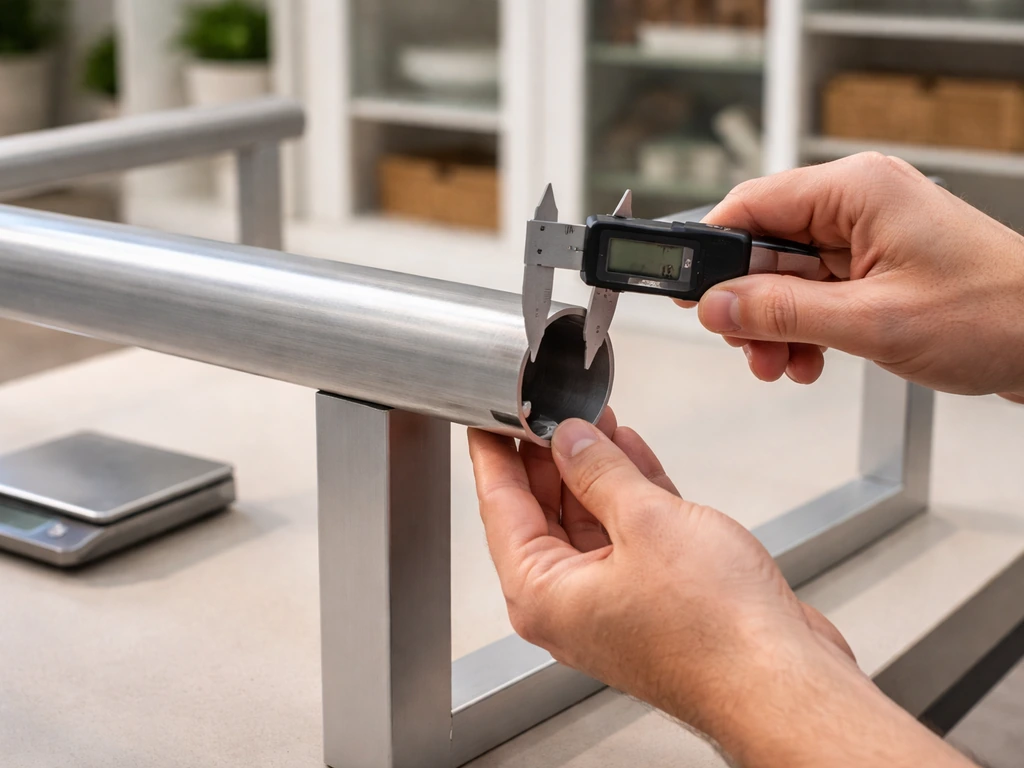
Whether you're in a showroom or comparing product pages online, here's a quick framework for cutting through the noise and assessing actual quality in under ten minutes.
In-store checks
- Pick it up and feel the weight. Commercial-grade aluminum chairs typically weigh 8 to 15 lbs. If it feels flimsy or light as a feather, the wall thickness is likely too thin.
- Push on the joints. Grab the back and rock it. A quality frame won't flex or creak at weld points.
- Look at the weld quality. Smooth, consistent beads indicate quality fabrication. Rough, globby, or incomplete welds are a red flag.
- Check the fasteners. Visible hardware should be stainless or show no surface rust. Zinc-plated screws look shiny but will rust at the head within two seasons.
- Inspect the powder coat at edges. Chips or thin coverage at corners and edges indicate a cheap application that won't hold up.
- Sit in it. A chair that feels unstable or has sharp frame edges pressing through thin sling fabric will be worse, not better, after a year of use.
Online verification checklist
- Look for frame gauge or wall thickness specs. If the listing doesn't include them, ask or skip.
- Find the weight listed per chair or table. Cross-reference against the material and size to verify the specs make sense.
- Check for BIFMA compliance, ASTM B117 salt-spray rating, or load-rating documentation.
- Read warranty terms carefully: commercial-grade furniture typically offers 2-5 year frame warranties; anything under 1 year is a warning sign.
- Search the model number + 'reviews' outside the retailer's site to find real user feedback on fading, joint failure, or corrosion.
- Check cushion fabric specs: look for 'solution-dyed acrylic' and a UV-hour rating. Polyester or printed fabric without UV ratings will fail quickly.
- Verify the return/replacement policy for frames and hardware specifically, not just general merchandise returns.
Brands and products worth considering (and what to avoid)
On the commercial end, brands like Telescope Casual, Grosfillex, Brown Jordan, and Woodard have longstanding track records supplying actual restaurant and hospitality operators. They publish specs, offer commercial warranties, and have replacement part programs. Tropitone, Winston Furniture, and Homecrest are also respected names in the contract/hospitality market and carry over well to high-end residential use. For teak specifically, look at Barlow Tyrie, Westminster Teak, and Gloster: these brands use Grade A teak with documented sourcing and joinery quality.
In the mid-market, Polywood stands out for its HDPE lumber construction: it genuinely performs outdoors, is made from recycled material, and carries a 20-year residential/5-year commercial warranty. For all-weather wicker, Tortuga Outdoor and Ohana Depot offer aluminum-framed HDPE wicker at more accessible price points than the hospitality brands, with decent UV performance if you're not in a true coastal environment.
What to avoid: anything marketed as 'heavy-duty' or 'commercial-grade' without published specs is a red flag. Big-box store patio sets in the $200 to $500 range almost universally use thin-wall aluminum, zinc-plated hardware, and polyester cushion fabric. They look fine in year one and fall apart in year two or three. The same goes for wicker furniture sold without mentioning HDPE or resin construction: natural wicker outdoors is a money-losing choice. If the listing doesn't mention frame thickness, sling cycle rating, or warranty depth, treat it as residential-grade at best. If you are shopping for good used patio furniture, confirm the frame material and that wicker is HDPE or resin, not natural fibers HDPE or resin construction.
It's also worth comparing restaurant quality against adjacent tiers. Resort quality furniture (used in hotel pool decks and beach clubs) is often one step above restaurant grade in aesthetic finish and cushion depth, but the structural specs are similar. Commercial quality furniture, sold specifically for contract or hospitality use, is essentially the same category with formal spec sheets. If you're comparing against more affordable quality patio furniture options, the gap is mainly in frame thickness, fastener grade, and warranty depth rather than pure aesthetics. If you want to balance durability with budget, affordable quality patio furniture can be a smart step up from basic sets as long as frame thickness, hardware, and warranty hold up.
Long-term care, repairs, and knowing when to replace
The maintenance required for restaurant-quality furniture is genuinely low, but it's not zero. If you're shopping for life is good patio furniture, focus on durable frames, UV-resistant finishes, and upholstery that can handle real outdoor wear. Here's what a realistic care schedule looks like and where most people drop the ball.
Aluminum and metal frames
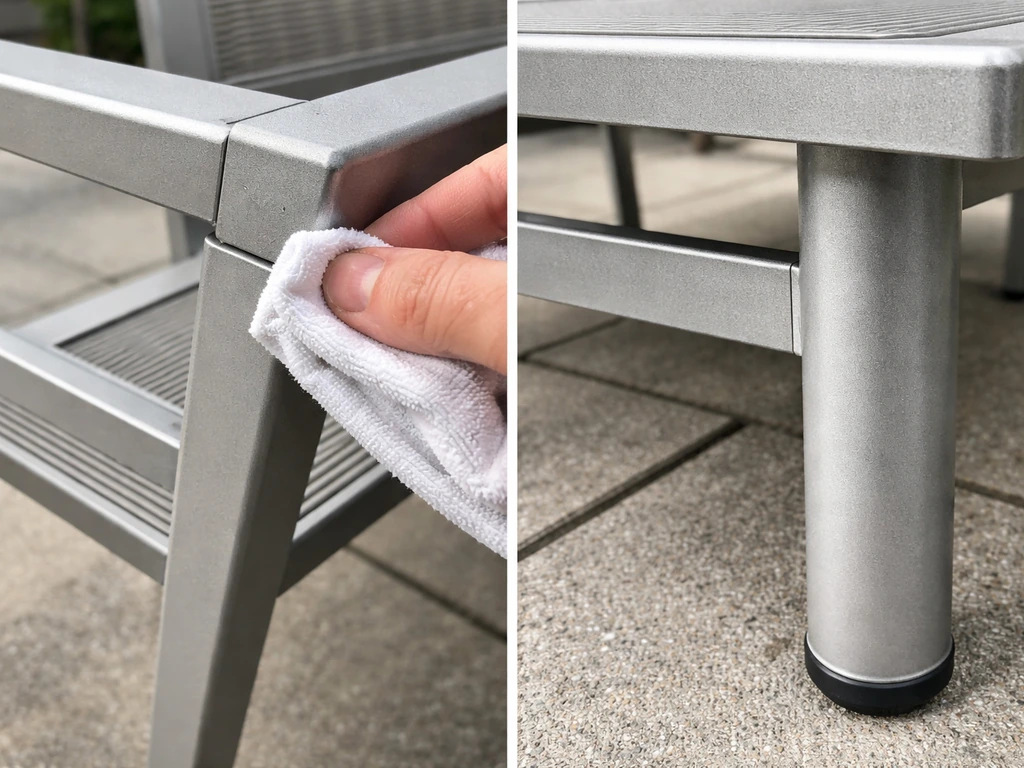
Wash aluminum frames with mild soap and water two to four times per year. Inspect for powder coat chips annually, especially at joints and feet. Touch up chips with matching powder coat touch-up paint (available from most commercial furniture brands) immediately when you spot them. Leaving bare metal exposed accelerates corrosion even on aluminum. Tighten all visible fasteners once a year; vibration and use loosen them over time. Lubricate any moving parts (gliders, folding mechanisms) with a silicone-based lubricant, not petroleum-based products that attract dirt.
Teak and hardwood
If you want to maintain teak's golden color, apply teak oil or sealer once or twice a year after cleaning with a teak cleaner. If you're fine with the silver-gray patina, do nothing except an annual cleaning with a mild oxalic acid-based teak cleaner to prevent black mold staining. Sand lightly with 220-grit sandpaper before oiling if the wood has gone gray and you want to restore the color. Don't use teak sealers that film over the surface: they peel badly. Oil penetrates and protects without peeling.
Sling and cushion replacement
Commercial-grade vinyl sling fabric typically lasts 5 to 8 years before it begins to sag, fade, or crack. The good news is that sling replacement is a legitimate repair option on quality frames. Most commercial furniture brands sell replacement slings by model, and there are third-party sling re-fabrication services. This is one of the strongest arguments for buying a quality frame upfront: a $600 chair with a replaceable sling can be refurbished for $80 to $150 and last another 8 years. A $200 chair with a proprietary or non-replaceable sling goes to the landfill. Cushions should be stored or covered when not in use to extend fabric life. Replace cushion inserts when foam compression makes them less than 50 percent of original thickness.
When it's time to replace
Frame weld cracks or joint separation are a safety issue and a replacement signal: welded furniture cannot be safely repaired by re-welding in most home settings. Powder coat failure covering more than 20 to 30 percent of a frame surface means the base metal is at risk and refinishing is likely cost-prohibitive. If cast iron shows deep pitting rust rather than surface rust, the structural integrity is compromised. For wood, replace when you see cracking that runs across the grain (structural compromise), not just along the grain (cosmetic checking). Calculate your cost-per-year: a piece that lasted 12 years at $800 cost $67 per year. If a replacement piece costs the same and will last just as long, that's a reasonable buy. If it costs $150 at a big-box store and lasts 3 years, you're paying $50 per year for an inferior experience. Restaurant-quality furniture almost always wins the cost-per-year comparison over a 10-year horizon.
FAQ
How do I verify “restaurant quality” for patio furniture when shopping online, where specs are often missing?
Look for documented test results or spec sheets that state salt-spray hours (ex: 1,000+ hours) and hardware grade (316 stainless is a safer bet than 304). If the listing only says “coastal ready” without those specifics, assume the coatings and fasteners are not engineered for chloride exposure. Also confirm powder coat thickness and whether touch-up paint is available, since chips happen where frames rub or stack.
Is it smart to buy used restaurant quality patio furniture, and what should I check first?
Yes, but only if the frame is truly repairable and the brand supports parts. For restaurant-style sling chairs, replaceable slings are the key differentiator, you can keep the higher-cost frame and renew the seating surface. Before buying used, inspect welds and joints for separation, check for powder coat failure at feet and joints, and confirm whether replacement slings or cushion covers match the exact model.
Will restaurant quality patio furniture be as comfortable as my residential patio set?
Restaurant-style seating is often designed with less cushion thickness and a more upright posture (common chair seat heights, and narrower cushion stacks). That can feel “stiffer” than residential lounge sets, so plan for comfort by choosing chairs with appropriate back angle and, if needed, adding weather-rated seat pads rather than trying to retrofit deep cushions that trap moisture.
What’s the most common mistake people make when pairing restaurant-style chairs with outdoor dining tables?
Treat table height as a fit and comfort issue, not an aesthetic detail. Measure your chair seat height and your target clearance, then test the pairing at home if possible. A common mistake is buying a table labeled “dining height” from one brand and chairs labeled “bar height” or “standard” from another, the 1 to 2 inch mismatch shows up as uncomfortable knee contact or poor back support.
How should I store restaurant quality patio furniture for winter in a cold climate?
In freeze-thaw regions, the biggest risk is not just cracking, it’s trapped moisture inside hollow frames and foam-filled cushions. Prioritize frames with drain paths at joints (or ones that are known to not trap water), store cushions when temperatures drop below 40°F, and avoid keeping waterlogged items under covers that don’t breathe.
Is powder coated aluminum really “maintenance-free” in coastal areas?
If the furniture is aluminum with a properly cured powder coat, you should still rinse after salt spray and avoid abrasive cleaning pads that cut through the coating. For touch-ups, use the manufacturer’s matching touch-up system or a correctly formulated powder-coat touch-up product, because generic spray paint can fail faster at chips. Also upgrade fasteners to 316 stainless if you are assembling or replacing hardware.
How do I compare warranties to determine whether a patio set is truly restaurant-grade?
Check warranty language for duration and coverage scope. A long warranty that covers only frame “cosmetic” issues is weaker than one that covers structural components, finishes, and parts availability. In restaurant-grade purchasing, replacement parts availability matters as much as years, since sling fabric and cushions are wear items.
What’s the difference between “commercial sling” and normal outdoor cushion seating, and how do I choose between them?
For sling fabric, the most useful indicator is a commercial cycle rating or an explicit statement of commercial-use upholstery standards, plus sling system compatibility for replacement. For cushions, look for solution-dyed acrylic and quick-dry foam, avoid surface-printed “UV rated” claims. The edge case is mixed sets, where the frame is commercial but the cushion fabric is residential, you’ll still see early fading or mildew.
How can I calculate cost-per-year correctly when some parts are replaceable?
Use a simple cost-per-year estimate but include expected repairs. A quality frame with replaceable sling can remain economical even if you replace fabric once, because you avoid buying a whole chair. For furniture that cannot be repaired (non-standard cushions or proprietary sling systems), the cost-per-year can jump quickly in year 4 to 6.
Can I repair restaurant quality patio furniture myself if the frame finish or welds get damaged?
Avoid it for structural failures like weld cracks, severe joint separation, or powder coat failure across most of a frame. Those conditions usually mean the base metal or joinery is compromised, and “DIY welding and repainting” may not restore safe strength. If powder coat failure covers more than about a quarter to a third of the surface, treat refinishing as likely uneconomical and plan for replacement.
Next Articles
Cheap Quality Patio Furniture: How to Buy Durable Sets
Buy durable, weather-ready patio sets on a budget by checking materials, construction, coatings, and lifespan by region.
Affordable Quality Patio Furniture: Buy Smart for Long Life
Guide to buying affordable quality patio furniture: materials, specs, climate fit, and maintenance for long-lasting comf
Home Good Patio Furniture Guide: Choose, Buy, Maintain
Step-by-step guide to choosing home good patio furniture by use, climate, and materials, plus maintenance and rust prote