
The best HDPE patio furniture holds up for 20-plus years without cracking, fading badly, rotting, or rusting, and it does that with almost zero maintenance. Brands like POLYWOOD and Trex Outdoor Furniture (which uses genuine POLYWOOD lumber) back that claim with 20-year residential warranties on the lumber itself. If you want outdoor furniture you can leave on a covered porch, a full-sun deck, or a poolside patio and essentially ignore for a decade, HDPE is the right material. The key is knowing what separates a well-built HDPE piece from a cheap lookalike, and matching the style and construction to your climate and how you actually use the space.
Best HDPE Patio Furniture Guide: Choose by Climate

Marcus Kellerman
3 Jul 2026
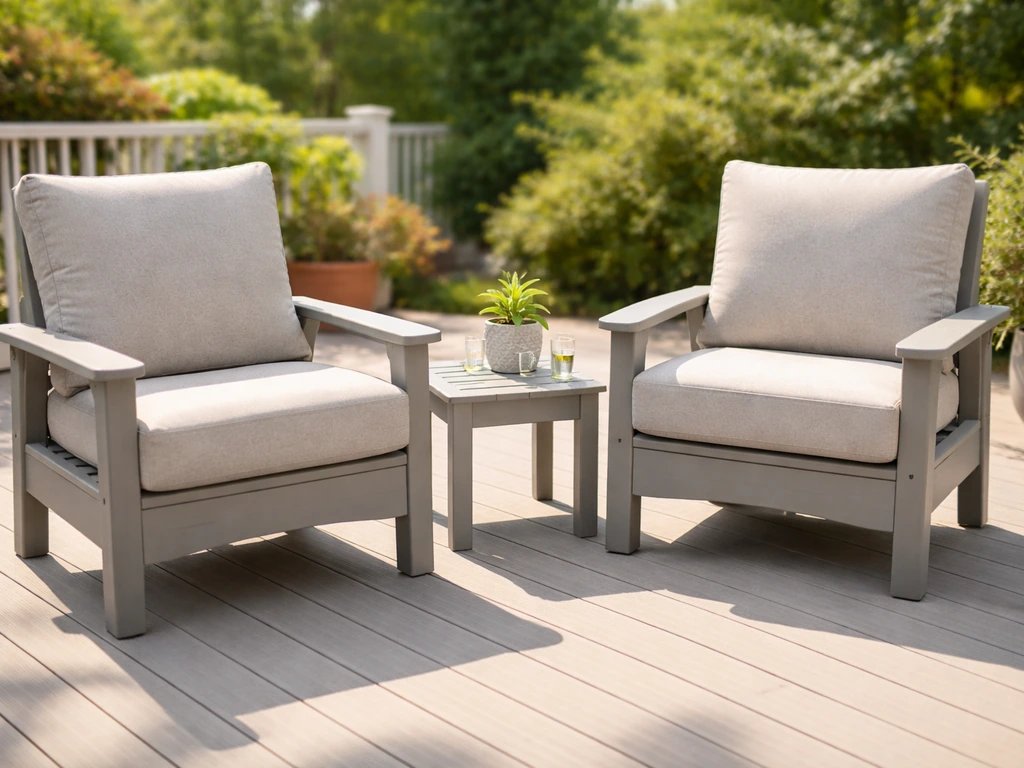
What HDPE patio furniture actually is (and why it lasts)
HDPE stands for high-density polyethylene, a thermoplastic polymer that gets milled into what the industry calls "lumber" and then shaped into slats, planks, and structural components. Unlike solid wood, it does not absorb moisture, so it cannot rot, swell, splinter, or support mold growth in the way organic materials can. Unlike steel or cast iron, it cannot corrode.
Unlike lower-grade plastics and resins, quality HDPE furniture is made with UV inhibitors and light-stable pigments blended directly into the material before it is shaped, so the color runs through the full thickness of every board rather than sitting as a surface coat. POLYWOOD, for example, mixes those pigments and UV stabilizers into its lumber before processing, which means a surface scratch does not expose a different-colored core underneath.
Most quality HDPE outdoor furniture is also made from recycled materials, primarily post-consumer plastic such as milk jugs and detergent bottles. That recycled-content angle is a genuine environmental benefit, not just a marketing claim. The material is dense and heavy enough to feel substantial in person, which surprises a lot of first-time buyers who expect something that feels like cheap lawn furniture. When you pick up a well-made HDPE Adirondack chair, it has real heft. That density is part of what makes it weather-resistant and stable in wind.
What "best" actually means for HDPE quality
Not every piece labeled HDPE is the same. There is a wide quality range, and the things that separate a 20-year piece from a 5-year disappointment come down to a handful of construction details you can actually check before buying.
Lumber thickness and density
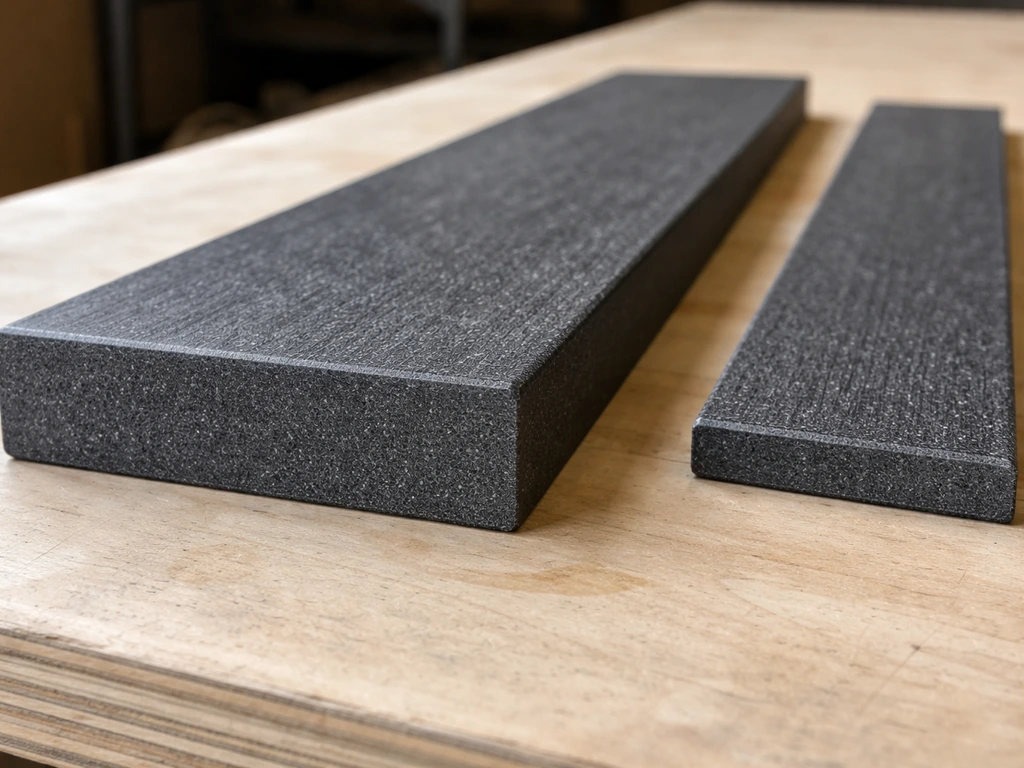
Thicker boards flex less, resist impact better, and hold fasteners more securely over time. Look for slat thickness around 3/4 inch or more on seating surfaces. Boards that feel hollow or flex noticeably when pressed are a red flag, usually indicating a lower-density formulation or hollow extrusion used to cut cost.
UV inhibitors and pigment systems
This is the single biggest factor in long-term color retention. Quality HDPE lumber has UV-inhibiting pigment systems blended throughout the material, not just applied to the surface. Ask specifically whether the color goes all the way through the board. Breezesta, for instance, includes UV inhibitors and stabilizers but warrants against fading for only three years, with an acknowledgment that all colors will fade to some degree over time. POLYWOOD and Trex offer 20-year lumber warranties that cover defects, cracking, and splitting. That warranty gap tells you something about the confidence each manufacturer has in their formulation.
Frame material and hardware
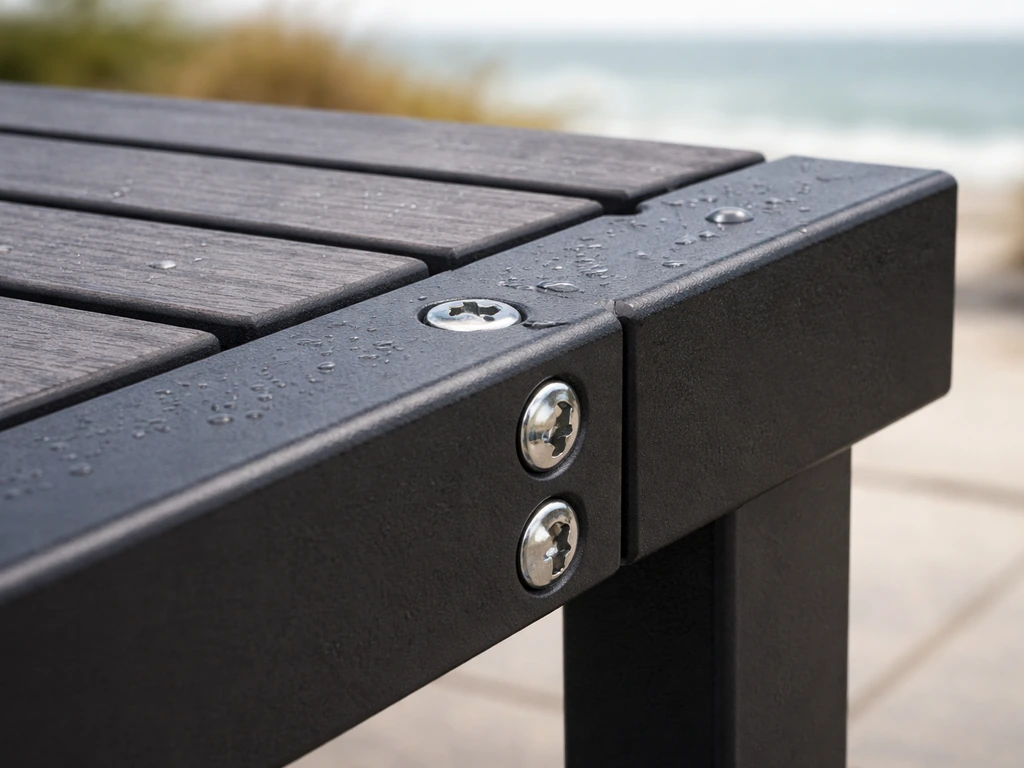
HDPE lumber is almost always paired with a metal frame on larger pieces like dining tables, sectionals, and loungers. The frame metal matters a lot, especially in coastal or humid environments. Powder-coated aluminum is the standard choice for corrosion resistance. POLYWOOD warrants its welds and joints against breaking or cracking for five years, and its powder coat against peeling for five years. Hardware (fasteners, bolts, hinges) should be stainless steel or marine-grade. Zinc or standard steel hardware will rust within a couple of seasons in wet climates, and corroded fasteners are the most common reason an otherwise sound HDPE piece falls apart.
Joinery, drainage, and ventilation
Even though HDPE does not absorb water, poor drainage design can trap standing water at joints, which creates conditions for surface mildew and stains the hardware. Look for slat gaps that allow drainage, and check that frame corners and joints are not sealed in a way that traps moisture. Good joinery also means the piece does not rack or wobble under load. Sit in chairs and push on table surfaces before buying in person, or check customer reviews specifically mentioning wobble or flex over time.
Brand warranty as a quality proxy
A 20-year lumber warranty is the benchmark for serious HDPE furniture. Both POLYWOOD and Trex Outdoor Furniture offer this for residential use, covering defects and structural failure of the lumber itself. A shorter warranty, or a warranty with heavy carve-outs, is a signal to look more carefully at materials and construction specs. Warranty coverage for replacement parts is also worth checking. POLYWOOD makes individual replacement lumber parts available for purchase even outside warranty, which is a meaningful long-term support commitment. Breezesta, by contrast, states clearly that no parts or furniture are available for purchase or warranty replacement, which limits your options if a single board cracks years down the road.
HDPE vs. other patio materials: a direct comparison
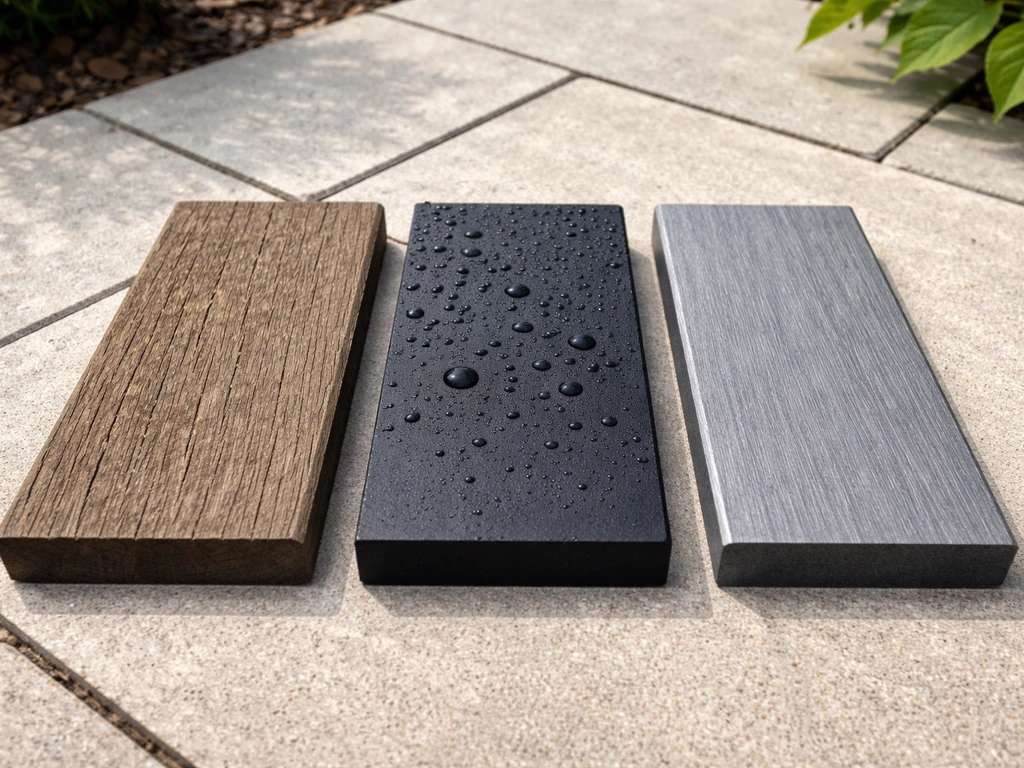
Buyers shopping HDPE are usually also considering at least one other material type. Here is how HDPE stacks up across the attributes that matter most for outdoor use.
| Material | Lifespan (typical) | Maintenance level | Weather/moisture resistance | Corrosion/rot risk | Weight | Rough cost tier |
|---|---|---|---|---|---|---|
| HDPE lumber | 20+ years | Very low | Excellent | None | Heavy | Mid to high |
| Teak | 25+ years (with care) | Moderate to high | Very good | Rot-resistant but can check | Heavy | High to premium |
| Powder-coated aluminum | 15-25 years | Low | Excellent | None (if coat intact) | Light | Mid to high |
| Cast iron | Decades | High (rust prevention) | Poor without maintenance | High (rust) | Very heavy | Mid to high |
| Wicker/rattan (natural) | 3-7 years outdoors | High | Poor | Rots and dries out | Light | Low to mid |
| Synthetic wicker (resin) | 8-15 years | Low to moderate | Good | Frame can rust | Moderate | Mid |
| Pressure-treated wood | 10-15 years | Moderate | Moderate | Moderate rot risk | Moderate | Low to mid |
Teak is the only material that genuinely rivals HDPE on long-term durability outdoors, but it requires periodic oiling to maintain its appearance and costs significantly more. Powder-coated aluminum frames are excellent and are actually used in tandem with HDPE lumber on many of the best pieces. Cast iron looks great but is a maintenance burden anywhere rain or humidity is a factor. Natural wicker and rattan simply do not belong in a year-round outdoor setting.
Synthetic wicker (resin wicker over an aluminum frame) is a reasonable alternative but the woven weave tends to loosen and break down over 8-12 years, while the HDPE equivalent just keeps going. If you want something lighter than HDPE for frequent rearranging, aluminum-frame furniture is the better call. If you want zero long-term work and maximum durability, HDPE wins.
If you are looking for the best plastic patio furniture for long-term durability, HDPE is the top choice to start with HDPE wins.
Matching HDPE furniture to your climate and how you use it
HDPE is one of the most universally adaptable outdoor furniture materials available, but climate still affects which features and styles to prioritize. Here is how to think about it by condition.
Coastal and salt-air environments
Salt air is brutal on metal, so the hardware and frame material selection matters more here than anywhere else. You want stainless steel fasteners, a marine-grade powder coat on any aluminum frame, and fully enclosed frame tubes (open-end aluminum tubes trap salt moisture). HDPE lumber itself handles salt spray without issue. Trex Outdoor Furniture specifically calls out salt spray resistance as a feature of its HDPE product line. In coastal settings, avoid any HDPE piece that uses zinc-plated or standard steel hardware, even if the lumber is top-tier.
Snow, freeze-thaw cycles, and cold climates
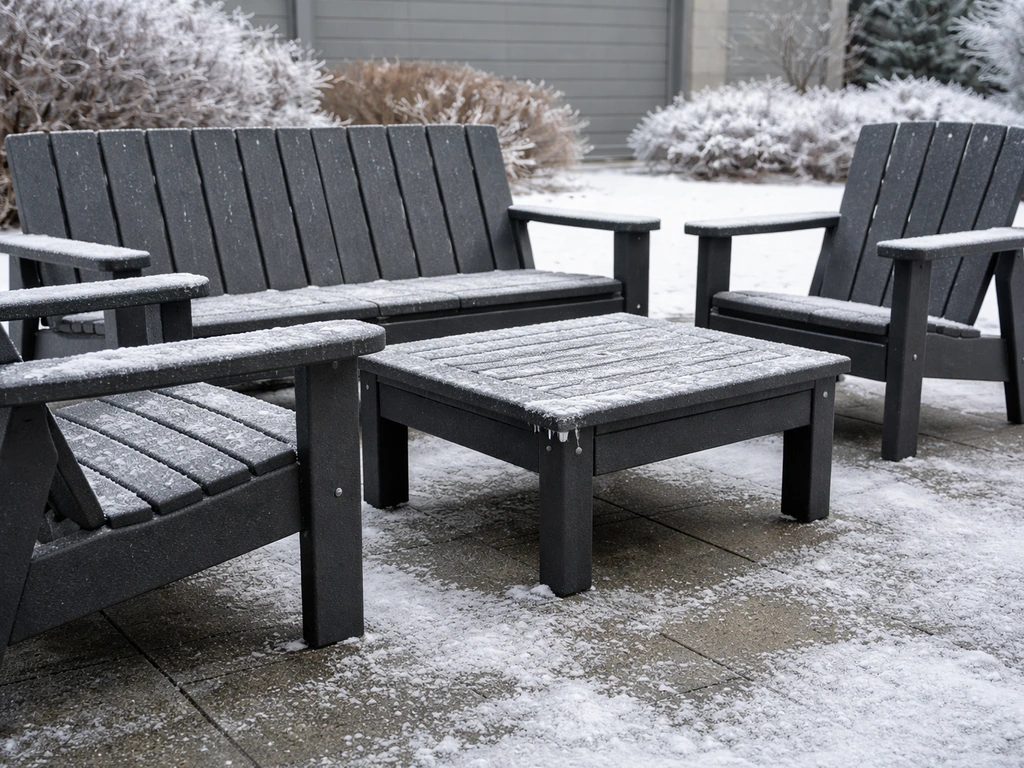
One of HDPE's strongest advantages over wood and even some metals is its behavior in freeze-thaw cycles. It does not absorb water (ASTM D570 water absorption testing shows near-zero uptake for properly formulated HDPE), so there is no moisture inside the material to freeze, expand, and crack it the way it damages wood, concrete, or poorly sealed metal joints.
ASTM D570 is the standardized water absorption of plastics test method used to quantify how much water is absorbed by a plastic under specified conditions, which is why it is referenced for HDPE water uptake ASTM D570 standardized water absorption test method. You can leave quality HDPE furniture outside through a northern winter without covering it and it will be fine.
If you want to cover it, do it. If you do not, it still survives. This is one area where HDPE genuinely outperforms teak, pressure-treated wood, and cast iron.
Full-sun and high-UV settings
Intense sun is where UV inhibitor quality separates premium HDPE from cheaper alternatives. In Arizona, southern Texas, Florida, or any high-UV region, the pigment and stabilizer blend in the lumber has to work harder. Stick to brands with documented UV resistance testing (ASTM G154 and D4329 are the standard accelerated weathering tests for plastics) and a meaningful fade warranty. Darker colors tend to absorb more heat in full sun, which does not damage HDPE but can make seating uncomfortably hot on a 95-degree day. Lighter colors like white, driftwood gray, or sand are more practical for full-sun pool decks.
Poolside and high-moisture areas
HDPE is essentially the ideal poolside material because it does not absorb water, dry out, or rot from constant moisture exposure. Chlorinated splash water is not a problem for the lumber. The caution here is again the hardware and frame: chlorine accelerates corrosion on lower-grade metals. Stainless steel fasteners and anodized or marine-grade powder-coated aluminum frames are what you want. Chaise lounges and deep-seat chairs with open slat construction drain well and dry fast, which is what you want near water.
High-traffic commercial or family use
For spaces that see hard use, the structural integrity of the frame joinery and the fastener quality matter most. Look for mortise-and-tenon or bolted connections rather than just screws, particularly on chairs that get pulled in and out repeatedly. Heavier HDPE pieces also tend to stay put in wind better than lighter aluminum or resin alternatives, which is a practical advantage in exposed settings.
Comfort, design details, and built-in performance to check
HDPE furniture has come a long way from the simple Adirondack chair. Today you can find full deep-seat sectionals, dining sets, bar-height sets, loungers, coffee tables, and occasional pieces in dozens of color options. A few design and comfort details are worth evaluating before you buy.
- Seat depth and back angle: Traditional Adirondack-style chairs are reclined and low, great for relaxing but not for dining. Make sure the geometry matches the intended use before ordering online.
- Cushion compatibility: Some HDPE frames are designed for optional cushions; others are fully slatted and meant to be used without. If you want cushions, check that the frame has the right dimensions for standard or brand-specific cushion sizing.
- Slat spacing and ergonomics: Wider slat gaps improve drainage but can feel less supportive over long sits. The best pieces balance drainage with enough surface area to be comfortable without a cushion.
- Armrest and footrest height: These vary more than you would expect across brands. If possible, try before you buy, or look for detailed dimension specs and compare to furniture you already own and find comfortable.
- Weight and footpads: Heavy HDPE dining chairs should have non-scratch foot caps to protect decking and pavers. Check that those caps are present and replaceable.
- Color consistency: Because quality HDPE has pigment blended throughout, color should look consistent across every board on a piece. Surface inconsistency or obvious color variation between boards can indicate a lower-grade formulation.
- Folding and stacking: If storage space is limited, folding Adirondack chairs and stackable side chairs exist in HDPE and are worth seeking out specifically.
Cleaning and maintaining HDPE furniture
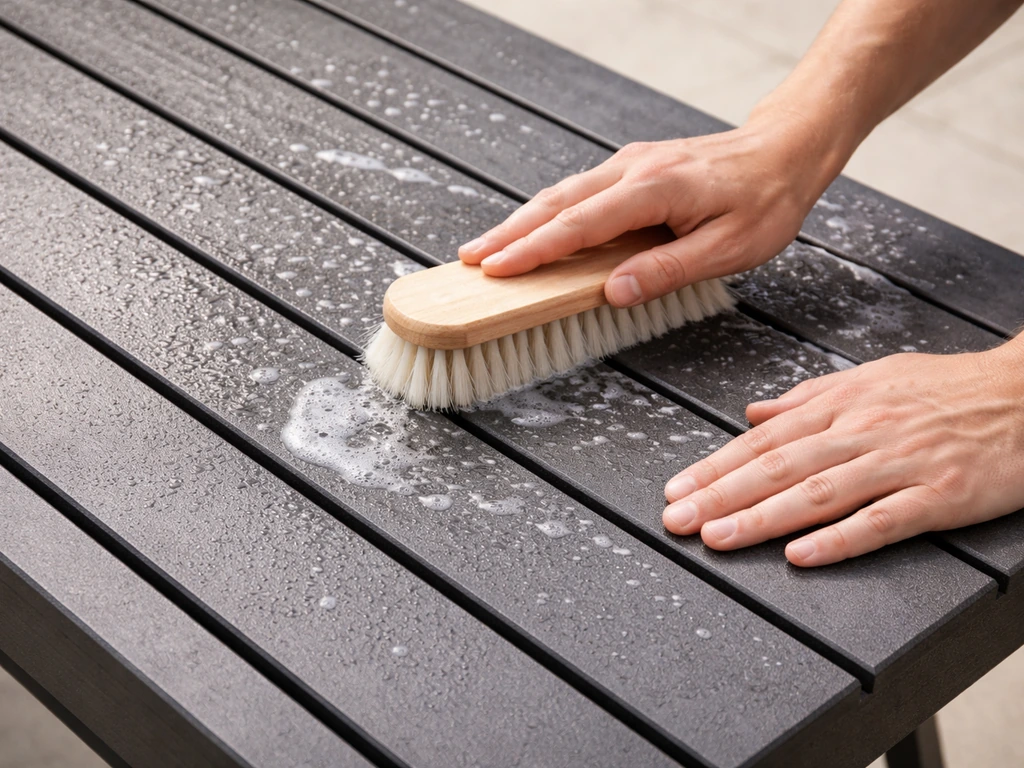
The maintenance pitch for HDPE is real: you do not need to sand it, seal it, oil it, or paint it. The routine is simple. Mild dish soap, warm water, and a soft-bristle brush handle nearly everything. Home Depot’s [Care and Maintenance](https://www.
homedepot. com/catalog/pdfImages/9f/9facf8bb-fad9-4c12-9164-3365fa610611. pdf) PDF for outdoor furniture also recommends routine cleaning with mild soap and water and notes hot-water oxygen bleach as an option for cleaning. For heavier buildup, mold, or mildew stains, POLYWOOD recommends a solution of mild dish soap, a small amount of bleach, and warm water applied with a soft brush.
Oxygen-based cleaners like Simple Green OxySolve are a non-bleach alternative that work well on mold and algae if you prefer to avoid bleach. Let the solution sit for a few minutes, then scrub and rinse.
A few things to avoid: scouring pads and stiff wire brushes will scratch the surface, and while a scratch on HDPE does not expose a different color underneath, it does create texture that catches more dirt over time. Do not sand HDPE furniture. POLYWOOD specifically warns against sanding because it scratches the material and voids the warranty. Do not use petroleum-based solvents or harsh chemical strippers, which can degrade the surface. And do not paint or stain it. HDPE is non-porous by design, so paint does not bond well and will peel, and any modification of that kind typically voids your warranty.
If you want added protection, Breezesta makes a product called Breezesta Protect that applies a UV protector layer to help prevent fading and surface cracking. This kind of topcoat treatment is optional on quality HDPE but can be a useful extra step in extremely high-UV environments or if you have an older piece showing early signs of surface dullness. No sealing, covering, or winterizing is required for the furniture itself, though covering it in winter extends the life of any cushions you are using with it.
Repairability and long-term value
One of the most underrated questions to ask before buying any outdoor furniture is: what happens when something breaks? With HDPE, the answer varies a lot by brand. POLYWOOD makes individual replacement lumber parts available for purchase, including table legs, slat boards, and chair arms, so a single cracked board does not mean replacing the whole piece. That parts availability is a meaningful long-term advantage. Trex Outdoor Furniture, which uses POLYWOOD lumber, inherits similar support. Breezesta explicitly states that no parts or furniture are available for purchase or warranty replacement, which means if something breaks outside the warranty window, you are largely on your own.
On a cost-per-year basis, HDPE furniture is often a better value than it looks at first price comparison. A quality HDPE dining set at $1,500 that lasts 25 years costs you $60 per year. A less expensive teak set at $1,200 that needs re-oiling every season and starts showing real wear after 12 years costs more in time and products, and may need replacement sooner in a wet climate. A cheap resin set at $400 that fades, cracks, and wobbles in five years costs $80 per year and leaves you shopping again. The sticker price is not the number that matters most.
HDPE furniture also holds resale value better than most outdoor materials because the material itself ages gracefully. A 10-year-old POLYWOOD Adirondack chair that has been cleaned occasionally looks and functions essentially the same as a new one. That is genuinely unusual in outdoor furniture.
A practical buying checklist and next steps
Use this checklist when evaluating any HDPE patio furniture purchase. It takes about five minutes and will save you from the most common quality mistakes. If you want to narrow it down fast, use the criteria in this guide to pick the best poly lumber patio furniture for your climate and use.
- Check the warranty length on lumber specifically. 20-year residential warranty is the benchmark. Less than that, ask why.
- Ask whether pigments and UV inhibitors are blended throughout the lumber or applied as a surface treatment. You want throughout.
- Confirm the frame metal and hardware material. Powder-coated aluminum frame and stainless steel fasteners are the standard for coastal and wet climates.
- Look at the warranty coverage for metal frames and hardware separately. POLYWOOD covers welds/joints for 5 years and powder coat for 5 years.
- Ask about replacement parts availability. Can you buy individual boards or components if something breaks in year 12?
- Check board thickness and feel. Boards should feel dense and solid, not hollow or flexible under hand pressure.
- Review the drainage design. Slat gaps should be present on horizontal surfaces; frame joints should not trap standing water.
- Consider your climate. Coastal settings: prioritize marine-grade hardware. High UV: prioritize lighter colors and documented UV testing. Freeze-thaw climates: any quality HDPE handles this well.
- Match the style to actual use. Deep-seat chairs for lounging, upright dining chairs for eating, open-slat loungers for poolside use.
- Calculate cost per year, not just sticker price. Divide purchase price by expected lifespan (20+ years for premium HDPE) and compare against alternatives.
Best fit by climate and budget
| Climate/Use Case | Top priority features | Recommended tier |
|---|---|---|
| Coastal/salt air | Marine-grade hardware, stainless fasteners, fully enclosed aluminum frame | Premium (POLYWOOD, Trex Outdoor Furniture) |
| High UV/desert southwest | UV inhibitors throughout lumber, lighter colors, documented UV testing | Premium |
| Cold/freeze-thaw (northern states, Canada) | Non-porous HDPE (any quality brand), minimal hardware exposure, no need for covers | Mid to premium |
| Poolside/high moisture | Open slat drainage design, stainless hardware, aluminum frame | Mid to premium |
| High-traffic/family use | Heavy-duty frame joinery, bolted connections, replaceable parts availability | Premium |
| Shaded low-stress porch use | Any quality HDPE lumber with basic UV inhibitors | Mid-range acceptable |
If you are also comparing HDPE to broader plastic and recycled-content options, it is worth knowing that poly lumber furniture (sometimes called polywood generically, though POLYWOOD is a brand) and recycled plastic furniture are closely related categories. Many “recycled plastic” patio chairs are also made from polyethylene materials, but recyclability depends on the exact resin and whether the parts are accepted by your local recycling program recycled plastic furniture.
HDPE is the material inside most of what gets sold under those labels, so the quality evaluation criteria overlap significantly. The evaluation framework here applies across all of those product types: look at the UV inhibitor approach, lumber density, frame and hardware quality, warranty length, and parts support. Those five factors will tell you more about a piece than any marketing language on the product page.
FAQ
How can I tell in the store whether the HDPE is truly all-weather quality or a hollow, low-density imitation?
Do a two-minute “flex and finish” check, press down firmly on seat slats and table tops (quality boards feel rigid and do not oil-can), then look closely at cut ends or exposed fastener channels, the color should look consistent throughout the thickness rather than only on the outer surface.
Do I need to cover HDPE patio furniture in winter, or can I leave it out year-round?
You can typically leave HDPE furniture outside through freeze-thaw without damage, the extra value of covering is mainly for cushions, if your set includes fabric, choose breathable covers to prevent trapped moisture near hardware.
Is bleach safe for cleaning HDPE, and how should I use it to avoid streaking or residue?
Yes, when used lightly, mix a small amount of bleach with mild dish soap and warm water, apply with a soft brush, let it sit briefly (a few minutes), then scrub and rinse thoroughly, the key is rinsing well so hardware does not get dried bleach residue.
Will dark-colored HDPE patio furniture fade faster or get hotter than lighter colors?
Fading is primarily a UV-inhibitor formulation issue, but dark colors do absorb more solar heat, expect higher surface temperatures on summer afternoons, if you will use it in full sun, consider lighter shades for seating.
What hardware details should I look for besides “stainless steel” on the product page?
Prefer explicitly stated stainless (not generic “rust-resistant”), confirm whether the frame is powder-coated aluminum and whether fasteners are marine-grade, also check that joints do not appear sealed in a way that prevents drainage, that is where mildew or staining usually starts.
How do I handle rust or corrosion if I already bought a piece that uses mixed-metal hardware?
Replace corroded fasteners promptly, use marine-grade stainless for any hardware swaps, and clean the area before reassembly, corroded bolts can loosen joints even if the HDPE slats themselves stay intact.
What’s the best way to remove mildew stains on HDPE furniture without damaging the surface texture?
Use the recommended mild soap and bleach mix (or an oxygen-based cleaner), let it dwell briefly, then scrub gently with a soft brush, avoid wire brushes and scouring pads since they scratch and create texture that holds dirt and makes stains more likely to reappear.
Does painting or staining HDPE void warranties or cause long-term problems?
In most cases it will, HDPE is non-porous so paint and stain tend to peel, and applying coatings can also interfere with how the manufacturer defines “material defect,” if warranty coverage matters, stick to approved cleaners and optional UV-protector products only.
If a single slat or board breaks, can I replace just that part, or will I need to replace the whole set?
It depends on the brand’s parts policy, for example some lines sell individual replacement lumber components (like chair arms, table legs, or slat boards), while others state that no parts are available outside warranty, confirm parts availability before buying if your priority is long-term repairability.
Are HDPE cushions or fabric coverings the weak point, and what should I do about them near pools?
The HDPE frame usually outlasts the cushions, chlorine splash and humidity mainly stress fabrics and foam, rinse off overspray when practical, choose removable, washable covers, and store cushions dry during off-season to reduce mildew.
Next Articles
Best Plastic Patio Furniture: Chairs, Sets, and Buying Guide
Choose the best plastic patio furniture with climate, durability, comfort, maintenance, and price guidance for chairs an
Best Stain for Teak Patio Furniture, Top Picks by Climate
Best stain for teak patio furniture: expert picks, climate-based choices, prep, application, and maintenance tips.
Is Teak Patio Furniture Good? Durable, Smart Buying Guide
Is teak patio furniture good? Evidence-based verdict, lifespan, care, buying tips, comparisons, and eco guidance.