
The best patio furniture supplier is one that pairs verifiable material quality with honest warranties, transparent sourcing, and a return policy that doesn't disappear after checkout. In 2026, that shortlist includes manufacturer-direct brands like Gloster, Brown Jordan, and Fermob for premium buyers; Telescope Casual and Woodard for mid-range durability; and Outer and Polywood for those prioritizing sustainability and online convenience. Which one is right for you depends on your climate, material preference, and how long you expect a set to last before it needs replacing or repairing.
Best Patio Furniture Supplier: Guide to Top Brands & Tips

Marcus Kellerman
27 Jul 2026
Who this guide is for and what it covers
This guide is written for homeowners, landscape architects, and outdoor designers who are tired of buying furniture that warps, rusts, or fades within two seasons. It's also for anyone upgrading from big-box basics and trying to figure out whether spending three times more on teak or aluminum actually makes financial sense over a ten-year period. I've spent considerable time cross-referencing manufacturer specs, EN 581 and ASTM test protocols, warranty language, and real buyer feedback to cut through the marketing noise. What follows covers: how I define and score a top supplier; a materials breakdown across every major category (wood, aluminum, wicker, cast iron, teak, rattan, and synthetic weaves); a climate-specific buying guide from coastal Maine to southern Spain; a ranked look at the brands worth your attention; pricing tiers and true cost-per-year calculations; and maintenance and repair guidance that extends the life of whatever you buy.
What separates a top patio furniture supplier from the rest
A supplier's marketing copy is almost useless as a quality signal. What actually separates a reliable supplier from one that will frustrate you comes down to six concrete attributes.
- Material integrity: frames and finishes that meet or reference recognized test standards (EN 581 for structural safety, ASTM B117 for corrosion resistance on metals, ASTM G154 for UV/moisture weathering on fabrics and coatings, ASTM D1435 for polymer components like HDPE wicker).
- Warranty substance: a warranty that covers frame and finish separately, with at least 5 years on structural aluminum or teak frames and 2 to 3 years on powder coatings and fabrics — and a claims process that doesn't require returning items at your cost.
- Transparent sourcing: for wood products especially, look for FSC certification, SVLK/FLEGT documentation for Indonesian teak, and a willingness to disclose country of origin for every major component.
- Verifiable reviews: a review base on Trustpilot, Google, or verified-purchase platforms showing consistent post-delivery satisfaction, not just pre-sale enthusiasm — and no suspicious clusters of five-star reviews posted within days of each other.
- Shipping and returns: white-glove delivery options for large items, clear damage reporting windows (72 hours minimum), and a returns policy that covers manufacturer defects without restocking penalties.
- After-sale support: availability of replacement cushions, touch-up paint, spare hardware, and repair guidance at least 5 years post-purchase.
Suppliers operating under ISO 9001:2015 quality management frameworks (specifically Clause 8.4, which governs control of externally provided processes and components) are more likely to have documented supplier-evaluation procedures. That matters for furniture brands sourcing frames from one factory and cushions from another, a common arrangement that can introduce inconsistency if the brand doesn't audit its supply chain.
How I scored and rated suppliers
My ratings methodology is a composite index approach, consistent with the OECD Handbook on Constructing Composite Indicators (2008), which establishes best practice for weighted, normalized scoring systems. Each supplier was evaluated across seven categories, each weighted by its practical impact on long-term satisfaction. Scores were normalized to a 10-point scale within each category before weighting.
| Scoring Category | Weight | What I measured |
|---|---|---|
| Material quality and testing evidence | 25% | Published spec sheets, ASTM/EN test references, finish standards (AAMA 2604/2605 for metal coatings) |
| Warranty terms (frame + finish + fabric) | 20% | Duration, coverage scope, claims process, cost-to-claim |
| Sourcing transparency and certifications | 15% | FSC, SVLK/FLEGT for wood; OEKO-TEX or Greenguard for fabrics; country-of-origin disclosure |
| Verified customer satisfaction | 15% | Trustpilot, Google Reviews, verified-purchase platforms; volume and recency weighted |
| Pricing vs. lifespan value (TCO) | 10% | Cost-per-year calculated over expected service life using LCCA principles |
| After-sale support and parts availability | 10% | Replacement cushions, hardware, finish touch-up, repair resources |
| Shipping, returns and damage policy | 5% | Delivery options, damage window, restocking fees |
Life-Cycle Cost Analysis (LCCA), the same framework required by U.S. federal procurement guidance (GSA P100 and NIST references) for capital purchases, underpins the pricing-vs-value calculations throughout this guide. A $1,200 teak chair that lasts 25 years with annual oiling costs roughly $60 per year. A $300 painted steel chair that rusts through in 5 years costs $60 per year too, but without the residual value or repairability.
How to use this guide
Start with your climate zone in the materials-by-climate section below. That will narrow your material candidates from six to two or three. Then check the materials deep-dive for whichever materials survived that filter to understand realistic maintenance demands. Cross-reference those materials against the brand table to identify which suppliers actually deliver them well. Finally, run a quick cost-per-year estimate using the formula: (purchase price + estimated annual maintenance) divided by expected service life in years. The supplier whose product scores best on that calculation, while meeting your aesthetic requirements, is your answer. If you are primarily comparing brands rather than suppliers, the companion coverage on the best patio furniture brands and top rated patio furniture brands covers manufacturer reputations in more granular detail. For a deeper look at individual makers, see our analysis of the best patio furniture brand (ref: 38e1e7e1-c1e0-4614-97b6-cf7dfd9ed7b0). See our roundup of the best products patio furniture for curated product recommendations and retailer links. For detailed brand rankings and head-to-head comparisons, see our patio furniture top rated roundup for in-depth analysis.
Materials overview
Patio furniture is made from a surprisingly short list of core materials, each with well-documented performance trade-offs. Understanding these before you shop eliminates most bad purchasing decisions.
| Material | Typical lifespan (maintained) | Weather resistance | Maintenance demand | Best climate fit |
|---|---|---|---|---|
| Teak | 25–50+ years | Excellent (natural oils, Class 1 durability) | Low to moderate (annual oiling optional) | All climates including coastal and humid |
| Aluminum (powder-coated) | 15–25 years | Excellent (no rust, UV-stable coating) | Low (occasional wash, touch-up if chipped) | All climates; ideal for coastal |
| Cast iron | 20–40 years | Moderate (rusts without maintenance) | High (annual painting/sealing) | Dry, temperate; poor coastal fit |
| Synthetic wicker / HDPE | 10–20 years | Good (UV-stabilized HDPE resists fade) | Low (rinse clean) | Humid, rainy; not extreme cold |
| Natural rattan | 3–8 years outdoors | Poor (moisture warps/rots wicker core) | High (must be covered or stored) | Mild, dry climates only; best indoors |
| Teak-alternative woods (eucalyptus, acacia, shorea) | 10–20 years | Good to moderate depending on species | Moderate (annual oiling required) | Temperate and Mediterranean climates |
| Steel (painted/galvanized) | 5–12 years | Poor to moderate (rust-prone) | High (annual maintenance) | Dry climates; avoid coastal zones |
| Natural wicker (reed/willow) | 2–5 years outdoors | Poor | Very high | Covered patios, dry climates only |
Materials by climate: what to buy where
Coastal zones (salt air, high humidity, UV)
Salt air is the great destroyer of most metals. Steel rusts within one season without serious protection. Even aluminum can pit at fastener points unless stainless steel hardware (316-grade, which contains 2–3% molybdenum for chloride resistance, versus standard 304) is used throughout. For coastal settings, marine-grade aluminum frames with 316 stainless hardware and solution-dyed acrylic cushions (Sunbrella, Outdura, or equivalent) are the practical gold standard. Teak is equally excellent here, its natural oils resist moisture and salt, but comes at a higher entry price. Avoid cast iron, painted steel, and natural rattan entirely in coastal environments.
Humid subtropical and tropical zones
High heat combined with year-round humidity accelerates mold, mildew, and wood movement. Teak and marine-grade aluminum continue to perform well. Synthetic wicker over aluminum frames handles humidity without rotting or warping. Natural rattan is a non-starter outdoors in these zones. If choosing wood, stick to teak or shorea (Philippine mahogany) over acacia or eucalyptus, both of which can check and crack under sustained humidity cycling.
Cold climates and Canada
Canadian and northern U.S. climates subject furniture to freeze-thaw cycling, heavy snow loads, and months of storage requirements. Cast iron holds up reasonably well to freeze-thaw if kept dry and maintained, but weight makes it awkward to store. Aluminum is the standout choice: it doesn't rust, handles temperature extremes without cracking, and is light enough to stack and store. Teak expands and contracts with humidity but recovers well with oiling in spring. Synthetic HDPE wicker also performs acceptably in cold climates and resists cracking better than cheaper polyresin alternatives. Buyers looking at suppliers specifically serving the Canadian market will find useful detail in coverage of the best patio furniture brands in Canada, which covers regional availability and warranty service.
Mediterranean climates (including Fuengirola and coastal southern Spain)
Mediterranean climates combine intense UV exposure with dry summers, mild wet winters, and coastal salt influence in areas like Fuengirola on Spain's Costa del Sol. For local buying and installation, check patio top garden furniture Fuengirola for supplier listings and product recommendations tailored to coastal southern Spain. UV degradation is the primary fabric concern here, solution-dyed acrylic fabrics tested to ASTM G154 (2,000+ hours in QUV apparatus without significant color shift) are essential. Wrought iron and cast iron actually hold up better here than in wetter climates, provided they are sealed annually, the dry summers reduce rust risk significantly. Teak weathers to a silver-grey patina in strong Mediterranean sun if left unoiled, which many buyers in this region prefer aesthetically. Avoid natural rattan and untreated softwoods.
Temperate zones (UK, Pacific Northwest, northern Europe)
Grey skies and persistent dampness without extreme heat make temperate climates challenging for anything susceptible to mold and surface mildew. Powder-coated aluminum, teak, and high-quality synthetic wicker on aluminum frames all perform well here. Teak develops its silver-grey patina faster in low-UV, damp conditions than in sunnier climates, some people love it, others oil regularly to maintain the honey-brown tone. Cast iron can work on covered patios with annual maintenance but should be avoided on open lawns where it sits in standing water.
Materials deep-dive
Teak
Teak (Tectona grandis) is the benchmark against which all other outdoor wood is measured, and for good reason. U.S. Forest Service research documents its naturally high durability, exceptional dimensional stability, and resistance to weathering compared to most tropical hardwoods. See the US Forest Service review "Characteristics of ten tropical hardwoods, Weathering characteristics and dimensional change (US Forest Service Research)" for comparative data on teak’s heartwood durability and dimensional stability Characteristics of ten tropical hardwoods — Weathering characteristics and dimensional change (US Forest Service Research). Its heartwood contains natural oils and silica that resist moisture penetration, insect attack, and fungal decay without any treatment. A well-maintained teak set can realistically last 25 to 50 years, I've personally handled teak garden chairs from the 1970s that needed only light sanding and oiling to look respectable.
- Pros: Exceptional longevity (Class 1 natural durability), low maintenance (oiling optional — untreated teak weathers to an even silver-grey), repairable by sanding, compatible with all climates including coastal and humid zones.
- Cons: High purchase price (expect $400–$1,200+ per chair for genuine Grade A teak), heavy weight, variable quality depending on plantation origin, and a significant counterfeiting/substitution problem in the market.
- Sourcing check: Always request FSC certification, SVLK (Indonesia's government timber-legality verification system, integrated with FLEGT licensing), or equivalent documentation. Check whether the species is listed under CITES Appendices before purchasing from any supplier that cannot provide verifiable export documentation.
- Teak vs. eucalyptus: Eucalyptus grandis and E. globulus are widely used as teak alternatives and cost 40–60% less. They perform reasonably well with annual oiling but are less dimensionally stable and more prone to checking in extreme temperature swings. For 10–15 year furniture, eucalyptus is a credible choice; for 25+ year furniture, teak is still the correct answer.
Aluminum
Marine-grade cast aluminum or extruded aluminum with a quality powder-coat finish is the most practical all-climate choice available. It does not rust, it's light enough to move and store easily, and a good powder-coat finish rated to AAMA 2605 (the higher of the two industry coating standards, specifying superior weathering and chalk/fade resistance versus the lighter-duty AAMA 2604) will hold color for 10 to 15 years in most climates.
- Pros: Rust-free, lightweight, low maintenance, wide range of styles (cast aluminum mimics wrought iron aesthetics), wide availability across all supplier tiers.
- Cons: Can feel less substantial than cast iron or teak; cheaper extruded aluminum frames dent and bend more easily than cast; coating chips around mounting hardware if hardware is not stainless or zinc-plated.
- What to check: Ask whether hardware is 316 stainless steel (especially for coastal use), whether the powder coat is AAMA 2604 or 2605 rated, and whether the brand publishes ASTM B117 salt-spray test results for the coating.
- Aluminum vs. steel: Painted or galvanized steel costs less upfront but rusts in 3–8 years depending on climate. Over a 15-year horizon, aluminum almost always wins on total cost of ownership.
Cast iron
Cast iron is heavy, beautiful, and genuinely durable, but only when maintained. Left unpainted and exposed to moisture, it rusts through within a decade. Annual inspection and touch-up painting with a rust-inhibiting primer is non-negotiable. The weight (a cast iron dining chair can exceed 30 lbs) is both an advantage (wind stability) and a logistics challenge for seasonal storage. Best suited to covered patios, dry climates, and buyers who enjoy the aesthetic and don't mind the maintenance commitment.
- Pros: Exceptionally heavy and wind-stable, classic aesthetic that ages well, repairable and repaintable almost indefinitely, often available secondhand at good value.
- Cons: Rusts without annual maintenance, very heavy to move or store, not suitable for coastal environments without significant corrosion protection, limited modern style options.
- Cast iron vs. wrought iron: True wrought iron (worked by a blacksmith) is increasingly rare and expensive. Most 'wrought iron' furniture sold today is actually mild steel — lighter and cheaper but rust-prone. Genuine cast iron is poured into molds and is the heavier, more durable product.
Wicker (synthetic / HDPE)
Synthetic wicker made from high-density polyethylene (HDPE) over an aluminum or steel frame is one of the most resilient choices in the mid-price range. HDPE tested under ASTM D1435 outdoor weathering protocols and UV stabilized throughout its cross-section (not just surface-coated) resists fading, cracking, and brittleness for 10 to 20 years. Standards lists such as HDPE and Foam Composite Building Material EC 035-2018 (references ASTM D1435 and other ASTM standards), Docslib (standards list) summarize ASTM D1435 and related weathering standards as recognized practices for assessing outdoor polymer performance HDPE and Foam Composite Building Material EC 035-2018 (references ASTM D1435 and other ASTM standards) — Docslib (standards list). The key question when buying is whether the weave is over an aluminum frame (preferred, no rust) or a steel frame (rust risk at any weave gaps or frame joints).
- Pros: Comfortable visual texture that approximates natural rattan, easy to clean (rinse with a hose), mold and mildew resistant, good performance in humid and rainy climates.
- Cons: Cheaper HDPE weaves fade and become brittle in intense UV after 5–8 years; not repairable in the way teak or aluminum can be sanded and refinished; the 'wicker' texture traps debris that requires occasional detail cleaning.
- HDPE vs. PVC wicker: PVC-based synthetic wicker is cheaper and more common at the lower end of the market. It yellows and cracks faster than HDPE under UV exposure. Ask suppliers specifically whether the weave is HDPE or PVC — many won't volunteer this distinction.
Natural rattan
Natural rattan is a climbing palm whose stems are harvested, dried, and woven into furniture frames and weave patterns. It's lightweight, attractive, and comfortable, but it is fundamentally an indoor or covered-patio material. Outdoors in any climate with meaningful rainfall or humidity, the rattan core absorbs moisture, swells, and eventually splits or rots. I rate natural rattan's realistic outdoor lifespan at 2 to 5 years even with covers, and 10+ years in a conservatory or screened porch. Buyers who love the aesthetic should consider synthetic rattan-look weaves (HDPE) for exposed outdoor use.
- Pros: Beautiful natural texture, lightweight, relatively affordable, excellent for covered or semi-outdoor spaces.
- Cons: Absorbs moisture and deteriorates rapidly when exposed; splitting and loosening weaves cannot be cost-effectively repaired; limited outdoor warranty from most reputable suppliers.
- Natural rattan vs. synthetic weave: For uncovered outdoor use, synthetic HDPE weave wins on durability by a wide margin. Natural rattan remains the better choice aesthetically and structurally for indoor or covered spaces.
Wood alternatives: eucalyptus, acacia, shorea, and FSC softwoods
Not all buyers can justify teak pricing. Eucalyptus (especially Eucalyptus grandis) is the most credible alternative, FSC-certified eucalyptus plantations are well-established in Brazil and South Africa, and the timber oils reasonably well. Shorea (sold as Philippine mahogany or balau) is another Class 2 durable hardwood that performs respectably with annual oiling. Acacia is widely sold in the mid-market but is a level below shorea and eucalyptus in dimensional stability, it checks and cracks more noticeably over time. Pressure-treated FSC pine or cedar can work in temperate climates with regular maintenance but is not appropriate for coastal or high-humidity environments without annual sealing. For another relevant comparison, see top rated patio furniture brands.
Supplier types: who you're actually buying from
Understanding the supplier category matters because it shapes warranty enforcement, quality control, and after-sale support. Here are the four main channels and what to expect from each.
| Supplier type | Examples | Typical price tier | Strengths | Weaknesses |
|---|---|---|---|---|
| Manufacturer-direct / premium brand | Gloster, Brown Jordan, Fermob, Barlow Tyrie | High ($$$–$$$$) | Full control over material specs, strong warranties, parts availability | Higher prices, limited physical showrooms, some require trade accounts |
| Specialty outdoor dealers | Telescope Casual, Woodard, Castelle dealers | Mid to high ($$–$$$) | Knowledgeable sales staff, brand depth, regional service networks | Inconsistent dealer quality; pricing varies by location |
| Big-box retailers | Home Depot, Wayfair, Costco, Target | Entry to mid ($–$$) | Accessible pricing, easy returns, wide availability | Inconsistent material quality, limited parts/repair support post-warranty |
| Online-native / DTC brands | Outer, Polywood, Article | Mid ($$–$$$) | Strong value for money, good warranties, transparent sourcing | Can't inspect before buying; shipping damage risk on large sets |
| Online marketplaces | Amazon, eBay third-party sellers | Variable ($–$$$$) | Price competition, wide selection | Inconsistent seller reliability, counterfeit risk for premium materials, difficult dispute resolution |
My general recommendation: for furniture you intend to keep 10 or more years, buy from manufacturer-direct brands or established specialty dealers. For outdoor furniture in the $300–$800 range that you expect to replace in 5–8 years, online-native DTC brands offer the best combination of value and warranty support. Avoid unverified third-party marketplace sellers for any purchase above $200, the fake-review and misrepresentation problem on those platforms is well-documented in academic research.
Top 10 patio furniture brands and suppliers in 2026
This list reflects composite scores across the seven categories described in the ratings methodology above. It is not a paid ranking. Brands with strong material specs, honest warranties, and verifiable customer satisfaction scored highest regardless of price tier. See our companion roundup of the top 10 patio furniture brands for brand-by-brand profiles and score breakdowns (ca97c854-b4a0-4d28-a90d-a1bd45a25726). Related coverage of outdoor patio furniture ratings and patio top garden furniture in Fuengirola provides additional regional perspective for European buyers.
- Gloster (UK/global) — Premium teak and aluminum, outstanding build quality, 5-year frame warranty, FSC and SVLK documentation available. Best for buyers who want furniture that outlasts the house.
- Barlow Tyrie (UK/global) — Specializes in teak, stainless steel, and aluminum. Teak sourced with full SVLK/FLEGT chain of custody. 10-year warranty on teak frames is industry-leading.
- Brown Jordan (USA) — Aluminum-focused premium brand with over 75 years in the market. AAMA 2605-level powder coats standard on premium lines. Strong parts and reupholstery program.
- Fermob (France) — Powder-coated steel specialist with a distinctive color range. Steel construction requires more coastal maintenance care, but the coating quality and design consistency is excellent for temperate and Mediterranean climates.
- Telescope Casual (USA) — Mid-market aluminum and sling furniture, made in the USA, with solid material specs and a realistic warranty. Strong value-per-dollar in the $800–$2,500 set range.
- Woodard (USA) — Wrought aluminum (cast and tubular) with a long manufacturing history. Wide commercial and residential product range. Good for buyers who want a traditional aesthetic without cast iron's maintenance burden.
- Outer (USA, DTC) — HDPE recycled-material frames, Sunbrella cushions standard, strong sustainability credentials, and a genuine 5-year warranty. Best online-native option for conscious buyers.
- Polywood (USA) — HDPE lumber made from recycled plastics. Virtually zero maintenance, strong UV and moisture resistance, 20-year warranty on HDPE components. Not the most elegant aesthetically, but the long-term value calculation is hard to argue with.
- Kettal (Spain) — High-design aluminum and synthetic fiber brand headquartered in Barcelona with strong Mediterranean and European distribution. Excellent choice for Fuengirola and Costa del Sol buyers seeking contemporary design.
- Crate and Barrel Outdoor / CB2 Outdoor — Positioned as an accessible mid-tier option with better-than-average material transparency for a retail brand. Aluminum and teak lines are credible; avoid their entry-level steel pieces in coastal or humid zones.
How to verify a supplier before you buy
Before committing to any supplier, run through this verification process. It takes 20 minutes and prevents the most common costly mistakes.
- Check Trustpilot and Google Reviews for the brand or retailer (not just the product listing). Trustpilot's automated fraud-detection filters and business-interaction transparency features make it more reliable than platform-native reviews for detecting inflated ratings. Look for response patterns to negative reviews — how a company handles complaints reveals more than its average score.
- Request or download the product spec sheet. A credible supplier can tell you the aluminum alloy grade, powder-coat standard (AAMA 2604 vs. 2605), hardware material, and fabric brand. If they can't or won't, treat that as a red flag.
- For wood products: ask for FSC, SVLK/FLEGT, or equivalent documentation. Check whether the timber species appears on CITES Appendices — this is publicly searchable through the CITES Trade Database.
- Read the warranty document (not the marketing summary). Note what voids the warranty (many void for 'improper storage' or 'normal weathering'), what the claims process requires, and whether return shipping is at your cost.
- Verify that replacement cushions, covers, and hardware are available and priced reasonably. A brand that discontinues cushion covers two years after purchase effectively ends the furniture's useful life.
- For online purchases above $500, verify the seller's return window for concealed shipping damage. Seventy-two hours from delivery is a reasonable minimum; anything shorter creates risk when freight items arrive with internal damage not visible until unboxing.
Pricing tiers and real cost-per-year calculations
Sticker price is the least useful number when comparing patio furniture. The number that matters is annual cost of ownership, calculated as: (purchase price + estimated total maintenance over service life) divided by expected service life in years. Here's how the major tiers actually compare over time.
| Tier | Typical set price (4-seater) | Expected lifespan | Annual maintenance cost est. | Approximate cost per year |
|---|---|---|---|---|
| Entry (big-box steel/wicker) | $300–$600 | 4–6 years | $20–$40 (covers, touch-up paint) | $70–$130/year |
| Mid (aluminum DTC, HDPE) | $800–$1,800 | 12–18 years | $15–$30/year (occasional wash, cover) | $60–$115/year |
| Upper-mid (specialty dealer aluminum/teak-alt) | $1,800–$4,000 | 15–20 years | $30–$60/year (oiling, cushion replacement) | $105–$260/year |
| Premium (teak, cast aluminum, premium brands) | $4,000–$12,000+ | 20–40+ years | $50–$100/year (oiling, periodic refinish) | $115–$350/year — but residual/resale value applies |
The key insight from this comparison: entry-tier furniture is rarely cheaper on a per-year basis than mid-tier furniture. The jump from entry to mid is typically the best value move available. Premium teak and cast aluminum sets carry higher annual costs but hold resale value and can be refinished rather than discarded, the equivalent of buying a quality tool rather than a disposable one.
Cushion and fabric selection
Cushions are the most frequently replaced component in any patio furniture set, and the fabric choice determines how quickly that replacement cycle arrives. Solution-dyed acrylic fabrics, where the color is locked into the fiber during the manufacturing process rather than applied as a surface dye, dramatically outperform conventional printed outdoor fabrics in UV resistance. Sunbrella is the category benchmark: its technical data documents strong resistance to fade, mildew, and bleach cleaning, and the brand backs this with a multi-year limited warranty. Outdura (part of the Sattler Group) is a credible alternative with published performance claims including 2,000+ hours of UV fade testing per ASTM G154 protocols and OEKO-TEX material certifications.
- Look for 'solution-dyed acrylic' in the fabric description — this is the specific term that indicates color stability.
- Avoid polyester outdoor fabrics for anything exposed to direct sun; they fade measurably faster than solution-dyed acrylic under the same UV exposure.
- Check the fill material: open-cell polyester foam absorbs water and develops mildew; quick-dry polyester fiberfill or closed-cell foam performs better in humid or rainy climates.
- Zippers on cushion covers should be corrosion-resistant (YKK marine-grade or equivalent); standard metal zippers seize up or rust within one to two seasons in coastal environments.
- Keep a note of the fabric pattern name and colorway at purchase — this is what you need to order replacement covers from the supplier years later.
Maintenance and repair: extending the life of what you have
Teak and wood
Teak requires very little, but neglect to oil it for several years and the surface develops a dry, grey patina that, while not structurally harmful, can check slightly at joints. Annual application of a penetrating teak oil (not a surface sealer, which traps moisture) in spring keeps the color and prevents minor cracking at joints. Sand with 120-grit paper before oiling on weathered pieces. Black mildew spots on teak respond well to a diluted oxalic acid wash before oiling.
Aluminum
Powder-coated aluminum needs almost nothing under normal use. Wash annually with mild soap and water. If the coating chips (usually around hardware points), touch up immediately with a matching powder-coat touch-up pen or automotive rattle-can primer to prevent oxidation at the exposed spot. Marine environments warrant a once-yearly rinse with fresh water to remove salt deposits, particularly in welds and frame joints.
Cast iron
Annual inspection is essential. Light surface rust can be removed with a wire brush and treated with a rust converter before repainting with a rust-inhibiting enamel. Deep pitting rust requires grinding back to bare metal, priming with a phosphoric acid-based rust treatment, and recoating. Store or cover cast iron through wet winters wherever possible. Never leave cast iron sitting in pooled water.
Synthetic wicker
Rinse with a hose and scrub with mild soap for standard cleaning. If individual strands snap or loosen, many manufacturers sell repair strand kits, it's fiddly work but achievable on panel sections. UV-damaged (brittle, cracking) HDPE weave cannot be restored and indicates the end of the weave's service life; at that point, a frame replacement or new set is the practical solution.
Sustainability and authenticity checks
Sustainability claims in outdoor furniture marketing range from genuinely meaningful to completely hollow. Here's what to look for and what to ignore.
- FSC certification (Forest Stewardship Council): the most widely recognized and audited standard for responsibly managed forestry. Look for the FSC chain-of-custody certificate number, which can be verified on the FSC database. A logo without a certificate number is not verifiable.
- SVLK/FLEGT for Indonesian teak: Indonesia's SVLK is a government-administered timber legality verification system integrated with the EU's FLEGT (Forest Law Enforcement, Governance and Trade) licensing framework. A FLEGT license on Indonesian teak means legality has been verified by the exporting country's government — it's the most reliable timber legality assurance currently available for the world's largest teak exporter.
- CITES compliance: verify that your timber species is not listed under CITES Appendix I or II without proper documentation. The CITES Trade Database is publicly accessible and takes minutes to search.
- OEKO-TEX for fabrics: OEKO-TEX Standard 100 certifies that fabric materials have been tested for harmful substances. Relevant for cushion fabrics, especially in households with children.
- Recycled content claims: Polywood and similar HDPE brands publish specific recycled content percentages (Polywood claims 100% recycled HDPE from post-consumer plastics). Ask for the percentage and the material type — 'sustainable materials' without specifics is not a useful claim.
- Authenticity of teak: Grade A teak (tight grain, minimal sapwood, from the heartwood) is meaningfully different from Grade B or C. Ask specifically about grade and whether the supplier can document origin by plantation (plantation-grown teak from Indonesia or Central America is legal and increasingly available; old-growth teak sourcing is a significant regulatory and ethical red flag).
Your buyer checklist before finalizing a purchase
Use this as a final check before you commit. If you can't answer 'yes' to most of these, ask the supplier directly, and judge them by how clearly and confidently they respond.
- Do I know the frame material, alloy or grade, and finish standard (e.g., AAMA 2604/2605 for aluminum)?
- Is the hardware 316 stainless steel (especially important for coastal or humid zones)?
- Do I have the warranty document — not the summary — and understand what voids it?
- For wood products: is FSC, SVLK/FLEGT, or equivalent certification available and verifiable?
- Are replacement cushions, covers, and spare parts available and affordably priced?
- Have I checked Trustpilot or Google Reviews for the brand or retailer (not just the product listing), and does the review pattern look authentic?
- Have I calculated cost-per-year using the formula: (price + estimated total maintenance) divided by expected service life?
- Do I have a plan for winter storage or covers in my specific climate?
- Does the fabric description specifically say 'solution-dyed acrylic' (e.g., Sunbrella, Outdura) rather than polyester or 'outdoor fabric'?
- Is the return/damage policy clear, and is the damage-reporting window at least 72 hours from delivery?
FAQ
What industry standards and test protocols should I cite when evaluating outdoor furniture durability and safety?
Refer to recognized standards and test practices: EN 581 (safety/stability/durability for outdoor seating and tables), ASTM G154 (accelerated UV+moisture weathering for non‑metallic materials), ASTM B117 (salt‑spray corrosion screening), ASTM D1435 (outdoor weathering of plastics) and AAMA coating specifications (AAMA 2604 / 2605) for metal finishes. Cite the exact clause or test method and, where possible, include third‑party lab reports that show the supplier’s products were tested to these standards.
Which methodological guides are required to build an evidence‑based supplier rating or scoring system?
Use the OECD 'Handbook on Constructing Composite Indicators' to design weighting, normalization and validation steps. Combine that with ISO 9001:2015 requirements (Clause 8.4) for supplier selection and monitoring to define evaluation criteria. Document indicator definitions, sources, weights, normalization method, sensitivity checks and an audit trail so the rating is reproducible and defensible.
What provenance, certification and legal documents are needed to verify sustainable and authentic timber (e.g., teak) sourcing?
Request supplier evidence such as: chain‑of‑custody (FSC) certificates, Indonesia SVLK / V‑Legal / FLEGT licensing where applicable, mill invoices tracing harvest/lot numbers, and CITES checks for regulated species. Support claims about wood durability with peer‑reviewed or government technical sources (e.g., USFS Forest Products Laboratory research on teak). Record document dates and verifier contact details.
What material‑by‑climate evidence should be gathered to recommend wood, aluminum, wicker, cast iron, teak, rattan and synthetic weaves?
Collect published material properties and test reports: corrosion resistance data for metals (including guidance to prefer 316 marine stainless in coastal climates), accelerated UV and hydrolysis testing for fabrics and plastics (ASTM G154), plastic weathering tests (ASTM D1435) for HDPE/synthetic wicker, and wood weathering/dimensional stability studies (USFS). Pair these with local climate metrics (average temp, UV index, annual precipitation, salinity/wind exposure) and match expected material life to those exposure conditions.
What manufacturer and fabric technical data should be used for cushion and outdoor fabric recommendations?
Use solution‑dyed acrylic technical datasheets and warranties from major makers (e.g., Sunbrella, Outdura) to cite UV/fade test hours, mildew resistance, cleaning instructions and stated warranties. Include stain‑ and bleach‑cleaning protocols from manufacturer care guides and independent test reports where available.
Which corrosion and finish specifications are relevant for metal outdoor furniture in coastal zones?
Cite AAMA 2604/2605 coating specifications for powder/architectural finishes and ASTM B117 salt‑spray test results. For alloy selection, include corrosion literature and supplier metallurgy data showing the advantage of marine‑grade 316 stainless steel versus 304 in chloride environments. Where possible, use third‑party lab corrosion reports and real‑world case studies from similar coastal locations.
Next Articles
Best Patio Furniture Brands Canada: Top Picks & Buying Guide
Compare the best patio furniture brands in Canada: top 10 picks, material guides, climate‑proof buys & where to shop.
Top Rated Patio Furniture: How to Choose Best Options
Buy top-rated patio furniture fast with material fit, durability checks, measurements, maintenance tips, and repair vs r
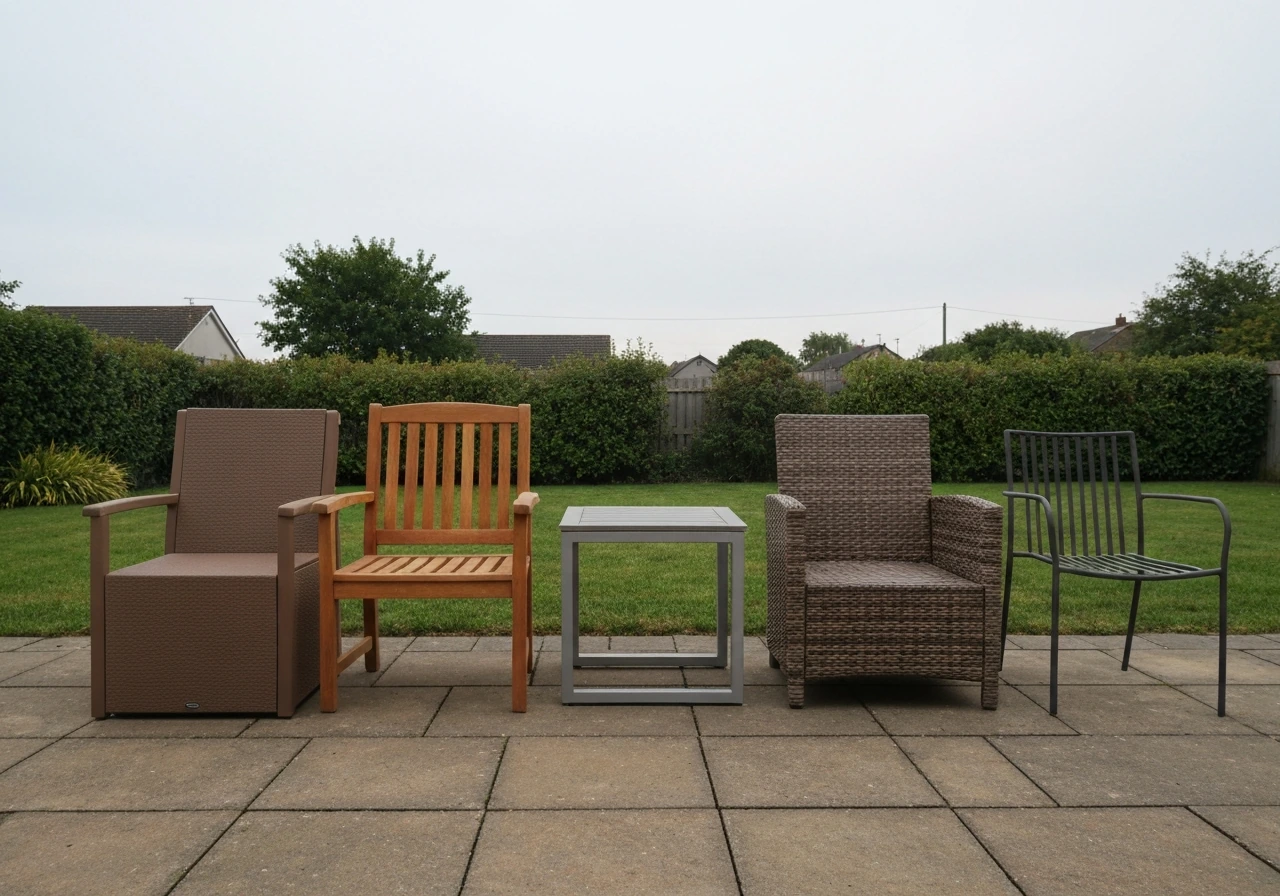
Top 10 Patio Furniture Brands: Best Picks by Material and Climate
Ranked top 10 patio furniture brands by material and climate, with what to verify, price value, and care tips.