
Whether wicker patio furniture can get wet depends almost entirely on what it's made of. blank" rel="noopener noreferrer">Synthetic resin (PE) wicker handles rain, splashes, and humidity without issue and can even be hosed down during cleaning. Maison Louis Drucker also notes that blank" rel="noopener noreferrer">synthetic fiber weaves are highly resistant to water and UV, making them suitable for all-year outdoor use, including coastal conditions. If you are shopping for a wicker patio trash can, choosing synthetic PE wicker over natural rattan will generally hold up better to rain and regular splashes. Natural rattan, on the other hand, is not waterproof and will swell, warp, and grow mold if it stays wet. Most furniture sold today as 'wicker' is actually the synthetic version, but if you own natural rattan or aren't sure which you have, that distinction matters a lot before the next rainstorm.
Can Wicker Patio Furniture Get Wet? Waterproof Guide

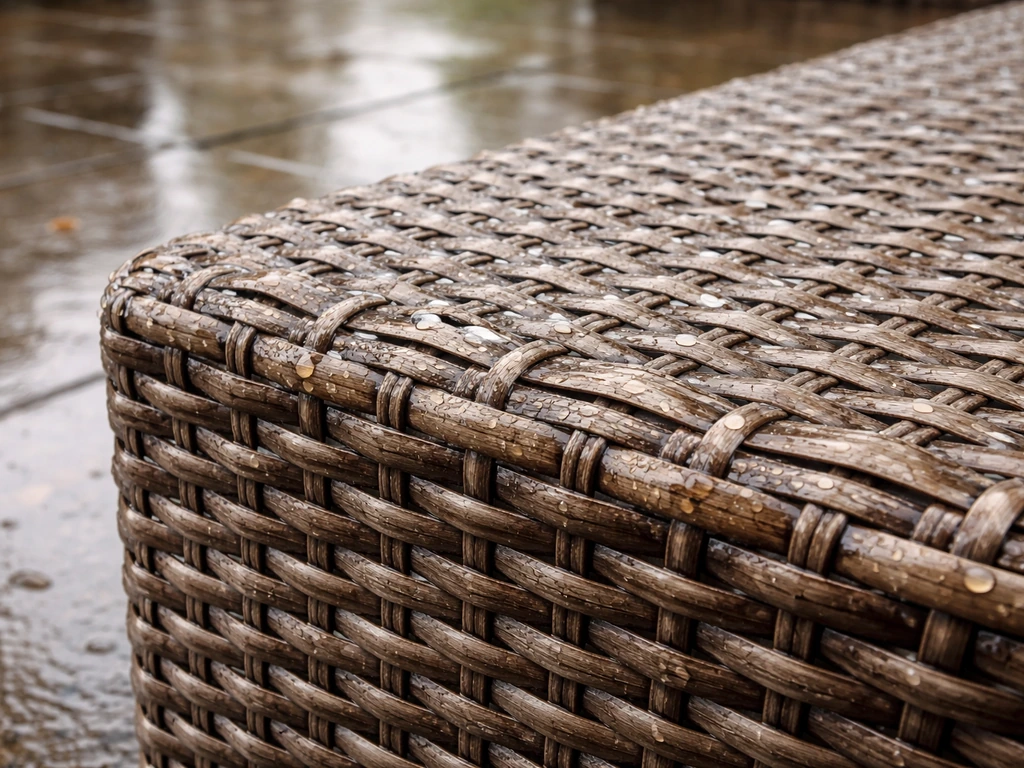
What 'wicker' actually means: natural rattan vs synthetic resin
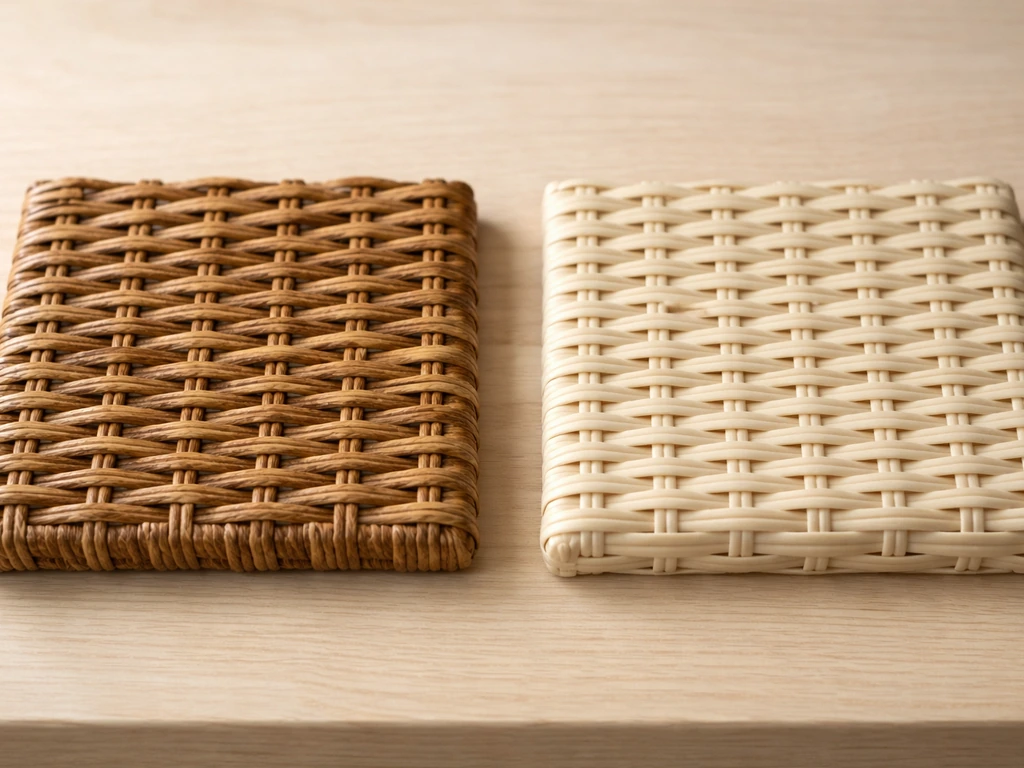
Wicker isn't a material, it's a weaving technique. The actual fiber doing the weaving can be natural or synthetic, and that's where everything diverges. Natural rattan comes from a tropical palm plant. It's organic, it breathes, and it absorbs moisture. Synthetic resin wicker (also called PE wicker or all-weather wicker) is made from polyethylene plastic fibers woven over a metal frame. It looks nearly identical to natural rattan but behaves completely differently when wet.
Natural rattan has a warm, handmade quality and shows up in higher-end indoor furniture and some boutique outdoor pieces. Synthetic PE wicker dominates the outdoor furniture market because it was designed specifically to handle outdoor conditions. When you buy a wicker patio set from most major retailers today, you're almost certainly getting PE wicker. But older sets, pieces from specialty stores, or furniture repurposed from indoors could easily be natural rattan. Check the product listing, tag, or manufacturer spec if you're not sure.
Waterproof vs weather-resistant: what actually happens when it gets wet
These two terms get used interchangeably in product listings, but they describe very different levels of protection. Weather-resistant means the material can tolerate rain and moisture exposure for a while before degrading. Waterproof means water can't penetrate or damage it at all. Almost nothing in outdoor furniture is truly waterproof in every component, but high-quality PE wicker comes close for the woven shell itself.
| Feature | Natural Rattan | Synthetic PE Wicker |
|---|---|---|
| Water absorption | Absorbs moisture readily | Does not absorb moisture |
| Rain exposure | Risk of swelling and warping | Handles rain without damage |
| Humidity tolerance | Degrades in sustained high humidity | Performs well even in coastal/humid climates |
| Mold/mildew risk (weave) | High if left wet | Low if allowed to drain and dry |
| UV resistance | Can fade and dry-crack | Generally UV-stabilized |
| Recommended outdoor use | Covered/sheltered areas only | Full outdoor exposure suitable |
| Salt water resistance | Poor | Good (Gloster PE woven, for example, is salt-water resistant) |
For natural rattan, the damage timeline is faster than most people expect. Rattan Wholesaler's research shows that continuous outdoor exposure without protection can cause fiber swelling and structural failure within months in humid environments. Repeated wet-dry cycles weaken the fiber bonds and joints, and mold sets in once moisture gets trapped in the weave. Maison Louis Drucker describes rattan as sensitive to excessive moisture and notes that when humidity is high enough to prevent drying (common in rainy winters), the material stays wet and degrades continuously.
PE wicker doesn't absorb water, so the weave itself isn't the problem. The risks with synthetic wicker shift to the frame and the cushions. A steel frame under that PE weave can rust if the protective coating is compromised by standing water. An aluminum frame has no rust risk. And cushion foam, even inside a water-resistant fabric cover, can hold moisture for days after rain. That trapped moisture is where mold and odor actually come from on most modern wicker sets.
What to do right after rain, a splash, or a spill
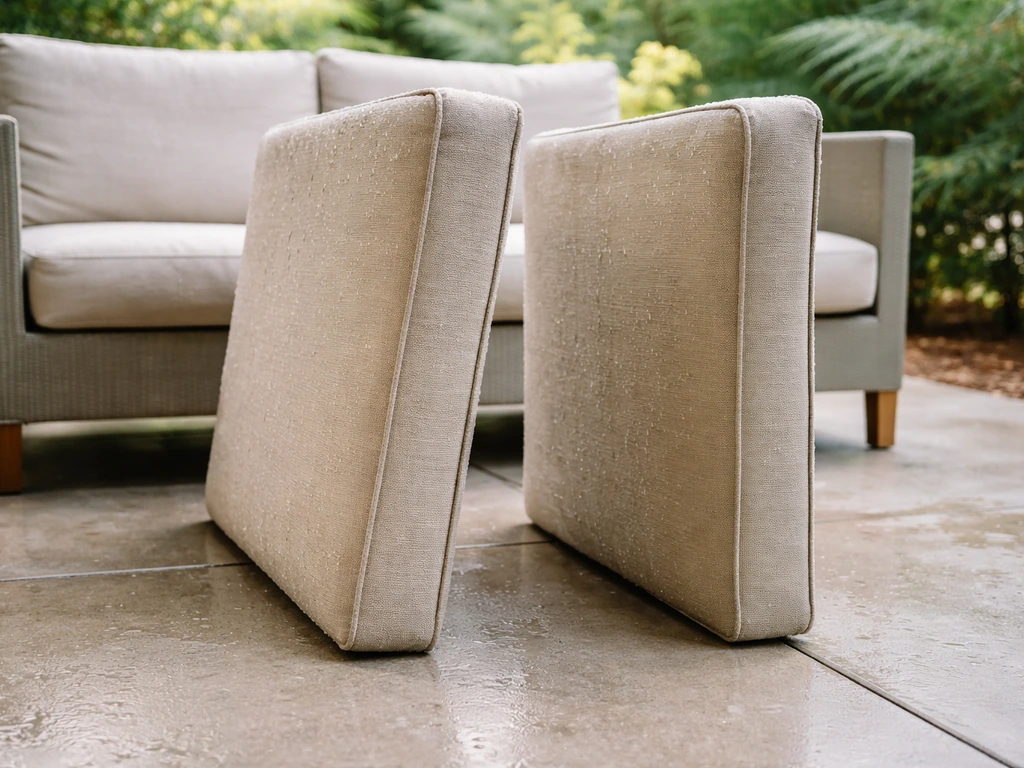
If your furniture just got rained on, the most important thing is airflow and speed. The faster moisture clears out of the weave, joints, and cushion materials, the lower your mold risk. Here's the sequence that actually works:
- Remove cushions immediately and stand them on edge so water can drain through both sides rather than pooling at the bottom.
- Tilt or prop the furniture frames at an angle if water is visibly sitting in the weave channels or seat recesses.
- Wipe down natural rattan with a dry cloth as quickly as possible. Smithers of Stamford specifically says to wipe it dry right away and warns that leaving natural rattan in rain overnight increases damage risk significantly.
- For PE wicker, shake or brush off excess water from the weave, then let it air dry in a spot with good airflow and ideally some sun.
- Don't put covers back on wet furniture. Trapping moisture under a cover is worse than leaving the furniture uncovered in calm weather.
- For natural rattan that got genuinely soaked, use a hair dryer on the lowest heat setting, moving it constantly and keeping distance, to speed drying without cracking the fibers.
For spills specifically, blot rather than rub on natural rattan to avoid pushing liquid deeper into the fiber. On PE wicker, a quick rinse with water is fine and actually helps flush the mess out of the weave.
Drying and cleaning to prevent mold, mildew, and odors
The number-one rule across every manufacturer's care guide is the same: do not reassemble or use the furniture until everything is completely dry. That means the frame, the cushions, and the covers. Cushion foam is the biggest trap here because it can feel dry to the touch on the outside while staying soaked inside for 24 to 48 hours. If you put a cushion back on a chair seat that's even slightly damp and then cover it, you will get mold and a musty smell.
Cleaning the wicker frame
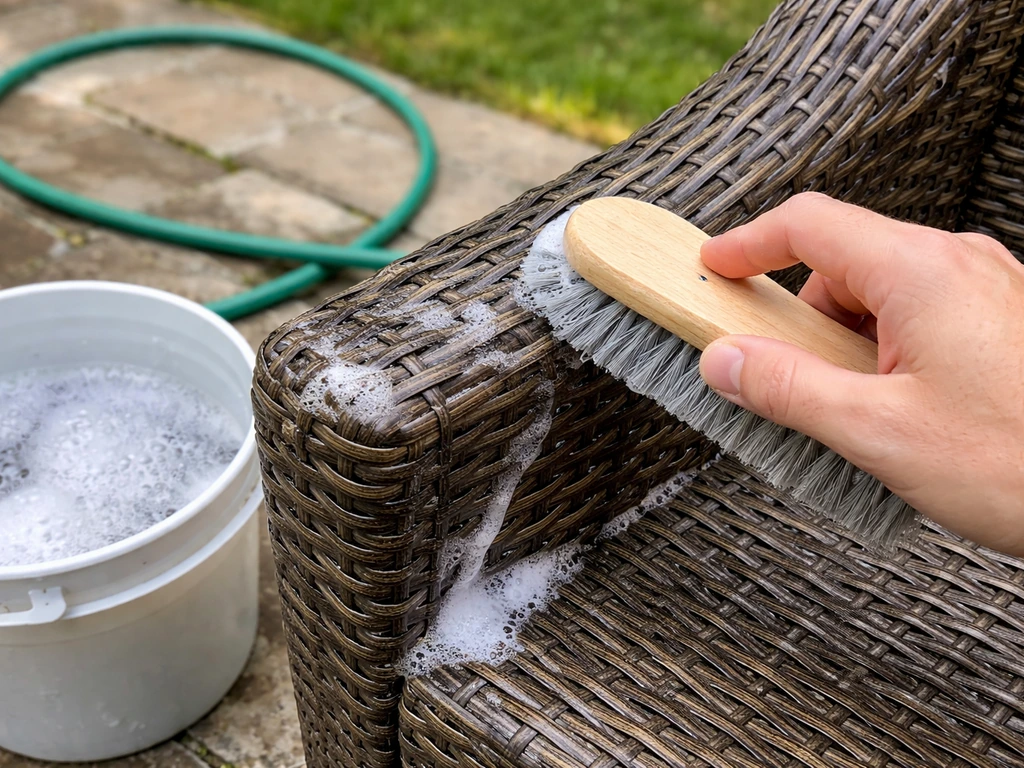
For PE wicker, a mild soap solution and a soft brush work well. You can use a garden hose to rinse, and Tractor Supply's resin wicker care instructions actually describe soaking steps during cleaning. The point is that PE wicker can handle it. Avoid pressure washers at close range because they can force water into crevices and stress the weave over time. For natural rattan, stick to a barely damp cloth with mild soap, wipe immediately, and dry with a clean towel. Never soak natural rattan during cleaning.
Cleaning and drying cushions
For cushions with Sunbrella or similar performance fabric covers, the standard approach is mild soap and lukewarm water, rinsed thoroughly and air-dried completely. Sunbrella is engineered to resist fading, moisture, and mildew, so it handles cleaning well. If you're dealing with existing mildew stains, a diluted bleach solution (check your fabric's care tag first) followed by a full rinse and thorough drying usually handles it. The critical step is making sure the inner foam dries too, not just the cover. Stand cushions on edge in the sun with covers unzipped if possible to maximize airflow through the fill.
If you're already dealing with musty odors from cushions that got left wet too long, vacuum the surface first to remove any loose mold spores, then clean with a mild soap and water solution. Sun exposure after cleaning genuinely helps kill residual mold and clear odor. For severe cases where the foam core has developed deep mold, replacement foam is usually the more practical fix.
Long-term protection: covers, storage, sealing, and cushion care
Using furniture covers correctly
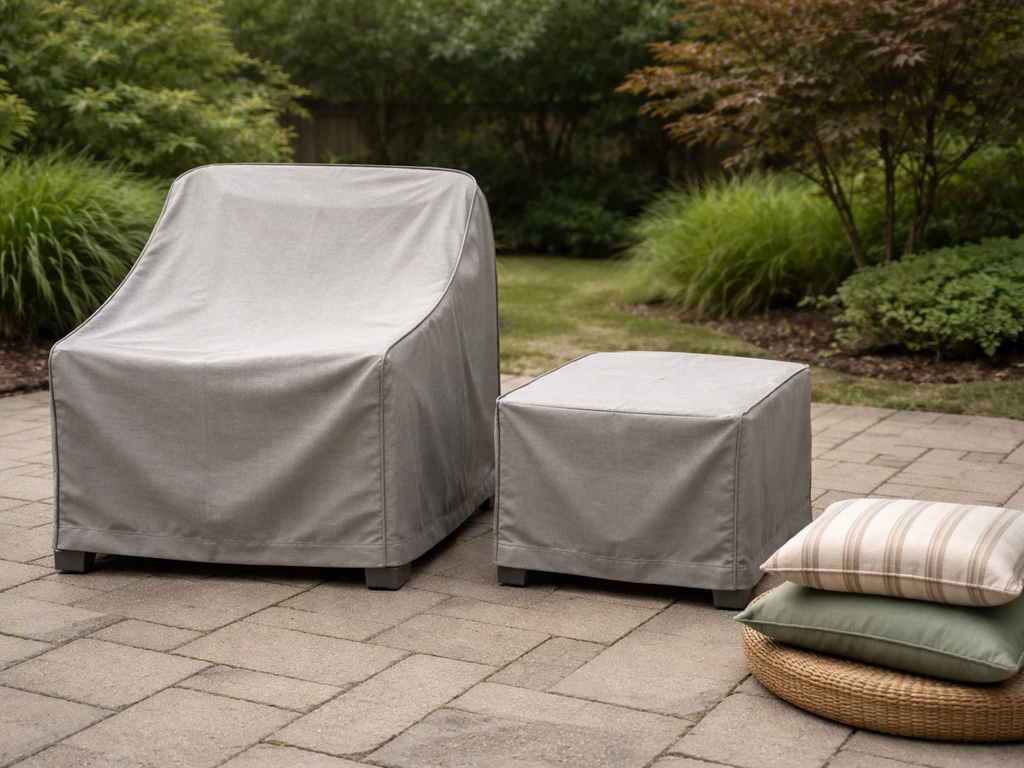
Covers protect furniture from UV exposure, debris, and the worst rain events, but they create their own risk if used wrong. Most patio furniture covers are water-resistant rather than fully waterproof, meaning moisture can still seep through or collect underneath. The key is ventilation: covers with built-in vents or tie-down straps that allow some airflow prevent condensation from building up underneath. Never cover wet furniture, and before storing covers themselves, make sure they're completely dry or you're creating a mold incubator.
Seasonal storage
For natural rattan, indoor or sheltered storage during wet seasons is not optional if you want it to last more than a few years. A garage, shed, or covered porch works. The ideal storage environment for natural rattan is 40 to 60 percent relative humidity with good airflow, according to Rattan Wholesaler. Below that range the fibers dry out and crack; above it, mold risk climbs. For PE wicker, storage is a preference rather than a necessity, but bringing it in or covering it during winter still extends the finish life and reduces UV degradation on the frame.
Sealing and protective finishes
Natural rattan benefits from periodic treatment with a protective finish, linseed oil, or a rattan-specific sealant to slow moisture absorption. This isn't a permanent fix but it buys time and resilience. PE wicker generally doesn't need sealing at the weave level, but if you use an outdoor waterproofing spray on cushions periodically, it helps maintain water bead-off on the fabric. Some manufacturers recommend this every season, especially after cushion cleaning.
How the frame and cushion materials change your risk
The wicker weave gets all the attention, but the frame underneath and the cushion fill often create the real long-term problems. Here's how the main combinations play out:
- Aluminum frame with PE wicker: the lowest-risk combination for rain and humidity. Aluminum doesn't rust, PE doesn't absorb water, and the main care concern is just the cushions.
- Steel frame with PE wicker: fine when the powder coating is intact, but any chips or scratches become rust entry points if water sits there. Inspect welds and joints annually.
- Wood frame with natural rattan: the highest-risk option. Both materials are organic and moisture-sensitive. Wood joints can swell, crack, and separate. This combination belongs in covered or indoor settings.
- Quick-dry foam cushion cores: the right spec for outdoor use. Walters Outdoor, for example, uses a reticulated foam core in its outdoor cushions specifically for drainage and mildew resistance. If you're replacing cushions, this is the foam type to look for.
- Standard polyester foam in non-vented cushions: common in budget sets and the biggest driver of mildew complaints. Water gets in and doesn't come out.
Cushion fabric matters too. Performance fabrics like Sunbrella are solution-dyed acrylic, meaning the color goes all the way through the fiber and resists fading, moisture, and mildew at the material level. Budget polyester cushion covers look similar but don't perform anywhere near as well over time. If you're buying a new set or replacing cushions, the cushion spec deserves as much attention as the wicker type.
Tips for rainy regions and humid climates
If you live somewhere with consistent rain, high humidity, or coastal exposure (salt air plus moisture), your furniture management routine needs to be more active, not just reactive. If spiders are a concern, keep moisture low and check corners and cushions regularly. Here's what works in practice:
- Buy PE wicker over natural rattan. For rainy or humid climates, this isn't a preference, it's the practical choice. High-quality PE wicker paired with rust-resistant aluminum frames and quick-dry cushions is genuinely designed for these conditions.
- Prioritize airflow around the furniture. Dense arrangements against walls or under low-clearance covers trap humidity and slow drying. Leave space for air to move.
- Remove and store cushions on nights when rain is forecast. This one habit prevents most of the mold and odor problems people run into.
- In very humid climates, run a regular cleaning rotation even if the furniture looks fine. Mold and mildew can establish before you see visible growth.
- For coastal locations, Gloster's PE woven furniture is noted as resistant to salt water, and the principle applies broadly: look for PE wicker specifications that explicitly address salt and UV resistance rather than assuming all synthetic wicker is equal.
- If you own natural rattan and live in a wet climate, the honest advice is that it's not the right material for that placement. Either keep it fully covered and sheltered, or consider the trade-offs alongside alternatives.
It's worth knowing that PE wicker still has limits in sustained wet conditions. Even though the weave itself doesn't absorb water, if water pools in the base of seat cushions or collects in the joints of a steel frame for weeks at a time, you'll still see issues. The material is built for rain exposure, not for neglect. Good habits, including quick cushion removal, periodic cleaning, and using proper covers with ventilation, are what actually translate 'weather-resistant' specs into long furniture life.
If you're still deciding between materials or weighing the full picture of wicker ownership, the broader pros and cons of wicker patio furniture and how it compares to alternatives like wood are worth looking into alongside the maintenance side of things. The pros and cons of wicker patio furniture depend largely on whether you are choosing natural rattan or synthetic PE wicker.
FAQ
If my PE wicker furniture gets drenched in heavy rain, should I just leave it out until it dries?
Leaving it out is fine if air can reach the weave and cushions. The key is not covering it while it is still wet, and flipping or removing seat cushions so moisture can escape from the foam. If you notice water pooling at the base or on the frame joints, blot and reposition the cushions, then let it dry in direct airflow (fan or sun).
Can I use a pressure washer on wicker patio furniture to get water and dirt off faster?
Avoid pressure washing close range. Even for PE wicker, high pressure can force water into frame seams and accelerate rust on steel components, and it can gradually stress the weave over time. Stick to a gentle hose rinse and a soft brush, especially around joints, under cushions, and any stitched or tied areas.
How long is too long for cushions to stay wet before mold starts?
Moisture left trapped inside cushion foam for about 24 to 48 hours is where problems commonly begin, even if the outside feels dry. The faster you get cushions off, unzipped covers opened, and airflow through the fill, the lower the odor and mildew risk.
Are wicker covers completely waterproof, so I can leave furniture covered in rain?
Most patio covers are water-resistant, not fully waterproof, so water can seep through or create condensation underneath. If you cover furniture during or right after rain, make sure it has started drying and the cover allows ventilation (vents or straps). Never seal wet cushions under a tight cover.
How can I tell whether my “wicker” furniture is natural rattan or PE wicker without guessing?
Check the product tag or manufacturer listing first. If it is labeled as resin, polyethylene (PE), all-weather, or synthetic, it is PE wicker. If it is described as rattan or palm-based and marketed as natural or indoor-friendly, it is likely natural rattan, which should never be soaked and requires sheltered, controlled humidity storage.
What should I do if I find mold on a natural rattan piece after it got wet?
Do not soak it. Rinse very lightly (barely damp cloth), then dry thoroughly with good airflow and keep it sheltered from ongoing humidity. If mold is extensive or returns quickly, you may need professional help, but in many cases the fix is removing moisture exposure and cleaning with a mild cleaner appropriate for natural fibers.
Can I leave PE wicker furniture outside through winter rainstorms?
Yes, but sustained wet conditions can still cause issues through the cushions and frame. In practice, bring cushions in during extended rainy periods, drain or prevent water pooling at seating points, and periodically rinse off salt air (coastal) and dirt to keep frames and joints from staying wet.
Is it safe to store cushions in place under the furniture cover during long rainy weeks?
Usually no. Covers can trap moisture, and cushion foam holds water internally. For long stretches of rain, remove cushions, dry them fully, then store in a dry, ventilated area, or hang them upright so airflow reaches the fill.
What’s the best way to remove musty smell from wicker cushions after they were left wet?
Vacuum first to remove loose spores, then wash with mild soap and water, rinse thoroughly, and air-dry completely with sun and airflow. If the smell persists after the foam is fully dry, it often indicates deep mold within the foam, and replacing the foam core is typically the most effective solution.
Do I need to seal PE wicker after it gets wet, or is cleaning enough?
You generally do not need to seal the PE weave itself. For cushions, optional seasonal waterproofing on the fabric can help improve water beading, but it does not replace drying and ventilation. For frames, focus on preventing water pooling and keeping any rust-prone surfaces protected.
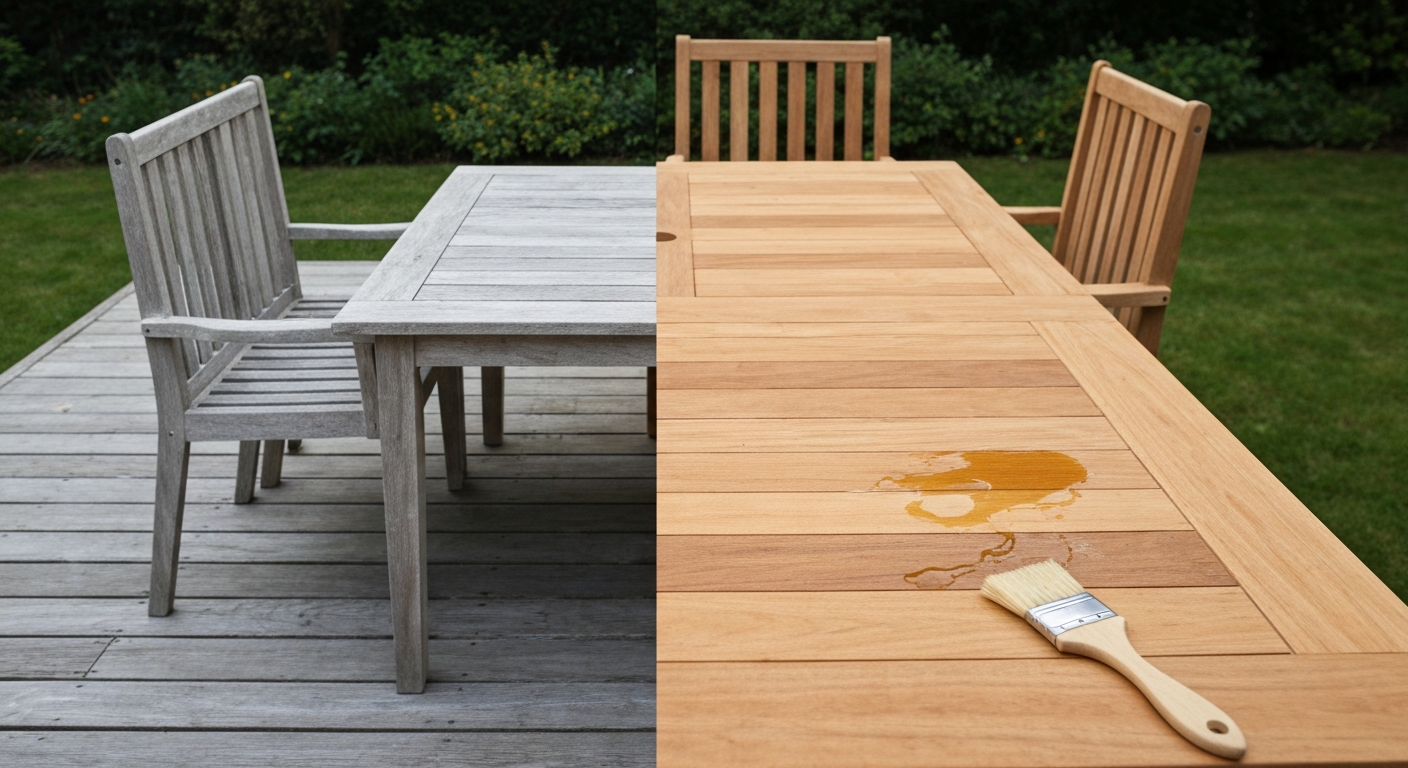
Best stain for teak patio furniture: expert picks, climate-based choices, prep, application, and maintenance tips.
Is teak patio furniture good? Evidence-based verdict, lifespan, care, buying tips, comparisons, and eco guidance.
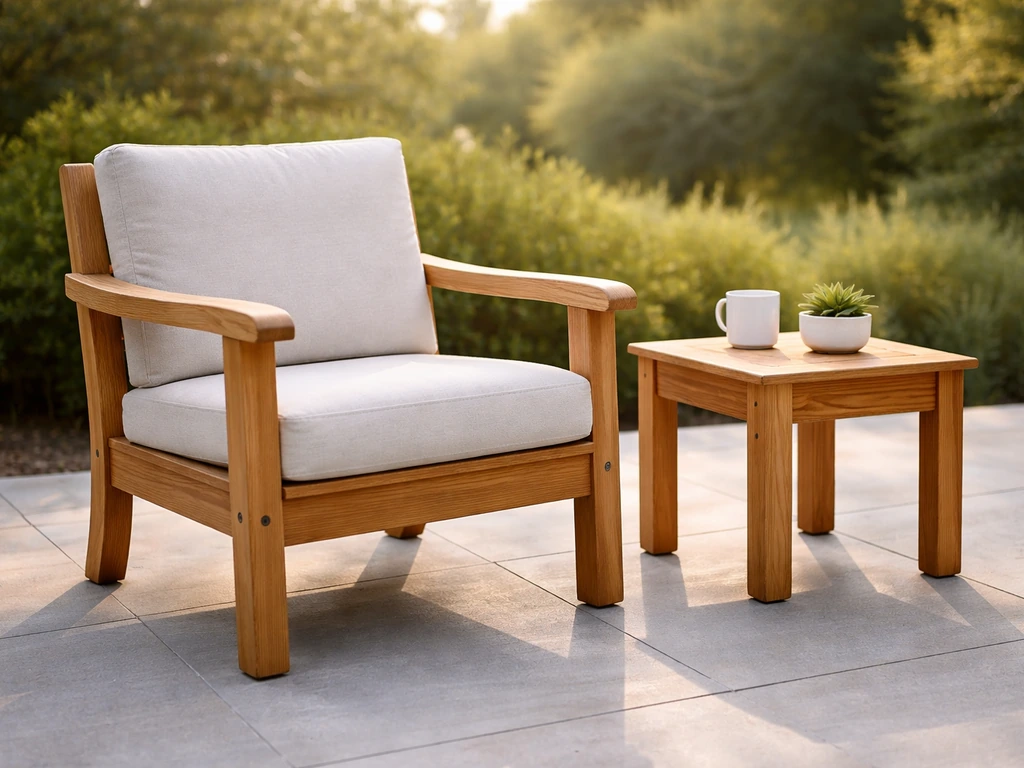
Teak patio lifespan ranges, factors that shorten or extend durability, and a maintenance plan to protect joints and fini