
FSC certified patio furniture means the wood in the piece was tracked through a verified supply chain back to a responsibly managed forest. That tracking system is called Chain of Custody (CoC), and it's what lets a brand legally put the FSC label on a finished product. FSC’s Chain of Custody (CoC) is what lets companies trace and account for certified inputs through manufacturing so they can make credible FSC claims on finished products credibly trace and account for certified inputs. If a brand can't show you a CoC certificate number, the "FSC certified" claim on the product page is unverified marketing, not a real certification.
FSC Certified Patio Furniture: How to Verify and Buy

Marcus Kellerman
1 Jun 2026
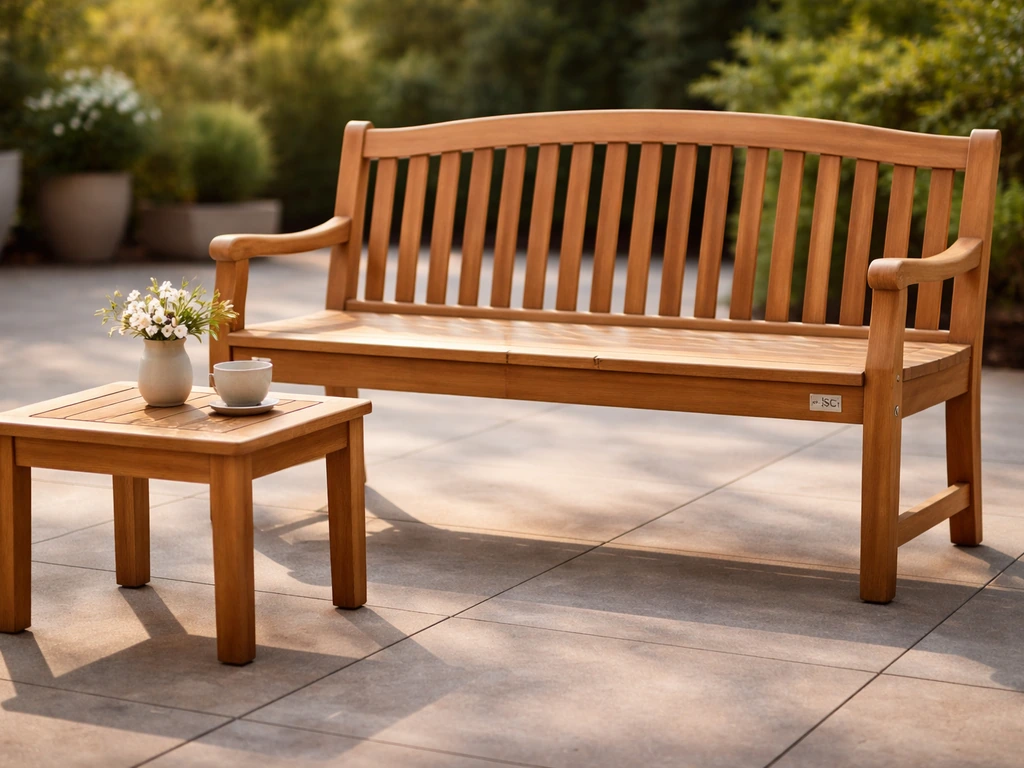
What "FSC certified" actually means for patio furniture
FSC stands for Forest Stewardship Council, and it certifies forests and the companies that handle wood from those forests. For a piece of patio furniture, there are three label types you'll realistically encounter, and they don't all mean the same thing.
| Label | What it means | Strength of claim |
|---|---|---|
| FSC 100% | All wood in the product comes from FSC-certified forests only. No exceptions. | Strongest |
| FSC Mix | A blend of FSC-certified wood, FSC-controlled wood, and/or recycled material. Minimum 70% certified or controlled inputs required. | Moderate |
| FSC Recycled | All wood content is 100% post-consumer or post-industrial recycled material. | Strong for recycled content, not about forest sourcing |
FSC Mix is the label you'll see most often on patio furniture. It's legitimate, but understand what it actually covers: the non-FSC-certified portion of the wood is allowed only because it qualifies as "Controlled Wood" under FSC's own verification framework. FSC allows non-FSC-certified wood to be used only if it qualifies as “Controlled Wood,” verified under FSC’s Controlled Wood framework. Controlled Wood isn't the same as FSC-certified forest wood. It's a risk-managed alternative that FSC designed to handle global supply realities while still filtering out the worst sourcing practices. It's not a loophole, but it's also not equivalent to FSC 100%. If sustainability is the reason you're shopping this way, FSC 100% is worth seeking out specifically.
One more thing worth knowing: FSC Controlled Wood claims can only be made on sales and delivery documents between companies that each hold FSC CoC certificates. You as a consumer will never see a raw "Controlled Wood" label on a retail product. What you see on the furniture itself will be one of the three labels above.
How to verify FSC claims before you buy

The single most useful thing you can do is look up the brand's CoC certificate number on FSC's public database at info.fsc.org. Every company that holds a valid FSC Chain of Custody certificate has a unique number (formatted like FSC-C######). If it's on the product page, enter it. If it's not on the product page, ask for it. A genuine FSC licensee will have it.
- Find the CoC certificate number on the product listing, the furniture's hang tag, or the brand's sustainability page.
- Go to info.fsc.org and enter the certificate number in the certificate search.
- Confirm the company name matches the seller, the certificate is active (not expired), and the product category includes furniture or wood products.
- Check whether the label on the actual product matches what the listing claims. "FSC certified" should appear with a specific label type (100%, Mix, or Recycled), not just a generic logo.
- If buying through a retailer (not directly from the manufacturer), the retailer should also hold a CoC certificate if they're making FSC claims on the product page themselves.
Be skeptical of product descriptions that say things like "sustainably sourced" or "eco-friendly wood" without an FSC label or certificate number. Those phrases have no third-party verification behind them. Genuine FSC claims require a licensee to follow FSC trademark rules and maintain their CoC certification through annual audits. Vague green language costs nothing to print.
Material choices that actually hold up outdoors
FSC certification covers the sourcing of the wood. It says nothing about how that wood performs in your backyard. These are two separate questions, and you need to think about both.
Teak: the benchmark for FSC outdoor wood
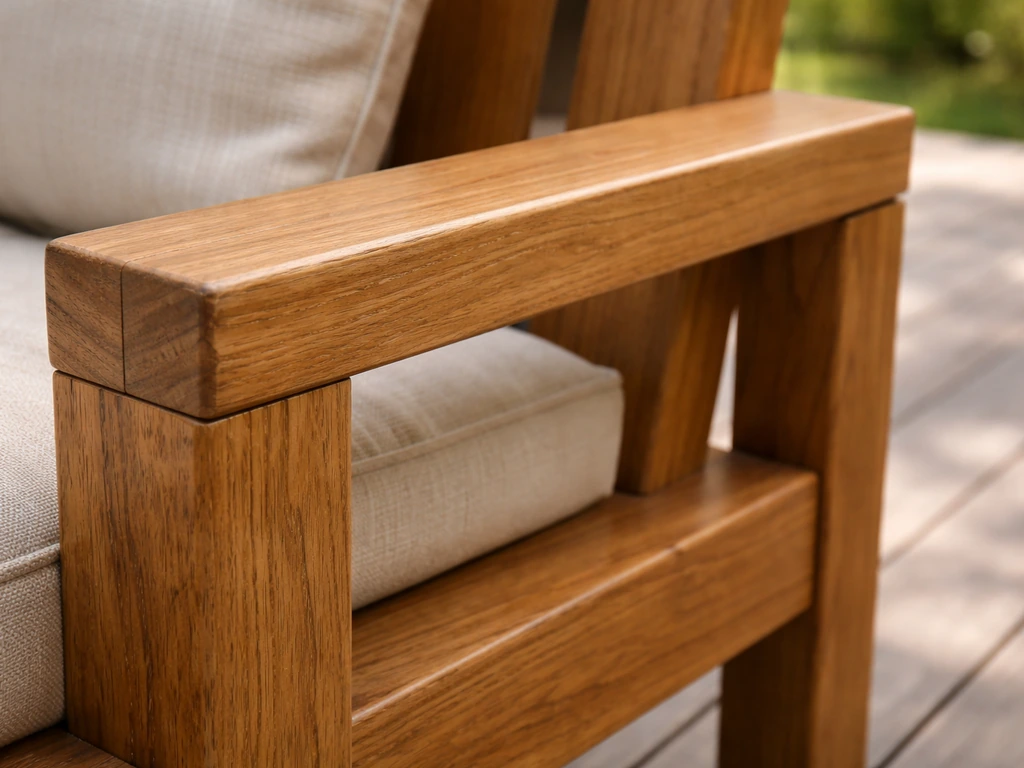
Teak is the most popular FSC-certified wood in premium patio furniture, and for good reason. It contains natural oils and silica that make it highly resistant to rot, moisture, and insects without needing a sealant. Plantation teak grown in Indonesia, Brazil, and Costa Rica is where most FSC-certified teak originates. Grade A teak (tight grain, golden color from the heartwood) is what you want. Grades B and C include more sapwood and perform noticeably worse outdoors. Expect to pay $800 to $3,000+ for an FSC teak dining set from a reputable brand, but a well-built set lasts 20 to 30 years, which makes the cost-per-year calculation pretty reasonable.
Eucalyptus and acacia: FSC-certified alternatives worth considering
Eucalyptus and acacia are two FSC-certified hardwoods that appear in mid-range patio furniture at lower price points than teak. Both have decent natural oils and weather reasonably well, though neither matches teak's inherent density or longevity. Eucalyptus furniture in the $400 to $1,200 range is often FSC Mix certified and performs well with annual oiling. If the brand offers FSC 100% eucalyptus, that's a meaningful step up in certification strength. Acacia is more variable in quality between manufacturers, so pay attention to construction, not just certification.
Aluminum, wicker, and cast iron: no FSC certification, but worth comparing
FSC only applies to wood and fiber-based products, so aluminum frames, all-weather wicker (HDPE resin), and cast iron pieces carry no FSC designation. That doesn't make them bad choices for a patio. Powder-coated aluminum is exceptionally weather-resistant and lightweight, and it's often the frame material on patio sets that pair FSC-certified wood slats with a metal structure. In that case, the FSC claim applies only to the wood components, not the frame. Always read the label scope carefully. If durability and low maintenance are the priority in a humid or coastal climate, an FSC-certified teak tabletop on a powder-coated aluminum frame is genuinely a smart hybrid.
Buying checklist: construction, hardware, finishes, and cushions
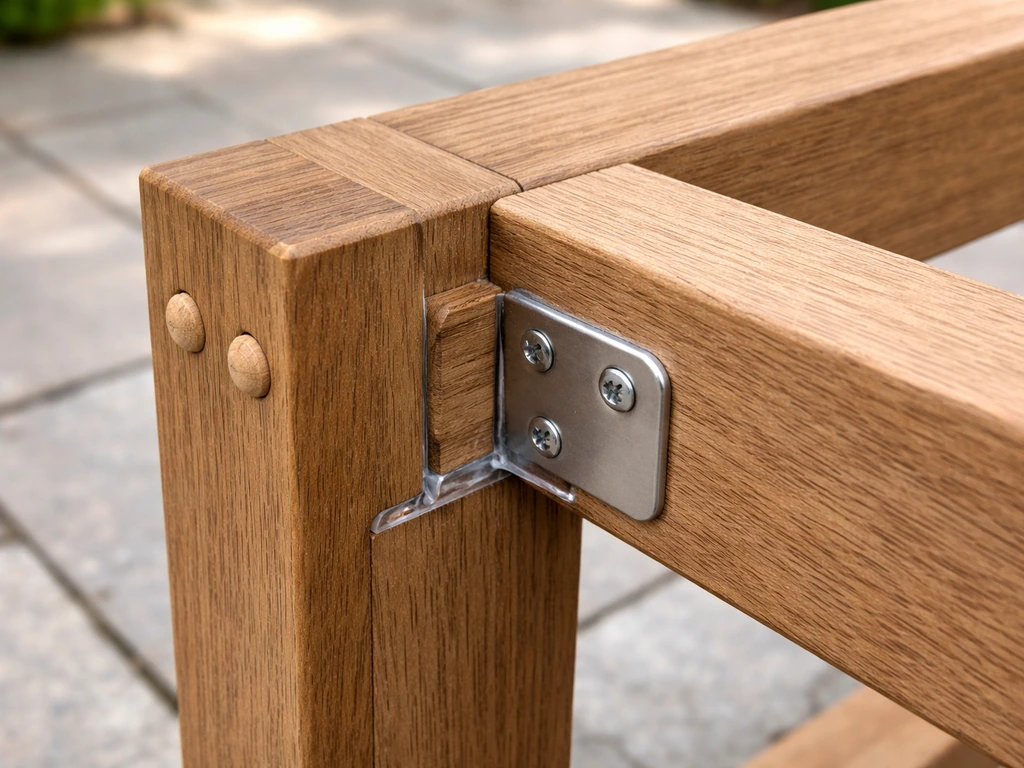
The FSC label tells you where the wood came from. The following points tell you whether the furniture is actually built to survive years outside.
- Joinery: Look for mortise-and-tenon or dowel construction on wood pieces, not just screws into end grain. End-grain screw joints expand and contract with moisture and fail faster.
- Hardware: Stainless steel (316 grade for coastal environments, 304 for inland use) or hot-dipped galvanized hardware only. Zinc-plated or cadmium-plated screws will rust through in one or two seasons.
- Finish: Raw/unfinished teak is fine and intended to weather to silver-gray. Other FSC woods (eucalyptus, acacia) often need a UV-protective oil or sealant applied at purchase and annually after.
- Cushion fabric: Look for solution-dyed acrylic (Sunbrella being the most recognized brand) rather than polyester. Solution-dyed fibers hold color and resist mildew far better. Check that cushion inserts are quick-dry foam, not standard upholstery foam.
- Frame thickness: On aluminum frames paired with FSC wood slats, look for wall thickness of at least 1.2mm for chairs and 1.5mm for tables. Thinner extrusions flex and eventually crack at welded joints.
- FSC label scope on the product: Confirm in the product description whether the FSC claim covers the entire piece or only specific components (e.g., "FSC certified wood slats"). This is common on hybrid pieces and it's accurate, just important to understand.
Climate-specific guidance for FSC wood furniture
Where you live changes which FSC wood species and finishes make sense. If you are specifically trying to buy patio furniture made in the USA, also check the brand’s stated manufacturing location and how the wood and components are sourced where you live changes which FSC wood species and finishes make sense. Here's how to match certification and material to your actual outdoor environment.
| Climate | Best FSC wood choice | Key consideration |
|---|---|---|
| Hot and dry (Southwest, desert) | Teak or FSC eucalyptus with oil finish | Low moisture reduces rot risk; UV is the main enemy. Oil annually to prevent cracking and surface checking. |
| Humid subtropical (Southeast, Gulf Coast) | Grade A teak preferred; eucalyptus with sealed finish as a second choice | High humidity and rainfall accelerate mold and rot. Teak's natural oils give the best resistance. Avoid acacia in this zone unless you're committed to frequent oiling. |
| Coastal/salt air (Atlantic, Pacific coasts) | Teak with stainless steel 316 hardware | Salt air corrodes metal hardware and degrades finishes fast. Teak handles it better than most woods. Hardware spec is critical here. |
| Cold climate (Northeast, Midwest, mountain regions) | Teak stored indoors or under cover in winter; FSC eucalyptus with protective cover | Freeze-thaw cycles are brutal on wood joints. Store cushions inside from October. Consider furniture covers rated for snow load if storage isn't practical. |
| Mild and temperate (Pacific Northwest, coastal California) | Any FSC-certified hardwood performs well; eucalyptus is a cost-effective option | Lower UV and temperature swings mean maintenance demands are lower. Mildew from rain and fog is the main issue to manage. |
Maintenance and care to protect your investment
FSC certification is about responsible sourcing, but the way you care for the furniture is what determines whether it lasts 5 years or 25. These habits make the real difference.
Cleaning
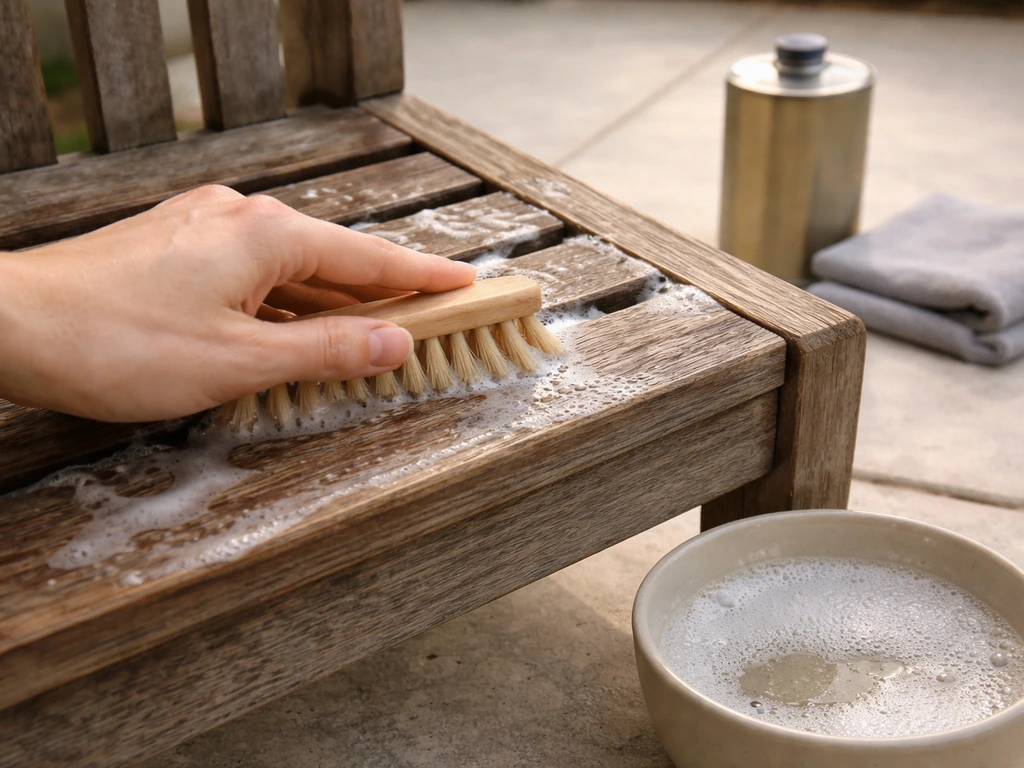
For teak and other FSC hardwoods, clean with a soft brush, mild soap, and water once or twice a season. Avoid pressure washing at close range because it raises wood grain and drives moisture into joints. Teak can be cleaned with a diluted oxalic acid cleaner if it's gone gray and you want the golden color back, but weathered silver-gray teak is structurally fine and requires no treatment to last.
Sealing and oiling
Teak purists often skip oiling entirely, and that's defensible. Oiling teak can actually trap moisture if done improperly and lead to mildew. If you prefer to maintain the golden color, use a teak-specific oil (not linseed or generic wood oil) applied in thin coats after cleaning and drying. For eucalyptus and acacia, oiling annually is not optional; it's maintenance. Use a penetrating hardwood oil rather than a film-forming varnish, which peels and traps moisture over time.
Cushions and covers
Store cushions indoors or in a deck box when not in use, especially in humid climates. Even solution-dyed acrylic fabric will develop mildew if left wet repeatedly. A fitted furniture cover during the off-season extends wood and finish life significantly, particularly in climates with freeze-thaw cycles or prolonged rain. Look for covers made from breathable polyester rather than solid tarps; breathable covers prevent condensation buildup underneath.
Questions to ask and how to compare brands before you buy
The patio furniture market has grown significantly, and brands range from genuine craft operations using verifiable FSC supply chains to importers slapping sustainability language on product pages. Here's how to cut through it. If you're trying to identify Salterini patio furniture, use the same checklist: look for the specific FSC label type and any verifiable certificate or documentation tied to the brand cut through it.
Questions for the brand or retailer
- "What is your FSC Chain of Custody certificate number?" (If they don't have one, they can't make an FSC claim on finished goods.)
- "Is the FSC certification on this piece FSC 100%, FSC Mix, or FSC Recycled?" (Each means something different, as covered above.)
- "Which components does the FSC certification cover? The entire piece, or just the wood frame/slats?"
- "What species is the wood, and what grade?" (For teak, Grade A vs. B or C matters.)
- "Where is the furniture manufactured, and does the manufacturer also hold a CoC certificate?"
- "What finish is applied, and what maintenance schedule do you recommend for my climate?"
How to compare brands side by side
When evaluating two brands against each other, build a simple comparison around five criteria: FSC label type (100% vs. Mix), species and grade of wood, hardware specification, warranty length, and verified CoC certificate status. A brand offering FSC Mix teak with a 5-year structural warranty and a verifiable CoC number is a stronger choice than one claiming FSC 100% with no certificate number and no warranty language. Warranty terms reveal a lot about manufacturer confidence in their construction. A 1 to 2 year warranty on outdoor furniture is minimal; look for 3 to 5 years on the frame as a baseline.
It's also worth knowing whether the brand manufactures domestically or imports. Some brands that manufacture domestically use FSC-certified lumber sourced from North American plantations, which shortens the chain of custody and can make verification easier. Brands that import from Southeast Asia or Latin America can absolutely hold legitimate FSC certifications, but the supply chain is longer, which is why the CoC certificate check matters even more. If you're exploring where specific furniture is made as part of your buying research, that context pairs naturally with FSC verification.
Finally, don't overlook repair and long-term support. If you need help beyond basic upkeep, search for a local service that repairs patio furniture and can source matching parts. Even the best FSC teak set may need a joint retightened, a slat replaced, or new hardware after a decade. Brands that offer replacement parts or point you to a professional restoration path give better long-term value than those that treat furniture as disposable. Knowing who repairs patio furniture in your area before you buy is a practical step many people skip, but it's part of protecting a meaningful investment.
FAQ
If a product shows “FSC certified,” how do I know the claim matches the exact brand and product I’m buying?
When the product page lists an FSC label, you should also be able to find a matching FSC Chain of Custody certificate number for the brand or seller that uses the label. If the certificate number is missing or does not appear in the FSC public database, treat the claim as unverified and ask the company for the certificate number tied to the specific product line (not just a general corporate certificate).
Does FSC certified patio furniture certification apply to the whole set, or only to the wood parts?
Be careful with “FSC certified” phrasing on mixed-material furniture. For example, an aluminum frame or HDPE resin wicker will not be FSC-labeled, even if the wood slats are. The practical check is to look for the label scope wording or any product documentation that states the FSC coverage is limited to the wood and fiber components.
What should I check if I care about rust resistance, not just responsible wood sourcing?
FSC labels do not tell you whether the finish is marine-grade, whether fasteners are stainless, or whether joints are sealed against water intrusion. If you live where rust is common, verify hardware type (stainless or corrosion-resistant), look for sealed or doweled joinery on slatted frames, and ask whether the brand specifies outdoor-rated fasteners.
How can I plan for repairs and replacement parts before buying FSC certified patio furniture?
Look at how long replacement parts are supported and whether the brand can provide matching slats, brackets, or fasteners. A long warranty is helpful, but parts availability can matter more after year five. If the brand only offers parts for a short period, factor in the likely need for repairs in wet climates or high wind exposure.
Can “FSC 100%” still be misleading if the furniture uses engineered or mixed materials?
If you see “FSC 100%” but the product page also mentions engineered wood, composite boards, or non-wood components, ask for clarification. FSC 100% applies only to the FSC-controlled component type that the label covers, so you want to confirm whether the relevant patio structure is actually FSC 100% wood/fiber or if parts of the build are non-FSC.
What cover practices prevent moisture problems on FSC hardwood patio furniture?
For teak and other FSC hardwoods, the risk is not the wood drying out, it is repeated moisture trapping at joints and under covers. If you use a cover, make sure it is breathable, and avoid putting the cover on while the furniture is still damp. In freeze-thaw regions, also ensure water cannot pool and freeze on flat surfaces.
Is it possible to buy FSC certified patio furniture that needs minimal upkeep, and what material choices drive that?
Yes. If you prefer low-maintenance, prioritize construction and finish over frequent oiling. For teak, you can choose to do minimal maintenance and let it go gray, but still avoid pressure washing that can force water into joints. For eucalyptus and acacia, plan for annual oiling with a penetrating hardwood oil, because skipping maintenance can shorten outdoor lifespan.
What is the quickest way to compare two brands of FSC certified patio furniture that seem similar on price?
If you are comparing two brands, insist on five specifics beyond the label: (1) the FSC label type (100% versus Mix), (2) wood species and grade where relevant (for teak, grade A versus mixed grades), (3) hardware specification such as stainless fasteners, (4) warranty length that matches the part you care about (frame or structural), and (5) whether the brand provides a verifiable CoC certificate number. This prevents you from being influenced by marketing language alone.
What questions should I ask a brand if they refuse to share a CoC certificate number?
If the company says it uses FSC-certified lumber but only provides general “eco” claims, ask for the FSC Chain of Custody certificate number and confirm it is tied to the selling entity. Also ask whether the product is FSC Mix or FSC 100%, because Controlled Wood inclusion is not the same as certified forest wood, and you may be paying for a stronger claim than you are receiving.
When a listing is vague on wood grade, how do I adjust my buying decision for FSC-certified patio furniture?
Tree species and grade matter, especially for teak. If you do not see grade or clarity about heartwood content, ask whether they specify grade A or provide a comparable quality definition, since sapwood-heavy grades perform worse outdoors. For eucalyptus and acacia, ask for manufacturer QC details (for example, consistent board selection and construction method) because quality can vary between makers even with FSC certification.
Next Articles
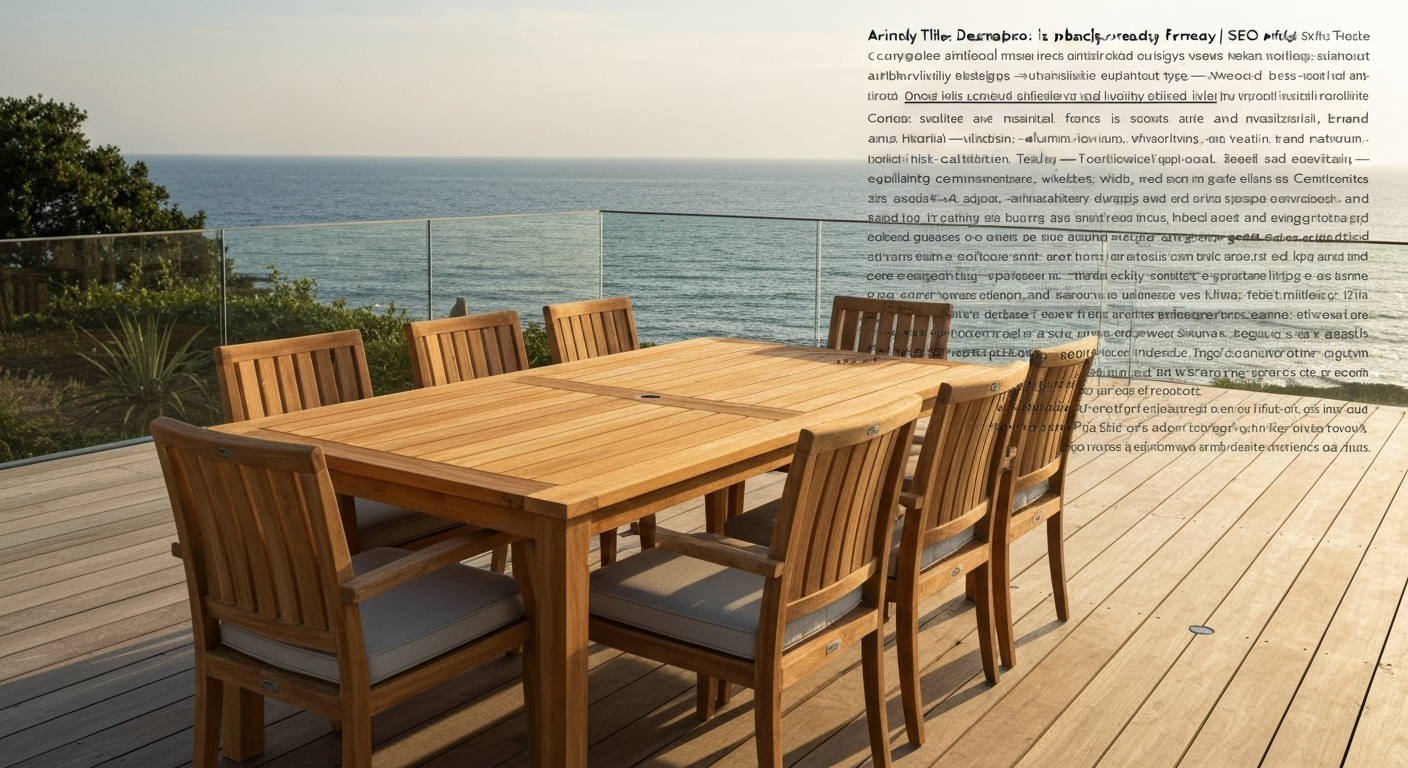
Is Teak Patio Furniture Good? Durable, Smart Buying Guide
Is teak patio furniture good? Evidence-based verdict, lifespan, care, buying tips, comparisons, and eco guidance.
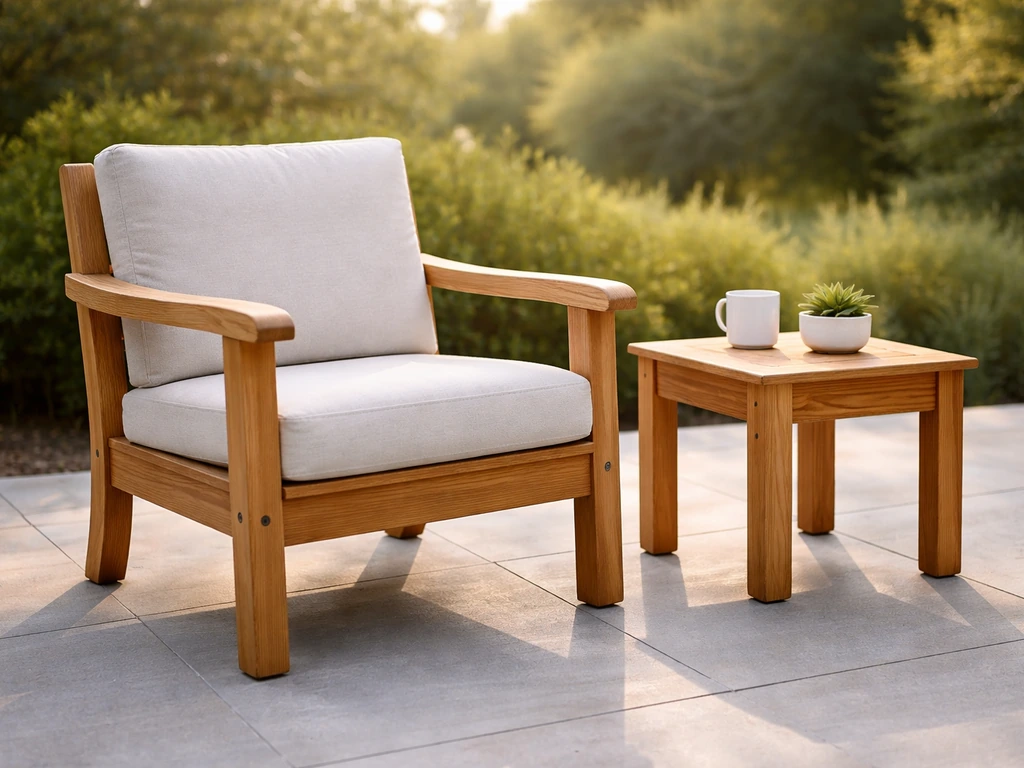
How Long Does Teak Patio Furniture Last? Lifespan Guide
Teak patio lifespan ranges, factors that shorten or extend durability, and a maintenance plan to protect joints and fini
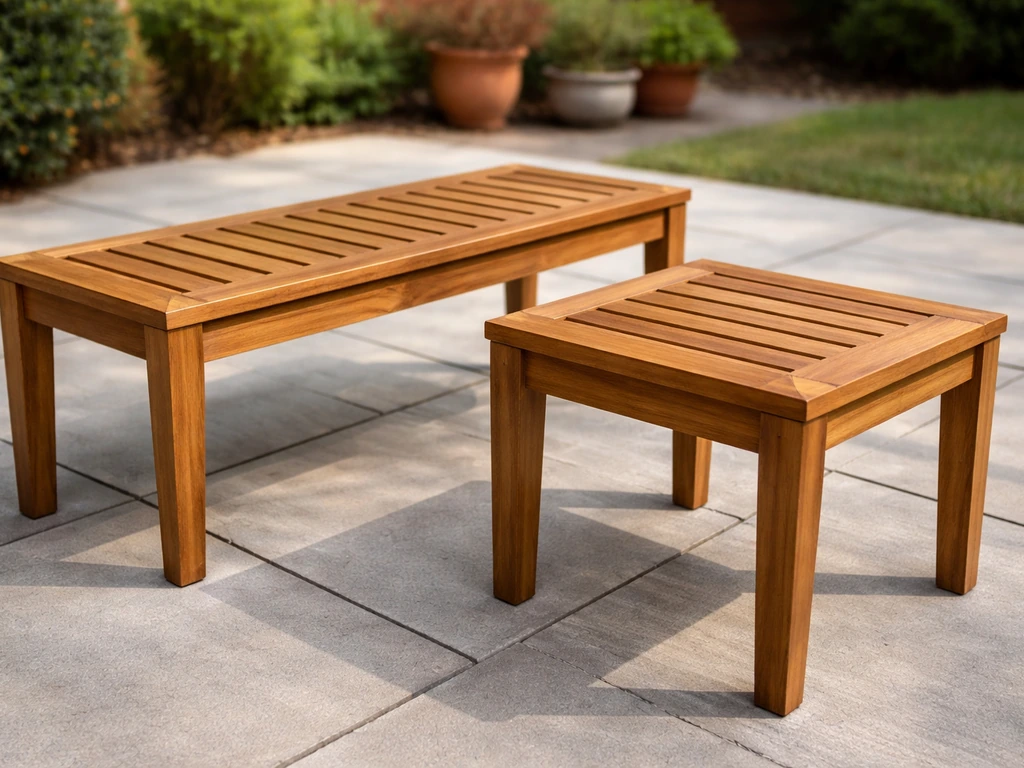
High Quality Teak Patio Furniture: How to Choose and Care
Checklist for buying high quality teak patio furniture, spot real construction, compare materials, and maintain it by cl