
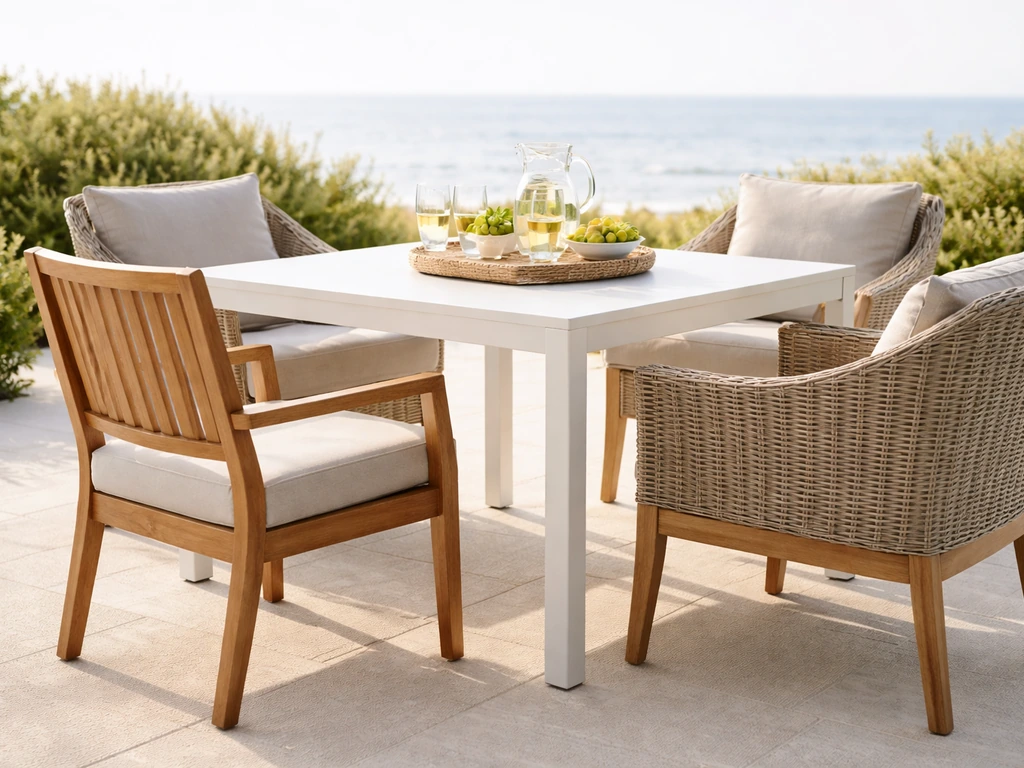
If you want patio furniture that will not rust, your safest bets are aluminum, teak, synthetic (resin) wicker over an aluminum frame, and high-density polyethylene (HDPE) lumber. These materials are either naturally immune to iron-oxide rust or built in a way that keeps corrosion-prone metal away from moisture. No material is completely maintenance-free forever, but choosing the right one from the start dramatically changes how much work you do down the road and how long the furniture actually lasts.
Patio Furniture That Will Not Rust: Best Materials Today

Marcus Kellerman
29 Jun 2026
Why patio furniture rusts in the first place
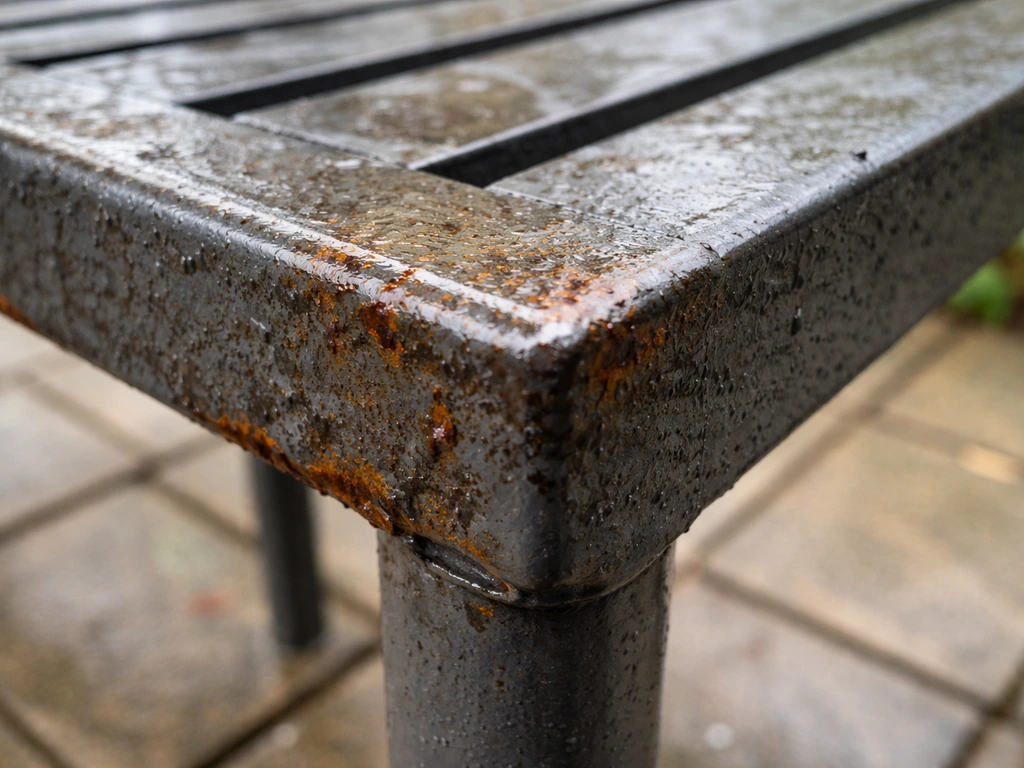
Rust is what happens when iron reacts with oxygen and water to form iron oxide. That means only iron-containing metals (primarily steel and cast iron) can technically rust. But corrosion is a broader problem and shows up in other metals too, just in different forms. Aluminum oxidizes but forms a stable, self-sealing surface layer rather than the flaky orange mess you get with steel. Zinc coatings can develop white rust, a chalky zinc-corrosion product, when trapped moisture sits against the surface without drying out.
The most common failure points in outdoor furniture are not the main frame tubes, they are the weak spots: joints and welds where water collects, fasteners (screws, bolts, and brackets) made from different metals than the frame, scratches and chips in powder-coat or paint finishes that expose bare metal, and hollow frame sections with no drainage holes where water pools internally. blank" rel="noopener noreferrer">Galvanic corrosion is another real risk: when two dissimilar metals touch in the presence of moisture, one sacrifices itself to protect the other. If a steel bolt holds together an aluminum frame, the bolt can corrode aggressively even if the frame itself stays clean.
Chloride ions (from ocean air, pool splash, or de-icing salt) make everything worse. They break down the protective passive film on stainless steel, causing pitting and crevice corrosion even on grades that are marketed as rust-proof. This is exactly why coastal and poolside environments demand a higher standard of material and coating than a dry inland patio does.
What 'rust-proof' actually means (and what it doesn't)
No outdoor furniture is truly rust-proof in every condition forever. The more honest term is rust-resistant, and even that depends on climate, coating quality, and how you maintain the piece. What you can realistically get is furniture that does not rust under normal outdoor exposure for 10 to 20-plus years with basic upkeep. That is a very achievable goal if you pick the right material and construction.
Aluminum is the closest you can get to genuinely rust-proof because it contains no iron. It can still corrode, but the oxidation process is self-limiting and usually cosmetic. Teak and other dense hardwoods contain no metal at all (in the main structure), so the wood itself cannot rust. Synthetic resin wicker is plastic, so again, no rust in the woven material itself. The gotcha in both teak and wicker furniture is hardware: the screws, brackets, and frame underneath. That is where rust sneaks in on otherwise rust-resistant pieces.
Steel patio furniture, including stainless, is worth understanding separately. Regular carbon steel rusts fast without a coating. Powder-coated steel can last years but eventually chips. Stainless steel relies on a thin chromium-oxide passive film for protection, and that film can fail in chloride-heavy environments, leading to pitting. Grade 316 stainless is significantly more chloride-resistant than the more common 304 (18-8) grade, but even 316 has shown rust spots in aggressive coastal or poolside settings within a few months of installation. Stainless is not a magic bullet.
How to choose rust-resistant furniture before you buy
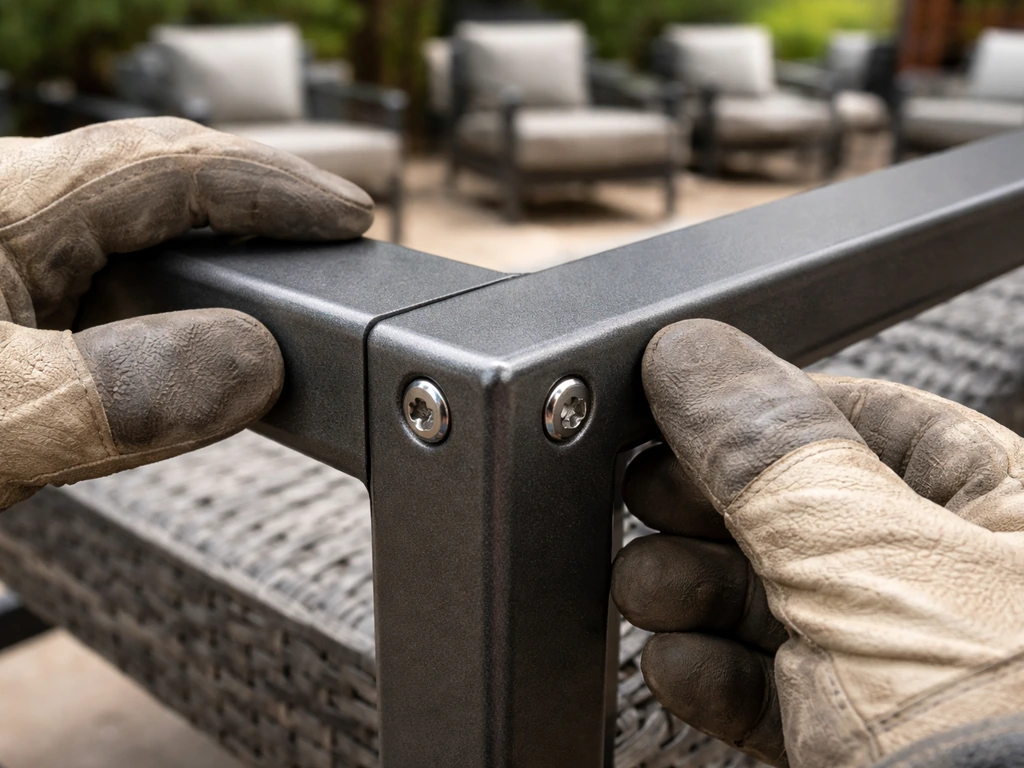
Shopping for rust-resistant patio furniture is really about inspecting construction details, not just accepting a label. Here is what to actually look at:
- Frame material: Look for cast or extruded aluminum, stainless steel (316 grade for coastal), or solid hardwood like teak. Ask the retailer specifically which metal alloy and which steel grade is used.
- Powder coat thickness and finish: On metal frames, a quality powder coat should feel uniform and smooth with no thin edges at welds or joints. Thin coatings at stress points are where chipping and rust start first.
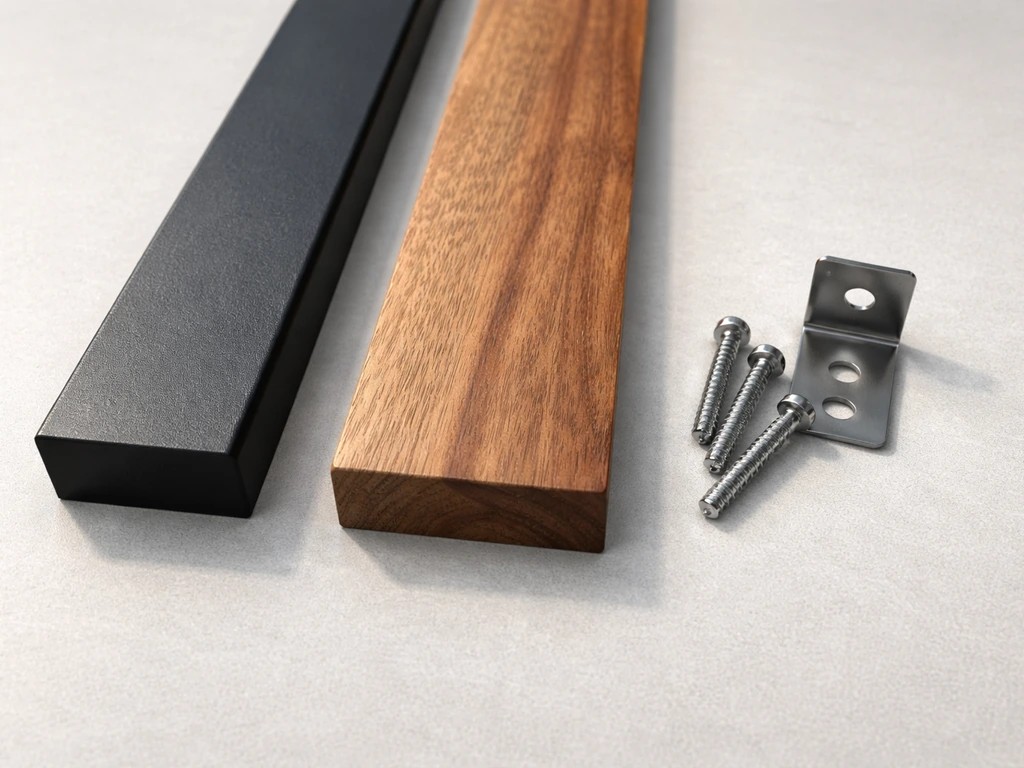
- Fasteners: Bolts, screws, and brackets should be stainless steel or marine-grade aluminum, not zinc-plated or uncoated steel. Mismatched metals create galvanic corrosion risk.
- Drainage and ventilation: Hollow frame tubes should have small drainage holes at the lowest points so trapped water can escape. Flip the piece over and look.
- Weld quality: Rough, porous welds trap moisture and are the most common rust initiation point on metal furniture. Smooth, continuous welds are better.
- Wicker frame underneath: On wicker or rattan sets, confirm the frame is aluminum, not steel. Ask directly or check spec sheets, because this distinction matters enormously for rust risk.
- Hardware on wood furniture: Teak and hardwood sets use metal hardware. Check whether screws and brackets are stainless or galvanized. Stainless is better for wet climates.
- Corrosion test standards: Some manufacturers cite ASTM B117 salt-spray test results. This accelerated test exposes coatings to salt fog (typically 96 or more hours) and reveals how quickly the finish breaks down. A piece that passes 1,000-hour ASTM B117 testing is significantly more durable than one with no published data.
The best non-rusting materials, broken down by type
Aluminum
Aluminum is the gold standard for rust-free metal patio furniture. It contains no iron, so it cannot rust by definition. It does oxidize, but aluminum oxide bonds tightly to the surface and actually protects the metal underneath rather than flaking off. A good powder-coat finish over aluminum adds UV and scratch resistance and can last 15 to 20 years with basic care. Cast aluminum is heavier and holds detail well (common in traditional and ornate styles), while extruded aluminum is lighter and used in modern sling chairs and sectionals. Both are excellent rust-resistance choices. The main caveat is hardware: always verify that fasteners are stainless steel, not galvanized iron, to avoid galvanic corrosion where the metals meet.
Teak
Teak is a tropical hardwood with a naturally high oil content and tight grain that makes it highly resistant to moisture, rot, and insects. The wood itself will not rust (there is no metal in it), but it will weather from golden-brown to silver-gray if left untreated. That weathering is cosmetic and does not compromise the wood's structural integrity. Where teak furniture can develop rust is in its hardware. Check that screws, bolts, and stainless steel fittings are actually marine-grade stainless (316 where possible) rather than cheaper plated fasteners. Grade-A teak with quality stainless hardware can easily last 20 to 50 years outdoors with minimal maintenance.
Synthetic (resin) wicker over aluminum frames
Natural rattan wicker breaks down outdoors quickly and should not be confused with all-weather wicker. Synthetic resin wicker is made from polyethylene strands woven over a frame, and it handles UV, rain, and humidity well. KETTLER USA notes that synthetic resin wicker is designed to be used outdoors and can be cared for with proper cleaning to help maintain its condition [synthetic resin wicker is made from polyethylene strands](https://www. kettlerusa.
com/pages/kettler-patio-furniture-care/wicker). The critical detail is what the frame underneath is made of. The best synthetic wicker furniture uses aluminum frames, which eliminates rust risk entirely. Lower-end pieces use steel frames, which can rust through the weave from the inside out, leaving stains on the wicker and eventually compromising the structure.
Lower-end pieces that use steel frames can rust through the weave from the inside out. When shopping, confirm the frame is aluminum. For cleaning, a light hose-down is sufficient. Avoid high-pressure washing, which can force water into frame joints and damage protective coatings.
Cast iron (with caveats)
Cast iron patio furniture is heavy, beautiful, and genuinely durable, but it is iron, so rust is always a possibility. Well-maintained cast iron with intact paint or powder coating resists rust effectively, and the mass of the material means surface rust is usually only skin-deep and repairable. The problem is when chips and scratches go untreated: cast iron rusts quickly once bare metal is exposed to moisture. Cast iron is better suited to covered patios, drier climates, or situations where you are committed to annual touch-up painting. If you are near the coast or get heavy rain, aluminum or teak is a smarter low-maintenance choice.
Natural wood (other than teak)
Eucalyptus, shorea, cedar, and redwood are all used in outdoor furniture and share the same fundamental advantage as teak: wood does not rust. They vary in how well they resist moisture and rot without treatment. Teak and shorea are the most naturally durable. Cedar and redwood are moderately durable but benefit from annual sealing. Eucalyptus falls in the middle. As with teak, the rust risk on any wood furniture is in the hardware, so stainless or well-coated fasteners are essential regardless of which species you choose.
Material comparison at a glance
| Material | Can it rust? | Rust risk level | Best climate fit | Maintenance level |
|---|---|---|---|---|
| Aluminum (powder-coated) | No | Very low (hardware only) | All climates including coastal | Low |
| Teak | No (wood itself) | Very low (hardware only) | All climates, excellent coastal | Low to medium |
| Synthetic wicker / aluminum frame | No | Very low | All climates | Low |
| Synthetic wicker / steel frame | No (wicker), yes (frame) | Medium | Dry inland only | Medium |
| Cast iron | Yes | Medium to high | Dry climates, covered patios | Medium to high |
| Powder-coated steel | Yes (if coating chips) | Medium | Inland, low humidity | Medium |
| Stainless steel (304) | Technically no, but can pit/stain | Medium in coastal/pool areas | Inland or low-chloride | Medium |
| Stainless steel (316) | Technically no, but can pit/stain | Low to medium in coastal | Coastal or poolside | Medium |
| Natural wood (cedar, eucalyptus) | No (wood itself) | Very low (hardware only) | Moderate humidity climates | Medium |
Climate matters more than most people realize
Where you live is one of the biggest variables in choosing rust-resistant furniture. The same aluminum chair that lasts 20 years in Arizona might need more frequent coating attention in coastal Maine. And a powder-coated steel set that looks fine in Denver can show rust within a season on a salt-air patio in Florida.
Coastal and high-humidity climates
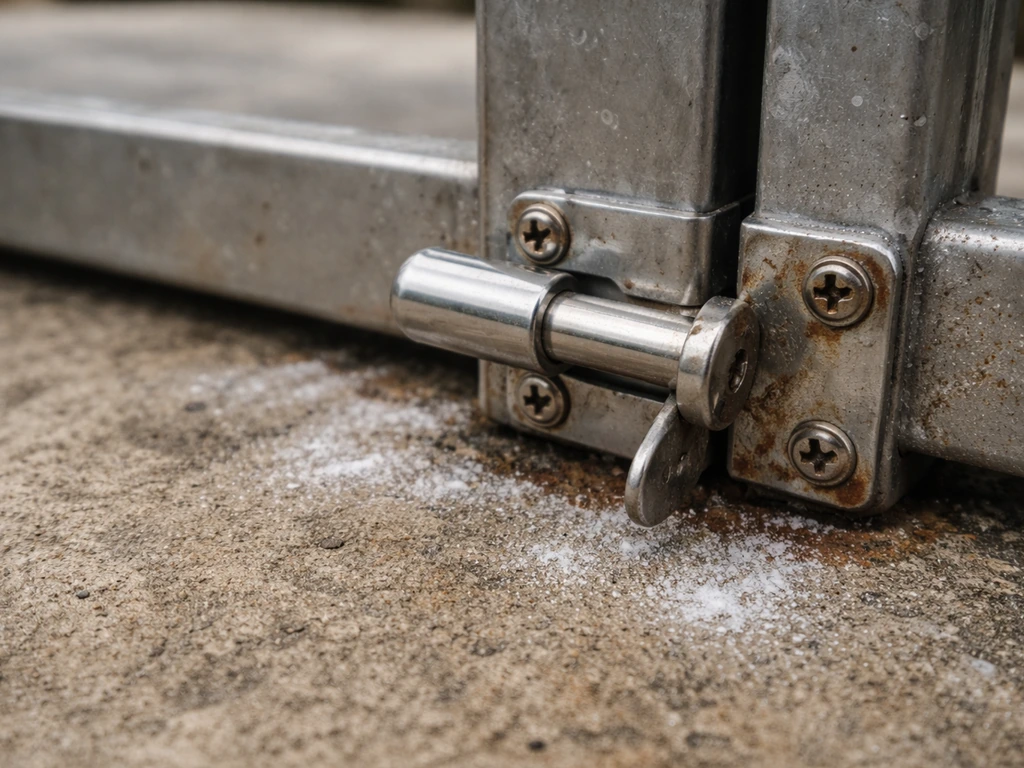
Salt air is the most aggressive corrosion environment most homeowners encounter. Chloride ions from ocean spray travel inland for miles and settle on every surface. They attack the passive film on stainless steel, accelerate corrosion on any zinc coating, and creep under powder-coat chips to spread rust laterally. Zinc-coated service life is often expressed as being proportional to zinc thickness, meaning thicker hot-dip zinc coatings generally provide longer corrosion resistance [hot-dip zinc coating thickness](https://www.
ssab. com/en-us/brands-and-products/steel-categories/coated-steel/hot-dip-galvanized-coating). In coastal settings, aluminum and teak are the top choices, full stop. If you want metal furniture near salt water, use aluminum with a quality powder coat and stainless (ideally 316 grade) hardware.
Cast iron is a poor choice within a mile of the coast unless you are very committed to maintenance. High humidity without salt (think the Gulf Coast interior or the Pacific Northwest) creates similar conditions: prioritize aluminum frames, look for furniture with drainage holes, and avoid any steel or cast iron that does not have an exceptionally robust coating.
Dry inland climates
In low-humidity inland regions like the Southwest or the Great Plains interior, rust is much less of a daily concern. Powder-coated steel holds up well because moisture is infrequent and dries quickly. Cast iron is a reasonable option if you want the look and mass. You still want quality coatings and stainless fasteners, but you have more flexibility in material choice. UV degradation and heat expansion are often larger problems than rust in these climates, so look for UV-stable finishes and consider how metal surfaces will handle extreme heat.
Poolside environments
Pool chemicals, especially chlorine, create a chloride-rich environment similar to coastal conditions. Stainless steel furniture near pools can develop pitting corrosion even with 316 grade, because of the concentrated chloride exposure. Aluminum and teak are the safer choices. If you do use stainless near a pool, rinse the furniture regularly with fresh water to dilute and remove chloride deposits, and avoid any cleaners that contain bleach or chloride-based compounds.
Keeping rust-resistant furniture that way: a practical maintenance routine
Even the best aluminum or teak furniture benefits from a simple routine. The goal is not to fight corrosion after it starts but to remove the conditions that cause it in the first place.
Cleaning
Wash metal furniture two to four times per season with mild soap and water. In coastal or poolside environments, a monthly rinse with fresh water removes salt and chloride deposits before they can work under coatings. Use soft cloths or a soft brush. Never use steel wool or abrasive scrub pads on any metal surface, including stainless: scratches compromise the surface finish and give corrosion a starting point. For stainless steel specifically, use only non-chloride cleaners. Many standard household cleaners contain chlorides, so check the label.
Coating and touch-up
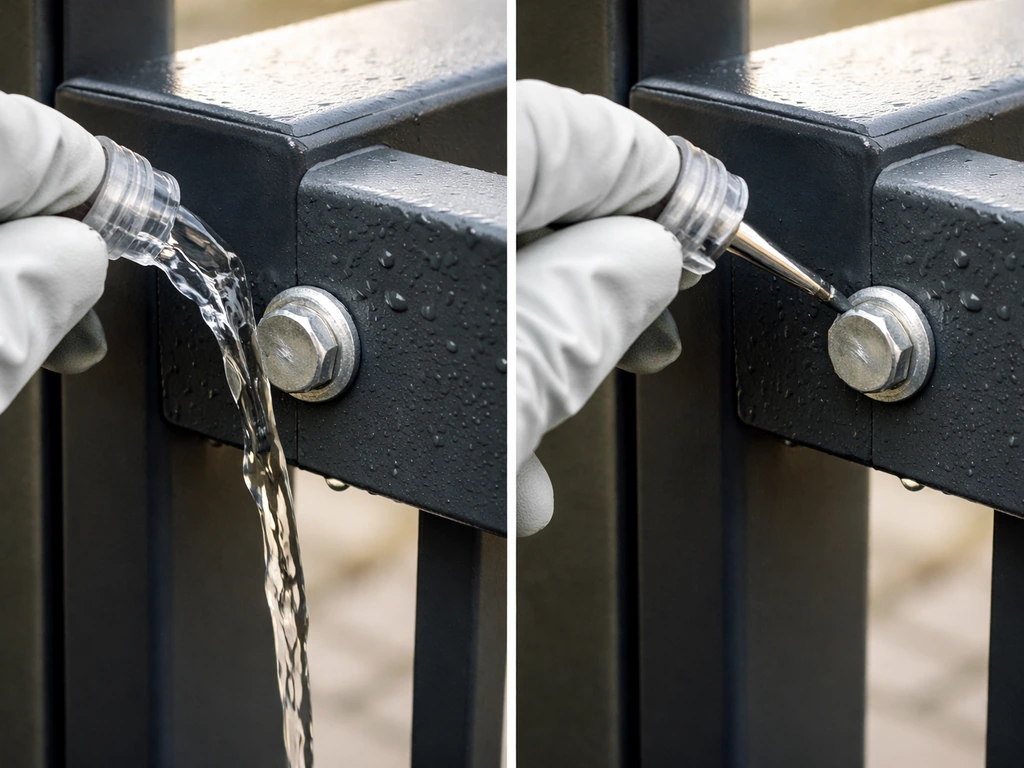
Inspect powder-coated surfaces at the start of each season. Any chip or scratch that exposes bare metal should be touched up immediately with a matching powder-coat touch-up paint or a rust-inhibiting primer. Left alone, even a small chip allows moisture to undercut the surrounding coating. On aluminum, consider applying a clear automotive wax or a dedicated outdoor metal protectant once a year to add a moisture barrier over the factory coating. On teak and other hardwoods, apply teak oil or a penetrating wood sealer every one to two seasons to maintain moisture resistance.
Hardware checks
Hardware is where rust surprises people. Once a year, inspect every visible bolt, screw, and bracket. Any orange staining or white powdery deposits near fasteners signal active corrosion. Replace corroding hardware promptly with stainless steel equivalents before the corrosion spreads to surrounding material or structurally weakens joints. Check that drainage holes in hollow frame sections are clear and not blocked by debris.
Storage and covers
If you live somewhere with hard winters or extended rainy seasons, storing metal furniture indoors or in a shed dramatically extends coating life. If outdoor storage is your only option, use breathable furniture covers (not airtight plastic, which traps condensation). Stack pieces so air can circulate, and store them off the ground so they are not sitting in standing water. Even for rust-resistant aluminum, a season spent under a breathable cover rather than exposed to freeze-thaw cycles will extend the life of the powder coat noticeably.
Your buying checklist and next steps
When you are ready to shop, use this as your quick reference to verify rust resistance before you buy:
- Confirm the frame material in writing. Ask: is this aluminum or steel? Cast aluminum or extruded aluminum? If it is steel, what coating and grade?
- For wicker sets, verify the internal frame is aluminum, not steel. This is the single biggest rust risk in wicker furniture and is often not labeled clearly.
- Check fastener specs. Stainless steel (316 for coastal) or marine-grade aluminum hardware only. Reject galvanized iron or unspecified 'zinc-plated' screws.
- Look for drainage holes in hollow frame sections. If you cannot see them or the seller cannot confirm them, factor that in.
- Inspect welds and joints in person if possible. Smooth, continuous welds with no pitting or gaps are a sign of quality construction. Rough welds are a future rust site.
- Ask about coating testing. Any quality manufacturer should be able to tell you whether their coating has been ASTM B117 salt-spray tested and for how many hours.
- Match the material to your climate. Coastal or poolside: aluminum or teak with 316 stainless hardware. Dry inland: more flexibility, but still prioritize aluminum over steel.
- Plan your maintenance before you buy. Even the best furniture needs seasonal cleaning and annual hardware checks. If you will not do touch-up painting, cast iron and steel are not for you.
- Budget for long-term value, not just sticker price. A $800 aluminum set that lasts 20 years costs less per year than a $400 powder-coated steel set that needs replacing in five.
The bottom line: if rust avoidance is your top priority, start with aluminum or teak and work from there based on your style preference, climate, and budget. Both materials have a track record of decades of outdoor use without the corrosion problems that plague steel and cast iron when coatings fail. For anyone comparing specific metal options in more depth, the differences between steel and aluminum construction, and how steel performs generally as a patio furniture material, are worth understanding before making a final decision.
FAQ
Does “rust-proof” on patio furniture labels mean it will never rust anywhere?
No. Even aluminum, teak, resin wicker, and HDPE are not completely maintenance-free forever. Coatings can scratch, fasteners can corrode, and trapped moisture in joints can still create corrosion points, so think “rust-resistant under normal exposure,” not zero-risk.
Is stainless steel the safest metal option for a patio near the ocean or a pool?
Usually not. Stainless can pit in chloride environments because the protective film is stressed by salts or pool chemicals. Aluminum or teak is the safer choice, and if you use stainless near a pool, plan on more frequent rinsing with fresh water to remove chloride residue.
What’s the fastest way to check whether an “all-weather” wicker set is actually rust-safe?
Inspect the frame material directly, not just the weave. Confirm the supporting frame is aluminum. If the seller cannot confirm it, assume it might be steel, then look for drainage design and ask about the frame coating and fastener material.
Can powder-coated steel be rust-free if the coating looks perfect when I buy it?
It can be very rust-resistant, but not rust-free. Powder coating fails at chips, scratches, and at joints where water sits. Verify that welds are sealed or well-finished, look for drainage in hollow sections, and confirm the brand uses compatible fasteners to reduce galvanic corrosion.
If I have an aluminum furniture set, should I still worry about rust at all?
Yes, mainly at hardware and connection points. Aluminum oxidizes protectively, but stainless or non-matching metal fasteners can still create galvanic corrosion when moisture is present. Verify that bolts, screws, brackets, and inserts are stainless (ideally marine-grade) and keep joint areas clean and dry.
Are galvanized screws and bolts safe on aluminum or teak furniture?
They can be risky in humid or coastal conditions. Galvanized hardware uses zinc, and zinc can develop white corrosion when moisture is trapped. If you want long service life, choose stainless fasteners instead, especially for places where water collects.
What should I do if I find a small chip or scratch on powder-coated metal?
Touch it up quickly. Clean the area, then apply a matching touch-up product or a rust-inhibiting primer designed for outdoor metal. Leaving bare metal exposed allows moisture to creep under the coating and spread the damage laterally.
Can I pressure-wash patio furniture to remove salt and grime?
Avoid high-pressure washing, especially on resin wicker and around frame joints. Pressurized water can drive moisture into welds and channels, and that accelerates corrosion at the weak points. Use a gentle hose-down and mild soap, then allow thorough drying.
Do I need to use special cleaners for rust-resistant furniture?
For stainless, yes. Many common household cleaners contain chlorides, which can promote pitting and crevice corrosion. For other metals, stick to mild soap and water, and avoid abrasive pads on any finish because scratches create corrosion starting points.
How often should I inspect furniture hardware to catch rust early?
At least once per season, and more often near the coast, a pool, or heavy rain areas. Focus on bolts, screws, bracket corners, and any spots showing orange staining or white powdery buildup, since hardware corrosion often precedes visible damage to the frame.
Is indoor storage a guaranteed fix for rust, or is it just slower rust?
Indoor storage helps a lot, but it is not instant protection if moisture is already trapped in coverings or joints. Use breathable covers and ensure the furniture is dry before covering. Storing off the ground also reduces the chance of standing water and trapped humidity.
Does winter freeze-thaw damage matter for rust-resistant materials?
It can. Freeze-thaw and condensation cycles stress coatings and can force water into joints. Even aluminum benefits from breathable coverage and avoiding prolonged exposure to cycles that repeatedly soak and freeze the same spots, especially along seams and hollow frames.
What drainage or design features indicate a piece will resist rust better?
Look for drainage holes in hollow frames, clear pathways for water to escape, and well-finished joints where welds do not trap runoff. If the piece is designed like a closed tube without drainage, it is more likely to hold moisture and corrode from the inside out.
Is teak actually rust-proof, or can it still develop rust stains?
The wood itself cannot rust, but stains can still appear from metal hardware. If you see rust-colored streaks, it is typically coming from screws, brackets, or embedded fittings. Use stainless or marine-grade fasteners and periodically check those contact points.
Next Articles
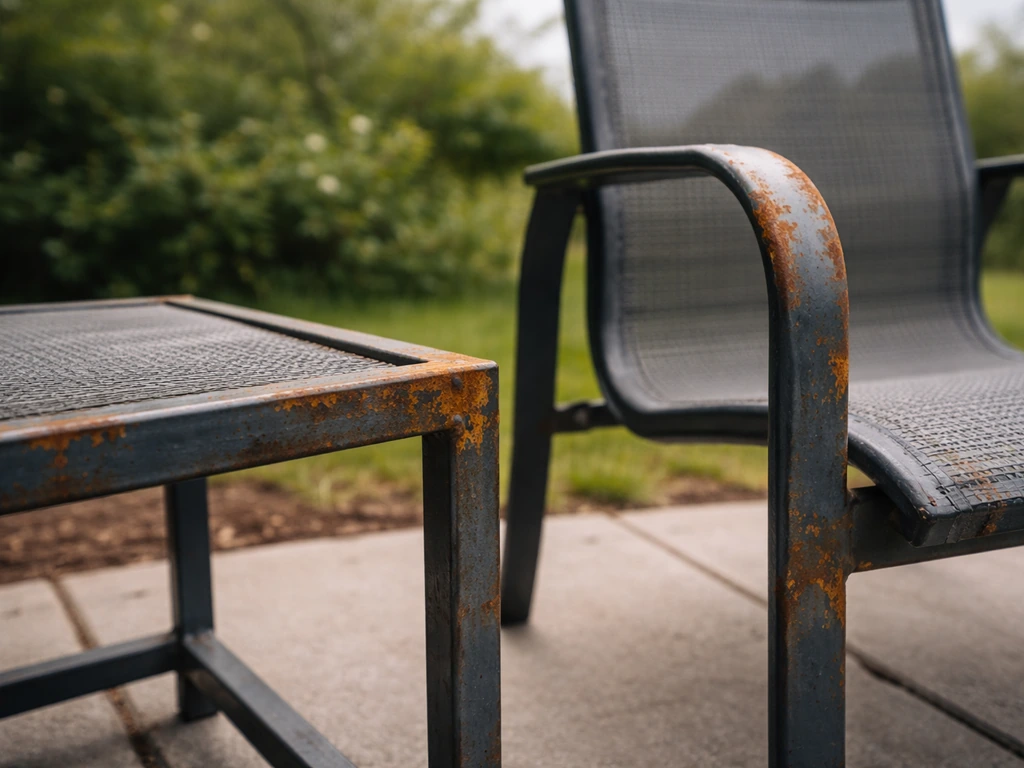
Does Steel Patio Furniture Rust? How to Prevent and Stop It
See if steel patio furniture rusts and how to prevent or stop it fast with coatings, cleaning, drying, and repair steps.

Best Metal Patio Furniture: Aluminum vs Steel vs Iron Guide
Aluminum, steel, or wrought iron patio furniture? Compare durability, coatings, hardware, and pick best sets, chairs, an
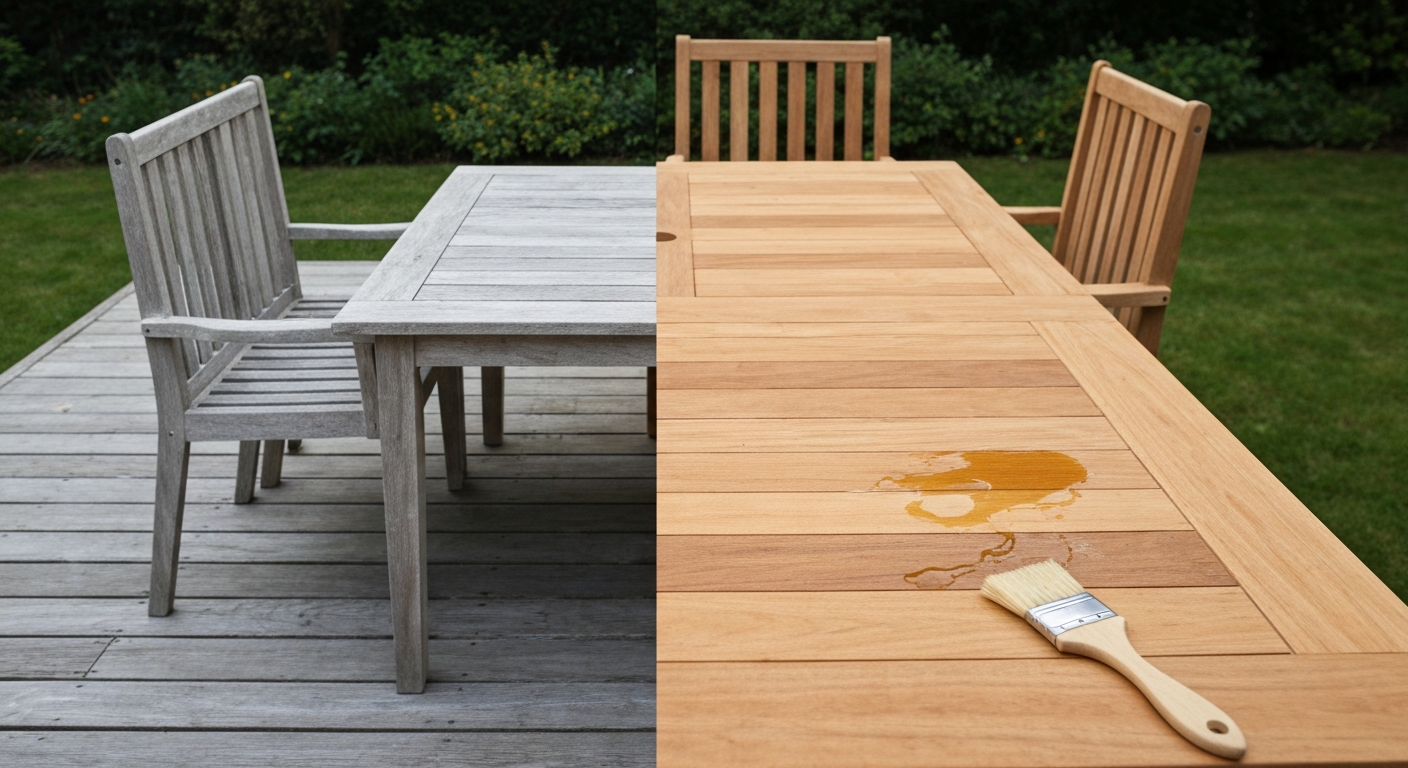
Best Stain for Teak Patio Furniture, Top Picks by Climate
Best stain for teak patio furniture: expert picks, climate-based choices, prep, application, and maintenance tips.