
Powder-coated aluminum is the best metal for most patio furniture, most of the time. It doesn't rust, weighs a fraction of what steel does, holds a quality powder coat exceptionally well, and will outlast cheaper steel sets by years with almost no effort. That said, wrought iron and steel have a real place in specific situations, and knowing when to pick one over the other will save you from buying something you'll regret in two seasons.
Best Metal Patio Furniture: Aluminum vs Steel vs Iron Guide

Marcus Kellerman
13 May 2026

Aluminum vs. Steel vs. Wrought Iron: Pick the Right Metal First
Before you look at styles or price tags, get clear on the metal itself. Each one behaves differently outdoors, and the differences are not subtle.
Aluminum
Aluminum doesn't rust, period. It can form a dull oxidation layer if the coating is damaged, but it won't produce the red, flaky corrosion that destroys steel. It's light enough to move around a deck easily, which matters more than most buyers expect until they try to rearrange heavy furniture for a party. Cast aluminum is thicker and heavier than tubular aluminum, which makes it better for sturdy dining chairs and conversation pieces that you want to feel planted. Tubular aluminum works well for lighter stackable chairs and side tables. Both hold powder coating reliably when the manufacturer uses a proper conversion coating pretreatment, and that pretreatment is what separates furniture that lasts a decade from furniture that starts peeling in year two.
Steel
Steel is denser and heavier than aluminum, which some people prefer because the furniture feels more substantial and doesn't blow over in wind. The problem is that steel rusts when moisture gets through the coating. And it will get through eventually, especially at welds, cut edges, and anywhere a scratch goes untreated. A well-prepped, dual-layer powder-coated steel set can perform well for years, but it demands more maintenance attention than aluminum. If you are weighing steel patio furniture pros and cons, focus on durability at the welds and a strong powder-coat pretreatment so it holds up with routine care. Steel also costs less per pound to manufacture, which is why you see a lot of budget sets in steel. The steel vs. aluminum comparison is a real trade-off worth thinking through for your specific situation. If you're deciding between a steel vs aluminum patio set, focus on coating quality, welds, and how much maintenance you are willing to do.
Wrought Iron and the Wrought-Iron Look
True wrought iron is dense, incredibly heavy, and extremely durable when maintained. A well-kept wrought iron set can last for generations. The problem is weight and maintenance. Water ingress through any crack in the coating leads to rust, and because of the chemical and electrochemical (galvanic) corrosion mechanisms that act on iron, even minor coating failures can become serious damage if ignored. Most furniture sold today as having a 'wrought iron look' is actually steel, sometimes cast iron for decorative pieces. If you want the aesthetic and have the patience for annual inspection and touch-up, wrought iron is genuinely excellent. If you want low maintenance, it's the wrong choice.
| Metal | Rust Risk | Weight | Maintenance Demand | Best For |
|---|---|---|---|---|
| Aluminum | Very low (no rust, minor oxidation only) | Light to medium | Low | Most climates, low-maintenance setups, coastal areas |
| Steel | Moderate (rusts if coating fails) | Heavy | Medium | Budget sets, windy areas, inland dry climates |
| Wrought Iron | Moderate-High (rusts without upkeep) | Very heavy | High | Traditional aesthetics, covered patios, dedicated maintainers |
For most homeowners in most climates, aluminum is the right call. Steel can work if you're inland, treat it with care, and want the extra stability or a lower upfront price. Wrought iron is a niche choice for people who love the look and will actually maintain it.
What Separates Quality Metal Furniture from the Junk
The metal type only gets you so far. A cheap aluminum set with a thin, poorly applied powder coat will fail faster than a well-built steel set. Here's what to look at before you buy.
Powder Coat Thickness and Pretreatment
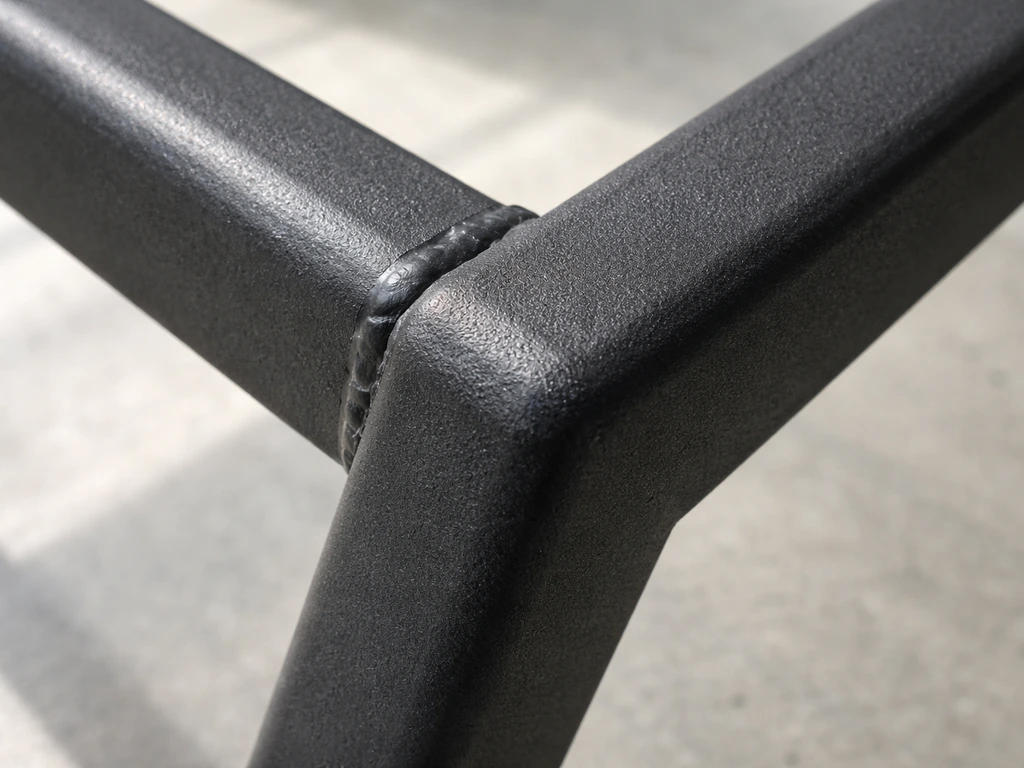
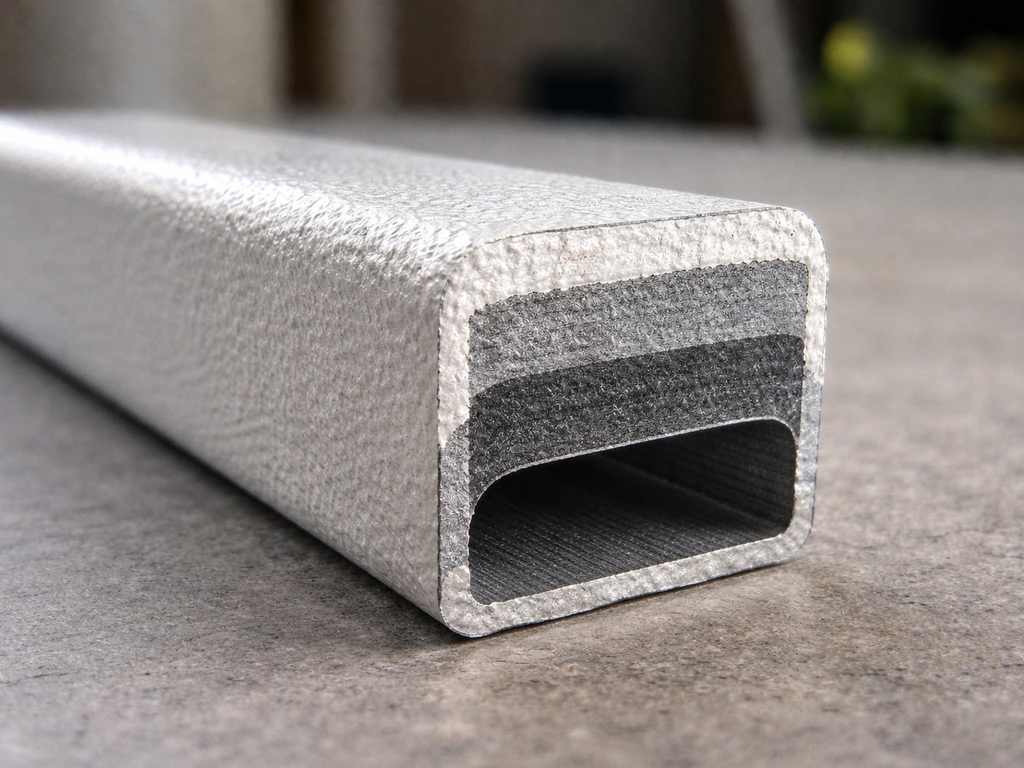
Industrial powder coating typically runs 50 to 125 microns (2 to 5 mils) of cured film thickness. For outdoor furniture exposed to weather, you want to be at the higher end of that range, around 80 to 100 microns (roughly 3.9 to 4.7 mils), especially in harsh climates. Thicker coatings resist chipping and give you a longer window before any microscopic defects, called 'holidays' in the coating industry, let moisture reach the metal underneath. But thickness alone isn't enough. What happens before the powder is applied matters just as much. Quality manufacturers use a conversion coating pretreatment, either phosphate-based or newer zirconium-based, that creates a thin chemical film on the metal surface. This film improves adhesion and, critically, limits how far corrosion can spread if the topcoat is eventually damaged. For aluminum frames, you want a chromium or zirconium phosphate pretreatment. For steel, zinc or iron phosphate is appropriate. Budget furniture often skips or shortchanges this step, and you can't see it from the outside.
Frame Design and Welds
Look at the welds closely. Clean, consistent welds with no porosity or cracks mean the coating can adhere evenly. Rough, lumpy, or inconsistent welds create stress points and coating gaps right where moisture wants to sit. Frame geometry matters for stability too: wider leg bases, cross-bracing on chairs, and welded corner gussets on table frames are all signs that the manufacturer thought about structural performance and not just aesthetics. Also check whether the frame design includes drainage holes in hollow legs and tubes. Without them, water collects inside and corrodes from the inside out, where you'll never see it until the frame fails.
Fasteners and Hardware
Stainless steel fasteners are the right choice for outdoor furniture. Zinc-coated steel hardware is an acceptable second option for sheltered settings. What you don't want are bare steel or chrome-plated screws and bolts, which will rust within a season or two in any humid environment. Some brands, including those offering limited residential warranties on metal frames, explicitly cover stainless steel and zinc-coated hardware in their warranty language, which tells you they've thought this through. When you're assembling furniture or inspecting a set in a showroom, look for the hardware specification. If the listing doesn't mention it, that's not a good sign.
Multi-Coat Systems
Better outdoor furniture often uses a dual-layer powder coating system: a primer coat followed by a color/topcoat. This matters because the ASTM tape adhesion test (D3359), used to measure how well coatings stick, can sometimes show failure between coats in a multi-coat system rather than at the metal surface. A well-bonded primer that also provides corrosion inhibition reduces the chance of that happening. When a brand mentions a dual-layer powder coat, it's a genuine quality indicator, not just marketing.
Best Metal Options by Furniture Type
Metal Patio Dining Sets
For dining sets, cast aluminum is the strongest choice. The heavier, denser construction of cast aluminum chairs and table frames gives the set a solid feel at the table, resists tipping in wind better than tubular designs, and still avoids the rust vulnerability of steel. Look for chairs with a wide rear leg stance and a flat, level cap or glide on the bottom of each leg so they don't rock on slightly uneven pavers. Tables should have a central cross-brace or apron design rather than four legs meeting at an unbraced center. If you prefer steel for the lower price, prioritize sets with dual-layer powder coating and stainless hardware, and plan on annual inspection.
Metal Patio Chairs
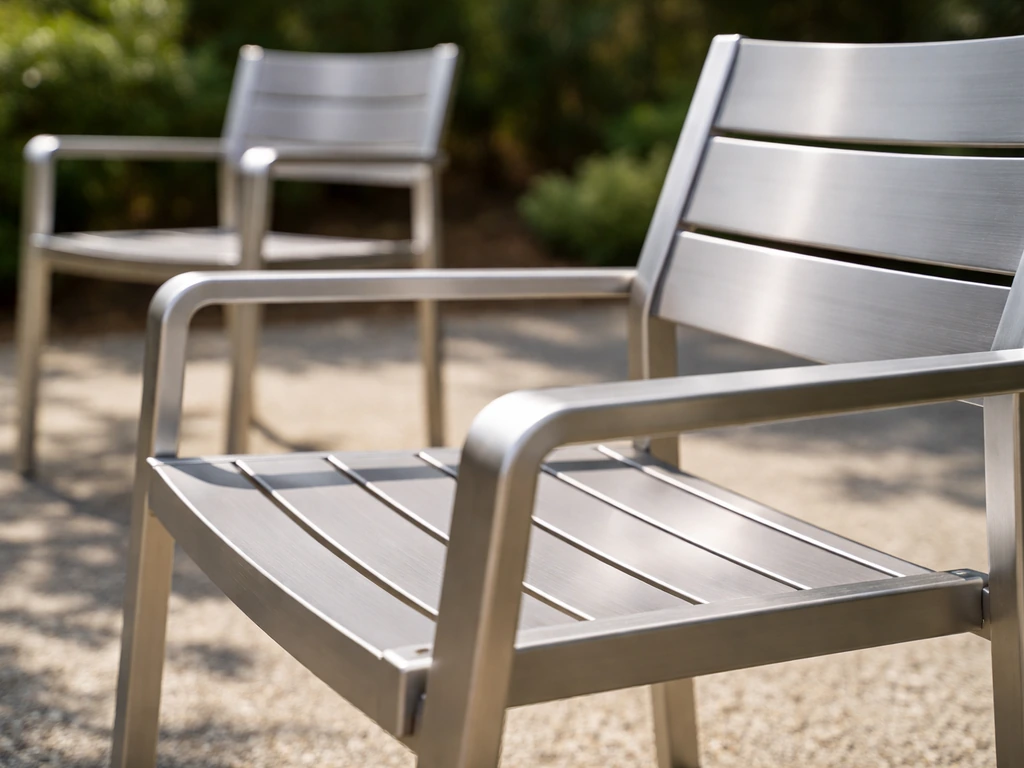
Standalone metal patio chairs, whether paired with a separate table or used as lounge seating, benefit most from aluminum when they'll be moved frequently, stacked, or left outside year-round. Stackable tubular aluminum chairs are practical and durable but tend to feel lighter underfoot. If comfort is the priority, look for cast aluminum frames with integrated armrests and seat designs that either accept cushions or are contoured enough to sit in without them. For a more traditional or heavy-duty feel, powder-coated steel chairs with a baked enamel or dual-coat finish work well in covered or semi-covered settings.
Metal Patio Conversation Sets
Conversation sets, the loveseat-chairs-coffee table groupings designed around a central focal point, are usually left in place season to season. Since you're not moving them constantly, the weight advantage of aluminum matters less here, and you can consider heavier cast aluminum or even steel if the look appeals to you. What matters most is the cushion situation and frame integrity at the joints. Sectional-style conversation sets have more connection points between pieces, so check that the joining hardware is stainless and that any adjustable or modular connectors aren't bare steel clips. For outdoor use in variable weather, aluminum frames with a deep, UV-stable powder coat color will hold up without the touch-up attention that steel requires.
Metal Patio Rocking Chairs
Metal rocking chairs put different stress on a frame than static chairs. The rocker mechanism creates repetitive flexing at the joint where the rocker connects to the chair legs, and on cheaper sets, that's exactly where welds crack and coatings fail first. Look for rocking chairs with welded rocker connections rather than bolted, since bolted connections loosen over time with the rocking motion. Cast aluminum rockers are particularly well suited to covered porches and patios because they're light enough to reposition but heavy enough to feel stable in use. Steel rockers work fine on a covered porch where rain exposure is limited, but I'd avoid leaving them fully exposed to rain without regular inspection.
How Your Climate Should Drive Your Metal Choice
Coastal and Salt Air Environments
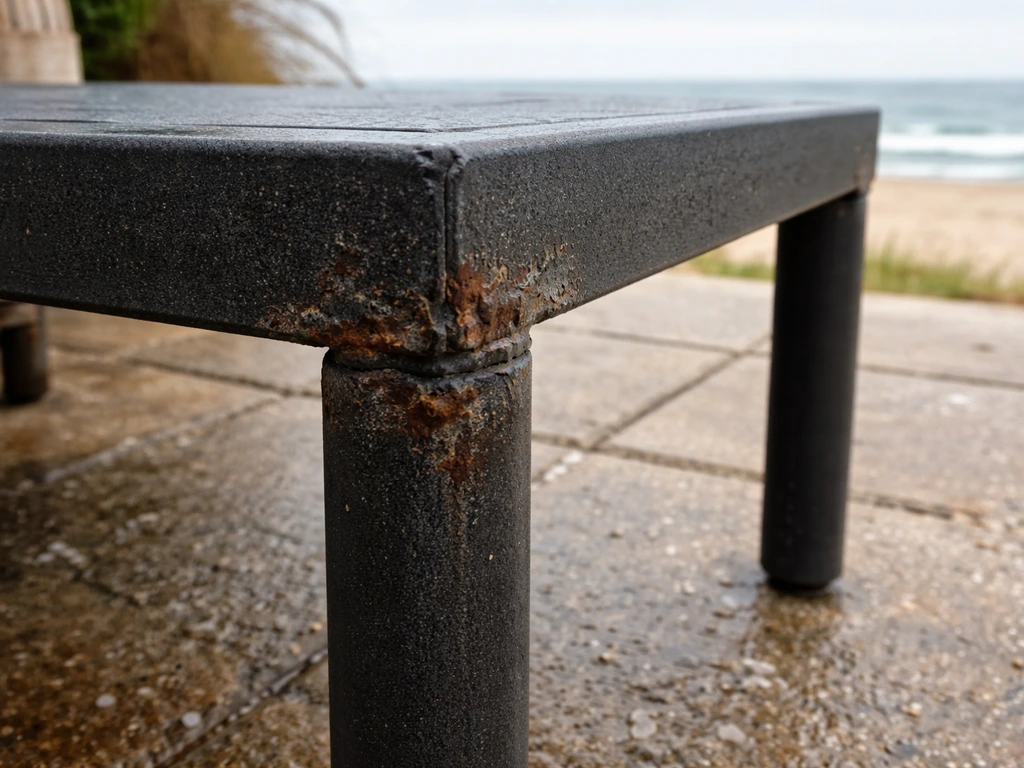
Salt air is the hardest test for any metal patio furniture coating. Even quality powder coats can blister and delaminate under repeated salt exposure as the salt drives oxidation of the metal beneath the coating. Some manufacturers explicitly exclude salt-air blistering from warranty coverage, which tells you exactly how aggressive this environment is. In coastal settings, aluminum is the only sensible metal choice. Its natural corrosion resistance means that even if the coating fails in spots, you're dealing with surface oxidation rather than structural rust. Use a furniture-grade outdoor wax on the powder coat every season as an additional moisture barrier, and rinse the frames with fresh water monthly during salt-air season. Steel and wrought iron near the coast require much more aggressive maintenance, and in my experience, they're simply not worth the effort when aluminum is available.
Freeze-Thaw Climates
Repeated freeze-thaw cycles expand and contract metal frames, which stresses coatings at joints and welds. Any water that has infiltrated a coating gap freezes, expands, and forces the coating further away from the metal surface. The fix is the same regardless of metal type: store furniture indoors or under a quality cover during winter, and inspect and touch up any coating damage before storing. For frames left outdoors through winter, aluminum handles freeze-thaw stress better than steel because there's no underlying rust progression happening in the coating gaps. If you're in a northern climate and don't have storage space, aluminum is the much safer choice.
High Heat and UV-Heavy Climates
In desert Southwest climates or anywhere with intense sun and heat, the main threat to metal furniture isn't rust, it's coating degradation. UV breaks down powder coat pigments, causing chalking and fading, and extreme heat can accelerate the process. Look for UV-stable polyester powder coatings rather than standard epoxy-based coatings, which yellow and chalk faster outdoors. Darker colors absorb more heat and can feel uncomfortably hot to the touch, something to keep in mind for chairs and armrests. Light-colored or metallic powder coat finishes hold up better visually in high-UV climates. Steel and aluminum are roughly equal here as long as the coating is UV-stable, but aluminum still wins on rust risk if summer monsoons or high humidity are also factors in your region.
Cleaning, Maintenance, and Rust Prevention
Metal patio furniture maintenance is not complicated, but it does need to happen on a schedule. Ignoring small issues lets them become expensive ones.
Regular Cleaning
Clean powder-coated metal furniture with mild dish soap and warm water, using a soft cloth or sponge. Rinse thoroughly with clean water afterward. Do this two to four times per season, or monthly in coastal environments. Skip the pressure washer: high-pressure water forces moisture into any tiny coating gap and strips wax protection. For frames with drainage holes in the legs, ensure those holes aren't plugged with debris, since blocked drainage lets water pool inside hollow tubes.
Wax and Protective Coatings
Applying a paste or liquid car wax, or a product specifically made for powder-coated surfaces, once or twice a year creates a hydrophobic barrier over the powder coat that slows moisture infiltration and UV degradation. This is especially valuable in coastal, high-humidity, or high-UV climates. Apply it after cleaning, let it haze, and buff it off. It takes twenty minutes and meaningfully extends the life of the coating.
Touch-Up and Rust Repair
Repair coating damage as soon as you find it. A scratch that exposes bare steel will start rusting within weeks in humid conditions. For small chips and scratches, a matching touch-up paint or repair lacquer applied in thin layers is the standard fix. Some manufacturers sell matching touch-up products specifically for their finishes. The process: clean the damaged area, remove any rust with fine steel wool or a rust converter product, apply a primer coat if the damage reaches bare metal, then apply the color coat in thin passes. On dual-layer powder coat systems, a single color coat over a properly primed surface is often sufficient for a small repair. For wrought iron or steel sets with more extensive rust, wire brush the area down to clean metal, treat with a rust inhibiting primer, and repaint. Waiting on this turns a ten-minute job into a major restoration project.
End-of-Season Storage
If you're in a climate with hard winters or a wet season, store metal furniture in a garage, shed, or under breathable covers before the worst weather arrives. Breathable covers are important: non-breathable tarps trap condensation and actually accelerate corrosion by holding moisture against the frame. Clean and dry the furniture before covering it. If you're storing indoors, a light coat of wax before storage provides additional protection during the off-season.
Long-Term Value: When to Spend More and When to Hold Back
The sticker price of a metal patio set is almost meaningless on its own. What matters is the cost spread over actual years of use. A $600 steel set that degrades and needs replacing in four to five years costs more per year than a $1,200 cast aluminum set that runs fifteen years with basic maintenance.
The factors that justify spending more are: heavier gauge frames (especially in cast aluminum), documented pretreatment and dual-layer powder coat systems, stainless steel hardware throughout, welded rather than bolted structural connections, and a brand that offers replacement parts. Repairability is underrated. A set where you can replace a single cracked chair arm or a broken rocker without buying a whole new set is worth a premium. Sets where everything is a proprietary weld with no replacement parts available are a gamble.
Where you don't need to overspend is on decorative details, brand names without substance behind them, or cushion upgrades included in the frame price. Cushions wear out and get replaced; the frame is what you're really buying. Spend on the frame quality, then buy cushions separately if needed.
Salt spray testing under standards like ISO 9227 or ASTM B117 is used by serious manufacturers to validate how their coatings hold up in aggressive conditions. If a brand references accelerated corrosion testing for their finishes, that's a sign they're engineering for real-world performance rather than just appearances. It won't always show up in product listings, but it's worth asking a manufacturer or retailer about if you're buying for a coastal or high-humidity environment.
The bottom line: aluminum is the default best metal for patio furniture because it gives you the widest margin for error in most climates. Steel can be a smart choice when you want heavier, more stable furniture, stay on top of maintenance, and keep it in a climate without aggressive salt or sustained humidity. Steel can be a smart choice for patio furniture if you stay on top of maintenance and choose a high-quality powder coat. Wrought iron is a genuine long-term investment if you're committed to maintaining it and love the aesthetic. Match the metal to your actual climate, check the coating quality before you buy, and set up a basic maintenance routine. Do those three things and a good metal patio set will outlast several rounds of cheaper furniture.
FAQ
Which is better if I move my patio furniture frequently, aluminum or steel?
If you plan to rearrange furniture often, prioritize lighter aluminum tubular or cast aluminum chairs with wide rear leg stance for stability. If it will mostly stay put, cast aluminum or dual-layer powder-coated steel is fine, and you can focus more on feel and comfort than on weight.
Is powder-coated steel automatically rust-proof outdoors?
Not necessarily. A “powder-coated steel” label is helpful, but quality hinges on pretreatment and weld workmanship. Look for documentation of dual-layer coating, stainless or zinc hardware, and inspect welds for smooth, consistent coverage with no visible pinholes or gaps.
Can I ignore small chips in the coating on aluminum patio furniture?
Yes, but only if you keep the coating intact. A single nick down to bare metal can start corrosion quickly in humid climates, so use touch-up products promptly and make sure drainage holes in legs are clear so moisture does not sit inside the frame.
How can I tell if patio furniture labeled “wrought iron” is truly wrought iron?
You should only consider “wrought iron” products if the manufacturer explicitly states wrought iron construction and you are willing to inspect and touch up regularly. Many items marketed as wrought iron are actually steel, where rust behavior and maintenance expectations are different.
What metal is safest for patio furniture in a coastal, salt-air environment?
For coastal and salt-air areas, aluminum is the safer default because if coating fails, corrosion is usually limited to surface oxidation rather than deep structural rust. Even high-quality steel near the coast typically demands more aggressive, ongoing maintenance.
Can I use a pressure washer to clean metal patio furniture?
Generally no. High-pressure washing can force water into coating gaps and speed up coating breakdown, especially around welds and hollow legs. Stick to mild soap and warm water, then rinse gently, and keep covers breathable if you store furniture.
What hardware details should I look for on conversation sets and modular patio furniture?
Check that stainless steel fasteners are specified (or zinc-coated hardware for sheltered areas), then verify the joining hardware on sectional or modular sets. For connectors and adjustable parts, avoid anything that uses bare steel clips or unspecified hardware.
My patio chair rocks on uneven pavers, what should I check first?
If the feet rock, it usually means glides or levelers are uneven, missing, or not adjusted for your surface. For cast aluminum dining pieces, look for flat level caps or glides on each leg, and for pavers or uneven patios consider furniture with adjustable glides.
How can I verify coating quality beyond the brand name and price?
Yes. Dual-layer powder coat plus proper pretreatment is more predictive than marketing terms. Ask whether they use conversion pretreatment (like zirconium or phosphate-based systems) and whether the coating system is designed for outdoor exposure thickness in the relevant range.
What’s the best way to winterize metal patio furniture if I can’t bring it indoors?
If you do not have indoor storage, prioritize aluminum and use breathable covers, not tarps. Clean and dry the furniture before covering, and inspect for coating damage before winter so any defects are treated before freeze-thaw cycles.
Is it worth paying extra for a brand that offers replacement parts?
Look for replacement-part availability for common stress points such as chair arms, rocker components, and damaged glides. If the brand does not offer parts, a small broken component may force a whole-set replacement, which reduces the value of premium pricing.
Will powder coat color choice matter for UV resistance and comfort?
Not if it causes the coating to fail. If a product uses UV-stable polyester powder coat, the finish should resist chalking and fading better, but extremely dark colors still heat up more in high-UV climates, making armrests and seats uncomfortable.
Next Articles
Is Teak Patio Furniture Good? Durable, Smart Buying Guide
Is teak patio furniture good? Evidence-based verdict, lifespan, care, buying tips, comparisons, and eco guidance.
How Long Does Teak Patio Furniture Last? Lifespan Guide
Teak patio lifespan ranges, factors that shorten or extend durability, and a maintenance plan to protect joints and fini
High Quality Teak Patio Furniture: How to Choose and Care
Checklist for buying high quality teak patio furniture, spot real construction, compare materials, and maintain it by cl