
Yes, steel patio furniture can and does rust outdoors, but how quickly and how badly depends almost entirely on the finish protecting it. Bare steel left outside will rust within days in wet weather. Powder-coated steel can last years with zero rust if the coating stays intact. Galvanized steel sits somewhere in between. The honest answer is: the steel itself will always want to rust, but the right finish, the right climate precautions, and a little routine maintenance can keep that from ever happening in any meaningful way.
Does Steel Patio Furniture Rust? How to Prevent and Stop It

Marcus Kellerman
16 Jun 2026
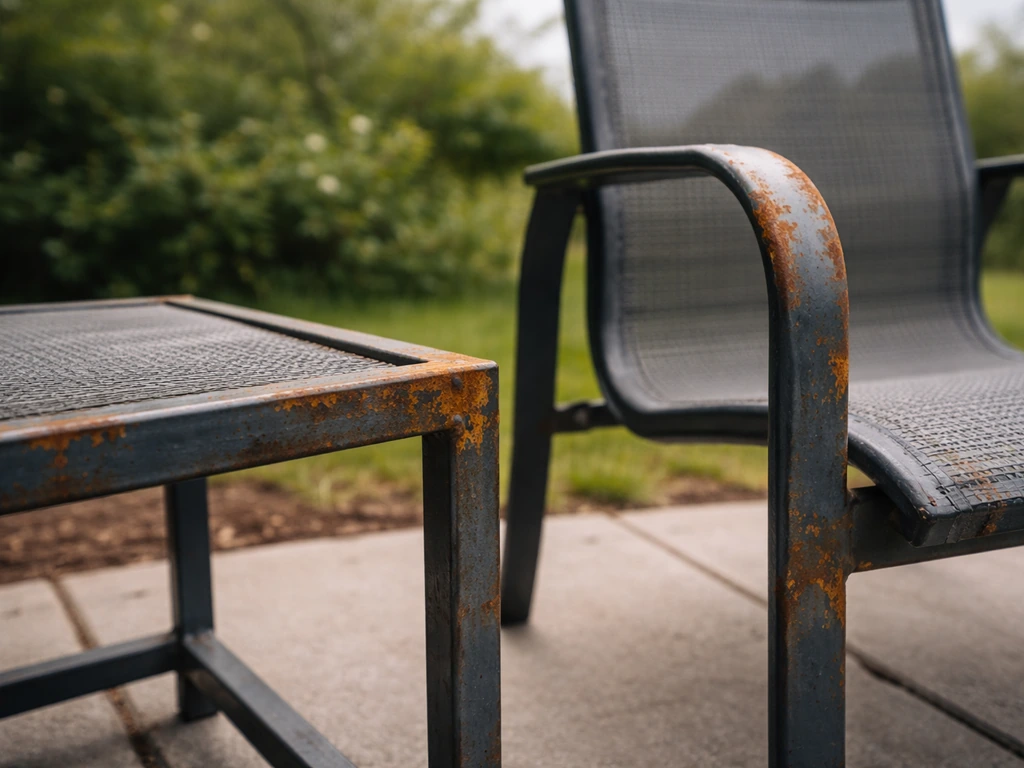
Does steel patio furniture rust, and when does it happen
Rust is hydrous iron oxide, the orange-brown result of iron reacting with oxygen and water in an electrochemical process. Steel is mostly iron, so it's always a candidate for rust whenever moisture and oxygen are present, which outdoors means basically all the time. The question isn't whether the chemistry is possible. It's whether the steel's protective barrier can keep moisture from ever reaching the metal itself.
Powder-coated steel is the finish you'll see on the vast majority of quality patio furniture sold today. When that coating is fully intact, moisture never contacts the steel and rust doesn't start. The problem begins the moment that coating gets a chip, scratch, or crack, even a small one at a weld seam or a furniture leg edge. Once moisture finds that pathway, rust starts underneath the coating and can spread laterally, eventually causing the finish to blister and flake away from the inside. A tiny chip that looks cosmetic on day one can become a rust patch the size of your hand by the end of a wet summer.
Galvanized steel adds a zinc layer that behaves differently. Zinc corrodes first, acting as a sacrificial anode that protects the underlying steel even if the coating gets nicked. You'll often see white powdery deposits, called white rust, on galvanized steel in humid or poorly ventilated conditions. That's zinc oxide forming, not iron rust. It's less damaging but is a warning sign that the zinc is being consumed. Once the zinc is fully depleted in a spot, real iron rust follows. In coastal or chloride-heavy environments, chloride ions accelerate that zinc consumption significantly.
Painted steel without a proper primer or galvanized base is the most vulnerable. Paint alone is a thin barrier and it cracks and chips more readily than powder coat. Once it does, unprotected steel is exposed directly to the elements.
Steel vs other metals: what rust actually means for different finishes
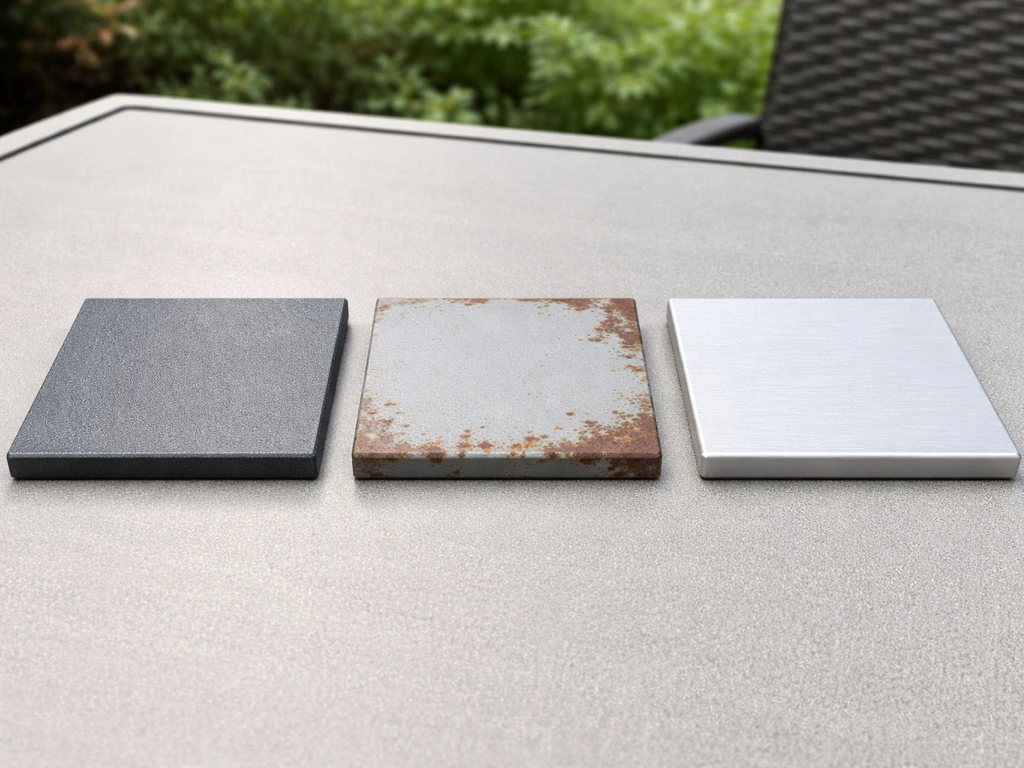
Not all metal patio furniture behaves the same, and 'metal furniture rusts' is an oversimplification that leads people to make poor buying decisions. Here's what you're actually dealing with across the most common options.
| Metal / Finish | Rusts? | Corrosion Type | Coastal Suitability | Best For |
|---|---|---|---|---|
| Powder-coated steel | Yes, if coating is damaged | Iron oxide at chip/scratch sites | Moderate (keep coating intact) | Dry to moderate climates, covered patios |
| Galvanized steel | Eventually, after zinc depletes | White rust (zinc oxide) first, then iron rust | Fair (chlorides accelerate zinc loss) | General outdoor use, some humidity |
| Bare/painted steel | Yes, quickly | Iron oxide wherever paint fails | Poor | Avoid outdoors without additional protection |
| Aluminum (powder-coated) | No iron rust; surface oxidation only | Aluminum oxide (self-sealing) | Excellent | Coastal, humid, rainy climates |
| Cast iron | Yes, readily | Iron oxide; can graphitize in acid rain or saltwater | Poor without serious maintenance | Low-humidity climates, covered/sheltered patios |
| Stainless steel | Rarely; surface rouging possible | Red-brown iron contamination deposits, not true rust | Good (grade 316 for coastal) | Moderate to coastal climates |
Stainless steel deserves a special note because it confuses people. It doesn't rust in the traditional sense because chromium in the alloy forms a self-healing passive oxide film on the surface. What you sometimes see on stainless outdoor furniture, a reddish-brown dusty film, is [called rouging](https://en. wikipedia.
org/wiki/Rouging). It's caused by iron contamination from nearby steel components or tools, not by the stainless itself corroding through. It wipes off. In coastal environments, grade 316 stainless is strongly preferable to grade 304 because chlorides can break down the passive film and initiate pitting corrosion in the cheaper grade.
Aluminum won't rust at all since there's no iron in it. Its natural oxide layer is actually protective and self-sealing, which makes aluminum the top pick for anyone in a rainy or coastal climate.
What actually causes rust on patio furniture
Understanding the triggers lets you control them. Rust on outdoor steel furniture doesn't just happen randomly. There are specific conditions that drive it, and most of them are preventable.
- Moisture sitting on or under the finish: Rain, dew, and morning condensation are the main culprits. Water pooling in joints, horizontal rails, or under furniture feet accelerates corrosion dramatically at those points.
- Scratches and chips in the coating: Even a small scratch from dragging furniture across a patio, a dropped tool, or a pet's claws can expose bare steel. Rust starts within days at an exposed spot in wet conditions.
- Salt air and chloride exposure: Coastal environments and areas where de-icing salt is used in winter are especially corrosive. Chloride ions penetrate and undermine both zinc coatings and powder-coat adhesion, speeding up rust formation.
- Harsh cleaning chemicals: Bleach, chlorine-based cleaners, and abrasive scrubbers damage powder-coat finishes. Once the finish is compromised, the protection is gone.
- Non-breathable furniture covers: This one surprises people. A waterproof cover that seals tightly can trap moisture underneath through condensation, especially during temperature swings. That trapped moisture sits against the steel with nowhere to go, which is one of the fastest ways to start rust under a cover that seemed like it was protecting the furniture.
- Poor placement and drainage: Furniture sitting directly on wet grass, against a wall with poor airflow, or in a spot where water pools after rain will corrode faster than the same piece on an elevated, well-drained deck.
How to prevent rust starting today
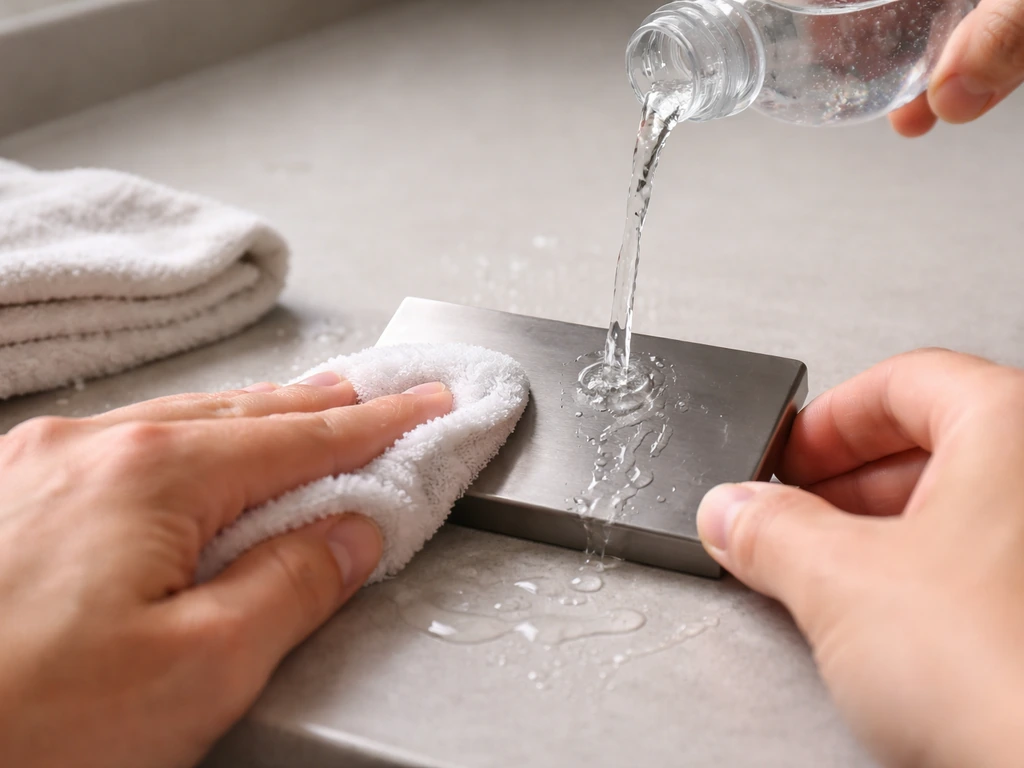
Prevention is far cheaper and easier than remediation. Most of these steps take minutes and can be done right now.
Clean it the right way
Use lukewarm water with a mild, pH-neutral detergent and a soft lint-free cloth. Avoid anything abrasive, no scrub pads, no steel wool on coated surfaces, no bleach. Rinse thoroughly to remove any soap residue, then towel-dry immediately, paying special attention to joints, corners, and anywhere horizontal surfaces collect water. Water that sits in those spots is where rust starts on otherwise well-maintained furniture.
Touch up chips and scratches fast
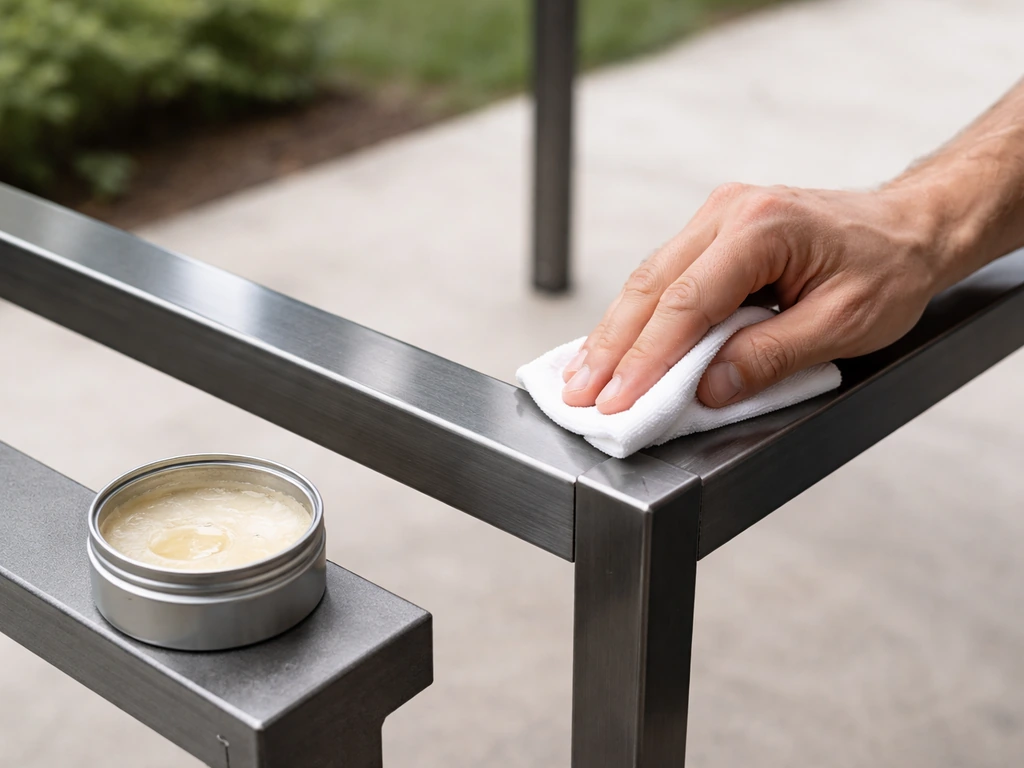
Keep a small can of rust-inhibiting touch-up paint or a matching powder-coat aerosol on hand. The moment you spot a chip, clean the area, let it dry completely, and seal it. Don't wait for next season. A chip that gets one winter of moisture exposure under an untreated surface can become a serious repair job by spring.
Apply a protective wax or coating annually
A coat of paste wax or a dedicated metal furniture sealant on powder-coated or painted steel provides an additional moisture barrier. It also makes the surface easier to clean. Apply it in spring when you bring furniture out, or after any deep cleaning session.
Cover correctly
Use breathable, water-resistant covers rather than fully waterproof ones that seal tight. The goal is to shed rain while allowing moisture vapor to escape underneath. A cover that traps condensation is worse than no cover in many climates. Make sure covers don't pool water on top of the furniture either, since that weight creates contact points where moisture can wick in.
Think about placement
Elevate furniture legs off wet surfaces when possible using rubber feet or leg caps. Position furniture where airflow can dry it after rain. Avoid tight corners against walls or fences where moisture lingers. In regions with heavy snowfall and road salt, moving steel furniture to a garage or shed for winter is genuinely worth the effort.
How to stop rust once it starts
Catching rust early makes a huge difference. The process scales with severity, so assess what you're dealing with before reaching for any products.
Light surface rust (orange staining, no pitting)
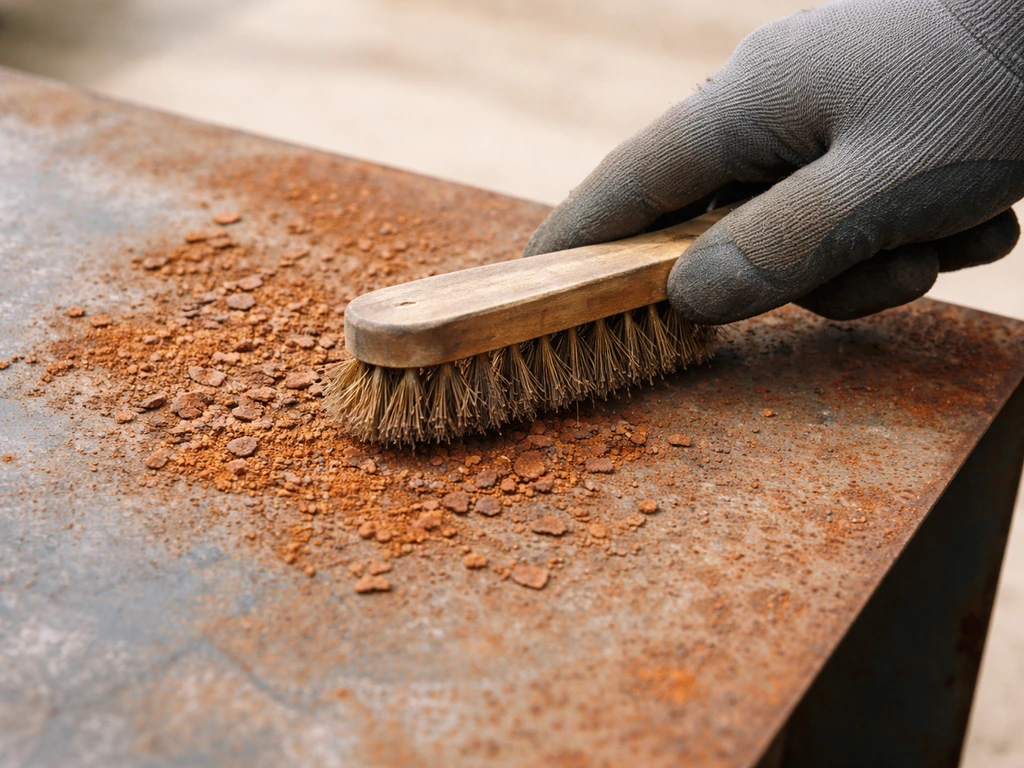
- Clean the area with mild detergent and water, rinse, and let it dry completely.
- Rub the rusted spot with fine-grit sandpaper (120 to 220 grit) or fine steel wool until the rust is gone and you're down to clean metal or intact coating around the edges.
- Wipe away all dust and debris with a clean dry cloth.
- Apply a rust converter, rust-inhibiting primer, or touch-up paint rated for outdoor metal. Let it cure fully before the furniture gets wet.
- If the surrounding powder coat is intact and well-adhered, feather the edges of your touch-up into the existing finish to protect the repair zone.
Moderate rust (blistering finish, spreading patches)
- Use a wire brush or scraper to remove all loose rust, flaking paint, and deteriorated coating. Don't paint over anything that isn't fully adhered.
- Sand the area back to clean metal where the rust has been active. Feather the edges of the intact surrounding finish.
- Degrease the bare metal area with a suitable solvent or cleaner and let dry.
- Apply a phosphoric-acid based rust converter if any residual rust remains in pits or crevices. Keep the solution wet for the contact time specified, then let it fully cure. The converter transforms iron oxide into ferric phosphate, an inert layer that's paintable.
- Once completely dry (no residual moisture, as even slight dampness can cause flash rust or compromise the converter reaction), apply a rust-inhibiting primer, then topcoat with outdoor metal paint that matches your furniture.
Heavy rust (deep pitting, structural concerns)
If rust has progressed to deep pitting or has started compromising structural welds or tubing walls, surface treatment alone won't fix the problem. At that stage, you're weighing repair cost against replacement. For furniture frames with pitted welds or thinned tubing, replacement is usually the right call both for safety and economics. That said, heavily rusted decorative elements like armrests or table aprons on otherwise solid frames can sometimes be treated, primed, and repainted with good results if the structural members are still sound.
Choosing the right metal for your climate
If you're in the market for new patio furniture and rust resistance is a priority, your climate should be the first thing you factor in, before style, before price.
Dry or low-humidity climates (Southwest, desert regions)
Powder-coated steel performs very well here. With low rainfall and low humidity, the coating rarely gets the sustained moisture exposure that leads to rust. UV degradation of the finish becomes a bigger concern than rust in dry sunny climates, so look for high-quality powder coat and apply a UV-protective wax annually. Cast iron can also work in these climates as long as it's kept painted and dry.
Humid or rainy climates (Southeast, Pacific Northwest)
Powder-coated steel can work but demands more vigilance. If you're deciding between metal vs wood patio furniture, aluminum's rust-proof nature can make it a low-maintenance alternative to wood in wet or rainy areas. Any chip or scratch needs immediate attention. Powder-coated aluminum is a significantly lower-maintenance choice here. It won't rust regardless of how wet it gets, the oxide layer is self-sealing, and it handles humidity without any surface corrosion. For someone in a high-rainfall climate who doesn't want to babysit their furniture, aluminum is the practical answer. The steel vs aluminum patio set comparison is worth thinking through carefully if you're in one of these regions.
Coastal and salt-air environments
Chlorides are aggressive to almost every metal except aluminum and high-grade stainless. Powder-coated steel near the ocean degrades faster because salt particles abrade and undermine the finish. Galvanized steel loses its zinc coating more quickly in chloride-rich air. For oceanfront or close-coastal use, powder-coated aluminum is the top choice for ease of care, with 316-grade stainless steel as a premium alternative.
If you're set on steel, rinse the furniture with fresh water weekly during salty season and be rigorous about coating maintenance. This is also where patio furniture that won't rust at all becomes a concept worth exploring directly. Choosing the right metal and finish is how you get patio furniture that will not rust, even in salt air.
Regions with freezing winters and road salt
Salt spray from roads combined with freeze-thaw cycles is brutal on steel. Chlorides from de-icing salt behave similarly to coastal salt air, and the temperature cycling opens up micro-cracks in coatings as metal expands and contracts. If you're in the Midwest or Northeast and storing furniture outside through winter, aluminum is the safe choice. If you love the look of steel, budget for winter storage in a garage or shed and touch up any coating damage every fall before storing.
Maintenance routine and quick checks to keep it looking new
Steel patio furniture that's inspected and cleaned regularly will outlast neglected aluminum furniture. The routine doesn't need to be complicated.
Monthly during the season
- Wipe down all surfaces with mild soapy water and a soft cloth, rinse, and dry. Focus on horizontal rails, joints, and feet where water collects.
- Do a quick visual scan for chips, scratches, or any spot where the finish looks different. Even a small dull patch at an edge can be an early sign of coating failure.
- Check furniture feet and leg tips. If rubber or plastic caps have fallen off, replace them so the raw steel tube end isn't sitting directly on wet pavers or concrete.
At the start of each season (spring)
- Do a thorough inspection in good daylight. Look at weld points, the underside of arms and rails, anywhere you haven't looked in months.
- Sand and touch up any chips or scratches found. Let repairs cure before the furniture gets wet.
- Apply a coat of paste wax or metal sealant to powder-coated and painted surfaces.
- Check that covers are in good condition with no tears that would let moisture pool and sit.
At the end of each season (before storage or winter)
- Clean thoroughly and dry completely before covering or storing. Never store damp steel furniture under a cover for months.
- Repair any chips or scratches before storage so moisture doesn't work under the coating all winter.
- Store in a garage, shed, or covered area if you're in a high-salt or high-humidity climate.
- If storing outdoors, use breathable covers and elevate furniture legs off the ground.
Steel is a genuinely good patio furniture material when the finish is right and you give it a small amount of attention. It's heavier and more substantial than aluminum, it takes paint and powder coat beautifully, and good pieces can last fifteen to twenty years with proper care. The steel patio furniture pros and cons conversation always comes back to this: the durability is real, but it's conditional on the coating staying intact. Treat every chip like the problem it is, keep moisture from sitting on the surface, and you'll rarely see rust do any meaningful damage.
FAQ
How can I tell whether I’m seeing true steel rust or something else on patio furniture?
True steel rust is orange-brown and typically forms where bare steel is exposed, often around chips, welds, or edges. On galvanized furniture you may see white powdery deposits, which are zinc oxide (often called white rust), and it can look similar in early stages. A quick check is to gently wipe the spot, if it wipes off and leaves no orange staining, it’s more likely rouging on stainless or zinc oxide on galvanized rather than iron rust, but any exposed metal should be treated as a coating failure.
Is it safe to keep using steel patio furniture if it has small surface rust spots?
Sometimes, but don’t ignore it. Small surface bloom can be arrested if you address the coating failure immediately, clean the area thoroughly, remove loose corrosion, and then reseal with the correct type of touch-up material. If rust is around a joint or weld, the bigger risk is hidden loss of metal thickness, so inspect for looseness, cracking, or rust that has grown under the coating.
What’s the fastest way to stop rust once it appears, without making the problem worse?
First, remove loose rust and contaminants so the new barrier can adhere, then dry completely. Use a product designed for rust on painted or powder-coated metal, or use touch-up paint only after the metal is properly prepped. Avoid sanding with aggressive grit that burns through the surrounding coating, and avoid painting over damp areas, since trapped moisture can cause new rust under the patch.
Can I use regular spray paint or does the touch-up have to match the original finish?
Matching matters. Powder coat touch-ups generally need a compatible coating method (often a powder-coat aerosol) or a system intended for powder-coated surfaces. Regular outdoor spray paint can work in a pinch for minor chips, but if it isn’t bonded for that substrate and surface profile, it may peel and let moisture reach the steel. If you don’t know the original finish, test on a small area first and choose an outdoor metal system that explicitly states it adheres to the existing coating type.
Does washing steel patio furniture with a pressure washer increase rust risk?
It can. High-pressure streams can drive water and debris into seams, strip protective wax or sealants, and chip coatings at edges. If you use one, keep the nozzle farther away than you would for siding, use a low pressure setting, avoid pointed angles at welds and leg bases, and dry immediately afterward.
How often should I reapply wax or a metal sealant on powder-coated or painted steel?
A practical approach is seasonal, especially after deep cleaning or at the start of the rainy period. The article notes annual wax for UV protection in dry sunny climates; in high-humidity or frequent-rain areas, consider reapplying more often, and always after you touch up chips so you restore the moisture barrier around the repair.
Do patio covers prevent rust, or can they trap moisture and cause it to worsen?
Covers can help, but only if they shed rain and still allow moisture vapor to escape. Fully sealing, non-breathable covers that hold condensation can speed up corrosion, particularly at contact points where the cover stays wet. Make sure the cover doesn’t sag into puddles, and use covers that are water-resistant and breathable with proper fit and airflow.
What should I do differently for steel patio furniture near the ocean or in areas with road salt?
You need more aggressive maintenance of the coating system. Rinse with fresh water during salty season, and inspect chips more frequently because salt can undermine coatings faster and accelerate zinc consumption on galvanized steel. Also store in a more sheltered spot during winter when possible, since freeze-thaw cycles and salt spray together can expand micro-cracks in coatings.
Does stainless steel patio furniture ever rust?
Stainless won’t rust the same way carbon steel does, but it can show reddish-brown dust called rouging caused by iron contamination. It wipes off, but it can return if nearby components or tools are ferrous. Use stainless-safe cleaners and avoid letting iron tools, wire brushes, or grinders contact the surface, since that contamination can stain repeatedly.
When is replacement actually the better choice than repairing rust on steel furniture?
Replace when rust has progressed to pitting that compromises structural members, or when corrosion has affected welds and tubing walls. Surface treatment won’t restore lost thickness, and continuing to repair can become a repeating cycle of coating failure. If the frame flexes, joints are loose, or rust has spread under large areas of coating, replacement is usually safer and often more economical.
Next Articles

Best Metal Patio Furniture: Aluminum vs Steel vs Iron Guide
Aluminum, steel, or wrought iron patio furniture? Compare durability, coatings, hardware, and pick best sets, chairs, an
Is Teak Patio Furniture Good? Durable, Smart Buying Guide
Is teak patio furniture good? Evidence-based verdict, lifespan, care, buying tips, comparisons, and eco guidance.
How Long Does Teak Patio Furniture Last? Lifespan Guide
Teak patio lifespan ranges, factors that shorten or extend durability, and a maintenance plan to protect joints and fini