
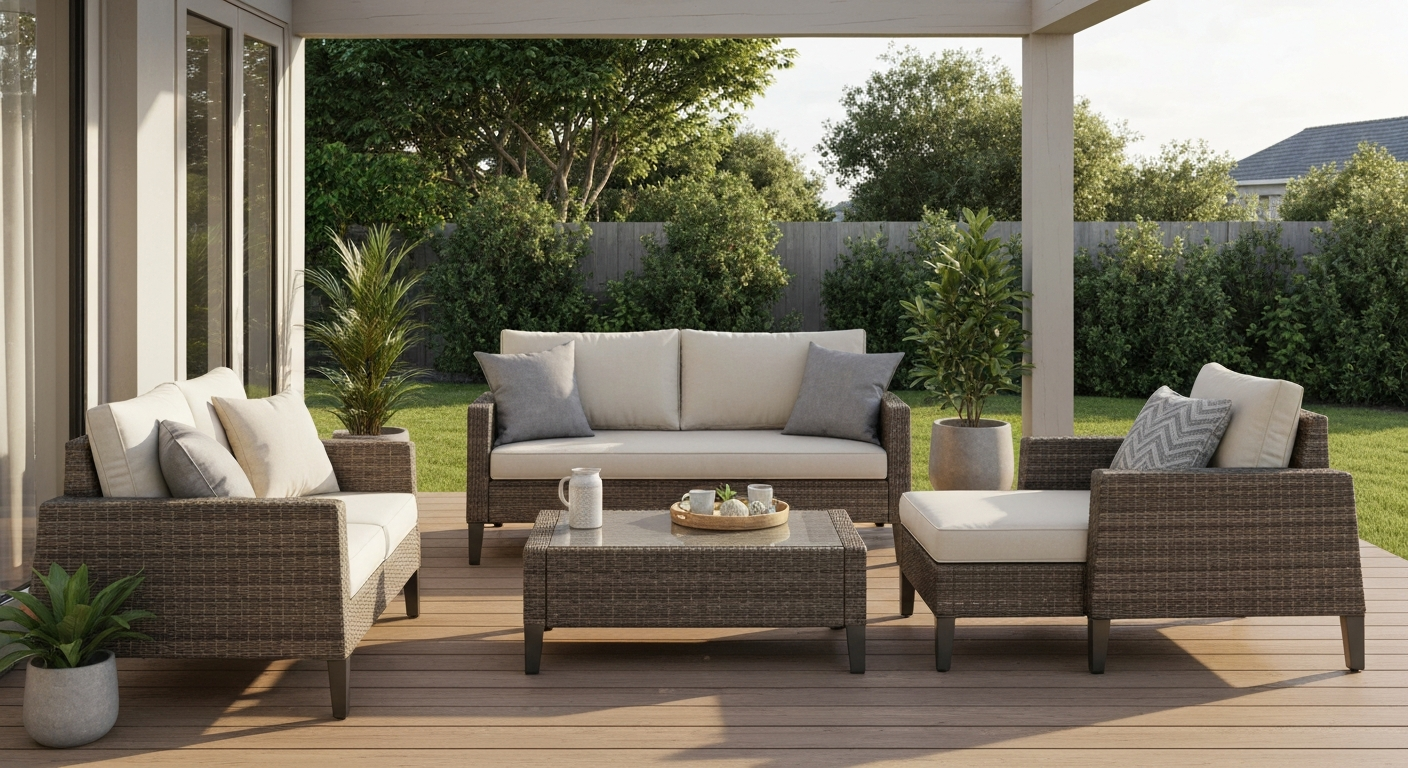
Wicker patio furniture has a lot going for it: it looks great, it's lightweight, it comes in a wide price range, and modern synthetic versions hold up far better outdoors than most people expect. But the trade-offs are real. UV fading, moisture sensitivity in natural fiber versions, and weaker structural performance compared to solid wood or aluminum mean wicker isn't the right call for every climate, every budget, or every use case. This guide walks through the honest pros and cons, separates natural wicker from synthetic resin wicker (a crucial distinction most buyers overlook), and gives you climate-specific and use-specific guidance so you can decide whether wicker belongs on your patio.
Pros and Cons of Wicker Patio Furniture for Homeowners

Marcus Kellerman
21 Jul 2026
Who this guide is for
If you're a homeowner comparing patio furniture materials, a designer speccing out an outdoor lounge or hospitality space, or someone who already owns wicker and wants to know how to maintain or extend its life, this article covers what you need. You'll find a clear pros-and-cons breakdown, a natural vs. synthetic comparison, climate-by-climate guidance, care and repair steps, and a side-by-side look at how wicker stacks up against teak, aluminum, and other common outdoor materials.
Quick verdict: is wicker right for you?
High-quality synthetic (PE/HDPE resin) wicker on a powder-coated aluminum frame is a genuinely solid outdoor furniture choice for most residential patios, covered decks, and screened porches. You can expect 10 to 15 years of good service from a quality set, and up to 20 years from premium UV-stabilized product on a robust frame. Natural fiber wicker, on the other hand, belongs indoors or under a fully covered structure. Put it in direct rain and sun and you're realistically looking at 2 to 7 years before cracking, rotting, and mildew shorten its life significantly. The most important thing most buyers get wrong: they shop for 'wicker' without specifying synthetic or natural, then wonder why one set lasts a decade and another falls apart in three seasons.
Pros and cons at a glance
| Factor | Pro | Con |
|---|---|---|
| Appearance | Classic, textured, works with many design styles | Can look dated if style trends shift; natural fiber yellows or grays outdoors |
| Weight | Lightweight, easy to rearrange or store | Can blow over in wind without ballast or strapping |
| Comfort | Flexible weave has slight give; pairs well with cushions | Bare wicker can leave marks on skin; cushions are often required for long sits |
| Price | Wide range: entry sets from ~$400, midrange $800–$2,500 | Premium/handcrafted sets can exceed $5,000+ |
| UV resistance | UV-stabilized HDPE resin holds color well for years | Low-quality resin fades and embrittles; natural fiber bleaches quickly outdoors |
| Moisture | Synthetic resin is non-absorbent and mildew-resistant | Natural fiber absorbs water, cracks when wet/dried repeatedly or frozen |
| Durability | Good for normal residential use with proper frame | Weaker than solid teak or cast aluminum under heavy loads or commercial use |
| Maintenance | Synthetic wicker needs only soap-and-water cleaning | Natural fiber requires regular sealing, drying, and indoor storage off-season |
| Repairability | Individual strands can be rewoven by hand | Repair requires matching strand material; aging frames can make repair impractical |
| Pest risk | Synthetic resin has no cellulose, no food value for insects | Natural rattan/reed is cellulose-based and susceptible to termites where active |
The pros: what wicker does well
Appearance and design flexibility
Wicker's woven texture adds visual depth that flat metal or solid wood simply can't match. It reads as casual and relaxed in a coastal or bohemian setting but also works in more formal garden layouts depending on the weave pattern and frame finish. Modern resin wicker comes in a range of weave styles, from tight flat-band weaves to round-strand open weaves, and in finishes from natural honey tones to dark espresso and gray. If you want a look that integrates into both contemporary and traditional outdoor spaces, wicker has more range than most materials.
Lightweight and easy to move
A typical wicker lounge chair weighs 15 to 25 pounds, compared to 30 to 50 pounds for a comparable cast-aluminum piece and 40 to 60 pounds or more for solid teak. That difference matters if you regularly rearrange your patio for entertaining, drag chairs under cover before storms, or store furniture seasonally. The trade-off is wind stability, which I'll cover in the cons section, but for most residential uses the light weight is a genuine advantage.
Comfort with or without cushions
The woven structure of a well-made wicker chair has slight flex and breathability that rigid materials lack. In warm weather especially, that airflow through the weave keeps you cooler than sitting in a solid-backed chair. Most wicker sets pair with cushions anyway, and because the frames are lightweight and often generously proportioned, it's easy to find good cushion fits. Just know that a wicker chair without cushions can leave a weave imprint on exposed skin after an extended sit.
Price range and accessibility
Few furniture categories offer as wide a price range as wicker. You can pick up a synthetic resin bistro set or conversation grouping on Wayfair or Home Depot for under $400 to $800. Midrange branded sets with better frame construction and UV-stabilized stranding run $800 to $2,500. At the premium end, handcrafted or loomed wicker brands like Lloyd Flanders and Brown Jordan push into several thousand dollars per seating piece. For most homeowners, the $1,000 to $2,000 range buys a set that performs reliably for 8 to 12 years with reasonable care. That's a respectable cost-per-year figure when you factor in minimal maintenance costs.
Versatility across spaces
Wicker works just as well as indoor furniture as it does outdoors, which means a quality set doesn't have to live exclusively on the patio. Many people pull wicker seating into a sunroom or covered veranda for winter use, getting year-round value from the investment. The same material logic applies to wicker accessories like side tables, storage baskets, and patio trash cans, which extend the design cohesion of a wicker seating area without requiring a large budget. If you need a compact waste solution, consider a wicker patio trash can designed to match resin sets and withstand outdoor conditions.
The cons: where wicker falls short
UV fading and embrittlement
This is the biggest durability threat for synthetic wicker and the one most buyers underestimate. Polyethylene resin strands that aren't properly UV-stabilized will fade, become brittle, and eventually crack under sustained sun exposure. The difference between a $300 set and a $1,500 set often comes down to whether the PE stranding contains UV absorbers and HALS (hindered amine light stabilizers) rather than basic coloring only. Quality suppliers test their materials against standards like ASTM G155 (xenon-arc exposure) and ASTM D4329 (fluorescent UV), which simulate years of outdoor sun exposure. If a manufacturer can't tell you anything about their UV-stabilization approach, treat that as a red flag. For context, Brown Jordan's residential warranty specifically limits resin weave coverage to three years for structural deterioration or excessive fading, which signals how seriously even premium brands take the UV exposure risk.
Moisture vulnerability in natural wicker
Natural rattan, willow, and reed are cellulose-based plant fibers. They absorb moisture, swell, dry, contract, and over time that cycle cracks the fibers and weakens the weave. In humid or rainy climates, mildew takes hold in the fiber structure and accelerates deterioration. Most natural wicker used outdoors without protection fails within 2 to 7 years. Consumer and trade guidance warns that natural rattan, willow, or reed wicker should be used only indoors or under covered structures because prolonged outdoor exposure generally reduces its lifespan to roughly 2–7 years as sunlight, repeated wetting and drying, and mildew cause cracking, rot, and loss of structural strength Natural rattan/willow/reed wicker is advised for indoor or covered use only; prolonged outdoor exposure typically shortens its service life to about 2–7 years due to sunlight, wetting/drying cycles and mildew causing cracking, rot and strength loss.. Iowa State University Extension recommends cleaning mildew from outdoor wicker with a dilute bleach solution (roughly three-quarters of a cup of bleach per quart of water), but that's a remediation step, not a substitute for proper placement and protection.
Structural limits and weave quality
Wicker's woven structure is not as mechanically strong as solid timber, cast aluminum, or steel under high loads or cyclic stress. Research on woven composites confirms that weave architecture matters: tighter, plain-weave constructions distribute load more uniformly and resist fatigue better than looser open weaves. In practical furniture terms, this means a cheap open-weave seat can develop sag, unraveling at anchor points, or outright strand breakage under regular use by heavier occupants. Commercial lounge seating applications often require compliance with ANSI/BIFMA X5.4 proof-load and cyclic durability standards, and not all residential-grade wicker would pass those tests. For household use this usually isn't a problem, but it's worth knowing if you're buying for a rental property or hospitality setting.
Maintenance and repair reality
Synthetic wicker is genuinely low-maintenance: soap, water, and an annual rinse is typically all it needs. Natural wicker is a different story. It requires seasonal sealing or lacquering, careful drying after any moisture exposure, and indoor storage in cold climates. Even synthetic wicker eventually shows wear at anchor points and high-stress areas. Reweaving loose or broken strands is doable by hand, but finding matching replacement strand material (in the right color, texture, and strand width) gets harder as sets age or are discontinued. If you're planning to hold onto a set for 15 or more years, buy from a brand that sells replacement weave material or offers repair support.
Wind stability
Light weight is a pro in some contexts and a con in others. Wicker furniture can blow over in high winds, which risks damage to the furniture, other property, and anyone nearby. This is especially relevant in coastal and storm-prone areas. Furniture straps, weighted bases, or simply moving pieces under cover when storms are forecast are standard management steps.
Natural vs. synthetic (resin) wicker: the difference that matters most
Most outdoor furniture marketed as 'wicker' today is synthetic resin wicker, specifically stranding made from PE (polyethylene) or HDPE (high-density polyethylene). Natural wicker refers to furniture woven from actual plant fibers: rattan, reed, seagrass, willow, or similar materials. The two are often confused because they can look similar at a glance, but they behave completely differently outdoors.
| Attribute | Natural Wicker (Rattan/Reed) | Synthetic Resin Wicker (PE/HDPE) |
|---|---|---|
| Best placement | Indoors or fully covered/sheltered | Outdoors, semi-covered or fully exposed |
| Moisture behavior | Absorbs water, prone to swelling, cracking, mildew | Non-absorbent, mildew-resistant |
| UV response | Bleaches and degrades quickly in direct sun | UV-stabilized versions hold color 5–15+ years |
| Outdoor lifespan | ~2–7 years outdoors without protection | ~10–20 years (quality UV-stabilized HDPE) |
| Pest risk | Cellulose-based, susceptible to termites | No cellulose, no insect food value |
| Freeze risk | Absorbs moisture that can freeze and crack fibers | Low absorption; less vulnerable but still best stored indoors in deep-freeze climates |
| Maintenance | Seasonal sealing, careful drying, winter indoor storage | Mild soap and water, minimal effort |
| Repairability | Can be rewoven with natural stranding | Repairable with matching PE strand material |
| Typical price range | Often less expensive; antique/vintage pieces vary widely | Wide range: $400 entry-level to $5,000+ premium |
| Sustainability note | Renewable plant material; biodegradable | Petroleum-based plastic; recyclable in some programs |
My recommendation: unless you're furnishing a covered sunroom or screened porch where rain exposure is essentially zero, choose synthetic resin wicker on an aluminum frame. The performance gap outdoors is not subtle. Natural wicker is beautiful and has a warmth that resin can't fully replicate, but asking it to survive a Pacific Northwest winter or a Florida rainy season is unrealistic.
Climate and region guide: which wicker works where
Coastal and salt-air environments
Salt air accelerates corrosion on metal components and can degrade low-quality finishes quickly. For coastal use, synthetic resin wicker on a powder-coated aluminum frame (not steel) is the right call. Check that the frame hardware is marine-grade stainless or corrosion-rated. Natural wicker in coastal climates is a poor investment: salt air plus humidity is an especially harsh combination for plant fibers. If you love the wicker look in a beachside setting, go synthetic and rinse the furniture periodically to remove salt buildup.
Hot and humid climates (Southeast US, Gulf Coast, Florida)
High UV plus high humidity is the most demanding combination for any outdoor furniture material. In this climate, UV-stabilized HDPE resin wicker on an aluminum frame is the clear choice. Look for solution-dyed stranding, which carries colorfast pigment through the entire strand rather than just on the surface. Natural wicker in Florida's humidity and rain will mildew within a season. Even quality synthetic sets benefit from occasional soap-and-water cleaning to prevent mildew from growing in debris that collects in the weave, even though the fiber itself resists it.
High UV, dry, and desert climates (Southwest US, Arizona, Nevada)
Intense UV without much moisture is actually harder on unprotected plastics than most buyers realize. Dry air doesn't protect PE resin from UV embrittlement. In arid, high-sun regions, the UV-stabilization quality of the strand material is the single most important spec to verify. Solution-dyed, UV-stabilized HDPE with documented accelerated weathering testing is what you want. Low-end resin wicker in Phoenix or Las Vegas can look chalky and brittle within two to three years.
Cold and freezing climates (Upper Midwest, Northeast, Mountain West)
Freeze-thaw cycles are brutal on moisture-absorbing materials. Natural wicker left outdoors through a freeze will absorb water, that water will expand as ice, and fiber cracking and weave failure follow. Synthetic resin wicker absorbs very little moisture and is more tolerant of freezing, but most manufacturers still recommend indoor storage for winter. Frame integrity is also a concern: cheap steel frames rust from within after moisture infiltrates through weave anchor points, and in freeze climates that happens faster. An aluminum frame eliminates the rust risk entirely. If outdoor storage through winter is unavoidable, use quality furniture covers rated for freeze-thaw conditions.
Rainy and overcast climates (Pacific Northwest, UK-style climates)
Sustained rain exposure without intense UV actually favors synthetic wicker in one respect: UV degradation is slower. But moisture management still matters. Make sure the furniture drains well (open weave patterns help), cushions have water-resistant covers, and the frame has no rust pathways. Covered storage during peak rainy season significantly extends the life of any outdoor furniture in a wet climate.
Mild, temperate climates (California Coast, Mid-Atlantic, Pacific Northwest summers)
Temperate climates with moderate UV, low humidity, and rare freezing are the most forgiving environment for wicker furniture. In these conditions, midrange synthetic resin wicker will last comfortably toward the upper end of its rated lifespan. Natural wicker can even perform adequately on a covered porch in a mild climate, though I'd still lean synthetic for any year-round outdoor placement.
Can wicker get wet? What rain and moisture actually do
The answer depends entirely on whether you're talking about natural or synthetic wicker. Synthetic PE/HDPE resin wicker is non-absorbent. Rain runs off it, it doesn't swell or crack from wetting, and it dries quickly. A quality synthetic wicker set can absolutely get wet without any structural harm, though cushions should be removed or covered in heavy rain. Natural wicker is a different story entirely. Plant-fiber wicker (rattan, reed, willow) absorbs moisture. A single rain event won't destroy a well-made natural piece, but repeated wetting and drying cycles weaken fibers, encourage mildew growth in the weave, and over time cause cracking and structural failure. If your natural wicker furniture gets caught in rain, dry it thoroughly in shade or a well-ventilated space before storing or covering it. Never wrap wet natural wicker in a sealed cover. For those dealing with ongoing moisture questions specific to their setup, the details of how different wicker types respond to rain, humidity, and seasonal moisture are worth understanding in depth. Can wicker patio furniture get wet? Read this focused FAQ for practical, climate-specific answers and care tips.
How wicker compares to other patio furniture materials
| Material | Typical Lifespan | UV Resistance | Moisture Resistance | Weight | Maintenance | Price Range (set) |
|---|---|---|---|---|---|---|
| Synthetic resin wicker (HDPE) | 10–20 years (quality) | Good to excellent (UV-stabilized) | Excellent (non-absorbent) | Very light | Low (soap + water) | $400–$5,000+ |
| Natural wicker (rattan/reed) | 2–7 years outdoors | Poor (bleaches quickly) | Poor (absorbs water, molds) | Light | High (sealing, drying, storage) | $200–$2,000+ |
| Teak | 20–30+ years | Excellent (natural oils) | Excellent | Heavy | Low to moderate (oil or let patina) | $1,500–$10,000+ |
| Powder-coated aluminum | 15–25 years | Excellent (if coat intact) | Excellent (no rust) | Light to medium | Very low | $600–$6,000+ |
| HDPE/Polywood | 15–30+ years | Excellent (through-color) | Excellent | Medium | Very low | $500–$4,000+ |
| Steel (powder-coated) | 5–15 years | Good (if coat intact) | Moderate (rusts if coat chips) | Heavy | Moderate (inspect/touch up coat) | $300–$3,000+ |
Teak and HDPE/Polywood materials outlast synthetic wicker in raw durability terms, especially in harsh climates. Aluminum is roughly comparable in lifespan to premium resin wicker with lower maintenance demands. Where wicker wins is in aesthetics for those who want a woven, textured look and in comfort through the flexibility and breathability of the weave. If longevity is your top priority and you don't specifically want the wicker aesthetic, teak or aluminum will give you better decades-per-dollar performance. If you want that look and you're willing to buy quality and care for it properly, wicker is a legitimate long-term investment. For a detailed comparison of how the two most visually similar options stack up, wicker vs. wood is worth exploring in depth. For a detailed comparison, see our guide on wood vs wicker patio furniture for side-by-side pros, cons, and longevity comparisons.
What to look for when buying: quality signals
Shopping for wicker is genuinely confusing because most product listings don't specify what kind of PE is used, how it's UV-stabilized, or what the frame material and gauge are. Here's what to actually look for.
- Frame material: aluminum (welded, not just bolted) is the best choice for outdoor use. Avoid bare steel or steel with minimal coating in wet or coastal environments.
- Strand material: look for HDPE or 'all-weather resin' with explicit mention of UV stabilization or UV-resistant additives. Solution-dyed stranding is a positive indicator.
- Weave tightness and anchor points: inspect where strands are anchored to the frame. Loose, flimsy anchor points are where failure starts.
- Weight and thickness: heavier stranding with a tighter weave generally indicates better durability than thin, widely-spaced strands.
- Warranty coverage: a three-year or longer weave warranty (like Homecrest and Brown Jordan offer for residential use) signals the manufacturer stands behind the material's durability. Read what's excluded.
- Cushion quality: check whether cushions are included and whether the fill and covers are rated for outdoor use (solution-dyed acrylic fabric, quick-dry fill).
- Brand service availability: for premium sets, check that the brand or retailer offers replacement cushions, stranding material, or service support after purchase.
Caring for wicker patio furniture
Routine care for synthetic wicker
Synthetic resin wicker is about as low-maintenance as outdoor furniture gets. Wash the weave with mild soap and warm water using a soft brush or cloth, rinse thoroughly, and let it air dry. Do this two to four times per year, or after heavy pollen seasons or storms. Avoid abrasive cleaners and high-pressure washers on the weave itself. A low-pressure garden hose rinse is fine and actually helpful for flushing debris out of the weave openings. Store or cover the furniture when it won't be used for extended periods, especially over winter in cold climates.
Caring for natural wicker outdoors
Natural wicker requires more active management. Clean it with mild soap and water, dry it thoroughly in a ventilated area (never in direct hot sun, which can cause uneven drying and cracking), and apply a clear lacquer or furniture wax annually to protect against moisture absorption. If mildew appears, Iowa State University Extension recommends a cleaning solution of about three-quarters of a cup of bleach per quart of water applied with a soft brush, followed by thorough rinsing and drying. In climates with any significant rainfall or freezing temps, bring natural wicker indoors or into a covered, dry space for the off-season.
Basic strand repair
Loose or broken strands on a synthetic wicker piece can often be re-anchored or rewoven by hand with matching replacement material. The repair process involves threading the replacement strand through the existing weave pattern, tucking and securing the ends at the frame anchor points using the same technique as the original construction. The challenge is finding matching strand material once a product is several years old or discontinued. Some premium manufacturers supply replacement strand reels; for others, you'll need to match the strand dimensions and color as closely as possible from a wicker repair supplier. Minor unraveling caught early is easy to fix. Widespread strand failure on an aging frame is a signal to replace rather than repair.
Wicker and spiders: a quick note
Woven furniture does create sheltered cavities that spiders find attractive for web-building and nesting. This is less a flaw of the material and more a reality of any textured, hollow-cavity outdoor furniture. Regular cleaning and clearing debris from inside the weave reduces spider habitat. Natural wicker has an added complication: in regions with active termites, the cellulose-based fibers are literally food for wood-eating insects. Synthetic resin wicker has no cellulose and offers no food value to termites or wood-boring insects, which is one more practical reason to prefer it for outdoor use in pest-active regions.
Realistic lifespan and cost-per-year breakdown
I always prefer to think about furniture cost in terms of cost-per-year rather than sticker price, because it changes the math considerably. A $500 entry-level synthetic wicker set that lasts four years before the strands embrittle costs you $125 per year. A $1,500 midrange set with good UV stabilization that lasts 12 years costs $125 per year too, but you've also avoided the hassle of replacement. A $3,000 premium set lasting 18 years runs about $167 per year but delivers a noticeably better ownership experience throughout. Where entry-level wicker reliably disappoints is in UV and frame durability. The cheapest sets tend to use thin-gauge stranding, minimal UV stabilization, and steel frames, and they deliver performance in line with their price. If the $400 to $600 range is your ceiling, look for sets with explicit all-weather PE stranding on an aluminum frame and accept that you'll be replacing them in five to seven years.
Buying checklist before you commit
- Confirm whether the wicker is natural fiber or synthetic resin PE/HDPE before purchasing.
- Check frame material: aluminum is preferable to steel for outdoor use.
- Ask about or look up UV stabilization specifics, especially if the set will sit in direct sun.
- Read the warranty carefully, noting what's covered on the weave vs. the frame, and for how long.
- Check whether the brand offers replacement cushions, covers, or strand material post-purchase.
- Match the material choice to your climate: synthetic for exposed outdoor placement, natural only for sheltered or indoor use.
- Factor in cushion quality: outdoor-rated fill and solution-dyed acrylic fabric holds up far better than standard polyester.
- Inspect anchor points and weave density if buying in person, or look for close-up product images and reviews if buying online.
- Plan for seasonal storage or quality covers if you're in a freeze-thaw, high-UV, or coastal climate.
- Compare cost-per-year across options rather than focusing only on upfront price.
FAQ
What are the main pros of wicker patio furniture?
Wicker (especially modern synthetic/resin wicker) offers an attractive, textured aesthetic, good comfort when combined with cushions, lightweight pieces that are easy to move, generally lower price points for entry and mid tiers, and relatively low maintenance for high‑quality resin/PE weaves. Synthetic wicker is non‑absorbent, mildew‑resistant compared with natural fibers, and when made with UV stabilizers can provide many years of outdoor use.
What are the main cons of wicker patio furniture?
Natural wicker (rattan, reed, willow) weathers poorly outdoors—it fades, cracks, rots and supports mildew/insect problems if exposed to sun and wet. Lower‑quality synthetic wicker can suffer UV embrittlement, strand cracking, unravelling at anchor points, and frame corrosion (if the underlying metal is cheap steel). Wicker can fade in strong sun, and cushions/fabrics still need routine cleaning and replacement. Warranty periods for woven components are often shorter than for frames.
How does natural wicker compare to synthetic/resin (PE) wicker?
Natural wicker is cellulose‑based, best used indoors or under full cover; outdoors it typically lasts only a few years. Synthetic/resin (HDPE/PE) is engineered for outdoors: it’s non‑absorbent, mildew‑resistant, and can be UV‑stabilized for much longer life (good products often last roughly 10–20 years depending on quality and exposure). Choose natural for indoor/covered spaces and synthetic/resin for exposed outdoor use.
Can wicker get wet? Will moisture damage it?
Synthetic resin wicker tolerates occasional wetting and dries quickly; regular wet/dry cycles accelerate wear if cushions aren’t dried and if water gets trapped in joints. Natural wicker absorbs moisture, which promotes swelling, mildew and rot—so it should not be left exposed to rain or high humidity for extended periods. In freeze climates, trapped water can cause cracking when it freezes.
Does wicker attract spiders or insects?
Natural wicker can attract or shelter insects that feed on cellulose or nest in cracks (including termites in termite‑active regions) and may harbor spiders. Synthetic resin wicker is much less attractive to wood‑feeding pests, though spiders can still use it as shelter. Regular cleaning and storing cushions/tools reduces pest sheltering.
How long will wicker patio furniture last? What are realistic lifespan expectations?
Lifespan varies by material, quality, frame and climate. Natural wicker used outdoors often lasts ~2–7 years. High‑quality UV‑stabilized resin/HDPE wicker with a corrosion‑resistant frame commonly provides roughly 10–20 years of usable life under normal exposure; lower‑end resin pieces may show failure in 3–7 years. Manufacturer warranty terms for woven components are commonly shorter (often 1–3 years) than frame warranties.
Next Articles
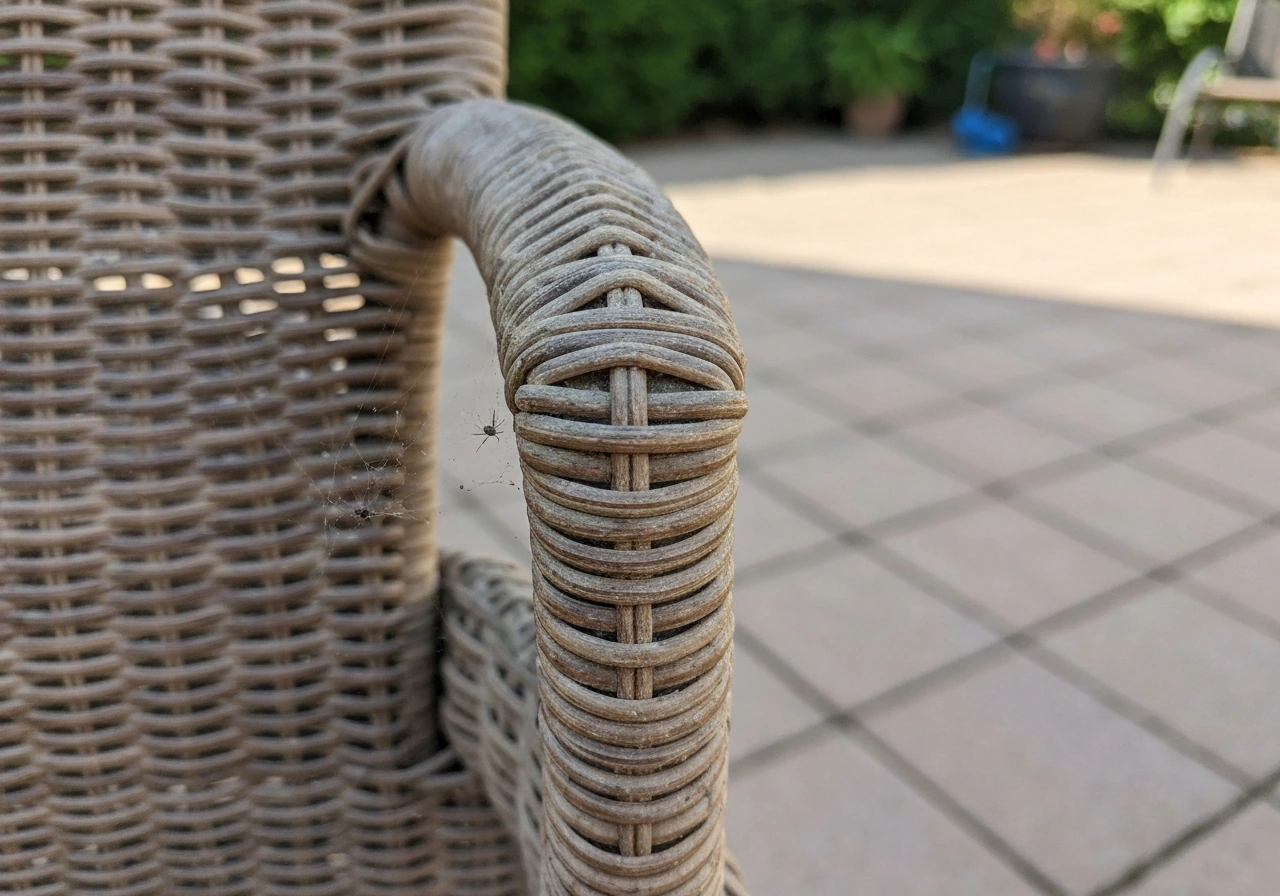
Does Wicker Patio Furniture Attract Spiders? Fix It Fast
Does wicker patio furniture attract spiders? Learn why, how to prevent webs fast, and compare wicker vs other patio mate
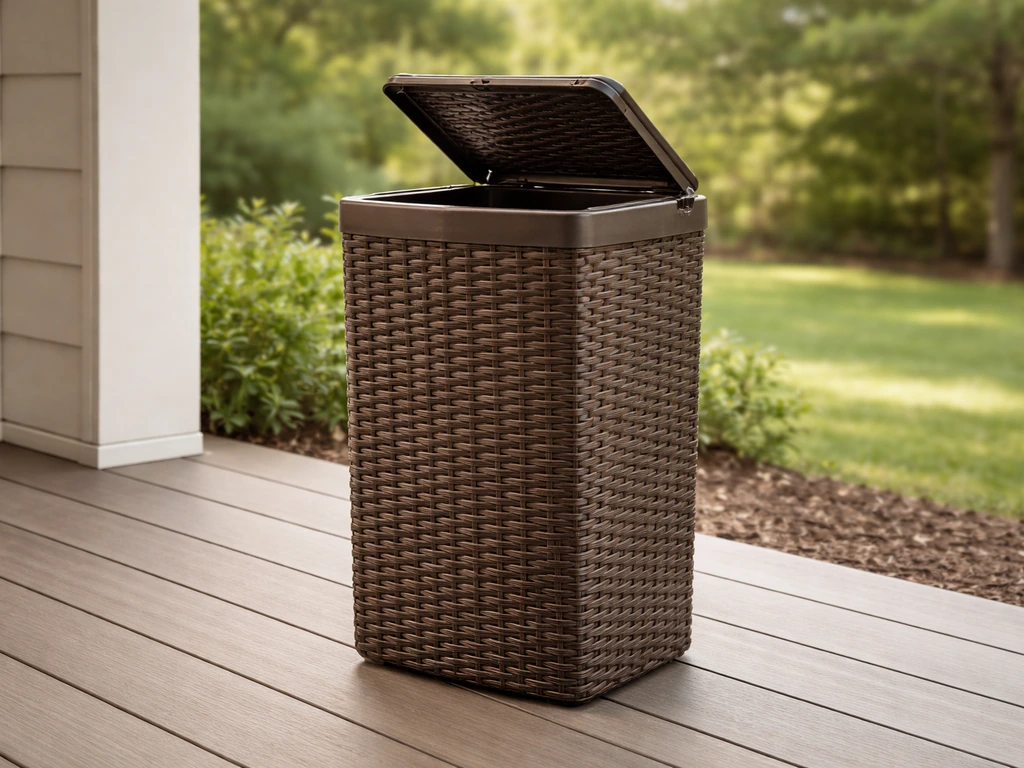
Wicker Patio Trash Can Buying and Care Guide
Choose the right wicker patio trash can with climate-ready materials, weather resistance, sizing, odor control, and care
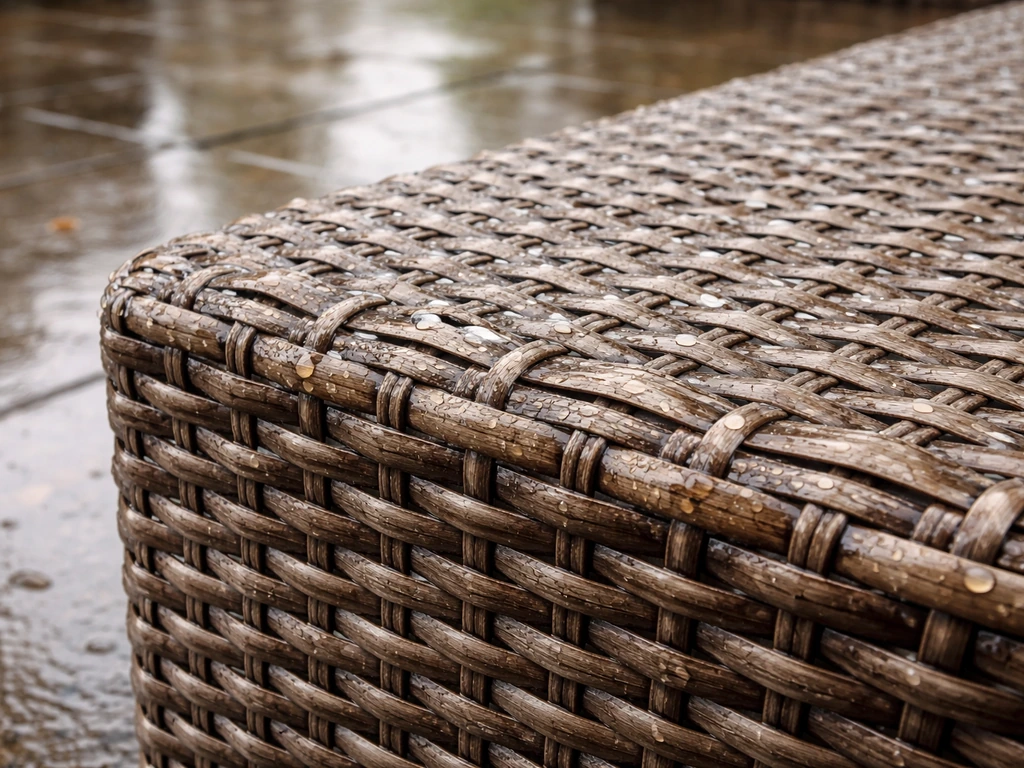
Can Wicker Patio Furniture Get Wet? Waterproof Guide
Find out if wicker patio furniture can get wet, when it risks mold or warping, and how to dry and protect it.