
Go with a synthetic resin wicker trash can, not natural wicker. Natural wicker (rattan, seagrass, bamboo) breaks down fast outdoors: it cracks in UV, warps in rain, and grows mold inside the weave. Quality HDPE resin wicker looks nearly identical, holds up through freeze-thaw cycles, resists UV fading for years, and cleans easily with a garden hose. For a standard patio placement, look for a 13-gallon capacity with a swing-top lid, a powder-coated aluminum frame, and interior dimensions that accommodate a standard 13-gallon liner. Those four details alone will eliminate most of the bad buys.
Wicker Patio Trash Can Buying and Care Guide

Marcus Kellerman
8 Jul 2026
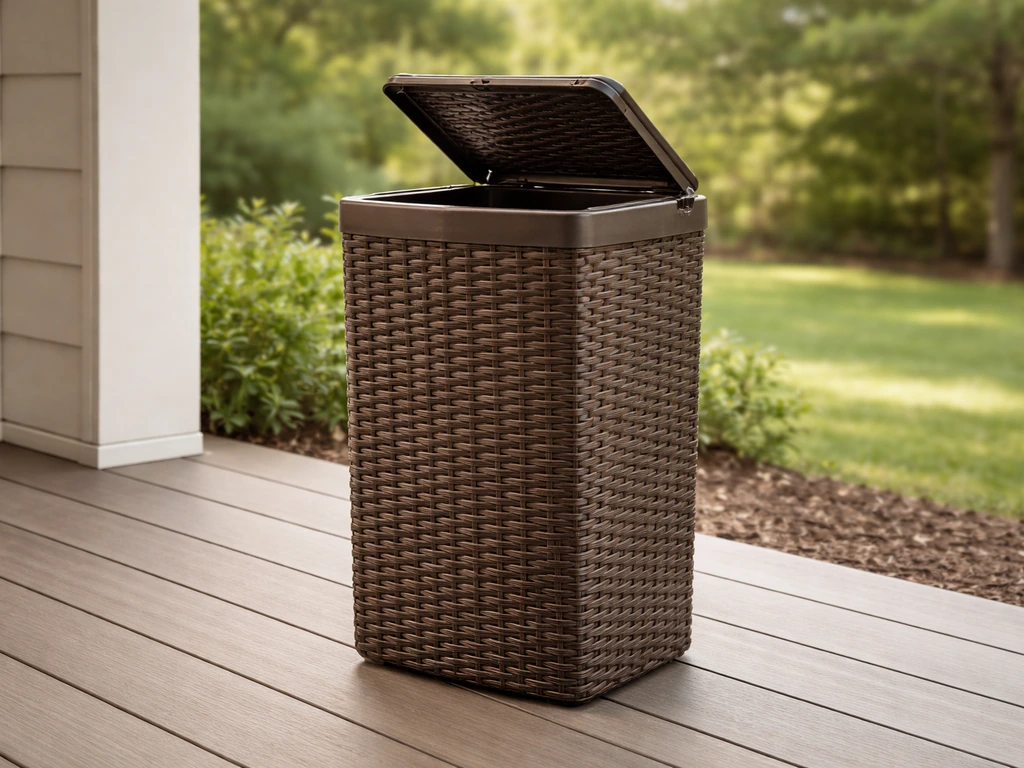
What kind of 'wicker' is actually best outdoors
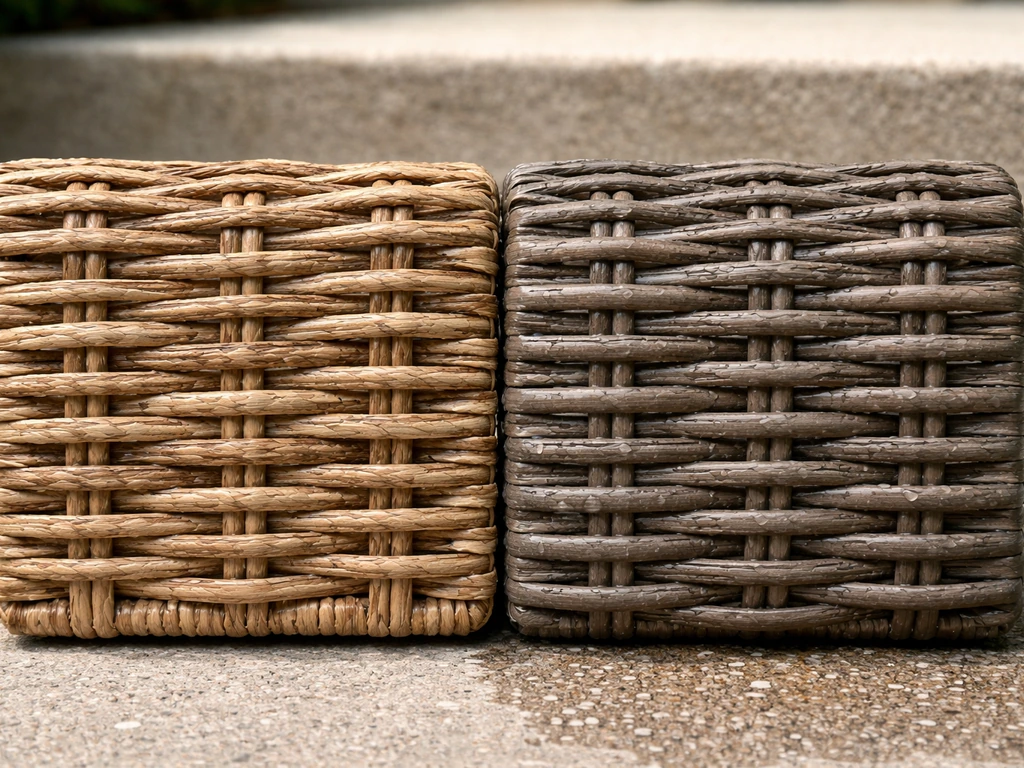
The word 'wicker' describes a weaving technique, not a material. What you put outside matters enormously, and there are really only two camps worth discussing for a patio trash can: natural wicker and synthetic resin wicker. Because pros and cons vary by material, compare how natural wicker versus resin wicker handle UV, moisture, and maintenance before you decide pros and cons of wicker patio furniture.
Natural wicker is made from plant-based materials like rattan reed, seagrass, or bamboo. It looks beautiful, but it is simply not designed for outdoor use. Moisture seeps into the reed itself, which leads to mold and mildew growing inside the fibers rather than just on the surface. Sun breaks down the organic structure, making it brittle and prone to cracking within a single season in a hot climate. blank" rel="noopener noreferrer">Applying a waterproofing spray helps briefly but does not meaningfully extend its outdoor lifespan. If you already own or love the look of natural wicker pieces, they belong in a covered sunroom, not on an exposed patio. If you are comparing options for your patio, wood vs wicker patio furniture comes down to durability, moisture resistance, and how much maintenance you want to do.
Synthetic resin wicker, specifically HDPE (High Density Polyethylene) fiber, is the right material for anything staying outside year-round. It is a polyethylene plastic strand woven to mimic rattan visually. Good HDPE resin wicker resists moisture, UV radiation, mold, mildew, sagging, staining, and cracking. Premium fiber like Viro brand HDPE is rated to perform in temperatures as low as -70°C (-94°F), which means freeze-thaw cycles in cold climates will not cause the cracking and delamination that destroys cheaper alternatives.
There is a third option that frequently gets marketed loosely as wicker: PVC resin. It is cheaper to produce than HDPE and unfortunately it shows. PVC wicker tends to start cracking and fading within two to three seasons because it lacks the UV inhibitors and flexibility of quality HDPE. If a trash can is advertised as 'resin wicker' but does not specify HDPE, ask or skip it. The long-term cost per year on a PVC piece is terrible compared to a well-made HDPE one.
| Material | Weather Resistance | UV Resistance | Mold/Mildew Risk | Expected Lifespan Outdoors | Best For |
|---|---|---|---|---|---|
| Natural wicker (rattan/reed) | Poor | Poor | High | 1 season or less | Covered indoor/sunroom use only |
| PVC resin wicker | Moderate | Fair (fades) | Low to moderate | 2–3 seasons | Budget short-term or covered patio |
| HDPE resin wicker | Excellent | Excellent | Very low | 7–15+ years | All climates, full outdoor exposure |
Key features to look for
Capacity and liner fit
For most patios, a 13-gallon capacity is the practical sweet spot. Target’s listing for a 13-gallon swing-top waste basket also notes it accommodates a standard 13-gallon trash liner a 13-gallon capacity. It is big enough to hold a full afternoon of entertaining waste without needing constant trips to the main bin, and it uses standard 13-gallon trash liners you can buy anywhere. Manufacturers like Sterilite and Witt explicitly rate their 13-gallon swing-top models to accommodate a standard 13-gallon liner, which takes the guesswork out. If you go with a rigid internal liner (a plastic insert that drops inside the wicker shell), check the dimensional specs carefully. As a reference, Witt's 13R rigid liner runs 11 inches by 11 inches by 20 inches tall. Your interior wicker shell needs to clear those dimensions with a little room to spare so the liner seats properly and the lid still closes.
Lid style
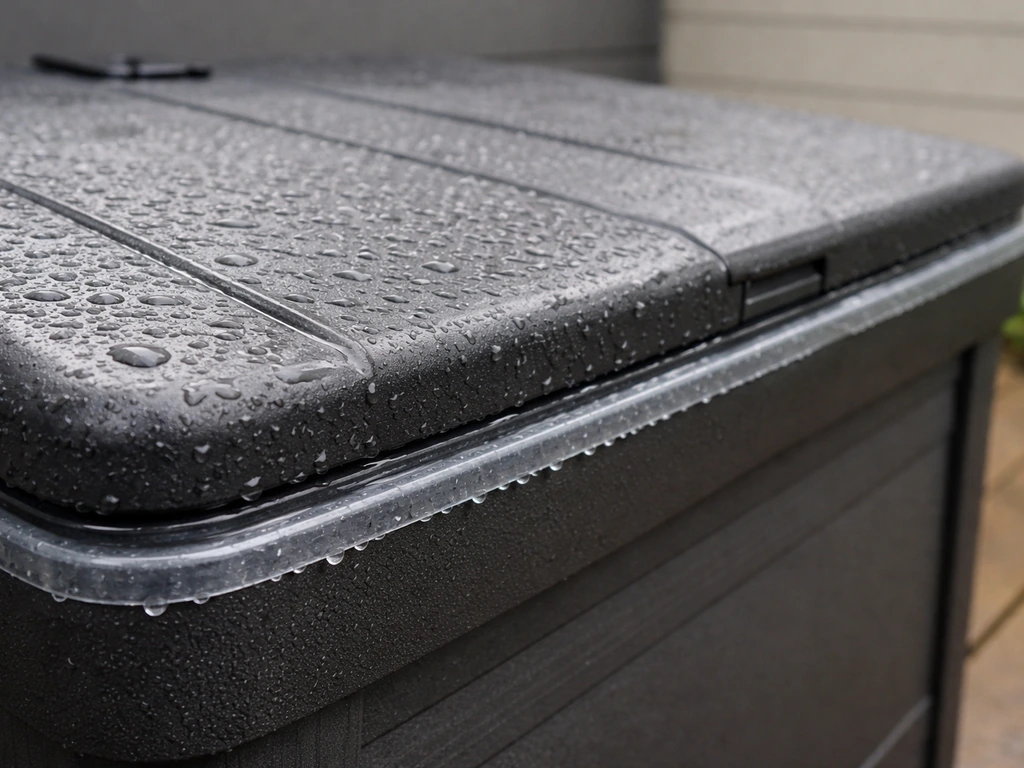
The lid is the single most important weather-related feature. A swing-top lid is the best choice for most patios: it blocks rain, restricts insects from getting inside, and allows one-handed disposal without lifting anything. If you are wondering whether wicker patio furniture attracts spiders, the answer depends largely on how moisture and debris collect in the weave does wicker patio furniture attract spiders. Some rain-bonnet style lids claim to reduce precipitation entry by up to 66% compared to an open-top can. For areas with heavy rain or high insect pressure, a swing-top or hinged flip-lid is a must. Avoid lidless or flat-topped open bins on any exposed patio; you will end up with standing water at the bottom and a mold problem within weeks.
Drainage and ventilation
Even with a good lid, some moisture gets in during heavy rain or when wet items are tossed inside. Look for drainage holes at the base of the can or the inner liner. If your model does not have them, you can drill two or three small holes at the lowest point yourself. Ventilation matters for odor control too: liners with star seals and built-in vent holes allow airflow that reduces the pressure seal effect and helps prevent trapped odors from building up inside the bag.
Frame construction
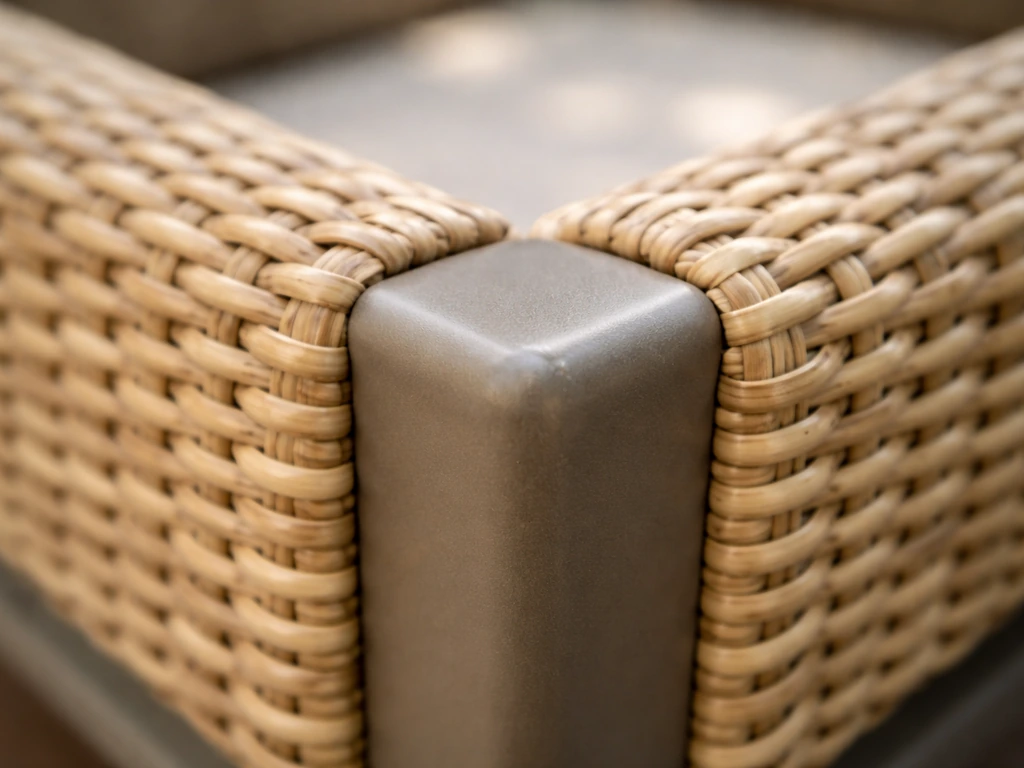
The wicker weave is only as good as what it is wrapped around. Look for a fully welded, powder-coated aluminum frame. Powder-coated aluminum resists rust and corrosion and stays structurally sound in humid or coastal environments where a steel frame would start corroding within a season or two. Avoid frames with visible exposed welds at high-stress points (lid hinges, base corners) since inadequate reinforcement at those spots is a primary failure mode in cheap wicker products. Give the can a light shake in the store or when it arrives: it should feel solid, not flex or rattle.
Weatherproofing and climate-specific guidance
Not every climate stresses an outdoor trash can the same way, and it is worth matching features to your actual conditions rather than just buying whatever looks nice.
- Hot and sunny climates (Southwest, South Florida, desert regions): UV resistance is the top priority. Cheap PVC resin will chalk and crack visibly within one summer in intense sun. HDPE with UV inhibitors is non-negotiable here. Look for darker weave colors, which absorb heat less unevenly than white or light finishes that can develop uneven fading.
- High humidity and coastal areas: Mold and mildew resistance comes first. HDPE itself does not grow mold, but organic debris trapped in the weave can. A smooth, tightly woven pattern traps less debris than an open-lattice weave. Rinse the can monthly and ensure it drains completely. Natural wicker is essentially unusable in humid coastal environments without significant deterioration within months.
- Rainy climates (Pacific Northwest, Southeast): Drainage holes and a quality swing-top lid are critical. Standing water inside the can (even under a liner) accelerates any organic buildup. A powder-coated aluminum frame handles wet conditions far better than steel.
- Cold climates with freeze-thaw cycles: This is where HDPE really separates itself from PVC. Quality HDPE fibers maintain flexibility at low temperatures. PVC becomes brittle when it gets cold and will crack as the material expands and contracts through repeated freeze-thaw cycles. If you are in a climate with hard winters, HDPE is the only resin wicker worth buying.
- Windy patios: Weight and base stability matter more than most buyers think. A taller, lighter can will tip in wind; look for a weighted base or consider one that can be anchored. If you use a rigid inner liner, it also adds stability.
Durability and build quality checklist
Before buying, run through these checks. It takes two minutes and will save you from a replacement purchase in year two.
- Confirm the fiber material is HDPE, not just 'resin wicker' or 'all-weather wicker' without a spec. Ask the retailer or check the product sheet.
- Inspect or research the frame: welded aluminum is ideal. If it says 'steel frame,' ask whether it is powder-coated and what rust protection is provided.
- Check weave tightness: a tight, even weave with no loose strands or gaps traps less debris and holds up better structurally over years of UV exposure.
- Look at the lid hinge and pivot point: this is the highest-wear area. It should feel smooth, not wobbly, and the material at the hinge should be reinforced.
- Check whether the base corners are reinforced or just weave over a thin rod. Cheap builds often fail here first.
- Confirm UV inhibitor treatment is mentioned in the product specs. This is what separates a 10-year HDPE piece from a 2-year PVC piece.
Cleaning, odor control, and maintenance routine
Regular cleaning
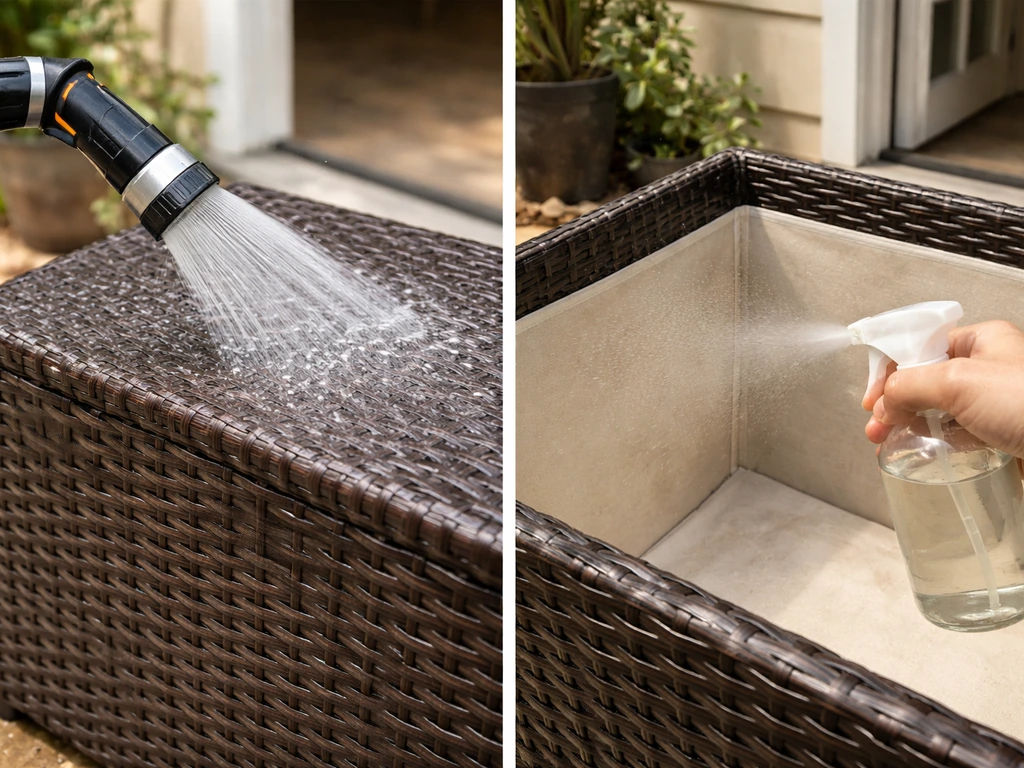
HDPE resin wicker is easy to clean, which is one of its real practical advantages. For routine maintenance, hose it down on a medium spray setting (never high pressure, which can work water into woven stress points and loosen fibers over time). For actual cleaning, mix 1/4 cup mild liquid dish soap with 1 gallon of warm water, scrub gently with a soft-bristle brush, and rinse thoroughly. The key step most people skip: make sure foam and soap residue is fully rinsed out of the weave. Soap residue left in the gaps actively attracts dirt and can encourage microbial buildup over time.
Mildew treatment
If you see mildew starting on the wicker surface, mix 1 part white vinegar with 4 parts water. Apply it with a soft brush, let it sit for 10 to 15 minutes, and then rinse thoroughly. This is effective for surface mildew on resin wicker without damaging the fiber or frame finish. After cleaning for mildew or doing any deep wash, let the can air dry completely before replacing a liner. Leftover moisture trapped under a liner is exactly what creates the persistent mold and odor problem people blame on the can itself.
Odor control
Use a liner every time without exception. After each liner change, spray the interior with undiluted white vinegar and let it air dry before inserting a new bag. For a more persistent odor issue, activated carbon (charcoal) deodorizer inserts are available that sit inside the can and adsorb odor particles as air moves through. These do lose effectiveness over time as the carbon saturates, so plan to replace them every one to three months depending on use. Always ensure drainage holes are clear so liquid waste does not pool at the bottom under the liner.
Seasonal maintenance
Once a month, give the whole exterior a rinse. Once a season, do a full soap-and-water scrub including the lid interior and the base. In winter climates, consider whether to bring the can onto a covered porch or into a garage during extended hard freezes. Quality HDPE handles cold, but avoiding sustained ice accumulation on the weave reduces stress on the fibers and the frame finish.
Common problems and how to fix them
| Problem | Likely Cause | Fix |
|---|---|---|
| Fading or chalking weave | PVC resin, no UV inhibitors, or prolonged intense sun | No real fix for PVC; for HDPE, outdoor furniture UV protectant spray can slow further fading. Replace with HDPE if it is PVC. |
| Cracking or brittle weave strands | PVC in cold weather, or severe UV degradation | Individual broken strands can be trimmed flush; widespread cracking means the material has failed and replacement is needed. |
| Mildew on weave surface | Moisture trapped in weave, insufficient drying, debris buildup | Vinegar and water solution (1:4), scrub with soft brush, rinse completely, and allow full air drying. |
| Standing water at base | No drainage holes or clogged drainage | Drill 2–3 small holes at the lowest interior point; clear debris from existing drainage holes. |
| Persistent odor despite liner use | Moisture under liner, spills soaking through bag, inadequate drying | Empty, scrub interior, rinse, allow to dry completely before relining. Add activated carbon deodorizer insert. |
| Wobbly or tipping can | Wind, lightweight design, or frame joint loosening | Check if frame screws/bolts have loosened and tighten if possible. Add weight to base interior or move to a more sheltered patio location. |
| Loose weave strands | Wear at stress points, budget frame construction | Trim cleanly with scissors so it does not catch. A single loose strand left to snag will unravel further. |
How to measure your space and choose the right one today
Getting the placement and fit right before you buy takes about five minutes with a tape measure and will prevent the frustrating return of a can that looked right online but does not work in your actual space.
- Measure the footprint zone: Mark out where you want the can to sit and measure width and depth available. Standard 13-gallon wicker patio cans run roughly 12–14 inches in diameter for round designs and 11–15 inches for rectangular ones. Leave at least 3 inches clearance on all sides from furniture and walls for airflow.
- Measure the height available: Most 13-gallon round patio cans are 22–26 inches tall with the lid. If your can will sit under a side table or in a built-in nook, confirm vertical clearance including a fully opened lid.
- Check your liner size: Standard 13-gallon bags fit 13-gallon cans universally. If the can you want uses a rigid internal liner, get the interior liner dimensions from the spec sheet (length × width × height) and compare to standard bag sizing to confirm compatibility. The Witt 13R insert at 11 × 11 × 20 inches gives you a useful real-world benchmark.
- Identify your climate priority: Hot and sunny means prioritize UV-rated HDPE and darker finishes. Wet or humid means prioritize drainage holes and tight weave. Cold and freezing means confirm HDPE, not PVC. Windy patio means look at weight and base design.
- Confirm the frame material in the product specs: Aluminum frame listed? Good. Check for powder-coated or rust-resistant finish. If only 'metal frame' is listed, ask specifically.
- Order and test the fit: When the can arrives, insert your liner before doing anything else. The bag should sit inside the can with a 1–2 inch overhang at the top edge to fold over without slipping. If the bag falls in or bunches badly, the capacity match is off and you should exchange for the correct size.
One last practical note: the wicker patio trash can question often comes up alongside broader decisions about wicker on the patio in general. Whether wicker furniture holds up to rain, which climates it suits, and how it compares to wood alternatives are all connected questions that affect how you approach the whole patio setup, not just the accessories. The same material principles that apply here (HDPE beats natural wicker outdoors, aluminum beats steel for frames, UV inhibitors determine longevity) apply across every wicker piece you put outside.
FAQ
How do I choose the right liner size for a 13-gallon wicker patio trash can?
For a wicker patio trash can, choose a liner size that matches the can’s stated capacity and, if possible, the manufacturer’s liner dimensions. A standard 13-gallon swing-top model is typically meant for a standard 13-gallon liner, but rigid internal liners often need clearance checks because their inserts take up space and can prevent the liner from sitting flush (which then reduces the lid’s ability to seal).
What should I do if my wicker patio trash can has no drainage holes?
If the can has no drainage holes, stagnant liquid is the fastest way to trigger odor and mildew at the base. Drilling a few small holes at the lowest point can help, but it is still important to clear any holes after storms or after draining and cleaning. If you have an internal rigid liner, ensure the holes do not get blocked by the liner’s fit or by folded plastic corners.
Is it safe to power wash a wicker patio trash can?
Avoid high-pressure washing. It can force water into the weave’s stress points and loosen fibers over time, especially near the lid hinge and base corners. Use a medium hose spray for routine rinses, then fully air dry before installing a liner, since trapped moisture under the liner is a common cause of persistent smells.
Why does my wicker patio trash can still smell after cleaning?
Residual soap and foam trapped in the weave can act like a dirt magnet and eventually contribute to microbial growth, even on HDPE. After scrubbing with mild dish soap, rinse thoroughly until you no longer see any slickness or suds, then let it air dry completely before putting in a liner.
Do I really need a swing-top lid on a wicker patio trash can?
A swing-top lid is best for exposed patios because it blocks rain and reduces direct insect access. If you have heavy rain or frequent flying insects, a hinged flip-lid or swing-top is the practical choice over open-top, lidless, or flat-topped bins, which tend to collect standing water at the bottom.
How often should I use vinegar or charcoal deodorizer inserts in a wicker patio trash can?
Yes, but you should do it selectively. If you are using vinegar as recommended after liner changes, let the interior air dry before adding a new bag. If odors persist, carbon inserts can help, but they work until the carbon saturates, so replacement timing matters, and you still need clear drainage and good lid closure to prevent moisture buildup.
What are the best ways to spot a low-quality wicker patio trash can in-store?
Visually, check the frame and attachment points first. Choose a fully welded, powder-coated aluminum frame, and avoid products with visible exposed welds at high-stress spots like base corners and lid hinges. Also shake the can lightly, it should feel solid without flexing or rattling, which often indicates weak joints.
Can I use a wicker patio trash can for recycling bins, and will liners still work?
If you plan to use it for recycling, note that some cans are harder to manage with thicker liners or multiple bins. Confirm the liner type that fits (standard liner versus rigid insert) and make sure the lid can close fully without bulging, otherwise water and insects can get in more easily and create odor problems.
What should I do with my wicker patio trash can during winter freezes?
If you are in a freeze-thaw area, HDPE resin wicker is typically more tolerant than many cheaper resin types, but the key is avoiding sustained ice accumulation. For long hard-freeze stretches, bringing the can onto a covered porch or into a garage can reduce stress on the weave and frame finish, even if the material is rated for cold.
Next Articles
Can Wicker Patio Furniture Get Wet? Waterproof Guide
Find out if wicker patio furniture can get wet, when it risks mold or warping, and how to dry and protect it.
Best Stain for Teak Patio Furniture, Top Picks by Climate
Best stain for teak patio furniture: expert picks, climate-based choices, prep, application, and maintenance tips.
Is Teak Patio Furniture Good? Durable, Smart Buying Guide
Is teak patio furniture good? Evidence-based verdict, lifespan, care, buying tips, comparisons, and eco guidance.