
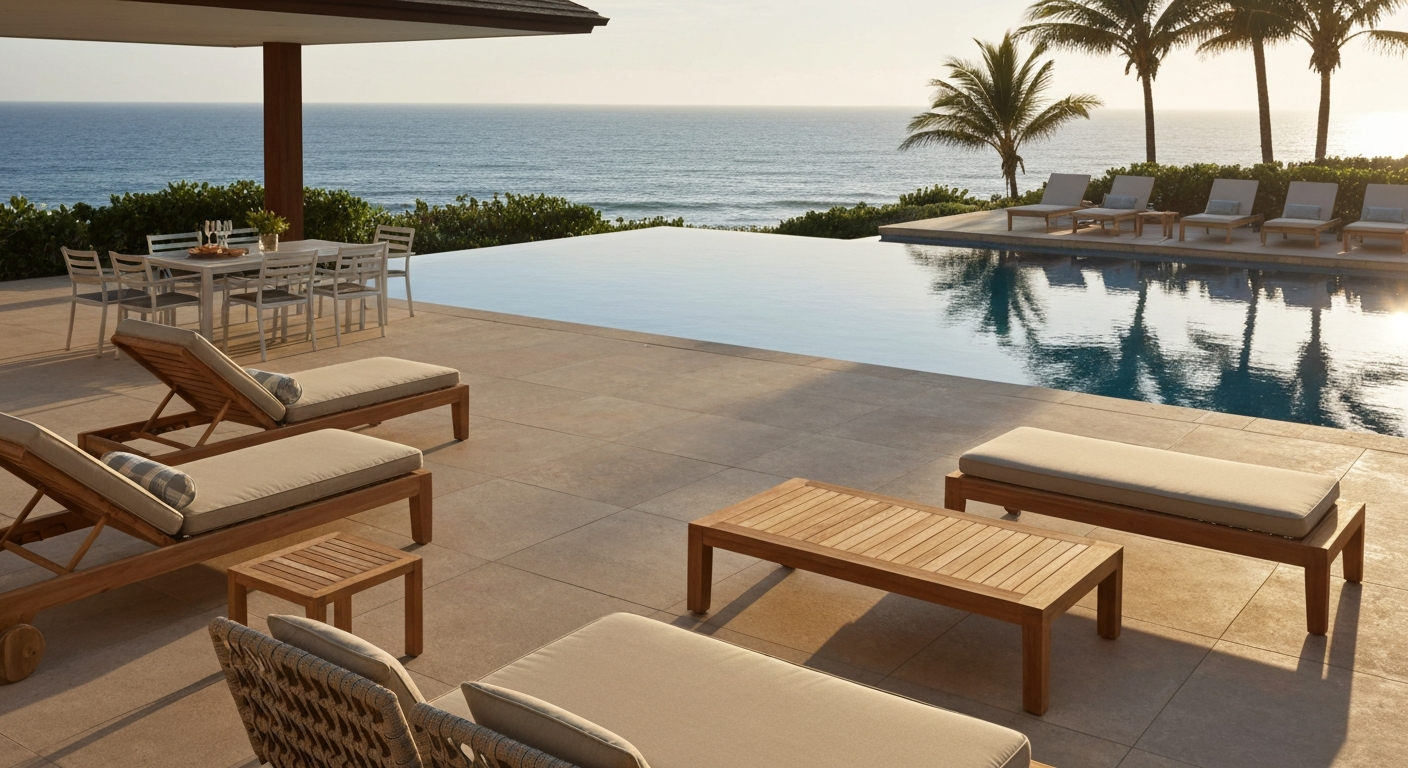
Resort quality patio furniture means pieces built to survive daily commercial use across years of sun, rain, salt air, and heavy traffic without warping, flaking, or failing structurally. For homeowners and designers, that translates to frames with verified corrosion-resistant finishes, joints fastened with marine-grade hardware, cushion fabrics that resist UV fading and dry within hours, and warranties of at least five years on structural components. You pay more upfront, but the cost-per-year often beats mass-market furniture that needs replacing every three to five seasons.
Resort Quality Patio Furniture: Ultimate Buyer's Guide

Marcus Kellerman
29 Jul 2026
Who this guide is for
If you are upgrading a patio and tired of repainting rusted steel frames every spring, this guide is for you. If you are an outdoor designer specifying pieces for a high-end residential project or a boutique hotel pool deck, it covers the procurement criteria hospitality buyers actually use. It also speaks to buyers considering used resort-surplus pieces or weighing whether affordable alternatives can deliver genuine durability. The article cuts through vague marketing language about 'commercial grade' and 'weather resistant' by tying recommendations to measurable standards, real warranty terms, and material science you can verify before you spend.
What 'resort quality' actually means
The phrase gets thrown around loosely, so it is worth nailing down a working definition. Resort quality patio furniture is built to contract (commercial) specifications, meaning it is designed to withstand multi-year deployment in public-facing, high-use hospitality environments: pool decks, beachfront terraces, rooftop bars, and shaded restaurant patios. Hospitality brands like Hilton and Marriott publish FF&E (furniture, fixtures, and equipment) specification manuals that require product submittals with manufacturer spec sheets, independent test reports (salt spray, UV), maintenance manuals, and defined warranty terms. A piece that meets those procurement hurdles is genuinely resort quality. One that just looks the part is not.
The payoff for homeowners and residential designers is straightforward: you get furniture engineered for abuse, climate variability, and longevity. A well-specified resort-grade aluminum dining set installed on a coastal patio in 2026 should still look structurally sound in 2041. That is not marketing copy. It is a realistic expectation based on the finish thicknesses, alloy specifications, and warranty terms that tier of product carries. Mass-market pieces at a quarter of the price will rarely survive half that timeline.
Measurable quality criteria to check before you buy
Vague claims about 'durability' mean nothing if a brand cannot back them with test data or warranty language. Here are the objective indicators I look for when evaluating any piece claiming resort-grade status.
Frame and finish testing
Ask the manufacturer whether their powder coat or frame finish has been tested to ASTM B117 (neutral salt spray) or the more demanding ASTM G85 cyclic variants. Contract-grade outdoor furniture suppliers commonly specify a minimum 500 to 720 or more hours of neutral salt spray exposure as an acceptance threshold. Be aware that ASTM B117 hours do not convert directly to real-world years of service. Both ASTM B117 and the equivalent ISO 9227 standard explicitly state that the test is a comparative quality-assurance tool, not a field-life predictor. What the number tells you is whether a manufacturer is holding their product to a rigorous comparative benchmark. A brand that cannot cite any test hours should be treated with skepticism.
UV resistance is equally important. ASTM G154 (fluorescent UV) and ASTM G155 (xenon-arc) are the relevant standards. See ASTM G154, Standard Practice for Operating Fluorescent Ultraviolet (UV) Lamp Apparatus for Exposure of Materials (ASTM) for fluorescent UV lamp testing; ASTM G155 covers xenon‑arc exposure for full‑spectrum solar simulation See ASTM G154 — Standard Practice for Operating Fluorescent Ultraviolet (UV) Lamp Apparatus for Exposure of Materials (ASTM) for fluorescent UV lamp testing; ASTM G155 covers xenon‑arc exposure for full‑spectrum solar simulation.. Xenon-arc testing under G155 simulates full-spectrum solar radiation and is widely used for outdoor finish and fabric life prediction. Powder coat adhesion testing under ASTM D3359 (cross-hatch tape test) is another QA check worth asking about, because adhesion failure after UV and moisture cycling is the most common early failure mode in coated metal furniture.
Powder coat thickness and system type
For resort-grade aluminum and steel, expect a dry film thickness of 60 to 120 microns. Industry and finishing experts commonly recommend powder‑coat dry film thicknesses in the 60–120 µm (micron) range for commercial/resort outdoor aluminum and steel furniture, with many contract RFQs calling out minimums of 60–80 µm and ‘super‑durable’ polyester powders, and two‑coat systems used where specifications exceed 120 µm powder‑coat dry film thicknesses in the 60–120 µm range. Many contract RFQs specify a minimum of 60 to 80 microns and require 'super-durable' polyester powders. Two-coat systems are used where specifications exceed 120 microns, typically for coastal C4 to C5 corrosivity categories as defined under ISO 12944. If you are buying furniture for a coastal property and a supplier cannot tell you the dry film thickness or the powder type, that is a red flag.
Hardware
Every bolt, screw, and bracket on resort-quality outdoor furniture should be stainless steel, and for coastal sites it should specifically be 316 (marine-grade) stainless. The difference matters: 316 contains molybdenum, which significantly improves resistance to chloride pitting and crevice corrosion compared with the more common 304 grade. Hardware failure is the most common structural problem in otherwise good outdoor furniture, and it is cheap to do right at the factory and expensive to fix in the field.
Cushions and fabric
Solution-dyed acrylic fabrics (Sunbrella is the benchmark brand) are the standard for resort cushions. The color is dyed through the fiber rather than applied to the surface, which gives them genuine UV resistance rather than surface-fade resistance. Quick-dry open-cell foam cushion cores are another specification worth checking: they drain and dry within a few hours of rain rather than staying saturated for days and growing mold. Expect two-year cushion warranties on premium brands (Gloster's published warranty, for example, covers cushions and weave for two years and structural components for five).
Warranty benchmarks
Five years on structural components is the floor for resort quality. Gloster's 2025 USA warranty covers aluminum, teak, and stainless-steel structural components for five years. Brands like Tropitone publish separate commercial warranties with photo-evidence claims processes that reflect serious institutional backing. On the engineered-material end, POLYWOOD cites a 20-year limited residential warranty on its HDPE lumber components, which demonstrates what rigorous materials engineering and testing can produce. If a brand offers only a one-year or two-year structural warranty on a 'premium' frame, that warranty length is telling you something about confidence in the product.
Quality criteria at a glance
| Criterion | Resort Quality Minimum | Mass-Market Typical | What to Ask the Brand |
|---|---|---|---|
| Salt spray resistance | 500–720+ hrs ASTM B117 or G85 cyclic | Rarely tested or disclosed | Request test report or spec sheet |
| Powder coat DFT | 60–120 µm, super-durable polyester | Often 40–60 µm, standard polyester | Ask for finish spec in µm |
| Hardware grade | 316 stainless (coastal), 304 minimum inland | Zinc-plated steel or unknown alloy | Ask hardware grade by spec |
| Cushion fabric | Solution-dyed acrylic, quick-dry foam | Polyester print, standard foam | Check label or fabric name |
| Structural warranty | 5 years minimum | 1–2 years | Read the full warranty document |
| UV coating test | ASTM G154 / G155 tested | Not disclosed | Ask for test methodology |
Teak: the benchmark material
Teak has been the hospitality industry's default outdoor hardwood for decades, and for good reason. Its natural silica and oil content give it a density and moisture resistance that most other woods cannot match without chemical treatment. A properly graded Grade A teak frame (cut from the heartwood, with tight grain and minimal sapwood) on a covered or partially shaded resort terrace can realistically last 50 or more years with basic maintenance. That is not an exaggeration: antique teak garden furniture from the 1970s is still in circulation and functional.
Teak pros
- Exceptional natural oil content resists moisture, rot, and insects without chemical treatment
- Grade A heartwood has tight, even grain that resists warping and cracking
- Weathers to an attractive silver-grey patina if left untreated — no paint or sealant required
- Fully repairable: surface scratches and weathering can be sanded back to reveal fresh wood
- Compatible with all climate zones including high-humidity, freeze/thaw, and coastal environments
- Holds mortise-and-tenon or stainless bolt joinery exceptionally well over long service life
Teak cons
- High cost: Grade A teak dining sets commonly run $3,000 to $10,000 or more at retail
- Sustainability concerns persist despite FSC certification programs — verify certification before purchase
- Requires annual teak oil or cleaner application if you want to maintain the golden-brown color rather than the silver patina
- Heavy: teak furniture is not easily moved seasonally without a dedicated storage solution
- Grade inconsistency is rampant — Grade B and C pieces with sapwood inclusions perform significantly worse and are sometimes mislabeled
Teak care and realistic costs
If you want the warm honey color, apply a teak oil or teak sealer once or twice a year after cleaning with a teak cleaner and a soft brush. If you prefer the silver-grey weathered look, simply clean the surface annually to remove mildew and algae. Do not use a pressure washer at high settings: it opens the grain and accelerates surface breakdown. Budget $30 to $60 per year for cleaning products on a typical dining set. For renovation of heavily weathered pieces, a light sand with 120-grit paper followed by 220-grit and a fresh oil application will restore the surface to near-original condition. Entry-level Grade A teak sets start around $2,500 for a four-seat dining group; resort-specification contract pieces (Gloster, Barlow Tyrie, Jensen Leisure) typically start at $5,000 and run well above $10,000 for large configurations.
Other outdoor hardwoods: eucalyptus, ipe, and the alternatives
Teak's cost and supply constraints have pushed designers and homeowners toward other dense tropical and temperate hardwoods. Eucalyptus and ipe are the two most common alternatives you will encounter at the resort-adjacent price tier.
Eucalyptus
FSC-certified plantation eucalyptus (primarily Eucalyptus grandis or E. saligna) is genuinely rot-resistant and harder than most northern hemisphere softwoods. It is not as dense or as naturally oily as Grade A teak, but it performs well in humid and moderate-coastal environments. Realistic lifespan with consistent oiling and covered storage is 15 to 25 years. It costs roughly 40 to 60 percent less than comparable teak. The downsides are real: eucalyptus is more prone to surface checking (small cracks along the grain) if allowed to dry out rapidly, and cheaper grades with looser grain will absorb more moisture and deteriorate faster. Annual oiling is not optional with eucalyptus the way it is with teak: skip it for two or three seasons and you will see significant surface degradation. On a pure cost-per-year basis, quality eucalyptus is competitive with mid-tier aluminum in temperate climates.
Ipe
Ipe (Brazilian walnut) is one of the densest commercial hardwoods available, with a Janka hardness rating around 3,500 lbf that puts it near the top of the scale. It is used extensively in commercial decking and some contract outdoor furniture. The practical challenge for furniture is its very density: ipe is so hard that joinery must be pre-drilled precisely, and it is unforgiving of poorly fitted hardware. When done right, an ipe frame is extraordinarily durable, with realistic outdoor lifespans exceeding 25 years even in harsh climates. The sustainability picture is less favorable than eucalyptus: ipe sourcing from verified legal and sustainable forestry is harder to confirm, and certification is less consistent. Cost is comparable to or slightly below mid-grade teak.
Hardwood comparison
| Wood | Typical Lifespan (outdoor) | Maintenance Level | Relative Cost vs. Teak | Best Climate |
|---|---|---|---|---|
| Grade A Teak | 40–50+ years | Low (oiling optional) | Baseline | All climates |
| Eucalyptus | 15–25 years | Medium (annual oiling) | 40–60% less | Temperate, humid |
| Ipe | 25–35 years | Medium (oiling/hardware care) | 10–20% less | All climates, harsh conditions |
Aluminum: the workhorse of resort furniture
Cast and extruded aluminum is probably the most common material in genuine hospitality-grade outdoor furniture today, and it earns that position. It does not rust, it is lightweight relative to its strength, and a proper powder coat finish applied at the correct dry film thickness will survive coastal environments for a decade or more with minimal care. That said, not all aluminum outdoor furniture is resort quality, and the difference between a $400 mass-market aluminum set and a $3,000 contract-grade one is real and measurable.
Alloy types
The two constructions you will encounter are cast aluminum (molten metal poured into molds, used for ornate or heavy pieces) and extruded or welded aluminum (sections formed by extrusion and welded, common in contemporary dining and lounge furniture). Both use alloys from the 6000 series (typically 6061 or 6063) for structural outdoor applications. These alloys provide a good balance of strength, corrosion resistance, and weldability. Cast aluminum pieces tend to be heavier and more rigid; extruded/welded pieces are lighter and easier to move seasonally. For pure outdoor durability, alloy grade matters less than wall thickness and weld quality: look for a minimum wall thickness of around 1.5 to 2 mm on extruded sections for resort-grade frames.
Powder coat: where quality is won or lost
The powder coat system is the critical variable for aluminum outdoor furniture durability. As noted in the quality criteria section, resort-grade specifications call for 60 to 120 microns of dry film thickness using super-durable polyester powders. Budget and mass-market pieces commonly apply thinner coats of standard polyester powder that begin to fade, chalk, and delaminate within three to five years, particularly in high-UV or coastal environments. A proper pretreatment process (chromate conversion or zirconium-based pretreatment before coating) is also essential and rarely visible in product listings, it is worth asking about when sourcing from contract suppliers.
Aluminum strengths and real limitations
- Does not rust: aluminum forms a passive oxide layer that self-protects at the base metal level even if the powder coat is scratched
- Lightweight: cast aluminum is noticeably lighter than steel or iron, and extruded aluminum is lighter still
- Low maintenance: annual wash with mild soap and water is sufficient for most environments
- Powder coat touch-up is straightforward: rattle-can powder coat touch-up paints are available in many standard colors
- Cannot be repaired by welding in the field easily: a cracked or bent frame section typically requires frame replacement
- Thin-wall budget pieces dent more easily than cast sections under point loads or heavy impact
- Color fading in extended high-UV exposure is possible even with good powder coat if UV-stable pigments were not specified
Cast iron and steel: when weight is an asset
Cast iron and mild steel outdoor furniture are less common in new resort specifications today, but they still appear regularly in high-end residential settings and heritage hospitality properties. Their virtues are stability (a cast iron bistro table will not move in a coastal wind) and visual weight that suits formal garden and terrace aesthetics. Their vulnerabilities are rust and mass, and both require honest management.
Cast iron
Well-made cast iron garden furniture that is kept dry, painted or powder-coated, and touched up annually can last generations. I have seen Victorian-era cast iron garden benches still in service. The problem is that any coating failure on iron moves quickly to rust, and cast iron is brittle rather than ductile: a dropped cast iron chair on stone may crack rather than dent. Powder coat on cast iron follows the same quality criteria as aluminum, but because the base metal is far more reactive to moisture and oxygen, adhesion failures are higher stakes. Annual inspection of the coating and immediate touch-up of any chips or scratches is non-negotiable for iron in humid or coastal climates. Cast iron is essentially not appropriate for beachfront or high-salt-spray environments without extremely frequent maintenance.
Mild steel and tubular steel
Welded steel frames (typically mild steel or Corten steel in architectural applications) are heavier and stronger than aluminum at equivalent wall thickness, and steel welds are easier to repair in the field. The corrosion risk is the same as cast iron, managed through galvanization, powder coat, or both. Galvanized-plus-powder-coated steel is a reasonable choice for covered outdoor environments or climates without significant salt exposure. In coastal C4 to C5 corrosivity environments as classified under ISO 12944, steel requires heavy coating systems and frequent inspection to achieve acceptable outdoor service life. The maintenance burden in salt-air environments is high enough that I typically recommend aluminum or teak over steel for coastal residential and hospitality applications.
Cast iron and steel: quick assessment
| Material | Best Use Case | Corrosion Risk | Maintenance Need | Avoid In |
|---|---|---|---|---|
| Cast iron | Formal gardens, covered terraces, inland climates | High if coating fails | Annual inspection + touch-up | Coastal/salt-air, beachfront |
| Mild steel (powder coated) | Covered patios, low-humidity inland sites | High if coating fails | Regular inspection, touch-up | High-humidity, coastal, freeze/thaw cycles |
| Galvanized + powder coat steel | Semi-exposed sites, covered commercial | Moderate | Annual wash, periodic inspection | Direct beachfront exposure |
Natural rattan and cane: beautiful but demanding
Natural rattan and cane are among the most aesthetically compelling materials in outdoor furniture, and genuinely resort-appropriate pieces made from them do exist, but the conditions under which they perform well are narrow. Understanding those limits before you buy will save considerable frustration.
Natural rattan is the solid stem of a palm-family climbing plant, and cane is the skin peeled from that stem. Both are lightweight, flexible, and beautiful in their natural color. The fundamental problem is moisture: natural rattan absorbs water readily, swells, can develop mold and mildew, and will eventually crack, split, and delaminate at joints if repeatedly wetted and dried. In a genuinely outdoor, unprotected environment, particularly in humid climates or areas with frequent rain, natural rattan has a realistic lifespan of just three to seven years before visible deterioration. In dry, shaded, or protected settings (a covered lanai with good airflow in a dry climate, for example), well-made natural rattan furniture can look excellent for 10 to 15 years.
Where natural rattan works
- Covered outdoor spaces with overhead protection from rain and direct sun
- Dry or semi-arid climates with low humidity (desert Southwest, Mediterranean-type climates)
- Screened porches and sunrooms where furniture is protected but benefits from airflow
- Indoor-outdoor setups where pieces are stored or moved inside during wet weather
Natural rattan maintenance
Keep natural rattan out of standing water and away from prolonged rain exposure. Clean with a damp cloth and mild soap, never soaking the material. Apply linseed oil or a rattan conditioner annually to prevent the cane from drying and cracking in low-humidity environments. Repair loose or broken strands with rattan reed stock available from craft suppliers: the joints in woven rattan seats can be re-soaked and re-wrapped if caught before they fully fail. A rattan frame with a cracked or broken structural pole section is more difficult to repair and generally indicates it is time to replace the piece.
For resort applications in uncovered or semi-exposed outdoor settings, synthetic resin wicker over an aluminum frame is the more practical choice. It delivers the aesthetic of natural weave with substantially better UV and moisture resistance. Natural rattan earns its place at the resort-quality tier only when the deployment conditions genuinely suit it.
How resort quality compares to other tiers
Resort quality sits above both mass-market consumer pieces (the kind found at large home goods chains) and what is broadly marketed as 'affordable quality' outdoor furniture, while overlapping significantly with commercial or restaurant-grade specifications. Understanding these tiers helps you decide when the premium is justified and when it is not.
| Tier | Frame Spec | Finish Spec | Warranty | Expected Lifespan | Best For |
|---|---|---|---|---|---|
| Resort / Contract grade | Tested alloy, 316 SS hardware, verified DFT | Super-durable polyester, 60–120 µm, salt-spray tested | 5 years structural | 15–25+ years | High-use residential, hospitality, coastal |
| Commercial / Restaurant grade | Commercial alloy, stainless hardware standard | Good powder coat, often 500+ hrs B117 tested | 3–5 years structural | 10–20 years | Restaurant patios, poolside, event venues |
| Affordable quality / Mid-market | Good consumer-grade alloy, often 304 SS hardware | Standard polyester powder coat, 40–80 µm | 1–3 years | 5–12 years | Residential patios with seasonal care |
| Mass-market / Home goods style | Unknown alloy, zinc-plated hardware | Thin standard powder or spray paint | 1 year or less | 3–6 years | Budget replacement, minimal use |
| Cheap / Entry-level | Steel or thin aluminum, often galvanized | Paint only | 90 days–1 year | 2–4 years | Temporary or low-priority setups |
Commercial and restaurant-grade furniture is often the most direct overlap with resort quality and is worth considering for residential buyers who prioritize durability over residential design aesthetics. The specifications are very similar. The difference is typically that resort-grade residential pieces invest more in design refinement, cushion quality, and finish color options, while restaurant-grade pieces (think contract stacking chairs and standard dining tables) optimize for stackability, replaceability, and price at volume. If the aesthetics work for your space, buying from a commercial outdoor furniture supplier can deliver excellent performance at a lower price than equivalent residential-branded resort pieces. For a direct comparison of commercial and residential options, see our guide to restaurant quality patio furniture. If you want options vetted for institutional use, consider shopping commercial quality patio furniture from contract suppliers who publish test data and warranties.
Climate and region matching
The best material for your patio depends heavily on where you live. A teak set that would thrive in coastal Maine may be overspecified for a covered Phoenix patio where UV is the primary stressor. Here is how I think through the regional fit for each material tier.
| Climate Type | Primary Stressor | Recommended Materials | Avoid |
|---|---|---|---|
| Coastal / salt air | Chloride corrosion, humidity, UV | Grade A teak, 6000-series aluminum with super-durable powder coat, 316 SS hardware | Mild steel, cast iron, natural rattan |
| High humidity (Southeast, tropical) | Moisture, mold, UV | Teak, eucalyptus (oiled), aluminum, synthetic resin wicker on aluminum frame | Natural rattan (uncovered), untreated steel |
| Freeze / thaw (Midwest, Northeast) | Thermal cycling, moisture infiltration at joints | Aluminum (most forgiving of thermal cycling), teak (self-sealing grain) | Cast iron (brittle fracture risk from freeze), thin-wall steel |
| High UV / desert (Southwest) | UV degradation of coatings and fabrics, heat warping | Aluminum with UV-stable powder coat, solution-dyed acrylic cushions, teak | Standard polyester powder coat (chalks quickly), PVC weave |
| Temperate / moderate | General weathering, occasional frost | All resort-grade materials viable; eucalyptus cost-effective here | No major exclusions at this tier |
How to evaluate brands and avoid marketing hype
The outdoor furniture market is full of brands using the words 'resort quality,' 'commercial grade,' and 'contract tested' as marketing copy rather than verifiable specifications. Here is a practical method for cutting through it.
- Request or download the full product spec sheet — not a marketing brochure. A legitimate resort-grade manufacturer will have a spec sheet listing alloy grade, powder coat type and DFT, hardware specification, foam density, and fabric manufacturer.
- Ask for test report references. Ask whether the product has been tested to ASTM B117, G85, G154, or G155, and request the test hours or report summary. A brand selling into hospitality channels will have these.
- Read the warranty document, not the warranty summary. Look for exclusions, definition of 'structural,' claims process requirements (Tropitone, for instance, requires photo evidence), and whether commercial and residential warranties differ.
- Check whether the brand sells into the contract/hospitality channel directly. Brands like Gloster, Barlow Tyrie, Brown Jordan, Tropitone, and Jensen Leisure supply hotels and resorts and publish commercial spec documentation — that institutional accountability is meaningful.
- Be skeptical of specialty lifestyle branding. A label like 'Life Is Good' on outdoor furniture signals a lifestyle brand licensing arrangement rather than a furniture manufacturer with deep material expertise. Evaluate the actual product specs, not the brand story.
- Compare cost-per-year, not sticker price. A $4,000 teak set lasting 40 years costs $100 per year. A $600 steel set lasting five years costs $120 per year and generates more waste.
Where to buy resort-grade outdoor furniture
Specialty outdoor furniture retailers and direct-to-consumer brands in the contract space are the most reliable sources. For accessible resort-style options, consider life is good patio furniture as a retailer offering durable, resort-inspired outdoor pieces. Brands with dedicated commercial divisions, Tropitone, Gloster, Barlow Tyrie, Brown Jordan, Woodard, Summer Classics, sell through authorized dealers and sometimes direct, with full documentation. Contract furniture dealers (often operating in furniture and design districts in major cities) serve both residential designers and commercial buyers and carry hospitality-surplus and floor samples at reduced prices. Online direct-to-consumer brands at the resort-quality tier are fewer, but some have emerged in the last five years with transparent spec sheets and legitimate warranty structures. If you're price-conscious, look for reputable sellers offering affordable quality patio furniture with transparent spec sheets and legitimate warranties. For teak specifically, specialist importers with FSC certification and Grade A sourcing documentation are worth seeking out.
Used resort-surplus furniture is a legitimate and underused source for genuine quality at substantially lower prices. Hotels routinely cycle out furniture that is five to ten years old but structurally sound, selling through liquidators, commercial auction houses, and local classified listings. The key is knowing how to inspect what you are buying.
Inspecting used resort furniture: a checklist
Before buying used outdoor furniture, run through this inspection sequence. It takes about ten minutes per piece and will prevent expensive disappointments.
- Check all welds or joinery points for cracks, separation, or movement. Flex the frame gently in multiple directions — any creaking or visible movement at joints indicates structural compromise.
- Inspect the powder coat or finish for delamination, bubbling, or rust bleed-through. Bubbling under the coating almost always means corrosion has started beneath the surface and the piece will deteriorate rapidly.
- Look at every hardware point (bolts, screws, brackets) for rust staining. Surface rust on fasteners is manageable; pitting or flaking means the hardware needs full replacement.
- For wood pieces, press a fingernail or small tool into end grain and joints to check for soft spots indicating rot. Check the undersides of arms and seat rails, where moisture collects.
- For wicker or resin weave, flex individual strands in several locations. Brittle cracking in multiple spots means the UV degradation is too advanced for easy repair.
- For cushions, compress and release the foam. If it does not rebound within a few seconds, the foam has broken down and the cushions need replacement (budget $100 to $400+ per piece for new resort-grade cushions).
- Negotiate based on findings: surface finish wear with solid structure is worth 30 to 50 percent off new retail. Weld cracks, significant rust bleed, or advanced wood rot should be deal-breakers unless you have specific repair skills and price the piece accordingly.
Lifecycle cost and expected lifespan by material
| Material | Upfront Cost Range (4-seat set) | Expected Lifespan | Annual Maintenance Cost | Approx. Cost per Year |
|---|---|---|---|---|
| Grade A Teak | $3,000–$10,000+ | 40–50 years | $30–$80 (cleaning/oiling) | $75–$260 |
| Eucalyptus | $800–$2,500 | 15–25 years | $30–$60 | $53–$165 |
| Resort aluminum | $2,000–$6,000 | 20–30 years | $20–$40 (washing) | $87–$220 |
| Cast iron / steel | $600–$3,000 | 10–20 years (with maintenance) | $50–$150 (paint/rust treatment) | $80–$300 |
| Synthetic resin wicker (aluminum frame) | $1,200–$4,000 | 10–20 years | $20–$40 | $80–$260 |
| Natural rattan (covered only) | $500–$2,000 | 8–15 years (covered) | $30–$60 | $62–$170 |
| Mass-market steel / aluminum | $200–$800 | 3–6 years | $50–$100 (rust/paint) | $67–$267 |
These ranges reflect real-world performance under reasonable care, not best-case scenarios. The takeaway is that resort-grade teak and aluminum are rarely the most expensive options on a cost-per-year basis, even though their sticker prices are high. The mass-market category often ends up costing more over a decade when replacement cycles and maintenance are factored in.
Repair and maintenance by material
Teak care
For teak in any condition, start with a dedicated teak cleaner (Star Brite, Semco, and Deks Olje are common brands) and a stiff-bristle brush, working with the grain. Rinse thoroughly and let dry for 24 hours before applying any oil or sealer. If the wood has gone silver and you want to restore the honey color, a two-part teak cleaner (oxalic acid brightener) will strip years of oxidation in a single application. Follow with 120-grit then 220-grit sanding and apply two coats of golden teak oil, allowing full penetration and drying between coats. For routine maintenance on oiled teak, one application per year in late spring is sufficient in most climates.
Powder coat touch-ups on aluminum and steel
For small chips on aluminum, clean the area with isopropyl alcohol, apply a thin layer of rust-inhibiting primer spray if any bare metal is visible, then apply a rattle-can touch-up paint matched to the original color. Most resort-grade manufacturers sell color-matched touch-up paint through their dealers. For larger areas of delamination on steel, the process is more involved: grind back to bare metal, apply a zinc-phosphate or epoxy primer, and topcoat with a UV-stable outdoor enamel or rattle-can powder coat product. True powder coat re-application requires an oven cure and is a shop job, not a field repair.
Wicker and resin weave repairs
For synthetic resin wicker, individual broken strands can be re-woven using replacement resin wicker strand purchased by the roll from outdoor furniture parts suppliers. The repair process involves carefully unweaving adjacent good strands to create entry and exit points, threading the new strand through the pattern, and securing both ends with a small bead of clear outdoor-grade adhesive. It is tedious but entirely achievable and costs very little in materials. Natural rattan repairs follow the same process but require the strand to be soaked in warm water first to restore flexibility before weaving.
Rust treatment on iron and steel
Surface rust on cast iron or steel furniture should be addressed before it penetrates. Use a wire brush or angle grinder with a wire wheel to remove loose rust and scale down to stable metal. Apply a rust converter (phosphoric acid-based products convert iron oxide to iron phosphate and provide a primed surface) and allow to fully cure per the product instructions, typically 24 hours. Then apply a zinc-rich primer and finish with an oil-based outdoor enamel. In humid or coastal climates, plan on doing this inspection and touch-up annually on any iron or steel pieces.
Cushion care and replacement
Solution-dyed acrylic cushion covers (Sunbrella and equivalent fabrics) can be machine-washed on a gentle cycle or cleaned in place with a diluted bleach solution (1 cup bleach to 1 gallon of water) for mold and mildew. Rinse thoroughly and allow to air dry completely before returning to storage or use. If the fill foam has broken down (it no longer rebounds), purchase replacement open-cell quick-dry foam cut to the original dimensions from a foam supplier and re-use the original cover. This typically costs $30 to $80 per cushion versus $150 to $400 for a complete replacement from the original manufacturer.
Making the final call
Resort quality patio furniture is a genuine and verifiable product category, not a marketing abstraction. The criteria are measurable (finish thickness, hardware spec, test hours, warranty length), the materials have documented performance histories, and the cost-per-year math usually justifies the premium for anyone who plans to stay in a space more than a few years. For coastal environments, go teak or properly specified aluminum with 316 stainless hardware and accept no substitutes on hardware grade. For inland humid climates, teak and eucalyptus are both excellent with consistent care. For freeze/thaw climates, aluminum is the most forgiving frame material. For high-UV desert settings, prioritize UV-stable powder coat and solution-dyed cushion fabrics above all else. Whatever you buy, get the warranty document, the spec sheet, and the maintenance instructions before the purchase, not after.
FAQ
What is a clear, measurable definition of “resort‑quality patio furniture”?
Resort‑quality patio furniture is outdoor seating, tables and accessory pieces specified and built to meet commercial‑grade durability, corrosion and UV resistance, and serviceability standards used by hospitality/FF&E purchasers. Measurable criteria include: frame materials and grade (e.g., 316 stainless or marine‑grade aluminum alloys), finish system performance (powder‑coat film thickness commonly 60–120 µm, ‘super‑durable’ polyester), accelerated test results (salt spray—ASTM B117/G85 cycles, UV weathering—ASTM G154/G155), proven coating adhesion (ASTM D3359), and commercial warranties (commonly 3–5 years structural). Expected lifespans under typical residential exposure: 7–20+ years depending on material and maintenance; resort grade aims for the high end of that range with predictable maintenance intervals.
How does resort‑quality furniture differ from mass‑market, cheap, and restaurant/commercial grade?
Tier differences: Resort‑quality (commercial/resort) — engineered for repeated outdoor use, higher‑spec materials (316 SS, marine‑grade aluminum, teak or engineered HDPE), thicker/better coatings, documented test reports, longer commercial warranties (3–5+ years), replaceable parts, intended life 10–20+ years. Mass‑market/affordable (big‑box/HomeGoods style) — consumer alloys, thin coatings, limited QA/testing, short warranties (1–2 years), expected life 3–7 years. Cheap/impulse — low‑grade metals, thin powder coat or paint, poor fasteners, 1–3 year life. Restaurant/commercial grade — similar or higher to resort grade but specified with contract standards (explicit ISO 12944 corrosivity mapping, cyclic corrosion testing, heavier film builds and maintenance contracts); built for heavy daily use and high turnover. Choose based on expected use intensity, site exposure and budget.
What measurable quality criteria should buyers use when evaluating patio furniture?
Key measurable criteria: material specification (alloy and grade—e.g., 6061/6063 aluminum, 316 stainless), finish system specs (type, powder type, DFT µm), documented corrosion testing (ASTM B117 or G85 cyclic hours with caveats), UV/accelerated weathering (ASTM G154/G155 hours), coating adhesion tests (ASTM D3359 results), fastener materials (stainless grade), weaving/resin specs and UV‑stability claims (solution‑dyed, UV inhibitors), cushion fabric spec (solution‑dyed acrylic, water resistance, quick‑dry foam), warranty terms (length, what’s covered), and service parts/repairability. Request technical data sheets and independent lab reports for resort/residential purchases.
How do common materials compare (teak, hardwoods, aluminum, cast iron, natural rattan, synthetic/resin wicker, HDPE)?
Material pros/cons summary: - Teak: very durable, naturally oily and rot‑resistant; ages to silver patina; needs periodic oiling to retain color; expensive; lifespan 15–30+ years if maintained. - Other hardwoods (e.g., eucalyptus, ipe): durable when dense and properly finished; variable resin and decay resistance; may require sealing; lifespan 10–25 years depending on species and maintenance. - Aluminum (powder‑coated): lightweight, rust‑proof substrate but relies on coating; high‑quality alloy + super‑durable powder coat gives excellent life in many climates; susceptible to coating failure in very aggressive marine sites unless specified to C5/CX. - Stainless steel: 316 recommended for coastal exposures; strong and corrosion resistant; higher cost; welds/fasteners must match grade. - Cast iron/steel: heavy and durable but will corrode if coating fails; best in protected or low‑salt sites with robust coatings. - Natural rattan/wicker: attractive but poor UV/salt resistance outdoors unless under cover; suited for covered patios. - Synthetic/resin wicker (HDPE/PE rattan): UV‑stabilized, long‑lasting when woven over aluminum frames; good for resort use with proven UV‑stable resin. - HDPE (Polywood): engineered lumber, very low maintenance, resists moisture/UV, long warranties (some ~20 years), heavy and recyclable. Choose material based on specific exposure and maintenance willingness.
Which materials are best for coastal/salt‑air environments?
Coastal recommendations: prioritize 316 stainless or marine‑grade alloys and marine‑specified finishes. Use powder‑coated aluminum only if the coating system and film thickness are specified to C5/CX environments with cyclic salt‑spray testing (ASTM G85 variants) and high DFT (60–120 µm). Avoid plain 304 stainless, untreated steel and natural rattan. Teak performs well near the coast but requires maintenance; HDPE and resin wicker with aluminum 316 or properly finished frames are excellent low‑maintenance options.
What should homeowners in humid, freeze/thaw, high‑UV, and desert climates choose?
Climate‑specific guidance: - Humid (inland/wet): choose rot‑resistant materials—teak, HDPE, aluminum with good drainage and mildew‑resistant cushions; keep fasteners stainless. - Freeze/thaw: avoid water‑absorbing woods that can split; choose aluminum, powder‑coated steel with good finish, 316 stainless connectors, and store cushions/soft goods indoors in winter. - High UV (southwest): UV‑stable synthetic wicker, solution‑dyed acrylic fabrics, and powder coats formulated for UV resistance (ASTM G155 testing). - Desert/low humidity: UV and heat are primary stressors — choose UV‑stable plastics/resins, heat‑tolerant coatings (xenon‑arc tested), and light colors to reduce heat load.
Next Articles
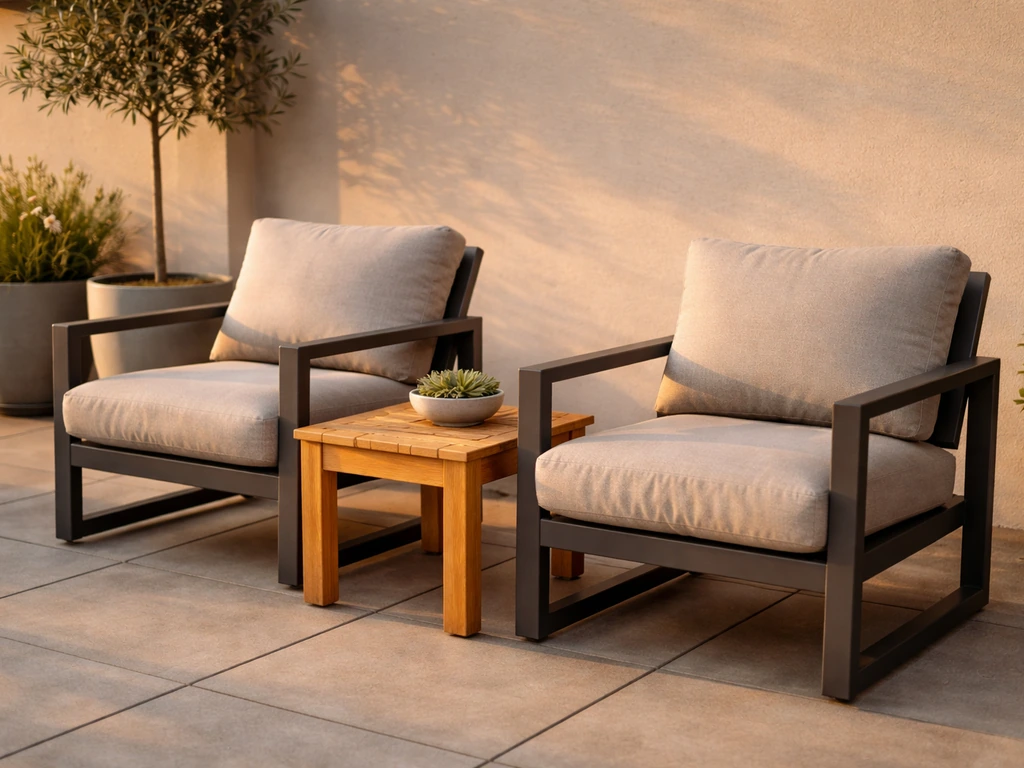
Restaurant Quality Patio Furniture: Choose, Verify, Maintain
How to pick restaurant quality patio furniture: compare wood, aluminum, wicker, cast iron, teak and rattan for comfort a
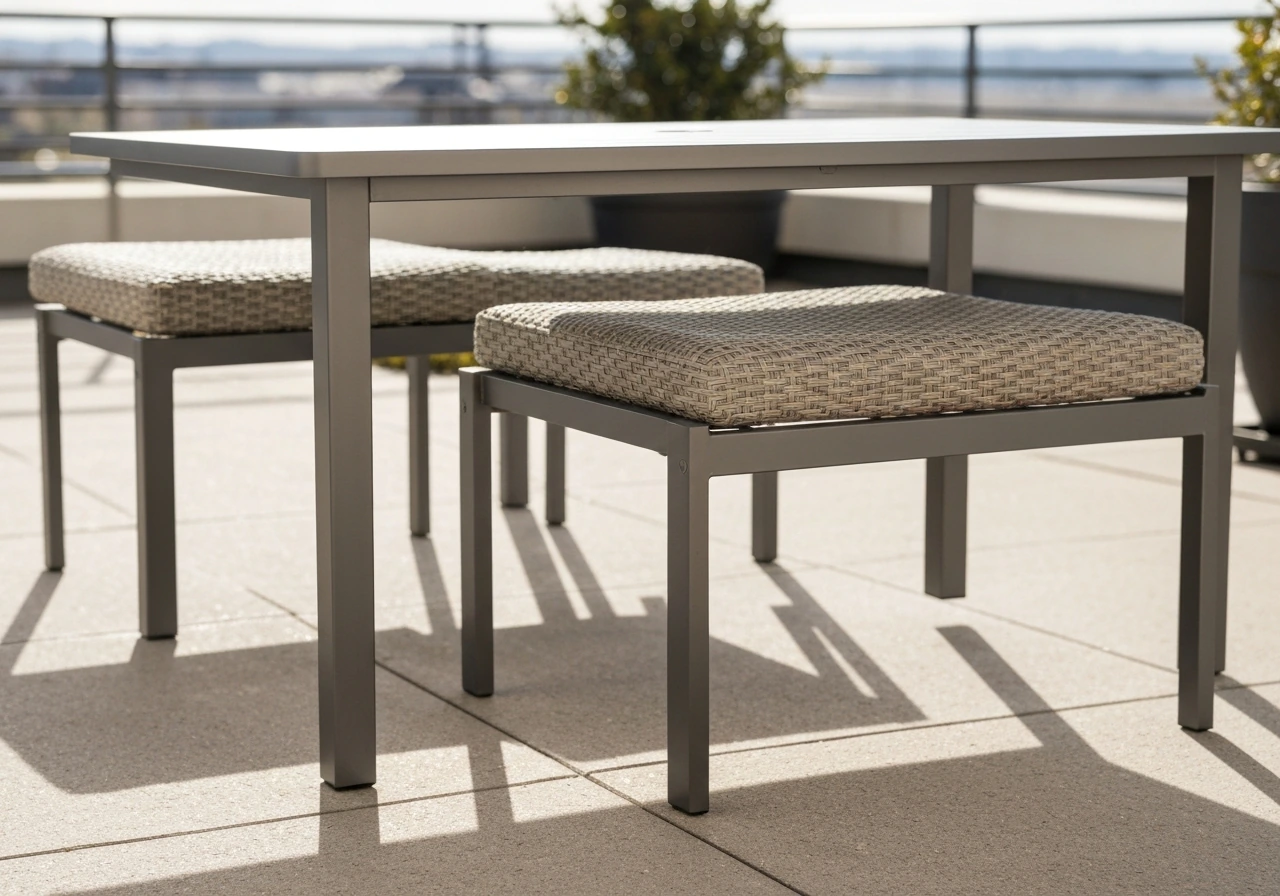
Cheap Quality Patio Furniture: How to Buy Durable Sets
Buy durable, weather-ready patio sets on a budget by checking materials, construction, coatings, and lifespan by region.
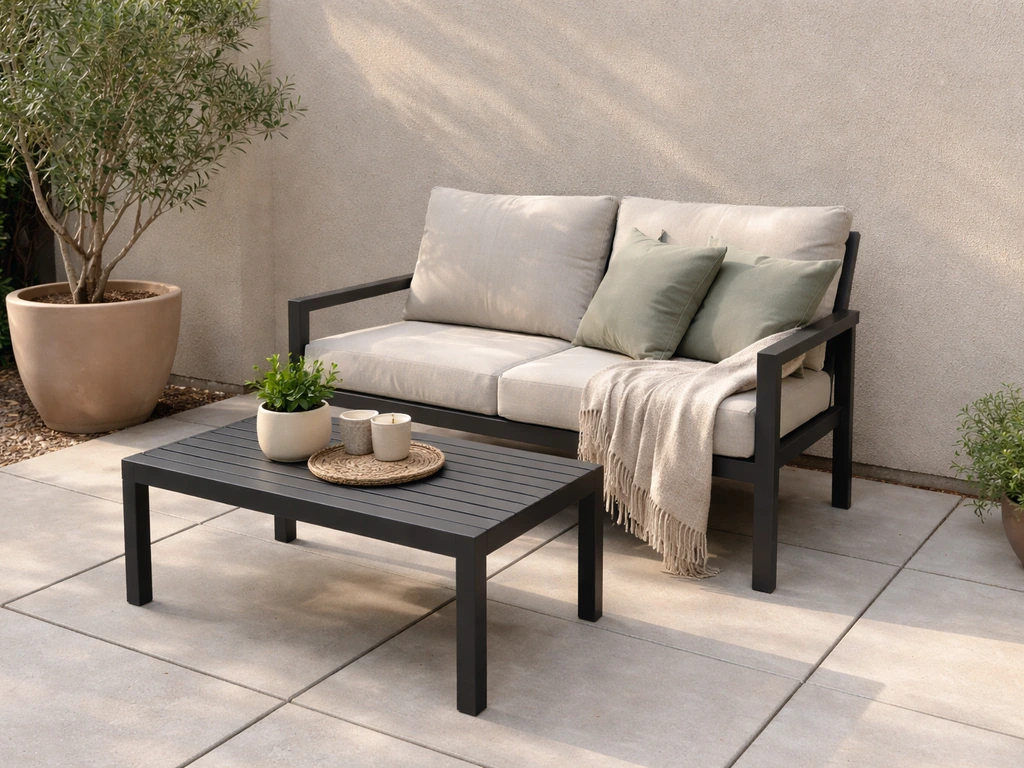
Affordable Quality Patio Furniture: Buy Smart for Long Life
Guide to buying affordable quality patio furniture: materials, specs, climate fit, and maintenance for long-lasting comf