
Teak is the better overall outdoor wood if you want to buy once and forget about it for decades. Eucalyptus is a legitimate, lower-cost alternative that performs well outdoors but asks more of you over time: more oiling, more attention to sourcing, and more realistic expectations about long-term durability. If your budget is $800 to $1,400 and you're willing to oil the furniture once or twice a year, a quality eucalyptus set is a solid buy. If you're spending $2,000 or more and want a material that practically takes care of itself, grade-A teak is worth every dollar.
Teak vs Eucalyptus Patio Furniture: Which Is Better?

Marcus Kellerman
17 May 2026
Which one should you buy? A quick decision framework
Before diving into the details, here's the short version. Neither wood is universally "better" for every buyer, but the right choice becomes obvious once you know your priorities.
| Buyer type | Best choice | Why |
|---|---|---|
| You want low maintenance and have the budget | Grade-A teak | Natural oils mean minimal upkeep; annual cleaning is usually enough |
| You want solid outdoor wood at a lower price | FSC-certified eucalyptus | Good durability, especially when kiln-dried and factory-oiled; just plan to re-oil annually |
| You live in a wet or coastal climate | Teak | Superior natural rot and moisture resistance; eucalyptus needs more help in high-humidity zones |
| You care deeply about sustainability | Either, with caveats | Eucalyptus is plantation-grown and fast-growing; teak should be FSC-certified to be responsible |
| You want furniture that lasts 25+ years outdoors | Teak | Documented multigenerational lifespan with proper heartwood grade |
| You're furnishing a rental or secondary home | Eucalyptus | Lower upfront cost, good 10–15 year lifespan with basic care |
One caveat worth stating upfront: grade matters enormously with teak. Grade-A teak (dense heartwood, no knots or sapwood) is a very different product from grade-B or grade-C teak that mixes in sapwood. The sapwood versions can crack and rot outdoors, which is why cheap "teak" sets sometimes get a bad reputation. Always confirm you're buying heartwood from a reputable seller before comparing teak and eucalyptus on price.
Durability and weather performance outdoors
Teak: why it's been the outdoor standard for generations
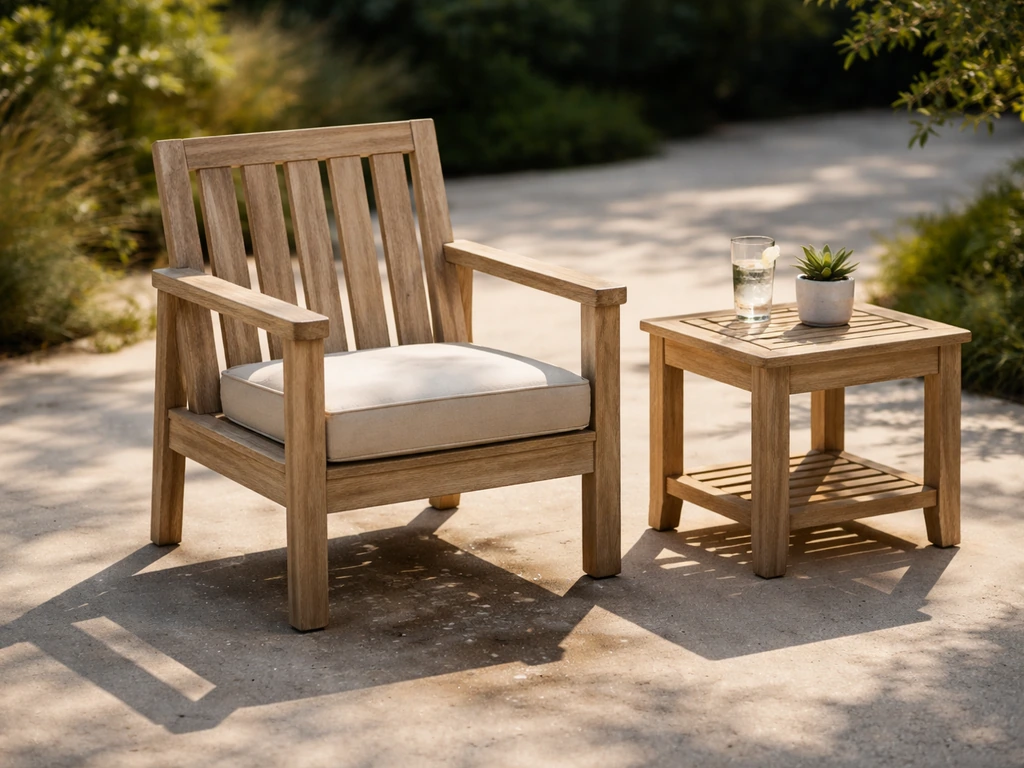
Teak's reputation comes from its chemistry. The wood is naturally packed with oils and silica, which together resist moisture absorption, fungal growth, and insect damage without any help from you. Carl Hansen and other premium makers specifically use only heartwood (the dense inner core of the log) rather than the lighter, less stable sapwood. That decision matters: heartwood teak has excellent dimensional stability, meaning it holds its shape across temperature swings and wet-dry cycles that would stress other woods significantly. In practice, a well-made grade-A teak table left on a covered patio in Seattle or Miami is going to be fine for decades.
Eucalyptus: genuinely durable, but more variable
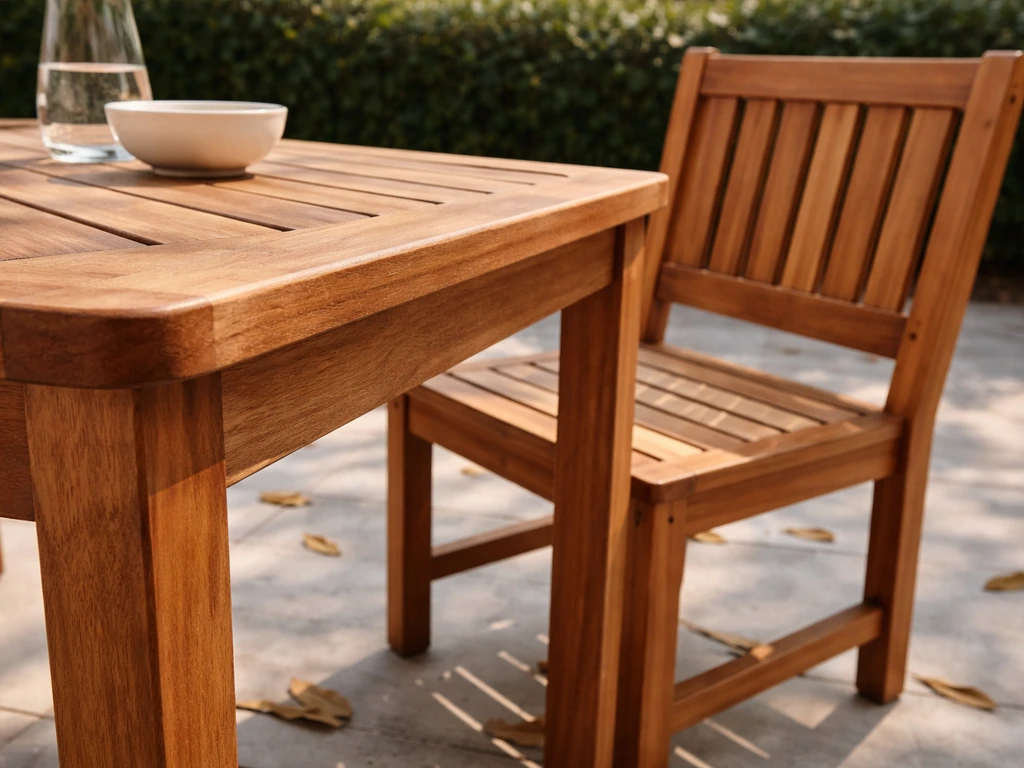
Eucalyptus is a legitimately hard, dense tropical hardwood with good natural weather resistance. It's used in decking and outdoor furniture across Europe and South America precisely because of those properties. Where eucalyptus gets complicated is variability. There are hundreds of eucalyptus species, and the quality of furniture-grade pieces depends heavily on kiln-drying practices, the species used, and whether the wood received factory oil treatment.
Outdoor Interiors, for example, kiln-dries its eucalyptus under strict guidelines and factory-treats it with an oil preservative before it reaches you. That head start matters, but it also means you're partly buying the manufacturer's process, not just the wood itself.
Thermal modification (heat-treating wood at around 200°C) can further improve eucalyptus durability against decay fungi and marine exposure, but not all eucalyptus furniture is thermally modified, so you need to ask.
Teknos rates plantation eucalyptus's outdoor dimensional stability as "medium/satisfying," which is honest but noticeably below teak's excellent rating. In real terms, eucalyptus will move slightly more with seasonal humidity changes, which is why the 3% shrinkage note that Outdoor Interiors includes in its care documentation exists. For most climates, this isn't a dealbreaker, but in extreme wet-dry cycles (think monsoon Arizona or humid coastal Louisiana), teak holds up more predictably over the long term.
How each wood ages: color, grain, and what to actually expect
The inevitable silver-gray question
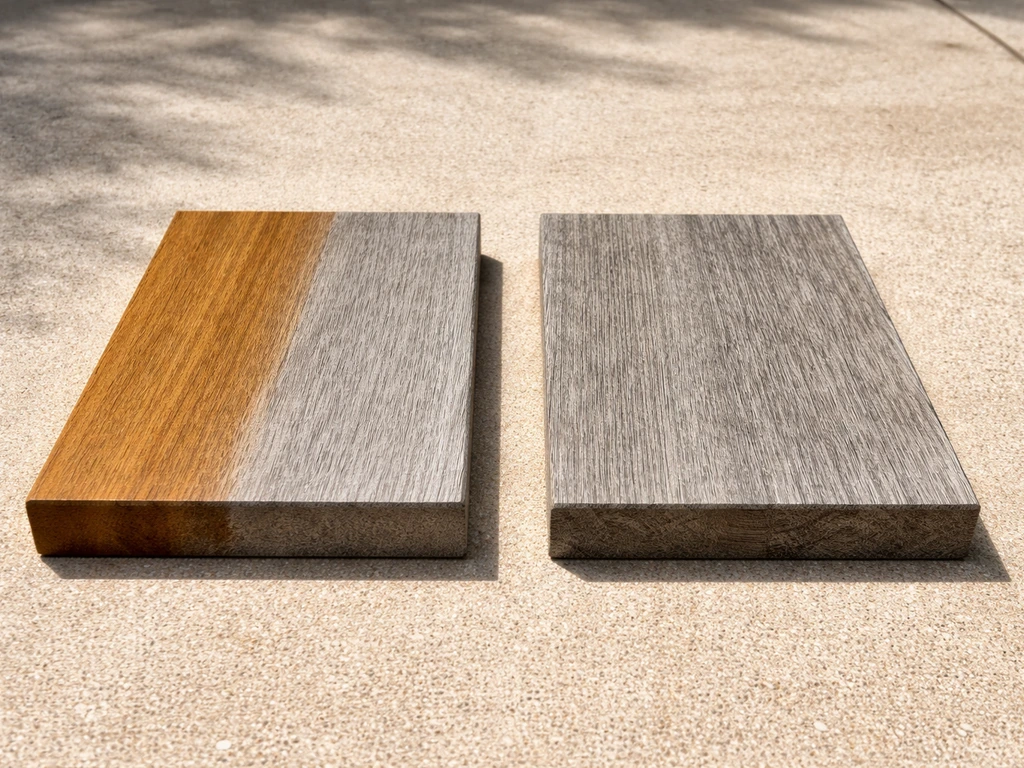
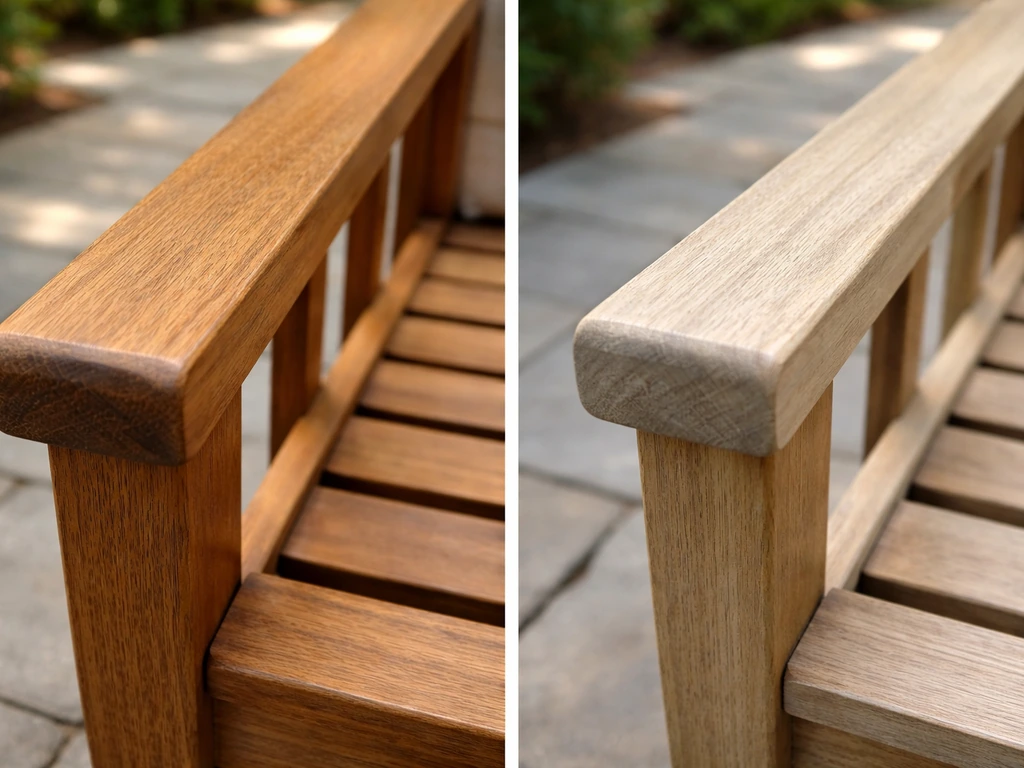
Both woods will gray out if left untreated outdoors. Teak starts as a warm honey-gold and weathers to a soft silver-gray over roughly 6 to 12 months of sun exposure, depending on your climate. This patina is completely natural, structurally harmless, and actually beloved by a lot of homeowners. Brands like Seasonal Living describe it as a "soft-silvery patina," and it genuinely looks good on classic garden benches and Adirondack-style furniture. If you love that weathered look, you can just clean teak once a year and let it go gray. If you want to keep the original honey color, an annual application of teak sealer or linseed oil handles that.
Eucalyptus also grays and can become dull if the finish dries out, but the aging pathway feels different. Because eucalyptus relies more on its factory finish and applied oils to look good, untreated eucalyptus can start to look dried and tired rather than elegantly weathered. Outdoor Interiors is upfront about this: their care guidance emphasizes periodic re-oiling specifically to prevent drying and surface degradation, not just for aesthetics. The difference matters: teak's oils are inside the wood, while eucalyptus's protection is more dependent on what's been applied to the surface.
Checking, cracking, and warping
Surface checking (small, shallow cracks along the grain) is normal in both woods and is considered expected aging rather than a defect. McGill Teak explicitly excludes checking from warranty coverage, framing it as a natural weathering outcome. These surface checks are cosmetic and don't affect structural integrity in well-made pieces. What you want to avoid is deep cracking or warping, which is more likely in lower-grade teak with sapwood or in eucalyptus that wasn't properly kiln-dried. Buy from brands that specify kiln-dried wood and heartwood-only construction, and you minimize the risk significantly.
Maintenance: what you're actually signing up for
Teak maintenance: genuinely minimal
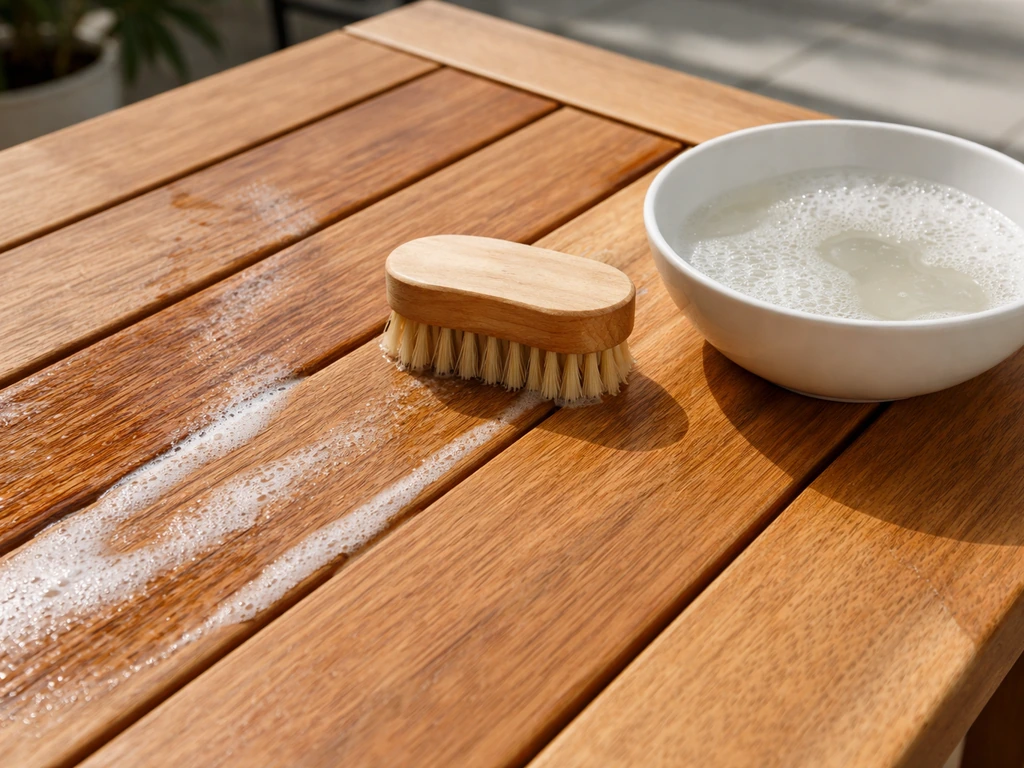
Teak's maintenance case is simple. Fritz Hansen and Paradise Teak both say annual cleaning is the baseline requirement. Paradise Teak says the only necessary maintenance for outdoor teak furniture is [annual cleaning](https://www. paradiseteak.
com/teak-information/), and that annual application of a teak sealer or linseed oil helps preserve the original honey color. A mild soap, some warm water, and a soft brush once a year keeps the wood clean and the surface from developing mildew stains. If you want to maintain the honey color, add a coat of teak oil or linseed oil after cleaning. If you're happy with silver-gray, skip the oil entirely.
That's it. The wood's natural oils do the heavy lifting, and quality heartwood teak doesn't need sealing or coating to survive outdoors.
Eucalyptus maintenance: more consistent effort required
Eucalyptus asks more of you. Outdoor Interiors recommends periodic treatment with teak oil, boiled linseed oil, or refined linseed oil to keep the wood from drying out and to slow the color-fading process. "Periodic" in practice means once or twice a year in most climates, more often in very sunny or very wet conditions. The wood arrives factory-treated, which gives you a head start, but that initial treatment depletes over time from sun and rain exposure. If you skip a few seasons of oiling, eucalyptus can dry, crack at the surface, and look noticeably worse than it would have with basic care. This isn't a fatal flaw, but it's a real maintenance commitment that teak doesn't require.
- Annual cleaning with mild soap and water (both woods)
- Teak: optional oil or sealer once a year if you want to preserve honey color
- Eucalyptus: re-oil with teak or linseed oil 1-2 times per year to prevent drying
- Both woods benefit from furniture covers during winter or extended periods of non-use
- Store cushions indoors; the wood itself can stay out year-round in most climates
Sustainability and sourcing: what the labels actually mean
This is where eucalyptus has a genuine edge over conventionally sourced teak, and where both materials require you to do a little homework. Old-growth teak from Southeast Asia has been heavily exploited, which is why FSC certification matters so much when you're buying teak today. Brands like Outdoor Interiors specifically call out FSC-certified teak as their sourcing standard, and that's the right benchmark to look for. Avoid any teak that can't trace its origin or offers vague claims about being "sustainably harvested" without a third-party certification to back it up.
Eucalyptus comes out better here by default. It's a fast-growing plantation species, meaning it doesn't require harvesting old-growth forests. The eucalyptus trees used in furniture production can reach harvestable size in 10 to 15 years, compared to the 40 to 80 years teak takes. Amazonia and other brands market their eucalyptus as 100% FSC-certified, which adds a chain-of-custody verification layer on top of the plantation-sourcing story.
PEFC certification is another legitimate standard to look for. The key takeaway: FSC or PEFC logos on eucalyptus furniture are meaningful if the brand can back them up with documentation, not just a label. IKEA-style traceability audits (supplier code compliance, legal verification) are a reasonable baseline for what responsible sourcing controls should look like in practice.
If sustainability is a top priority and your budget is limited, FSC-certified eucalyptus is probably the most responsible choice per dollar you can make in outdoor wood furniture today. If you're buying teak, insist on FSC certification and heartwood-only construction, and you're making a responsible long-term choice too.
Cost, lifespan, and long-term value
What you'll pay in 2026
Eucalyptus patio dining sets typically run from about $800 to $1,400 for a quality 5- to 7-piece set. A 7-piece FSC-certified eucalyptus set from The Home Depot can be found around $830, while a 5-piece set from Lamps Plus comes in around $1,380. These are real, usable price points for a homeowner who wants solid wood without the premium. Teak costs more. A 7-piece grade-A teak dining set runs roughly $2,000 to $2,800 at mass retail (Walmart shows $1,987 to $2,770 for 7-piece sets), and premium brand teak from makers like Carl Hansen or Fritz Hansen runs substantially higher.
Lifespan and cost per year
This is where the math gets interesting. Well-maintained grade-A teak routinely lasts 25 to 50 years outdoors. Some brands offer lifetime warranties (with exclusions for normal weathering like graying and checking, which are cosmetic anyway). If you spend $2,500 on a teak set that lasts 30 years, you're paying about $83 per year. Quality eucalyptus, maintained with regular oiling, realistically lasts 10 to 15 years in most climates. A $1,000 eucalyptus set over 12 years works out to about $83 per year as well, but only if you stay on top of the maintenance. Neglect the oiling and you might get 7 to 8 years before the wood degrades meaningfully, which changes that math quickly.
| Eucalyptus | Grade-A Teak | |
|---|---|---|
| Typical price (5-7 piece dining set) | $800–$1,400 | $2,000–$2,800+ |
| Expected outdoor lifespan (with care) | 10–15 years | 25–50 years |
| Approximate cost per year | $67–$93/yr | $50–$112/yr |
| Maintenance frequency | Oil 1-2x/year + annual cleaning | Annual cleaning (oil optional) |
| Warranty typical coverage | 1–5 years (varies by brand) | Lifetime to 10 years (varies; excludes weathering) |
| Sustainability profile | Fast-growing plantation wood; FSC available | Slow-growing; FSC certification essential |
What to look for when shopping
For teak: confirm the grade. Ask specifically for grade-A heartwood teak and verify the brand uses only heartwood construction, not a mix of sapwood. Brands that are vague about their grade should be treated with skepticism. For eucalyptus: look for FSC certification, kiln-dried construction, and confirmation that the wood was factory-treated with an oil preservative before shipping. Ask about the species used if you can, as some eucalyptus species are denser and more durable than others. For both: check warranty language carefully. "Lifetime warranty" on teak sometimes covers structural defects only, while excluding the normal weathering effects (graying, checking) that are the most common customer concerns. That's fine as long as you understand what's covered going in.
How teak and eucalyptus compare to other wood options
Teak and eucalyptus aren't the only hardwoods competing for your patio. Acacia is another popular outdoor wood at similar or lower price points than eucalyptus, with its own tradeoffs around durability and maintenance. If you're also considering acacia, reviewing its durability and maintenance tradeoffs can help you choose confidently between acacia, teak, and eucalyptus acacia wood patio furniture pros and cons.
If you're exploring the full landscape of outdoor wood furniture, it's worth understanding how acacia stacks up against both teak and eucalyptus, since it often shows up in the same retail spaces and price brackets. Each wood has different natural oil content, density, and grain behavior, and the right choice depends on your climate and how much maintenance you're realistically willing to do.
The bottom line
If you can stretch to grade-A teak, do it. The combination of minimal maintenance, exceptional longevity, and the ability to simply clean it once a year and let it live on your patio is genuinely hard to beat. Over a 25-year horizon, it's often the cheaper option when you account for replacement costs. If $2,000+ is out of reach right now, a quality FSC-certified eucalyptus set is a smart, responsible buy, not a compromise.
Just commit to oiling it once or twice a year, and it will reward you with a solid decade-plus of outdoor use. Either way, prioritize certification, kiln-dried construction, and heartwood-only claims before you buy, and you'll avoid the cheap versions of both woods that give the entire category a bad name.
FAQ
If both woods turn gray outdoors, how do their “aging styles” differ in real life?
Teak can gray while still staying structurally sound, and eucalyptus often looks “dry and tired” sooner if you skip re-oiling. If you want the same visual aging pattern year after year, teak is more forgiving because it doesn’t depend as heavily on maintaining an applied surface treatment.
Do I need to oil eucalyptus more if my patio is covered but still gets humid?
Yes, but what matters is whether the space dries out between storms. In very humid climates, eucalyptus that was factory-oiled still benefits from a more consistent re-oiling schedule, typically up to twice a year, while teak usually only needs a yearly clean (plus oil only if you want to keep color).
Can I use teak oil on eucalyptus, and is there a downside to over-oiling?
Use teak oil or linseed oil on eucalyptus, but avoid stacking heavy film products repeatedly. If the finish is already coated, additional oil can build up unevenly and make the surface feel tacky, so apply lightly and follow the product instructions for timing between coats.
What signs indicate I should avoid or return a piece of teak or eucalyptus?
For teak, deep cracking or warping is usually a sign you did not receive true grade-A heartwood (or the piece was poorly made). For eucalyptus, deep cracks often point to insufficient kiln drying or inadequate factory treatment, so ask the seller what species and kiln-dry standard they use before buying.
What is the best order of operations for cleaning, drying, and re-oiling?
Plan on cleaning before you oil, and let it dry fully. A practical approach is: rinse off pollen and grime, scrub lightly with mild soap and a soft brush, rinse, wait until completely dry, then apply oil thinly. Oiling over damp wood increases uneven dark spots and can slow proper penetration.
How do I know whether to oil eucalyptus based on sun exposure, not just time?
Switch to a “maintenance schedule” based on sunlight exposure rather than the calendar. In hot, bright, or reflected-sun conditions, eucalyptus commonly needs re-oiling earlier than expected, while teak’s annual cleaning remains a stable baseline for most patios.
How do pre-finished products affect the teak vs eucalyptus decision?
Yes. If a teak set is marketed as “teak oil” or “sealed teak,” it may already have a surface treatment that changes how quickly it weathers. The key is to confirm the construction claim (heartwood-only, grade) and treat any pre-finish as something that will eventually wear off with time.
What should I look for in warranty terms so I do not get surprised later?
Warranty wording matters. Some “lifetime” teak warranties exclude normal weathering like graying and surface checking, and may only cover structural issues. Before purchase, ask what counts as structural failure versus cosmetic aging, and request the warranty exclusions in writing.
What exact questions should I ask the retailer before buying teak vs eucalyptus?
Yes, and it helps you avoid low-grade teak and inconsistent eucalyptus batches. Ask whether the seller can provide grade-A heartwood specification for teak, the eucalyptus species for eucalyptus, and proof of kiln-drying and factory oil treatment. If they cannot answer these directly, treat the listing as a higher risk purchase.
How can I spot a “cheap” version of either wood before it arrives?
A good test is to look for clear documentation and manufacturing specifics. For teak, confirm heartwood-only and grade-A, and look for credible certification. For eucalyptus, require kiln-dried construction, confirmation of factory oil preservative treatment, and ideally FSC or PEFC documentation rather than a vague sustainability claim.
Is surface checking always just cosmetic, or can it signal a bigger problem?
Surface checking is normal in both, but you should still inspect for depth and movement. If cracks are shallow and the furniture remains level, it is likely cosmetic aging. If you see widening splits, loosened joinery, or noticeable rocking, the issue is more likely material quality or improper drying.
Which wood is better if I want the lowest-effort long-term routine?
If you do not want regular upkeep, prioritize grade-A teak and buy from a seller that clearly states heartwood-only construction. If you want eucalyptus for its price, budget for re-oiling once or twice yearly, and understand that neglect usually shortens the usable lifespan more than with teak.
Does storing patio furniture under a cover change the maintenance needs for teak vs eucalyptus?
Storing outdoors in a dry, covered area generally works better than storing fully exposed. If you leave furniture uncovered during frequent wet seasons, eucalyptus is more likely to look dull sooner without re-oiling, while teak will still cope but may gray faster. If you can, use breathable covers and keep the furniture off standing water.
Next Articles
Is Teak Patio Furniture Good? Durable, Smart Buying Guide
Is teak patio furniture good? Evidence-based verdict, lifespan, care, buying tips, comparisons, and eco guidance.
How Long Does Teak Patio Furniture Last? Lifespan Guide
Teak patio lifespan ranges, factors that shorten or extend durability, and a maintenance plan to protect joints and fini
High Quality Teak Patio Furniture: How to Choose and Care
Checklist for buying high quality teak patio furniture, spot real construction, compare materials, and maintain it by cl