
Top rated cast aluminum patio furniture combines ornate, mold-cast construction with genuine corrosion resistance, making it one of the most durable and low-maintenance choices available for outdoor living. If you want furniture that survives coastal salt air, heavy UV exposure, and freeze-thaw cycles without rusting, warping, or demanding constant refinishing, cast aluminum belongs near the top of your list. The best pieces, properly powder-coated and assembled with marine-grade fasteners, routinely last 15 to 25 years with only basic seasonal care.
Top Rated Cast Aluminum Patio Furniture: Best Picks & Care

Marcus Kellerman
25 Jul 2026
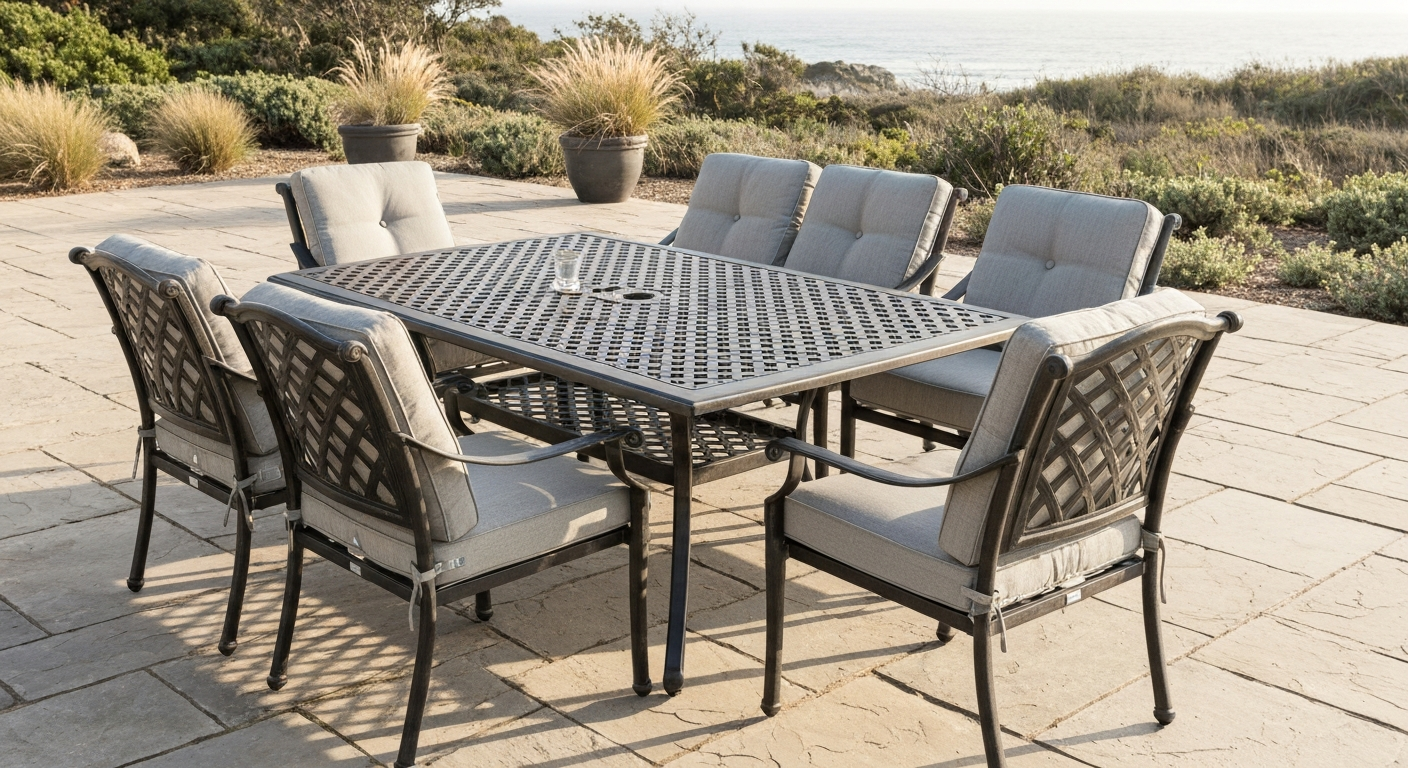
What cast aluminum actually is (and how it differs from other metals)
Cast aluminum furniture starts as molten aluminum alloy poured into a mold, which can be sand, permanent metal, or a die. The mold defines the shape entirely, which is why cast aluminum chairs and tables can have intricate scrollwork, curved legs, and detailed botanical patterns that would be impossible to achieve by bending or extruding a metal profile. Once cooled and removed from the mold, the casting is cleaned, ground smooth, and finished, usually with powder coat.
The alloys most commonly used in structural castings are A356 (an aluminum-silicon-magnesium alloy valued for its strength-to-weight ratio and corrosion resistance) and A380, a die-casting alloy suited to high-volume, intricate parts. Both resist oxidation far better than steel or iron. The key practical difference between casting methods is surface quality and mechanical consistency: sand casting is flexible but can leave a rougher surface, permanent-mold casting improves tolerance and finish, and die casting achieves the tightest tolerances at high volume.
A lot of buyers confuse cast aluminum with extruded or fabricated aluminum, and the distinction matters when you're shopping. Extruded aluminum is pushed through a die to create a constant cross-section, like a tube or I-beam, then cut and welded into furniture frames. It's lighter and usually less expensive than cast, but it can't achieve the same sculptural complexity. High-end patio sets sometimes use cast joints and connection points with extruded frame members, which is a sensible engineering compromise. Pure cast aluminum sets, where each component is individually cast, tend to be heavier and more decorative.
Versus wrought or cast iron: iron is dramatically heavier (about three times the density of aluminum), more prone to rust without constant maintenance, and difficult to move. Cast aluminum delivers a similar ornate aesthetic at roughly one-third the weight, with inherent corrosion resistance rather than painted-on protection. Versus teak or other hardwoods: wood requires periodic oiling or sealing, is vulnerable to mold and moisture intrusion at joints, and eventually degrades structurally. Aluminum never rots. Versus resin wicker or rattan-wrapped frames: wicker is lighter and often more comfortable for casual lounging, but the woven surface degrades under intense UV and salt air faster than a quality powder-coated aluminum casting.
Why people choose cast aluminum (and the real trade-offs)
The appeal of cast aluminum comes down to a combination of properties that are genuinely hard to find together in one material. It doesn't rust, it tolerates extreme weather, it holds decorative detail well, and a quality set can outlast most of the wooden decks it sits on. Here's an honest breakdown.
- Corrosion resistance: Aluminum naturally forms an oxide layer that resists rust. With proper powder coat and pretreatment, even coastal salt-air exposure is manageable.
- Weight: Cast aluminum is heavier than extruded aluminum furniture (and noticeably heavier than resin) but far lighter than cast iron or wrought iron, making occasional repositioning practical.
- Decorative range: Casting allows scrollwork, floral motifs, cabriole legs, and lattice backs that give outdoor furniture a traditional or transitional aesthetic not achievable with welded tube frames.
- Low maintenance: Annual cleaning, occasional touch-up on chips, and cushion storage in winter are typically all that's required.
- Longevity: Quality cast aluminum sets regularly last 15 to 25 years. Spread that against the sticker price and the cost-per-year math is often better than cheaper alternatives replaced every 5 to 7 years.
- Recyclability: Aluminum is one of the most recyclable metals, so end-of-life disposal is straightforward.
The real trade-offs deserve equal attention. Cast aluminum is not cheap at the top end: a quality 7-piece dining set from a respected brand will run $1,500 to $2,500 or more. Budget pieces in the $500 to $700 range often cut corners on casting wall thickness, pretreatment, and hardware, which you pay for later. The material also gets very hot in direct sun, so table and arm surfaces need either shade or covering on peak-heat days. And while cast aluminum holds traditional aesthetic detail exceptionally well, clean-lined contemporary or Scandinavian looks are usually better executed in extruded aluminum or teak.
How to identify genuinely high-quality cast aluminum pieces
Quality in cast aluminum furniture is mostly invisible from marketing photos, which is why it's worth knowing what to look for at the technical level before you spend serious money. For shopping recommendations and vetted brands, see our guide to high quality aluminum patio furniture.
Casting quality and wall thickness
Heavier individual components are usually a good sign, not a liability. Thicker-walled castings are structurally stronger and resist denting or cracking at stress points like chair leg-to-seat junctions. Tap the underside of a chair seat or the leg of a table with your knuckle: a dull, solid sound suggests adequate wall thickness; a thin, hollow ring suggests the casting was pared down for cost. Look at joint areas specifically. Where a leg meets a frame rail or a back splat meets the seat, the casting should be clearly thicker, not a simple butt junction.
Powder coat finish
The powder coat is the first line of defense. Powder‑coat adhesion is commonly evaluated using standardized tests such as ASTM D3359 (adhesion/tape test) and ASTM D2794 (impact resistance); see Paint adhesion testing, Wikipedia (references ASTM D3359). Premium outdoor furniture manufacturers apply polyester powder coat at 60 to 100 micrometers (roughly 2.4 to 3.9 mils) dry film thickness. Super-durable TGIC-polyester or TGIC-free super-durable polyester formulations hold color and gloss significantly longer than standard polyester under UV exposure. At the absolute top tier, fluoropolymer (PVDF) coatings offer the best long-term UV and weathering performance, though these are rare in residential furniture and more common in architectural applications. Before a powder coat is applied, good manufacturers pre-treat the casting: chromate conversion coatings (sometimes called Alodine, per MIL-DTL-5541) or chromate-free zirconium chemistries improve adhesion and salt-spray resistance substantially compared to untreated aluminum. A brand that mentions pretreatment or references salt-spray testing (ASTM B117) or UV testing (ASTM G154 or G155) in its product documentation is telling you something meaningful.
Fasteners
This detail gets almost no attention in product listings, but fastener choice directly determines long-term performance, especially in coastal or humid environments. Quality cast aluminum furniture uses 316 stainless steel or silicon bronze fasteners at structural connections. Both are covered under standards like ASTM F467/F468 for nonferrous hardware. Avoid pieces that use standard zinc-plated or unspecified steel hardware: these will rust and stain the finish within a few seasons near salt air. If a brand's spec sheet doesn't mention fastener material and customer service can't tell you, that's a red flag.
Cushions
Cushion quality varies widely and is often the weak point of even premium cast aluminum sets. Look for solution-dyed acrylic fabric (Sunbrella is the category benchmark), which resists UV fading and mildew far better than polyester covers. Interior foam should be either quick-dry open-cell or a combination of high-density foam with a weather-resistant wrap. Avoid sets where the cushion foam feels soft and dense like interior upholstery: that material will absorb water, grow mildew, and break down quickly outdoors.
Warranties as a quality proxy
Warranty terms are one of the clearest signals of manufacturer confidence. Woodard, one of the most established names in cast aluminum, offers a 15-year limited structural warranty on aluminum frames and a 7-year finish warranty. Brown Jordan publishes similar residential structural coverage at up to 15 years for cast and extruded aluminum frames. A brand offering only 1 to 2 years on structural components is telling you its own confidence level. Read the full warranty document before purchase, not just the headline number: exclusions for commercial use, improper cleaning, and finish wear can significantly reduce effective coverage.
Buyer's inspection checklist
Whether you're handling pieces in a showroom or evaluating photos and descriptions in an online listing, run through this checklist before committing.
- Casting detail clarity: Scroll and decorative motifs should be crisp, not blurry or filled with excess material. Blurred detail suggests poor mold quality or rushed finishing.
- Joint inspection: Check where legs meet frames, where arms attach to backs, and where stretcher rails connect. Joints should look integral to the casting, not added after the fact with visible welds or filler.
- Wall thickness at stress points: Squeeze or press gently at chair arms and leg tops. There should be no flex or give. If the piece flexes noticeably under hand pressure, it will flex more under body weight.
- Surface finish consistency: Run your hand over the powder coat. It should feel uniformly smooth with no gritty texture, bubbling, thin spots, or visible bare metal edges at cut points.
- Fastener material: Look for silver-toned hardware at visible bolts or screws. Ask the retailer or check the spec sheet. If it says stainless steel, confirm grade 316 for coastal applications.
- Hardware tightness: All fasteners should be tight with no play at joints. Loose hardware from day one will only worsen.
- Glide feet: Chair and table legs should have rubber or plastic glide feet attached, protecting the powder coat and your deck surface.
- Cushion cover fabric: Look for 'solution-dyed acrylic' or specifically the Sunbrella brand label. Check for double-stitched seams and rust-proof zipper pulls.
- Warranty documentation: Confirm the warranty term, what it covers (structural vs. finish), and whether it's available in writing before purchase.
- Weight-to-size ratio: A well-built cast aluminum dining chair typically weighs 15 to 25 pounds. Significantly lighter chairs often have thinner wall castings.
Top-rated product categories and brands worth your money
These recommendations are based on construction quality, warranty terms, material specifications, and real-world performance feedback, not promotional relationships. The cast aluminum furniture market is wide, from budget imports to genuine heirloom-grade American and European-designed pieces. Here's how the major categories break down and which brands consistently deliver. See our guide to the best cast aluminum patio furniture brands for curated brand recommendations and buying advice. For a curated guide to the best cast aluminum patio furniture, see our top picks and buying advice in our dedicated recommendations. For a concise buyer's guide and curated recommendations on the best aluminum patio furniture, see our roundup of top-rated options and buying tips.
Cast aluminum dining sets
Dining sets represent the largest purchase in this category and the widest quality spread. Budget sets in the $700 to $1,000 range (brands like GatherCraft, available at Wayfair and Home Depot) offer a reasonable entry point for low-exposure patios with moderate climate demands, but finish thickness and fastener specs are rarely disclosed. Mid-range sets from $1,200 to $2,000, including offerings from Agio and Telescope Casual, typically improve on casting detail and use better cushion fabrics. At the premium level, Woodard and Brown Jordan dining sets ($2,000 to $3,500+) back their products with 15-year structural warranties, and their spec documentation actually names pretreatment processes and coating types. For a set expected to last 20 years, that top-tier price works out to roughly $100 to $175 per year, which is hard to beat versus mid-quality replacements every 6 to 8 years.
Conversation and seating sets
Cast aluminum conversation sets (typically 4 to 6 chairs or loveseats around a coffee table) work well in traditional and transitional outdoor design schemes. The ornate casting aesthetic pairs naturally with covered porches and landscaped patio areas. Telescope Casual makes well-regarded conversation sets in this space with disclosed powder-coat specs. Homecrest and OW Lee produce quality pieces with good coastal performance records. For buyers who want deep-seating comfort close to what sectional wicker delivers but with better material longevity, a cast aluminum set with thick cushioned seats is a strong long-term choice.
Chaise lounges
Cast aluminum chaise lounges occupy a specific niche: they're pool-side or resort-style pieces that need to handle constant moisture, sunscreen chemical exposure, and UV without degrading. Quality here means the adjustable back mechanism uses corrosion-resistant hardware throughout, not just at the frame connections. Woodard and Brown Jordan both produce cast aluminum chaise lounges in the $400 to $900 range per unit that hold up well at poolside with quality cushions. Look for adjustable positions that work smoothly: binding or stiff adjustment is often the first functional failure on cheaper chaises. Retail pricing for cast aluminum chaises generally ranges from about $300 at the budget end to over $600 for mid-to-premium pieces.
Benches
Cast aluminum garden benches are one of the best value propositions in this material category. A quality 4-foot bench from a brand like Hanamint or Woodard, priced between $250 and $600, can anchor a garden path, courtyard, or entryway and genuinely last decades with zero structural maintenance. The ornate scroll and leaf designs achievable in cast aluminum make these a natural fit for formal garden settings. Avoid very cheap cast aluminum benches under $120: at that price point, casting wall thickness and hardware quality are almost always compromised.
Cafe sets
A bistro or cafe set (two chairs and a small round table) is often the right solution for balconies, small patios, or supplemental seating. Cast aluminum cafe sets in the $200 to $500 range from brands like Crosley, Tangkula, and Christopher Knight Home occupy the accessible mid-market. For genuine long-term value, step up to sets with disclosed powder-coat specs and stainless hardware. The table tops on many cafe sets are cast aluminum as well, which is preferable to glass or tile inserts that can crack and are harder to replace.
Quick top-picks summary by category
| Category | Best for budget | Best mid-range | Best premium | Key quality indicator |
|---|---|---|---|---|
| Dining set (7-pc) | GatherCraft (~$700–$1,000) | Agio / Telescope Casual (~$1,200–$2,000) | Woodard / Brown Jordan (~$2,000–$3,500) | 15-yr structural warranty, disclosed pretreatment |
| Conversation set | Tangkula / Devoko (~$500–$900) | Homecrest / OW Lee (~$1,000–$2,000) | Brown Jordan / Woodard (~$2,000+) | 316 SS fasteners, solution-dyed cushions |
| Chaise lounge | Basic import (~$300–$400) | Telescope Casual (~$450–$650) | Woodard / Brown Jordan (~$650–$900) | Corrosion-resistant adjustment hardware |
| Garden bench | Crosley / import (~$120–$200) | Hanamint (~$250–$400) | Woodard (~$400–$600) | Integral casting at joints, thick wall sections |
| Cafe / bistro set | Christopher Knight / Tangkula (~$150–$300) | Crosley / Agio (~$300–$500) | Woodard / OW Lee (~$500–$800) | Powder-coat spec disclosure, all-cast tabletop |
How your climate should drive your buying decision
Cast aluminum performs well across most climates, but what 'good enough' means for a patio in Phoenix is different from what it means on a dock in Pensacola. Here's what to prioritize by region.
Coastal and salt-air environments
Salt air is the most demanding scenario for any outdoor metal. Chloride ions attack both coatings and base metals, and galvanic corrosion at dissimilar-metal joints accelerates dramatically in marine environments. For coastal installations within roughly a mile of salt water, the non-negotiables are: 316 stainless steel fasteners throughout (not 304, which tea-stains and offers less chloride resistance), a disclosed pretreatment process before powder coat, and a super-durable or PVDF topcoat. Ask for documentation on ASTM B117 salt-spray test performance. Brands like Woodard and Brown Jordan that publish coastal-use guidance and recommend their marine-spec products for seaside applications are the safer choice. You will also want to rinse pieces with fresh water monthly to remove salt deposit accumulation.
High UV and sun-intense climates (Southwest, Florida, Hawaii)
In high-UV climates, the powder coat fades and chalks before the aluminum itself shows any degradation, so finish quality is the critical variable. Specify TGIC-free super-durable polyester or PVDF powder coat, and look for brands that reference ASTM G154 or G155 UV weathering test data. Lighter-colored finishes typically show chalking more visibly than darker ones; darker finishes absorb more heat but hide surface aging longer. Cushion fabric UV resistance is equally critical: solution-dyed acrylic fabrics retain color dramatically longer than solution-printed or surface-dyed polyester in full-sun applications in the Southwest or Florida.
Freeze-thaw climates (Upper Midwest, Mountain West, Northeast)
Cast aluminum handles freeze-thaw cycling far better than cast iron (which can crack) or wood (which swells and checks). The concern is more about moisture penetrating any finish chips or micro-cracks in the powder coat and then expanding as ice. A thick, well-adhered powder coat with no damage chips entering winter is important. For buyers in freeze-thaw climates, seasonal storage of cushions is essential, and moving furniture to a covered area or using fitted covers prevents both coating stress and hardware corrosion from standing water and ice. Aluminum patio furniture that was never stored outdoors through a northeastern winter will always look better ten years in than furniture left fully exposed.
High-humidity climates (Gulf Coast, Southeast, Pacific Northwest)
In persistently humid environments, the primary risks are mold growth on cushions and moisture retention at joints. Aluminum itself is relatively indifferent to humidity, but fastener and hardware corrosion can be accelerated where humidity combines with even minor salt or pollution. Open-weave sling seating (which dries faster than cushion pads) is worth considering for pool areas and very humid patios. If you prefer cushions, prioritize quick-dry foam cores and keep them covered or stored when not in use.
Arid and low-humidity climates (Desert Southwest)
In desert climates, the main challenge is UV degradation of finishes and fabrics, and heat absorption by the metal. Cast aluminum in direct desert sun can reach surface temperatures that are uncomfortable to touch. Shade structures, lighter finish colors, and a quality UV-resistant powder coat are more important than corrosion resistance in arid zones. The good news: fastener corrosion and moisture-related issues are minimal, and pieces left uncovered year-round will still look structurally sound for many years as long as the finish holds.
Cast aluminum vs. other popular patio materials
Understanding how cast aluminum compares to the alternatives helps clarify whether it's the right call for your specific situation. This is not a 'winner takes all' comparison: each material has contexts where it genuinely outperforms.
| Material | Weight | Corrosion resistance | Maintenance level | Aesthetic range | Typical lifespan | Approximate cost tier |
|---|---|---|---|---|---|---|
| Cast aluminum | Medium (15–30 lbs/chair) | Excellent (with coating) | Low | Ornate to transitional | 15–25 years | Mid to premium |
| Wrought / cast iron | Heavy (30–60 lbs/chair) | Poor without paint | High (annual painting) | Ornate, traditional | 20+ years if maintained | Mid |
| Teak (Grade A) | Heavy (20–35 lbs/chair) | Excellent (natural oils) | Low to medium | Clean, contemporary | 25–50 years | Premium |
| Resin wicker / rattan | Light (10–18 lbs/chair) | Good (resin only) | Low to medium | Casual, coastal | 7–15 years | Budget to mid |
| Extruded aluminum | Light (8–15 lbs/chair) | Excellent (with coating) | Low | Modern, minimalist | 15–25 years | Mid |
My honest recommendation: if your aesthetic leans traditional or transitional and you want the lowest possible long-term maintenance cost, cast aluminum is the right call. If you want a clean-line modern look, extruded aluminum or teak handles that better. If budget is tight and the furniture will mostly be covered or stored, resin wicker at the mid-range is a reasonable short-term play, but it won't last like aluminum will. Cast iron is essentially obsolete for new purchases given the weight and maintenance demands: cast aluminum delivers the same look at a fraction of the upkeep.
Maintenance, repair, and long-term care
One of the clearest advantages of cast aluminum is how little it demands. A realistic annual maintenance routine takes less than a day for a full dining set and extends the furniture's life by decades.
Routine cleaning
Wash cast aluminum frames two to four times per year with a mild dish soap solution and a soft brush or cloth. For coastal environments, increase this to monthly rinses with fresh water to flush salt accumulation. Avoid pressure washing directly on finish chips or at tight angles to joints: you can force water behind the coating and start corrosion that otherwise wouldn't occur. Never use bleach, abrasive cleaners, or steel wool on powder-coated aluminum. For stubborn mildew on frames (rare, but possible in humid climates), a diluted white vinegar solution works without damaging the powder coat.
Touching up the powder coat
Touch-up paint for powder-coated aluminum is available from most furniture brands and online in standard colors. The realistic expectation for touch-up is that it prevents corrosion at the chip site rather than making the spot visually invisible: touch-up paint is liquid and will never fully replicate the texture and gloss of factory powder coat. Clean the chipped area with isopropyl alcohol, allow it to dry completely, apply a thin coat of matching touch-up paint with a fine brush, and let it cure before the surface gets wet. For larger areas of coating failure (over an inch in diameter), professional powder coat re-coating at a local metal finishing shop is worth the cost, typically $50 to $150 per piece, to protect what is otherwise still-sound aluminum.
Replacing hardware
If fasteners begin to show rust staining or fail to torque properly, replace them before the problem spreads. Match the replacement to the original specification: 316 stainless for coastal pieces, standard stainless for inland use. Most furniture hardware uses M5, M6, or M8 metric bolts, though some American brands use standard (SAE) sizes. Hardware stores and fastener specialty suppliers stock 316 SS hardware affordably. When re-torquing, hand-tight plus a quarter to half turn is typically sufficient for furniture connections: over-torquing into aluminum castings can crack the boss or strip the thread.
Addressing corrosion
Aluminum corrosion typically appears as white powdery oxidation (aluminum oxide) at bare or scratched metal, or as pitting in salt-air environments. Surface white oxidation is not structurally dangerous: clean it with a soft abrasive pad dampened with water, rinse, dry thoroughly, and apply touch-up coating. Pitting is more serious: if you find active pitting deeper than a millimeter in structural load-bearing areas (leg bottoms, seat frame rails), have the piece evaluated before continued use. Shallow pitting on non-structural ornamental areas can be sealed with touch-up coating and monitored annually.
Cushion care
Remove cushions during rain and store them in a covered area or furniture storage bag when not in use for extended periods. For Sunbrella and similar solution-dyed acrylic fabrics, spot clean with mild soap and water; for heavier mildew or staining, a diluted bleach solution (1/4 cup bleach, 1/4 cup dish soap per gallon of water) is manufacturer-approved and safe for these fabrics. Always rinse thoroughly and allow cushions to dry completely before storage: storing damp cushions is the leading cause of mold and odor problems. Avoid machine-washing cushion covers on hot cycles, which can distort seam alignment.
Seasonal storage and winter preparation
In freeze-thaw climates, prepare furniture for winter by cleaning frames and inspecting finish integrity, removing and storing all cushions indoors, checking and re-torquing any loose hardware, and covering pieces with properly fitted breathable covers or moving them to a covered storage area. Avoid airtight covers in humid climates: they trap condensation. For coastal environments, a pre-winter fresh-water rinse followed by a light wipe with a furniture-grade protectant (silicone-free, wax-based products work well) reduces salt accumulation over the winter dormant period.
Budgeting honestly: what to spend and what to expect back
The $500 to $1,000 band concentrates the largest volume of cast aluminum patio set listings on major retail platforms, and that is also where the quality variation is widest. A $600 dining set might last 5 to 8 years with care; a $2,200 set from a warranted brand might still be in service in 2046. Run the math: at $600 over 7 years, that's about $86 per year. At $2,200 over 20 years, it's $110 per year, and you get a set that's still functional and good-looking at the end of that window rather than worn out. Add in replacement costs and the occasional mid-life set purchase at the budget end, and the premium set almost always wins on total cost of ownership.
Where to buy matters too. Large home improvement retailers (Home Depot, Lowe's) and online marketplaces (Wayfair, Amazon) offer the broadest budget-to-mid range selection, but spec documentation is often incomplete or absent. Specialty outdoor furniture retailers, both local and direct-brand online stores, are more likely to provide complete product specs, have knowledgeable staff, and offer meaningful warranties backed by a company that will actually answer the phone in year 8 when a part breaks. For premium purchases over $1,500, I'd always recommend buying from an authorized dealer or directly from the brand rather than a third-party marketplace, where return logistics and warranty registration can be complicated.
Return and warranty tips: register your warranty immediately at purchase, retain the receipt and packaging until the first season is complete (for any shipping damage claims), and read the warranty exclusions carefully for language about 'normal wear,' commercial use, and finish damage caused by cleaning products. The best warranties in this space, like Woodard's 15-year frame / 7-year finish coverage, are genuinely useful if you document damage promptly and follow the prescribed maintenance guidelines.
FAQ
What is the single most important research deliverable needed to write an authoritative guide on “top rated cast aluminum patio furniture”?
A validated checklist of evidence‑backed evaluation criteria that editors and reviewers can apply to every product: alloy specification (e.g., A356/A380), casting method (die‑cast, sand, permanent mold), pretreatment (chromate or zirconium conversion), powder‑coat system (TGIC‑polyester vs. PVDF, DFT target 60–100 µm), fastener specification (316 SS or silicon bronze for coastal), cushion materials (Sunbrella or equivalent performance), and stated manufacturer warranties (structural and finish). Each checklist item should reference ASTM/ISO standards or manufacturer test data where available (e.g., ASTM B117, ASTM G154/G155, ASTM D3359, ASTM D2794).
Which technical standards and test methods must the article cite and explain?
Cite and briefly explain relevant standards so readers can evaluate manufacturer claims: ASTM B117 (salt spray for corrosion), ASTM G154 and G155 (accelerated UV/weathering), ASTM D3359 (paint/coating adhesion), ASTM D2794 (impact resistance), MIL‑DTL‑5541 or equivalent (aluminum conversion coatings), and coating architectural standards (AAMA or ISO where applicable). Provide guidance on how to interpret manufacturer statements referring to these tests (e.g., hours of exposure, pass/fail thresholds).
What product‑level data should be collected for each recommended item or brand?
Collect: alloy designation (A356/A380 or unspecified), casting method, part wall thickness and join details, powder‑coat chemistry and DFT (µm/mils), pretreatment type (Alodine/MIL‑DTL‑5541 or zirconium), fastener materials (316 SS, 304 SS, silicon bronze), cushion fabric and fill (solution‑dyed acrylic vs polyester, quick‑dry foam), dimensional and weight specs, load/structural ratings, country of manufacture, MSRP and street price ranges, clear warranty PDFs (structural/finish/limited terms), and verified consumer review metrics (returns, failure modes). Include links to source documents or product pages.
Which brands and product categories should be evaluated and what objective criteria justify inclusion?
Evaluate leading brands across categories (dining sets, conversation sets, chaise lounges, benches, cafe sets). Inclusion criteria: transparent material specs (alloy, casting method), documented pretreatment and powder‑coat details, use of marine‑grade fasteners in coastal‑rated products, multi‑year residential structural warranties (10–15+ years), consistently high verified customer ratings with low structural/fade complaints, and third‑party test or industry endorsements. Use brands with public warranty PDFs (e.g., Brown Jordan, Woodard) and high retailer presence for price benchmarking.
What climate‑specific data and recommendations must be provided?
Provide climate-tailored guidance citing corrosion and UV mechanisms and mitigation: coastal/salt air — require Al pretreatment + super‑durable powder coat, 316 SS or silicon bronze fasteners, and elevated maintenance; high UV/sun — prefer PVDF/fluoropolymer or TGIC‑super‑durable polyester with documented UV testing (ASTM G154/G155); freeze‑thaw — avoid water‑trapping designs, use closed‑cell or quick‑dry cushions; humid/tropical — specify breathable cushion fabrics and strong pretreatment to resist pitting; arid/sandy — recommend tighter tolerances and sealed joints to limit abrasion. For each zone, list recommended hardware and maintenance cadence.
What consumer feedback and failure modes should be aggregated and analyzed?
Aggregate verified buyer reviews and service claim trends to identify common failure modes: finish peeling/chalking, ‘tea‑staining’ from 304 SS fasteners, corrosion/pitting in salt air, loosening joints or stripped fasteners, cushion mildew/water retention, and weld or casting cracks. Quantify frequency where possible (e.g., percent of reviews citing finish issues) and correlate with product specs (e.g., lower DFT coatings, unspecified pretreatment) to show patterns.
Next Articles
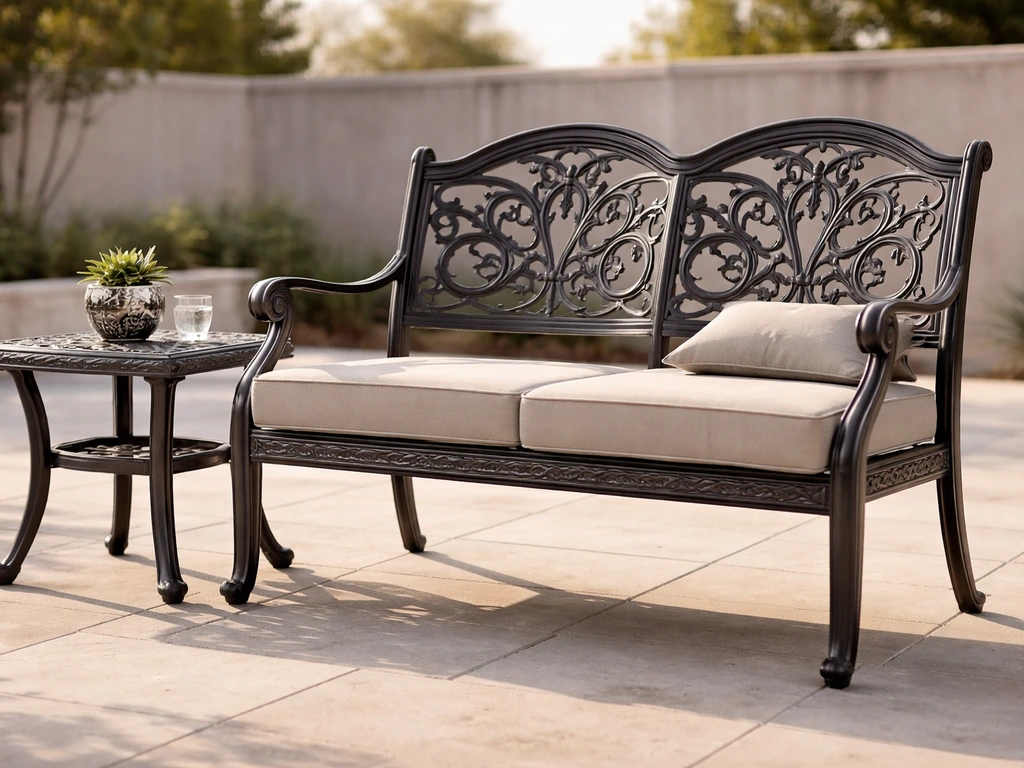
Best Cast Aluminum Patio Furniture Brands: Guide
Compare top cast aluminum patio furniture brands and choose by climate, use, finishes, warranty, and care for lasting va
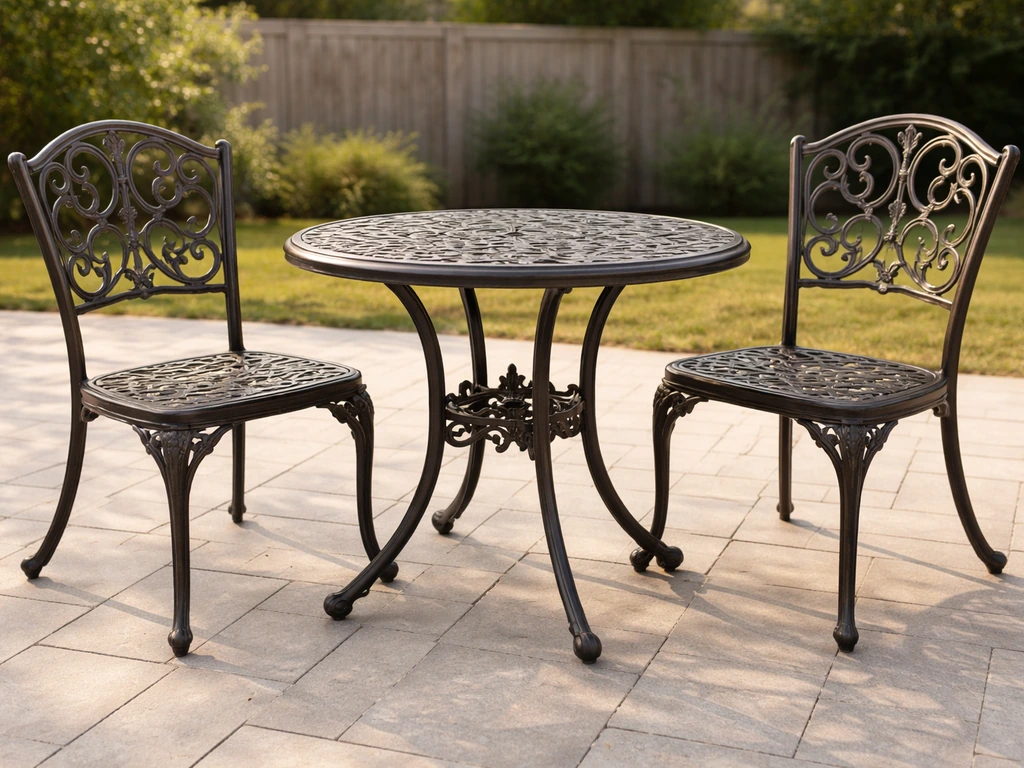
Best Cast Aluminum Patio Furniture: Buyer Guide and Checklist
Buyer checklist for best cast aluminum patio furniture, incl dining sets, weather performance, finishes, quality checks,
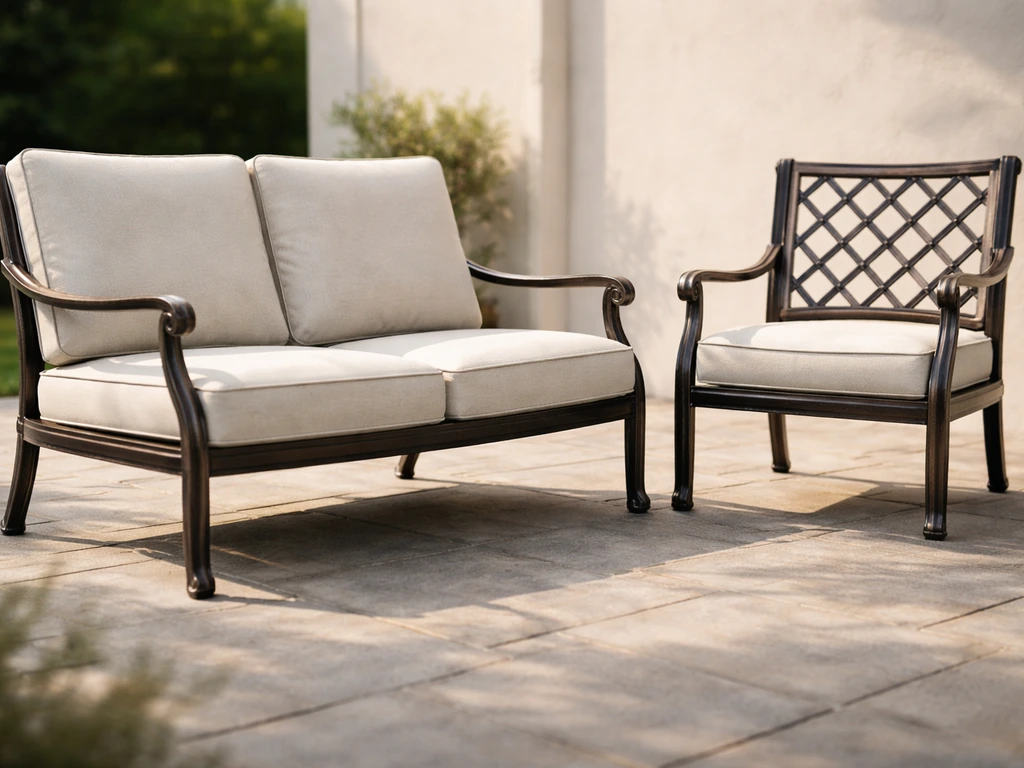
High Quality Aluminum Patio Furniture: How to Choose
Checklist for high quality cast aluminum patio furniture: inspect build, finish, hardware, comfort, climate fit, and mai