
Garden Treasures is a private-label brand owned by Lowe's and registered as a trademark of LF, LLC (USPTO Registration Number 3917433). Lowe's created the brand exclusively for its stores and online channels, which means there is no independent Garden Treasures company, no dedicated factory, and no separate customer service department. When you buy a Garden Treasures piece, you are buying a Lowe's product that was designed under Lowe's specifications and manufactured by one or more contract factories, mostly in China and Vietnam.
Who Makes Garden Treasures Patio Furniture: Origin & Guide

Marcus Kellerman
18 Jul 2026
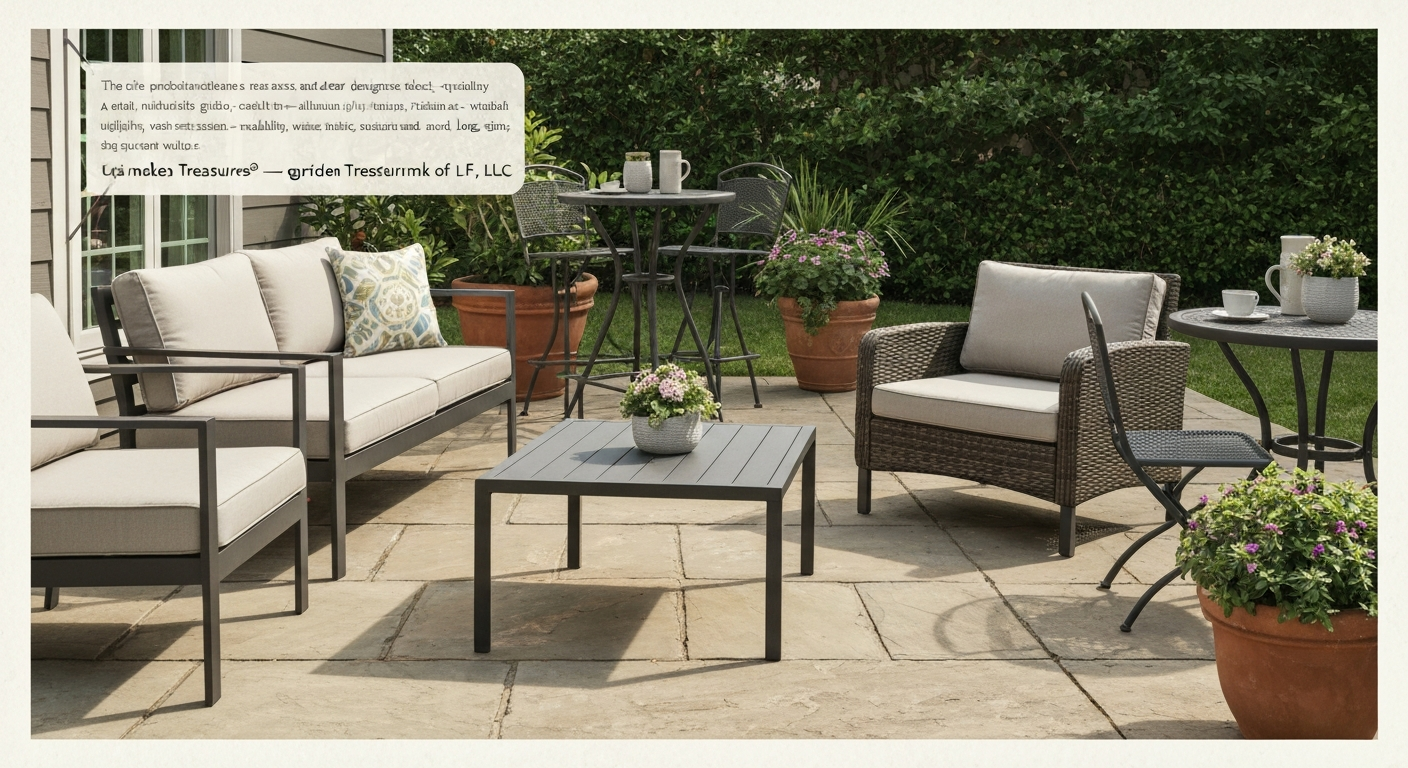
How Garden Treasures is sourced and who really makes it
Like most mass-market patio lines at big-box retailers, Garden Treasures follows a private-label model. Lowe's works with a rotating roster of OEM (original equipment manufacturer) factories in Asia, mostly in China and Vietnam, to produce furniture and outdoor accessories under the Garden Treasures name. For a related example of private-label sourcing, see who makes Halmuz patio furniture for how another retailer-brand is produced and sourced. The brand itself appears in Lowe's annual Form 10-K filings as one of the company's private brands, placing it in the same category as other Lowe's house labels rather than as a standalone manufacturer.
This sourcing model means no single factory makes every Garden Treasures product. A wrought-iron bistro set and a sling-seat aluminum sectional sold under the same label may come from entirely different suppliers and even different countries. Industry import data consistently show China accounting for roughly 50 to 65 percent of US patio furniture import value, with Vietnam contributing another 12 to 18 percent, and Garden Treasures country-of-origin markings on product manuals confirm pieces labeled 'Printed in Vietnam' and 'Printed in China' exist within the same product line. For homeowners, the practical consequence is that build quality can vary noticeably from SKU to SKU, even within the same season's collection.
Step-by-step: how to verify a Garden Treasures product
If you have a piece in hand and want to confirm it is a genuine Garden Treasures product, or if you are looking up parts and warranty coverage, the verification process is straightforward. You are essentially cross-referencing the physical label against Lowe's product records. Public UPC databases list Garden Treasures product UPCs (examples: UPC 684143001324), enabling SKU matching between manuals, retailer pages and aftermarket listings, see UPC 684143001324, UPCitemdb (Garden Treasures fence/border SKU example) UPC 684143001324 — UPCitemdb (Garden Treasures fence/border SKU example).
- Find the product label or hang tag. It should read 'Garden Treasures® is a registered trademark of LF, LLC' along with a model number (formatted like WXF04291 or PT-51464).
- Locate the UPC or GTIN barcode on the packaging or label. You can enter that number into a public UPC database (such as UPCitemdb) to pull up the registered product description and confirm it matches the item you have.
- Visit Lowes.com and search the model number directly. The product page will show the item number, original price, and any available accessories or replacement parts.
- Download the assembly or use-and-care manual from ManualsLib by searching the model number. Verify that the manual's trademark notice, country-of-origin statement, and parts list match what is printed on your label.
- Check the instruction sheet packaged with the furniture. Garden Treasures manuals consistently include a customer service phone number (1-800-643-0067) and a one-year limited warranty statement, both of which confirm the Lowe's connection.
- If you are buying used, ask the seller for the original receipt or Lowe's order number. An online Lowe's order lookup tied to the item number is the fastest way to establish purchase history for warranty or parts inquiries.
Spotting authentic pieces vs. similar mass-market labels
Plenty of imported patio furniture sold through Walmart, Amazon, and secondary marketplaces looks nearly identical to Garden Treasures products because many pieces originate from the same Asian OEM factories. Visually distinguishing a Garden Treasures item from a competing private-label product (like a Walmart-exclusive line) requires checking specific identifiers rather than relying on appearance alone.
- The printed trademark notice 'LF, LLC' on the manual, hang tag, or carton is the most reliable identifier. No other retailer's private label carries this specific attribution.
- Lowe's item numbers appear on the carton and product page in a distinctive format. Cross-referencing that number at Lowes.com confirms the retailer relationship.
- Garden Treasures replacement canopy tops, cushion covers, and other accessories occasionally appear on Walmart.com and eBay, but the original furniture itself was sold exclusively through Lowe's channels. If someone is selling 'Garden Treasures furniture' on a non-Lowe's platform, it is either used, a returned or overstocked item, or a mislabeled competitor product.
- Photos of the hang tag and a close-up of the frame label are the minimum documentation I would request before buying any Garden Treasures piece secondhand.
What to expect from Garden Treasures build quality and materials
Garden Treasures sits firmly in the entry-to-mid-range segment. You are not getting the welded-in-America steel of a vintage Woodard piece, nor the sustainably harvested Grade A teak of a premium outdoor brand. What you are getting is a factory-produced item designed to a retail price point, which means cost-driven material choices throughout. Frames are typically powder-coated steel or aluminum, seats use polyester sling fabric or injection-molded resin, and cushions are filled with polyester fiber. Joinery is mostly bolted assembly rather than welded, which affects long-term rigidity. Expect a lifespan of 3 to 7 years with average care, depending on material and climate exposure.
| Material | Typical Garden Treasures Use | Expected Lifespan | Primary Risk |
|---|---|---|---|
| Powder-coated aluminum | Frames, legs, armrests | 7-12 years | Coating chips leading to oxidation |
| Powder-coated steel | Frames, table bases | 3-7 years | Rust at scratches and welds |
| Resin wicker (synthetic) | Seating and accent pieces | 4-8 years | UV brittleness and unraveling |
| Polyester sling fabric | Chair backs and seats | 3-5 years | UV fading and fabric sag |
| Polyester cushion fabric | Seat and back cushions | 2-4 years | Mold in humid climates |
Aluminum Garden Treasures pieces: durability, climate fit, and care
Aluminum is the best material in the Garden Treasures lineup for long-term durability, and the reason is straightforward: aluminum does not rust. The metal forms a passive oxide layer that blocks further corrosion, which makes it the right choice for coastal climates, humid regions, and anywhere you cannot always move furniture under cover. Garden Treasures aluminum frames are powder-coated, meaning a dry paint applied electrostatically and then heat-cured. A proper powder-coat film runs 60 to 120 microns thick and adds meaningful UV and abrasion resistance. The limitation is the coating, not the metal. Where the coating chips, bare aluminum is still corrosion-resistant, but chalky white oxidation can appear over time if the chip is left unaddressed.
For climate suitability, aluminum is my consistent recommendation for coastal, tropical, and high-humidity markets. Salt spray is the enemy of most outdoor metals, and aluminum handles it far better than any steel option at this price point. In dry, hot climates (Arizona, Nevada, inland Texas), the main concern shifts to UV degradation of the powder coat itself, which can chalk and fade after several years. For inland four-season climates, aluminum holds up through freeze-thaw cycles without the expansion-contraction cracking that sometimes affects cheaper steel frames.
- Rinse aluminum frames with clean water two to four times per year, more often in coastal environments.
- Inspect the powder coat annually for chips or scratches. Touch up small areas with a matching outdoor metal paint to prevent chalking.
- Avoid abrasive cleaners that scratch the coating. Mild dish soap and a soft cloth handle most dirt.
- Store or cover during extended periods of disuse, especially in climates with UV intensity above 8 on the UV Index scale.
Wicker and rattan Garden Treasures furniture: what you're actually getting
Almost all Garden Treasures 'wicker' products use synthetic resin wicker rather than natural rattan. This matters enormously for outdoor use. Natural rattan dries, cracks, and deteriorates rapidly when exposed to rain and UV radiation, which is why any furniture marketed for outdoor use and sold at a mass-market price is virtually guaranteed to use an HDPE or PVC-based synthetic strand. Synthetic resin wicker is woven around a steel or aluminum frame, and that frame material is where long-term durability is really determined.
Under moderate conditions, a decent synthetic wicker set can last 4 to 8 years. The failure modes are UV brittleness (strands become fragile and snap rather than flex, usually after 4 to 6 years of heavy sun exposure) and unraveling at the weave ends where the strand is tucked rather than bonded. Humid and rainy climates are actually friendlier to synthetic wicker than dry, high-UV climates, because it is ultraviolet light rather than moisture that accelerates resin degradation. If you are in Phoenix or central California's Central Valley, expect the lower end of that lifespan range without shade coverage.
- Rinse with a garden hose to clear dirt from the weave. A soft brush loosens debris embedded in tight patterns.
- Apply a UV-protective spray designed for synthetic wicker once per season to slow resin degradation.
- Check weave ends annually for loose strands. Re-tuck and secure with outdoor-rated adhesive before unraveling spreads.
- Keep cushions dry and store them indoors or in a waterproof storage bin when not in use to prevent mold in humid climates.
- Cover the set during extended off-season storage to reduce cumulative UV exposure.
Steel and wrought-iron Garden Treasures pieces: rust risk and how to manage it
Steel is where Garden Treasures (and most entry-level outdoor furniture) has its clearest durability limitation. Unlike aluminum, steel rusts the moment moisture contacts bare metal, and the powder-coat finish is the only thing standing between a steel frame and oxidation. The key variables are coating quality, coating thickness, and how the steel was prepared before coating. High-end outdoor steel furniture uses hot-dip galvanizing before powder-coating, which provides a sacrificial zinc layer that dramatically extends service life even when the top coat is breached. Most mass-market steel furniture, including many Garden Treasures steel items, skips galvanizing and relies on the powder coat alone. Salt spray testing standards (ASTM B117 and ISO 9227) demonstrate just how quickly unprotected or minimally coated steel fails in corrosive environments.
For climate recommendations, I am direct: do not buy Garden Treasures steel furniture for a coastal or high-humidity location if you expect it to last. Steel pieces make reasonable sense in dry inland climates (Colorado, the Midwest, the Pacific Northwest east of the Cascades) where humidity stays lower and salt air is not a factor. In those environments, with proper maintenance, a powder-coated steel frame can easily reach 5 to 7 years before surface rust becomes a structural concern rather than just a cosmetic one. In Florida, the Gulf Coast, Hawaii, or the Pacific Coast, the same piece can show rust within 18 months if any scratch or chip goes unaddressed.
Maintenance for steel Garden Treasures pieces is straightforward but non-negotiable if you want them to last. Inspect the entire frame at the start and end of each season, paying particular attention to welds, bolt holes, and any area where two metal surfaces contact each other, since these are the spots where the coating is most likely to wear. Sand any rust spots down to bare metal, apply a rust-converting primer, then cover with a matching outdoor metal paint. For pieces that have already developed structural rust at a weld, repair is usually not cost-effective at this price point. At that stage, replacement makes more sense, and professional repair services (dedicated outdoor furniture repair shops handle this kind of work regularly) should be evaluated against the furniture's replacement cost before committing. For complex restorations, consider hiring local patio furniture repair pros who can evaluate weld repairs and refinishing against replacement costs. For professional help compare local options like quality interiors & patio furniture repair when evaluating whether a restoration is worth the cost.
Warranty, returns, and replacement parts
Garden Treasures products carry a one-year limited warranty covering defects in materials and workmanship for frames, cushions, and sling fabric. The warranty excludes commercial use, misuse, weather-related damage, and cosmetic fading. To make a warranty claim or order replacement parts, call Lowe's customer service at 1-800-643-0067 with your proof of purchase and the manual's model number and part number ready. For assembly or manual examples for similar sets, see homall 4 pieces outdoor patio furniture instructions. For assembly, care, or troubleshooting guidance, consult the fdw patio furniture instructions for step-by-step help and model-specific notes. Lowe's handles all warranty and parts inquiries directly since LF, LLC is a trademark entity, not an independent operating company with its own support structure.
One year is a short warranty for a furniture product and honestly reflects the price-point positioning. Premium outdoor brands typically offer 3 to 15-year frame warranties. If you need a part outside the warranty window, your best options are: the Lowe's parts line (for discontinued items, availability is unpredictable), aftermarket canopy and cushion sellers on Amazon or specialty replacement-parts sites, and the used market on eBay where discontinued Garden Treasures accessories and replacement canopy tops trade regularly. Having the model number handy is essential for any parts search.
Buying used Garden Treasures furniture: a quick checklist
The secondary market for Garden Treasures is active on eBay, Facebook Marketplace, and Craigslist. Given the brand's entry-level pricing when new, used pieces need to be meaningfully discounted to represent real value, because you lose the warranty and absorb whatever wear has already occurred.
- Ask for clear photos of the frame, all four legs, the underside of the seat, and any weld points. These are where rust and structural damage appear first.
- Request the model number from the label. Look it up on Lowes.com or ManualsLib to understand the original specifications and what replacement parts exist.
- Inspect sling fabric and cushion covers for UV fading, fraying, and mold stains. Replacement cushions often cost $40 to $80 per chair and should factor into your offer price.
- For steel pieces, any surface rust that has progressed to pitting (rough texture rather than a flat orange stain) is a structural concern worth discounting heavily or avoiding.
- Check that all hardware is present. Bolted-assembly furniture missing key hardware from a discontinued SKU can be difficult to complete.
Alternative brands worth considering by climate and budget
If Garden Treasures fits your budget but you want a step up in durability, or if you are shopping for a climate that punishes entry-level materials, here are practical alternatives organized by what matters most.
| Brand / Line | Best For | Primary Material | Relative Price | Notable Strength |
|---|---|---|---|---|
| Hampton Bay (Home Depot) | Budget buyers wanting similar value | Aluminum, steel, resin wicker | Similar to Garden Treasures | Widely stocked, easy parts access |
| Allen + Roth (Lowe's) | Slight quality step-up within Lowe's ecosystem | Aluminum, composite | 10-20% above Garden Treasures | Better fabric grades and frame joinery |
| Telescope Casual | Coastal and high-humidity climates | Aluminum, marine-grade fabric | 3-5x Garden Treasures | Decades-long track record in salt-air environments |
| Tropitone | Commercial-grade residential use | Aluminum, sling fabric | 4-6x Garden Treasures | Heavy-gauge aluminum, long warranties |
| POLYWOOD | Low-maintenance all-climates | HDPE recycled plastic lumber | 2-3x Garden Treasures | Virtually maintenance-free, 20-year warranty |
| Fermob | Design-conscious buyers, mild climates | Powder-coated steel | 5-8x Garden Treasures | Premium coating quality, high aesthetic value |
For anyone in a coastal or tropical climate who has burned through budget steel furniture before, POLYWOOD or Telescope Casual are the brands I return to as recommendations most often. The higher upfront cost is offset by a dramatically longer service life. On a cost-per-year basis, a POLYWOOD Adirondack chair at around $350 that lasts 20-plus years beats a $90 steel chair that rusts out in three years by a significant margin. The Allen + Roth line (also sold at Lowe's) is worth a look if you want to stay in the Lowe's ecosystem with a modest quality upgrade. And if you enjoy researching the provenance and construction quality of older outdoor furniture brands, Woodard's vintage cast-aluminum and wrought-iron lines offer a genuinely different standard of craftsmanship than anything in the current mass-market segment.
FAQ
Who makes Garden Treasures patio furniture (ownership/manufacturer)?
Garden Treasures is a private‑label trademark used by LF, LLC and sold primarily through Lowe’s. The brand is a retail/private‑label line—Lowe’s sources Garden Treasures goods from multiple contract manufacturers (mostly overseas) rather than producing them in a single Lowe’s factory.
How is the Garden Treasures line sourced and manufactured?
Garden Treasures is sourced through Lowe’s private‑brand supply chain and typically manufactured by third‑party OEMs in Asia (common origins: China, Vietnam, sometimes Indonesia). Individual SKUs may come from different factories and suppliers, so quality and materials vary by model.
Step‑by‑step: how can I verify and identify an authentic Garden Treasures piece?
1) Locate the product manual, hanging tag or label. 2) Look for text: “Garden Treasures® is a registered trademark of LF, LLC” or Lowes.com/gardentreasures. 3) Note model/item number and UPC/GTIN on the tag/manual. 4) Match model/UPC against the Lowe’s product page or the printed manual/parts list. 5) Check for country‑of‑origin marking and a Lowe’s customer service/parts phone number. 6) If buying used, request photos of labels/manual and proof of purchase or original invoice.
Which label/UPC/parts details are most useful to confirm authenticity?
The best signals are: model or item number, printed UPC/GTIN, the LF, LLC/Lowe’s trademark notice, parts diagrams and list in the manual, country‑of‑origin statement, and a Lowe’s customer service phone line. Verify those values against the Lowe’s product page or the printed use & care PDF.
What materials are commonly used in Garden Treasures furniture and their expected durability?
- Powder‑coated aluminum: common, low weight, good rust resistance if coatings are properly applied; suitable for humid and coastal climates if high‑quality coating used. - Steel (painted or powder‑coated): can be durable if galvanized then powder‑coated; plain steel or thin coatings will rust faster, especially near salt. - Wicker/rattan (synthetic resin): typically PE/HDPE resin — good UV and moisture resistance when woven over metal frames; suitable for most climates if cushions stored. - Wood/teak: occasionally used; less common in mass‑market Garden Treasures and typically lower‑grade hardwoods/treated woods rather than premium teak—needs regular maintenance. - Plastics and molded polypropylene: lightweight and low‑maintenance but can become brittle and fade in strong sun over years.
How does climate affect longevity by material?
- Coastal/salt air: powder‑coated aluminum with thick film and stainless fasteners is best. Avoid ungalvanized steel. - Hot/sunny/UV‑intense climates: synthetic wicker with UV inhibitors or marine‑grade plastics perform better than untreated fabrics; expect fabric fading. - Cold/wet climates: aluminum and synthetic wicker resist freeze/thaw well; wood needs sealing and can rot if poorly maintained. - Humid climates: mold/mildew risk on cushions/fabrics—store or use quick‑dry cushions and breathable fabrics.
Next Articles
Who Makes Halmuz Patio Furniture? How to Verify the Maker
Learn how to confirm who makes Halmuz patio furniture using labels, documents, listings, and quality checks.
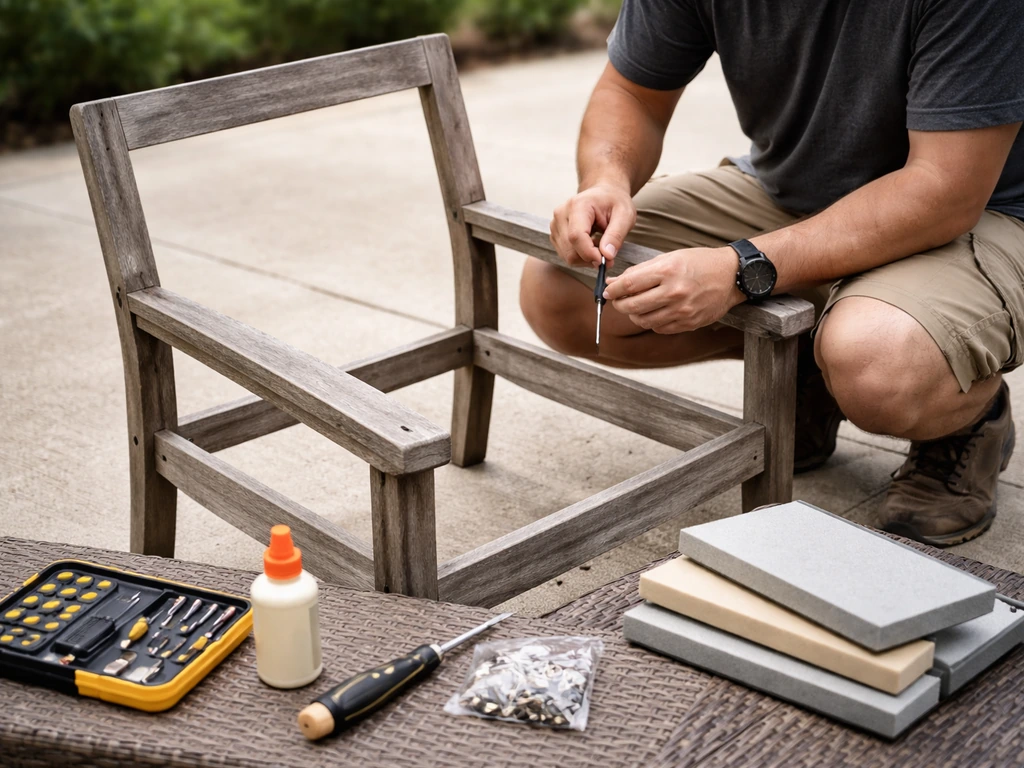
Patio Furniture Repair Pros: DIY vs Repair Guide
DIY vs pros for patio furniture repair: triage damage, material-specific fixes, costs, and vetting local repair experts.
Quality Interiors and Patio Furniture Repair Guide
Step-by-step quality patio furniture repair for wood, aluminum, wicker, teak, cast iron plus cushions, fixes and lasting