
Powder-coated aluminum and teak are the two most durable patio furniture materials you can buy right now. Aluminum won't rust, barely needs maintenance, and a well-welded powder-coated frame can last 20 or more years in nearly any climate. Teak is the gold standard in wood because it's naturally dense, oily, and rot-resistant without much help from you. If you want the single safest pick across the widest range of climates, a welded aluminum frame with Sunbrella slings or quality cushions and 316 stainless hardware is the combination that holds up longest for most people.
Best Durable Patio Furniture: Materials, Choices, and Care

Marcus Kellerman
20 May 2026
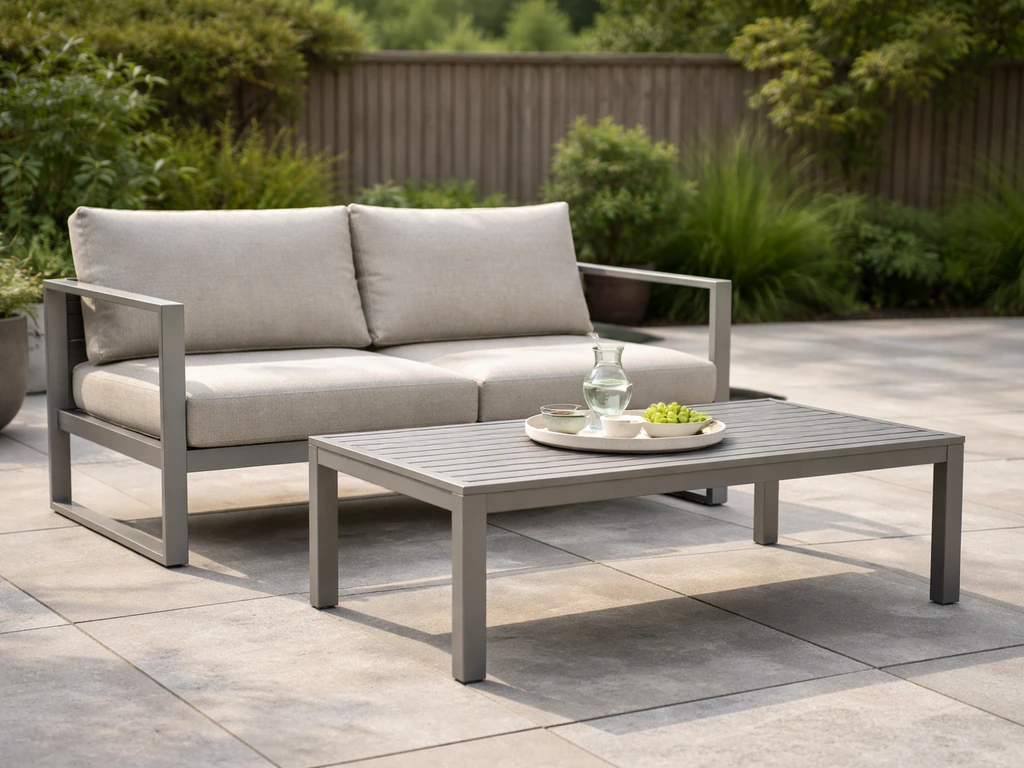
What actually makes patio furniture durable
The frame is not always what fails first. In reality, patio furniture has five components that each age at their own rate: the frame, the finish on that frame, the joints and fasteners, the sling or webbing (if applicable), and the cushion fabric. Most cheap furniture fails at whichever of those five is the weakest link, and it's almost never the raw frame material itself. You can have an aluminum frame that outlives three sets of replacement cushions. You can also have a beautiful teak frame where the stainless bolts corrode and loosen in five years because they weren't marine-grade hardware.
Durability is the sum of all five parts holding together under your specific conditions: UV radiation, moisture cycles, salt air, freeze-thaw stress, or just years of sitting weight and movement. Understanding where failure starts lets you shop smarter and maintain strategically rather than just buying "quality" and hoping for the best.
The five failure points to watch
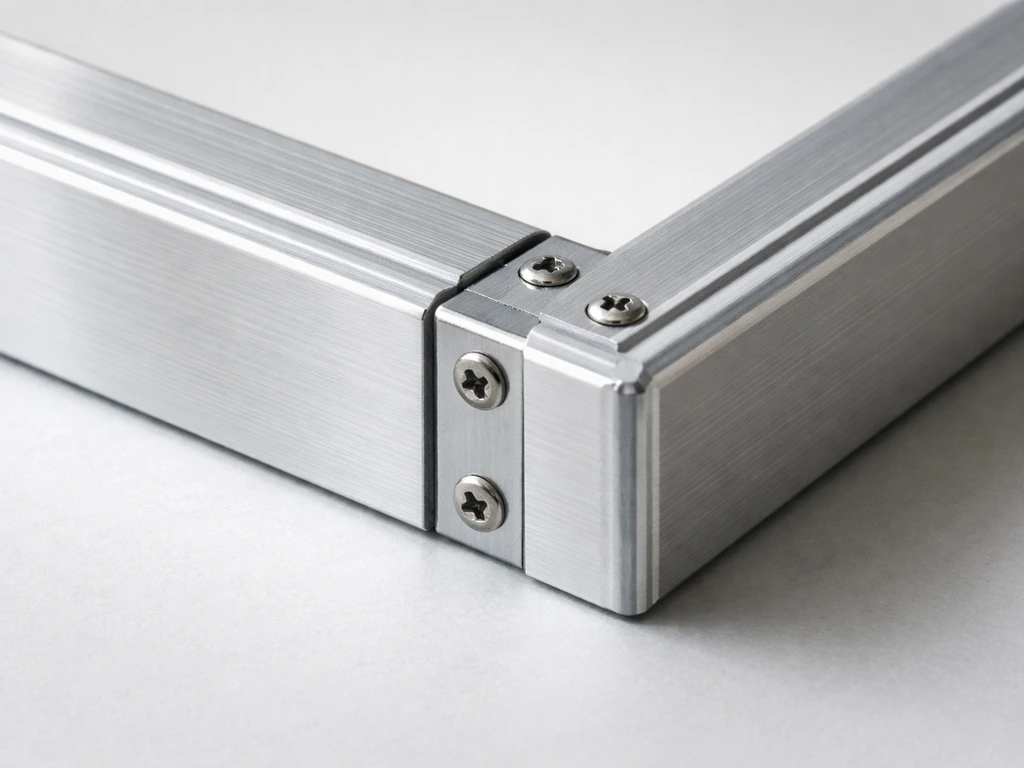
- Frame: The core structure. Material type and wall thickness determine structural lifespan.
- Finish: Powder coating, anodizing, oil, or sealant protects the frame from moisture and UV. A compromised finish accelerates everything else.
- Joints and fasteners: Weld quality, screw grade, and bolt material are where rust and wobble usually start. Undercoated weld seams and cheap zinc screws are the most common failure sites.
- Slings and webbing: UV exposure and moisture cycling degrade sling fabric. Low-grade slings can sag, fade, or crack within 2 to 3 seasons.
- Cushion fabric: Solution-dyed acrylic (like Sunbrella) resists fading and mildew far longer than polyester. The fill material matters too, quick-dry foam survives wet climates; standard foam doesn't.
The best durable outdoor furniture materials, ranked honestly
Every material has a climate where it shines and a condition where it struggles. Here's how the major categories actually perform over time.
Aluminum (powder-coated)
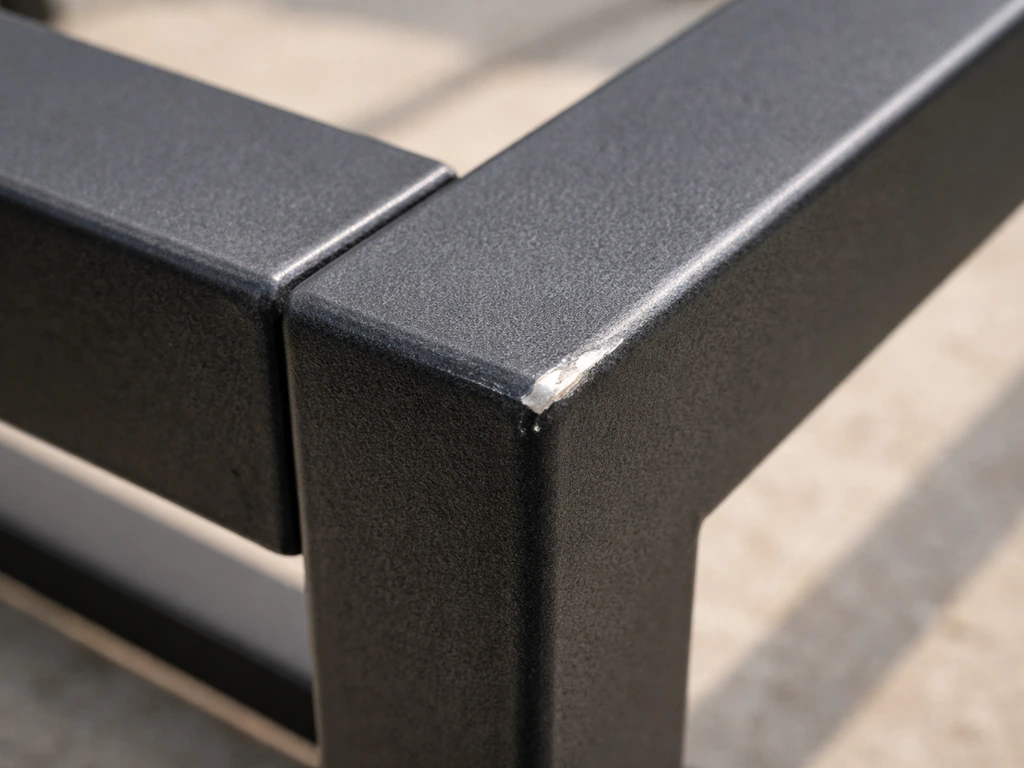
Aluminum is the most broadly durable patio furniture frame material available. It doesn't rust, it's lightweight enough to move for cleaning or storage, and a quality powder-coat finish bonds to the metal surface to resist both corrosion and UV fading. Tropitone, for instance, uses full-circumference welding on load-bearing joints rather than mechanical fasteners, which eliminates the most common structural failure point. The powder coat is what protects the weld area specifically, so uniform coating coverage at joints and inside edge profiles matters enormously. Thin or patchy coverage at seams lets moisture creep in and eventually bubbles the finish from underneath.
The weakness with powder-coated aluminum is surface scratching. If the finish gets chipped and you ignore it, you can get cosmetic oxidation even though the aluminum underneath isn't structurally compromised. Touch-up paint for scratches costs a few dollars and takes five minutes. Do it early and the frame stays beautiful for decades.
Teak (and other dense hardwoods)
Teak is the benchmark in wood outdoor furniture because it has naturally high silica and oil content that resists rot, insects, and moisture absorption without requiring you to do anything. Left untreated, it weathers to a silver-gray patina and still holds its structure for 25 to 50 years. Treated with teak oil annually, it stays its original warm honey-brown. The joints are the vulnerability here: mortise-and-tenon construction beats bolted joints on teak because it flexes slightly and doesn't split around fasteners. If you're comparing teak to other woods, it pulls ahead of eucalyptus, acacia, and shorea in natural oil content, though those alternatives can perform reasonably well when properly sealed. How long wood patio furniture lasts overall depends heavily on whether you seal, cover, and keep it off wet ground. Wood patio furniture can last decades when it is properly sealed, kept covered, and kept off wet ground.
Cast iron and wrought iron
Cast iron and wrought iron are extremely strong and heavy, which makes them wind-stable and nearly impossible to tip over. The weight is also their main liability: they're hard to move for cleaning or storage, and any standing water or humidity that sits in joint crevices will rust through the finish in a few years if you don't maintain them. Iron furniture is most practical in dry climates or covered patios. In coastal, humid, or high-rainfall environments, you're signing up for annual rust treatment and re-painting. The structural integrity once rust is addressed is excellent, but the maintenance burden is real and ongoing.
High-density polyethylene (HDPE) resin wicker
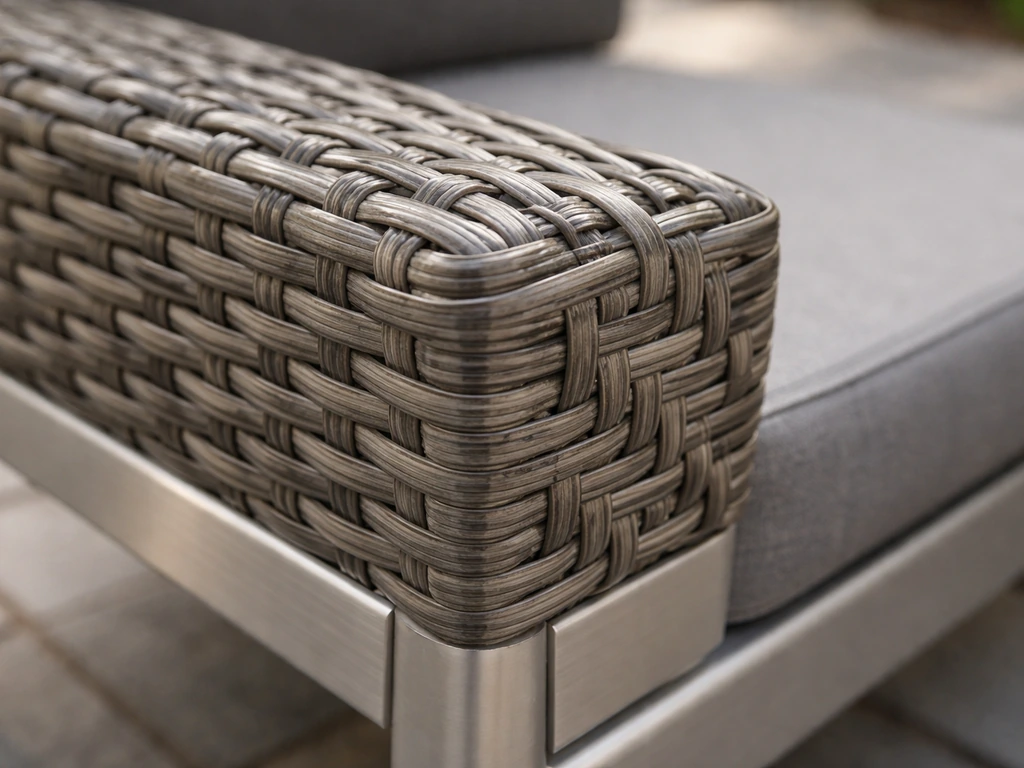
All-weather wicker is only durable if it's actually HDPE resin fiber woven over a structural aluminum or steel frame, not natural rattan (which cannot live outdoors) and not thin PVC resin that cracks in cold. Quality HDPE wicker from brands like Forever Patio uses UV inhibitors mixed directly into the resin, so the color doesn't fade from the surface in and the fiber stays flexible instead of becoming brittle. WickerParadise and WickerBest both put the lifespan of quality HDPE outdoor wicker at roughly 10 to 20-plus years depending on climate and care. The practical concern is what's underneath: a poor-quality steel inner frame that rusts can break through the woven exterior and destroy the piece from the inside out. Always confirm the inner frame material before buying.
Stainless steel
Stainless steel is less common in residential patio furniture but shows up in commercial and contemporary designs. Grade 316 (marine grade) is the version worth buying if you're near the coast. It contains molybdenum, which gives it substantially better resistance to chloride corrosion than the more common 304 grade. Coastal homeowners should confirm the grade before assuming stainless means salt-proof. For inland environments, 304 stainless performs well, but 316 is the specification to request anywhere within a few miles of saltwater.
Material comparison at a glance
| Material | Expected Lifespan | Rust/Corrosion Risk | UV Resistance | Maintenance Level | Best Climate Fit |
|---|---|---|---|---|---|
| Powder-coated aluminum | 20+ years | Very low (won't rust) | High (finish dependent) | Low | All climates |
| Teak | 25–50 years | N/A (wood) | Medium (grays naturally) | Low to medium | All climates, especially humid |
| Cast/wrought iron | 15–30 years with care | High if finish fails | Medium | High (annual treatment) | Dry/covered patios |
| HDPE resin wicker | 10–20+ years | Low (fiber), depends on frame | High (UV-stabilized resin) | Low | Most climates, check inner frame |
| 316 stainless steel | 20–30+ years | Very low | High | Low to medium | Coastal and all climates |
Frame construction and the parts that actually fail
Beyond material, how a piece is built determines how long it survives real-world use. Two chairs can use identical aluminum alloy and one will wobble in three years while the other is still solid in twenty. The difference is almost always in the joints.
Welded vs. bolted frames
Welded aluminum frames are structurally superior to bolted or screwed assemblies for patio furniture. Full-circumference welds at load-bearing joints distribute stress across the entire joint rather than concentrating it at a single fastener hole. Bolted frames aren't automatically bad (teak furniture often uses excellent bolted mortise joints), but in aluminum and steel, welded joints outlast mechanical fasteners significantly. When shopping, flip a chair over and look at the joints. Clean, consistent weld beads that are also covered by the powder coat are a good sign. Exposed bare metal at weld points means the coating was applied before welding, leaving the most vulnerable area unprotected.
Slings: what to look for
Sling chairs are popular because they're comfortable, low-maintenance, and dry fast. But not all sling fabric is equal. Solution-dyed acrylic slings (Sunbrella being the benchmark) have color embedded in the fiber rather than dyed on the surface, so UV exposure fades them far more slowly. Sunbrella casual furniture fabrics weigh approximately 8 to 9.25 ounces per square yard and carry a 10-year limited warranty on certain product lines. Cheaper polyester slings start fading within one or two seasons and can stretch or crack from UV exposure. When evaluating slings in a showroom, ask for the fabric brand and whether it's solution-dyed acrylic. If the seller can't answer, that's a signal.
Fasteners and hardware
This is where a lot of otherwise good furniture falls apart, literally. Zinc-plated screws and low-grade bolts will rust and either seize or corrode through within a few years in any wet environment. Any furniture you expect to keep for more than a decade should use 316 stainless steel hardware throughout, not just at the visible connection points but at every screw, bolt, and bracket. Check leg caps and glides too: plastic end caps that crack or fall off leave the hollow frame tube open to water collection, which freezes, expands, and deforms the leg in cold climates.
How to choose for your specific climate
The right material for San Diego is different from the right material for coastal Maine or humid Houston. What holds up longest depends almost entirely on the particular stresses your climate throws at outdoor furniture.
Rain, snow, and freeze-thaw cycles
If you get hard winters with snow and freezing temperatures, moisture management is everything. Aluminum is ideal because it doesn't absorb water, doesn't rust, and doesn't crack from freeze-thaw cycles the way wood can if it's poorly sealed. Teak handles cold well if it's kept off the ground and covered or stored during the off-season. Cast iron survives cold fine structurally, but standing water in crevices accelerates rust. HDPE wicker can be left out through mild winters but should be moved to covered storage during heavy snow seasons to prevent frame stress. Cushions should always be stored indoors in snowy climates.
Intense heat and UV exposure
In high-UV climates like the Southwest, the finish and fabric are what fail first. Powder-coated aluminum with a high-quality finish holds color well in intense sun. HDPE resin wicker with UV inhibitors mixed into the resin (not just a surface treatment) resists fading significantly better than cheaper resin products. Sling fabric in these climates must be solution-dyed acrylic. Teak is fine structurally but will gray faster in intense sun without periodic oiling. Dark powder-coat colors absorb more heat and can be uncomfortable to touch on hot days, which is a comfort rather than durability issue but worth knowing.
Coastal salt air
Salt air is the harshest environment for patio furniture. It accelerates corrosion dramatically on any exposed metal surface. The priority materials here are aluminum (which forms a passive oxide layer that actually protects it from salt corrosion), teak, HDPE resin wicker over aluminum frames, and 316 marine-grade stainless steel for hardware and structural elements. Standard stainless (304 grade) will show rust pitting in coastal conditions within a few years. Cast iron and steel frames are poor choices near the coast unless you're prepared for intensive annual maintenance. If you're within half a mile of saltwater, 316 stainless hardware is non-negotiable on every piece you buy.
High humidity and tropical climates
Humidity is wood's enemy and aluminum's non-issue. In consistently humid environments, teak and dense hardwoods do fine because of their natural oils, but lower-quality woods rot quickly. Untreated or poorly sealed wood frames should be avoided entirely. Aluminum is the most resilient choice. HDPE wicker performs well as long as the inner frame is aluminum rather than steel. Good airflow under and around furniture helps in humid climates, so legs-on-ground designs are better than skirted or platform-style pieces that trap moisture.
Shopping checklist: how to confirm durability before you buy
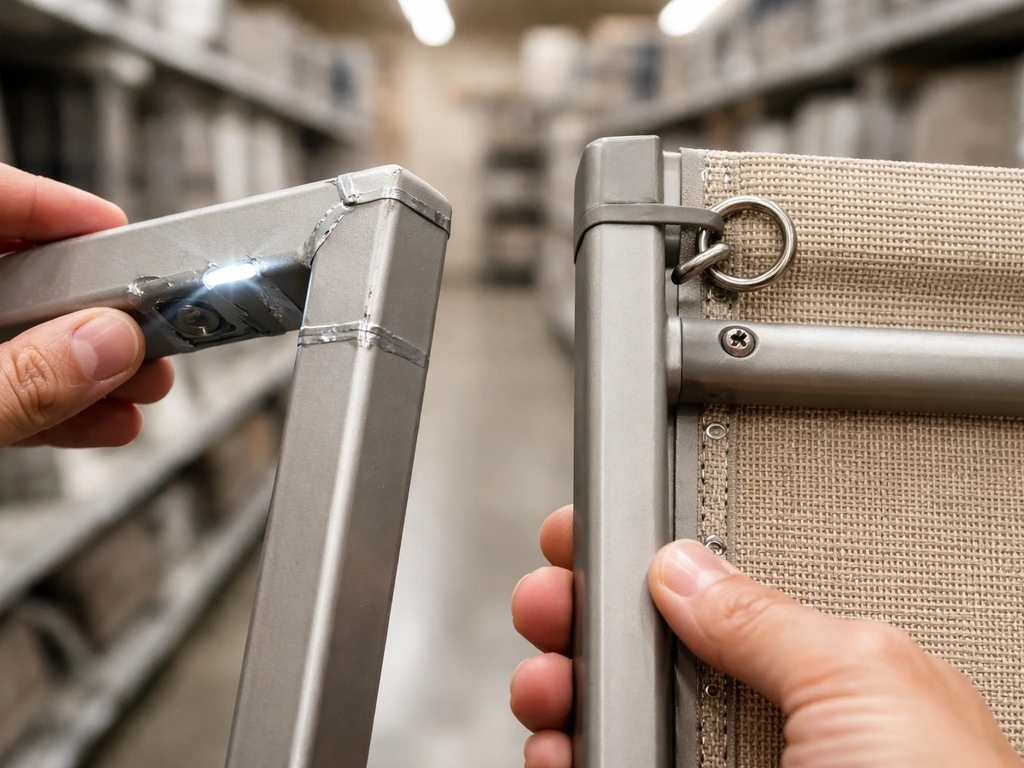
Whether you're in a showroom or reading a product listing online, these are the specific things to check before committing to a purchase. Most low-quality furniture fails at least two or three of these points.
- Frame material and wall thickness: Ask for the alloy grade on aluminum (6061 or 6063 are strong choices). For wicker, confirm the inner frame is aluminum, not steel.
- Weld quality: Look at joint areas closely. Welds should be consistent, not blobby or gapped. The powder coat should cover the weld bead fully, not stop short of it.
- Powder coat thickness and coverage: Tap the surface lightly, quality coating sounds solid. Check underneath the frame and inside corner joints for coverage gaps.
- Hardware grade: Ask specifically about screw and bolt material. Stainless steel (316 for coastal, 304 for inland) is the standard to request.
- Sling or cushion fabric: Confirm solution-dyed acrylic for slings. Ask for the brand name. If it's Sunbrella or a named equivalent, that's a good sign. Anonymous 'outdoor fabric' is not.
- Cushion fill: Ask whether it's quick-dry or open-cell foam, especially if you live somewhere with regular rain. Standard foam holds water and grows mildew.
- Warranty terms: A frame warranty of 5 years or more signals manufacturer confidence. A 1-year frame warranty on a $1,000 set should raise a flag.
- Leg caps and glides: Confirm they're present, properly fitted, and made of durable plastic or rubber, not thin press-fit caps that pop off.
Maintenance and repair habits that genuinely extend lifespan
Good patio furniture maintained well can outlast cheap furniture by three to four times, but even excellent furniture ignored entirely will deteriorate faster than it should. These are the maintenance moves that actually make a measurable difference.
Cleaning routines by material
For powder-coated aluminum and wicker frames, mild soap and water applied with a soft brush, followed by a thorough rinse, is all you need a few times per season. Avoid abrasive pads or harsh chemical cleaners that can scratch or degrade the powder coat finish. For powder-coated aluminum, Houe also advises avoiding aggressive cleaning agents that can damage the powder coating blank" rel="noopener noreferrer">avoid abrasive pads or harsh chemical cleaners. For sling fabric, Sunbrella recommends regular rinsing with clean water to prevent dirt from embedding in the weave, and a diluted bleach and mild soap solution for deeper cleaning when needed, always followed by a thorough rinse and air-dry. Sunbrella fabrics don't promote mildew growth themselves, but dirt sitting in the weave does, so keeping them clean is your mildew prevention strategy. For teak, a soft brush with a teak-specific cleaner once or twice a year removes weathered gray surface cells and prepares the wood for oiling if you want to maintain its original color.
Re-sealing wood and treating iron
Teak oil or a penetrating teak sealer applied once a year keeps the wood at its original tone and provides a barrier against moisture absorption. Let teak dry completely before applying oil, and wipe off any excess after 20 to 30 minutes to prevent a sticky surface. For cast iron or wrought iron furniture, inspect the finish annually. If you see rust spots, sand them down to bare metal with fine sandpaper, apply a rust-inhibiting primer, and repaint with a metal exterior paint. Don't leave bare rust exposed: once it starts, it spreads under the surrounding finish much faster than what's visible on the surface.
Covers, storage, and off-season care
Furniture covers extend the lifespan of finish and fabric significantly, but only if they allow airflow. Completely airtight covers trap condensation and can actually accelerate mildew on cushions and finishes. Look for covers with side vents. For climates with hard winters, cushions should always come inside. Aluminum and teak frames can typically be left covered outdoors, though teak in very cold climates benefits from garage or shed storage. Cast iron should be covered and kept dry. HDPE wicker furniture can usually stay outdoors through mild winters but moves indoors for heavy snow and ice seasons to protect the inner frame from freeze-thaw stress.
When to repair vs. when to replace
Slings and cushions are designed to be replaced without replacing the frame. A good aluminum frame with a bad set of slings is worth repairing: replacement slings in Sunbrella fabric can be ordered cut-to-size for most standard frame configurations, and the cost is a fraction of a new chair. Teak joints that have loosened can often be re-glued and re-bolted. A powder-coat finish with isolated chips can be touched up with matching paint. The time to consider full replacement is when the frame itself is bent, cracked at a weld, or structurally compromised, or when iron or steel frames have rusted through their wall thickness rather than just surface corrosion.
Quick recommendations by scenario
If you want the shortest possible path to a durable pick for your specific situation, here it is:
| Your Situation | Best Material Choice | Key Spec to Confirm |
|---|---|---|
| All-climate, minimal maintenance | Powder-coated aluminum frame + Sunbrella slings | Full-circumference welds, 316 SS hardware |
| Coastal or salt-air exposure | Aluminum frame or teak + 316 stainless hardware throughout | Hardware grade (316, not 304 or zinc) |
| Snowy winters, freeze-thaw cycles | Powder-coated aluminum; store cushions inside | Leg caps sealed, inner frame hollow drainage |
| High heat and UV (Southwest, desert) | Aluminum or HDPE wicker with UV-stabilized resin | Solution-dyed acrylic slings; avoid dark colors if touch temp matters |
| Humid or tropical climate | Aluminum frame; teak if you want wood | Inner wicker frame must be aluminum, not steel |
| Traditional or decorative aesthetic | Cast iron or wrought iron on a covered patio | Plan for annual rust inspection and touch-up painting |
| Budget-conscious long-term value | Aluminum frame with replaceable sling system | Sling replacement availability from manufacturer |
The throughline across all of these is: buy the best frame you can afford in the right material for your climate, insist on quality hardware, and choose replaceable fabric and cushion systems so you can refresh the piece without replacing the whole set. That approach gets you far more durability per dollar than buying cheap and replacing entire sets every five years. If you're still working through exactly how long you can expect a specific material to last in your climate, or trying to figure out which patio furniture holds up best across specific tests and brands, those questions are worth digging into further before you finalize your purchase. If you want to narrow it down to one option, look for powder-coated aluminum frames or HDPE resin wicker with UV-resistant components, since they tend to hold up best across the widest range of conditions which patio furniture holds up best. If you want the best chance of what outdoor patio furniture lasts the longest, focus on the frame material and the hardware that matches your climate.
FAQ
If I buy powder-coated aluminum, how can I tell whether the coating coverage at joints is actually good?
Look closely at weld seams and inside corner profiles. Good frames have uniform coating over the weld bead and into edge channels. If you see bare metal spots, pinholes, or thin-looking areas at joints, moisture can get underneath and cause bubbling from the inside, even if the aluminum itself will not rust through.
Can I use regular stainless hardware on patio furniture, or does it really have to be 316?
If you are within about half a mile of saltwater, 316 is the safer choice for every connection point, not just the visible bolts. In coastal air, 304 can develop chloride pitting and loosening faster, which often fails the joints before the frame material does.
How often should I touch up scratches on powder-coated aluminum?
Touch up soon after you notice chips or exposed metal. For small nicks, a quick early repair prevents corrosion under the coating from progressing cosmetically and reduces the chance the chip grows into a bigger failure point.
What’s the biggest mistake people make with teak, keeping it durable?
Relying on “letting it be” when it is sitting in a continuously wet location or on wet ground. Teak resists rot, but prolonged moisture pooling near joints and feet accelerates loosening and grime buildup. Keep it elevated with good airflow and avoid leaving it constantly damp.
Do teak oil and teak sealer work the same way for durability?
Not exactly. Teak oil mainly helps preserve color and slows surface drying, while penetrating teak sealer focuses more on limiting moisture absorption. Either can help, but you must apply to fully dry teak and wipe off excess, because thick, uneven applications can feel sticky and attract dirt.
Is HDPE wicker truly maintenance-free, or do I need to clean it too?
You still need routine cleaning. Dirt trapped in the weave can hold moisture and grime and will degrade how the fibers look over time. Use mild soap and water with soft brushing, then rinse thoroughly, and avoid harsh chemicals that can dull the resin surface.
How can I check the inner frame on wicker furniture before buying?
Ask about the inner frame material (aluminum versus steel) and, if possible, look at construction details through underside openings or any access panels. If the seller cannot confirm the inner frame, treat that as a risk because a rusting inner frame can destroy the piece from the inside out.
Do I really need to store cushions indoors in winter?
In freeze-thaw regions, yes. Storing cushions inside reduces water absorption and prevents the fabric and foam from degrading. Even if your furniture frame survives, trapped moisture in cushions and slings is a common reason for faster fabric breakdown.
What type of cover is better for durability, a full cover or an open-weave cover?
Use a cover that protects but still allows airflow. Completely airtight covers can trap condensation, which increases mildew risk on cushions and can promote finish deterioration. Side vents help vent moisture cycles.
How do I know whether a sling chair is worth repairing versus replacing?
Repair is usually the right move if the frame is straight and the welds or joints are intact, but the slings are sagging, faded, or torn. If the frame is bent, cracked at a joint, or the sling mounts are corroded or loose, replacement becomes more cost-effective than repeatedly reattaching new fabric.
How can I test the quality of a welded aluminum frame quickly in person?
Check for consistent weld beads and verify they are covered by powder coat, not exposed bare metal. Also look for wobble by applying gentle pressure to the seat and back in different directions, if the store allows it. A well-built joint should feel rigid with no looseness developing at seams.
Which lasts longer overall, a single high-end set or replacing components later?
Component-replaceable designs usually win for long-term cost. When slings, cushion covers, or cushion cores can be replaced without discarding the frame, you avoid replacing the most expensive parts. It also lets you update fabric to match seasonal needs, like switching to thicker covers in wet climates.
Next Articles
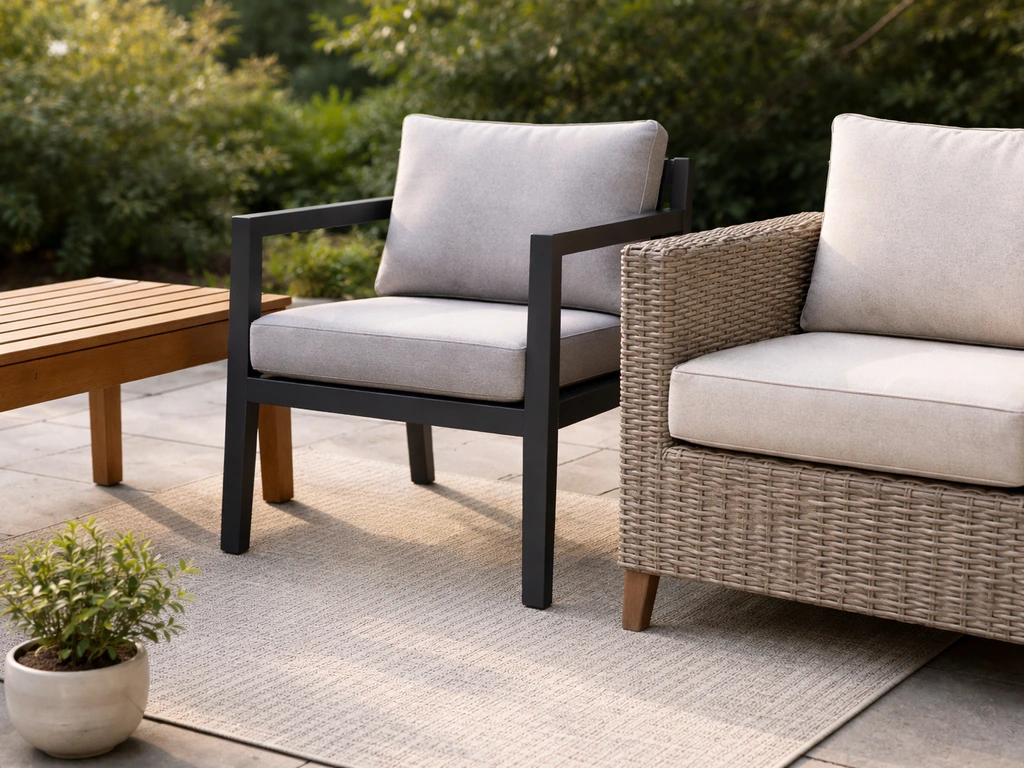
What Outdoor Patio Furniture Lasts the Longest by Material
Durability rankings by material and furniture type, plus climate-matched buying and care tips for long-lasting patio set
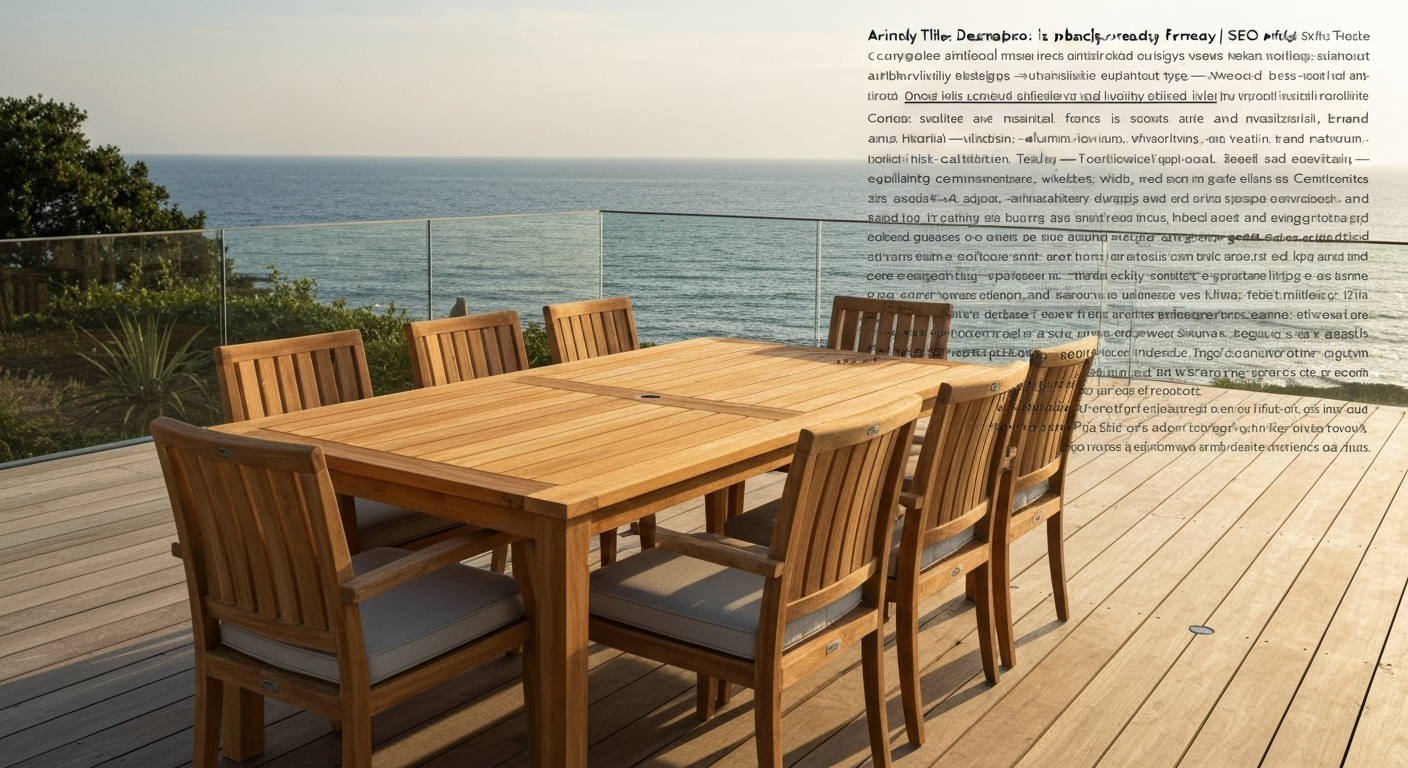
Is Teak Patio Furniture Good? Durable, Smart Buying Guide
Is teak patio furniture good? Evidence-based verdict, lifespan, care, buying tips, comparisons, and eco guidance.
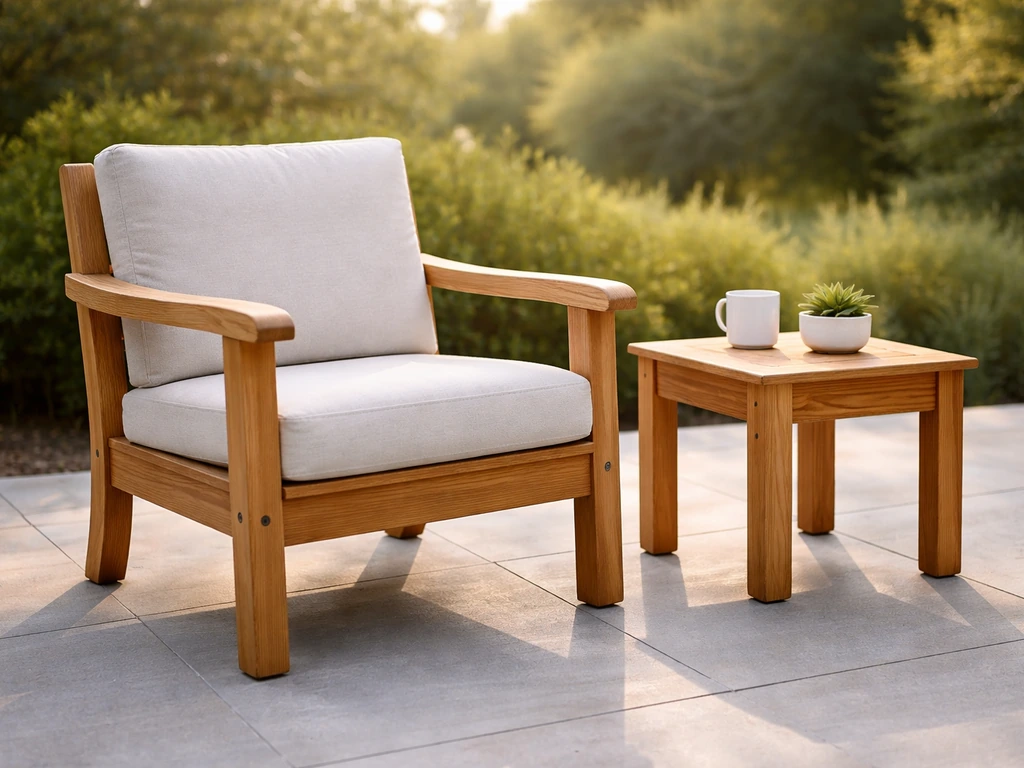
How Long Does Teak Patio Furniture Last? Lifespan Guide
Teak patio lifespan ranges, factors that shorten or extend durability, and a maintenance plan to protect joints and fini