
Powder-coated aluminum and solid teak are the two materials that consistently last the longest in real outdoor conditions. Quality aluminum frames can go 15 to 25 years with minimal effort, and well-maintained teak can outlast almost any other material on the market, often lasting 30 to 50 years. If you want the single most durable pick that works across nearly all climates with the least maintenance, aluminum is it. If you want heirloom-grade furniture and are willing to do a little more upkeep, teak is hard to beat.
What Outdoor Patio Furniture Lasts the Longest by Material

Marcus Kellerman
11 May 2026
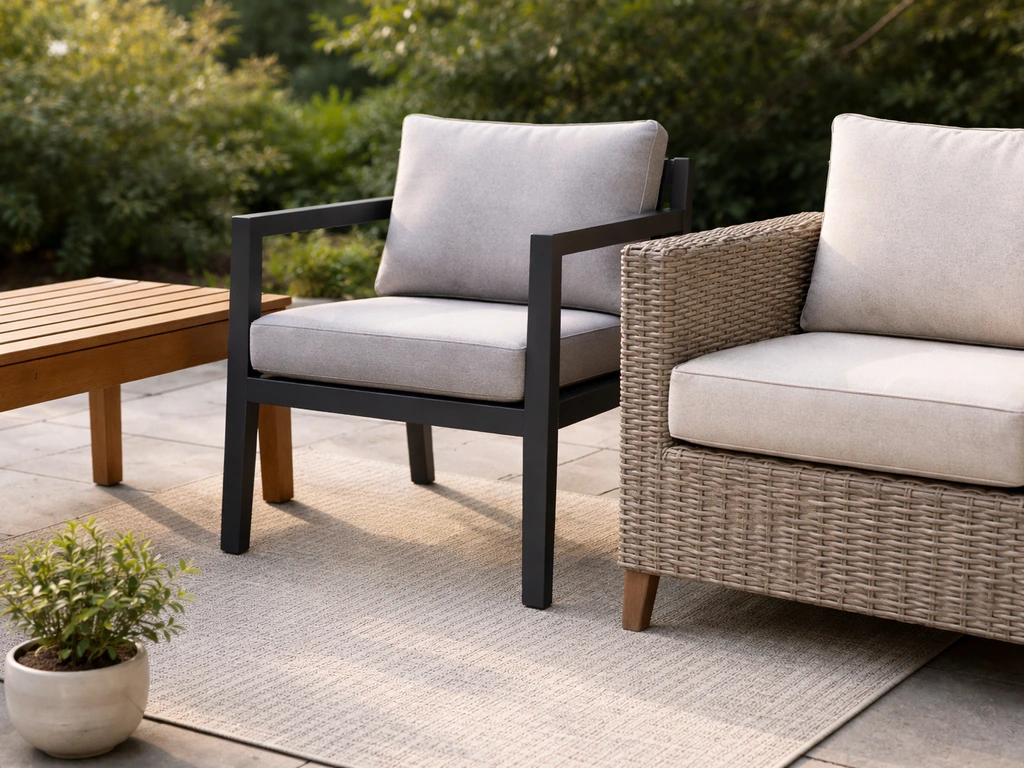
How long outdoor patio furniture should actually last
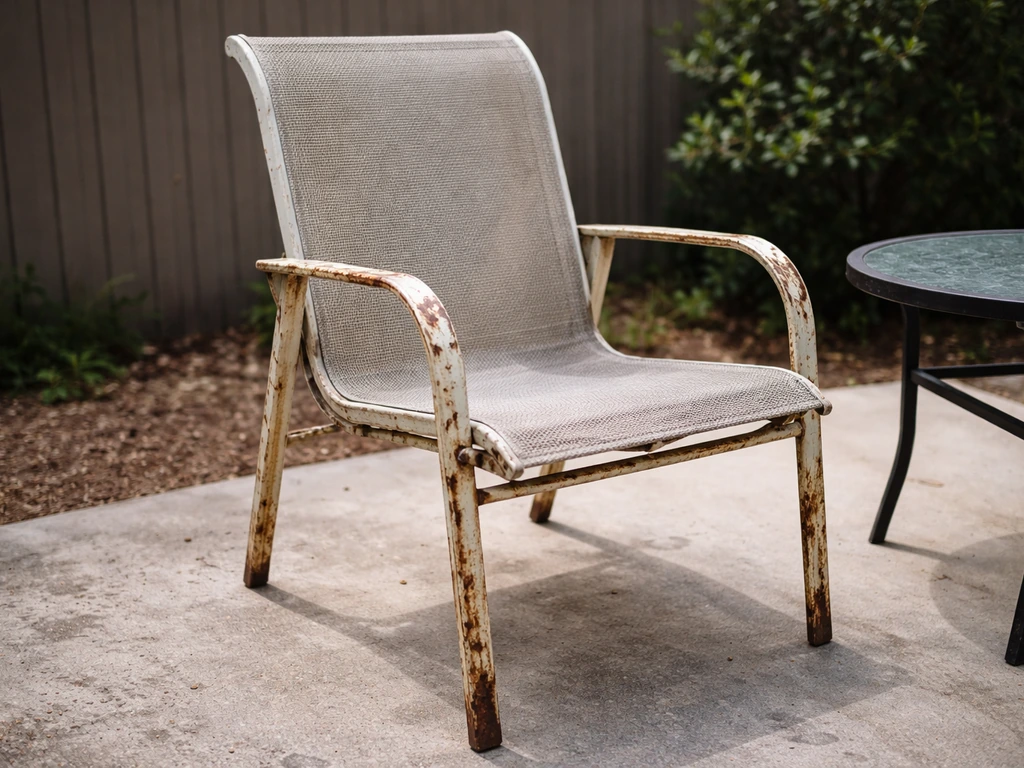
Realistic expectations matter here because a lot of furniture is sold with vague promises of durability. Entry-level furniture from big-box stores, regardless of material, typically lasts 2 to 5 years before it starts looking rough. Mid-range furniture from reputable brands, with proper care, should last 7 to 12 years. High-end, correctly specified furniture in the right climate should last 15 to 30 years or more. If you are trying to answer how long does patio furniture last for your exact setup, the next step is to match real expectations to your climate, care habits, and storage practices. The gap between those tiers is mostly about material grade, finishing quality, and hardware.
The industry uses accelerated weathering tests like ASTM G154 to simulate UV, heat, and moisture damage in a lab setting. Those tests are useful for comparing materials under controlled conditions, and BIFMA's outdoor furniture performance whitepaper (OF-2025) relies on similar methods. But the testing bodies themselves acknowledge there is no direct, guaranteed correlation between accelerated lab exposure and real outdoor years. That means manufacturer claims about lifespan are exactly that: claims. Your actual result depends heavily on your climate, how often you clean the furniture, and whether you store or cover it in the off-season.
The furniture style matters too. Dining chairs and tables tend to last longer than cushioned lounge sets simply because they have fewer fabric surfaces exposed to sun and moisture. Sectionals and deep-seating sets involve more complex frames and cushions, which introduce more failure points. When longevity is the goal, simpler construction usually wins.
Best materials for the longest-lasting patio furniture, by weather type
No single material wins in every climate. The best long-lasting choice for someone in coastal Florida is different from the best choice for someone in Minnesota or Arizona. Here is how the major materials stack up by weather condition.
| Material | Hot Sun/Dry Heat | Rain & Humidity | Snow & Freezing | Coastal Salt Air | Overall Lifespan (with care) |
|---|---|---|---|---|---|
| Powder-coated aluminum | Excellent | Excellent | Excellent | Very good | 15–25 years |
| Teak | Excellent | Excellent | Good | Excellent | 25–50 years |
| Cast iron | Good | Poor (rusts) | Poor (cracks under freeze/thaw) | Poor | 10–20 years (if maintained) |
| Wrought/welded steel | Good | Poor (rusts) | Fair | Poor | 5–15 years (if maintained) |
| HDPE/resin wicker | Very good | Excellent | Excellent | Very good | 10–20 years |
| Natural rattan wicker | Fair (dries/cracks) | Poor (swells/rots) | Poor | Poor | 3–7 years outdoors |
| Cedar/teak/eucalyptus wood | Good–Excellent | Good (if sealed) | Fair | Good (teak) | 10–30 years depending on species |
| Recycled HDPE lumber | Very good | Excellent | Excellent | Excellent | 20–30 years |
A few things jump out from that comparison. Cast iron and wrought steel, while heavy and visually impressive, are genuinely vulnerable to rust and freeze-thaw cycles. They can last decades with aggressive maintenance, but they are high-effort materials. Natural rattan should not be considered an outdoor-permanent material at all without serious UV and moisture protection. HDPE recycled lumber (the kind used in Adirondack chairs and park benches) is underrated and genuinely excellent for wet or cold climates.
Which furniture styles and types hold up the longest
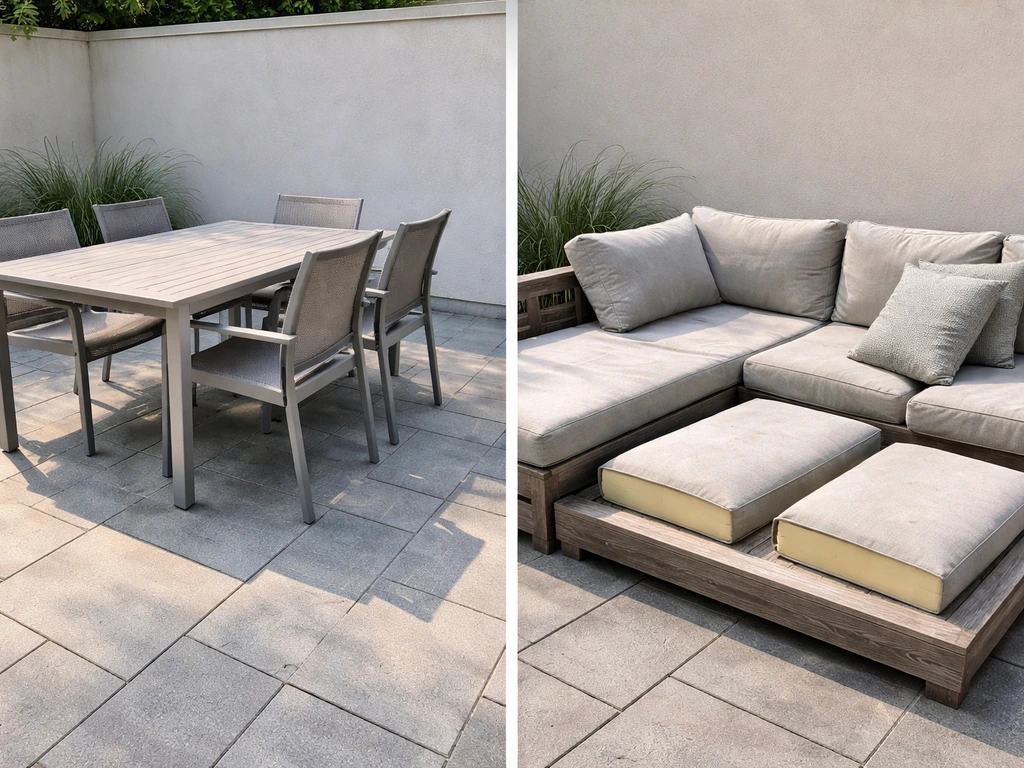
Frame-only or sling-style dining furniture tends to last the longest because there is no thick foam cushion trapping moisture and degrading over time. Aluminum or teak dining sets with sling seats or thin, quick-dry cushions are the most durable configuration you can buy. If you take care of the frame, the sling or cushion replacement every 5 to 8 years is a minor cost compared to buying a whole new set.
Deep-seating lounge sets and sectionals have more exposure points: foam cores, fabric covers, frame joints, and often more complex folding or reclining hardware. They can absolutely be built for longevity, but you need to pay more attention to cushion quality and storage. A deep-seating sectional in a teak or welded aluminum frame with solution-dyed acrylic cushions (like Sunbrella fabric) is a legitimate long-term investment. A deep-seating set with polyester cushions and a powder-coated steel frame is not.
Lounge chairs, especially aluminum or teak chaise lounges, sit in a middle ground. They are simpler in construction than sectionals and can last 15 to 25 years with good care. Adirondack chairs made from HDPE recycled plastic are arguably the most low-maintenance long-lasting chair you can buy: no painting, no sealing, no storing, and a lifespan that often exceeds 25 years.
- Dining sets with sling or thin quick-dry cushions: best overall durability and lowest maintenance
- HDPE Adirondack chairs: longest-lasting chair style with near-zero maintenance
- Teak or aluminum lounge/chaise: excellent lifespan if cushions are protected or stored
- Deep-seating sectionals: can last 15 to 20 years if built with quality frames and solution-dyed cushions
- Cast iron bistro sets: long-lived if repainted regularly and brought in during harsh winters
- Natural wicker/rattan sets: best suited as covered-porch furniture, not open-exposure year-round
Choosing between the top long-lasting materials: aluminum, teak, wicker, cast iron, rattan, and wood
Every material has a legitimate use case. The mistake most people make is choosing based on how something looks in a showroom rather than how it will perform in their specific backyard conditions. Here is a straight comparison.
Powder-coated aluminum
This is the most practical all-around choice for most homeowners. It does not rust, it is lightweight enough to move around, and quality pieces hold up well in sun, rain, humidity, and cold. The key variable is finish quality. Standard powder coats are rated roughly 5 to 10 years in harsh conditions. Architectural-grade powder coating or anodizing pushes that to 15 to 30 years. Ask specifically about the finish grade before you buy. Thin-walled aluminum (below about 0.065 inches wall thickness) dents and warps more easily; thicker-walled extrusions or cast aluminum components hold up far better.
Teak
Teak is the gold standard for outdoor wood furniture, and for good reason. If you are wondering, “does wood patio furniture last,” teak and well-sealed outdoor woods can last for decades with consistent oiling or sealing outdoor wood furniture. Its natural oil content makes it highly resistant to moisture, insects, and rot. Wikipedia on teak furniture notes that teak is valued for its natural resistance to weather and pests, which supports its long-lasting durability outdoors blank" rel="noopener noreferrer">highly resistant to moisture, insects, and rot. Left untreated, it weathers to a silver-gray patina that many people love. Oiled and maintained, it stays golden-brown. Grade A teak (from the heartwood of mature trees) is what you want; Grade B and C teak, sourced from younger trees or outer wood, contains less natural oil and is noticeably less durable. The price difference is real: Grade A teak dining sets typically start around $1,500 to $3,000 and go up significantly. But amortized over 30 to 40 years, the cost per year is often better than cheaper alternatives replaced every 5 years.
HDPE wicker (synthetic/resin wicker)
This is the category where naming gets confusing. High-quality outdoor wicker furniture is not made from natural wicker. It is made from high-density polyethylene (HDPE) resin woven over an aluminum frame. This material resists UV fading, does not absorb water, and holds up well in most climates. Good HDPE wicker can last 10 to 20 years. Look for UV-stabilized resin and a welded (not bolted) aluminum frame. Cheap versions use steel frames that rust through the weave over time.
Natural rattan
Natural rattan is a beautiful material that belongs indoors or in very well-covered outdoor spaces like screened porches. Exposed to direct sun, it dries and cracks. Exposed to rain, it swells, warps, and eventually rots. If you love the look and have a fully covered patio in a dry climate, it can work. Anywhere with rain or intense UV, it is not a durable outdoor choice.
Cast iron
Cast iron furniture is heavy, classic, and genuinely long-lasting if you are willing to maintain it. It is very susceptible to rust, especially at any chip or scratch in the finish. In humid, coastal, or very wet climates, it requires annual inspection and touch-up painting. It is also vulnerable to freeze-thaw cycles because water can work into hairline cracks and cause spalling over time. For a dry climate or a covered patio, cast iron can last decades. For a rainy Pacific Northwest or coastal setting, the maintenance burden is real.
Cedar, eucalyptus, and other outdoor wood
Cedar and eucalyptus are solid, affordable alternatives to teak. Cedar is naturally resistant to moisture and insects but softer than teak and more prone to denting. Eucalyptus is harder, denser, and closer to teak in performance, often at a lower price point. Both need annual sealing or oiling to maintain their resistance. Untreated, they can still last 10 to 15 years in many climates, but they will gray, crack, and check (develop small surface cracks) faster without care. Pine and spruce should not be used for exposed outdoor furniture; they absorb water readily and degrade quickly.
Care, maintenance, and storage that genuinely extend lifespan
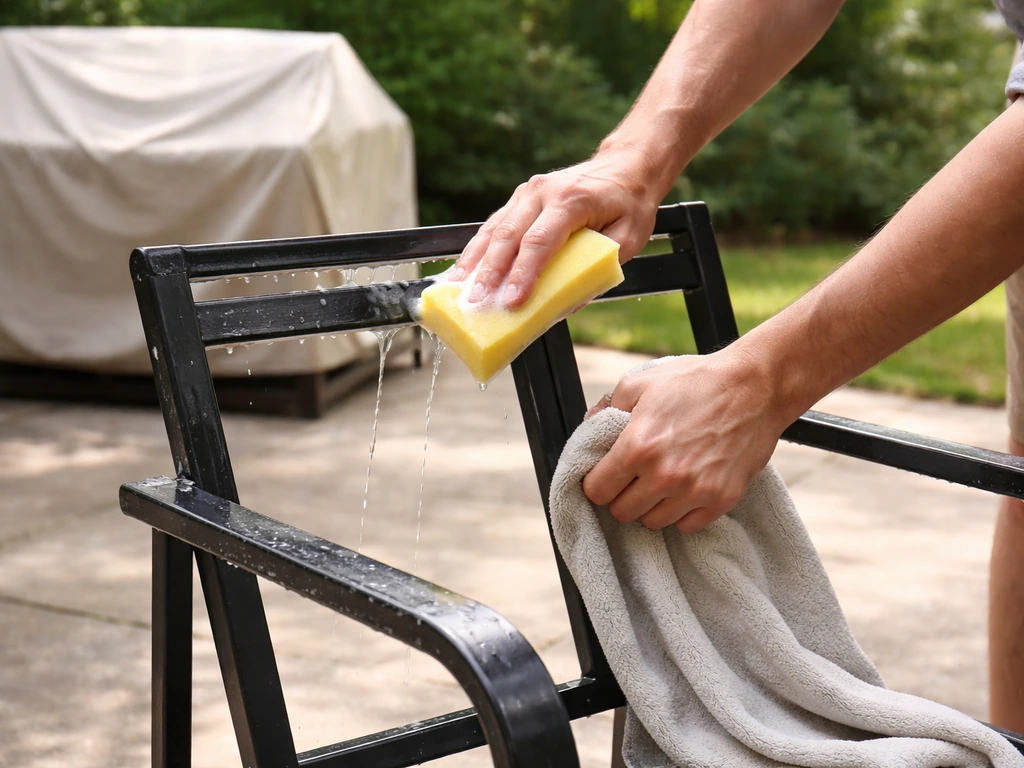
Most furniture failures are not really material failures. They are maintenance failures. The single highest-return thing you can do is wash your furniture twice a year with mild soap and water. Salt, bird droppings, pollen, and airborne pollutants break down coatings and fabrics faster than sun or rain alone.
- Wash all frames with mild dish soap and water at the start and end of each outdoor season. Rinse thoroughly.
- Inspect powder-coated or painted metal frames for chips or scratches every spring. Touch up immediately with matching powder-coat touch-up paint to prevent rust creep.
- Oil teak and eucalyptus furniture once per year in spring if you want to maintain the warm color. Use a dedicated teak or hardwood outdoor oil, not linseed oil.
- Store cushions indoors or in a waterproof storage box when not in use for more than a few days. Moisture trapped in foam is the number one cause of cushion failure and mold.
- Use breathable furniture covers (not plastic tarps) on frames during winter or extended non-use periods. Breathable covers prevent condensation buildup.
- Bring natural rattan, wicker with steel frames, and untreated softwood furniture indoors for winter in climates with freezing temperatures.
- Check all bolts and fasteners annually. Tighten loose hardware before it works itself into a stripped thread or stress fracture.
- Keep furniture legs off bare concrete or soil where possible. Use furniture feet or pads to prevent moisture wicking into wood end-grain or causing rust on metal feet.
For aluminum furniture, the maintenance is genuinely minimal: wash it, cover it if you live somewhere with harsh winters, and check for chips. For teak, oiling once a year adds maybe 20 minutes of work per piece. The return on that effort is measured in additional decades of life. For cast iron, the commitment is higher: annual repainting or at least touch-up is non-negotiable in wet climates.
What to look for when buying for longevity: a practical checklist
Buying for longevity means looking past the surface finish at the construction details that actually determine how long something will last. Here is what to check before you buy.
Frame construction
- Welded joints, not bolted joints, on metal frames. Welded connections are stronger and have fewer rust-entry points.
- Wall thickness on aluminum: look for 0.08 inch or thicker on main structural members for chairs and tables.
- Cast aluminum components at stress points (arm joints, leg connections) rather than stamped sheet metal.
- Mortise-and-tenon or stainless steel dowel joinery on wood furniture, not just glue and screws.
- Grade A teak designation on any teak furniture. Ask the seller directly if it is not stated.
Finishes and coatings
- Ask whether aluminum has standard powder coat or architectural-grade powder coat. The latter is thicker and more UV-resistant.
- Check that powder coat or paint is applied after all drilling and cutting, not before. Pre-cut pieces coated afterward have sealed edges that resist rust.
- For steel furniture, confirm a rust-inhibiting primer under any topcoat.
- On wood, confirm the species and whether a factory finish has been applied. Know whether it is a film-forming finish (polyurethane) or a penetrating oil, and follow the right maintenance protocol for each.
Cushions and fabrics
- Solution-dyed acrylic (Sunbrella is the best-known brand) is the most UV-resistant outdoor fabric available. It holds color 5 to 10 times longer than solution-dyed polyester and much longer than surface-printed fabrics.
- Quick-dry foam cores or open-cell foam wrapped in polyester batting drain water faster and resist mold better than standard upholstery foam.
- Zipper closures should be marine-grade or corrosion-resistant. Cheap zippers on outdoor cushions fail within 2 to 3 seasons.
- Removable, machine-washable covers extend cushion life significantly.
Hardware
- All exposed fasteners should be 304 or 316 stainless steel. 316 is preferable in coastal environments.
- Nylon or stainless steel glides on feet, not raw metal or bare plastic.
- Sling fabric tension should be adjustable or the sling should be replaceable. Ask the brand if replacement slings are available.
Warranties
A furniture warranty is one of the most honest signals of how much confidence a manufacturer has in their own product. Look for at least a 5-year structural warranty on the frame from a reputable brand. Some premium aluminum and teak brands offer lifetime frame warranties. A 1-year warranty on a piece of furniture claiming to last 20 years should be a red flag. Cushion warranties of 3 to 5 years on solution-dyed acrylic are reasonable. Warranties from brands with a physical address, real customer service, and available replacement parts are worth more than warranties from brands that may not exist in 3 years.
Climate-specific recommendations: matching material to your outdoor conditions
Hot sun and dry heat (Southwest, desert climates)
UV is the primary enemy here. Standard powder coat fades and chalks faster in intense desert sun. Architectural-grade powder coat or anodized aluminum holds color much longer. Teak handles heat well but will dry and gray faster without oiling in very dry climates. HDPE resin furniture is excellent because it does not dry out or crack the way natural materials can. Avoid natural rattan entirely. Cushion fabric is critical: solution-dyed acrylic is a must, not optional. Polyester fabrics fade visibly within one Arizona summer.
Rain and high humidity (Southeast, Pacific Northwest, tropical climates)
Moisture resistance is the primary requirement. Powder-coated aluminum and HDPE wicker over aluminum frames are the top picks here. Teak handles humidity very well due to its natural oils. Eucalyptus is a solid, more affordable alternative. Cast iron and steel require aggressive maintenance in these climates and will rust faster than you expect if you miss a chip or scratch. Wood furniture must be sealed or oiled annually and kept off the ground where moisture can wick up into end grain. Quick-dry cushion foam is essential; standard foam acts like a sponge in humid climates.
Snow, freezing temperatures, and freeze-thaw cycles (Midwest, Northeast, mountain regions)
Freeze-thaw cycles are brutal on anything that absorbs water. Cast iron, concrete, and natural stone furniture can crack over time as absorbed moisture expands. Powder-coated aluminum is nearly ideal for cold climates because it does not absorb water and does not rust. HDPE furniture is also excellent in cold and snow. Teak can handle cold reasonably well but should be moved off the ground or stored if possible during prolonged below-zero periods. Any wood furniture left out through winter should be elevated on feet and covered. Bring cushions inside whenever temperatures drop below freezing; foam that freezes while wet breaks down much faster.
Coastal salt air (ocean-facing properties)
Salt air accelerates corrosion on almost everything metal. Standard powder coat degrades faster in salt environments. Marine-grade 316 stainless steel hardware is mandatory, not optional. Teak is one of the best natural materials for coastal use because its density and natural oils resist the effects of salt and moisture. HDPE wicker over aluminum frames performs well, but check that all hardware is stainless. Cast iron is genuinely difficult to maintain at the coast and is not recommended unless you are committed to frequent painting and inspection. For aluminum furniture at the coast, look specifically for marine-grade anodizing or epoxy-based powder coats. The AAMA 2604/2605 testing protocols include a “Salt Spray Resistance” section that specifies specimen exposure durations such as 3,000 hours to ASTM B117 as part of qualification testing marine-grade anodizing or epoxy-based powder coats. Rinse all furniture with fresh water regularly if you are within a quarter mile of the ocean.
The bottom line: what to actually buy
If you want maximum longevity with minimum maintenance in almost any climate, quality powder-coated aluminum with solution-dyed acrylic cushions is the most practical choice most people can make. If you want patio furniture that will last, focus on proven materials like quality powder-coated aluminum or Grade A teak and maintain them properly over time maximum longevity. For a direct answer to what patio furniture holds up best overall, start with quality powder-coated aluminum, then match the cushioning to your climate maximum longevity with minimum maintenance. If you want the best durable patio furniture, start with powder-coated aluminum or Grade A teak and then match the cushions and hardware to your climate. It lasts 15 to 25 years, handles nearly every weather condition well, and requires almost no seasonal effort beyond washing and covering. If you want the longest-possible lifespan and are comfortable with annual oiling, Grade A teak is the superior long-term investment, especially in humid or coastal settings. HDPE recycled-plastic furniture (including wicker over aluminum frames) is the right call if you are in a very wet or very cold climate and want zero-maintenance simplicity. Avoid natural rattan, low-grade steel, and untreated softwoods if outdoor longevity is your goal.
The questions of which specific brands and models deliver on these material promises, how wood furniture in particular holds up over time, and what the actual lifespan looks like year by year are worth digging into further before you buy. The key is always matching the material grade and construction quality to your specific conditions rather than buying based on looks or price alone.
FAQ
What outdoor patio furniture lasts the longest if I never want to oil, paint, or refinish anything?
Choose quality powder-coated aluminum frames with solution-dyed acrylic cushions, or HDPE wicker on welded aluminum frames. Those options do not require annual sealing or repainting, and most maintenance is limited to twice-yearly washing plus seasonal covering if winters are harsh.
Does covering patio furniture actually extend lifespan, or is it mostly marketing?
Covering helps a lot, especially for cushions and finishes. Covers reduce UV and moisture exposure when your furniture sits for months, but make sure the cover breathes or you use a ventilated cover, so trapped condensation does not accelerate rust on any exposed hardware or mildew on cushion fabric.
How can I tell whether a powder-coated aluminum finish is truly durable?
Ask for finish grade details, not just the word “powder-coated.” Look for thickness or specifications of the coating system, and confirm whether it is anodized or uses an epoxy-based powder coat for demanding climates. Also inspect for continuous coverage at welds and corners, since thin spots chip first.
Teak sounds like the longest-lasting wood, but does it last if I skip annual oiling?
Yes, teak can still last for decades even if you do not oil, because its density and natural oils resist rot. The tradeoff is color and surface condition, it will gray faster and may look rougher sooner, but longevity typically stays strong if you keep it clean and protect it from standing water.
What cushion type gives the best longevity in humid or rainy climates?
Use quick-dry foam and solution-dyed acrylic fabric, ideally with covers that can be removed and dried. Avoid “regular” foam that stays wet, and avoid polyester blends that are not solution-dyed because they fade and degrade faster under constant moisture.
Are sling chairs actually longer-lasting than deep-seating lounge sets?
Usually, yes. Slings have fewer thick fabric layers that trap moisture, and they are simpler mechanically. Deep-seating sets last longer only when the cushions are truly quick-dry, frames are robust at joints, and you store or cover them effectively during wet seasons.
What is the most common mistake that shortens the life of otherwise durable materials like aluminum and teak?
Ignoring chips, scratches, and trapped grime. For aluminum, a chip can expose metal and later develop corrosion if you never touch it up. For teak, letting debris build up and leaving standing water can speed up surface breakdown, even though the wood resists rot.
Is cast iron ever a good choice for maximum lifespan?
It can be, but only with committed maintenance. In dry or covered patios it can last decades, but in humid, coastal, or freeze-thaw areas it requires frequent inspection and touch-up paint to prevent rust from spreading from small damage points.
Can I use outdoor furniture in winter, and still expect long lifespan?
Yes for aluminum and HDPE, especially if you cover them. For teak and all wood, elevate off the ground and cover to prevent prolonged saturation, and bring cushions inside or fully dry them before freezing conditions to prevent freeze damage to wet foam.
What should I check about hardware for longevity, especially near the ocean?
Confirm marine-grade stainless hardware, commonly 316 stainless. Salt accelerates corrosion, so even “outdoor” screws or bolts that are fine inland can fail quickly at the coast. Also ensure all hardware is compatible with the frame material, so you do not get galvanic corrosion at joints.
How do I choose between Grade A teak and lower grades for longest lifespan?
Grade A teak from mature heartwood holds more natural oil, so it weathers more slowly and resists moisture and insects better. Grade B and C can still perform, but they typically need more consistent maintenance and they tend to show wear and color changes sooner, which can reduce the apparent lifespan.
Is there a warranty clue that helps predict whether furniture will actually last 15 to 25 years?
Look for structural warranty length on the frame and reasonable coverage for the materials involved. A long structural warranty (for example, at least 5 years, sometimes lifetime frame coverage) plus realistic cushion warranties (often a few years) usually indicates better construction and parts availability for repairs, which matters for long-term ownership.
What longevity should I expect for the “best overall” option in real use, not lab claims?
For quality powder-coated aluminum with durable cushions, a practical expectation is roughly 15 to 25 years in many climates with light seasonal effort (washing and covering). If you skip covering in harsh winters or keep cushions wet and unclean, your realistic lifespan can drop well below that range.
Next Articles
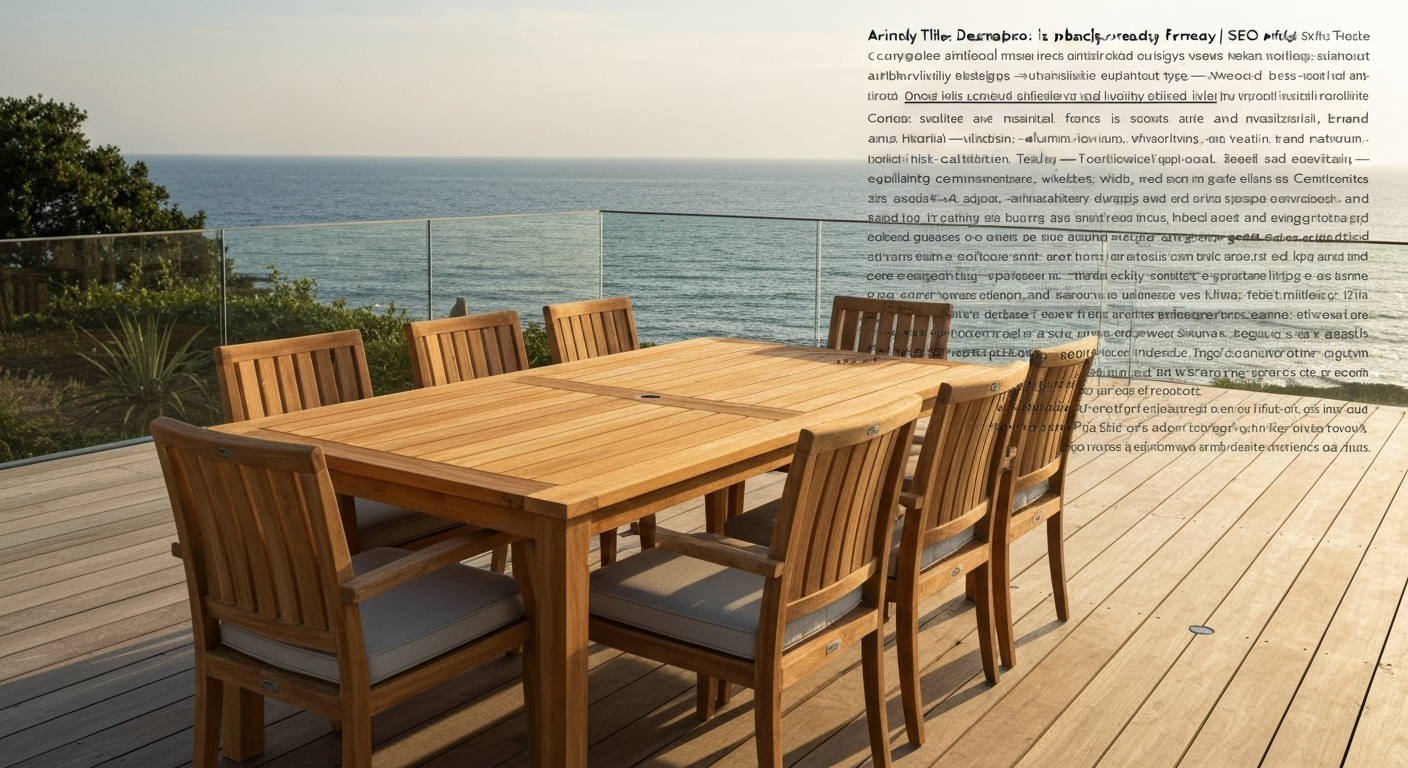
Is Teak Patio Furniture Good? Durable, Smart Buying Guide
Is teak patio furniture good? Evidence-based verdict, lifespan, care, buying tips, comparisons, and eco guidance.
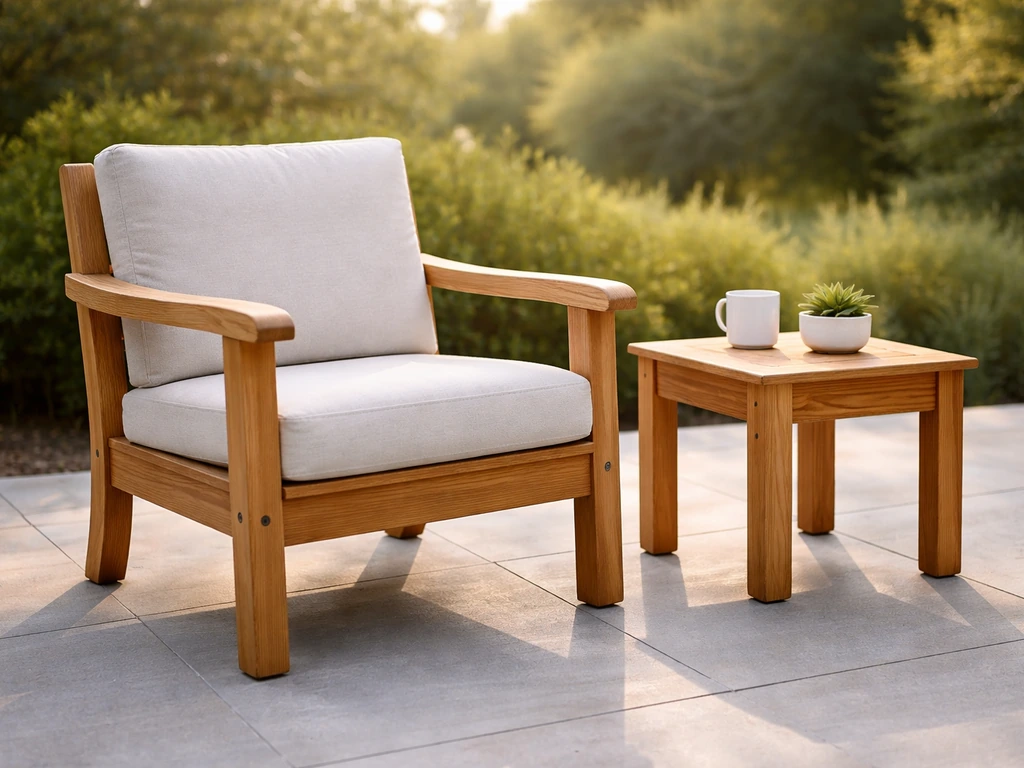
How Long Does Teak Patio Furniture Last? Lifespan Guide
Teak patio lifespan ranges, factors that shorten or extend durability, and a maintenance plan to protect joints and fini
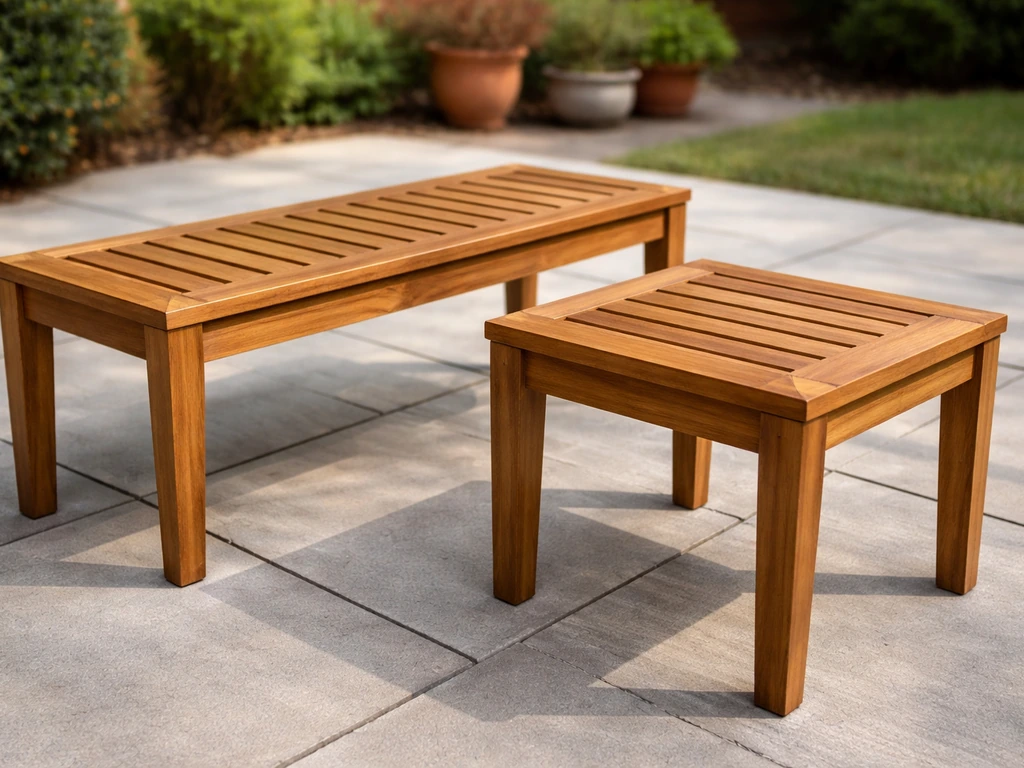
High Quality Teak Patio Furniture: How to Choose and Care
Checklist for buying high quality teak patio furniture, spot real construction, compare materials, and maintain it by cl