
Synthetic resin wicker (the kind woven from high-density polyethylene, or HDPE) can absolutely be left outside year-round with the right frame and basic protection. Natural wicker made from rattan or bamboo cannot. Leave natural wicker outside through rain, humidity, and sun and it will crack, fade, grow mold, and eventually fall apart. That single distinction, synthetic vs. natural, is the most important thing to sort out before you do anything else.
Can Wicker Patio Furniture Be Left Outside? What Works by Material

Marcus Kellerman
21 Jun 2026
Quick answer by wicker type
| Wicker Type | Material | Can It Stay Outside? | Biggest Risk | Minimum Protection Needed |
|---|---|---|---|---|
| Natural wicker | Rattan, bamboo, reed | No — bring it in or cover it | Moisture, mold, cracking, UV fading | Indoor storage or fully enclosed shelter |
| Synthetic / resin wicker (PVC) | PVC plastic weave | Partially — with good protection | Becomes brittle in freezing temps | Quality furniture cover, store in hard winter |
| Synthetic / resin wicker (HDPE) | High-density polyethylene | Yes — year-round capable | Cushion mildew, frame rust if steel | Breathable cover, aluminum or powder-coated frame |
If you have a quality HDPE resin wicker set on a powder-coated aluminum frame, you're working with material that's engineered to handle salt spray, blizzards, strong winds, glaring sun, and humidity. It won't rot, it won't absorb water, and it stays flexible even at very low temperatures (some HDPE products are rated down to -70°C). PVC-based synthetic wicker is more budget-oriented and can become brittle in freeze-thaw cycles, so it deserves more caution in cold climates. Natural rattan, regardless of how good it looks on the showroom floor, is not built for the outdoors long-term, one season of regular rain exposure can turn it black and cause fibers to split.
What weather your wicker can actually handle
Rain and moisture
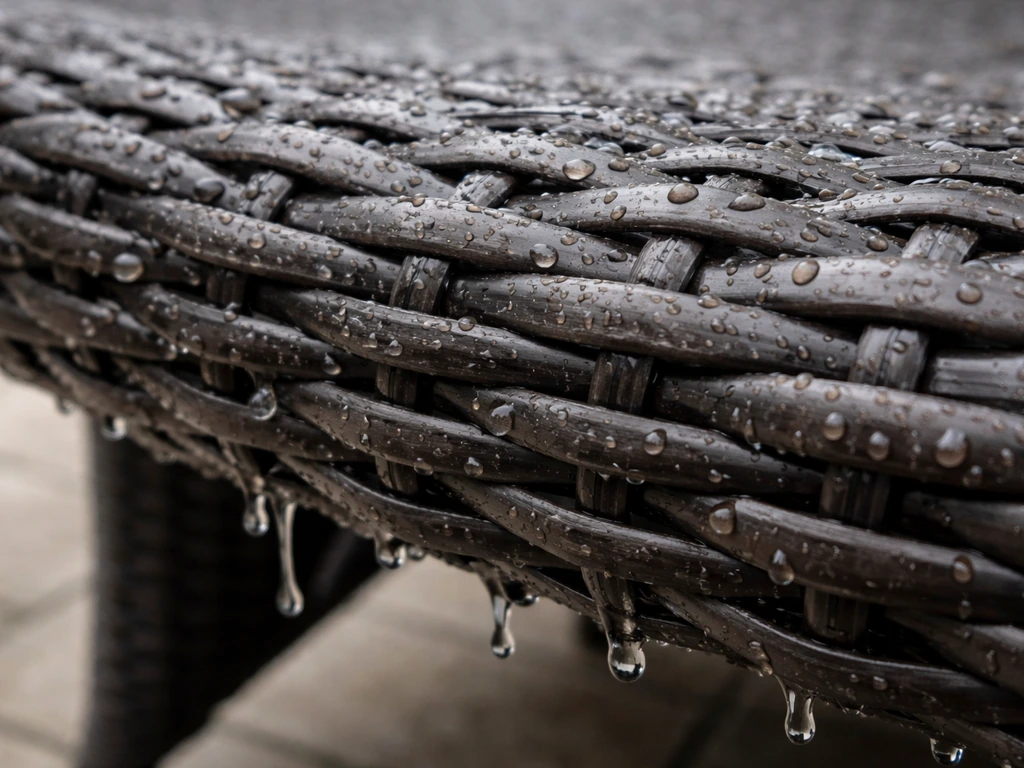
HDPE resin wicker is non-porous, so water rolls off the weave rather than soaking in. The furniture dries quickly after rain, which is why brands like Oxford Garden describe their resin wicker as "quick-drying." Natural rattan is the opposite: it absorbs moisture readily, which swells the fibers, weakens the structure, and creates ideal conditions for mold and mildew. Even a few weeks of consistent rain exposure will start degrading untreated natural wicker visibly.
Sun and UV exposure
Quality HDPE resin wicker is UV-stabilized, meaning the color is dyed through the material rather than painted on the surface. A Wikipedia overview of resin wicker characterizes polyethylene resin wicker as durable and resistant to water and UV radiation from sun damage blank" rel="noopener noreferrer">resistant to water and sun damage from UV radiation. That matters a lot, surface-painted synthetic wicker will fade and peel, while dyed-through HDPE holds its color through years of direct sun. Natural rattan has no UV resistance at all. Sunlight dries it out, causes fading, and makes fibers brittle over time. If your natural wicker set is sitting in full afternoon sun, it's aging fast even in a dry climate.
Snow, freezing temps, and temperature swings
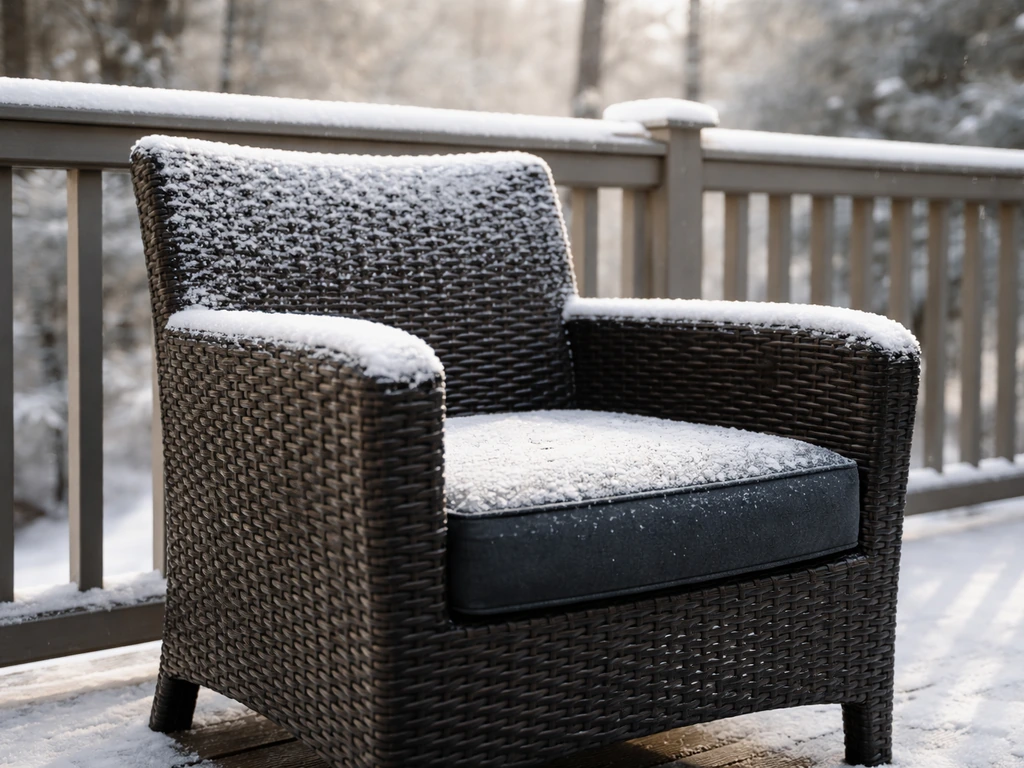
HDPE resin wicker holds up through freezing conditions without cracking or becoming brittle, which is why manufacturers can market it as appropriate for harsh winters. PVC-based synthetic wicker doesn't perform as well in deep cold, the material loses flexibility and can crack under pressure. Natural rattan is extremely sensitive to temperature swings: the rapid expansion and contraction of fibers causes cracking and splitting, and any trapped moisture turns to ice and accelerates the damage. For natural rattan, even a mild winter with freeze-thaw cycling is damaging.
Humidity and coastal conditions
Mold and mildew become a serious risk for natural rattan once relative humidity climbs above roughly 60 to 70 percent with poor airflow, and that's most of the southeastern US, coastal regions, and anywhere with wet summers. Interestingly, very low humidity (below about 40 percent) also harms natural rattan by drying it out and increasing brittleness. For HDPE resin wicker, high humidity is largely a non-issue for the weave itself, but saltwater environments do matter for the frame: aluminum frames resist corrosion well, while even powder-coated steel will eventually rust under sustained salt air exposure.
How to check what you actually have
Before deciding on a storage or protection strategy, spend five minutes figuring out exactly what your set is made of. Most people assume their outdoor wicker is synthetic, but that's not always the case, especially with older sets or pieces bought secondhand.
- Check the label or tag. Look under the seat cushion, on the underside of a chair, or on any attached paperwork. Words like "resin wicker," "all-weather wicker," "HDPE," or "polyethylene" confirm synthetic. "Rattan," "bamboo," "natural," or "cane" means it's organic material.
- Feel the weave. Natural rattan feels slightly rough, has a warm organic texture, and shows visible grain or nodes. Synthetic HDPE resin feels smooth, uniform, and almost plasticky — it can look very convincing but the texture gives it away up close.
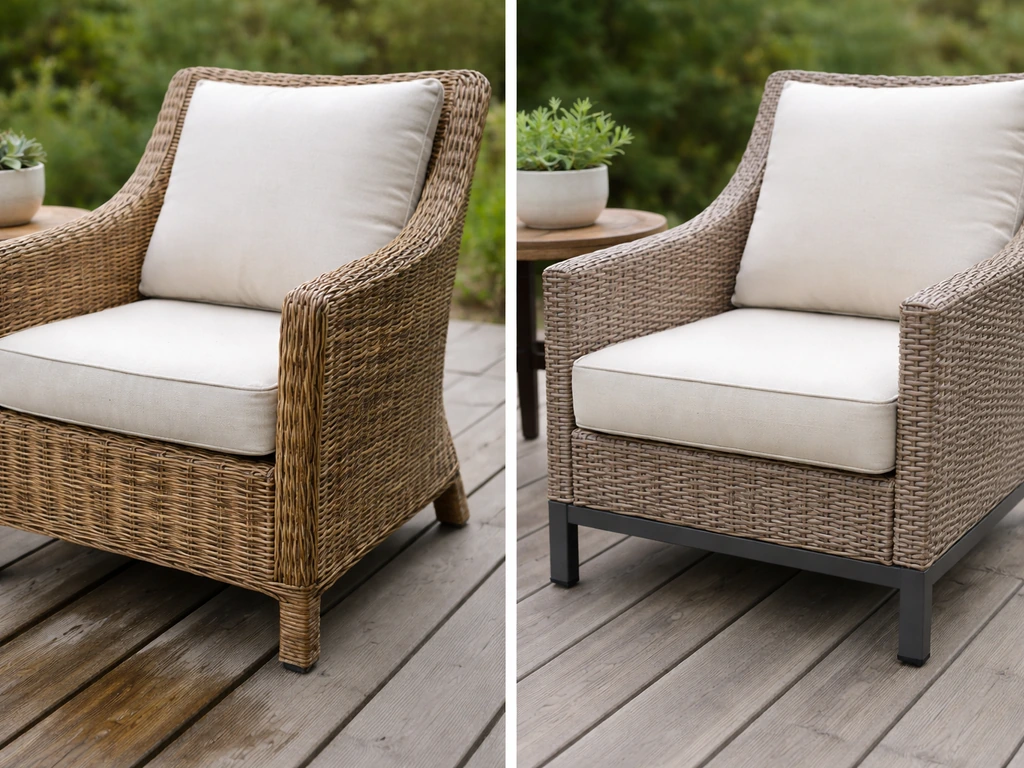
- Check the frame. Tap the legs or the structural supports. Aluminum is light and won't attract a magnet. Steel is heavier and will pull a magnet. Rattan or bamboo frames are warm, have visible grain, and feel woody. An aluminum or powder-coated steel frame with a resin weave is your best outdoor setup. A natural wood or rattan frame limits outdoor durability regardless of what the weave is made of.
- Look for existing damage. Check the weave for split or lifting strands, discoloration, black spots (mold), or brittleness. On the frame, look for rust streaks, peeling powder coat, or soft/spongy spots on wood or rattan. This tells you how much outdoor exposure has already taken a toll.
- If in doubt, do a small water test. Drip a few drops of water on an inconspicuous section of weave. If it beads up and rolls off quickly, it's synthetic resin. If the material absorbs the water and darkens, it's natural.
Best practices for leaving it outside
Covers: breathable, not waterproof tarps
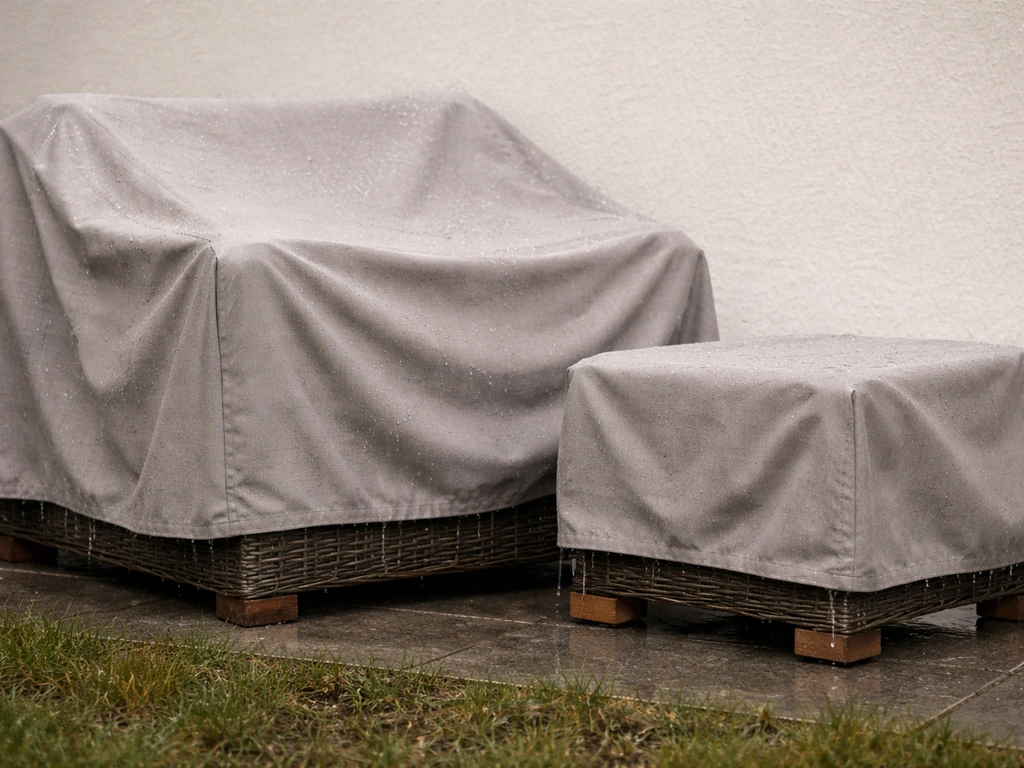
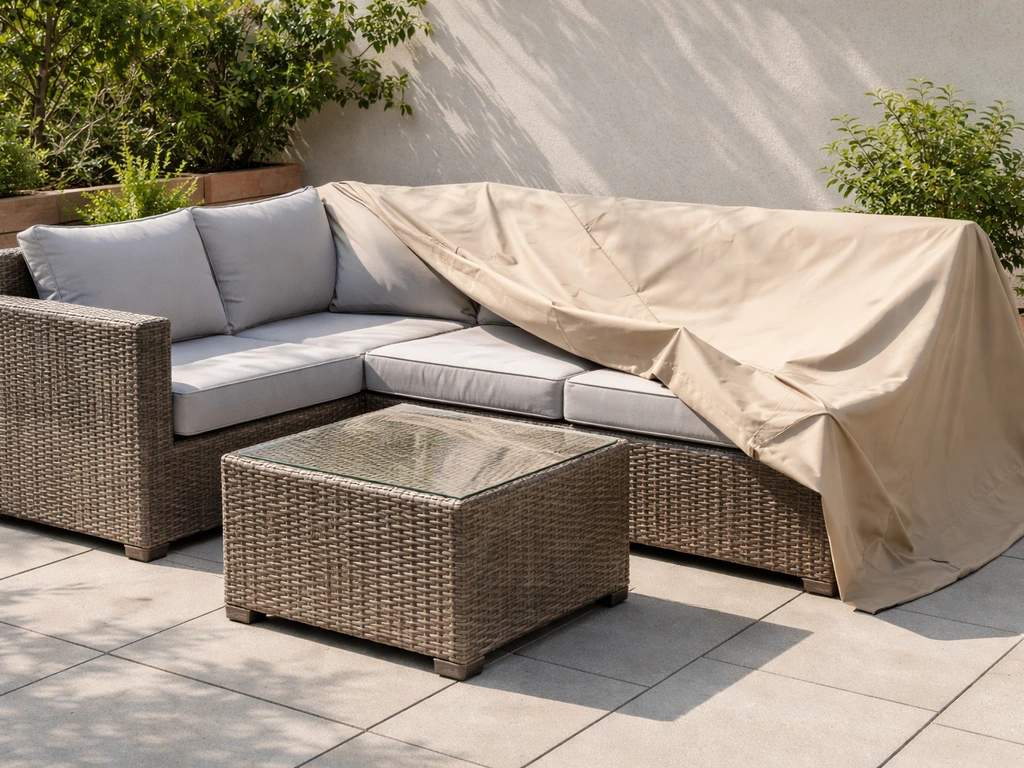
A breathable furniture cover is better than a solid plastic tarp for wicker, even all-weather resin wicker. Tarps trap moisture underneath, creating warm, damp conditions that encourage mildew on cushion fabric and can corrode metal frames over time. Breathable covers allow airflow while still blocking rain and debris. The cover should fit well enough that water runs off the sides rather than pooling in the middle, a sagging, water-pooled cover is almost as bad as no cover at all.
Placement and elevation
Keep wicker furniture off the grass and away from direct ground contact. Sitting on soil or lawn allows moisture to wick upward into the frame legs, accelerates rust on steel, and keeps the underside of the furniture permanently damp. Patio pavers, deck boards, or furniture feet that raise the legs even slightly make a real difference. Cape May wicker patio furniture is typically made from resin wicker on durable frames, so it can hold up well when you keep it off the ground and manage moisture. Position the set where it gets reasonable airflow and doesn't sit in a low spot that collects water after heavy rain.
Cushions are the real weak point
The wicker frame on a quality HDPE set can handle outdoor conditions far better than the cushions that come with it. Cushion foam and fabric absorb water, stay wet for hours or days, and develop mildew if they don't dry fully between rain events. The standard advice, bring your cushions in when not in use, is genuinely the right call. If that's not practical, lay them flat on the seat (rather than propped upright) before covering so the cover fits properly and water can drain off. Restoration Hardware similarly advises avoiding standing water by laying outdoor cushion inserts flat before covering so the cover fits properly and water can drain off blank" rel="noopener noreferrer">lay them flat before covering so the cover fits properly and water can drain off. Never store cushions while damp. Make sure they're completely dry before putting them away, even for short periods. Resin wicker cushion fabric can also become porous over time, which means what starts as a surface-repellent cushion eventually absorbs water more readily, something worth watching after a few seasons.
Seasonal care and maintenance
Spring startup
At the start of the outdoor season, rinse down the entire set with low-pressure water to remove dust, pollen, and any mold spores that settled over winter. Use mild soap and a soft-bristled brush for the weave, working into the crevices where debris collects. An old toothbrush works well for tight spots. Check the frame for rust spots, peeling powder coat, or bent welds. Apply a UV protectant spray to the resin weave before sustained sun exposure kicks in, this slows color fading, especially on darker weave colors.
In-season upkeep
Wipe down the furniture after heavy rain to prevent standing water from sitting in the weave. Don't let water pool on flat horizontal surfaces, table tops, armrests, and seat pans. Wash cushion covers according to their fabric guidelines at least once mid-season. If you're in a high-humidity region, do a quick visual check for early mold spots every few weeks, catching it early with a diluted white vinegar or mild soap solution is much easier than dealing with established mildew. For natural rattan that you're keeping in a covered patio or sunroom, a light application of rattan conditioner or furniture wax helps keep the fibers from drying out. If you have cape may patio furniture, focus on keeping it dry, well-covered, and protected from long wet spells.
Winter closedown
For HDPE resin wicker on aluminum frames, cleaning and covering with a breathable cover is usually enough in mild to moderate climates. In regions with severe winters, heavy snow loads, sustained freezing temperatures, or frequent freeze-thaw cycling, moving the furniture to a garage, shed, or storage room is the better call, even if the material can technically handle the cold. Store furniture upright to prevent moisture accumulation, and keep cushions completely separate from the frame pieces. For natural wicker, there's no debate: bring it inside for winter, ideally to a space with humidity between 40 and 60 percent to prevent both mold and drying-out cracking.
Repairs and warning signs you've gone too far
Some damage is repairable. Loose or lifted strands on resin wicker can often be re-secured with a flexible outdoor adhesive or rewoven if you have spare material. Surface rust on powder-coated steel frames can be sanded back and touched up with rust-inhibiting paint if caught early. Faded resin weave can sometimes be refreshed with a UV protectant, though deep fading and brittleness mean the material has degraded beyond cosmetic repair.
Stop leaving your set outside when you see these signs: weave strands that are crumbling, snapping, or pulling away in multiple spots (structural failure, not just cosmetic); black mold embedded deep in the weave that doesn't clean off; frame rust that has spread under the powder coat and is causing bubbling or structural weakness; or cushion foam that stays damp for 24-plus hours after rain even with covers in place. At that stage, continued outdoor exposure is accelerating failure, not just letting it age gracefully.
- Brittle or crumbling weave strands — material has UV-degraded past usable life
- Black mold deeply embedded in the weave after cleaning attempts
- Frame rust spreading under powder coat, causing bubbling or soft spots
- Cushion foam staying wet for more than a day after rain
- Structural frame joints that flex or creak — indicates corrosion weakening welds
- Weave pulling away from the frame at corners or load-bearing points
When wicker isn't the right choice for your climate
Even quality HDPE resin wicker has its limits, and some climates genuinely push it harder than others. If you're replacing a set or choosing materials for a new outdoor space, it's worth a brief comparison with the alternatives, especially if you're in a particularly harsh environment.
| Material | Best For | Worst For | Maintenance Level | Expected Lifespan Outdoors |
|---|---|---|---|---|
| HDPE Resin Wicker (aluminum frame) | Most climates, coastal, humid regions | Extreme UV over many years (slow fading) | Low | 10–15+ years |
| Aluminum | All climates, minimal maintenance priority | Those who want warmth/texture | Very Low | 15–20+ years |
| Teak | Tropical, humid, coastal, UV-heavy climates | Those who won't oil it periodically | Medium | 15–25 years |
| Cast Iron | Stable, sheltered patios, mild climates | Humid, coastal, freeze-thaw regions | High (rust prevention) | 20+ years with maintenance |
| Natural Rattan / Wicker | Covered patios, sunrooms, low-humidity interiors | Any exposed outdoor use | High | 3–7 years (outdoors), longer indoors |
If you're in the southeastern US, Gulf Coast, Hawaii, or anywhere with persistent high humidity and heat, HDPE resin wicker on aluminum is genuinely one of the better choices, it handles the conditions aluminum and teak handle, but with more visual warmth and texture. In the desert Southwest, UV degradation is your main enemy, so going with dyed-through HDPE (not surface-painted) and applying UV protectant annually matters more than waterproofing. In cold northern climates with heavy snow and hard freezes, HDPE holds up, but storing it off the ground and covered through winter extends the life of both the frame and the weave considerably. For those comparing wicker to metal patio furniture specifically, it really comes down to aesthetics and comfort, wicker tends to be more comfortable without cushions and gives a warmer look, while aluminum is essentially zero-maintenance and harder to damage through neglect.
If you're shopping for longevity and are serious about leaving furniture outside with minimal intervention, it's also worth looking at how different wicker sets compare in terms of how long they actually last, construction quality, weave density, and frame gauge vary a lot even within the synthetic category, and those differences show up after year three or four of outdoor exposure. If you want a real-world estimate for how long does wicker patio furniture last, compare those long-term durability differences first before you decide on the set and coverage plan how long they actually last.
FAQ
Can I leave wicker patio furniture outside during winter if I have synthetic pieces?
Only if it is synthetic resin wicker, ideally HDPE (often described as high-density polyethylene). PVC-based synthetics can survive outdoors but are more likely to get brittle in deep cold, so in freezing climates you should plan to move or insulate them during sustained winter freezes and frequent freeze-thaw cycles.
Is it okay to leave wicker patio cushions outside under a cover?
Yes, but prioritize drying. If your cushions must stay out, put them flat so water drains, use breathable covers that fit tightly enough to avoid sagging, and do a quick check after storms to confirm the cushion underside is not staying damp for more than a day.
What’s worse for wicker, no cover or a plastic tarp?
No, don’t rely on a solid plastic tarp. Plastic traps moisture, which encourages mildew on cushion fabric and can accelerate corrosion on metal hardware. Use a breathable cover (or at least vented sides) and ensure water runs off the edges rather than pooling over the seat.
Does leaving resin wicker outside work differently in coastal areas?
It depends on the frame and environment. Aluminum frames generally handle high humidity and rain well, while powder-coated steel can rust over time, especially in coastal, salt-air areas. If you live near the ocean, give the frame extra rinsing after salty weather and inspect the underside where moisture lingers.
How does high humidity affect leaving resin wicker out year-round?
If the set is truly HDPE resin wicker, high humidity usually isn’t a weave problem, but very poor airflow can still promote mildew on cushions and debris trapped in the weave. If you notice musty odors or surface spotting, improve airflow and clean crevices during mid-season.
Can I leave rattan wicker outside if it already has a protective seal?
Rattan that looks “treated” can still fail outdoors. Outdoor-ready finishes on natural wicker often wear down with UV and rain, and once the fibers start cracking you cannot reverse it. For rattan, plan on indoor winter storage or at least a dry, covered space that keeps it out of rain.
What should I do when I see early wear on resin wicker?
Yes, early damage signs usually get worse faster than normal aging. Replace or re-secure loose strands, and treat rust immediately. Stop outdoor use if you see embedded mold that won’t fully clean, widespread crumbling strands, frame bubbling under coating, or cushions that remain damp 24 hours after rain.
Can I use UV spray to keep resin wicker from fading, and how often?
Yes, but use the right product. UV protectant sprays can help slow fading on resin, especially for darker weaves, but they can also leave a residue that attracts dirt if applied too thickly. Clean first, dry fully, then apply a thin, even layer according to the product label.
Can I repair loose or lifted resin wicker strands without replacing the whole set?
It can, but you should test first. Some adhesives or coatings are not flexible or not formulated for outdoor plastics, and they can fail under cold temperatures. For repair, choose flexible outdoor adhesive meant for HDPE or similar synthetics, and ensure the strands are fully clean and dry before re-seating.
Does it matter if my wicker set sits directly on grass or patio soil?
For longevity, raise the furniture legs and prevent trapped moisture under the piece. Even small contact with soil keeps the underside damp, which speeds rust on steel and encourages grime accumulation in the weave. Use furniture feet, pavers, or deck boards to create a consistently dry base.
What’s the biggest mistake people make when covering wicker?
Yes, especially if you use covers. If you covered the furniture while it was still wet, you can trap moisture and start mildew within days. After rain, wipe away puddles, let the furniture dry, then cover, and keep cushions stored separately when possible.
Next Articles
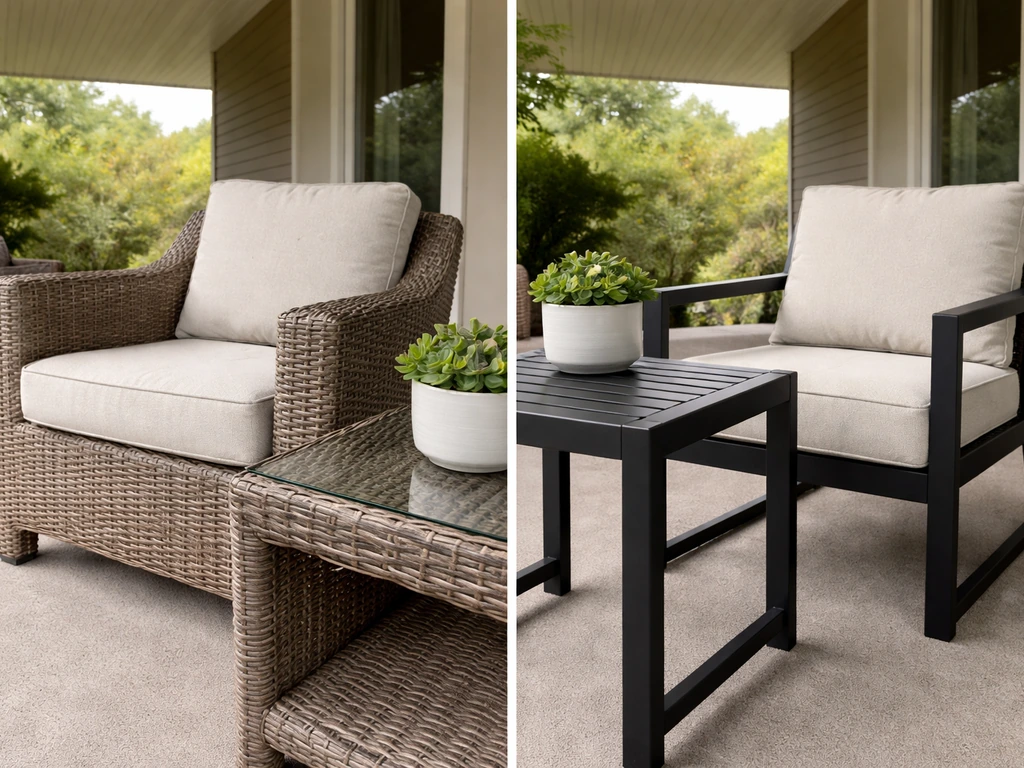
Wicker vs Metal Patio Furniture: Which Is Better?
Side by side wicker vs metal patio furniture comparison: weather, rust, comfort, upkeep, cost, and which to choose by cl
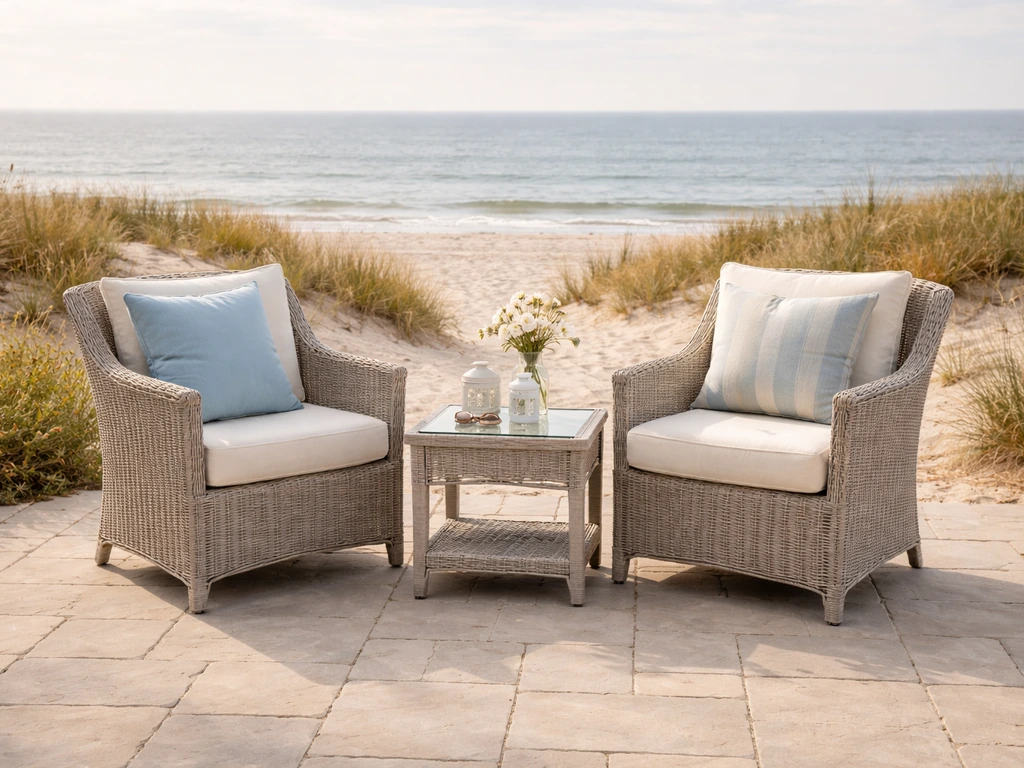
Cape May Wicker Patio Furniture: Coastal Buying and Care Guide
Buy and care for cape may wicker patio furniture: choose PE vs natural, corrosion-resistant frames, cushions, covers, an
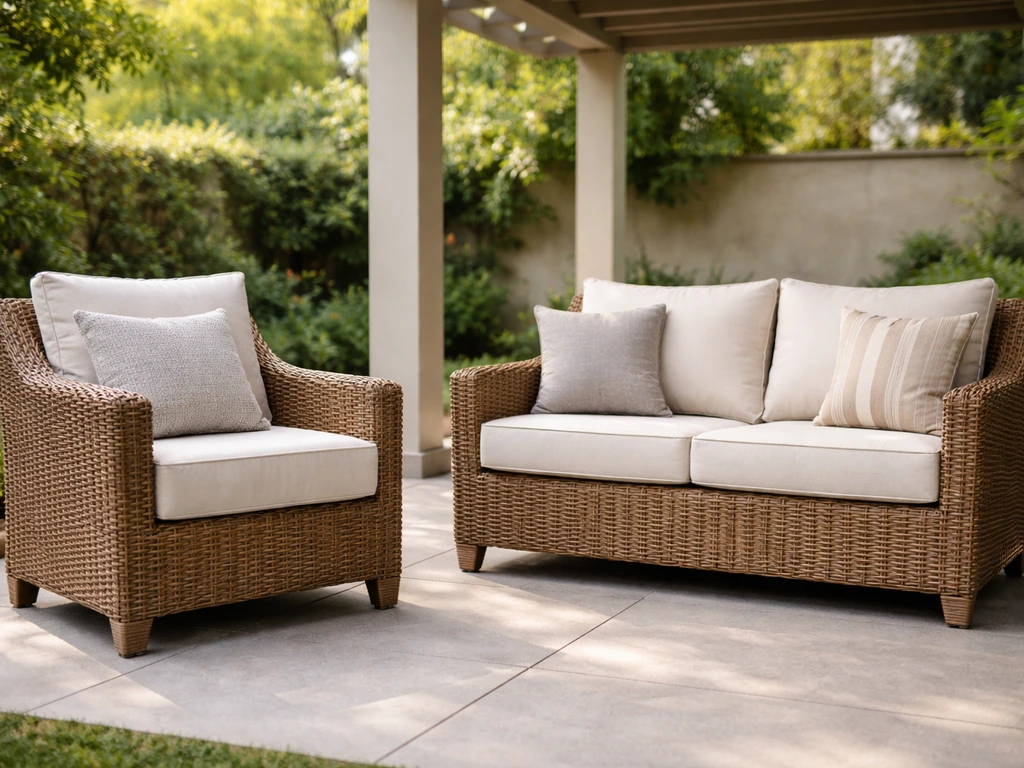
How Long Does Wicker Patio Furniture Last? Durability Guide
Learn how long wicker patio furniture lasts, natural vs resin, plus maintenance tips by climate and wear signs.