
For most outdoor settings, synthetic resin wicker over a powder-coated aluminum frame is the more comfortable, easier-to-live-with choice. Powder-coated steel or aluminum furniture wins on raw toughness and longevity in rough climates, but it tends to get hot in direct sun, feels harder underfoot, and requires more attention when coatings chip. The real answer depends on your climate, how much sun and salt air your patio sees, and how much maintenance you're willing to do.
Wicker vs Metal Patio Furniture: Which Is Better?

Marcus Kellerman
17 Jun 2026
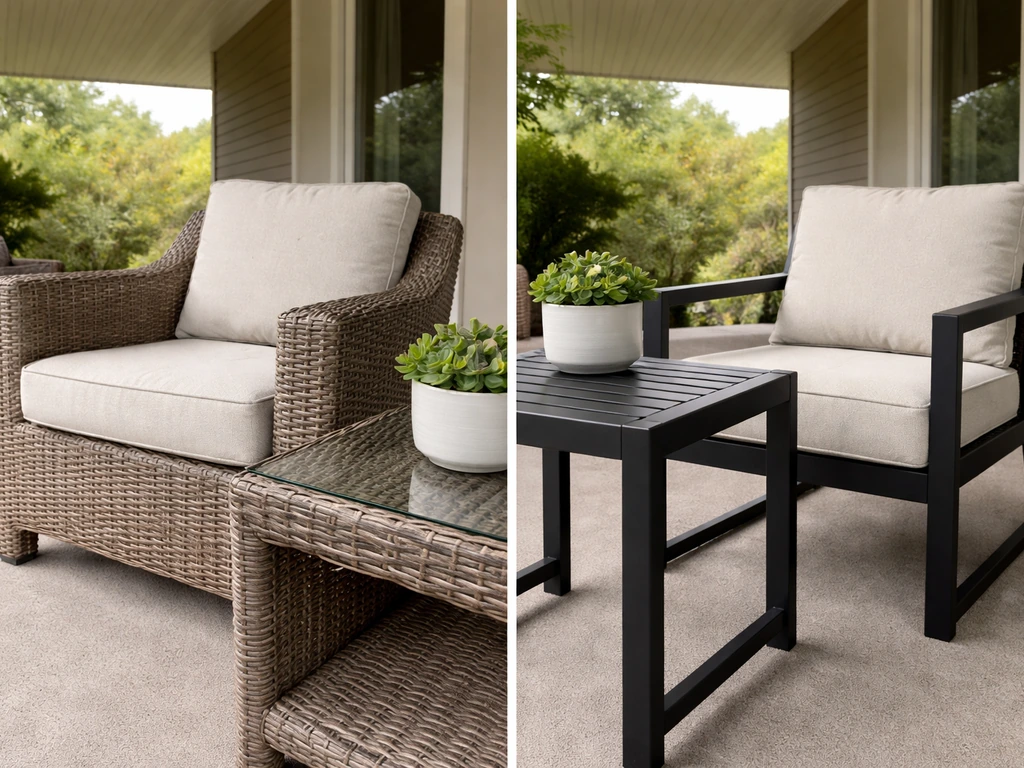
Quick verdict: which wins for your situation
| Your situation | Better pick | Why |
|---|---|---|
| Humid Southeast or rainy Pacific Northwest | Synthetic resin wicker over aluminum | Non-porous HDPE fiber sheds moisture, aluminum frame won't rust |
| Coastal salt air (within a mile of ocean) | Powder-coated aluminum (or resin wicker over aluminum) | Steel will corrode even under good coatings; aluminum's oxide layer resists salt |
| Hot, sunny Southwest or desert | Metal (aluminum) or resin wicker with UV-stabilized resin | Both handle heat; resin wicker can get soft if left in extreme direct heat for years |
| Freezing winters (Zone 5 and colder) | Powder-coated aluminum or steel | Quality HDPE wicker survives freezing temps, but cushions must come inside; metal stores easier |
| Relaxed entertaining, lots of cushioned seating | Synthetic resin wicker | Softer look, more ergonomic shapes, cushions feel at home |
| Commercial patio, high-traffic, minimal fuss | Powder-coated aluminum or steel | Hard frames take abuse; no weave to snag or pull loose |
| Budget-conscious, 5–10 year horizon | Synthetic resin wicker | Lower entry cost, acceptable lifespan for the spend |
| Long-term investment, 15–25 year horizon | High-quality aluminum (or HDPE wicker over aluminum) | Both can hit 15–25 years with proper care; steel is riskier long-term |
What 'wicker' actually means when you're shopping
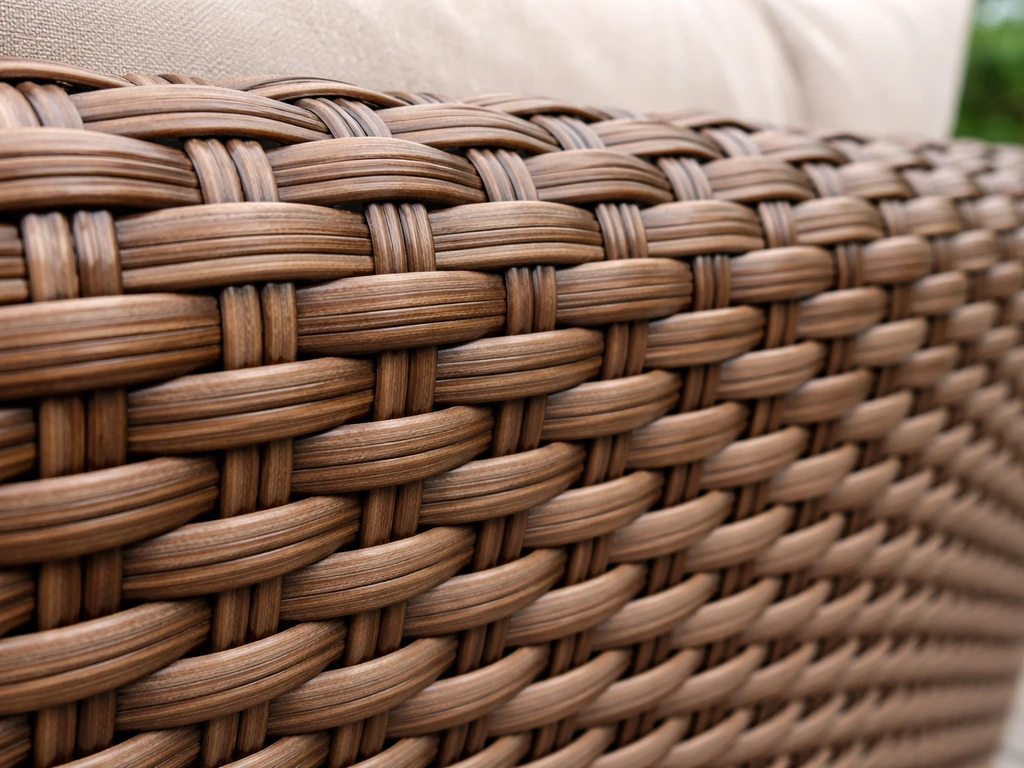
Wicker is a weaving technique, not a material. Historically it used plant-based fibers: willow, rattan, reed, bamboo. True natural rattan wicker is beautiful but it belongs indoors or on a covered porch in dry climates. Expose it to real weather and it swells, cracks, and molds within a season or two. That's the stuff your grandmother had in a sunroom, not a rainy backyard.
What you'll actually find sold as 'outdoor wicker' or 'all-weather wicker' today is almost always synthetic resin wicker, most commonly woven from high-density polyethylene (HDPE) fiber. HDPE is non-porous, UV-stabilized at the fiber level, and genuinely moisture-resistant. A good set will carry a frame of powder-coated aluminum underneath the weave. The terms rattan, wicker, and resin wicker get used interchangeably by retailers, which causes a lot of confusion. If the listing doesn't say 'synthetic,' 'resin,' 'HDPE,' or 'all-weather,' ask before you buy, because natural rattan sold as outdoor furniture is a short-lived mistake.
PVC-based resin wicker also exists and is cheaper than HDPE. It tends to become brittle with UV exposure faster than HDPE does. When comparing wicker sets, look specifically for HDPE resin, not just 'resin' or 'synthetic.' That detail matters for lifespan.
The metal side: steel vs aluminum and what rust actually means for you
When people say 'metal patio furniture' they usually picture powder-coated steel. Steel is heavier, stiffer, and cheaper to fabricate than aluminum, which is why it dominates the budget-to-mid-range market. The problem is that steel rusts. Powder coating delays that process significantly, but once the coating chips or scratches, moisture gets to bare metal and oxidation starts. Welds and joints are especially vulnerable because moisture can collect there from the inside, which is actually why some furniture warranties explicitly exclude rust that originates at welds or inside hollow tubing.
Aluminum is a fundamentally different story. It forms a natural oxide layer that protects it from corrosion even when scratched. Add a quality powder coat on top and you have a frame that can handle salt air far better than steel. Marine-grade aluminum furniture is tested to ASTM B117 salt spray standards (1,000+ hours without visible corrosion), a benchmark steel simply can't match without heavy galvanizing and ongoing maintenance. For coastal buyers especially, the steel-vs-aluminum distinction is one of the most important decisions you'll make. If you’re shopping in Cape May, patio furniture that uses marine-grade aluminum can better handle salt air and coastal weather Cape May patio furniture.
Cast iron is a third option you might encounter. It's extremely durable and heavy, resists tipping in wind, and has a classic look, but it's genuinely heavy to move, needs periodic repainting, and will rust aggressively if that paint is neglected. It's best suited for permanent placement in non-coastal climates where you don't need to move it.
Powder coating: what it does and where it fails
Powder coating on any metal (steel or aluminum) works by electrostatically applying a dry powder and then curing it in an oven. The result is a harder, thicker finish than liquid paint. It protects against UV, moisture, and mild abrasion. Where it fails: chips and scratches from dragging furniture, impacts, or pressure-washing at close range expose bare metal. On steel, that chip becomes a rust origin point within weeks in a humid climate. On aluminum, the chip is a cosmetic problem more than a structural one. Touch-up lacquers designed for powder coatings can address small chips before they spread, but if damage is widespread, re-powder coating by a professional shop is the real fix.
Durability and weather performance by climate
Hot, sunny climates (Southwest, Texas, Arizona)
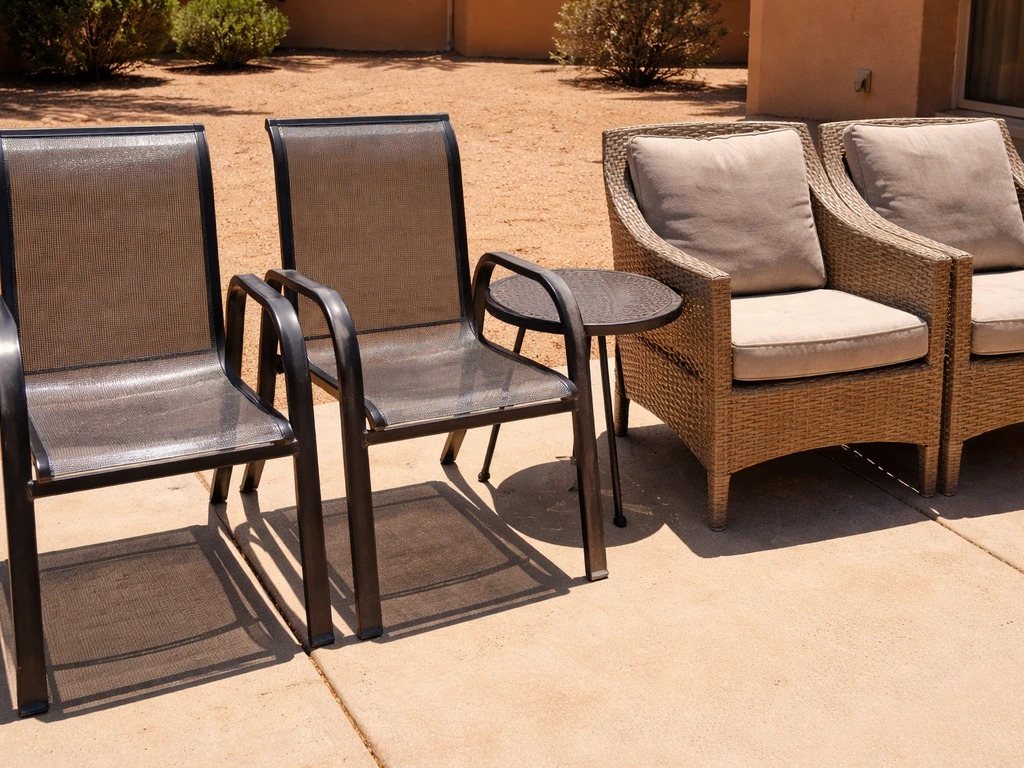
Both materials handle dry heat reasonably well, but they behave differently. Powder-coated metal gets extremely hot to the touch in direct sun, which is a real usability issue for bare arms or legs. HDPE resin wicker stays cooler because the woven structure allows air to pass through it. The risk for resin wicker in intense UV is long-term fiber degradation. Cheaper, non-UV-stabilized resin will fade and become brittle over years; quality HDPE with UV stabilizers built into the fiber resists this. Use UV-protective covers when the furniture isn't in use, especially if it sits in full afternoon sun.
Humid and rainy climates (Southeast, Pacific Northwest, Florida)
This is where synthetic resin wicker over aluminum really earns its place. HDPE fiber is non-porous, so it doesn't absorb water, doesn't mold on its own, and dries fast. The aluminum frame underneath won't rust. Steel furniture in a permanently humid climate requires diligence: wipe it down after rain, touch up chips immediately, and store or cover it during extended wet stretches. If you're not going to do that maintenance, steel in a humid climate is a money-losing proposition. The main concern for resin wicker in high-humidity zones is cushion fabric, not the furniture itself. Look for solution-dyed acrylic cushion fabric (Sunbrella is the benchmark) that's rated mildew-resistant.
Coastal and salt-air environments
Salt air is the harshest environment for patio furniture and it changes the calculation significantly. Galvanized or powder-coated steel will corrode in coastal conditions even with good maintenance, typically showing rust within a few years if you're within a mile of the water. Aluminum with quality powder coating is genuinely resistant to salt spray corrosion.
Synthetic resin wicker over a powder-coated aluminum frame is an excellent coastal option: the HDPE weave doesn't corrode at all, and the aluminum frame resists salt air better than steel. Rinse both frame and weave with fresh water regularly to remove salt deposits, and you'll get years more life out of either. This is one scenario where spending more upfront on aluminum (rather than steel) pays for itself quickly.
Freezing winters (Zones 4–6, Midwest, Northeast, Mountain West)
Quality HDPE resin wicker can technically survive freezing temperatures outdoors. The fiber itself won't crack in a freeze-thaw cycle the way natural rattan would. That said, cushions absolutely need to come inside: foam inside cushions traps moisture, which expands when it freezes and destroys the foam structure. Steel patio furniture in freezing climates faces the same chip-and-rust problem year-round, amplified by road salt and de-icing chemicals tracking onto patios.
To manage salt exposure on powder-coated aluminum, follow the care expectations for salt chlorides or ocean salt spray and de-icing salts so salt deposits are removed from the coated surface road salt and de-icing chemicals. Aluminum holds up better.
Regardless of material, covering or storing patio furniture over a full winter extends its life considerably.
Comfort, style, and how they actually feel to use
Synthetic resin wicker wins on everyday comfort and visual warmth. The woven texture gives it a softer, more organic look that integrates with landscaping and wood decking better than most metal furniture. The frames are typically designed for deeper, more lounge-oriented seating shapes, which makes them more ergonomically inviting for long evenings outside. That said, you're almost always relying on cushions for real comfort with wicker: the weave alone isn't soft enough for extended sitting without them.
Metal furniture spans a much wider aesthetic range. Wrought iron and cast iron have a classic, traditional look. Powder-coated aluminum and steel can look sleek and modern or ornate, depending on the design. Metal chairs without cushions are harder and less forgiving. They also retain heat in the sun and cold in the shade, which affects comfort in extreme temperatures. Metal furniture tends to be more straightforward to mix with other outdoor pieces, and the harder lines suit contemporary or minimalist patios well.
Weight and portability matter more than people expect. Steel furniture is heavy, which keeps it stable in wind but makes rearranging frustrating. Aluminum is significantly lighter. Resin wicker over aluminum hits a sweet spot: light enough to move easily, heavy enough not to blow over in moderate wind. If you frequently rearrange your patio layout or move furniture to storage seasonally, aluminum and aluminum-framed wicker both make that much easier.
Maintenance, repair, and what goes wrong over time
Cleaning resin wicker
Dirt accumulates in the weave crevices and can be stubborn. The right approach is a soft brush or vacuum to loosen debris, then mild soap and warm water with a gentle scrub, followed by a cold rinse and complete air drying. Avoid pressure washers: high-pressure water can force individual weave strands loose from their anchoring points and damage the weave structure over time. If mold or mildew appears (usually in shaded, poorly-ventilated spots), a diluted vinegar solution or a mild bleach-and-water mix applied promptly handles it before it spreads.
Repairing resin wicker
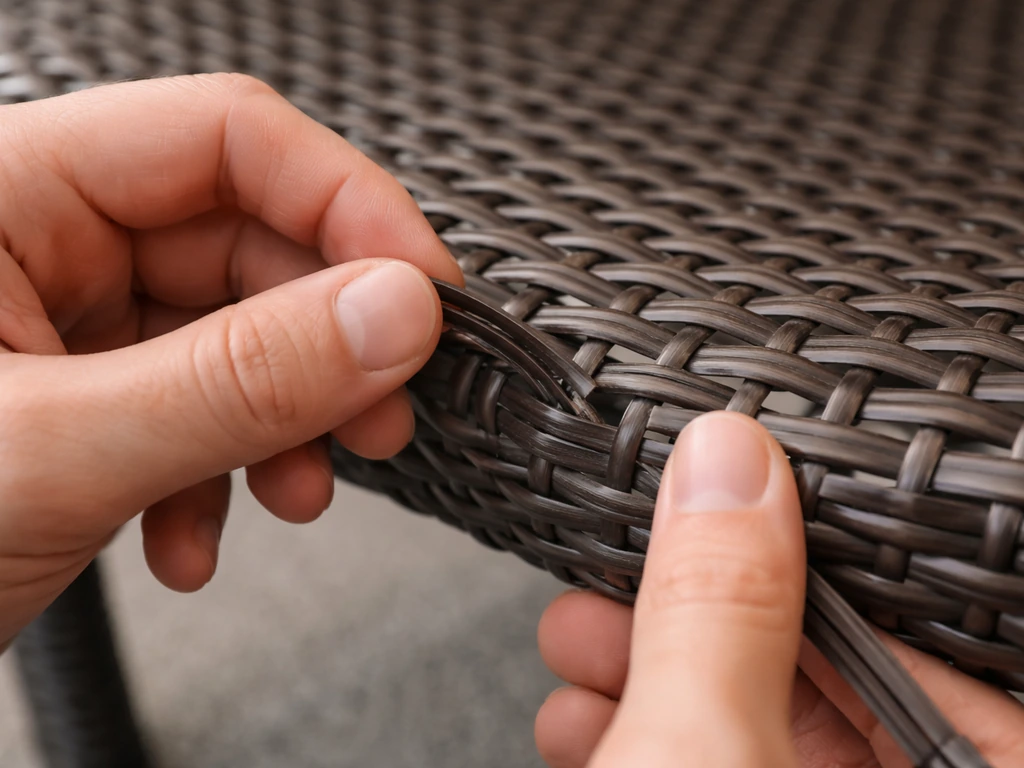
The most common failure in synthetic resin wicker is individual strands pulling loose from the weave, usually at stress points like armrests or seat edges. This is repairable with adhesive: re-gluing loose strips back into place is a DIY-level fix if you catch it early. If the damage is more extensive, replacement strand kits are available, but reweaving a section is time-consuming and not always worth it on a lower-cost set. The aluminum frame underneath almost never needs repair unless it's been physically bent.
Maintaining and repairing metal furniture
Metal furniture maintenance is mostly about protecting the coating. Wipe it down with soapy water regularly to remove dirt, bird droppings, and salt deposits (all of which accelerate coating degradation). Inspect annually for chips, scratches, or bare spots and address them with touch-up lacquer or paint formulated for powder-coated finishes before rust can take hold. On steel, catching a chip early costs you five minutes and a few dollars. Ignoring it for a season can mean bubbling, spreading rust, and an expensive refinishing job or replacement. Re-powder coating by a professional shop is the proper long-term fix for widespread coating damage.
Natural rattan and true wicker require a more involved maintenance regimen: they need periodic conditioning to prevent drying and cracking, are vulnerable to mold in humidity, and should not be left in rain. If you're considering natural wicker for an outdoor setting, the answer is simple: don't, unless it's on a completely covered porch in a dry climate. The synthetic versions exist precisely because natural wicker outdoors is a maintenance burden.
Cost and long-term value
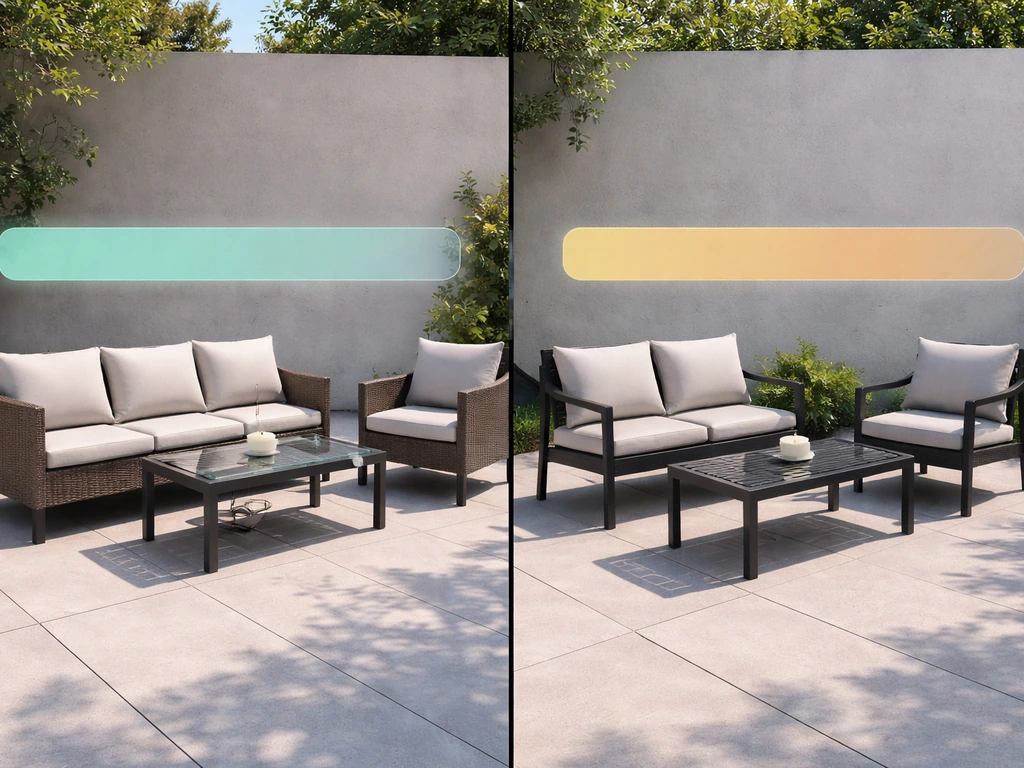
Entry-level resin wicker sets start around $300–$600 for a basic conversation set and can run $2,000–$5,000 for premium HDPE-over-aluminum configurations. Steel furniture occupies a similar range at the lower end but can get expensive in architectural or designer pieces. Aluminum furniture, particularly commercial-grade, tends to cost more than steel for equivalent pieces, but that premium pays back quickly in coastal or humid climates where steel corrodes. Think in cost-per-year rather than sticker price: a $1,200 synthetic wicker set that lasts 15 years costs $80/year. A $600 steel set that needs replacement in five years costs $120/year and that's before factoring in any rust remediation.
Quality HDPE resin wicker over a powder-coated aluminum frame realistically lasts 10 to 25 years depending on climate, care, and sun exposure. For a durable outdoor setup, synthetic resin wicker over a powder-coated aluminum frame typically lasts for many years, but the exact number depends on your climate and maintenance how long does wicker patio furniture last. Steel furniture in a well-maintained, non-coastal environment can last 10–15 years. Aluminum without any wicker overlay, well-maintained, can push past 20 years comfortably. Cheap steel in a humid or coastal climate may show significant corrosion within three to five years.
Your buying checklist and next steps
Before you shop, spend five minutes honestly assessing your outdoor conditions. How much direct sun does your patio get? Are you within a few miles of the ocean? Do you get hard winters? Do you want to leave furniture out year-round or are you willing to cover and store seasonally? If you want to can wicker patio furniture be left outside, start with HDPE resin wicker over a powder-coated aluminum frame and use covers when conditions are harsh leave furniture out year-round. Your answers to those questions should narrow your material choice significantly before you ever look at a price tag.
What to check when shopping for resin wicker
- Fiber material: look for HDPE specifically, not just 'resin' or 'synthetic.' HDPE resists UV and moisture better than PVC alternatives.
- Frame material: the spec sheet should say powder-coated aluminum, not steel, especially for coastal or humid settings.
- Weave density: tighter, denser weaves are more durable and resist sagging over time. Check by pressing gently on a seat; it should feel firm, not springy.
- UV stabilization: listings for quality sets will mention UV-stabilized or UV-resistant resin fiber. If it doesn't say so, assume it isn't.
- Cushion fabric: solution-dyed acrylic (Sunbrella or equivalent) is the standard for outdoor cushions. It resists fading, moisture, and mildew far better than polyester.
- Cushion fill: look for quick-dry foam inserts. Standard foam holds water and will degrade in a freeze.
What to check when shopping for metal furniture
- Frame material: aluminum vs. steel matters enormously in coastal or humid climates. The listing should specify.
- Powder coat thickness and quality: thicker coatings (typically 2–4 mils for outdoor use) hold up longer. Ask the retailer or look for commercial-grade specs.
- Weld quality: inspect weld points at corners and joints. Poorly welded seams trap moisture and rust from the inside out.
- Hardware: stainless steel bolts and hardware prevent corrosion at connection points where dissimilar metals accelerate rust.
- Weight: heavier steel furniture is more wind-stable but harder to store. Weigh that tradeoff for your situation.
- Touch-up paint availability: check that the manufacturer or a third-party supplier offers matching touch-up lacquer for the powder coat color.
Maintenance plan from day one
- Rinse metal and resin wicker with fresh water monthly (weekly in coastal areas) to remove salt, pollen, and debris.
- Clean both materials with mild soap and warm water at the start and end of the outdoor season. Rinse thoroughly and let dry completely before covering.
- Inspect metal frames annually for paint chips, scratches, or early rust. Treat with matching touch-up lacquer immediately.
- Check wicker weave annually for loose or lifting strands and re-glue them before they unravel further.
- Store cushions indoors during winter or extended rainy periods, regardless of what the cushion fabric claim says.
- Use UV-protective covers when furniture isn't in use, especially for resin wicker in high-sun environments.
- Avoid pressure washing either material. A soft brush and gentle hose rinse does the job without causing damage.
One last thing worth noting: if you're specifically weighing whether resin wicker can stay outside year-round in your climate, or trying to understand how long a quality wicker set actually lasts, those are worth thinking through carefully before you commit. The difference between a set that lasts a decade and one that falls apart in four years almost always comes down to frame material, fiber quality, and whether the cushions were stored properly. Get those three things right and either material will serve you well.
FAQ
Is resin wicker actually weatherproof outdoors, or is it just marketed that way?
Most “outdoor” resin wicker is HDPE woven over a powder-coated aluminum frame, and that combination resists moisture and dries fast after rain. The weak point is usually the cushions, if they stay wet or never dry, and the common failure is strands loosening at stress points, not the weave turning to mush.
What cushion fabrics should I look for so wicker and metal both stay usable in humid weather?
Choose mildew-resistant solution-dyed acrylic (commonly used for outdoor cushions) and confirm it is rated for mildew resistance. Also plan for airflow drying, cushions stored indoors or well-ventilated when not in use, because foam absorbs and traps moisture even if the furniture frame is corrosion resistant.
Can I put powder-coated metal in direct sun if it gets extremely hot to the touch?
You can, but plan for usability controls: add cushions with a light-colored, sun-reflective cover, use an umbrella or shade sail during peak hours, and avoid leaving metal chair backs exposed for long stretches if kids or bare skin are common.
If steel is cheaper, when does it stop making financial sense?
Steel in humid or coastal areas becomes expensive quickly because chips turn into rust origin points, especially at welds and joints where moisture can collect. If you are not willing to inspect annually and touch up chips fast, aluminum or HDPE-over-aluminum will usually be lower cost per year.
How do I tell whether wicker is truly HDPE versus a cheaper resin?
Check the listing for “HDPE,” “high-density polyethylene,” “synthetic resin,” or “all-weather,” not just “resin” or “synthetic.” If it does not explicitly mention HDPE or UV-stabilization at the fiber level, treat it as a gamble and ask the seller before buying.
Does salt air affect metal and wicker differently, or is “wicker” the real problem in coastal areas?
The wicker itself, if it is HDPE, does not corrode, and the risk shifts to frame coating integrity and cushion storage. For coastal conditions, aluminum with quality powder coating is the best frame bet, while steel can show rust within a few years if you are near the water and not diligent about maintenance.
Is it safe to power-wash wicker or metal patio furniture?
Avoid pressure washing, especially on woven resin wicker, because high-pressure water can pull strands loose from their anchoring points over time. For both materials, use a soft brush or gentle cloth plus mild soap and warm water, then rinse and fully air dry.
What’s the right way to maintain powder-coated metal to prevent rust from starting?
Inspect for chips and scratches at least once per year, clean away salt or bird droppings regularly, and touch up bare spots promptly using a coating designed for powder-coated finishes. Addressing small damage early is the difference between a cosmetic fix and a rust spread that eventually needs refinishing or re-powder coating.
If a resin wicker strand comes loose, can I repair it without replacing the whole set?
Often yes, if you catch it early. Re-gluing loose strands back into the weave is a practical DIY fix for localized failures, especially at armrests and seat edges, but if multiple sections are damaged or the frame is bent, replacement or professional repair may be more cost-effective.
Can resin wicker be left outside through winter, and what about freezing and road salt?
HDPE resin wicker can generally tolerate freeze-thaw cycles, but cushions should come indoors because trapped moisture in foam expands and destroys the cushion structure. In freezing areas, metal faces additional risk from de-icing chemicals tracking onto patios, so even aluminum benefits from covering and careful rinsing.
Next Articles
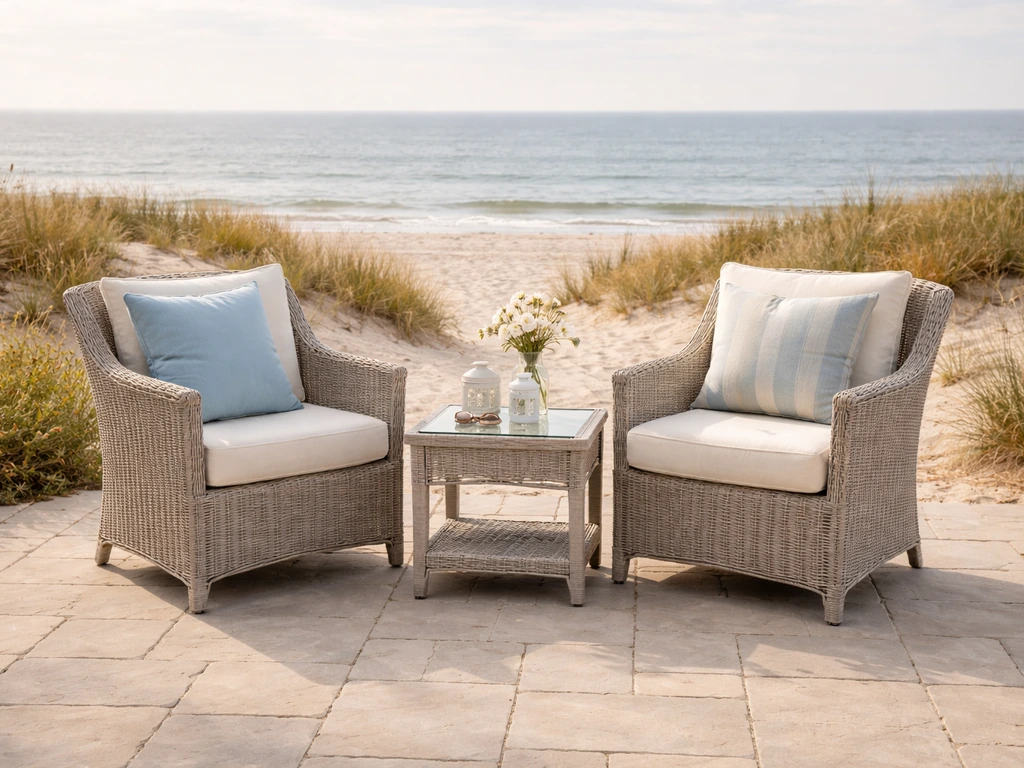
Cape May Wicker Patio Furniture: Coastal Buying and Care Guide
Buy and care for cape may wicker patio furniture: choose PE vs natural, corrosion-resistant frames, cushions, covers, an
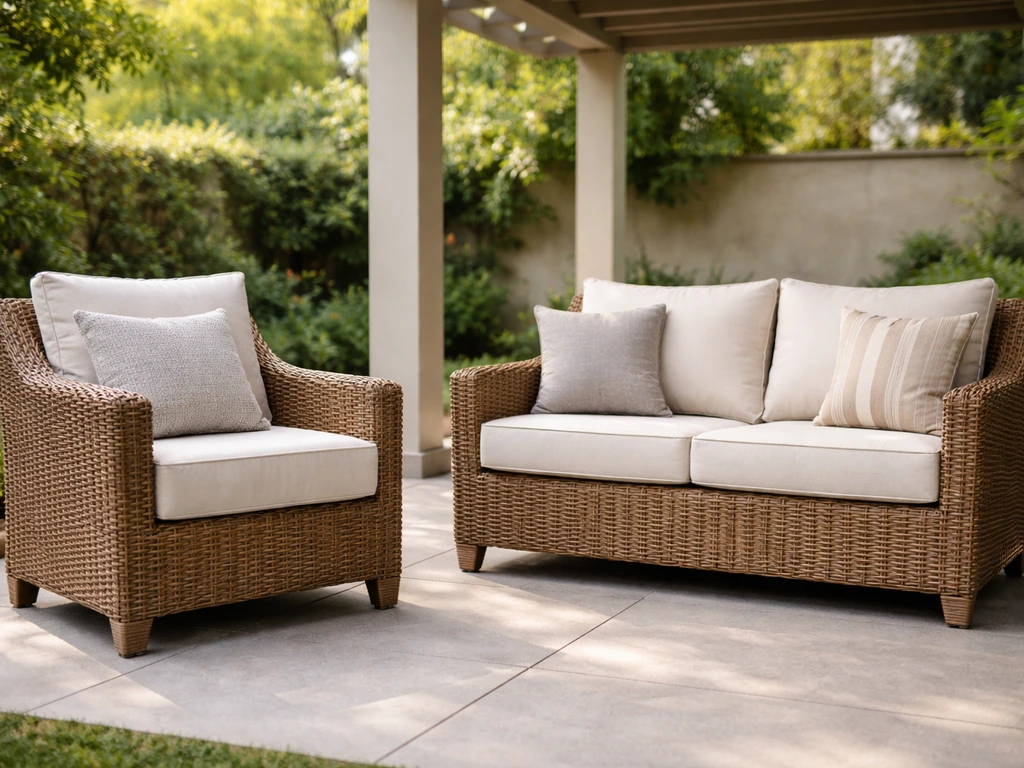
How Long Does Wicker Patio Furniture Last? Durability Guide
Learn how long wicker patio furniture lasts, natural vs resin, plus maintenance tips by climate and wear signs.
Is Teak Patio Furniture Good? Durable, Smart Buying Guide
Is teak patio furniture good? Evidence-based verdict, lifespan, care, buying tips, comparisons, and eco guidance.