
For coastal conditions like Cape May, you want all-weather PE (polyethylene) resin wicker on a powder-coated aluminum frame, Sunbrella-grade cushion fabric, and stainless or coated hardware. That combination handles salt air, high humidity, UV, and rain without rusting, rotting, or falling apart within a few seasons. Natural rattan wicker, no matter how attractive it looks in a showroom, does not belong outside at the Jersey Shore long-term. Below is everything you need to choose the right set, maintain it well, and repair it when something eventually does go wrong. When you buy cape may patio furniture, prioritize PE resin wicker and marine-grade cushions so it stands up to the salt air and UV.
Cape May Wicker Patio Furniture: Coastal Buying and Care Guide

Marcus Kellerman
12 Jun 2026
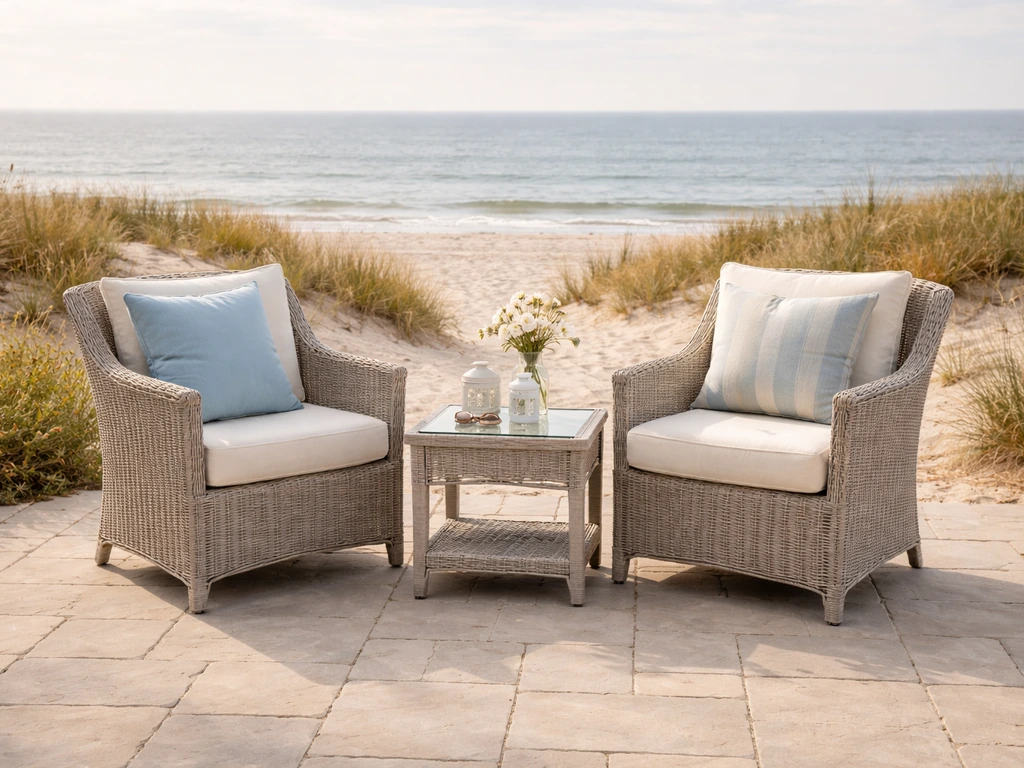
What 'Cape May' wicker patio furniture actually means
When shops in the Cape May area market 'Cape May wicker,' they are almost always pointing to a coastal or nautical aesthetic: light finishes, white or weathered-gray woven frames, airy silhouettes, and cushions in blues, sandy tones, or classic stripes. The name signals a look tied to beach-house living on the Jersey Shore rather than a specific manufacturer or construction standard. Local outdoor living stores in Cape May explicitly curate their wicker selections for that seaside aesthetic, which is useful to know because it tells you the style expectation but says nothing guaranteed about the build quality or weather resistance.
That distinction matters a lot. You can buy a beautiful white wicker set that looks perfectly 'Cape May' and have it start deteriorating within two summers if the materials are wrong for the climate. So treat 'Cape May wicker' as a style descriptor and evaluate the actual construction separately using the criteria below.
PE wicker vs. natural wicker: the most important decision you'll make
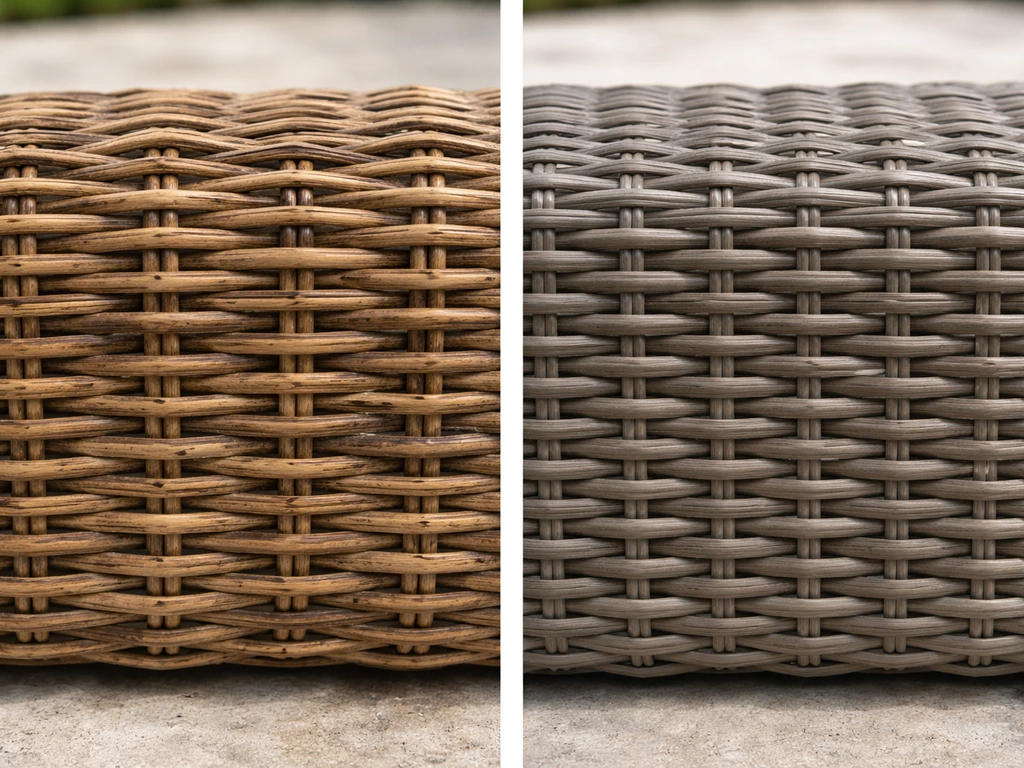
Natural rattan wicker is a plant-based material. It is beautiful, it has a genuine texture that synthetic versions try to imitate, and it is absolutely not built for sustained outdoor exposure in a coastal environment. Natural rattan dries out, becomes brittle with UV exposure, and can develop mold or mildew within the reed itself when humidity stays high. Prolonged rain exposure leads to rot. Coastal conditions at Cape May combine all of those stressors: high humidity, salt-laden air, UV from ocean-reflected sunlight, and regular rain. Natural wicker under those conditions requires aggressive protection, constant maintenance, and realistic expectations about lifespan.
Synthetic PE (polyethylene) resin wicker is engineered specifically for outdoor use. The strands are extruded plastic, UV-stabilized, and woven over a frame. When it is made well, PE wicker does not rot, does not absorb moisture, and resists fading far better than natural alternatives. Brands like Gloster use polyethylene plastic for their woven outdoor furniture for exactly this reason. All-weather wicker sets you find at serious outdoor furniture retailers are almost always PE resin. If a product description just says 'wicker' without specifying PE, resin, or all-weather, ask before you buy.
| Feature | Natural Rattan Wicker | PE Resin (All-Weather) Wicker |
|---|---|---|
| Rain/moisture resistance | Poor — absorbs moisture, can rot | Excellent — does not absorb water |
| Mildew risk | High — can develop within the reed | Low — wipes clean easily |
| UV/fade resistance | Low — dries out and bleaches | Good to excellent with UV stabilizers |
| Salt-air durability | Poor | Good when paired with aluminum frame |
| Repairability | Moderate — specialized skill needed | Good — loose strands can be re-glued |
| Best use | Covered porches, dry interior spaces | Full outdoor exposure, coastal climates |
For Cape May or any coastal Jersey Shore location, PE resin wicker is the only practical choice if the furniture will live outside. Natural wicker can work beautifully on a fully covered, screened porch where it is shielded from direct rain and stays reasonably dry, but even then, high humidity will shorten its life compared to an inland setting.
Why the frame material matters as much as the wicker itself
The wicker strands take all the visual attention, but the frame is what determines whether a set holds up structurally over many years. In a coastal environment, the frame faces salt air, standing water, and freeze-thaw cycles in the off-season. Two frame materials dominate the market: aluminum and steel.
Aluminum is the right choice for coastal conditions. It does not rust, it is lightweight, and a quality powder-coat finish protects it from UV and scratching. NorthCape's warranty data illustrates the real-world gap: aluminum frames carry a 7-year warranty against material and workmanship defects, while steel frames carry only 3 years, and rust on steel is explicitly not covered under their warranty terms. That is a manufacturer telling you in writing that steel and moisture are a bad combination. Coastal humidity and salt air accelerate that rust timeline even further.
Steel frames are heavier, cheaper to produce, and will eventually rust in a salt-air environment no matter how well they are powder-coated, especially at cut edges, drilled holes, and weld points where coatings are thinner. If you are shopping a price-point set and the frame is steel, factor in a shorter useful life and the likelihood of rust stains on your patio or deck.
What else to look for when buying Cape May wicker
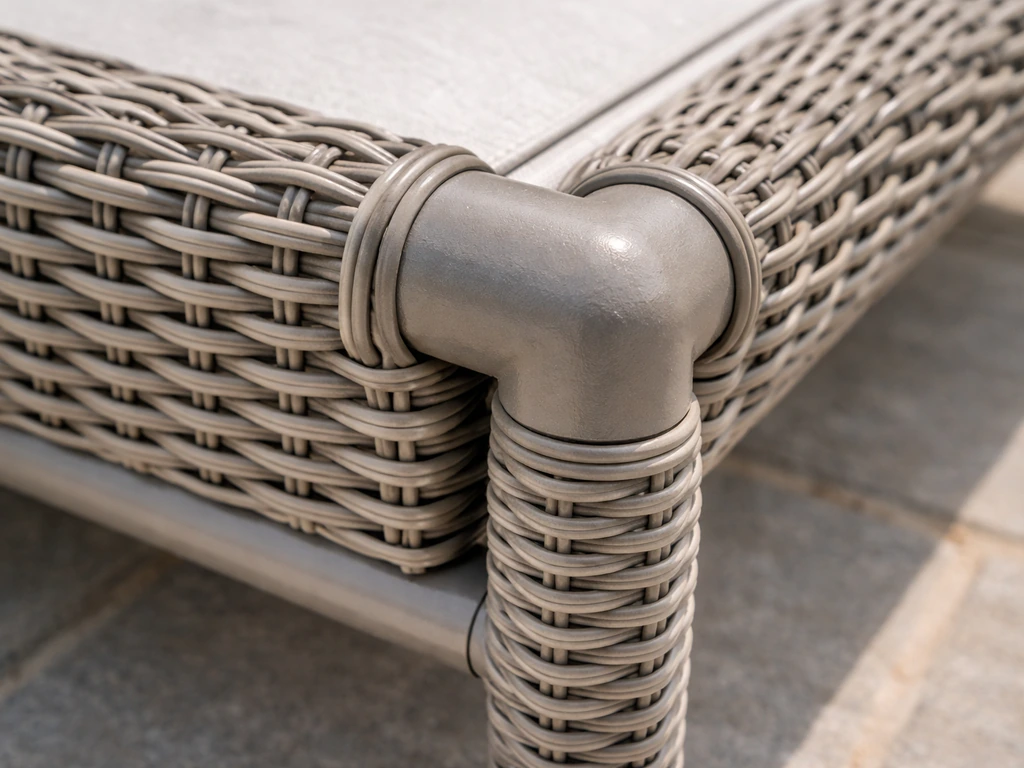
Construction details that signal quality
- Powder-coated aluminum frame: look for thick-wall tubing, not thin hollow sections that dent easily
- Tight, consistent wicker weave with no visible gaps, loose ends, or thin strands near corners and joints
- Stainless steel or coated hardware: bolts, screws, and connectors made from untreated steel will rust through in coastal air, loosening the frame over time
- Drainage holes in seat frames so water does not pool inside hollow sections, which can accelerate corrosion from the inside out
- End caps on frame tubing to prevent water ingress
Cushions: where most budget sets fall short
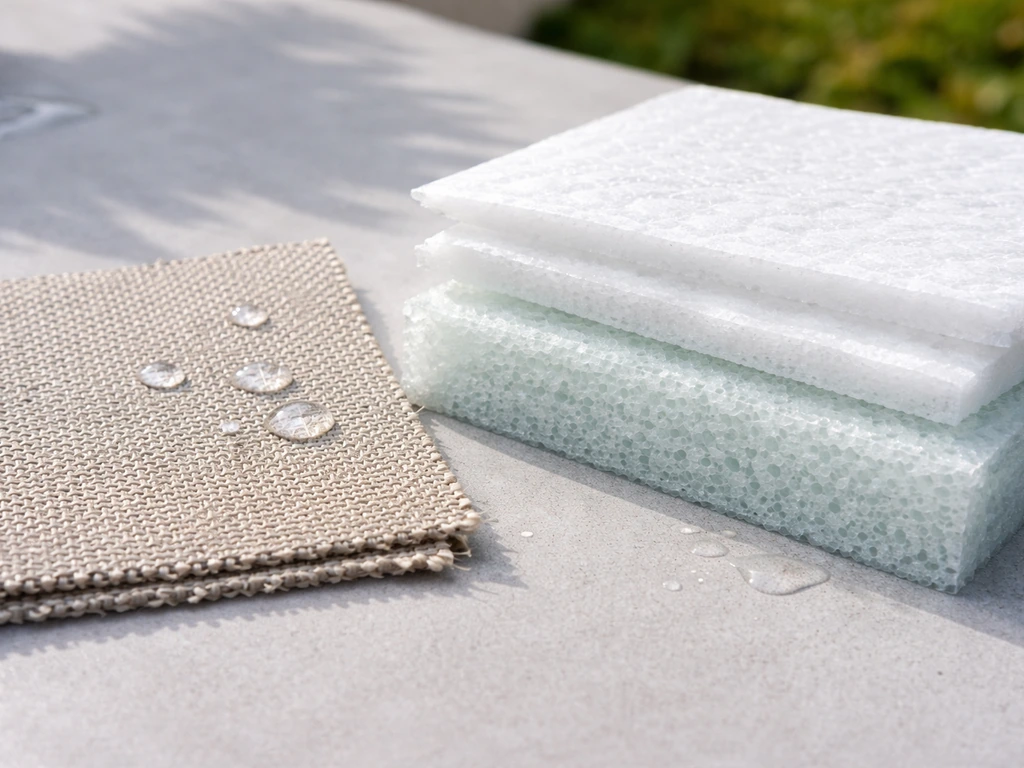
Cushion fabric is the component that fails fastest in a coastal environment if you cut corners. Look for solution-dyed acrylic fabric, with Sunbrella being the most well-known standard. Sunbrella backs their shade and marine fabrics with a 10-year limited warranty that covers loss of color from sunlight and degradation from atmospheric chemicals and mildew. That warranty exists because the fabric is genuinely engineered to resist those specific coastal stressors. Solution-dyed means the color runs through the fiber itself rather than sitting on the surface, which is why these fabrics hold color where cheaper prints fade within a season or two.
The cushion fill matters too. Quick-dry foam or open-cell foam wrapped in a breathable outer layer dries faster after rain, which directly reduces mildew risk. Dense closed-cell foam holds moisture and creates a mildew problem inside the cushion even when the cover looks dry. Removable, zippered covers are worth paying for because they let you machine-wash the fabric and replace it independently if it wears out before the foam does.
Warranty and brand signals
A meaningful warranty is a shortcut for evaluating build quality. Any brand confident enough to offer 5 or more years on their frame and at least 3 years on fabric is telling you something real about the materials they used. Short warranties or warranties that carve out rust, UV fading, and moisture damage on a product marketed for outdoor use are a red flag. Price also correlates with durability in this category: entry-level wicker sets in the $300 to $600 range typically use thinner PE strands, lighter-gauge frames, and polyester cushion fabric. Mid-range sets from $800 to $1,500 generally use better-grade PE wicker and aluminum frames. Premium sets above $1,500 typically include Sunbrella-level cushions, heavier frames, and longer manufacturer support.
Cape May's climate and what it actually does to outdoor furniture
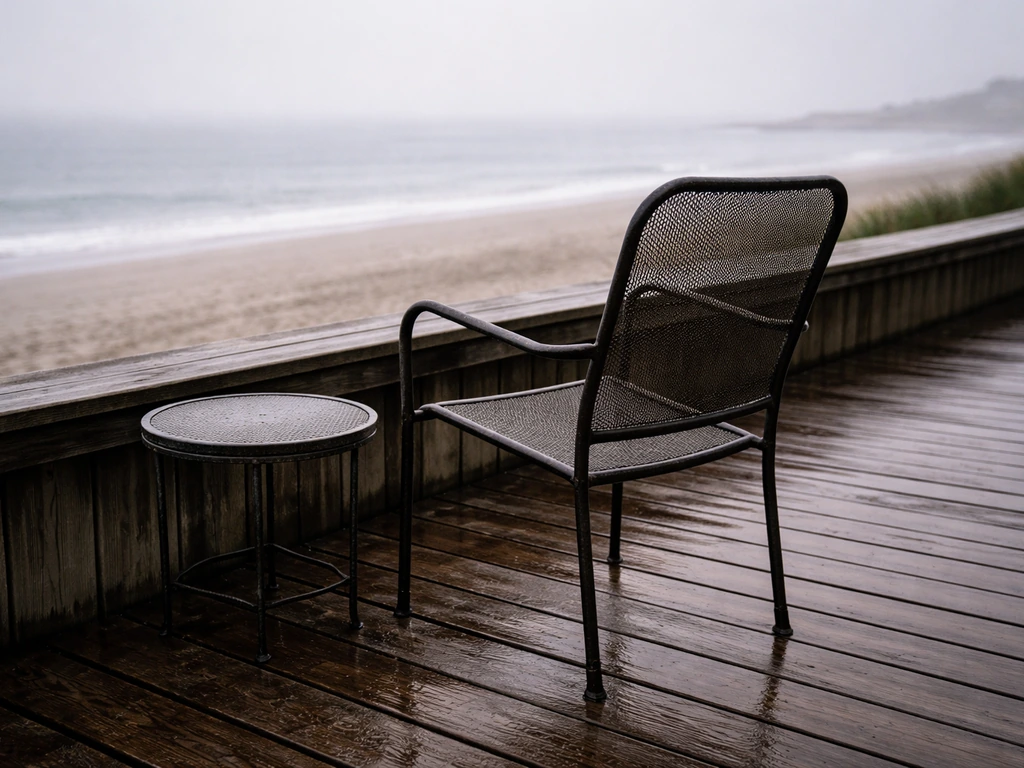
Cape May sits at the southern tip of New Jersey, surrounded by water on three sides. That means persistent humidity through spring and summer, salt-laden air within several blocks of the shoreline, intense UV from water-reflected sunlight, and heavy rain events from nor'easters and tropical systems. Winters bring freeze-thaw cycles, which stress any moisture that has infiltrated frames or cushion foam. This is not a mild outdoor furniture environment. It is one of the more demanding regional climates on the East Coast for patio furniture longevity.
Salt air is particularly corrosive to metals because the salt in the air accelerates oxidation. It does not take ocean spray to cause damage: salt particles carried even a quarter mile inland are enough to corrode unprotected steel hardware within a couple of seasons. The same salt deposits on PE wicker surfaces and acts as a UV catalyst, speeding up fading. Rinsing furniture periodically through the season is not optional in this environment, it is basic maintenance.
The good news is that well-chosen materials handle Cape May's conditions reliably. The owners who complain about wicker falling apart after two years almost always bought steel-framed sets with polyester cushions at a big-box price point and left them outside without any care. Owners who bought quality PE wicker on aluminum frames with Sunbrella cushions and do basic maintenance routinely get a decade or more of use.
Cleaning and maintenance: keeping humidity, salt, and UV from winning
Routine cleaning
For regular wicker cleaning, mix 1/4 cup of liquid dish soap with two cups of warm water. Use a soft brush to work it into the weave, rinse thoroughly with a garden hose, and let the furniture air-dry completely before putting cushions back. In a salt-air environment, a fresh-water rinse every few weeks through the season removes salt deposits before they accumulate and degrade the finish or weave. Avoid high-pressure washers directly on wicker; the force can loosen strands and work water into hollow frame sections.
Mildew on wicker
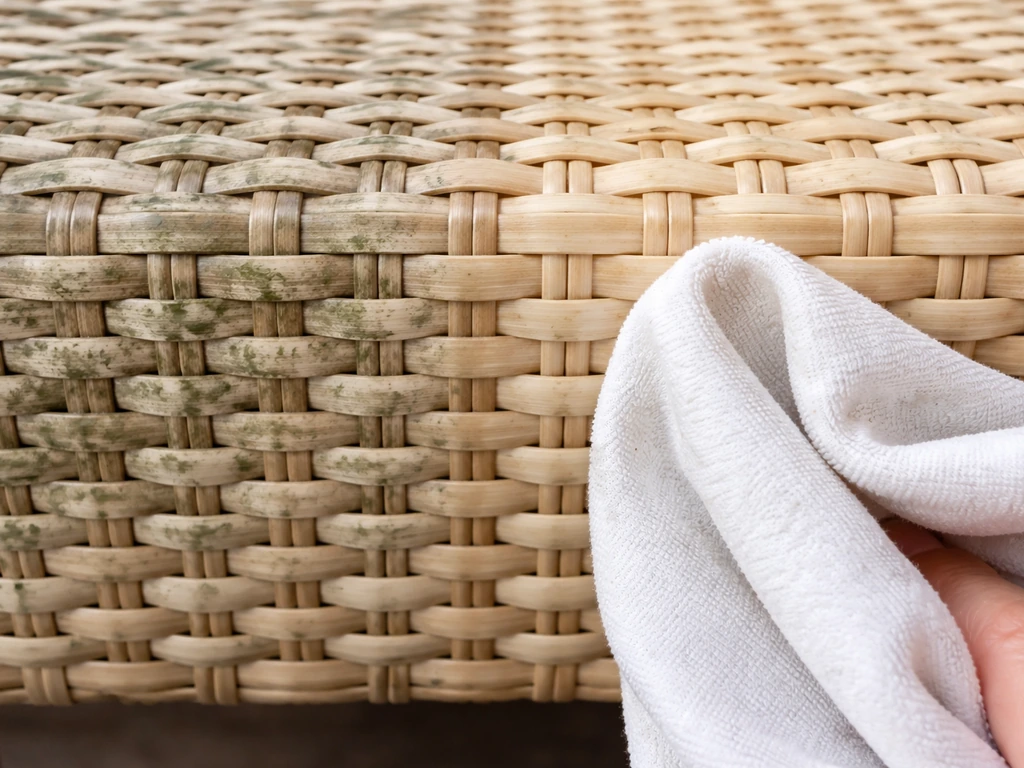
If mildew appears on PE wicker, wipe the affected area with a solution of 25% white vinegar and 75% water, then follow with a plain water wipe-down. This handles most surface mildew without damaging the wicker or finish. For more stubborn cases, a mild soap solution works well. Keep in mind that on PE wicker, mildew sits on the surface and does not penetrate the strands the way it does with natural rattan, so it is generally easier to address.
Mildew on Sunbrella and solution-dyed cushion fabric
Sunbrella fabric does not promote mildew growth on its own, but mildew will grow on any dirt or organic material left on the surface. For mildew removal, Sunbrella's recommended formula is 1 cup of bleach plus 1/4 cup of mild soap per gallon of warm water. Apply it to the affected area, let it soak briefly, then rinse thoroughly. This bleach concentration is safe for Sunbrella because the color is solution-dyed through the fiber, not a surface coating that will strip off. Do not use this formula on polyester or printed fabrics.
UV and fading protection
PE wicker with UV stabilizers resists fading but is not immune to it indefinitely. Applying a UV-protective spray to wicker frames once a season slows color degradation, especially in the intense reflected sunlight common near water. For cushions, Sunbrella-grade fabrics handle UV well on their own. Cheaper polyester cushions should be stored inside or under covers whenever possible to extend their life. Furniture covers are a practical investment for any overnight or multi-day periods when the furniture is not in use during the season.
Preventing fraying and strand damage
PE wicker strands can start to lift or fray at edges and corners if they are snagged by clothing, dragged across rough surfaces, or stressed by people sitting on the arms. Avoid dragging wicker furniture across concrete or brick. Periodically inspect the weave at stress points, particularly where strands wrap around frame joints, and address any loose ends before they unravel further. A loose strand left for a season often means a section that needs repair by the next.
Off-season storage
At Cape May, the off-season runs roughly October through April. Storing wicker furniture indoors or under a covered structure during that period dramatically extends its life by eliminating freeze-thaw stress on frames, UV exposure during low-angle winter sun, and moisture accumulation. If indoor storage is not possible, use fitted, breathable furniture covers rather than plastic tarps that trap condensation. Store cushions indoors in a dry space. Do not allow water to accumulate inside frame sections over winter, which means positioning furniture so tubes drain and making sure end caps are intact.
Repairs and long-term upkeep: what to fix and when to replace
Loose or broken wicker strands
This is the most common repair on PE resin wicker, and it is often fixable without replacing the whole set. If resin wicker strands are only pulled loose rather than fully broken, you can re-glue the strips and often repair the wicker without replacing the entire furniture set re-glue resin strips if they’re pulled loose.
If a strand has simply pulled loose from the weave, you can re-glue it using an outdoor-rated adhesive, work it back into the pattern, and secure the end. If a strand has broken or gone missing, replacement PE wicker strand can be purchased by the roll, woven into the gap, and glued at the ends.
The key question is whether the frame underneath is still sound. If the repair is just about strands and weave, do it. If the frame is bent, rusted, or cracked, that is a different conversation.
Frame damage and hardware issues
Aluminum frames that develop surface oxidation (white powdery deposits rather than rust) can be cleaned with a mild abrasive and recoated with outdoor metal paint or powder-coat touch-up spray. Structural bends in aluminum tubing are harder to fix; bent frames typically need professional welding or replacement. Rusting steel hardware (bolts, connectors, screws) should be replaced with stainless equivalents at the first sign of corrosion. Continuing to use rusting hardware accelerates the problem and can stain the wicker or patio surface.
Worn cushions
Cushion covers and fill wear out at different rates. Sunbrella covers often outlast the foam underneath by several years. When foam gets permanently compressed or develops a persistent mildew smell that does not clean out, replace the fill while keeping the cover. Replacement foam cut to size is inexpensive. Conversely, if the foam is still good but the fabric has faded or torn, new covers in Sunbrella fabric are available as custom replacements for most standard cushion sizes. Replacing cushion components rather than the whole set is one of the better cost-saving moves in outdoor furniture maintenance.
Repair vs. replace: how to decide
Run through this quick assessment: Is the frame structurally sound and rust-free? Are the repairs limited to weave issues, cushions, or hardware? If yes to both, repair is almost always worth it, since the underlying structure represents most of the furniture's value. If the frame has significant rust, structural damage, or corrosion at multiple points, and the wicker weave has widespread deterioration, replacement makes more economic sense. A set with a solid aluminum frame can realistically be maintained and repaired for 10 to 15 years with moderate attention. A steel-framed set in a coastal environment that was not well protected may reach end-of-life in 5 to 7 years regardless of repairs.
If you are evaluating a set you already own and wondering whether it is worth keeping, start with the frame. Everything else is replaceable. The longevity of wicker patio furniture in a coastal environment really does come down to that original material decision, and knowing what to look for means you will not make the wrong call twice.
FAQ
Can I use natural rattan wicker for Cape May if my furniture is under a covered porch?
Yes, but only if you can truly keep it dry and ventilated. Natural rattan can work on a screened porch if it stays protected from direct rain, is raised off damp ground, and you rinse salt residue off when storms pass. If your porch allows humid air to linger or rain mist reaches the set regularly, plan for a shorter lifespan and expect more frequent mold and brittle-weave issues than with PE resin.
What wording should I look for to confirm cape may wicker patio furniture is actually PE resin and not something else?
Look specifically for “PE resin” or “polyethylene” in the product details, not just “all-weather” or “outdoor wicker.” Woven patterns can look identical across materials, so confirm the strand material. If the listing only says “wicker” or “resin” without naming PE, ask the seller for the strand composition before paying, especially for white or weathered-gray sets marketed as “Cape May” style.
Is UV spray worth it for PE resin wicker, and will it affect the look of the weave?
Yes, but do it safely. Light, infrequent misting with a UV-protective spray can slow fading, but over-applying can leave a residue that attracts dirt and makes cushions look dull. Test on a hidden spot first, and for cushions rely on the fabric’s built-in performance rather than treating them with questionable sprays.
Can I rinse cape may wicker patio furniture with a hose after storms, or is washing too harsh?
If the frame is aluminum and you keep water out of seams, you can hose-rinse periodically, but avoid high pressure and avoid soaking joints repeatedly. The right approach is gentle rinsing, thorough air-dry, and a fresh-water rinse after heavy salt-air days. Continuous wetting without drying increases corrosion risk for any stainless or coated parts with nicks.
When should I replace cushion covers versus replacing the foam in wicker patio seating?
Cushion covers and foam can be replaced separately, which is often cheaper than replacing the full set. If the fabric is faded or torn but the foam is still firm and dry, replace covers only. If you notice persistent mildew odor or foam stays damp after drying, replace the foam insert while reusing the covers if they are still structurally intact.
What is the best off-season storage plan for Sunbrella cushions in a Cape May winter?
If you need to store cushions off-season, use breathable storage for the fabric and keep foam dry. Bring cushions indoors or store them in a dry, ventilated area, and keep covers zipped to protect against dust. Avoid plastic bags or airtight bins that trap humidity, because mildew risk returns even when the set is not outdoors.
Should I cover my wicker patio furniture for the winter, and are plastic tarps okay in Cape May?
Covers help, but only if they are breathable. Use fitted, breathable covers for the furniture and avoid plastic tarps that trap condensation. For winter, position the furniture so tubes and frame sections drain, and verify end caps are intact so water does not pool inside hollow parts.
When is it better to repair broken strands instead of replacing the whole cape may wicker patio furniture set?
Usually, strand repairs are worth it if the frame is still straight and rust-free. If a strand is simply pulled loose, re-gluing it and securing the end is typically enough. If you see bent aluminum, cracked joints, or widespread weave breakdown across many sections, replacement may make more sense because repairs can keep recurring.
What should I do if I see rust on bolts or connectors in a coastal wicker set?
Don’t wait. Replace rusting hardware at the first sign of corrosion, because failing hardware can stress the weave and accelerate frame damage at joints. Keep a small spares kit (stainless bolts, washers, connectors) and match sizes, then use an outdoor-rated fastener system so the repair does not become the new corrosion point.
If my PE wicker starts looking worn or frayed at edges, is that a material defect or a care problem?
It is normal for PE wicker to fade gradually, but it should not become chalky or brittle quickly. If you notice rough, raised, or lifting strands much sooner than expected, it usually points to abrasion, dragging, or inadequate strand protection rather than a “bad batch.” Treat it as a use-and-care issue, inspect corners and arm areas often, and stop dragging the set across rough surfaces.
Next Articles
How Long Does Wicker Patio Furniture Last? Durability Guide
Learn how long wicker patio furniture lasts, natural vs resin, plus maintenance tips by climate and wear signs.
Is Teak Patio Furniture Good? Durable, Smart Buying Guide
Is teak patio furniture good? Evidence-based verdict, lifespan, care, buying tips, comparisons, and eco guidance.
How Long Does Teak Patio Furniture Last? Lifespan Guide
Teak patio lifespan ranges, factors that shorten or extend durability, and a maintenance plan to protect joints and fini