
Resin wicker patio furniture typically lasts 10 to 15 years outdoors with normal use and basic maintenance. Natural wicker (rattan, reed, willow, bamboo) is a different story: expect 5 to 15 years if it stays covered and protected, but much less if it's left fully exposed to rain, sun, and freezing temps. Those ranges assume reasonably good-quality construction to start. The gap between the low and high ends comes down almost entirely to what the wicker is made of, how your climate punishes it, and whether you do the simple things that keep it alive.
How Long Does Wicker Patio Furniture Last? Durability Guide

Marcus Kellerman
22 May 2026
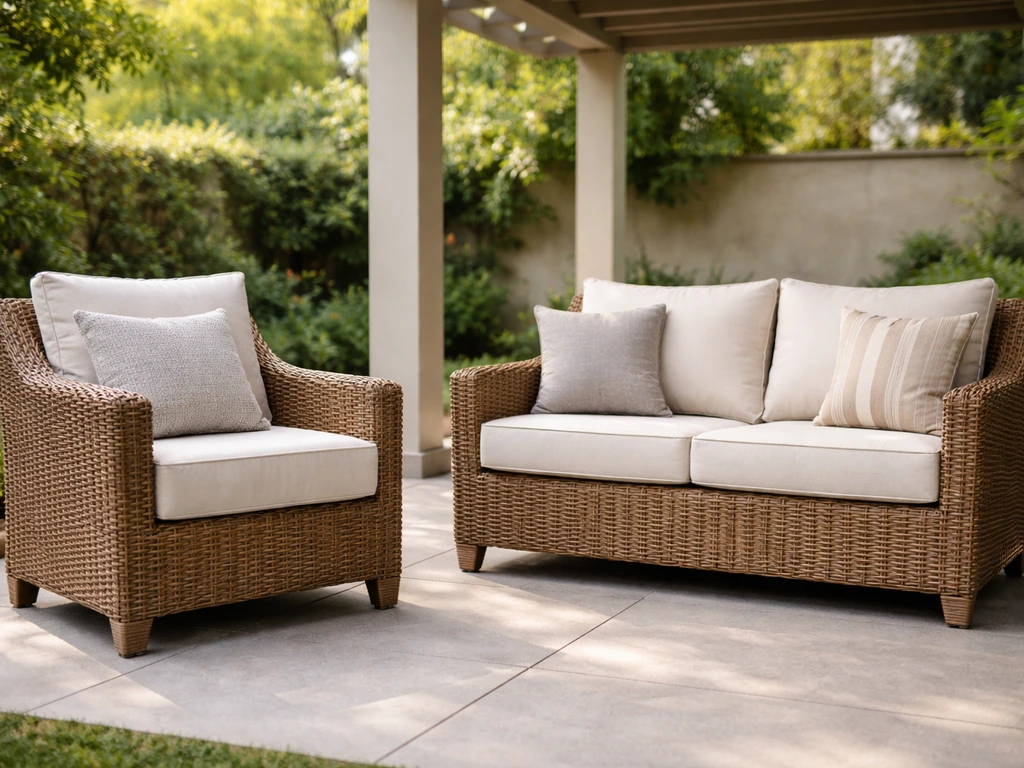
What 'lasts' actually means for wicker furniture
Durability for wicker isn't usually a single dramatic failure. It's a slow accumulation of problems: UV fading, individual strands fraying or cracking, the weave loosening until it sags or snags, structural joints weakening, or cushions giving out long before the frame does. Knowing what to watch for helps you catch issues early, decide whether something is worth repairing, and understand what you're actually paying for when you buy quality pieces.
When brands issue warranties, they're giving you a rough signal of what they stand behind. Most quality resin wicker lines come with a 3-year limited warranty on the wicker fibers themselves and up to 5 years on the aluminum frame. Brands like Homecrest, Oxford Garden, and CabanaCoast all land in that range. That doesn't mean the furniture dies at year three. It means that's where the manufacturer draws the line on their responsibility, and a well-maintained set will typically far outlast that window.
Natural wicker vs resin wicker: which one do you actually have?
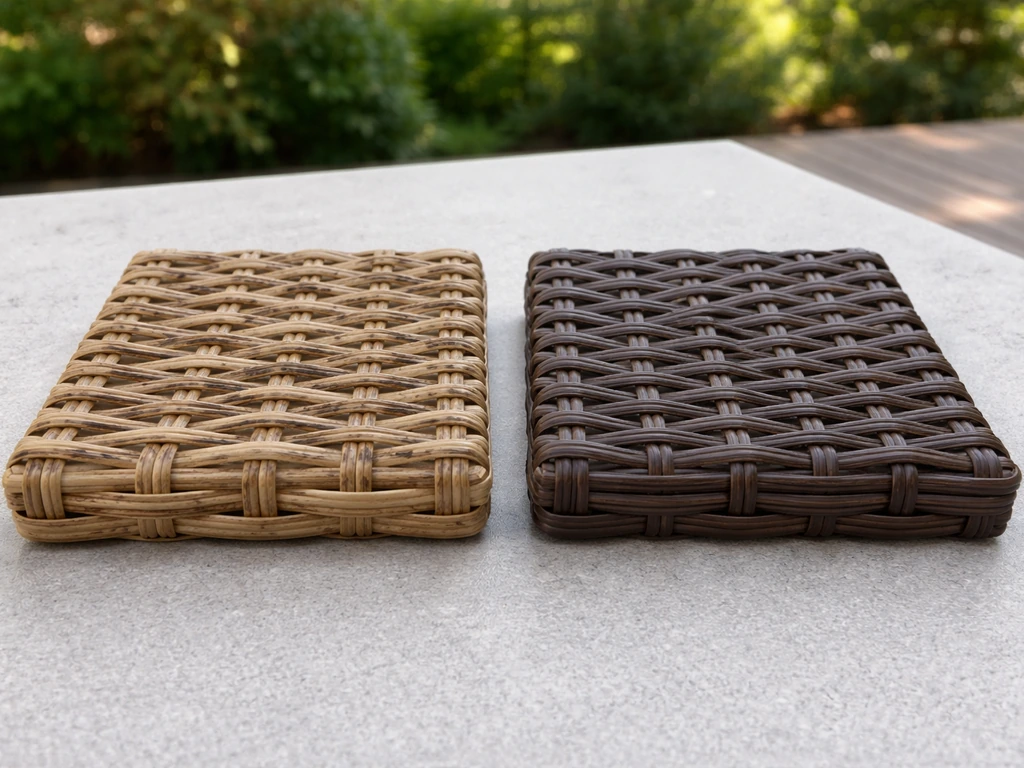
This is the most important distinction to get clear before anything else, because the two materials behave completely differently outdoors. Natural wicker is a weaving technique applied to plant-based fibers: rattan, reed, willow, and bamboo are the most common. These are porous, organic materials that absorb moisture, swell, dry, crack, and eventually degrade when exposed to the elements. Resin wicker (also called all-weather wicker or synthetic wicker) is plastic, almost always HDPE (high-density polyethylene), woven over a powder-coated aluminum or steel frame. It's specifically engineered for outdoor use in a way that natural plant fibers simply are not.
| Feature | Natural Wicker (Rattan/Reed/Bamboo) | Resin Wicker (HDPE) |
|---|---|---|
| Best environment | Indoor or fully covered outdoor only | Outdoor use including open patios |
| Expected outdoor lifespan | 5–15 years (covered/protected) | 10–15 years (normal outdoor use) |
| UV resistance | Poor — fades and dries out quickly | Good when UV-stabilized HDPE |
| Water resistance | Poor — absorbs moisture, swells, rots | Excellent — moisture does not penetrate fibers |
| Freeze-thaw tolerance | Low — becomes brittle and cracks | High — stable across temperature ranges |
| Frame material | Wood or rattan core | Powder-coated aluminum (quality sets) |
| Maintenance intensity | High — seasonal oiling, careful drying | Low — periodic soap-and-rinse cleaning |
| Coastal/salt-air suitability | Poor | Good (aluminum frame, HDPE fiber) |
The marketing around 'wicker' can genuinely confuse shoppers because the word describes a style of weaving, not a specific material. If you see a set labeled 'outdoor wicker' without any mention of resin, HDPE, or all-weather construction, dig deeper before assuming it can handle full sun and rain. Pieces described as rattan-style or poly rattan are usually synthetic, but always check the spec sheet.
What actually makes wicker fail sooner or last longer
UV exposure
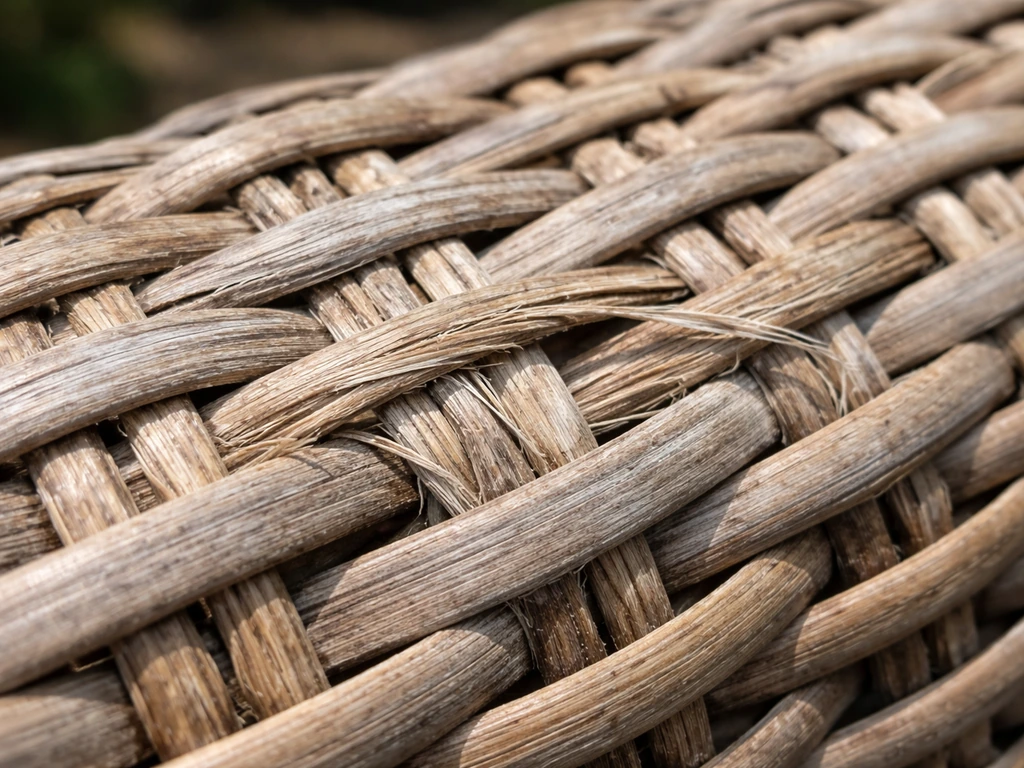
Sunlight is the single biggest enemy of both natural and synthetic wicker over time. For natural fibers, UV degrades the plant material directly, drying it out, bleaching the color, and making strands brittle. For HDPE resin wicker, the risk is photooxidative degradation: the surface turns chalky, loses tensile strength, and eventually becomes brittle if the resin lacks proper UV stabilizers. Quality outdoor-grade HDPE incorporates UV absorbers and HALS (hindered amine light stabilizers) that can extend useful outdoor life to 10 years or more. Cheap resin wicker often skips or minimizes these additives, which is a major reason budget sets degrade years before a premium set would.
Moisture and rain
Natural wicker absorbs water. Repeated wet-dry cycles cause swelling, warping, mold, mildew, and eventually rot. Even brief exposure to regular rain without proper drying will shorten the lifespan of natural wicker significantly. Resin wicker is fundamentally different: the HDPE strands don't absorb moisture, which is why it can be rinsed off and left to air dry without the same structural risk.
WickerLiving also notes that dampness from dew or rain can be handled without soaking the frame the way porous natural fibers do dampness from dew or rain can be addressed without soaking the frame. The concern with resin sets is actually the frame inside, not the fiber. If water gets into hollow aluminum frames and the drain holes are blocked or poorly designed, it can pool and cause issues over time.
Draining the frame after heavy rain (as Crosley's care instructions specifically recommend) is a small habit that protects the structural core.
Cold weather and freeze-thaw cycling
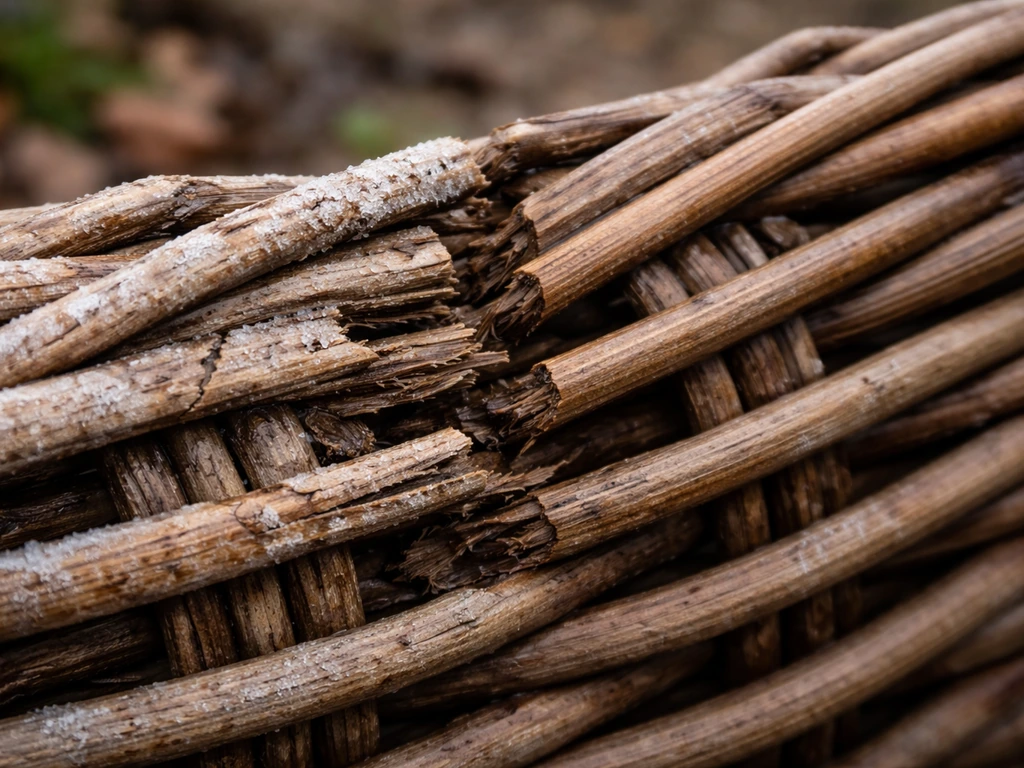
Cold air alone dries out natural wicker fibers, making them brittle and prone to cracking and splitting. Add freeze-thaw cycling to the mix and you're introducing repeated mechanical stress into any moisture that's been absorbed into the material. This is why outdoor wicker and rattan furniture should come indoors for winter in cold climates, full stop. Muubs’ polyrattan care guidance also recommends storing poly rattan dry and cool during winter, which fits with protecting material through moisture and temperature-cycle stress. Quality HDPE resin wicker handles temperature variation much better by design, but even resin sets benefit from winter storage or at minimum proper covers, primarily to protect the frame connections and cushions rather than the fiber itself.
Wind and physical stress
Wind matters more than most buyers realize. Lightweight wicker pieces tip over frequently in gusty conditions, which stresses joints, bends frames, and cracks weave at the flex points. Heavier aluminum-framed resin sets with wider bases handle this better than spindly steel-framed or wood-framed versions. If you're on an exposed deck or coastal lot, this is worth factoring into your buying decision.
Construction quality
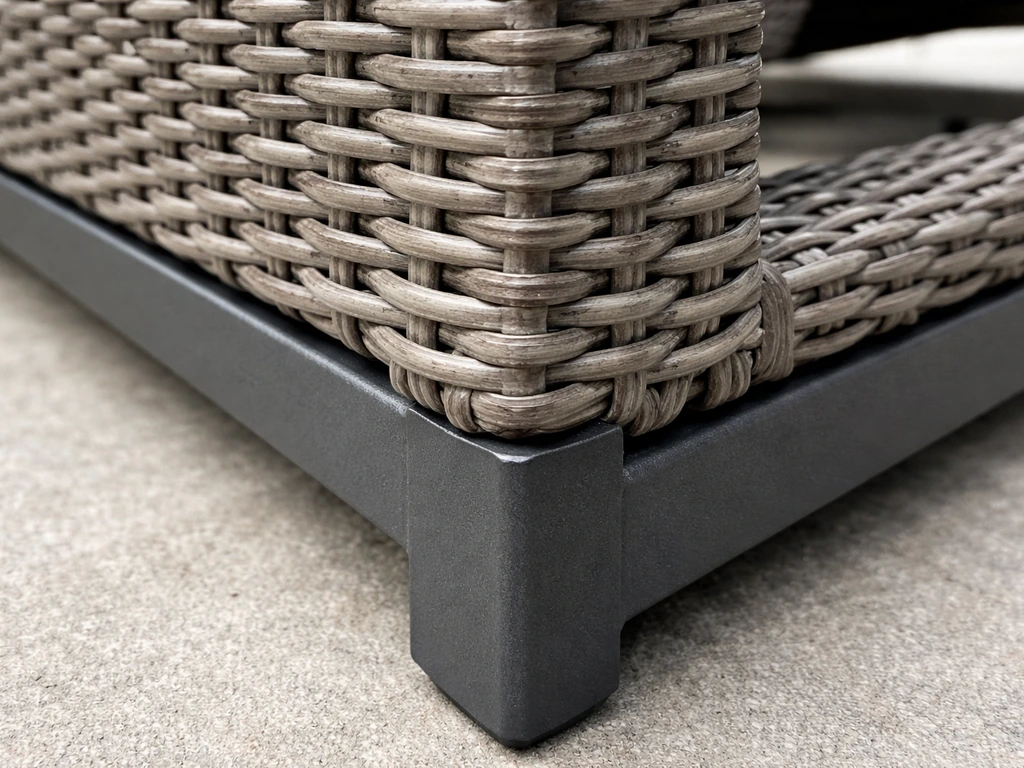
Frame material is the structural backbone. Quality resin wicker is always woven over a powder-coated aluminum frame. Avoid steel frames if possible: aluminum is corrosion-resistant and won't rust through, while steel will eventually rust even with powder coating, especially in humid or coastal environments. The weave density and tightness also matter. A loose, cheap weave sags and unravels faster than a tight, well-anchored one. Hand-woven construction over a welded (not bolted) frame tends to last longer and flex more gracefully with temperature changes.
How climate and placement shape how long wicker survives
Where you live and where you put the furniture matter enormously. A resin wicker set on a shaded, covered patio in a mild climate can easily reach 15 years in excellent condition. If you're shopping for cape may patio furniture, choosing a resin wicker set designed for shade and salt-air conditions can help it hit that longer lifespan. The same set left fully exposed in a high-UV desert climate or a salt-spray coastal yard will age noticeably faster and require more attention.
- Covered patio or pergola: Best possible scenario for any wicker type. Protection from direct rain and softened UV exposure can add years to both natural and resin sets. Natural wicker can work here with proper seasonal care.
- Full-sun open patio: Resin wicker with UV-stabilized HDPE is the right call. Natural wicker will dry out, fade, and crack much faster than expected without shade.
- Hot and arid climates (Southwest US): Intense UV is the primary threat. UV-stabilized HDPE resin wicker is essential. Look for brands that reference UV stabilizer additives and testing, not just 'UV resistant' marketing language.
- Freezing and cold climates (Northeast, Midwest): Bring natural wicker inside before first frost, every year. Resin wicker can tolerate cold better but should still be stored or covered to protect frame hardware and cushions from freeze-thaw damage.
- Coastal and salt-air environments (Cape Cod, the Jersey Shore, Gulf Coast): Salt is corrosive to metal and degrading to porous natural fibers. In these regions, resin wicker woven over powder-coated aluminum is the go-to choice. Many coastal furniture retailers (including those serving areas like Cape May) specifically stock composite and synthetic wicker for this reason.
- High-humidity climates (Southeast US, Pacific Northwest): Moisture and mildew are the risks. Resin wicker handles humidity well, but cushions and frame hardware need attention. Natural wicker is a poor fit.
Signs your wicker is aging and whether to repair or replace
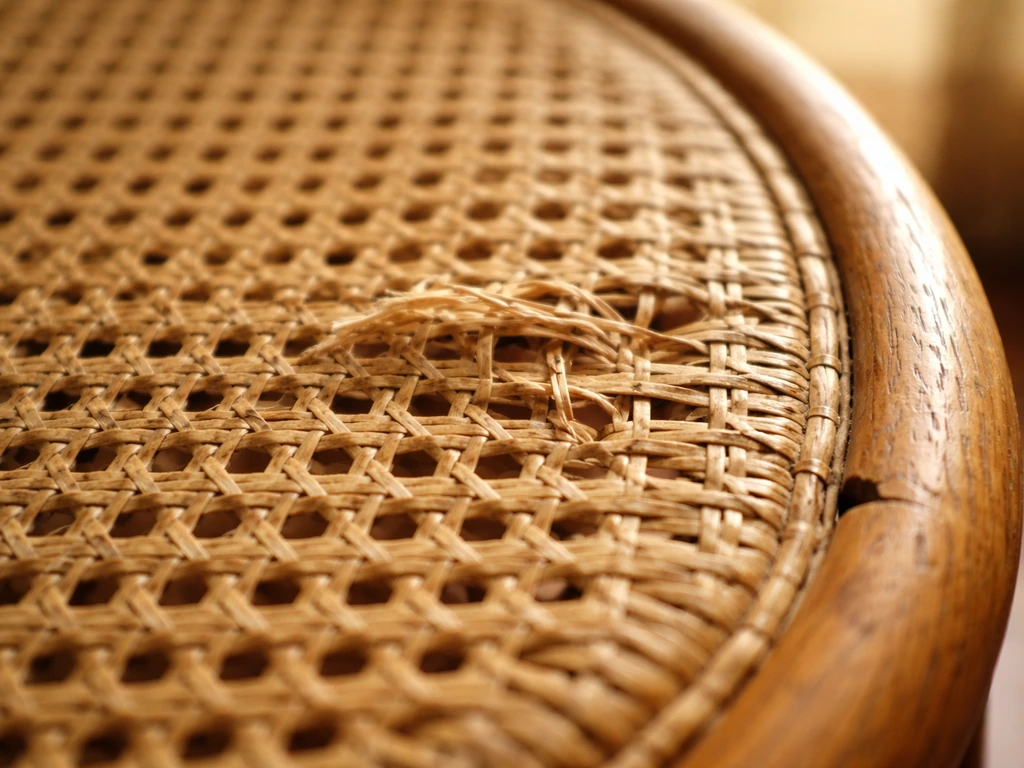
Knowing when to intervene early can save a set, and knowing when to cut your losses prevents throwing good money after bad. Here's what to look for and how to think about the decision.
Early warning signs (repair territory)
- One or two strands fraying or pulling loose from the weave pattern
- Minor surface fading or slight chalky texture on resin wicker
- Cushions fading or developing mildew spots while the frame is still solid
- Loose joints that wobble slightly but haven't deformed
- Small cracks in individual natural wicker strands
Isolated strand repairs on resin wicker are doable with replacement fiber kits and some patience. Reweaving natural rattan is a traditional craft skill, and local furniture repair shops can often address small areas cost-effectively. Cushion replacement is almost always worth it when the frame is still structurally sound, since it costs a fraction of a new set and gives the furniture years of additional life.
Late-stage signs (likely time to replace)
- Widespread weave sagging, loosening, or unraveling across most of the surface
- Frame bends, cracks, or visible rust bleeding through the powder coat
- Structural joints that flex or creak under normal sitting weight
- HDPE fibers that are visibly brittle, snapping rather than bending
- Natural wicker that has absorbed significant water and developed deep mold or rot in the core fibers
If the frame is compromised, repair rarely makes economic sense. A bent or rusted frame will continue to degrade regardless of what you do to the weave, and the cost of professional reframing typically exceeds the value of a used piece. At that point, applying the same budget toward a better-quality replacement is the smarter move.
The maintenance checklist that actually extends lifespan
None of this is complicated, but the difference between 7 years and 15 years of usable life often comes down to whether you do these things consistently.
- Clean regularly with mild soap solution: Mix a gentle dish soap at roughly a 1:16 ratio with lukewarm water. Scrub lightly with a soft brush, rinse thoroughly with cold water, and let it air dry completely before putting cushions back. Avoid bleach and abrasive cleaners, which break down resin finishes.
- Dry completely after rain or cleaning: Never let moisture sit in the weave or pool in the frame. If caught in a rainstorm, tip the furniture to drain the frame and let it dry fully before covering or storing it.
- Cover when not in use: A quality, breathable outdoor furniture cover keeps UV, bird droppings, pollen, and moisture off the surface between uses. Make sure it fits properly so wind doesn't trap condensation underneath.
- Store cushions separately during bad weather: Cushion fabric and foam retain moisture and develop mildew faster than the frame does. Pull them inside during rain and store them indoors or in a deck box during offseason.
- Bring natural wicker inside for winter: This is non-negotiable in climates with freezing temperatures. Store in a dry, climate-controlled space. Do not store upside down as water can pool in the frame and freeze.
- Winterize resin wicker with covers or storage: Even UV-stabilized HDPE benefits from reduced exposure during months the furniture isn't being used. At minimum, cover it and drain any water from hollow frame members before temperatures drop below freezing.
- Treat mildew spots promptly: Use a targeted mildew remover on affected areas rather than letting spots spread. On resin wicker, most surface mildew comes off easily with mild cleaning before it becomes embedded.
- Inspect joints and fasteners each spring: Tighten any hardware that has loosened over winter. Catching a wobbly joint early prevents the mechanical stress from spreading to the weave around it.
What to look for when buying wicker that will actually last
The buying decision is where you set the ceiling on how long the furniture can possibly last. No amount of maintenance rescues fundamentally cheap construction.
Frame: aluminum over everything else
For outdoor use, insist on a powder-coated aluminum frame. It won't rust, it's lightweight enough to move around, and quality powder coating holds up well to salt air and UV. Steel frames are heavier and cheaper but will eventually rust, especially at any spot where the coating chips. Wood-framed wicker pieces exist but are almost exclusively for covered indoor-outdoor spaces, not full outdoor exposure.
Fiber: UV-stabilized HDPE
For the weave itself, look for HDPE resin with documented UV stabilizers. wicker vs metal patio furniture. The distinction matters because not all HDPE is created equal: standard HDPE degrades under sunlight exposure, turning chalky and brittle. UV-stabilized HDPE (the kind used in marine applications and quality outdoor furniture) incorporates absorbers and stabilizers that substantially extend outdoor service life. If a brand can't tell you what type of resin their wicker fiber uses, that's a red flag.
Weave tightness and anchoring
Tug gently on individual strands in the showroom or look closely at product photos. A quality weave sits tight and uniform with no obvious gaps, loose ends, or irregularities. The strand ends should be neatly finished and secured, not just tucked loosely. Hand-woven construction over a fully welded frame is the gold standard.
Cushions: outdoor-rated fabric and quick-dry foam
Cushions are typically the first thing to show wear. Look for solution-dyed acrylic fabric (brands like Sunbrella are the benchmark) which resists fading and mildew far better than printed polyester. Quick-dry foam or open-cell foam that allows water to drain rather than retain moisture extends cushion life and prevents the mold issues that can make an otherwise good set unusable. One-year cushion warranties are common even on premium sets, which tells you brands know cushions take the most abuse.
Warranty as a quality signal
A 3-year warranty on the wicker fibers and a 5-year warranty on the aluminum frame is a reasonable benchmark for quality outdoor resin wicker. If a brand offers only a 1-year blanket warranty, it's either a budget product or they lack confidence in the construction. This doesn't mean you should buy furniture purely based on warranty length, but it gives you a quick way to compare how manufacturers are positioning their own confidence in the product.
If you're shopping in a coastal market, whether that's the Cape May area, the Gulf Coast, or the Pacific shoreline, prioritize the aluminum frame and HDPE fiber combination specifically. In Cape May, wicker patio furniture is especially demanding because of UV exposure and salt air, so choosing UV-stabilized HDPE over a powder-coated aluminum frame makes a big difference. Salt air is unforgiving on any porous or reactive material, and the extra investment in a well-constructed synthetic set will pay back in years of life that cheaper or natural alternatives simply can't match in that environment. The question of whether wicker furniture can be left outside year-round also ties closely into this buying decision, since the answer depends almost entirely on the material and your local climate.
FAQ
How can I estimate how long my wicker patio furniture will last based on what I’m seeing now?
Start by checking the failure pattern. If cushions are worn but the weave and frame are solid, you can often extend life significantly with cushion replacement. If you see widespread strand fraying, sagging weave, or loose joins, you are likely into the “years left” zone rather than the “one-off repairs” zone, since the slow weave loosening usually comes before major frame issues.
Can I leave resin wicker outside year-round in a freezing climate?
Yes, but not the way you’d treat it in mild weather. Even though HDPE fibers handle temperature swings well, freeze-thaw can stress frame connections and cushions (especially if water pools). Use winter storage for cushions, keep the furniture covered in snow-heavy areas, and ensure any drain paths in the frame are not blocked.
What’s the fastest way to tell if my “wicker” is natural (rattan) or resin without brand packaging?
Look for cues in texture and spec. Natural wicker typically looks more variable in thickness and color and can feel slightly more rough and absorbent. Resin wicker often looks more uniform and “evenly” woven. The most reliable method is to check the product description for terms like HDPE, all-weather, or synthetic, because the word “wicker” can describe weaving style, not material.
Will washing resin wicker shorten its lifespan?
Regular cleaning usually helps, but avoid letting water sit in problem spots. Use a hose with light pressure, then rinse away soap completely and allow full air-drying. After heavy rain, briefly tilting or draining (especially on hollow aluminum frames) prevents pooled moisture from accelerating issues at joints and under cushions.
Is powder-coated aluminum always the best frame material for wicker, including coastal areas?
For outdoor resin wicker, powder-coated aluminum is the best practical choice in most cases because it resists corrosion and will not rust through like steel. That said, inspect for coating chips and weak weld points. If a frame has significant coating damage and you see corrosion starting around those spots, expect a shorter lifespan unless it is repaired promptly.
How often should I re-cover or reapply protection to make wicker last longer?
Covers extend life most when they keep off direct sun and reduce rain exposure, but they must allow airflow. If your cover traps moisture, you can speed up mold and mildew on cushions and create damp conditions near the frame. A good approach is to use breathable covers, clean the furniture before covering, and check periodically for trapped moisture.
Are strand repairs worth it on resin wicker, and when do they stop making sense?
Strand repairs are often worth it when the damage is localized and the frame is still straight with no wobble. If the weave is loosening across multiple sections, or you see sagging at corners and stressed joints, individual strand kits become cosmetic. At that point, replacing cushions and using the set as long as it remains stable may be the most cost-effective path.
Should I replace cushions immediately, or can I wait until the frame shows wear?
If the cushions are waterlogged, moldy, or tearing, replace them sooner. Even if the frame is still fine, worn cushions accelerate deterioration by trapping moisture, rubbing on the weave, and increasing sag. High-quality cushion fabric and quick-drain foam can also prevent mildew from getting a foothold, which protects the surrounding weave and frame areas.
What is the most common buying mistake that reduces wicker lifespan?
Assuming “outdoor wicker” automatically means all-weather resin. Many items marketed with the wicker term alone may use materials or resins that lack meaningful UV stabilizers. If the listing does not clearly state HDPE and outdoor UV stabilization, treat it as a higher risk for early chalking, brittleness, and rapid fading.
How does wind affect how long wicker patio furniture lasts?
Wind matters because tipping and repeated flexing at joints can crack weave at stress points. Lightweight pieces are more vulnerable on exposed decks and coastal lots, where gusts can push furniture out of position. Stabilize the set (for example, with appropriate anchors if the manufacturer allows) and choose a wider, sturdier base for longer service life.
What warranty length should I treat as a real quality signal for how long wicker lasts?
Use warranty length as a sanity check, not the only metric. A common quality benchmark for resin wicker is a multi-year limited warranty for the fibers (often around three years) and a longer warranty for the frame (often around five years) depending on brand. If the warranty is very short or vague, it can indicate budget fibers or construction rather than something you can “maintain your way out of.”}]}]}
Next Articles
Is Teak Patio Furniture Good? Durable, Smart Buying Guide
Is teak patio furniture good? Evidence-based verdict, lifespan, care, buying tips, comparisons, and eco guidance.
How Long Does Teak Patio Furniture Last? Lifespan Guide
Teak patio lifespan ranges, factors that shorten or extend durability, and a maintenance plan to protect joints and fini
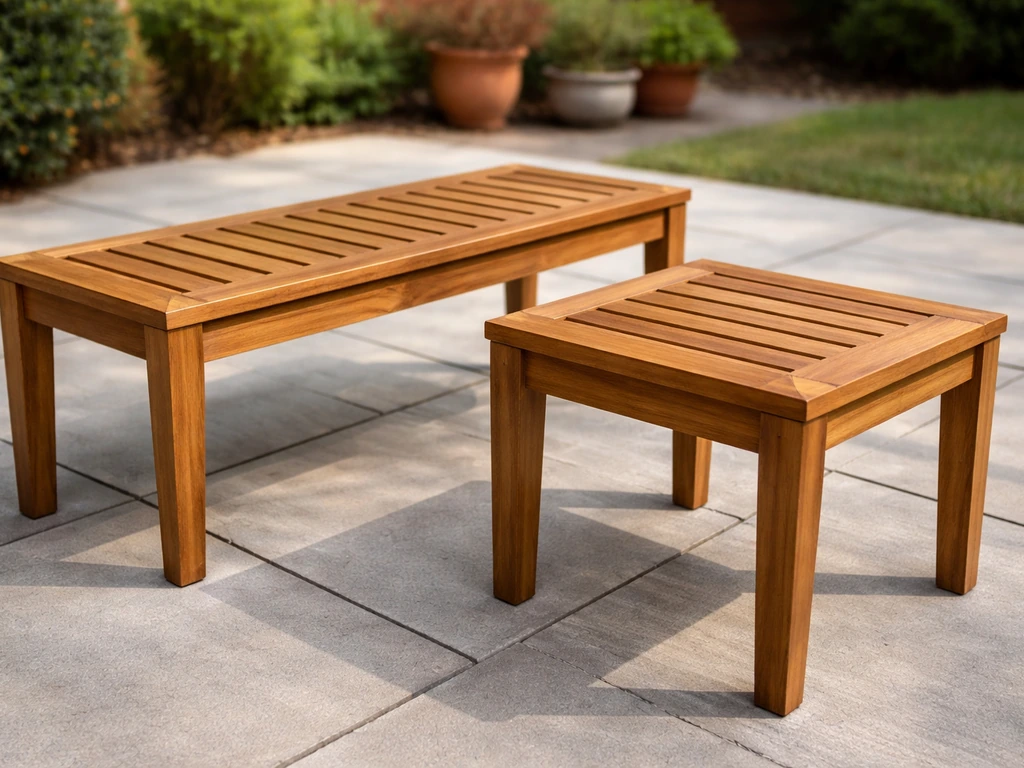
High Quality Teak Patio Furniture: How to Choose and Care
Checklist for buying high quality teak patio furniture, spot real construction, compare materials, and maintain it by cl