
The best all-weather wicker patio furniture is made from UV-stabilized HDPE (high-density polyethylene) resin fiber woven over a powder-coated aluminum frame, with Sunbrella or equivalent solution-dyed acrylic cushions and stainless or galvanized hardware throughout. That specific combination resists rain, UV fading, coastal salt, and freeze-thaw cycles far better than anything marketed as 'wicker' that uses a steel frame or untreated polyethylene weave. If you can verify those three things, you're looking at a set that realistically lasts 10 to 15 years with minimal effort. If you're shopping for the best outdoor wicker patio furniture, start by verifying the HDPE weave, powder-coated aluminum frame, and solution-dyed cushions. If you can't verify them, you're probably looking at furniture that rusts at the joints, turns brittle in the sun, or mildews through the cushions within two or three seasons.
Best All Weather Wicker Patio Furniture Buyer’s Guide

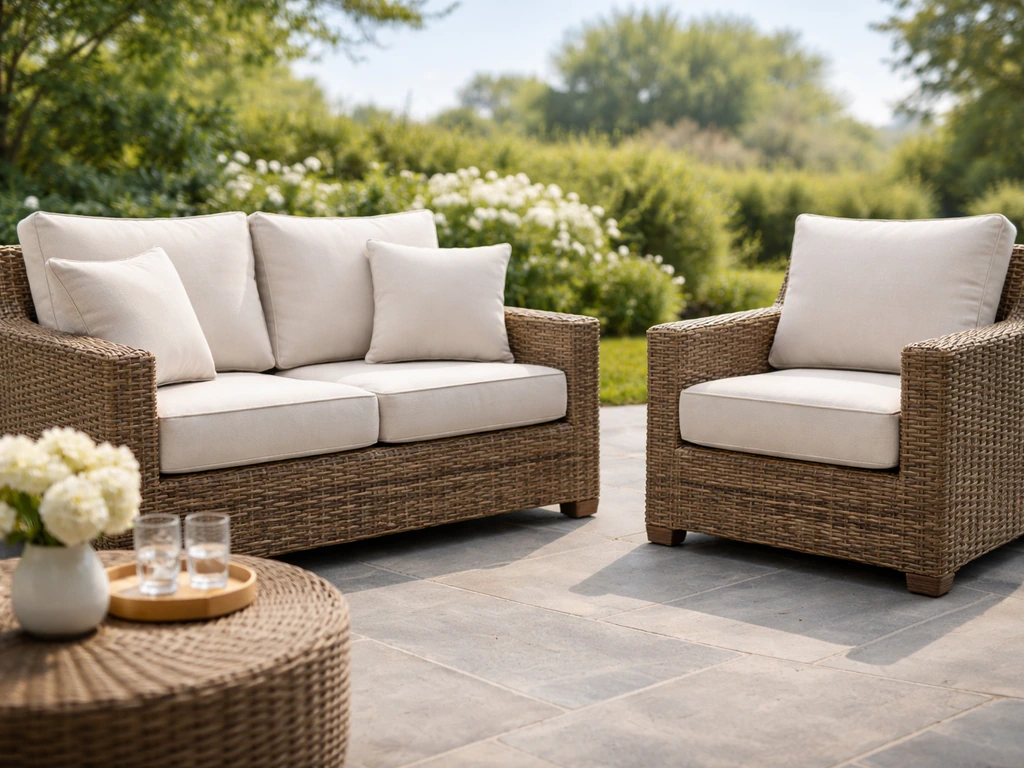
What 'all-weather wicker' actually means
Traditional wicker is a weaving technique, not a material. Historically it was done with natural fibers: rattan, reed, bamboo, rush. Those materials look beautiful indoors but fall apart outside. They absorb moisture, swell, crack, grow mold, and deteriorate fast in direct sun. When you see 'all-weather wicker' or 'resin wicker' on a product listing, that's the industry's way of saying the weave is made from synthetic fibers, usually polyethylene resin, designed to mimic the look of natural wicker without the weather vulnerability.
The critical word is 'UV-stabilized.' Polyethylene on its own is water-resistant, but plain PE resin degrades under prolonged sun exposure: it fades, becomes brittle, and eventually cracks or breaks apart. Quality all-weather wicker adds UV inhibitors directly into the fiber during manufacturing, which is why HDPE resin wicker from reputable brands holds its color and flexibility for years while cheap alternatives turn chalky and snap within a few seasons. Some manufacturers also reinforce the weave with nylon cord internally, which adds tensile strength beyond what the outer strands alone provide. That's a meaningful construction detail, not a marketing point.
The frame matters just as much as the weave. A perfect HDPE weave over a mild steel frame is still a liability, because steel rusts at the joints the moment the powder coat chips, and chips are inevitable outdoors. Water wicks under the coating, oxidation begins, and eventually the rust pushes through the weave from inside. Powder-coated aluminum eliminates that failure mode entirely because aluminum doesn't rust. It's also lighter, which matters if you rearrange furniture or move it for storage. Powder coating on aluminum also holds color far better than liquid paint, resisting fading under continuous UV exposure. That's the combination every serious all-weather wicker piece should have.
Top picks by style and use case
Not every wicker set is the right match for every outdoor setup. The category you choose matters as much as the materials, so here's how to think about each type.
Conversation sets
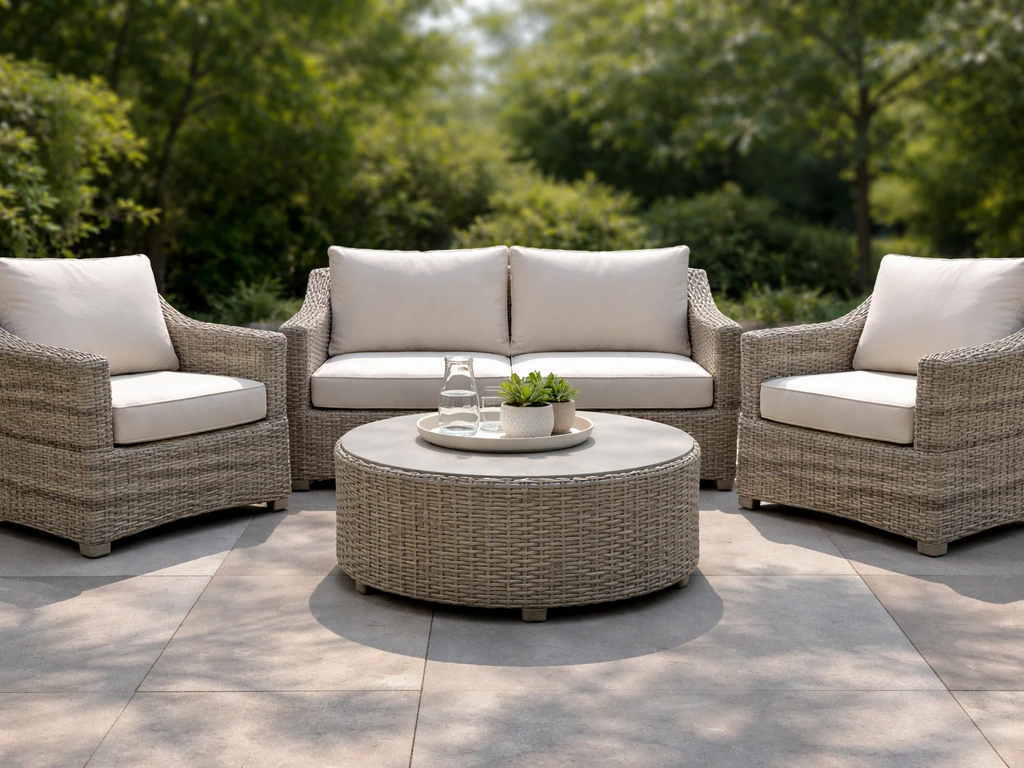
Conversation sets, typically a sofa or loveseat plus two chairs and a coffee table, are the most popular all-weather wicker category and the one where quality differences are most obvious. Look for sets where the sofa frame is made from extruded aluminum tube (not flat bar stock), the weave is tight and even without visible gaps at the corners, and the cushions have removable, washable covers. Sectional conversation sets, like the NorthCape Cabo-style sectionals, use modular pieces that let you reconfigure the layout, which is a genuine feature if you entertain. For a four- to six-person space, a three-piece conversation set (sofa, two chairs, table) works well. For larger patios, a five-piece or modular sectional makes more sense.
Dining sets
Wicker dining sets are underrated. The woven back and seat panels on chairs add a visual warmth that aluminum sling chairs don't have, and a good HDPE weave over aluminum holds up just as well. For dining specifically, prioritize chairs with woven seats rather than cushion-only seats if you eat outdoors frequently, because cushion management at mealtimes is annoying. A five-piece set (table plus four chairs) handles most families; seven-piece sets for six are better for regular entertaining. Check that the table has drainage holes if the top is solid, or choose a slatted or glass-top option so water doesn't pool.
Loungers and sectionals
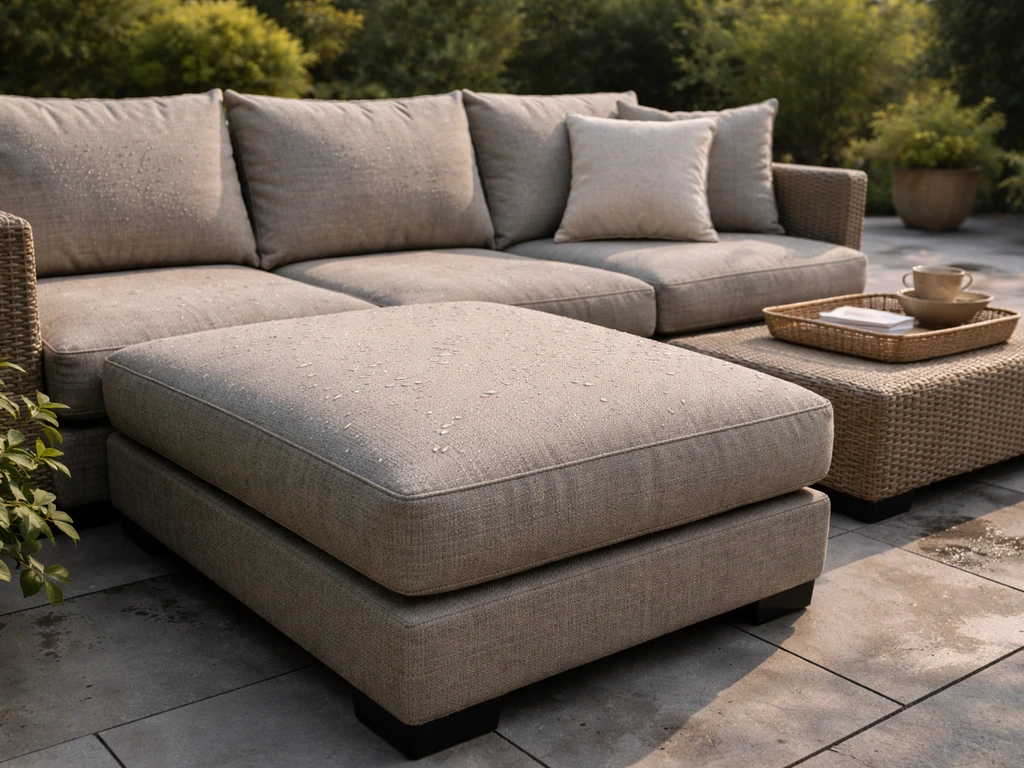
Deep-seat sectionals and chaise loungers are where cushion quality matters most, because the cushions take the most wear and the most moisture exposure. For loungers especially, look for open-cell 'dry-fast' foam inside the cushions: it drains water in minutes rather than holding moisture for days. CushionFoamz describes its “Dry Fast” outdoor cushion foam as open-cell or skeleton-structure foam that allows water and air to pass through for drainage, leaving the foam effectively dry within minutes open-cell dry-fast foam lets water and air pass through for drainage. A chaise that soaks up rain and stays wet grows mildew on the foam even when the cover looks dry. POLYWOOD and brands using HDPE weave with drainable cushion construction are the benchmark here. Adjustable-back chaises with woven surfaces (no separate seat cushion) are another strong option for pools and high-rain areas.
Best all-weather wicker for different climates
Climate is the single biggest factor in how long any outdoor furniture lasts, and all-weather wicker handles different conditions differently. Here's what to prioritize based on where you live.
| Climate | Key threat | What to prioritize | What to avoid |
|---|---|---|---|
| Frequent rain / Pacific Northwest | Moisture retention, mildew | Dry-fast foam cushions, drainage holes, tight weave, Sunbrella fabric | Closed-cell foam cushions, steel frames, cushions without removable covers |
| High humidity / Southeast / Gulf Coast | Mildew, corrosion, UV fading | UV-stabilized HDPE weave, stainless hardware, solution-dyed acrylic cushions | Natural wicker, chrome hardware, light-colored cushions without mildew treatment |
| Coastal / salt air | Salt corrosion on metal components | Marine-grade aluminum frame, stainless steel or plastic hardware throughout, powder coat rated for salt environments | Steel frames, zinc-plated fasteners, any exposed iron hardware |
| Freeze / snow / Midwest or Northeast | Freeze-thaw cracking of weave and frame stress | High-quality HDPE weave (stays flexible in cold), indoor cushion storage, furniture covers rated for freeze | Cheap PE weave (becomes brittle below freezing), leaving cushions out in snow |
| Hot, dry / Desert Southwest | UV degradation, color fade | UV-inhibitor-infused HDPE weave, UV-stable powder coat, solution-dyed cushions | Low-grade PE weave, liquid-painted frames, polyester cushion fabric without UV treatment |
One note on freeze climates: ForeverPatio's warranty documentation explicitly states that damage from sub-freezing temperatures is not covered under their limited warranty. That's a signal, not a condemnation, but it tells you to be more diligent about covering or storing furniture when temperatures drop well below 32°F, especially with cheaper weave fibers that become brittle in cold.
How to judge quality before you buy
Most product listings won't volunteer the details that determine whether a set lasts three years or fifteen. Here's what to actively look for and ask about.
The frame
Aluminum is the correct frame material for all-weather wicker. Specifically, look for 'heavy-duty powder-coated aluminum' and check whether the spec sheet says 'aluminum tube' or just 'aluminum frame.' Tube construction is stiffer and more resistant to bending under load. If the listing says 'steel frame' or doesn't specify the metal at all, that's a red flag. Powder-coated steel can work in mild, dry climates but carries meaningful rust risk the moment that coating gets scratched or chipped, which outdoor furniture inevitably does.
The weave
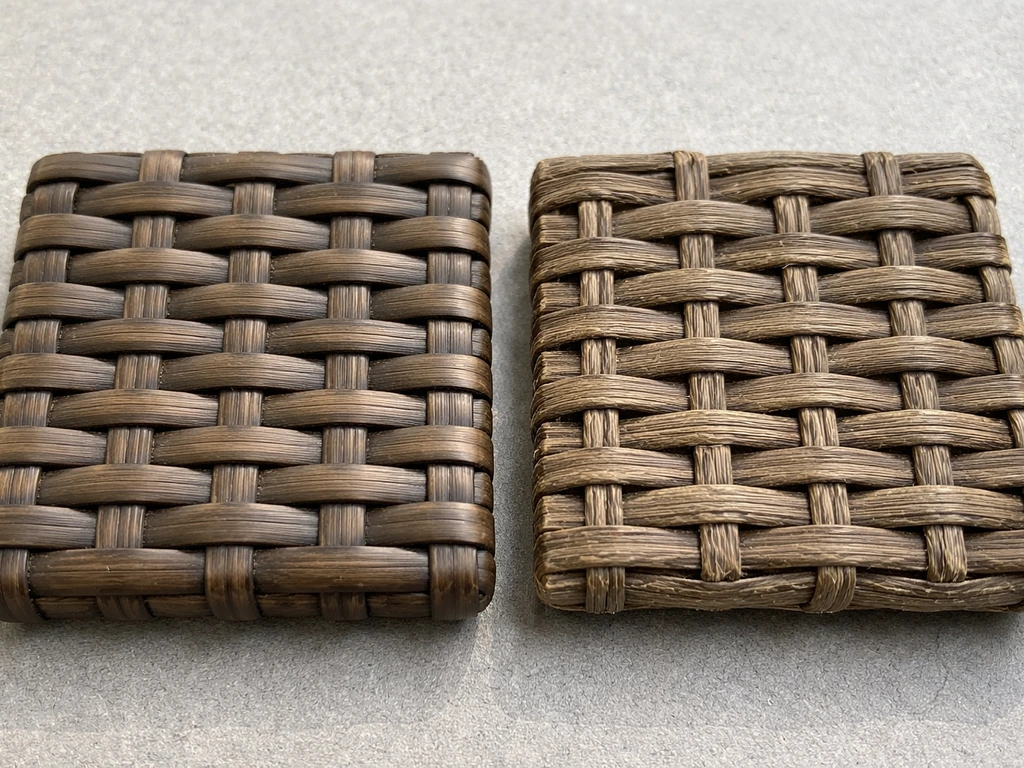
HDPE resin fiber is the gold standard. It's flexible, UV-resistant, and water-resistant by nature. Look for 'HDPE' or 'high-density polyethylene' in the product specs. 'Vinyl wicker' or 'resin wicker' without further specification may be lower-grade PE or PVC, which fades and becomes brittle faster. Weave tightness matters too: hold the piece up to light (or look at photos taken from an angle) to check for gaps, uneven strand spacing, or loose ends. Tight, uniform weave is a construction quality indicator. Nylon-reinforced weave adds strength; if a brand mentions it, that's a genuine plus.
Cushions and foam
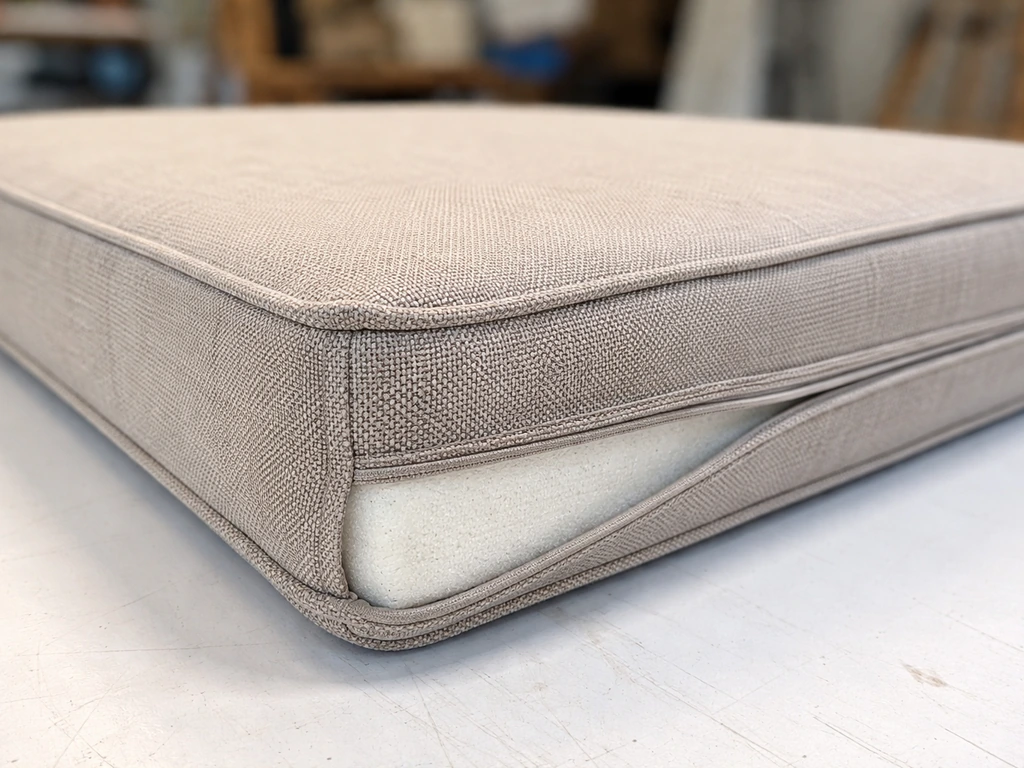
Cushions are the consumable part of any wicker set, and they're often where brands cut costs invisibly. The fabric should be solution-dyed acrylic, and Sunbrella is the benchmark: it's fade-proof, mold-resistant, mildew-resistant, and water-resistant, with performance backed by actual testing. The foam inside matters just as much. Dry-fast or open-cell foam drains water in minutes by letting it pass through the structure rather than absorbing it. Closed-cell foam feels luxurious when dry but stays wet for days after rain, creating the ideal conditions for mold and mildew. Removable, washable covers are a minimum requirement for any set you're buying long-term.
Hardware and joinery
Look at the screws, bolts, and connection points. Stainless steel fasteners are ideal; zinc-plated or plain steel fasteners will rust and seize. At coastal locations, stainless hardware is non-negotiable. The joints where legs meet the seat frame are the highest-stress points: on good furniture, these are welded or bolted with real hardware, not just the weave holding things together. If you can physically inspect a piece, press down firmly on seat corners and armrests to check for flex or creak, which indicates weak joinery.
Cleaning and protecting your furniture year-round
All-weather wicker is genuinely low-maintenance, but 'low maintenance' isn't the same as 'no maintenance.' A consistent routine keeps the weave flexible, prevents mildew from taking hold in the cushions, and extends the life of the powder coat on the frame.
Regular cleaning
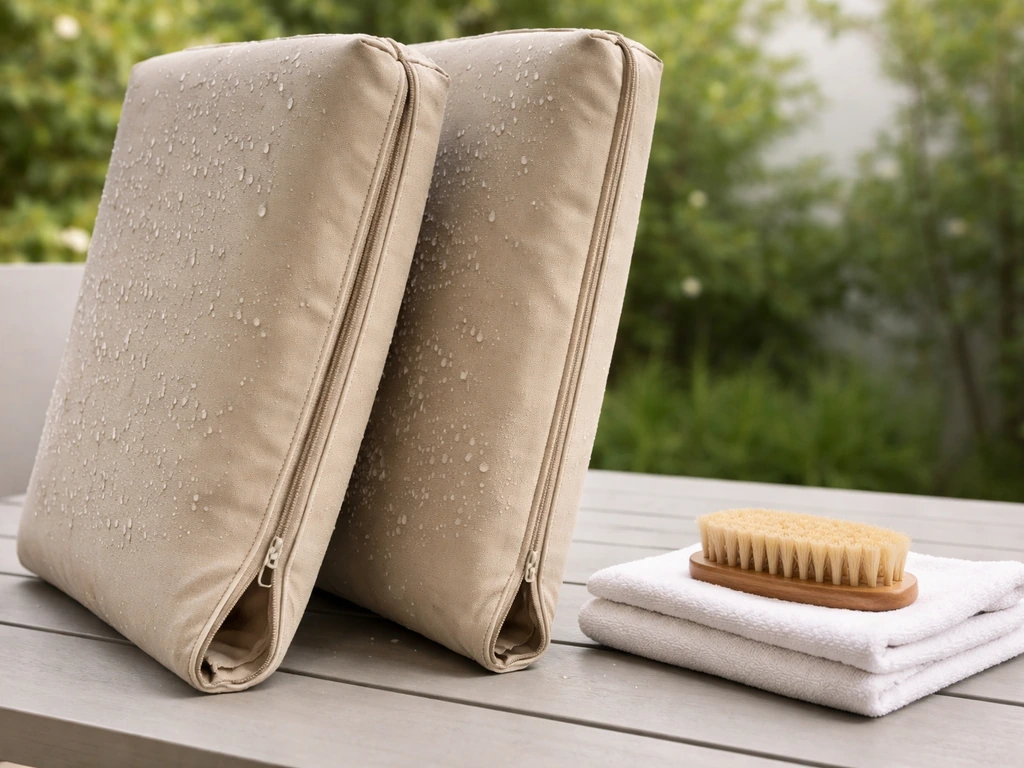
For the wicker frame, a soft brush and mild soapy water is all you need. Work the brush into the weave to dislodge pollen, debris, and salt deposits. Rinse thoroughly with fresh water, which is especially important in coastal locations where salt accumulates in the weave and around joints. Avoid pressure washing at high settings: the water force can loosen strands or push moisture into the frame joints. A garden hose at normal pressure is enough. Let everything air dry completely before replacing cushions or adding covers.
Cushion care
When cushions get soaked, stand them on edge with the zipper facing down and unzipped so water drains freely through the foam and out through the fabric. Don't lay them flat to dry: they'll trap moisture in the center. Before storing cushions for winter or extended periods, make sure they're completely dry, not just surface-dry. Even slightly damp foam stored in a garage or deck box will grow mildew. For Sunbrella fabric, a solution of mild soap and water handles most stains; a diluted bleach solution (1/4 cup bleach per gallon of water) handles mildew if it appears.
Covers and off-season storage
Furniture covers extend the life of the weave and powder coat significantly, especially over winter. Look for covers rated for UV resistance themselves, with venting panels to prevent condensation buildup underneath. In freeze climates, bring cushions inside and cover or store the furniture frames. The frames can survive cold, but sustained moisture and freeze-thaw cycles are harder on the weave over time. Even in mild climates, covering furniture during extended periods of non-use reduces UV exposure and keeps the weave from collecting debris that holds moisture.
Repair and maintenance over the long haul
Even quality all-weather wicker eventually needs some attention. The good news is that most repairs are straightforward and inexpensive if you catch problems early.
Replacing cushions
Cushions typically wear out before the frame does, which is by design on well-made furniture. Most quality wicker sets use standard cushion dimensions (seat depth, back height, arm height), so replacement cushions from aftermarket suppliers are readily available. CushionPalace, Cushion Source, and other specialty retailers offer custom-cut replacements in Sunbrella fabric with dry-fast foam. Expect to pay $40 to $150 per cushion for quality replacements, which is still far cheaper than replacing the entire set. When ordering replacements, measure both the cushion and the seat well itself, and account for any tie-down loops or Velcro tabs on the original.
Fixing loose or broken weave strands
A loose strand caught early is a five-minute repair. Resin wicker weave replacement cord is sold online, matched by color, and woven back into the existing pattern using a blunt needle or weaving tool. A broken strand left unaddressed will unravel further and let more strands go. If several adjacent strands have broken or cracked in the same area, that usually indicates UV degradation of the fiber, meaning the entire panel may need re-weaving or the set has reached the end of its realistic service life for that material quality.
Frame issues
Aluminum frames rarely fail structurally, but joints can loosen over time, especially on sets with bolted connections rather than welded ones. Check connection points annually by pressing on seat corners and armrests. Loose bolts can be tightened; stripped threads can usually be fixed with a slightly larger bolt or a thread insert. If a powder-coated aluminum frame develops scratches that expose bare metal, touch up with spray powder coat or a rust-inhibiting primer before corrosion can set in. On steel-frame sets, any rust at joints needs immediate attention: sand to bare metal, apply a rust converter, prime, and repaint before the corrosion spreads into the weave.
Warranties, brands, and getting real value for your money
Warranty terms are a surprisingly honest window into how confident a manufacturer is about their product. Here's how to read them.
What good warranty coverage looks like
For all-weather wicker, a meaningful warranty covers the weave separately from the frame, because they have different expected lifespans. NorthCape, for example, warrants straps and wicker weave for three years against separation, cracking, or tearing. Houe offers five years on powder-coated aluminum frames covering structural integrity and environmental resistance. Compare those numbers to a one-year frame warranty from a big-box product: that difference in warranty length reflects a real difference in construction confidence. Watch for exclusions too: several brands explicitly exclude damage from sub-freezing temperatures, which matters if you live in a cold climate and don't cover or store your furniture.
Price versus longevity
A five-piece all-weather wicker conversation set runs from about $400 to $600 at big-box stores for entry-level pieces, up to $2,000 to $5,000 or more for premium brands. If you want the best patio wicker furniture, use this cost-per-year logic to target sets with durable HDPE weave, a powder-coated aluminum frame, and quality cushions that can handle your climate. The right way to think about this is cost per year of use. A $500 set that lasts three years costs roughly $167 per year. A $2,000 set that lasts 15 years costs $133 per year and avoids three replacement purchases. The premium set also almost always has better warranty coverage, better cushions, and better resale value if you move. That said, not every expensive set is worth the price: verify the HDPE weave, aluminum frame, and quality cushion specs before paying a premium. If you want the best resin patio furniture, double-check the HDPE weave, the aluminum frame, and drainable, solution-dyed cushions before you buy. Brand name alone doesn't guarantee those specifics.
Brand credibility signals
Beyond warranty terms, look for brands that publish actual material specifications rather than just marketing language. A listing that says 'HDPE wicker woven over powder-coated aluminum tube frame with Sunbrella cushions and stainless hardware' is giving you verifiable specs. A listing that says 'premium all-weather wicker with durable frame' is telling you nothing. Brands like NorthCape, POLYWOOD, and Wicker Paradise publish material details and back them with multi-year warranties; that's a meaningful baseline for comparison when evaluating any set, whether it's from a specialty retailer or a major home improvement chain. blank" rel="noopener noreferrer">Wicker Paradise also describes its outdoor wicker collections as synthetic wicker engineered for UV resistance for outdoor use.
If you're deciding between closely related categories, the distinction between high-quality all-weather wicker and general outdoor or resin wicker often comes down to exactly these construction details: the fiber grade, the frame material, and the cushion specification. Understanding those differences is what separates a furniture investment from a furniture expense.
FAQ
How can I tell if a product’s “all-weather wicker” is truly HDPE and not a generic “resin wicker” claim?
Look specifically for “HDPE” or “high-density polyethylene” in the spec sheet, not just in the marketing headline. If the listing only says “resin wicker,” “vinyl wicker,” or “poly wicker” without the resin type, assume lower-grade polyethylene or PVC and plan for faster fading and brittleness.
Is powder-coated aluminum enough, or should I worry about the hardware and joint types too?
Powder-coated aluminum handles the frame rust risk, but joints and fasteners still matter. Prioritize stainless steel hardware for coastal air, and check whether connections are bolted with real hardware or just held together by the weave, weak joinery creaks under load and can loosen faster.
Can I leave cushions outside during rain, or do they need to be covered or brought in?
Even with solution-dyed, mildew-resistant covers, the foam matters. If you have open-cell (dry-fast) foam, cushions drain faster, but you should still keep them covered when not in use and aim to dry them fully if they soak through. In frequent rain or freeze climates, bringing cushions inside is the safest move.
What’s the best way to dry soaked cushions so they do not smell or develop mildew later?
Stand cushions on edge with the zipper facing down and unzipped so water can drain through the fabric and foam structure. Avoid laying flat, and keep them drying until they are completely dry throughout, not just dry to the touch, then reinstall the covers.
How should I clean all-weather wicker without damaging the weave or forcing water into the frame?
Use a soft brush with mild soapy water, then rinse at normal hose pressure. Avoid high-pressure washing, it can loosen strands or push moisture into joints and seams, which accelerates mildew in cushions and oxidation risk around exposed points.
Do furniture covers help, and what should I look for in a “good” cover?
Covers reduce UV exposure and keep debris from holding moisture in the weave, but the best ones also vent. Look for UV-rated cover fabric with venting panels to reduce condensation buildup underneath, which otherwise can promote mildew and musty odors.
What’s the right approach for freeze climates, should I bring the whole set in or just cushions?
If temperatures drop well below 32°F, cushions should be brought inside or stored dry, and frames should be covered to limit moisture accumulation. Many warranties exclude sub-freezing damage to the weave, so treat the fiber as the vulnerable component, even if the aluminum frame survives cold.
How do I evaluate cushion quality beyond just “Sunbrella” or “solution-dyed”?
Confirm dry-fast or open-cell foam, not just the outer fabric. Closed-cell foam can stay wet for days after rain, which increases mildew risk even when the cover looks dry. Also ensure covers are removable and washable, that is critical for long-term maintenance.
What should I check in the listing photos to spot a low-quality weave?
Use angled photos or zoom-in shots to look for gaps at corners, uneven strand spacing, loose ends, or visibly rough fraying. A tight, uniform weave is a construction quality indicator, loose or patchy areas often fail first at stress points.
If one strand breaks or a small section loosens, is repair easy or does it mean I should replace the whole piece?
Minor strand damage caught early is often repairable by re-weaving resin cord into the existing pattern. If multiple adjacent strands fail in the same panel, it can indicate UV degradation across that area, which may require re-weaving a larger section or treating the set as near the end of its realistic service life.
How often should I inspect hardware and joints on an all-weather wicker set?
Do a quick check at least once per year, press at seat corners and armrests to feel for flex or creaking. Catching loosened bolts early is cheaper than waiting until the joint shifts and increases stress on the weave and connections.
Are premium all-weather wicker sets always worth it, or can expensive brands still be a bad buy?
Expensive pricing does not guarantee the right construction. Before paying a premium, verify HDPE resin fiber, powder-coated aluminum tube framing (not just “metal”), solution-dyed cushions, and drainable foam. If any of those are missing or unspecified, the set may not deliver long service life.
Is a wicker dining set better than an outdoor sling chair setup for weather performance?
For frequent outdoor dining, prioritize chairs with woven seats when possible because you avoid the daily cushion management that can be annoying and moisture-prone. Weather performance is still driven by HDPE over aluminum and drainable, removable cushions if you choose cushion seats.
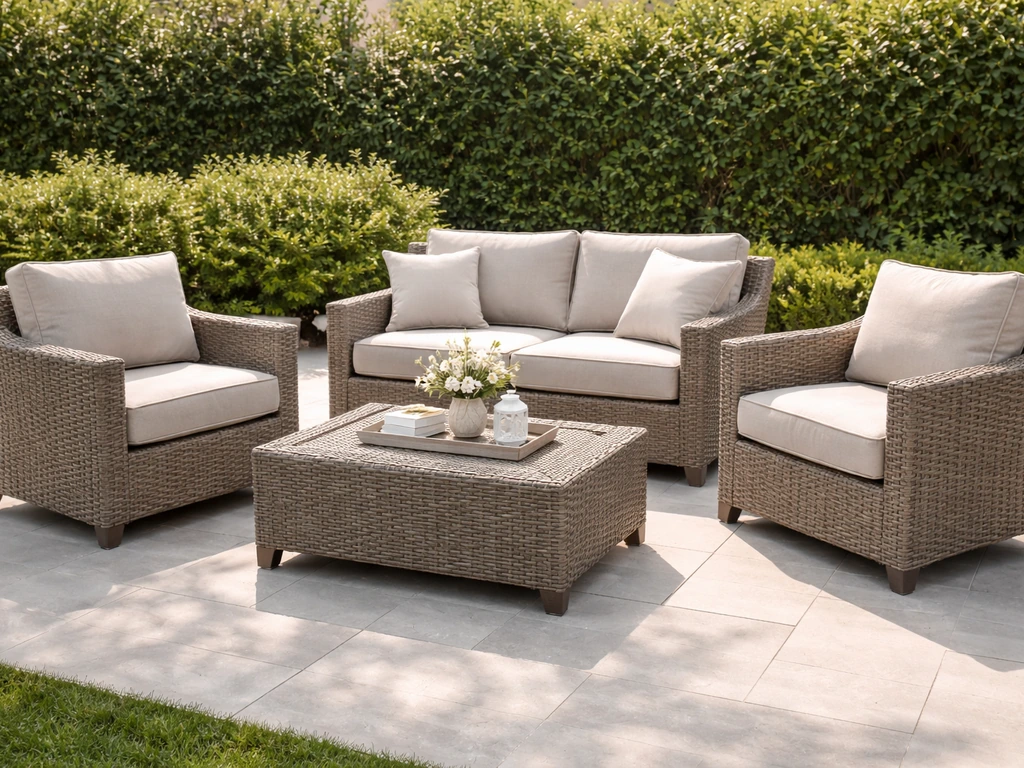
Learn how to spot high quality wicker patio furniture, compare resin vs natural, and choose durable sets and cushions.
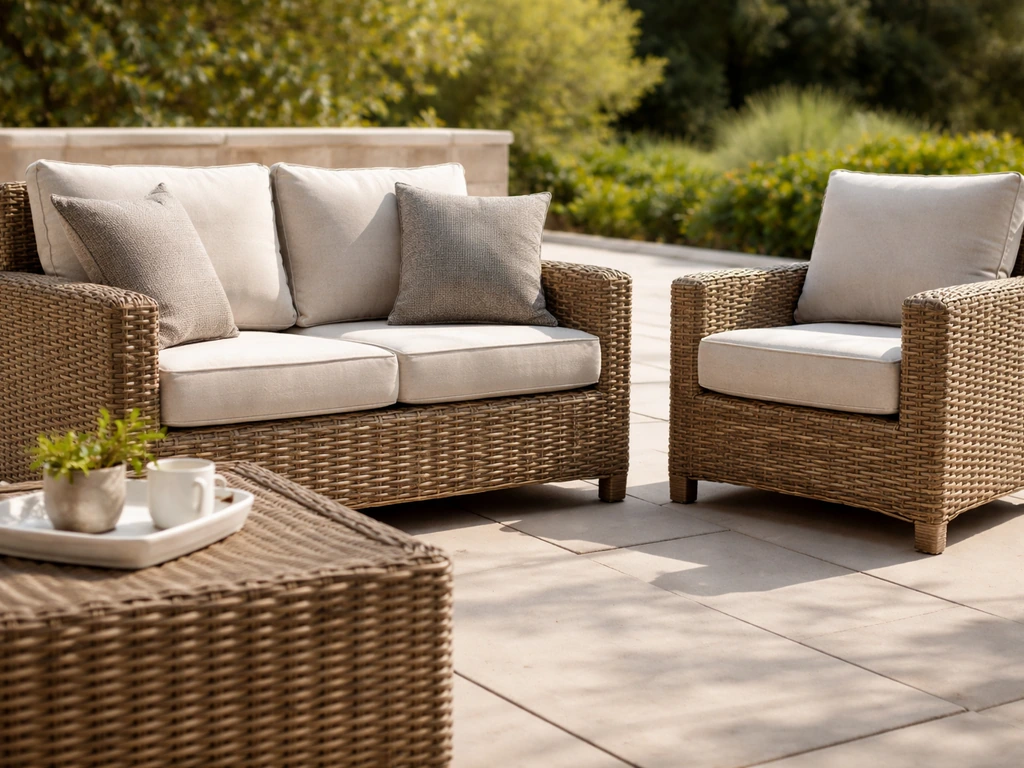
Choose the best outdoor wicker patio furniture by material, frame, weather resistance, comfort, and real climate tips.
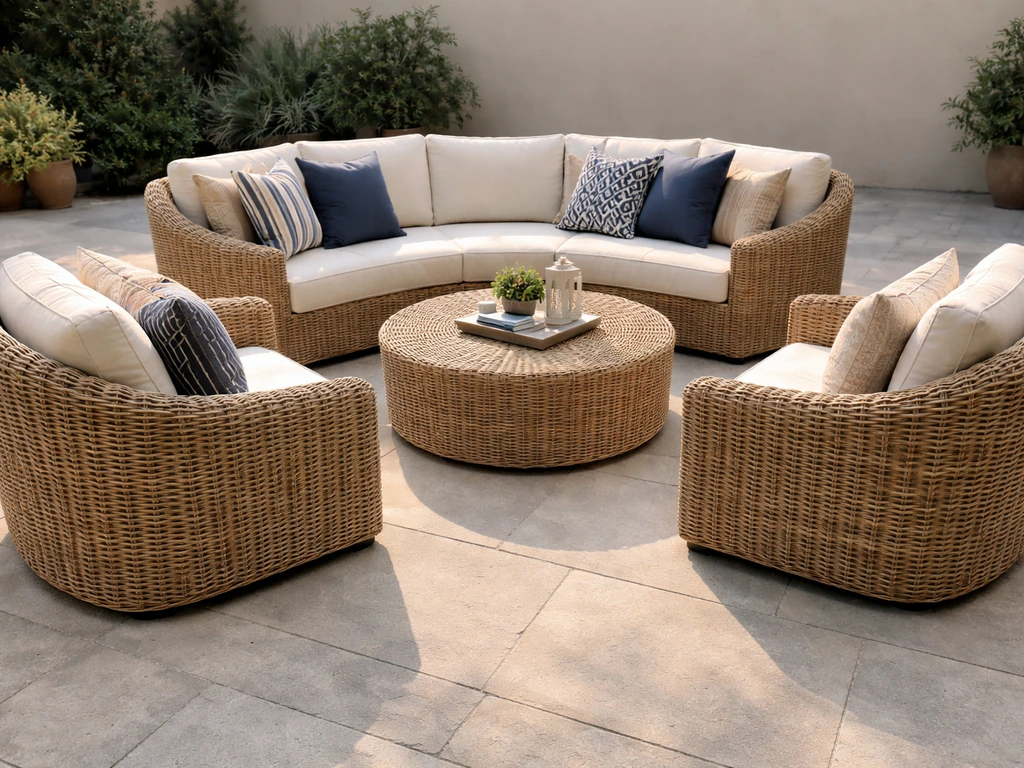
No-fluff guide to choosing the best patio wicker furniture with material, quality, sizing, and care tips for any climate