
High quality wicker patio furniture, in practical terms, almost always means resin wicker (polyethylene strands woven over a powder-coated aluminum frame), not natural wicker. If you want the best resin patio furniture, this is why resin wicker is the practical choice over natural wicker outdoors. Natural wicker looks beautiful but breaks down outdoors within a couple of seasons, while a well-made resin wicker set can last 10 to 15 years if you buy the right construction and care for it properly. The rest of this guide explains exactly what separates a durable, worth-the-money resin wicker set from one that looks good in photos but falls apart by year three.
High Quality Wicker Patio Furniture: How to Choose

Marcus Kellerman
15 May 2026
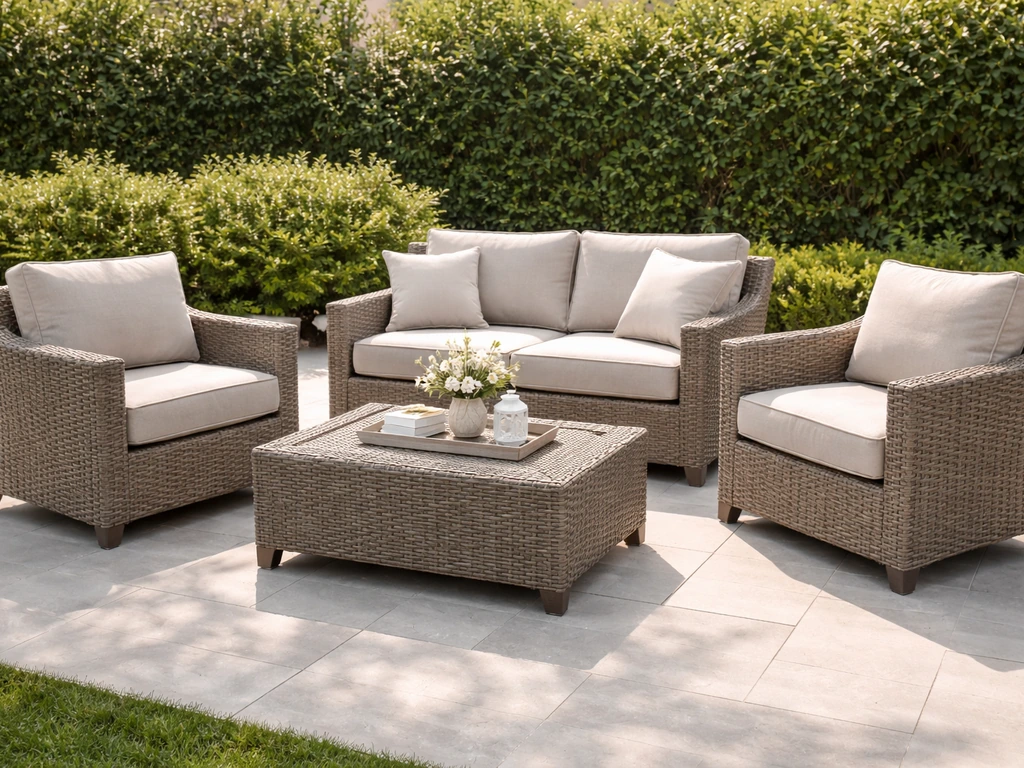
Wicker vs resin wicker: what 'high quality' actually means
Traditional wicker is a weaving technique, not a material. It can be made from rattan, seagrass, bamboo, or other natural fibers. Those materials are genuinely beautiful and work well indoors or in covered, dry spaces, but they absorb moisture, crack in UV exposure, and rot or mold if left outdoors without protection. Even a single rainy season in a humid climate can shred an unprotected natural wicker set.
Resin wicker (also called all-weather wicker) uses synthetic polyethylene (PE) or HDPE strands woven in the same patterns as natural wicker. Brands like Gloster describe their outdoor woven furniture explicitly as polyethylene plastic material woven over fully welded, powder-coated aluminum frames. POLYWOOD uses HDPE for its woven pieces specifically because it handles year-round outdoor conditions without the vulnerabilities of natural fiber. That combination of synthetic strand plus aluminum frame is the foundation of anything worth calling high quality outdoor wicker.
So when you see "high quality resin wicker patio furniture" as a search term, it is not redundant. It is the right thing to search for. The resin qualifier is doing real work, telling you this is the category designed for permanent outdoor use. The question then becomes: what separates premium resin wicker from budget resin wicker? If you want the best resin wicker patio furniture, focus first on construction details like fully welded aluminum frames and tight, UV-stable weave. That is where construction details matter. For help narrowing the options to the best outdoor wicker patio furniture, focus on all-weather resin wicker and the construction details that keep it looking good for years construction details matter.
What to look for in construction
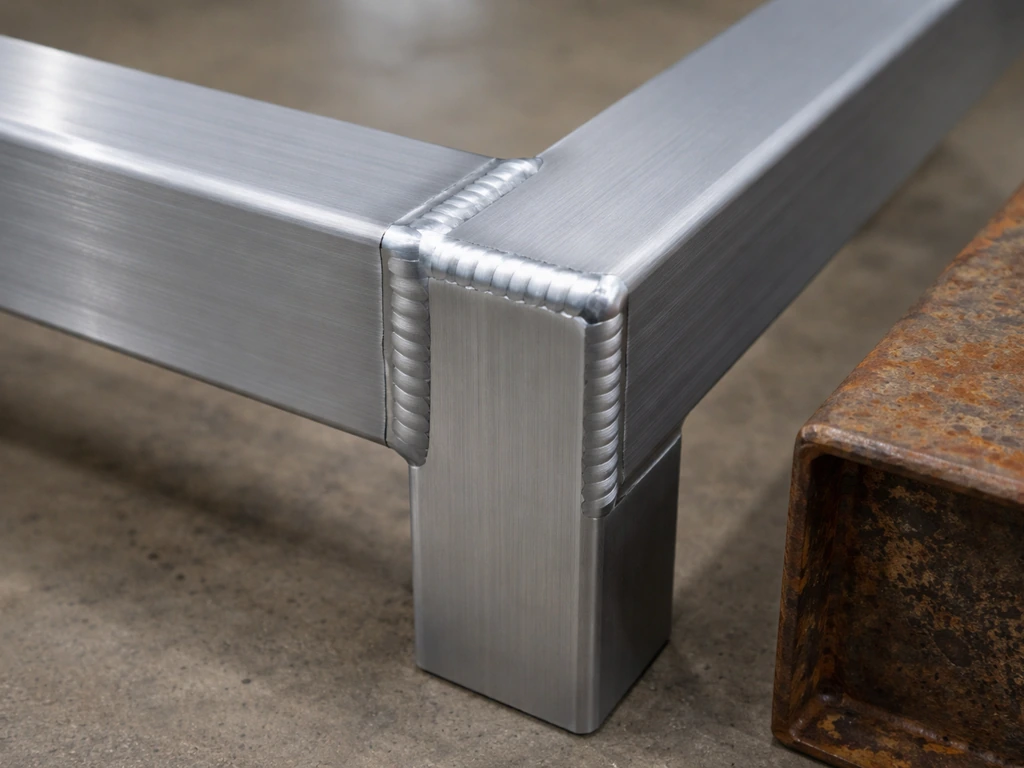
Frame material and welding
The frame is the skeleton of the piece, and aluminum is what you want. Steel is heavier and cheaper but rusts over time, especially near the coast or in humid climates. A quality aluminum frame should be fully welded at the joints, not bolted or screwed together with basic hardware that can loosen and corrode. Gloster's spec process includes chrome conversion coating applied before powder coat, and the powder coat is oven-cured at around 200 degrees Celsius (about 400 degrees Fahrenheit). That level of process is a quality signal. Budget brands often skip the conversion step and use a thinner powder coat that chips and corrodes faster.
When you are evaluating a frame in person, pick up the piece and feel for rigidity. A properly welded aluminum frame should feel solid with no flex at the joints. Wobble or give at connection points is a red flag, especially on chairs where lateral load during sitting creates stress on those welds.
Weave quality and attachment
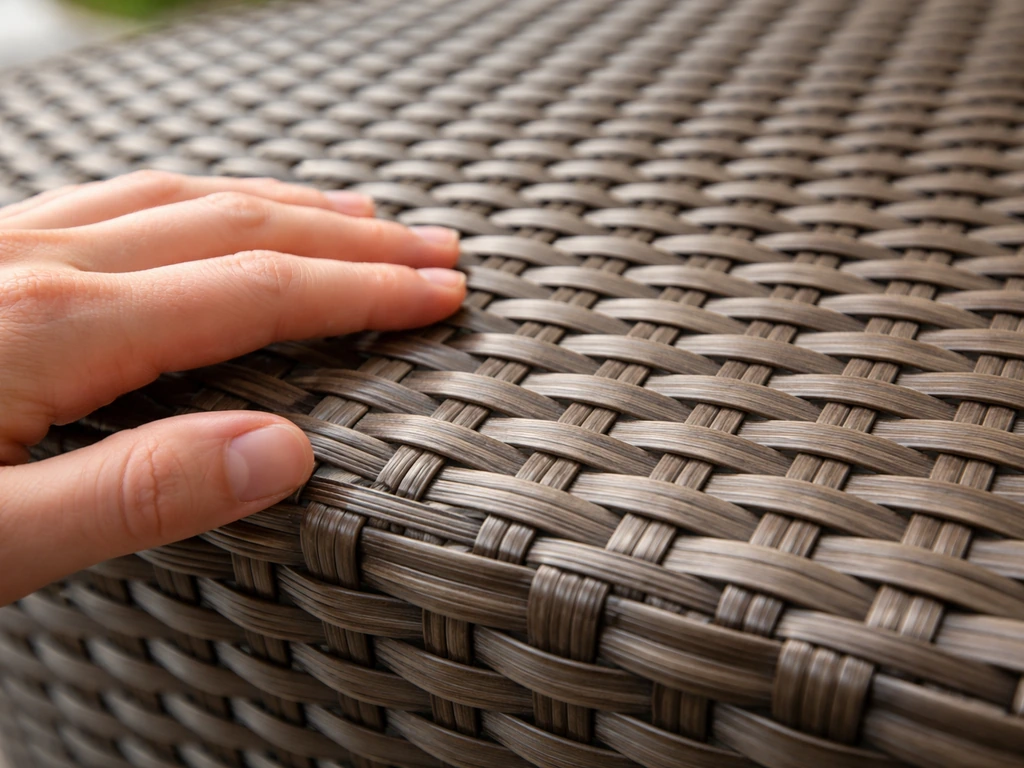
Run your hand across the weave. Premium resin wicker feels consistent, smooth, and tight. Strands should be uniform in diameter and lie flat against each other without gaps. Look at the corners and the underside of seat frames, because budget manufacturers cut corners literally at the corners, where tight wrapping is harder. Loose ends, uneven tension, or visible gaps in the weave all indicate a lower-quality product that will unravel faster under heat expansion and UV exposure.
The weave should also be attached securely at termination points, typically by tucking and stapling or heat-fusing the strand ends to the frame. Pull gently on a loose-looking strand end if you get the chance. On cheap pieces it will pull free easily. On good pieces it should not budge.
Hardware and joinery
Any visible hardware (screws, bolts, leg caps, foot glides) should be stainless steel or at minimum coated steel. Bare zinc or plain steel hardware will rust and bleed staining onto the frame. Check underneath chair and table legs for rubber or plastic foot caps, which protect both the furniture frame and your patio surface. Missing or flimsy foot caps are a small detail that signals broader cost-cutting throughout the build.
Resin wicker quality signals
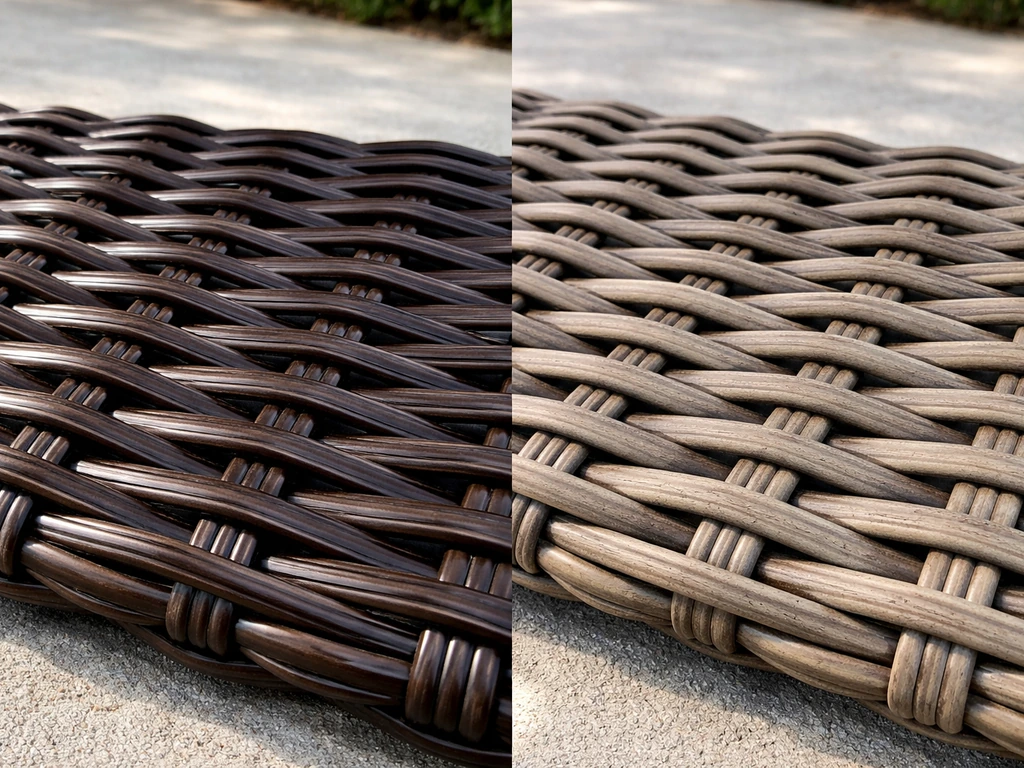
PE vs HDPE and what the difference means
Both polyethylene (PE) and high-density polyethylene (HDPE) outperform natural fibers outdoors, but HDPE is denser, stiffer, and generally more resistant to long-term UV degradation and impact. POLYWOOD uses HDPE specifically for its durability claims. PE is more common in mid-range wicker and still performs well when made properly. What matters more than the specific polymer is the quality of UV stabilizers and colorants mixed into the material at production.
UV resistance and color stability
Budget resin wicker often uses surface-dyed or painted strands. The color is a coating on top of the plastic, and it fades, chalks, or flakes as UV breaks it down. Premium resin wicker uses pigment mixed throughout the strand (similar to solution-dyeing in fabric), so color is consistent all the way through. You cannot always confirm this from a product listing, so look for explicit UV stabilizer language in the product specs or care documentation. A brand that publishes detailed care and materials documentation (like Gloster or KETTLER) is usually a brand confident enough in its product to be transparent about it.
Weave tightness and density
Tighter weave density is not just aesthetic. It means more material per square inch, which increases resistance to stretching and sagging under load, reduces UV penetration to the frame, and makes the piece feel more substantial. A loose, open weave can look intentional as a design choice, but compare it side by side with a tight weave and you will feel the difference in rigidity and long-term durability. If you are buying online and cannot feel the piece, look closely at product photos for strand uniformity and corner execution.
Cushions and upholstery standards
Fabric: solution-dyed acrylic is the standard to meet
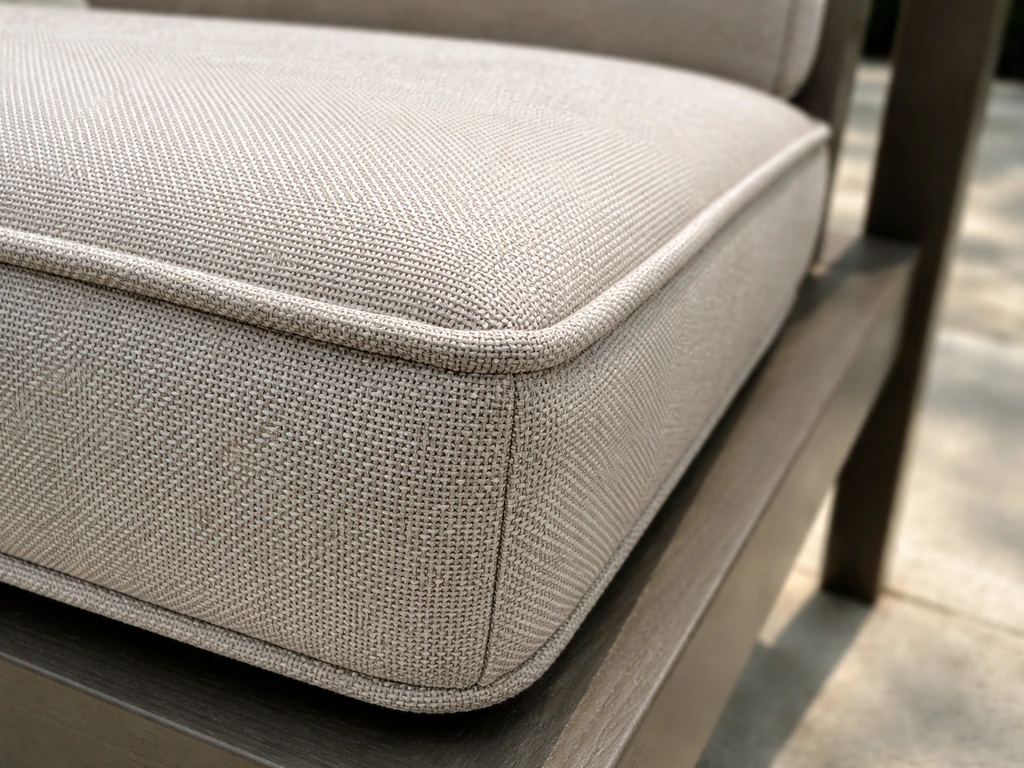
For outdoor cushion fabric, 100% solution-dyed acrylic is the benchmark. Brands like Kingsley Bate use either 100% solution-dyed acrylic or solution-dyed acrylic-blend fabrics. Gloster uses Sunbrella solution-dyed acrylic yarns specifically. The solution-dyed process means color is locked into the fiber at the yarn stage, not applied as a surface dye, which makes it dramatically more fade-resistant than polyester or surface-dyed alternatives. Sunbrella is the most recognized brand name, but several other solution-dyed acrylic fabrics perform comparably. The key phrase to look for in specs is "solution-dyed acrylic."
One important nuance: solution-dyed acrylic is water-resistant, not waterproof. Both Gloster and PatioLiving explicitly note this. Moisture can still seep into cushion foam over time, which is why cushion construction matters as much as the fabric cover.
Foam fill and moisture management
Quality outdoor cushion foam should be quick-drying and resistant to mold and mildew. Kingsley Bate and Gloster both reference open-cell construction inside cushions specifically to improve air circulation and speed drying time. Closed-cell foam holds water inside and becomes a mold factory. Ask or look for "quick-dry foam," "open-cell foam," or "drainage holes" in the product description. Solid block foam with no drainage provisions is a red flag for long-term outdoor use.
Fasteners, zippers, and covers
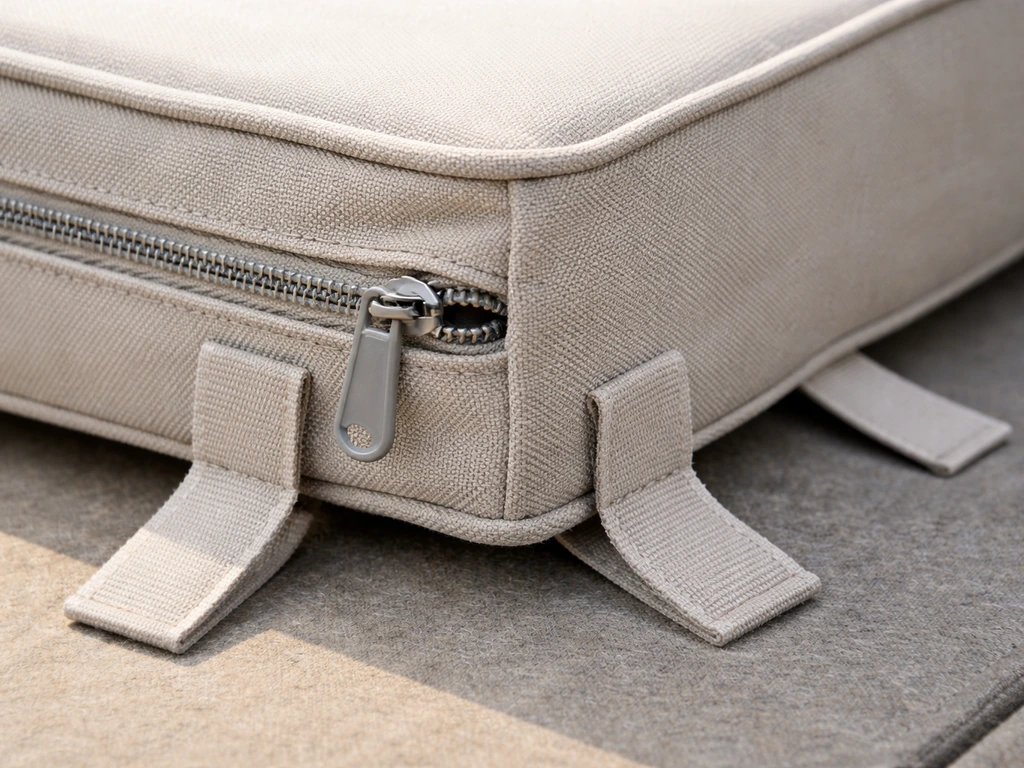
Cushion covers should have corrosion-resistant zippers (marine-grade or coated) and tie-down straps or velcro anchors to keep them seated in wind. Pull the zipper back and forth a few times and check for smooth action. Cheap zippers seize up after a season of exposure. Covers should be removable for cleaning, but avoid machine-washing them aggressively: one care manual explicitly warns that machine washing can degrade the UV-protective finish on outdoor fabric covers. Hand washing or a gentle cold-water machine cycle is safer.
How to choose for your climate
| Climate condition | Key risk | What to prioritize |
|---|---|---|
| High rainfall / humidity | Mold, mildew, frame corrosion | Fully welded aluminum frame, quick-dry foam, breathable cushion storage |
| Coastal / salt air | Accelerated corrosion on hardware and frame | Marine-grade or stainless hardware, chrome conversion + thick powder coat, rinse regularly |
| Intense sun / UV | Fading, strand brittleness, cushion color loss | UV-stabilized resin strands, solution-dyed acrylic fabric, covers when not in use |
| Freeze / thaw cycles | Cracking strands, frame fatigue at joints | HDPE or premium PE strands, store cushions indoors, bring lightweight pieces in if possible |
If you are in a coastal environment, corrosion is your number one enemy. Chrome conversion coating under the powder coat (as Gloster specifies) makes a meaningful difference in salt-air resistance compared to a simple powder-coated frame. Rinse frames with fresh water monthly to remove salt deposits. In humid Southern climates, the mildew risk on cushions is real: store them in a dry space when not in use, and never wrap them in non-permeable plastic, which traps moisture and accelerates mold growth. Seasonal Living explicitly warns against enclosing furniture in non-breathable materials for exactly this reason.
In climates with hard winters and freeze-thaw cycles, resin wicker is less vulnerable than natural wicker but can still develop microcracks in cheaper PE strands over years of repeated freezing. POLYWOOD recommends bringing cushions and lighter items inside during winter when they will not be used. A breathable, professional-grade furniture cover is the minimum if indoor storage is not possible.
How to compare brands and prices
What different price tiers actually get you
Entry-level resin wicker sets (under $400 for a full conversation set) typically use thinner PE strands, basic powder-coated steel frames, minimal weave quality control, and polyester cushion fabric. They look similar to premium sets in photos and feel adequate in the store. The difference shows up at year two or three: faded strands, loose weave at stress points, rusting hardware, and mildewed foam. Cost-per-year on a $300 set that lasts three years is $100/year. A $1,200 set that lasts 12 years is $100/year too, but with far less maintenance hassle and replacement cost.
Mid-range sets ($500 to $1,500 for a conversation grouping) typically move to aluminum frames and better PE quality. This is the sweet spot for most buyers. Premium sets ($2,000 and above from brands like Gloster or Kingsley Bate) add design refinement, tighter weave tolerances, Sunbrella fabric as standard, and much longer warranties. They are worth the price if you are furnishing a permanent outdoor space and want 15-plus years of performance.
Value checklist before you buy
- Frame material clearly stated as aluminum (not just 'metal' or 'alloy')
- Fully welded joints, not just bolted
- Powder-coated finish with corrosion resistance claims
- Resin wicker described as PE or HDPE with UV stabilization
- Cushion fabric described as solution-dyed acrylic (not just 'outdoor fabric' or 'polyester')
- Quick-dry or open-cell foam specified for cushions
- Removable, washable cushion covers with corrosion-resistant zippers
- Warranty of at least 3 years on the frame, 1 year on cushion fabric
- Brand publishes care and materials documentation (a transparency signal)
Red flags to walk away from
- Frame listed as 'metal' without specifying aluminum or steel
- No mention of UV stabilizers or UV-resistant treatment in wicker specs
- Cushion fabric described only as 'water-resistant polyester'
- No warranty, or warranty limited to 30 days on all components
- No care or maintenance documentation available from the brand
- Price that seems too low for the claimed features (a $299 full sectional is almost certainly compromised somewhere)
- Weave that feels loose or shows uneven strand tension in store or review photos
Warranty as a quality proxy
Warranty terms tell you how confident a brand is in its own product. POLYWOOD covers cushion fabric for one year against tearing, mildew, and excessive fading under their limited residential warranty, with workmanship defects covered for 30 days. That is honest and typical for mid-range cushions. A brand that warranties the frame for 5 to 10 years and cushion fabric for at least 1 to 2 years is putting real commitment behind the product. A brand with a 90-day blanket warranty on everything is telling you something about expected lifespan.
Maintenance and repair to extend lifespan
Regular cleaning routine
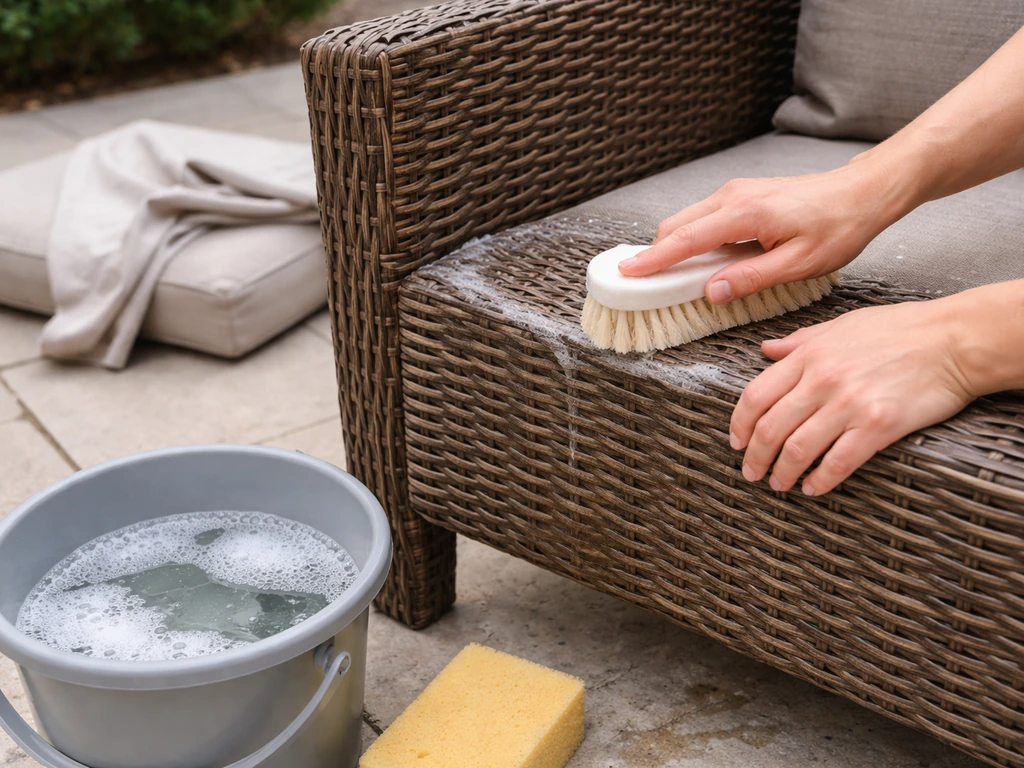
Clean your resin wicker furniture two to four times per year with mild soap (non-bleach, non-abrasive) and water. KETTLER explicitly warns that bleach and abrasive cleaners can permanently damage all-weather wicker and lead to chronic dirt accumulation by roughing up the strand surface. Forever Patio's care guide also advises against pressure washers on resin wicker. KETTLER recommends a medium-setting hose rinse rather than a high-power wash. Use a soft brush to work soap into the weave, rinse thoroughly, and let the piece dry fully in the sun before replacing cushions.
Cushion care and storage
Bring cushions inside or store them in a dry, ventilated space when you are not using the furniture for extended periods, especially through winter. POLYWOOD recommends storing cushions in a dry place protected from weather and wildlife. If you are using a furniture cover outdoors, make sure it is breathable: wrapping cushions in non-permeable plastic traps humidity and creates exactly the mildew conditions you are trying to avoid. A quality cover with vents or woven breathability is the right tool for outdoor storage.
Repairing damaged strands
Individual resin wicker strands can break or loosen over time, especially at high-stress points on chair arms or seat edges. On quality furniture with a solid frame, this is usually repairable. Replacement resin wicker strand material is available from specialty suppliers in round and flat profiles. You weave the new strand through the existing pattern, tuck the ends, and secure with a small amount of outdoor-rated adhesive. It takes patience but is very doable for a DIYer. A loose strand that is not yet broken can often be re-secured with a dab of adhesive at the attachment point before it becomes a full break.
When to restore vs replace
If the aluminum frame is structurally sound (no cracked welds, no major corrosion) and only the weave or cushions are showing wear, restoration is usually worth doing. Replacement cushions are widely available from brands like POLYWOOD through their help center, and third-party cushion suppliers can match most standard sizes. If the frame has significant corrosion, cracked welds at multiple joints, or noticeable flex that was not there originally, the structural integrity is compromised and replacement is the smarter investment. Repainting or recoating a powder-coated aluminum frame is possible but requires stripping, surface prep, and proper application to perform well, which usually makes it a professional job rather than a weekend DIY project.
If you are comparing specific sets right now, the related questions of best all-weather wicker furniture, best resin wicker patio furniture, and best resin patio furniture (including non-wicker resin options) each have their own nuances worth exploring depending on your budget and climate. The construction and quality principles covered here apply across all of those categories.
FAQ
How can I tell if resin wicker color will stay true in full sun (not just resist fading temporarily)?
Look for “UV stabilizers” or “pigment throughout the strand” language in the product specs, not just a color name. If the listing only mentions surface paint or “weather resistant finish,” assume faster fading and chalking, especially on chair arms and cushions in direct sun.
Should I cover my resin wicker patio furniture with a tarp during off-season storage?
Yes, but only if the cover is breathable and you still allow airflow. Plastic wraps and non-breathable tarps can trap humidity against cushions, increasing mildew risk even if the wicker strand itself is synthetic.
What cushion features matter most if I live in a rainy climate?
Check for drainage and airflow. If cushion descriptions do not mention open-cell foam, quick-dry construction, drainage holes, or removable covers, it is usually safer to assume moisture will linger and plan on bringing cushions inside after rain or during extended non-use.
Can I use a pressure washer to deep-clean my resin wicker patio set?
Avoid power washers and “steam cleaning” on the weave. Use mild soap, a soft brush, and a moderate hose rinse at low-to-medium pressure, then fully dry in sun before reinstalling cushions.
Where should I inspect the weave to find early quality problems?
A “tucked and stapled” or “heat-fused” termination detail is a good sign, especially on corners and underside edges. If the weave ends look simply cut or loosely wrapped, those strands are more likely to loosen under freeze-thaw and heat expansion.
My resin wicker strand is loose, can I repair it myself and will it last?
For light touch-ups, you can reseat a loosened strand, but for missing sections or widespread unraveling you will want proper replacement strand material and to match the weave profile. Make sure the frame is still rigid first, because replacing strands on a flexing frame will not hold long.
If I cannot bring cushions inside, what is the best storage approach?
A breathable cover helps, but cushion storage still matters. If you cannot store cushions indoors, keep them in a ventilated area and avoid stacking wet or damp cushions against each other, because trapped moisture spreads mildew.
What small hardware details most affect long-term durability on resin wicker sets?
Yes, but it should not be bare steel. Look for stainless hardware or coated fasteners, and verify foot glides or caps are included. Missing or flimsy caps often lead to rust spots and staining on pavers or decking over time.
Is resin wicker truly winter-proof in regions with hard freezes?
Quality resin wicker does better, but microcracking can still happen to cheaper strands after repeated freezes. If you expect frequent freeze-thaw, prioritize high-tolerance UV-stabilized strands, and plan to bring cushions and lighter pieces indoors.
How should I interpret warranty lengths when shopping for high quality wicker patio furniture?
That depends on the warranty scope. If the frame warranty is long (often multiple years) and the cushion fabric warranty is at least 1 to 2 years, it indicates confidence. A blanket “everything 90 days” style warranty usually signals limited lifespan expectations.
Does a tighter resin wicker weave always mean better comfort?
Tighter weave usually feels more rigid and less prone to sagging. However, very stiff designs with thick strands can be more rigid seating, so compare comfort side by side, not just durability.
When does refinishing an old resin wicker set make sense versus replacing it?
If the frame is fully welded aluminum and only the cushions or a few strands are worn, refinishing can be worthwhile. If you see cracked welds, widespread corrosion, or persistent wobble at joints, the better investment is usually replacing the set because structural issues are hard to “coat away.”
Do I still need to rinse resin wicker frames regularly near the ocean?
Yes, because aluminum frames can still collect salt residue and grime, which can accelerate corrosion at hardware and joints. Rinsing with fresh water periodically is especially important for coastal areas and windy storms.
Next Articles
Best Outdoor Wicker Patio Furniture: How to Choose
Choose the best outdoor wicker patio furniture by material, frame, weather resistance, comfort, and real climate tips.
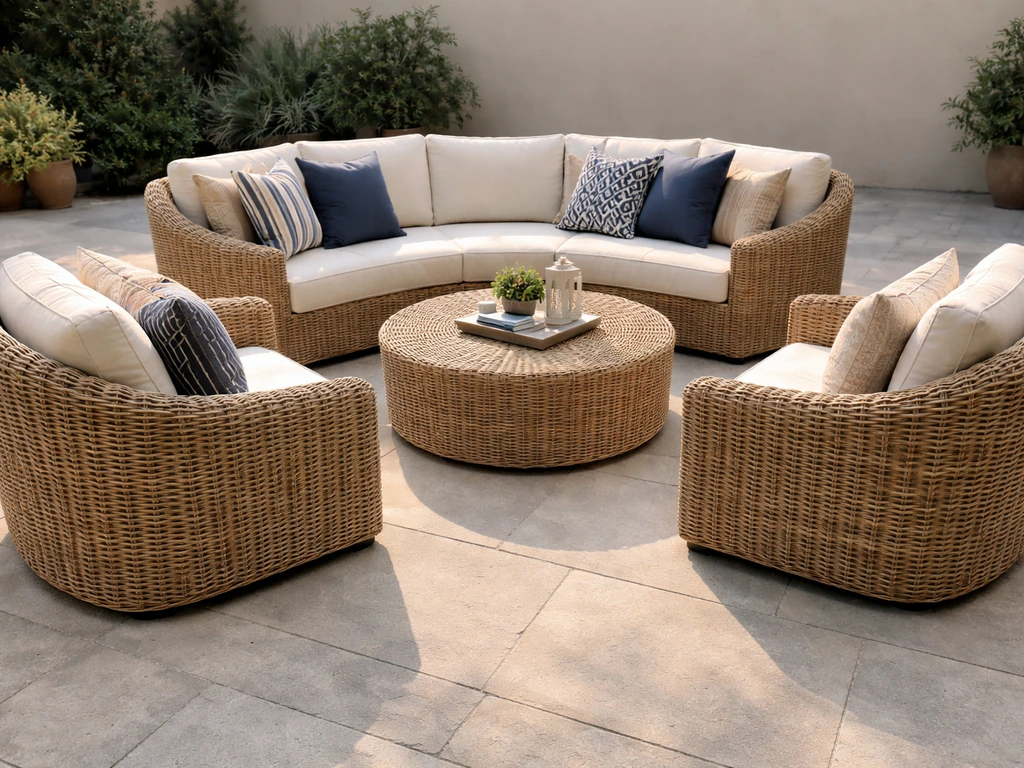
Best Patio Wicker Furniture: How to Choose the Right Set
No-fluff guide to choosing the best patio wicker furniture with material, quality, sizing, and care tips for any climate
Is Teak Patio Furniture Good? Durable, Smart Buying Guide
Is teak patio furniture good? Evidence-based verdict, lifespan, care, buying tips, comparisons, and eco guidance.