
The best resin wicker patio furniture combines a 100% HDPE woven fiber with a powder-coated aluminum frame, stainless or galvanized hardware, and solution-dyed cushions. That combination gives you a set that genuinely survives years of sun, rain, and humidity without rotting, rusting, or fading to a chalky gray. Brands like POLYWOOD, Lloyd Flanders, and Forever Patio build to that standard. Big-box sets under $400 usually cut corners on at least one of those four elements, and that's where most buyers get burned.
Best Resin Wicker Patio Furniture: Buyer Guide & Reviews

Marcus Kellerman
26 Jun 2026
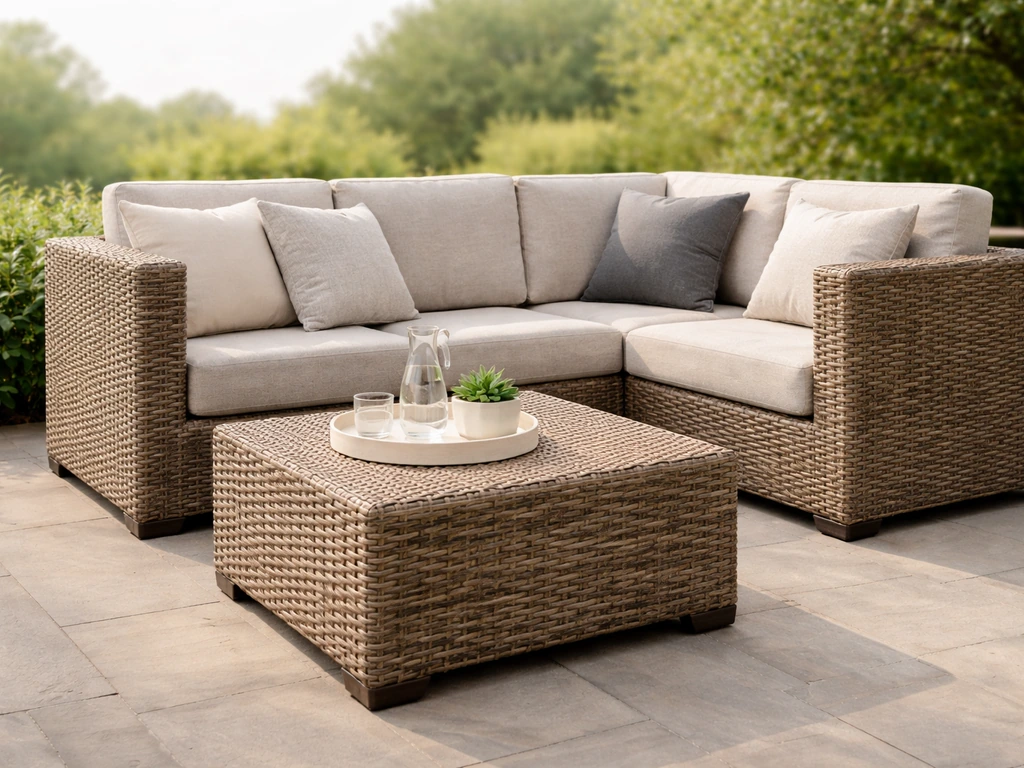
What resin wicker actually is (and how it differs from natural wicker)
Resin wicker, often sold as "all-weather wicker," is a synthetic textile made by extruding high-density polyethylene (HDPE) into thin strands, then weaving those strands over a structural frame. The HDPE is blended with UV inhibitors and colorants before extrusion, meaning the color and protection run all the way through the material rather than sitting on the surface as a coating. That's the single most important distinction between quality HDPE wicker and cheap knockoffs.
Natural wicker, made from rattan, reed, or other plant fibers, is porous. It absorbs moisture, which weakens the fibers and eventually causes cracking, splitting, and mold. UV rays break down the plant material further, making it brittle. Natural rattan looks beautiful on a covered porch, but if it's getting rained on regularly or sitting in direct sun all day, it will deteriorate within a season or two. HDPE resin wicker is non-porous by design, so water doesn't penetrate the strands, and the UV inhibitors baked into the fiber prevent the sun from degrading the material.
Some manufacturers go even further. Lloyd Flanders, for example, weaves aluminum wire into its wicker fabric for reinforcement, then submerges the finished wicker in a resin emulsion and bakes it before cutting it to fit aluminum frames. That multi-step process is why their furniture carries a much longer real-world lifespan than a standard extruded HDPE product. It costs more, but the construction is genuinely different.
How to judge quality before you buy
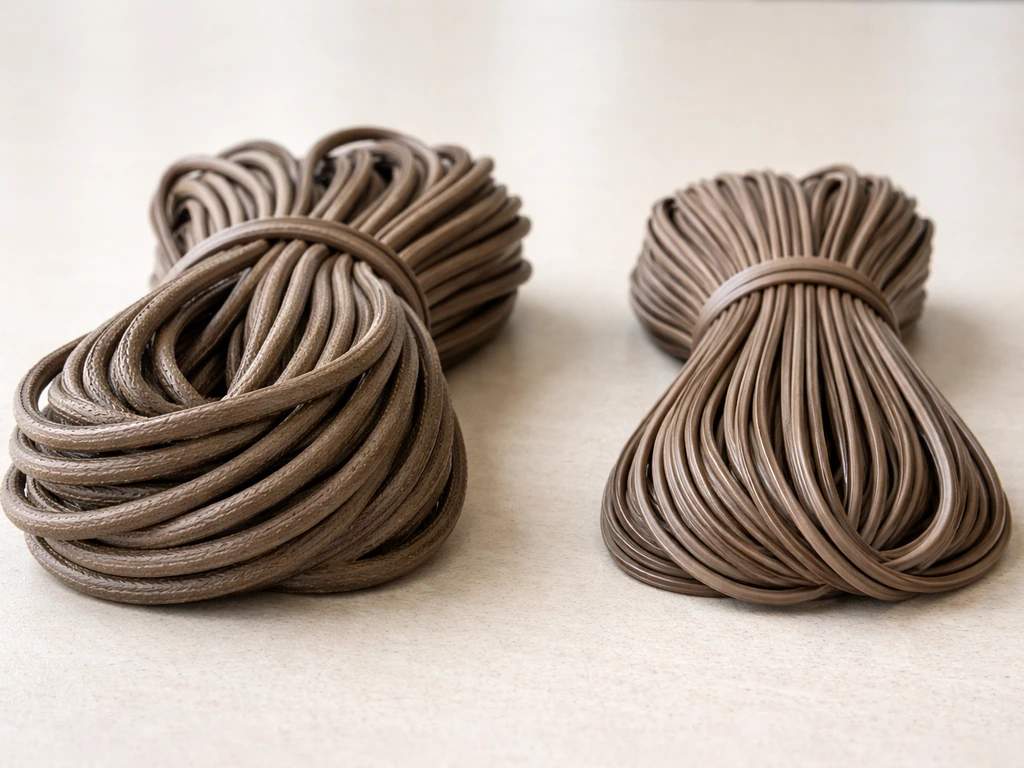
Most resin wicker furniture looks similar in a product photo. The quality differences show up in the details, and a few of them are easy to check even when shopping online if you know what to look for.
The fiber itself
The material should be specified as HDPE, not just "resin" or "synthetic wicker." Vague labeling is a red flag. HDPE strands should be thick-walled and have a matte or lightly textured finish. Thin, shiny, vinyl-looking strands are a sign of cheaper polyvinyl construction that will fade, crack, and feel plasticky within a few seasons. If you can handle the piece, the strands should feel firm and dense, not flimsy.
The weave
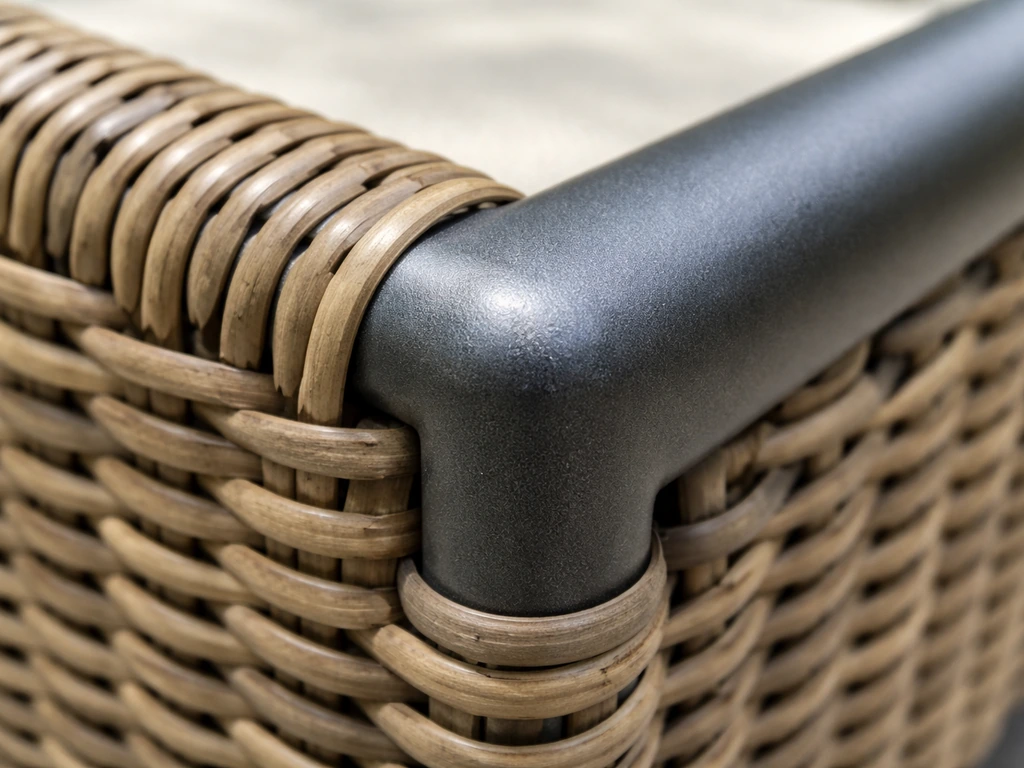
Run your hand across the surface and look at the joints where the wicker meets the frame or changes direction. On a quality piece, those junctions are tightly wrapped with no loose ends or fraying. The weave should be consistent and even with no sag, even if you press on it. On cheaper sets, the weave loosens noticeably when wet, gaps form at junctions over time, and loose strand ends start pulling away from the frame within a year or two.
The frame
Powder-coated aluminum is the standard you want. Aluminum doesn't rust, it's lightweight enough to move around your patio easily, and powder coating protects it from chipping and oxidation. Steel frames are heavier and stronger, which sounds appealing, but if the powder coating scratches, moisture gets in and rust starts immediately. For coastal or high-humidity environments especially, aluminum is the right call. Always confirm the frame material in the specs, not just the product name.
Hardware and fasteners
This is the detail most buyers ignore until their furniture starts wobbling after 18 months. Screws and bolts are the first thing to corrode on outdoor furniture. Stainless steel fasteners are the correct choice for any piece that will live outdoors year-round. Galvanized fasteners are acceptable for covered patios or furniture you bring in seasonally, but they will corrode faster in wet or salty conditions. If a manufacturer doesn't specify fastener material, assume it's standard zinc-plated steel and plan accordingly.
Cushions
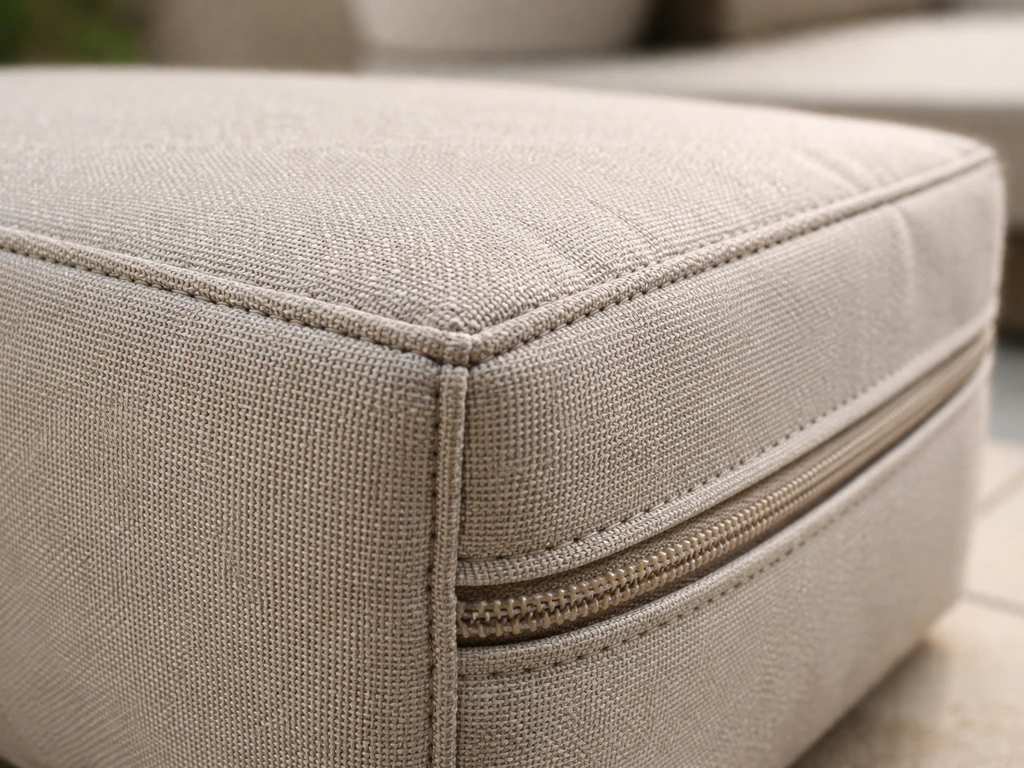
Cushion quality is where budget sets consistently fail. Look for solution-dyed acrylic fabric (Sunbrella is the benchmark brand, but there are solid alternatives). Solution-dyed means the color is part of the fiber, not a surface treatment, so it resists UV fading far better than polyester cushion covers. The foam core should be rated for outdoor use, which typically means a quick-dry open-cell foam wrapped in a moisture-wicking liner. Also check whether replacement cushions are available from the manufacturer. Cushion fabric and foam are the first things to wear out, and on a set with a quality frame, being able to replace cushions rather than the whole set is a genuine long-term value factor.
Quick inspection checklist
- Fiber material listed as HDPE, not just "resin" or "synthetic"
- Matte or textured finish on strands, not a shiny vinyl look
- Tight, even weave with no loose ends at junctions or frame connections
- Frame material confirmed as aluminum (not steel), with powder-coat finish
- Hardware specified as stainless steel or at minimum galvanized
- Cushion fabric listed as solution-dyed acrylic
- Replacement cushions available from the brand
- Warranty of at least 2 years on the frame, 1 year on cushions
Best resin wicker picks by patio use case
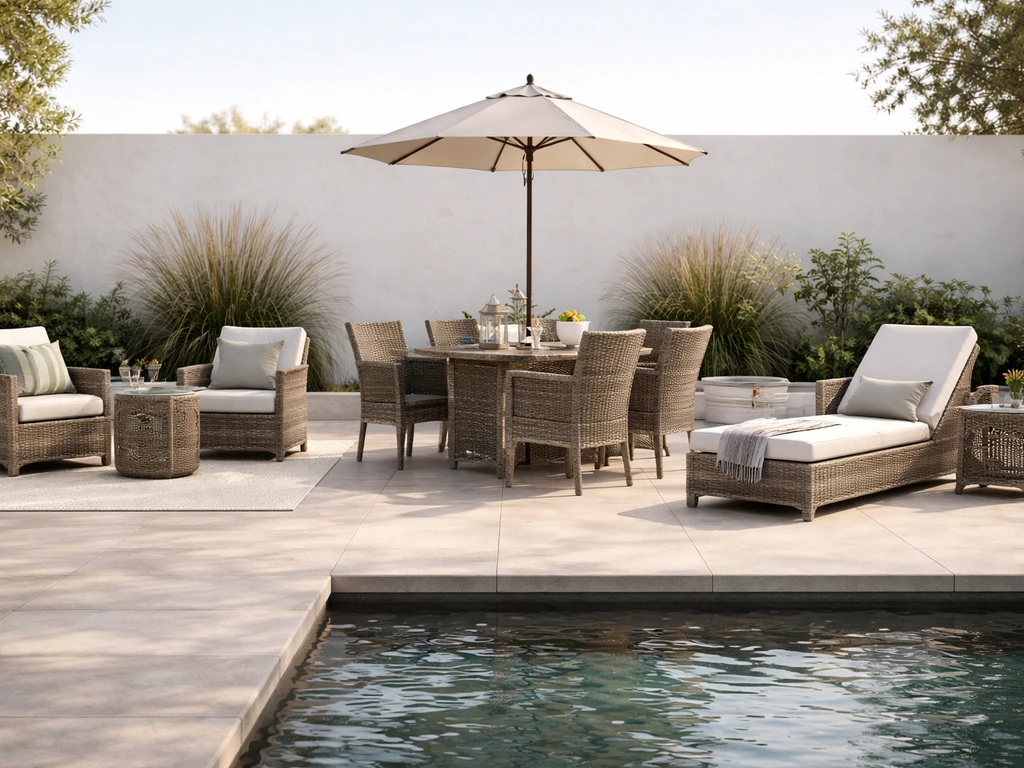
There's no single best set for everyone. The right configuration depends on how you actually use your outdoor space, how many people it needs to seat, and how much direct weather exposure the furniture will face. For most people asking what is the best wicker patio furniture, choosing the right setup for your patio use case is the biggest deciding factor best wicker patio furniture (resin wicker).
Best for conversation and lounging
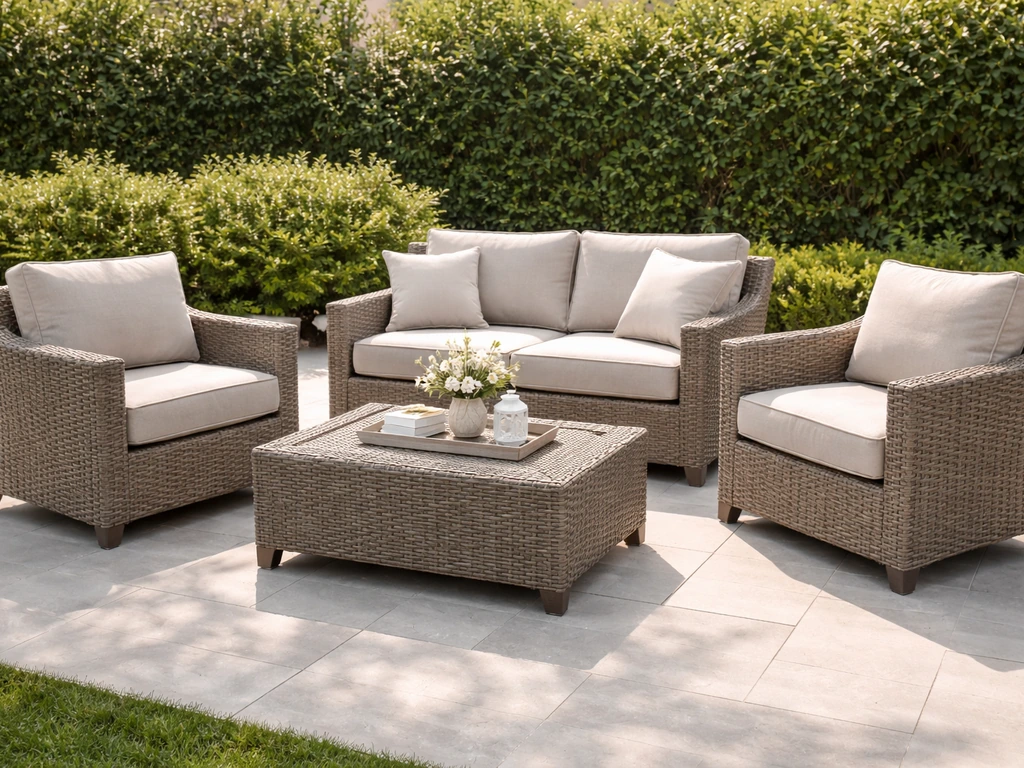
A conversation set, typically two to four deep-seat chairs or a loveseat plus a coffee table, is the most versatile configuration for a patio where you entertain or relax in the evenings. If you want the best resin patio furniture overall, start with an all-weather conversation set that uses 100% HDPE resin wicker and aluminum frames. POLYWOOD's all-weather wicker conversation sets hit the quality threshold with 100% HDPE fiber, aluminum frames, and a 5-year warranty. They're made in the USA, which also makes warranty service more straightforward. For a step up in craftsmanship, Lloyd Flanders' sectional and conversation pieces are in a different league, particularly if you have a covered patio where you want longevity measured in decades rather than years.
Best for dining
Dining sets in resin wicker work well when the chairs have firm, supportive seat cushions and the table base is stable enough to handle weather without warping. Look for dining chairs with wrapped wicker on the seat and back over an aluminum frame, and a table with a powder-coated aluminum or tempered glass top. Avoid dining sets where the tabletop is a thin wicker surface, since flat wicker surfaces accumulate food debris in the weave and are harder to clean than solid tops.
Best for sectional seating
Sectionals are great for larger patios, but they're also where you see the most quality variation because the pieces need to connect and stay aligned over time. Heavier-gauge aluminum frames matter more here, since the connecting hardware takes more stress. Check that each modular piece has feet with leveling adjusters or rubber caps, and that the sectional connectors are metal, not plastic clips. The HiGreen Outdoor and similar mid-range brands hit a reasonable price-to-quality ratio for sectionals if you're not ready to spend at the Lloyd Flanders level.
Best for chaise lounges and poolside
Chaise lounges take more direct sun and water exposure than almost any other patio piece. For poolside use, the aluminum frame is non-negotiable, and the wicker weave should have drainage designed into it so poolwater doesn't pool in the joints. Cushions for chaises need to be quick-dry rated. Rattan Imports and similar specialty retailers carry chaise lounges with the right spec combination for wet environments. For this use case, also check that the reclining mechanism uses stainless or coated hardware, since that's the first part to seize up in a chlorinated or salty environment.
What real-world reviews actually tell you
Across hundreds of reviews on Home Depot, Wayfair, Amazon, and specialty retailers, the complaints cluster around the same four issues: cushion fading after one season, frame rust appearing at hardware points, weave unraveling at the frame junctions, and wobble developing as joints loosen. The praise, when it's genuine, centers on sets that held their color and shape after two or more years of outdoor exposure.
The Reddit community that focuses on long-lasting purchases (buy it for life) has a recurring observation about patio furniture: most sets last only two to three years before fading, ripping, or rusting. The sets that do last are almost always on aluminum or teak frames with HDPE or high-quality woven fiber. That aligns exactly with the material specs above. If a set doesn't meet those specs, the reviews will reflect it within 18 to 24 months.
One thing to watch for in reviews: firmness complaints about cushions on new sets. Several brands, including Ohana, get initial complaints about firm cushions that commenters note break in over a few weeks of use. That's different from a structural problem and shouldn't be a dealbreaker if the other quality markers are there. On the other hand, cushion covers that fade or tear within a season are a real problem and a sign the fabric isn't solution-dyed acrylic.
Also pay attention to reviews that specifically mention the cushion fabric material. When a reviewer calls out that the cushion fabric held its color after two summers, and the product listing confirms solution-dyed acrylic, that's a meaningful data point. When reviews say the cushions faded by mid-summer and the listing just says "polyester," that's a pattern you can rely on.
How resin wicker performs across different climates
Resin wicker is genuinely more climate-versatile than almost any other patio furniture material, but climate still matters for choosing the right set and setting realistic durability expectations.
| Climate | Key risk | What to prioritize |
|---|---|---|
| Hot/sunny (Southwest, desert) | UV degradation over time | Thick-wall HDPE strands with UV inhibitors baked in, solution-dyed cushions |
| Humid/rainy (Southeast, Pacific Northwest) | Moisture in cushion foam and frame joints | Quick-dry cushion foam, aluminum frame with stainless hardware, good drainage in weave |
| Coastal/salt air | Corrosion at frame and hardware points | Aluminum frame only (no steel), stainless steel fasteners throughout |
| Cold winters (Midwest, Northeast) | Brittleness in subzero temps, freeze-thaw stress on joints | High-quality HDPE (less brittle than cheaper plastics), store cushions indoors, consider winter covers |
| Covered patio, mild climate | Minimal weather stress | More design flexibility; still prioritize aluminum over steel for longevity |
For most climates, HDPE resin wicker on an aluminum frame will outlast polyester fabric furniture, solid wood sets without annual treatment, and steel-framed anything left outdoors year-round. The realistic lifespan for a quality resin wicker set with proper care is 8 to 12 years for the frame and weave, with cushion replacement every 3 to 5 years depending on sun exposure. Budget sets cut that estimate roughly in half.
One caveat for cold climates: some lower-grade synthetic plastics become brittle at very low temperatures and can crack if something heavy is dropped on them or if they're moved while frozen. High-quality HDPE handles this better than cheaper polyvinyl alternatives, but if you're in a zone with hard winters, storing the cushions inside and covering the frames during the off-season is worth the effort to protect your investment. Staying with high quality wicker patio furniture that uses high-quality HDPE, plus proper off-season storage, is one of the best ways to prevent cracking in cold weather.
Caring for resin wicker and avoiding the most common buying mistakes
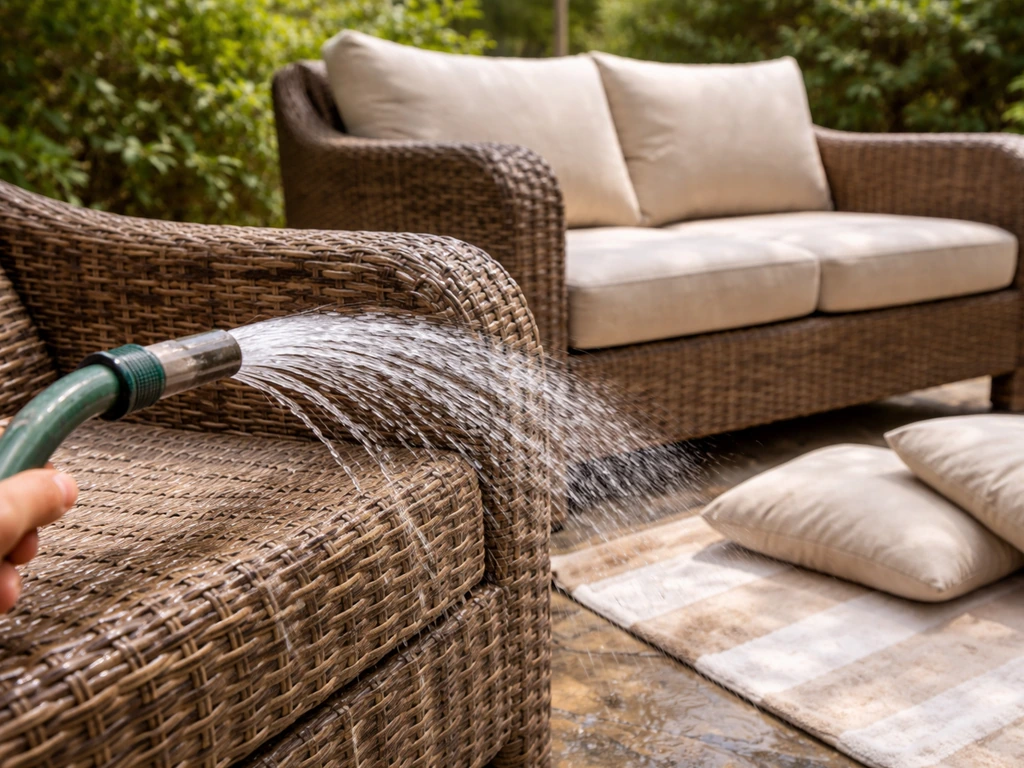
Cleaning and maintenance
Resin wicker is low-maintenance, but "low" doesn't mean zero. Dust, pollen, and leaf debris collect in the weave and create conditions for mildew if left long enough. A garden hose rinse every few weeks handles most of it. For deeper cleaning, a soft-bristle brush with mild soapy water gets into the weave without damaging the fiber. For mildew spots, a diluted white vinegar solution (roughly one part vinegar to three parts water) works without degrading the material.
Avoid pressure washing at high settings, which can force water into joint areas and stress the weave. Some manufacturers also warn against using harsh chemical cleaners, which can strip UV protection from the surface even on through-dyed HDPE. When in doubt, mild soap and water is the right call.
For cushions, remove them during extended rainy periods or when the furniture won't be used for a week or more. Even quick-dry foam benefits from not sitting in standing water. A weatherproof furniture cover during storms and in the off-season extends both cushion and frame life significantly.
The buying mistakes that cost people money
- Buying based on looks alone without confirming HDPE vs. cheaper synthetic materials: the price difference between quality and budget is real, but so is the performance gap
- Ignoring the frame material: a beautiful wicker weave over a steel frame will rust at the joints within 2 to 3 years in most climates
- Skipping the cushion fabric spec: polyester cushion covers fade and deteriorate quickly; solution-dyed acrylic is worth the price premium
- Not checking replacement cushion availability before buying: when cushions wear out in year 3 or 4 and replacements are discontinued, you're buying a whole new set
- Assuming "all-weather" means no maintenance: even the best HDPE wicker benefits from seasonal cleaning and off-season covers
- Buying a set that's too large for easy rearrangement: resin wicker over aluminum is lighter than most materials, but sectional pieces are still awkward to move alone if you need to store them seasonally
- Dismissing warranty terms: a 5-year frame warranty from a brand with domestic service (like POLYWOOD) is worth more than a 3-year warranty from an overseas-only operation
How to narrow your choice before you buy
Start with your climate and exposure level, then set your configuration (conversation, dining, sectional, chaise), then confirm the four material specs: HDPE fiber, aluminum frame, stainless hardware, solution-dyed cushions. If you're building your own checklist for brand-specific inspection steps, you can use quality-check lists like this one to verify those same HDPE, frame, hardware, and cushion details before buying blank" rel="noopener noreferrer">the four material specs: HDPE fiber, aluminum frame, stainless hardware, solution-dyed cushions. If you want the best outdoor wicker patio furniture, start by matching the resin wicker construction specs to your climate and expected sun and rain exposure. Filter out anything that doesn't meet all four before comparing prices. At that point, you're comparing quality sets against each other, and the decision comes down to style preferences, size, and brand warranty. That's a much easier comparison than trying to evaluate 50 sets that vary wildly on the fundamentals.
If you're also evaluating whether resin wicker is the right material category for your situation (versus, say, all-aluminum or teak), the guides on best all-weather wicker patio furniture and high quality wicker patio furniture cover those adjacent comparisons in more detail and can help you confirm whether resin wicker is the right fit before you commit to a specific set. If you're mainly shopping for looks and comfort, use the best patio wicker furniture guide to compare the top all-weather options by setup and material quality.
FAQ
Can the best resin wicker patio furniture handle full sun all summer and frequent rain?
Yes, but only if the product uses true HDPE resin wicker and an aluminum frame with stainless or properly rated hardware. If the listing just says “resin,” “synthetic wicker,” or uses unclear fastener specs, you risk the cheaper plastic blend failing faster in heat, UV, or seasonal wetting.
How can I tell if resin wicker patio furniture is truly mildew-resistant in humid climates?
Not always. Check whether the cushions use solution-dyed outdoor fabric and whether the foam is quick-dry open-cell type. If the cushion covers are only “water resistant” or the foam is unspecified, the set may look fine but cushions often fail first under constant humidity.
Is galvanized hardware acceptable for the best resin wicker patio furniture near the ocean?
Look for listings that explicitly say HDPE fiber (not just “resin wicker”) and that specify stainless or galvanized hardware. If fastener material is not listed, treat it as zinc-plated steel and expect corrosion at screw and bolt points first, especially near the coast.
Should I buy resin wicker patio furniture with replacement cushions in mind, and what details matter?
Measure the cushion thickness and check for replacement-cushion availability before buying. If the replacement catalog uses different SKU sizes, you could be stuck buying new cushions repeatedly at a higher cost, even when the frame is high quality.
What should I look for to prevent sectionals from wobbling or separating after a year?
If reviews complain about wobble developing, inspect for leveling adjusters on sectional modules, metal connectors, and sturdier aluminum frame gauge. Loose plastic clips and lighter frames tend to shift alignment over time, even when the wicker itself is high quality.
Are there quick online checks to spot low-grade resin wicker disguised as “all-weather”?
Avoid products that describe “vinyl-like,” “shiny,” or “thin strand” wicker. The common failure mode is quicker fading and strand cracking, even if the frame is decent, because the exterior color and UV stability are not through the fiber.
Is it a bad idea to choose a resin wicker dining set with a woven table top?
Yes. Check whether the table surface is solid (powder-coated aluminum top or tempered glass). Flat woven tabletops trap crumbs and moisture, which can discolor the weave faster and make cleaning harder.
How should I prepare resin wicker patio furniture for freezing winters?
For winter, the safest approach is to store cushions indoors and keep frames covered or in a protected area, especially in freezing zones. Even high-quality HDPE can crack if stressed while brittle, for example when moved while frozen or when heavy items drop onto the weave.
How often should I clean the best resin wicker patio furniture, and does it really need covers?
Expect it to be a maintenance item rather than a set-and-forget surface. Plan a gentle rinse every few weeks in pollen seasons, and remove cushions during extended wet spells so foam does not sit in standing water.
What cleaning methods or products should I avoid to protect through-dyed HDPE wicker?
Use a soft-bristle brush plus mild soapy water for general cleaning, and limit vinegar solution to mildew spots. Avoid strong cleaners and pressure washing at high settings because they can drive water into frame joints and can strip surface protection over time.
What details separate a poolside chaise that lasts from one that fails quickly?
If the chaise is poolside, confirm drainage is built into the weave or frame design. Also check that the reclining hardware is stainless or specifically coated, because that mechanism is where chlorinated or salty conditions cause early seize-up.
How do I tell the difference between normal cushion break-in and a quality problem?
Initial firm cushions are not the same as failing cushions. Distinguish break-in complaints from fading, tearing, or cover delamination in reviews, and prioritize product listings that confirm solution-dyed outdoor acrylic plus quick-dry foam.
Next Articles
Best Resin Patio Furniture Guide: How to Choose and Care
Choose the best resin patio furniture for your climate with buying criteria, material comparisons, and care tips.
Best All Weather Wicker Patio Furniture Buyer’s Guide
Buyer’s guide to truly all-weather wicker: resin vs natural, frame durability, cushions, care tips, and long-life value
High Quality Wicker Patio Furniture: How to Choose
Learn how to spot high quality wicker patio furniture, compare resin vs natural, and choose durable sets and cushions.