
Aluminum patio furniture does not rust the way steel does. Rust is iron oxide, and since aluminum contains no iron, that classic reddish-brown flaking you see on cheap steel chairs simply cannot form on aluminum. What you can see is oxidation: a white, chalky or powdery film that forms when aluminum reacts with oxygen and moisture. It looks alarming but behaves very differently from rust. Understanding that distinction tells you exactly what to do next and whether you're dealing with a quick cleanup or a real problem.
Does Aluminum Patio Furniture Rust? Causes, Fixes, Prevention
Marcus Kellerman
27 May 2026
What aluminum actually does instead of rusting
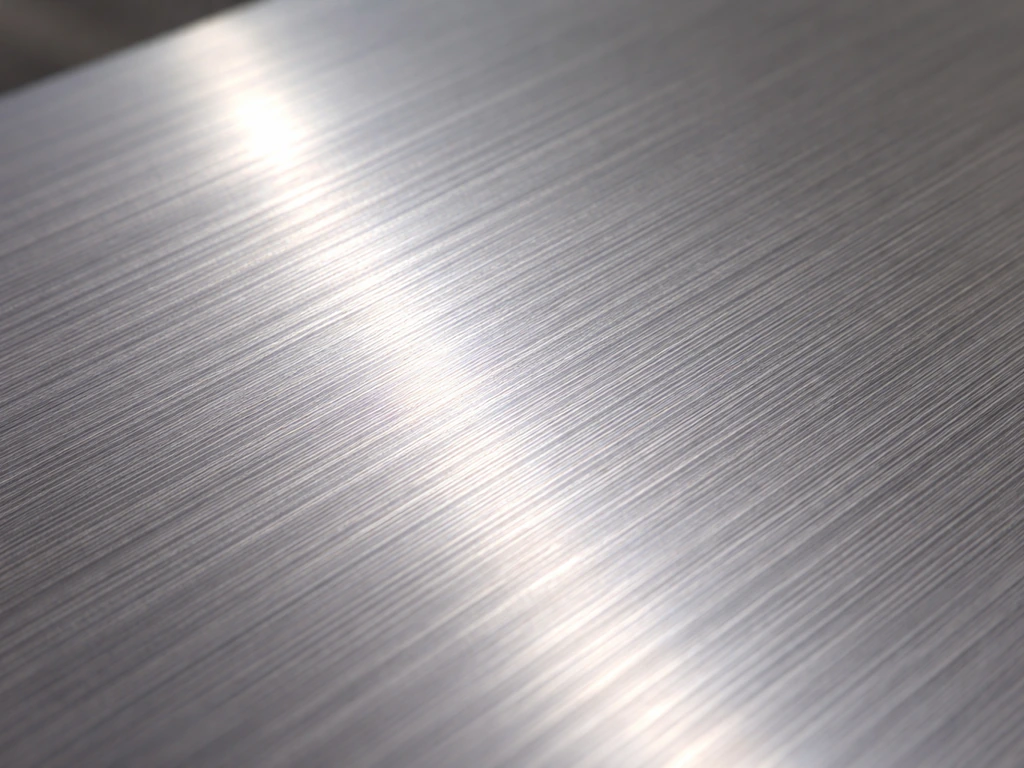
When aluminum is exposed to oxygen, it forms aluminum oxide (Al2O3), a thin, hard, transparent layer that essentially seals the surface from further attack. This passive film is why bare aluminum can sit outdoors for years and still hold up structurally. It's one of the key reasons aluminum is such a popular choice for outdoor furniture in the first place.
If that protective film gets overwhelmed by moisture, chlorides, or mechanical damage, the next corrosion product you see is aluminum hydroxide (Al(OH)3): a white, chalky, sometimes powdery residue. That white stuff is not rust. It's aluminum doing its own version of corroding, but because the corrosion product itself acts as a partial barrier, the damage tends to stay localized rather than spreading and flaking the way rust does on steel.
The practical takeaway: if you see orange or brown spots on your aluminum furniture, something else is going on. Either there are steel fasteners, brackets, or nearby metal objects whose rust is staining your aluminum, or the piece is not actually aluminum. White spots, white powder, or a dull chalky film is the real aluminum story, and it's far more manageable.
Cast aluminum specifically: what to expect in real outdoor conditions
Cast aluminum furniture is made by pouring molten aluminum into molds, which produces thick, solid, intricately detailed pieces. The added thickness gives it a structural advantage over hollow extruded aluminum tubing, but what matters most for corrosion is the finish applied over it. Almost all cast aluminum patio furniture ships with a powder-coated finish, sometimes over a primer coat. That powder coat is what protects the surface day-to-day.
In real-world outdoor conditions, cast aluminum holds up extremely well. The thicker walls mean a chip or scratch is less likely to reach through to bare metal than on thinner extruded stock. That said, powder coat does age: it can chalk (a UV-driven photodegradation process), lose gloss, or develop hairline cracks at stress points like joints and welds. Once the coating is breached, moisture can get underneath and you'll start to see white oxidation at those points. The finish is doing the heavy lifting, so caring for it is your primary job as an owner.
White powder vs. orange spots: knowing what you're actually looking at
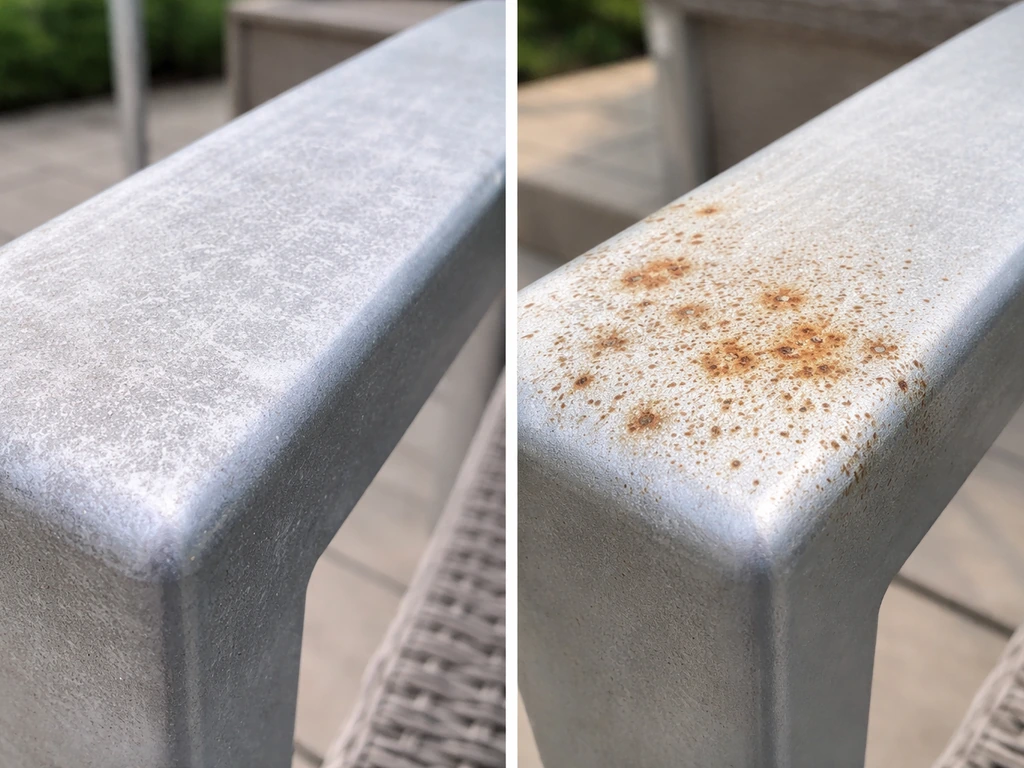
Before you do anything, figure out what you're dealing with. The damage type determines the fix, so a quick visual inspection saves you time and money.
| What you see | What it likely is | Severity |
|---|---|---|
| White powdery film or chalky haze on surface | Aluminum oxidation (aluminum hydroxide) | Low to moderate — cosmetic/cleanable |
| Dull, flat finish where it used to be glossy | UV chalking of powder coat | Low — cosmetic, re-coat if needed |
| Small white pits or cratered spots | Pitting corrosion, often from chloride exposure | Moderate — structural check needed |
| Orange or reddish-brown streaks or spots | Steel fastener rust staining the aluminum | Low for aluminum itself — replace fasteners |
| Bubbling or flaking paint/coating | Moisture under powder coat, coating failure | Moderate to high — assess bare metal underneath |
| Deep pits with loose, crumbly material | Active localized corrosion (often in joints/crevices) | High — may need repair or replacement |
| Greenish tinge near copper or brass hardware | Galvanic corrosion, dissimilar metal contact | Moderate — isolate metals, clean, protect |
The key diagnostic rule: true rust on aluminum is almost always transferred staining from another metal nearby. The white stuff is aluminum's own corrosion product. Pitting is the sign that localized corrosion has gone deeper than the surface. If you press on a pitted area and it feels soft, spongy, or crumbles, the structural integrity there is compromised.
What makes aluminum corrode faster: the real risk factors
Aluminum's passive oxide layer is tough, but specific conditions chip away at it. Chloride ions (from salt air, pool water, or road de-icing spray) are the biggest culprit for pitting corrosion because they penetrate the oxide film and initiate localized attack. This is why coastal furniture buyers need to be more proactive, and why chairs sitting near a saltwater pool need more frequent rinsing than the same chairs on an inland patio. The ASTM B117 salt spray test exists precisely because the industry knows salt exposure is the benchmark stress condition for outdoor metal coatings.
- Salt air and coastal spray: chloride ions break down aluminum's protective oxide film and drive pitting, especially in joints and crevices where moisture pools
- High humidity: moisture in the air accelerates corrosion reactions, particularly when salts from the environment deliquesce (absorb moisture and form a wet electrolyte on the surface)
- Scratched or chipped powder coat: any breach in the coating exposes bare aluminum and gives moisture a direct path to the metal
- Pooling water in joints and under feet: standing water in crevices creates the trapped electrolyte conditions that drive crevice corrosion
- Contact with dissimilar metals: steel bolts, copper fittings, or iron hardware touching aluminum in a wet environment creates a galvanic couple, and aluminum (being less noble) can corrode preferentially at those contact points
- Abrasive cleaning: pressure washers, wire brushes, and harsh scouring pads scratch the powder coat and accelerate deterioration
- Harsh cleaners left on too long: acidic or alkaline cleaners that aren't rinsed off can etch both bare aluminum and anodized finishes, causing white blemishing
If you're in a coastal zone within about a mile of the ocean, or your furniture sits next to a saltwater pool, treat it as a high-exposure situation and inspect and rinse more frequently than the standard guidance. For inland climates with low humidity, aluminum furniture is about as low-maintenance as outdoor furniture gets.
Inspection checklist: cosmetic issue or time to repair (or replace)?
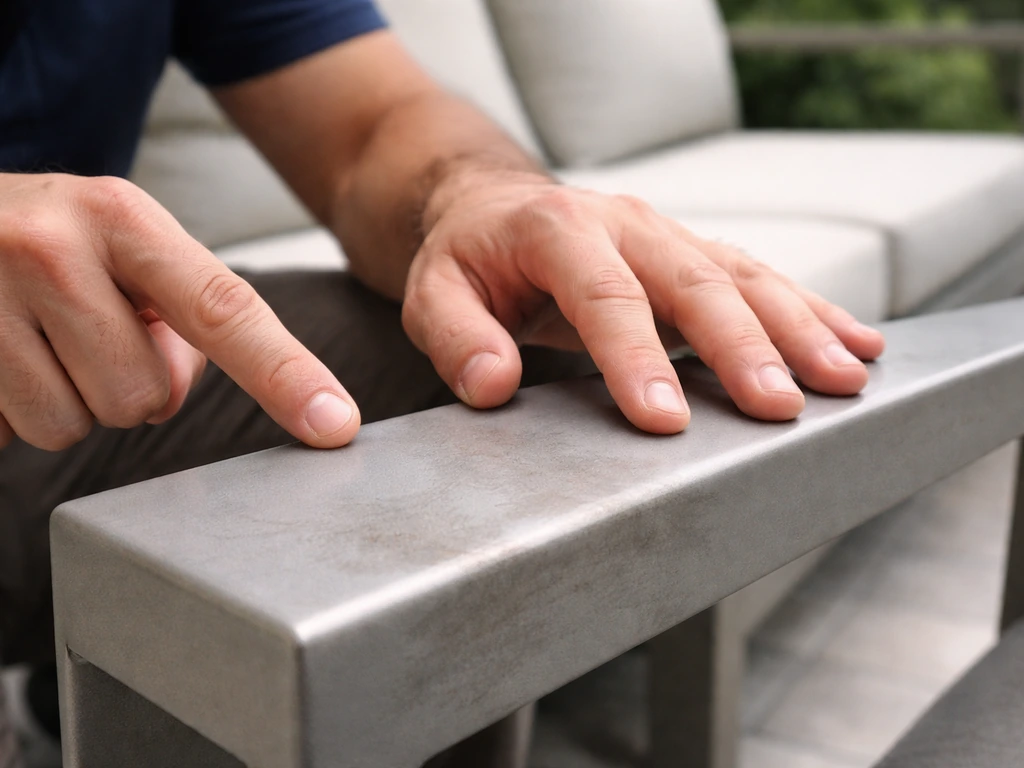
Run through this inspection at least once a year, or any time you notice something that looks off. It takes about ten minutes and tells you exactly what action to take. If you want to recycle aluminum patio furniture, you can usually bring it to a local metal recycling facility or scrap yard after removing non-aluminum parts when possible replace.
- Check the finish overall: run your hand across surfaces. Chalky residue that comes off on your hand means the powder coat is UV-degrading. This is cosmetic but worth addressing before it goes further.
- Look at all joints, welds, and frame intersections: these are crevice-corrosion hot spots. Look for white powder, pitting, or bubbling paint in those tight corners.
- Inspect every fastener and hardware piece: are any bolts, screws, or brackets made of steel or iron? Look for orange rust staining running from those points onto the aluminum. Replace steel hardware with stainless steel or aluminum equivalents.
- Check feet and any surface that contacts the ground or deck: these areas pool moisture longest. Pitting here is common and worth treating early.
- Press gently on any pitted or discolored areas: solid metal that just looks bad is a cosmetic fix. Soft, crumbly, or hollow-feeling areas under the surface indicate structural corrosion that needs a repair-or-replace decision.
- Look for contact with other metals: copper pipe nearby, a wrought iron table touching an aluminum chair, steel brackets. Isolate any contact points you find.
- Check for large bubbled or flaking sections of powder coat: small chips are repairable. If more than about 20-25% of a major structural section has coating failure with corrosion underneath, replacement is likely more cost-effective than refinishing.
Cosmetic issues (chalking, minor white oxidation, surface-level discoloration, small chips) are all fixable at home with modest effort. Structural pitting that extends deep into the metal, widespread coating failure with active corrosion underneath, or joints that have become loose because corroded material has reduced wall thickness: those are replacement signals. Quality cast aluminum furniture, properly maintained, should last 15 to 20 years or more, so it's worth investing in the maintenance if the frame is still solid.
Cleaning steps you can do today
Good cleaning is your primary defense against corrosion progression. Do this at the start and end of each outdoor season, and rinse down coastal furniture every one to two weeks during heavy-use periods.
- Mix a solution of mild dish soap and warm water. This is the recommended cleaner from multiple manufacturers and it's gentle enough to not damage powder coat or anodized finishes.
- Use a soft cloth, sponge, or soft-bristle brush. No wire brushes, no rough scouring pads, no abrasive cleaners. Scratching the coating is exactly what you're trying to avoid.
- Wipe down all surfaces, paying extra attention to joints, crevices, undersides of frame members, and anywhere water tends to pool.
- For white oxidation or chalky buildup, a non-abrasive cleaner like Soft Scrub can help lift the residue without scratching the finish. Apply gently and rinse immediately.
- Rinse thoroughly with clean water. Any cleaner residue left on the surface, especially in crevices, can cause its own surface damage over time.
- Towel-dry or let the furniture dry completely in the sun before covering or storing. Don't trap moisture under covers while the surface is still wet.
- Never use a pressure washer. The force can breach powder coat and drive moisture into joints.
For anodized aluminum (less common in patio furniture but used in some modern designs), the same principles apply: pH-neutral soap, soft cloth, full rinse, full dry. Avoid acetone-based cleaners, which can soften and damage coatings. Avoid acid or alkaline cleaners that aren't specifically formulated for anodized aluminum, and don't let any chemical cleaner sit on the surface for more than a minute before rinsing.
Protecting and repairing: touch-ups, coatings, and stopping galvanic corrosion
Touching up powder coat chips and scratches
Small chips and scratches in powder coat should be addressed as soon as you spot them, because bare aluminum underneath will begin forming white oxidation fairly quickly in humid or coastal conditions. The process is simple: clean the area with mild soap and water, let it dry completely, lightly sand the damaged spot with 400 to 600 grit wet/dry sandpaper to feather the edges and remove any loose oxidation, wipe away sanding residue, then apply touch-up paint in short, light strokes. Powder coat touch-up pens are available in multiple finish types (gloss, satin, matte, textured) and work well for small repairs. For larger areas, manufacturers like HOUE offer matching repair lacquers, and Feeney's care guidance describes masking surrounding areas before applying touch-up coating to keep the repair clean.
For more extensive coating damage, a 2-part epoxy primer applied over lightly scuff-sanded (320-grit) clean aluminum gives a durable base before a topcoat. Degrease the bare aluminum with denatured alcohol first, and use an aluminum pre-treatment primer if you're doing a full refinish. The preparation is honestly more important than the product you use on top.
Preventing and addressing galvanic corrosion
blank" rel="noopener noreferrer">Galvanic corrosion happens when aluminum contacts a more noble metal (like copper, brass, or even stainless steel) in the presence of an electrolyte like saltwater or wet humidity. Aluminum acts as the anode and corrodes preferentially. The fix is to eliminate the metal-to-metal contact: replace steel or iron hardware with stainless steel grade 316 (marine grade) or all-aluminum hardware, and use non-conductive washers, nylon bushings, or plastic isolators between dissimilar metal components. If furniture is already showing corrosion at a contact point, clean it, treat with a zinc-chromate or aluminum-compatible primer, and then isolate the contact going forward.
Protective coatings for ongoing defense
Once your furniture is clean and any bare spots are touched up, a coat of automotive-grade paste wax or a dedicated aluminum sealant adds a water-shedding barrier over the powder coat. This is especially worth doing for coastal furniture before the summer season. It won't fully replace a damaged powder coat, but it slows moisture penetration into any micro-scratches and keeps the finish looking better longer. Reapply annually at minimum, or twice a year in high-salt or high-humidity environments.
Climate and regional guidance
For most inland and temperate climates, aluminum furniture with a quality powder coat is genuinely low-maintenance. A seasonal clean and an annual inspection is usually all it takes. For coastal climates, high-humidity subtropical regions, or anywhere near a saltwater pool, step up to bi-weekly rinses with fresh water during peak season, an annual wax or sealant application, and immediate touch-up of any coating damage you spot. In freeze-thaw climates, check joints each spring because thermal cycling can crack coatings at stress points, creating entry points for moisture before the humid season starts. Store or cover furniture during the off-season if you want to maximize service life, but aluminum handles outdoor winters far better than steel or untreated iron would.
Aluminum's durability, weight, and corrosion resistance make it one of the most practical long-term outdoor furniture materials available, especially when you factor in the cost-per-year across a 15 to 20-plus year lifespan. The maintenance is minimal compared to wood or steel, and when something does go wrong, it's almost always a coating issue you can fix yourself rather than a structural failure. Know what you're looking at, keep the finish intact, and rinse off salt and grime before it has time to work into the joints. For a direct answer to the heat question, aluminum patio furniture can get very hot in strong sun, especially when the pieces are in full exposure without shade.
FAQ
If I see orange-brown spots on my aluminum patio furniture, does that mean the aluminum is rusting?
Not usually. Orange or brown discoloration on aluminum is most often staining from nearby ferrous metal (steel brackets, screws, welds, or other rusting items) rather than true rust forming on the aluminum itself. Look underneath and around joints and check whether there is any steel hardware creating the source.
What is the difference between white chalky aluminum oxidation and corrosion that’s gone deeper?
White powder or chalky film is typically surface aluminum corrosion. Deeper damage shows up as pitting (small craters) and feels soft, crumbly, or spongy when you press. If you can’t tell by touch, use a bright flashlight and check the same spot after cleaning, because the residue can hide early pits.
How can I tell whether my furniture is actually aluminum or a different metal with a similar look?
Check for branding or material stamps on the frame, and confirm with a magnet. Aluminum is not magnetic, but steel or iron parts will be. Also verify if the finish is powder-coated aluminum, because some “cast-looking” pieces are painted steel.
Can aluminum patio furniture develop rust if it’s bare (no powder coat)?
Bare aluminum can oxidize, but it won’t produce classic iron oxide rust. It will still form a white, powdery aluminum corrosion product if moisture and oxygen are present, especially in salty or humid conditions. That means you still need cleaning and, ideally, re-finishing to prevent coating breakdown from progressing.
Is saltwater exposure the only reason aluminum develops pitting?
Salt is a major trigger because chloride ions break down the oxide film, but it’s not the only cause. Pool chemicals (especially splash exposure to chlorinated water), road de-icer spray, and salty ocean mist can all contribute. If you live inland, concentrate on areas that repeatedly get wet, like under planters or near splash zones.
Do I need to remove corrosion before applying touch-up paint or sealant?
Yes. Clean first, then sand only the damaged edges so you don’t trap loose powder under the new coating. If whitening is still active (coming back quickly after cleaning), treat it again and ensure the surface is fully dry before applying any primer or touch-up layer.
Is a wax or aluminum sealant safe to use over powder coating?
In most cases, yes. Apply it after the furniture is clean and completely dry. Avoid sealing over wet residue or active corrosion powder, because it can trap moisture at micro-scratches. Reapply in coastal areas at least twice per year, especially before peak sun and heavy humidity.
What should I do if the white oxidation keeps spreading around a specific joint or contact point?
That pattern often points to galvanic corrosion or moisture trapping at dissimilar metal contact (for example, stainless or brass plus aluminum, or corroded steel hardware). The practical fix is to isolate the metals using non-conductive washers or isolators, replace questionable hardware, and re-prime any bare spots before sealing.
Can I use bleach or strong cleaners to remove oxidation on aluminum patio furniture?
Better to avoid harsh, oxidizing, or unknown chemical mixes. Stick to mild, pH-neutral soap and water for routine cleaning. If you must use a product, test a small hidden area first, rinse thoroughly, and do not let cleaners sit longer than about a minute before rinsing.
My powder coat is cracked at joints after freeze-thaw. Should I patch it or replace the furniture?
Cracks at stress points are usually a maintenance case, not immediate replacement, as long as the underlying metal is solid. Clean the area, remove loose powder, feather sand the crack edges, then touch up promptly. If pitting is soft or widespread, that’s a stronger replacement signal.
How do I know if pitting has compromised structural integrity?
Press on pitted spots. If the metal feels soft, spongy, or crumbles, the damage likely reduced wall thickness or depth is too far gone. Also inspect whether the same area has loosened fasteners, because vibration plus corrosion can enlarge gaps over time.
What’s the right way to choose touch-up materials for powder-coated aluminum?
Match the finish type as closely as possible (gloss, satin, matte, textured). For small scratches, touch-up pens work well, but for larger damaged zones use a proper primer-to-topcoat approach. If you’re doing a bigger repair, degrease the bare metal first using denatured alcohol so primer adhesion is reliable.
Does covering or storing aluminum furniture during winter prevent oxidation?
It helps, mainly by reducing repeated wetting and salt exposure. Use breathable covers when possible so condensation does not sit on the frame. After storage, do a quick seasonal inspection and rinse off any salt or grime before reapplying wax or sealant.
Next Articles
Is Aluminum Patio Furniture Good? Durability, Pros, Cons
Learn if aluminum or cast aluminum patio furniture is good for weather, rust resistance, and low-maintenance longevity.
Is Teak Patio Furniture Good? Durable, Smart Buying Guide
Is teak patio furniture good? Evidence-based verdict, lifespan, care, buying tips, comparisons, and eco guidance.
How Long Does Teak Patio Furniture Last? Lifespan Guide
Teak patio lifespan ranges, factors that shorten or extend durability, and a maintenance plan to protect joints and fini