
Steel is a genuinely good material for patio furniture when it is properly specified and finished. A powder-coated or hot-dip galvanized steel frame is strong, rigid, and long-lasting in most inland and low-humidity environments. The catch is that bare or poorly finished steel will rust quickly outdoors, so the quality of the coating matters far more than the steel grade alone. Get that part right and you have furniture that outlasts most alternatives. Get it wrong and you are dealing with rust streaks inside a season.
Is Steel Good for Patio Furniture? A Practical Guide

Marcus Kellerman
6 Aug 2026
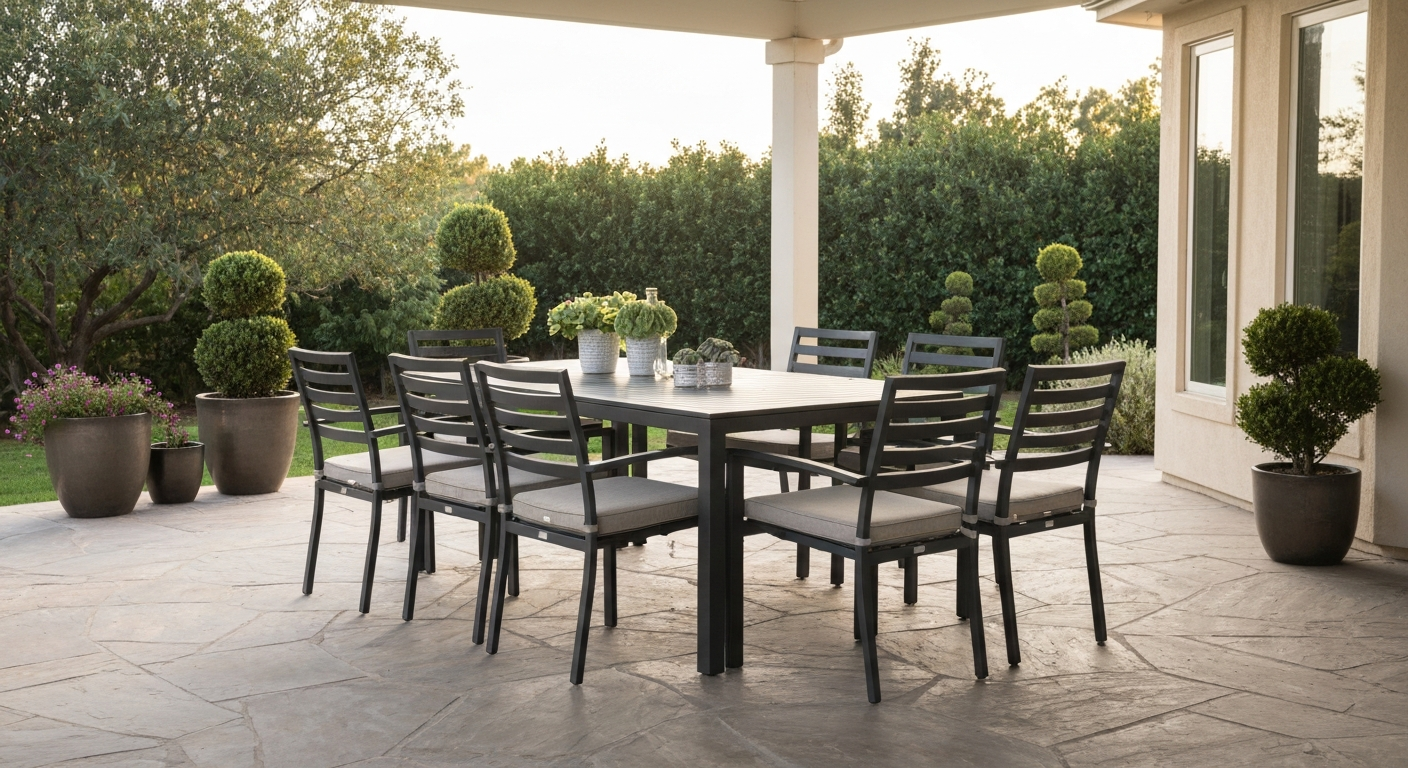
Does steel patio furniture rust?
Yes, carbon steel and most galvanized steel will rust if the protective coating is breached or degrades. This is not a flaw unique to cheap furniture: even well-made steel pieces will corrode once bare metal is exposed to moisture and oxygen. That said, rusting is not inevitable or immediate. A quality powder coat at 60 to 100 micrometers dry film thickness (the range commonly specified for outdoor polyester and polyurethane systems) can keep the substrate protected for a decade or more in typical inland conditions. Stainless steel grades resist rust far better, but they are not immune, especially near salt water. The honest answer is that steel's rust risk is manageable with the right finish and climate match, but it is a real variable you need to plan for. If you're wondering 'does steel patio furniture rust', the short answer is yes unless coatings or climate prevent corrosion.
Why steel rusts outdoors: the mechanisms that matter
Steel rusts through electrochemical corrosion. When iron in the alloy contacts water and oxygen, it oxidizes to form iron oxides, the familiar red-brown rust. Three specific mechanisms are relevant to outdoor furniture.
- Uniform (general) corrosion: the most common form on carbon steel. Moisture and oxygen react across the exposed surface progressively. Paint chips, scratched welds, or worn edges are the typical entry points on furniture.
- Pitting and crevice corrosion: more relevant to stainless steels. Chloride ions from salt spray or even road salt tracked onto a patio penetrate and disrupt the passive oxide layer. Pitting concentrates damage at discrete spots rather than spreading evenly, and it can compromise structural tubing faster than surface rust alone suggests.
- Galvanic corrosion: when two dissimilar metals are in electrical contact in the presence of moisture, the less noble metal corrodes preferentially. On patio furniture this shows up when steel fasteners are used with aluminum frames or vice versa, or when zinc coatings (anodes) sacrifice themselves to protect the underlying steel — which is actually the intended mechanism in galvanizing.
Salt accelerates all three mechanisms. Chlorides lower the potential at which pitting initiates, sustain thin electrolyte films on metal surfaces even when it looks dry, and dramatically raise conductivity of any moisture layer. ISO 9223 classifies atmospheric corrosivity on a C1 (very low, indoor) to CX (extreme, offshore) scale using measured corrosion rates and chloride deposition; furniture specifiers use these categories to match materials and coating systems to how aggressive the environment actually is. A coastal patio in South Florida is a C4 to C5 environment. A covered patio in Denver is closer to C2. That gap is enormous in practical terms.
The types of steel used for outdoor furniture
Not all steel used in patio furniture is the same. Understanding the differences helps you evaluate what you are actually buying.
Carbon steel
This is the most common base material: iron with a small carbon addition for strength, with essentially no intentional alloying for corrosion resistance. Left uncoated outdoors it begins rusting within days. Almost all carbon steel patio furniture relies entirely on its surface coating for corrosion protection. It is inexpensive, easy to weld and form, and very stiff (Young's modulus around 200 GPa), which is why furniture manufacturers favor it for structural tubing and frames. Density runs around 7,850 kg/m³, roughly three times heavier than aluminum for the same volume.
Galvanized steel
Galvanizing deposits a zinc layer over steel that protects through two mechanisms: it acts as a physical barrier, and as a sacrificial anode that corrodes in place of the steel if the coating is scratched. There are important grade differences. Continuously galvanized sheet (like G90 coil stock) carries only about 20 micrometers of zinc per side, which is relatively thin. Batch hot-dip galvanizing per ASTM A123, used on fabricated structural parts, requires much heavier coatings: sections over 6.4 mm thick typically call for 85 to 100 micrometers of total zinc. For furniture, the thicker ASTM A123-style coating is meaningfully more durable. Galvanized steel is a practical choice for frames that will then receive a topcoat.
Galvanneal
Galvanneal is continuously galvanized steel that is then annealed, converting the zinc coating to a zinc-iron alloy layer. This surface bonds better to paint and powder coat than standard hot-dip zinc. It is primarily a manufacturing-process choice rather than a corrosion-resistance upgrade on its own, though the improved paint adhesion extends total coating life.
Aluminized steel
Aluminized steel uses an aluminum-silicon coating instead of zinc. It offers strong heat and oxidation resistance, which is why it appears in grills and fire pit surrounds. For general furniture frames it is less common than galvanizing but shows up in combination pieces where heat exposure is expected.
Stainless steel: grades 304 vs. 316
Stainless steel contains at least 10.5% chromium, which forms a self-repairing passive oxide layer that dramatically improves corrosion resistance. Grade 304 (nominally 18% Cr, 8% Ni) is the most widely available and works well in inland and urban environments. Grade 316 adds 2 to 3% molybdenum, which raises the Pitting Resistance Equivalent Number (PREN) from roughly 18 to 20 for 304 up to 23 to 30 for 316. PREN ≈ %Cr + 3.3×%Mo + 16×%N, typical nominal PREN values are about 18–20 for 304 and about 23–30 for 316/316L, reflecting the extra molybdenum’s benefit against chloride-driven pitting. That added molybdenum is specifically why 316 resists chloride-driven pitting better than 304. Field studies on marine atmosphere exposure confirm that 316/316L produces fewer, smaller pits than 304 under comparable coastal conditions. The practical rule I follow: use 304 anywhere more than about a mile from the ocean; switch to 316 for coastal or poolside furniture where salt spray or chlorinated water is a routine presence. Even 316 needs annual washing near the coast to remove chloride buildup.
Protective finishes: what actually keeps steel from rusting
The coating is everything for carbon and galvanized steel furniture. Here is what is commonly used and what to look for.
Powder coat
Powder coating is the standard finish on quality steel patio furniture. Dry electrostatically applied polymer powder is baked onto the metal, forming a uniform, dense film. For outdoor furniture the typical specified dry film thickness is 50 to 125 micrometers (2 to 5 mils), with most quality manufacturers targeting 60 to 100 micrometers for outdoor polyester or polyurethane systems. Coating systems from suppliers like AkzoNobel's Interpon outdoor lines carry published durability levels of 5 to 10 or more years when applied over proper pretreatment. The pretreatment step, typically a phosphate or zinc phosphate conversion coating applied before powder, is critical: powder coat alone over bare steel peels at edges and chips. Verify thickness with a magnetic dry film thickness gauge (ASTM D7091 is the standard practice for this measurement). A budget piece that looks powder-coated may actually have a much thinner, inadequate film.
Liquid paint
Liquid paints, including alkyd enamels and polyurethane topcoats, are used on furniture, especially for touch-up and repair. Industrial protective paint systems for steel (governed by ISO 12944) link corrosivity category to recommended total dry film thickness. For high-durability performance in a C4 coastal or industrial environment, ISO 12944 typically calls for total system DFTs in the 200 to 300 micrometer range using a zinc-rich primer plus epoxy intermediate plus polyurethane topcoat, targeting 15 to 25 year performance. ISO 12944 links corrosivity categories (C2–C5/CX) to recommended coating system types and total DFT targets; for high‑durability C4 systems it commonly specifies total system DFTs of about 200–300 µm (zinc‑rich primer + epoxy/intermediate + polyurethane topcoat) to target roughly 15–25 years of protection ISO 12944 — protective paint systems and example total DFTs (practical summary). Retail furniture paint jobs rarely hit those totals, which is why factory powder coat outperforms brush-on paint for new pieces.
Epoxy primers and coatings
Epoxy-based primers, including zinc-rich epoxy primers, are used under topcoats to provide barrier and galvanic protection. Organic zinc-rich primers are commonly applied at 50 to 100 micrometers per coat and are particularly valuable at welds and cut edges where the zinc coating was burned away during fabrication. Cold-galvanizing zinc-rich primers (such as those following the Galmet-style product data sheets) provide a useful touch-up option when a steel frame has minor corrosion spots that need stabilizing before repainting.
Clear sealers
Clear sealers over stainless or decorative steel provide a UV-stable topcoat that resists water and chloride penetration. They do not offer the same barrier thickness as powder coat and need more frequent reapplication (typically every two to three years depending on climate). They are more relevant to stainless furniture where maintaining appearance matters, rather than for protecting carbon steel from rust.
Steel patio furniture pros and cons
Steel has a genuinely strong case in several categories and real liabilities in others. Here is the honest breakdown. See our full guide on steel patio furniture pros and cons for a detailed breakdown of strengths, weaknesses, and when to choose steel.
Where steel wins
- Strength and rigidity: Steel's Young's modulus of around 200 GPa means a steel frame flexes far less than aluminum under the same load. Dining chairs and loungers feel solid and stable. Thin-wall steel tubing can carry higher loads than equivalent aluminum without buckling.
- Durability against physical damage: Steel dents and scratches less easily than aluminum in normal use. It handles poolside impact, heavy wind events, and rough repositioning better.
- Cost: Carbon steel is one of the cheapest structural metals. Well-made powder-coated steel sets are typically priced below comparable stainless or teak, making them accessible at multiple budget levels.
- Design versatility: Steel is easy to weld into complex shapes, scroll work, and ornamental designs. Wrought-look and traditional garden styles are almost impossible to replicate affordably in aluminum.
- Long lifespan when maintained: A quality powder-coated steel frame in a moderate climate, touched up promptly when chipped, can last 15 to 20 years or more.
Where steel falls short
- Weight: At roughly 7,850 kg/m³, steel is about three times denser than aluminum. A steel sectional sofa set can be genuinely difficult to move, rearrange, or bring inside for winter storage.
- Corrosion risk: Carbon steel rusts when its coating is breached. Coastal, humid, or snowy climates (where road salt is tracked onto patios) dramatically shorten coating life without diligent maintenance.
- Heat retention: Steel absorbs and retains heat from direct sun. Chair arms and tabletops in full afternoon sun can become uncomfortable or briefly painful to touch in hot climates. Light-colored or matte finishes reduce but do not eliminate this.
- Maintenance commitment: Unlike teak or powder-coated aluminum, steel requires regular inspection for chips and scratches. Deferred maintenance on a rust spot costs significantly more than early touch-up.
- Coastal suitability limitations: Even powder-coated steel in a marine C4 to C5 environment will require more frequent recoating than 316 stainless, aluminum, or teak to achieve comparable service life.
Steel vs. aluminum vs. wrought iron vs. teak vs. wicker: full comparison
| Material | Durability | Rust / Rot Risk | Weight | Maintenance Level | Typical Cost |
|---|---|---|---|---|---|
| Carbon steel (powder-coated) | High in inland/moderate climates; coat-dependent | High if coating fails; low while intact | Heavy (~7,850 kg/m³) | Medium: annual inspection, prompt chip repair | Low to medium |
| Stainless steel 316 | Very high; especially coastal | Very low; minor pitting risk near salt water | Heavy (~8,000 kg/m³) | Low: wash annually near coast | High |
| Aluminum (powder-coated) | High across most climates | None: naturally oxide-forming | Light (~2,700 kg/m³) | Low: occasional wash, touch-up rare | Medium |
| Wrought iron / cast iron | Very high structurally; prone to surface rust | Medium-high: slower rust than carbon steel but inevitable without maintenance | Very heavy | Medium-high: annual painting or sealing | Medium to high |
| Teak (Grade A) | Excellent; 20–50+ year lifespan | No rust; low rot risk; moderate UV greying | Medium | Low to medium: annual oiling optional, no oiling needed if greying acceptable | High to very high |
| Wicker / rattan (synthetic PE) | Good; 5–15 years depending on UV exposure | No rust; UV degradation over time | Light | Low: wash with soap and water | Low to medium |
| Wicker / rattan (natural) | Moderate; not suitable for rain exposure | No rust; mold and rot risk if wet | Light | High: cover or bring indoors seasonally | Low to medium |
Steel vs. aluminum: head-to-head for patio sets
This is the most common comparison I see from readers trying to decide between metal options, and the answer is genuinely context-dependent rather than a clean winner-takes-all. For a detailed side-by-side comparison of corrosion resistance, weight, rigidity, and cost, see our guide on steel vs aluminum patio set.
Aluminum does not rust. For more on choosing durable options, see patio furniture that will not rust. Period. Its natural oxide layer reforms instantly when scratched, which is why aluminum furniture in coastal environments holds up without the coating anxiety that comes with carbon steel. Aluminum is also roughly three times lighter, making it easy to rearrange, store indoors before a hurricane, or move to follow shade. The trade-off is rigidity: aluminum's modulus is about 70 GPa versus steel's 200 GPa, so thinner aluminum sections flex and wobble more. Manufacturers compensate by using thicker wall tubing or more complex extrusion profiles, which partly offsets the weight advantage.
Steel's strength advantage is most apparent in dining chairs, which take concentrated point loads, and in heavy-use commercial settings. A powder-coated steel dining chair in a covered, inland patio will outperform most aluminum counterparts for structural feel over a long period. Steel also wins on price at entry and mid levels: a well-made steel set typically costs less than the equivalent in cast aluminum.
For coastal and high-humidity environments, the calculus shifts sharply. If the furniture will sit within half a mile of the ocean, or in a climate with consistent salt air (Gulf Coast, Pacific coastal zones, most of Florida), the maintenance burden of keeping steel's coating intact is real and ongoing. In that scenario I recommend either 316 stainless steel, powder-coated aluminum, or teak. For a comparison of top-rated options, see our guide to the best metal patio furniture. If you want a metal set and are near the water, aluminum is the more forgiving choice without question.
Quick pick guide: steel or aluminum?
- Choose steel if: your patio is inland or in a dry climate, you want maximum structural rigidity and a heavier, more anchored feel, you prefer traditional or ornamental designs, or budget is a primary concern.
- Choose aluminum if: you are within a mile or two of the ocean or in a persistently humid climate, you want furniture you can move or store easily, you want to minimize long-term maintenance, or you are in a climate with road salt exposure from tracked-in footwear.
How steel compares to teak, wrought iron, and wicker
Steel vs. teak and other woods
Grade A teak is one of the few materials that genuinely competes with steel on longevity: well-maintained teak furniture routinely lasts 20 to 50 years, and it has no rust risk whatsoever. For a side-by-side look at metal vs wood patio furniture, see our guide on metal vs wood patio furniture for material, maintenance, and lifespan comparisons. Teak's natural oils resist moisture, mold, and cracking far better than most hardwoods. The practical downsides are cost (quality teak is expensive), weight for large pieces, and a greying patina that some owners dislike if the furniture is not oiled annually. Eucalyptus and ipe are less expensive hardwood alternatives with similar logic but shorter track records for very long service. Against steel, teak wins on corrosion resistance everywhere and on total-cost-per-year math for buyers who amortize the purchase over 25 years. Steel wins on upfront cost and design range.
Steel vs. wrought iron and cast iron
Wrought iron and cast iron are essentially steel ancestors: iron with very low or very high carbon content. Cast iron is brittle under impact but extremely rigid and heavy; wrought iron is more malleable and is associated with traditional scrolled garden furniture. Both rust more slowly than bare carbon steel but will corrode without regular painting or sealing. Neither is practical for lightweight or portable use. In modern outdoor furniture, most pieces marketed as 'wrought iron look' are actually carbon steel with ornamental fabrication. True wrought iron pieces are largely antique or artisan-made. Steel outperforms cast iron on impact resistance and is easier to repair when coatings fail.
Steel vs. wicker and rattan
Synthetic PE wicker over an aluminum or steel frame has become a dominant mid-market outdoor category. The wicker itself does not rust, and high-density polyethylene weave handles UV reasonably well, though it will eventually fade and crack after several years of intense sun. The frames underneath are worth checking: a PE wicker set over a steel frame carries all of the same coating and rust concerns as a straight steel frame. Rattan and natural wicker are genuinely unsuitable for rain-exposed outdoor use and need seasonal storage or covering. Steel, especially in covered or semi-covered applications, is more structurally durable than the wicker weave it sometimes supports.
Buying checklist: quality markers for steel patio furniture
Before you buy, these are the things worth checking or asking about specifically.
- Ask for or check the steel type: is it carbon steel, galvanized steel, or stainless (and which grade)? Stainless should be labeled 304 or 316, not just 'stainless.'
- Verify powder coat thickness if possible: quality outdoor finishes run 60 to 100 micrometers. Budget pieces with thin, uneven coatings fail faster at edges and welds.
- Inspect the welds: clean, fully penetrated welds with no pinholes or gaps are essential. Rust almost always initiates at weld points where coating adhesion is lowest and metal is most stressed.
- Check fastener materials: stainless steel hardware throughout is the right call. Zinc-plated steel bolts and screws will rust and stain the frame even if the frame itself holds up.
- Look at the paint or coat on the underside and inside of tube ends: cut ends and hollow tube openings are chronic rust initiation points. Quality makers cap or seal tube ends.
- Evaluate the pretreatment: ask if the steel was phosphate-treated or zinc-phosphate-treated before powder coating. No pretreatment means the coating will peel prematurely at edges.
- Assess finish uniformity: even color, no drips, no thin edges at corners. Thin coating at sharp corners is where outdoor corrosion almost always starts on furniture.
- Factor in climate: match stainless grade (304 vs. 316) or coating system to your actual corrosivity category using the ISO 9223 logic: moderate inland = C2, urban industrial = C3, coastal or high humidity = C4 to C5.
Climate and placement guide
Where the furniture lives matters as much as what it is made of. Here is a straightforward breakdown by environment.
| Climate / Placement | Recommended Steel Type | Best Finish | Alternative if Steel Is Risky |
|---|---|---|---|
| Inland, dry (Denver, Phoenix, Dallas inland areas) | Carbon steel or galvanized | Quality powder coat 60–100 µm | Powder-coated aluminum |
| Humid, non-coastal (Southeast US, Pacific Northwest covered patio) | Galvanized + powder coat or stainless 304 | Powder coat with zinc phosphate pretreatment | Powder-coated aluminum or teak |
| Coastal (within ~1 mile of ocean, Gulf Coast, South Florida) | Stainless 316 only for steel; otherwise avoid carbon steel | Clear sealer over 316 SS; or skip steel entirely | Powder-coated aluminum or teak |
| Snowy / road salt regions (Midwest, Northeast US winters) | Galvanized + powder coat; avoid crevices where salt sits | Powder coat + annual inspection for chips before winter | Powder-coated aluminum |
| Poolside (chlorinated water exposure) | Stainless 316 or aluminum | 316 SS with annual washing | Powder-coated aluminum |
Maintaining and repairing steel patio furniture
Steel furniture rewards consistent light maintenance and punishes neglect. The following routine is what I recommend for most owners.
Annual and seasonal care
- Wash the furniture at the start and end of the outdoor season with mild soap and water. Remove dirt, pollen, and any salt deposits that accumulate on surfaces.
- Inspect every weld point, cut edge, and fastener location for rust spots or coating chips. Early-stage rust is a surface stain at this point; late-stage rust is a structural repair.
- Dry thoroughly after washing. Do not let water sit in hollow tube openings, crevices, or under rubber feet where it cannot evaporate.
- For coastal or high-humidity environments, wash monthly or after storms that deposit salt spray. Outokumpu's published guidance for stainless steel in marine atmospheres recommends annual washing at minimum, more frequently near the coast.
- Cover furniture or bring it indoors during winter if you are in a region with road salt, heavy snow loading, or persistent wet conditions.
Repairing rust and touching up coatings
- For small rust spots: sand or wire-brush the affected area to bare metal, wipe clean with a solvent-soaked cloth, apply a zinc-rich primer (cold galvanizing compound) at roughly 60 to 80 micrometers, and topcoat with a matching powder coat touch-up paint or quality outdoor enamel.
- For larger coating failures: the same sequence applies but you may need to feather the edges of the existing coating to prevent re-lifting. An epoxy primer followed by a matching polyurethane topcoat gives better adhesion and durability than single-stage enamel over a bare metal repair.
- For structural rust (scaling, pitting, or perforated metal): the furniture has likely reached end-of-life on that member. Professional repair or replacement is more economical than patching over heavily corroded steel.
- Match the touch-up paint carefully. Most manufacturers supply matching RAL color codes. A mismatched gloss level or shade stands out and indicates where future moisture will probe for entry.
- After any repair, allow full cure time before re-exposing to rain. Powder coat touch-up paints typically need 24 to 48 hours; epoxy primers need full cure per the product data sheet before topcoating.
Expected lifespan and cost-per-year value
A quality powder-coated steel dining set purchased for $600 to $900 that lasts 15 years in an inland moderate climate costs $40 to $60 per year. A stainless 316 set at $1,800 to $2,500 that lasts 25 years near the coast costs $72 to $100 per year, plus minimal maintenance. A teak set at $3,000 to $5,000 that lasts 30 to 50 years with occasional oiling can cost $60 to $170 per year. The steel option delivers strong value in its target environment. It loses that argument when it is used outside its climate envelope and requires frequent recoating or early replacement.
The furniture that delivers the worst cost-per-year outcome is invariably the budget steel set placed in a coastal or persistently wet environment without adequate maintenance. That $300 set from a big-box store with thin powder coat and zinc-plated hardware may be rusting visibly in 18 months. At that point the cost-per-year is terrible and the outcome is avoidable with either better material selection upfront or a slightly higher spend.
Quick decision rules
If you want a simple framework before you buy, these rules cover the majority of situations.
- Inland, dry or moderate climate with a covered patio: powder-coated carbon steel is an excellent choice. Prioritize weld quality and coating thickness over price.
- Humid non-coastal climate: powder-coated galvanized steel or stainless 304 with quality pretreatment. Aluminum is equally valid and requires less maintenance.
- Coastal or marine environment: use 316 stainless steel or powder-coated aluminum. Avoid carbon steel unless you commit to annual inspection and prompt repair. Teak is the zero-maintenance reference standard here.
- Poolside: 316 stainless or aluminum only. Chlorine accelerates corrosion on carbon steel and even on 304.
- Snowy region with road salt: galvanized and powder-coated steel works, but cover or store furniture before the salt season and inspect every spring before moisture and warmth accelerate any rust that initiated over winter.
- Maximum durability with minimum maintenance anywhere: teak or powder-coated aluminum. Steel delivers excellent value but does require an ongoing relationship with a wire brush and touch-up can.
FAQ
Does steel patio furniture rust?
Unprotected carbon steel will rust when exposed to moisture and oxygen. Rust risk is reduced or eliminated by using corrosion‑resistant alloys (stainless 304/316), protective metallic coatings (hot‑dip galvanizing, aluminizing, galvanneal), and organic finishes (quality powder coat, epoxy, polyurethane). Coastal salt accelerates corrosion; regular cleaning and proper coatings are essential for long life.
Which types of steel are used for patio furniture and how do they perform?
Common types: carbon/low‑alloy steel — strong and economical but requires coatings to resist rust; galvanized (continuous/G90) — thin zinc coating provides some protection but is thinner than hot‑dip; hot‑dip galvanized (HDG) — thicker robust zinc layer for long life if specified per ASTM A123; galvanneal — zinc‑iron alloy good for paint adhesion; aluminized steel — aluminum‑silicon coating offers corrosion resistance and heat reflectivity; stainless steel 304 — good for inland/urban use but can pit in chloride environments; stainless steel 316/316L — superior pitting resistance near coasts (higher PREN due to Mo). Choice depends on environment and whether you’ll rely on paint/powder coat.
How do protective finishes compare (powder coat, paint, epoxy)?
Powder coat (polyester/polyurethane) is common for furniture — durable, uniform, DFT typically 60–125 µm when done right. Two‑component epoxies and polyurethanes offer high chemical and corrosion resistance; multi‑coat systems (zinc primer + epoxy/intermediate + polyurethane topcoat) deliver longer durability, especially offshore. Quality depends on surface prep (blast, phosphating), primer selection, and coating thickness. AAMA/ISO and manufacturer specs (e.g., AAMA 2605 for architectural topcoats) indicate higher performance levels.
Is stainless steel a better choice than carbon steel for outdoors?
Stainless (especially 316) resists general corrosion and pitting better than carbon steel without coatings. 304 is fine inland but can pit in marine or highly polluted areas. Stainless won’t require paint to avoid rust, but it’s heavier and costlier. For heavy use or where welded joints and fasteners are exposed, stainless fasteners and good design to avoid crevices are important.
How does steel compare with aluminum, teak, wrought iron, and wicker?
Aluminum: ~3× lighter, naturally corrosion‑resistant if properly alloyed/coated, easier for large or movable pieces; less stiff than steel so tubing may be thicker for the same stiffness. Teak: natural wood, warm look, low maintenance if oiled, more expensive, not metallic. Wrought/cast iron: very heavy and strong, can rust if uncoated but holds classic styles; needs regular maintenance. Wicker/rattan: lightweight and comfortable; synthetic/resin wicker is weatherproof but has different aesthetics and load limits. Choose steel for strength and slim profiles, aluminum for portability and coastal tolerance, teak for natural aesthetics, and synthetic wicker for low maintenance.
Which metal patio furniture won’t rust?
No metal is absolutely immune to all forms of corrosion, but stainless steels (316/316L) resist rusting and pitting best in coastal/ humid atmospheres. Aluminum and properly specified aluminized or hot‑dip galvanized steel with robust organic topcoats also perform well. For truly ‘won’t rust,’ choose 316 stainless or aluminum with appropriate coatings; note stainless can still corrode in certain aggressive conditions if not cleaned.
Next Articles
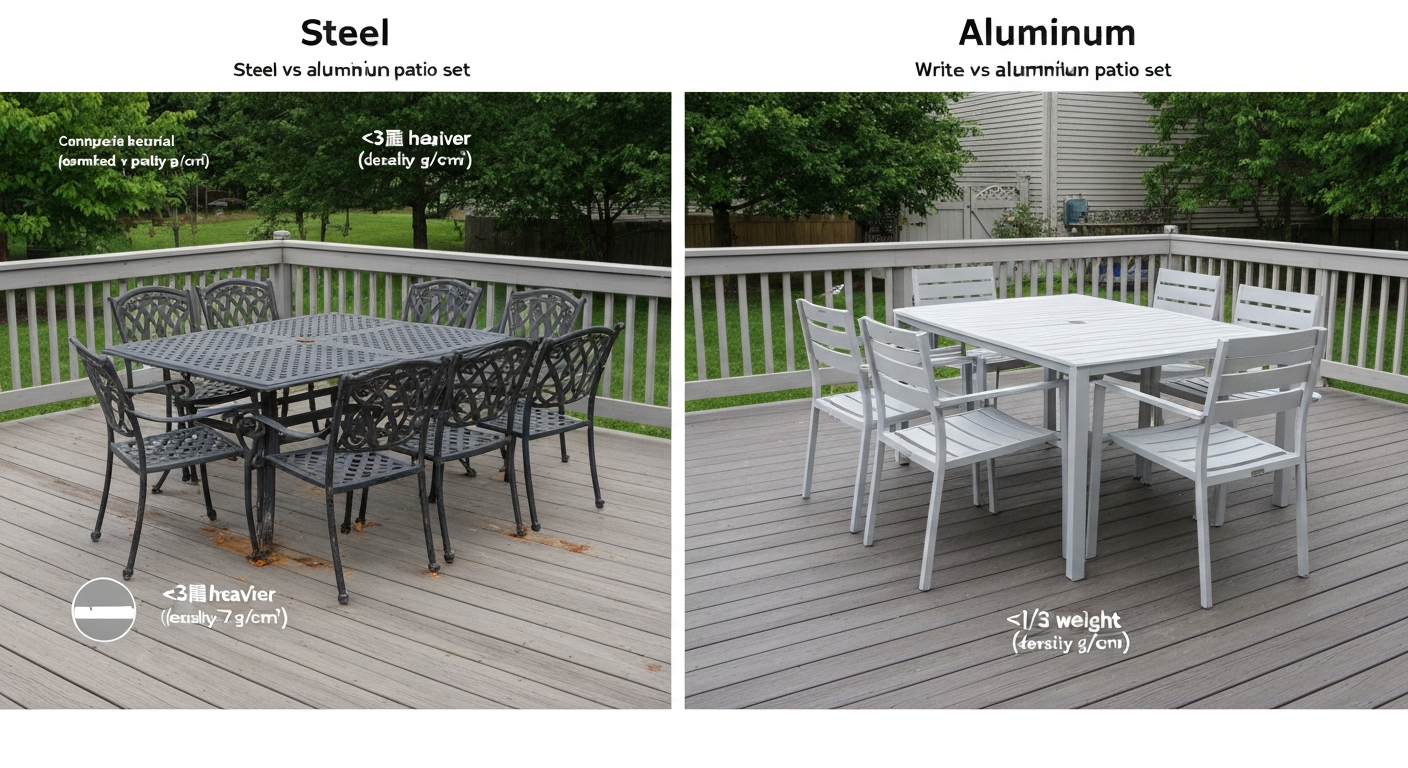
Steel vs Aluminum Patio Set: Which Material Should You Buy?
Steel vs aluminum patio set: expert comparison of durability, corrosion, cost, maintenance, and best picks.
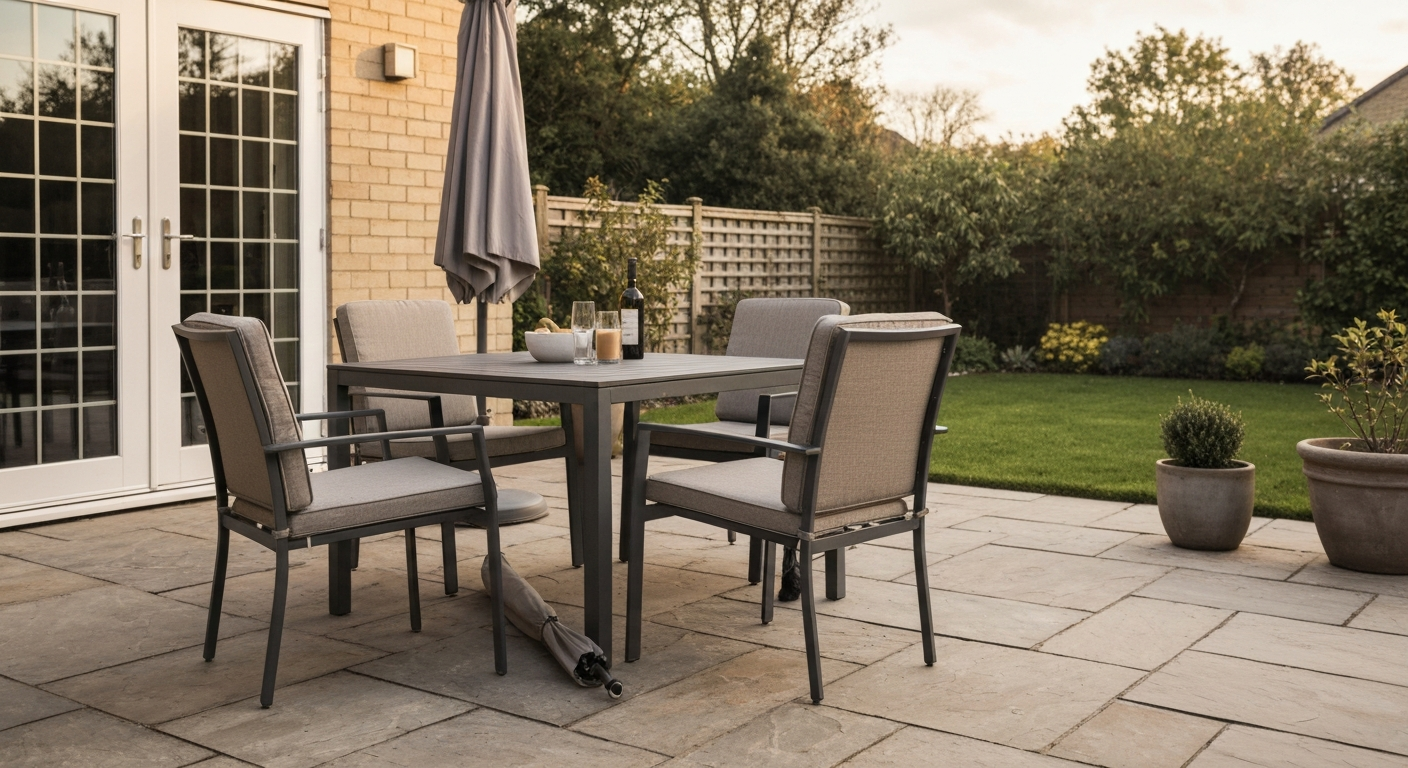
Steel Patio Furniture Pros and Cons: Buy Care & Rust Guide
Steel patio furniture pros and cons: verdict, rust prevention, buying checklist, maintenance & lifespan guide.
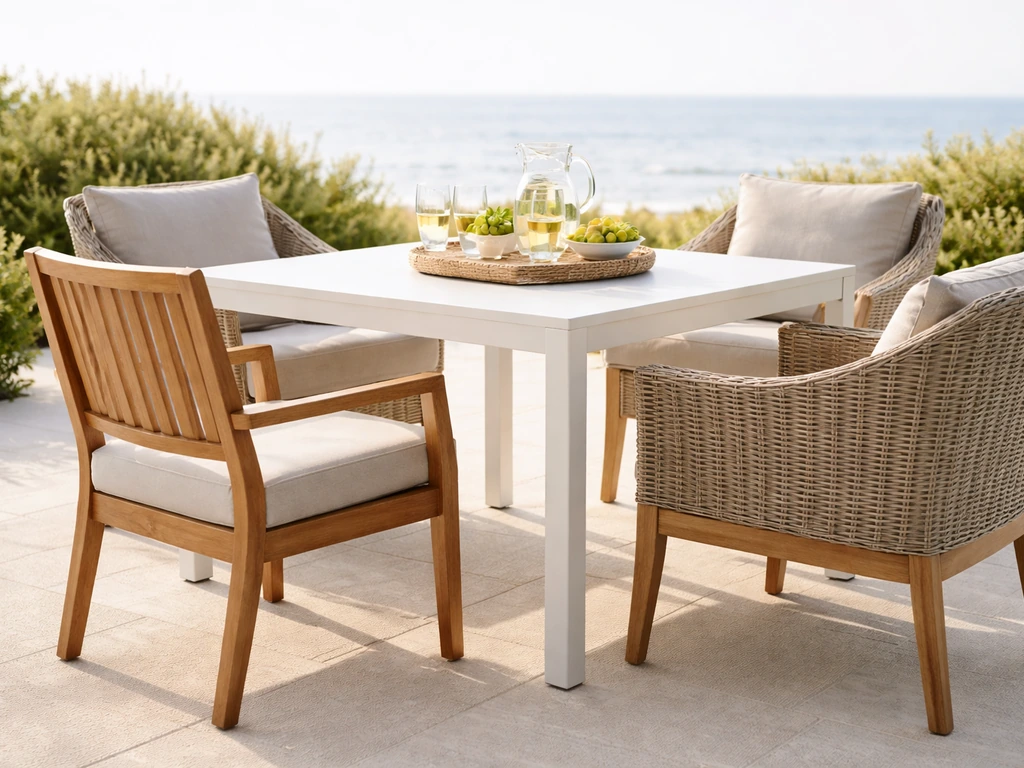
Patio Furniture That Will Not Rust: Best Materials Today
Shop patio furniture that will not rust: best materials, coating checks, fastener tips, and maintenance for coastal or d