
Patio furniture costs more than most people expect because you're not just buying furniture: you're buying something engineered to survive rain, UV, temperature swings, humidity, and years of outdoor exposure. If you're wondering why patio furniture is so expensive, this explains the key cost drivers and what to watch for why patio furniture so expensive. When that engineering is done properly, it involves premium raw materials, multi-stage finishes, stainless hardware, and labor-intensive construction. Then add U.S. import tariffs on Chinese-manufactured goods under Section 301, retail markups that commonly double the wholesale price (keystone pricing is standard in the industry), and shipping costs on heavy, bulky items, and a dining set that looks like it should cost $600 quickly lands at $1,800 on a showroom floor.
Why Is Patio Furniture So Expensive Reddit: Costs & Value Guide

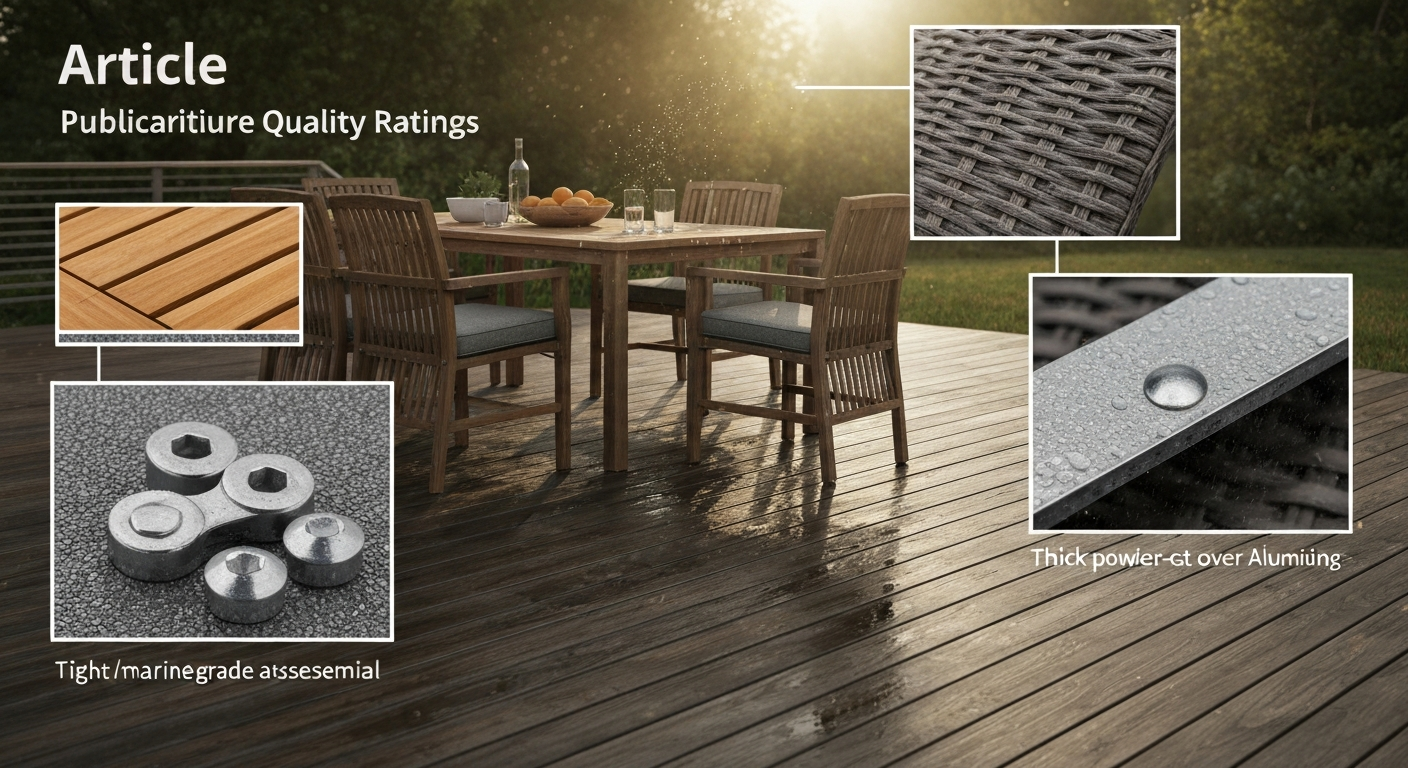
What actually drives the price up
There are six real price drivers in outdoor furniture, and understanding them helps you immediately spot whether a given price tag reflects genuine quality or just margin padding.
Materials
Raw material cost is the single biggest variable. Sustainably sourced teak from certified plantations commands a significant premium because the wood itself is expensive to grow, harvest, and process. Marine-grade 5052 aluminum alloy costs more than thin steel stamping. High-density polyethylene (HDPE) lumber made from recycled plastics requires industrial processing to produce consistent color and structural integrity. Cheap sets substitute lower-grade materials at every step, and those substitutions are almost always invisible at the point of sale. You only see them when the frame rusts, the weld cracks, or the finish flakes two seasons in.
Construction and finishes
Frame joinery, weld quality, and finish application are where manufacturers separate themselves. Reliable outdoor frames use fully welded joints rather than bolted sheet-metal brackets, stainless steel fasteners rather than zinc-plated screws, and powder-coat finishes applied at 1 to 4 mils of dry-film thickness over properly prepared metal. A three-stage powder-coat process (pre-treatment, primer, topcoat) over aluminum is a genuine quality indicator. Shortcut versions use single-stage spray finishes over unprepared steel, and those fail quickly in any climate with moisture or UV.
Labor and sourcing
Handwoven synthetic wicker over aluminum frames, mortise-and-tenon teak joinery, and sling fabrics stretched to proper tension all require skilled labor. Even when that labor is performed in lower-wage markets, a well-made piece still involves more hours than a factory-stamped chair. Domestic or near-shore manufacturing carries a further premium, which some premium DTC brands now explicitly market as a feature.
Tariffs and shipping
Finished furniture imported from China falls under HTS Chapter 94 (headings 9401 through 9404 cover seats and other furniture). Many of those 10-digit HTS subheadings were targeted by Section 301 tariff actions, which in 2026 continue to add meaningful duty percentages on top of standard import duties. U.S. Section 301 actions have included furniture, List 3 historically covered broad manufactured goods including furniture, and importers must check their product's 10‑digit HTS code to determine whether Section 301 duties apply to a given line Section 301 actions have included furniture; check your product's 10-digit HTS code. Importers pass those costs downstream. On top of tariffs, outdoor furniture is heavy and often shipped in large boxes; freight costs per unit are disproportionate to the product's weight-to-value ratio compared with, say, a shirt or a book. Both costs land in the retail price.
Retail markup
Traditional retail uses keystone pricing as a baseline: the manufacturer sells to the retailer at roughly twice their cost of goods (wholesale), and the retailer marks up to roughly twice their wholesale cost (MSRP). For a concise explanation of typical wholesale and retail markups, see what is the markup on patio furniture. Retailers commonly use 'keystone' pricing: a simple industry shorthand where retail is roughly double the wholesale cost (a 100% markup); many product categories and independent retailers still use keystone as a baseline keystone pricing. That means the sticker price you see in a showroom can be four times the actual manufacturing cost of the item. Specialty outdoor retailers with physical showrooms have higher overhead than big-box stores, so their markups can run even wider. Direct-to-consumer brands cut out one layer of that markup, which is a real pricing advantage, not just marketing copy.
Material by material: what you're actually paying for
Each major material category has a genuinely different cost structure, performance profile, and maintenance burden. Here's an honest breakdown of each.
| Material | Typical retail price range (chair) | Lifespan (well-maintained) | Best climate | Key weakness |
|---|---|---|---|---|
| Teak | $200–$800+ per chair | 25–50 years | Universal, excellent coastal | Initial cost; needs oiling if you want to preserve color |
| Cast/marine aluminum | $150–$600 per chair | 15–25+ years | Universal, good coastal | Cheaper alloys dent; quality varies widely |
| Synthetic wicker/rattan (over aluminum) | $100–$500 per chair | 8–15 years | Humid, sun, moderate coastal | UV degrades cheap resin weave over time |
| Cast/wrought iron | $200–$700 per chair | 20–40 years (with upkeep) | Low-humidity, sheltered | Heavy; corrodes without regular repainting |
| Softwoods (pine, cedar) | $80–$300 per chair | 5–10 years | Mild, low-humidity | Rots, warps; needs frequent sealing |
| Hardwoods (eucalyptus, acacia) | $120–$400 per chair | 10–20 years | Moderate climates | Cheaper than teak but less stable in wet climates |
| Powder-coated steel | $80–$350 per chair | 5–15 years | Dry, UV climates | Corrodes fast if coating chips; poor coastal performance |
Teak
Teak is the gold standard for outdoor wood furniture for good reason: natural oils in the wood resist moisture, insects, and rot without any treatment. Left unfinished, it weathers to a silver-gray patina; oiled annually, it stays golden-brown. Certified plantation teak from Indonesia is the most common source, and the premium is real. A 9-piece teak dining set retails from roughly $1,200 to over $3,000 depending on grade, joinery quality, and whether cushions are included. The cost-per-year math usually works out favorably over a 30-year lifespan.
Cast and marine-grade aluminum
High-quality cast aluminum (not extruded thin-wall tubing) is my personal recommendation for most buyers who want durability without the weight of iron or the price of teak. It doesn't rust, holds powder-coat finishes well, and a properly built frame can last 20 or more years. The catch is that 'aluminum' covers a huge range of quality. Cheap extruded aluminum tubing with thin walls and plastic connectors is categorically different from die-cast aluminum frames with fully welded joints. The price gap between them reflects that.
Synthetic wicker and rattan over aluminum
All-weather synthetic wicker wrapped over an aluminum frame is now the dominant look in mid-range outdoor furniture, and for good reason. The resin weave resists moisture and UV better than natural rattan, and the aluminum frame underneath won't rust. Quality variation here is enormous: cheap resin weaves become brittle and crack within a few seasons of strong UV exposure, while high-quality HDPE resin weaves used by better brands hold up for a decade or more. Look for UV-stabilized resin, tight weave density, and a fully welded (not bolted) aluminum subframe.
Cast and wrought iron
Cast iron furniture is heavy, stable, and genuinely beautiful in formal or European-style settings. A well-maintained cast iron bistro table will outlast almost anything else. The maintenance burden is the real issue: any chip or scratch in the paint exposes bare iron to moisture, and rust follows. In coastal or perpetually humid climates, that maintenance cycle becomes annual work. In a dry or sheltered setting, iron furniture can last 40 or more years with periodic repainting. It's a good choice if you're committed to the upkeep.
Softwoods, hardwoods, and budget wood
Cedar and pine furniture is inexpensive to buy and expensive to maintain in any climate with real weather. Without annual sealing and staining, softwood outdoor furniture deteriorates noticeably within three to five years. Eucalyptus and acacia sit in the middle ground: denser and more rot-resistant than pine, cheaper than teak, but less dimensionally stable in wet climates. They're a reasonable value in mild, moderate climates. Avoid them for coastal or high-humidity applications unless you're prepared to oil them every season.
Powder-coated steel
Steel furniture at the budget end of the market is not inherently bad, but it is the most climate-sensitive option on this list. A well-applied three-stage powder coat on properly prepared steel can last 15 or more years in a dry climate. The same finish on a piece of furniture sitting on a coastal deck in salt air might start showing rust at the edges and fastener points within two or three seasons. The coating is the entire corrosion barrier, and once it's compromised, the steel underneath corrodes quickly.
Realistic cost ranges by piece and set
Here are approximate retail price ranges across budget, midrange, and premium tiers. These reflect current U.S. market pricing in mid-2026, drawing on retailer listings across Home Depot, Wayfair, and specialty outdoor brands. Prices vary by material, brand, and whether cushions are included. If you want a quick guide to typical price ranges and what affects them, see our detailed breakdown of how much does patio furniture cost.
| Item | Budget tier | Midrange tier | Premium tier |
|---|---|---|---|
| Dining chair (single) | $50–$120 | $150–$350 | $350–$800+ |
| Lounge/Adirondack chair | $80–$200 | $200–$500 | $500–$1,200+ |
| Dining table (4–6 seat) | $200–$600 | $600–$1,500 | $1,500–$4,000+ |
| 4-piece conversation set | $400–$900 | $900–$2,500 | $2,500–$7,000+ |
| 5-piece dining set | $500–$1,200 | $1,200–$3,000 | $3,000–$8,000+ |
| Sectional sofa (modular) | $600–$1,500 | $1,500–$4,000 | $4,000–$12,000+ |
| Chaise lounge (single) | $100–$300 | $300–$800 | $800–$2,500+ |
Budget-tier sets from big-box retailers typically use thin powder-coated steel or low-grade aluminum frames, thin cushions with non-waterproof inner fills, and plastic or zinc-plated hardware. They can work fine in mild climates with careful off-season storage. Midrange sets, roughly $1,500 to $3,000 for a dining set, are where most buyers get the best combination of durability and price. Premium sets from specialty brands like Frontgate, which offers a 10-year structural frame warranty on residential outdoor furniture, or comparable premium lines reflect genuine material and construction upgrades, not just brand premium.
How retail pricing and markups actually work
The pricing chain for most patio furniture runs like this: manufacturer cost of goods, then roughly doubled to reach wholesale price, then roughly doubled again to reach retail (MSRP). That's the traditional keystone model. It means a dining chair that costs $80 to manufacture might wholesale for $160 and retail for $320. The retailer needs that margin to cover showroom overhead, inventory carrying costs, and seasonal discounting. This isn't unique to outdoor furniture, but the category is particularly markup-heavy because of its seasonal nature and the showroom experience retailers use to justify premium pricing.
Direct-to-consumer outdoor brands (those that sell exclusively online or through their own stores) cut out the wholesale-to-retail markup layer, which is why a DTC brand can offer what appears to be comparable quality at a lower price than a specialty showroom. They're not always a better product, but they are operating on a lower markup structure. Seasonal sales (Memorial Day, Labor Day, and end-of-season clearance in September and October) are where the most meaningful real discounts happen at traditional retailers, often 30 to 50 percent off MSRP, which brings those items closer to what a DTC brand charges at full price year-round.
What Reddit actually says about patio furniture pricing
Reddit's r/patio, r/frugalmalefashion (for deal alerts), r/homeimprovement, and r/OutdoorLiving threads surface a consistent set of buyer frustrations and lessons learned. The community's collective experience is genuinely useful because it cuts through brand marketing and reflects what happens to real furniture in real climates over multiple seasons. For crowdsourced recommendations and long-running durability reports, search for discussions under the phrase "best patio furniture reddit" to find compiled community picks and firsthand reviews.
The most common pain points
- Budget sets that look fine in photos but arrive with thin welds, plastic connectors, and fabric that fades or tears within one season
- Cushion covers that aren't truly waterproof and develop mildew in the inner fill after the first rain
- Powder-coated steel frames that start rusting at the weld points and fastener locations within two to three seasons, especially near coasts or in the Southeast
- Synthetic wicker that becomes brittle and starts cracking or unraveling at the ends after two to four years of strong UV exposure
- Sticker shock at specialty retailers after expecting big-box pricing
- Shipping damage on large, heavy sets ordered online with no local assembly support
Frequently cited community picks
In community threads asking for recommendations, POLYWOOD and similar HDPE lumber brands come up consistently as a 'buy it once' recommendation for buyers who want minimal maintenance. Seasoned Reddit users repeatedly note that POLYWOOD chairs bought five to ten years ago still look new with zero maintenance beyond occasional hosing off. Cast aluminum sets from mid-tier brands like Telescope Casual, Woodard, and Brown Jordan appear in upgrade-tier discussions. For budget shoppers, the consensus tends to favor buying used premium furniture from Facebook Marketplace or Craigslist over buying new budget furniture, a point worth taking seriously.
What buyers wish they knew before purchasing
- Check the fastener material first: if the bolts are zinc-plated or unspecified, assume they'll rust and factor in replacement cost
- Cushion quality is a separate purchase decision from frame quality: cheap cushions on a great frame is a common and fixable mistake
- Weigh the frame: heavy cast aluminum or heavy teak correlates with material quality; suspiciously light sets are usually thin-wall extrusions
- Wait for end-of-season sales rather than buying at Memorial Day peak pricing
- Consider buying last season's display model from a local specialty retailer for 30 to 50 percent off
Climate-specific recommendations and how long furniture actually lasts
Climate is the single most underweighted variable in most furniture purchase decisions. A set that would last 20 years in Phoenix might be worn out in 8 years in coastal Florida or coastal Maine. Here's what actually matters by climate type.
Coastal salt air
Salt air is the most demanding environment for outdoor furniture. It accelerates corrosion on any ferrous metal, degrades most finishes faster than UV alone, and attacks unsealed wood grain. The right choices here are marine-grade 5052 or 6061 aluminum with a multi-stage powder coat and exclusively stainless steel fasteners, HDPE lumber (POLYWOOD and equivalents), or teak with its natural oil content. Cast iron and powder-coated steel should be avoided unless you're willing to repaint annually. HDPE and quality cast aluminum realistically last 15 to 25 or more years in coastal conditions. Thin steel or poorly finished aluminum may fail in three to five years.
Humid and mildew-prone climates
The Gulf Coast, Southeast, and Pacific Northwest all create conditions where mildew and moisture penetration are primary failure modes. For these climates, synthetic resin wicker over aluminum frames, HDPE lumber, and teak all perform well. Softwoods deteriorate quickly without very diligent sealing. The critical maintenance item in humid climates is cushion management: store cushions inside or in a vented storage bench when not in use, and choose cushions with solution-dyed acrylic fabric (Sunbrella is the benchmark) and quick-dry inner fills.
High UV and sun exposure
In the Desert Southwest, Southern California, and high-altitude sunny climates, UV degradation is the dominant failure mode. It bleaches and embrittles resin wicker, fades fabric, and breaks down sealants on wood. UV-stabilized HDPE lumber holds up best, followed by powder-coated aluminum. If you're using synthetic wicker, confirm it is UV-stabilized resin (often described as high-density polyethylene resin weave). Cushion fabric needs to be solution-dyed acrylic, not printed polyester, which fades dramatically in strong UV. Natural teak holds up well but will silver-gray quickly without annual oiling.
Freeze-thaw climates
The Midwest, Northeast, and upper mountain states put furniture through repeated freeze-thaw cycles that cause moisture trapped in porous materials to expand and crack them. Wood joints, poorly sealed wood end grain, and low-quality welds are all vulnerable. Cast aluminum and HDPE lumber handle freeze-thaw well. Teak handles it reasonably well if properly maintained. Cast iron handles it well structurally but needs moisture-barrier paint maintained to avoid rust. The practical solution for most freeze-thaw climates is storage: furniture that's stored indoors or under quality covers from November through March will last significantly longer than furniture left exposed year-round.
Repair and maintenance: costs, when it makes sense, and when to replace
Outdoor furniture repair is often much more cost-effective than buyers assume, especially for quality frames where only one component has failed. Here's a realistic breakdown of the main repair categories and their approximate costs in 2026.
Cleaning
Basic annual cleaning is the highest-return maintenance task and costs almost nothing. A solution of mild soap and water, a soft brush, and a rinse will handle most frames and fabric. For mildew on cushion fabric, diluted white vinegar or diluted bleach (on colorfast fabrics only) is effective. Teak can be cleaned with a diluted oxalic acid teak cleaner (roughly $15 to $30 per bottle) before re-oiling. A thorough clean at the start of each season extends finish life and lets you catch early rust or damage before it spreads.
Cushion replacement
Replacement cushions for standard furniture sizes run roughly $30 to $150 per cushion for off-the-shelf sizes, and $100 to $400 or more for custom cut-and-cover work. Upgrading to Sunbrella or equivalent solution-dyed acrylic fabric covers with quick-dry polyester fill at the time of replacement is almost always worth the extra cost, since the new covers will outlast standard polyester covers by a factor of two to three in UV-exposed settings. If your frame is sound, replacing worn cushions is almost always more cost-effective than buying a new set.
Powder coating
Powder coating is the right repair route for metal frames that have chipped, rusted, or faded finishes but are structurally sound. Current contractor cost surveys place powder coating for patio furniture at roughly $100 to $500 per item for typical household projects, with sandblasting or chemical stripping for prep work adding $75 to $200 or more depending on the item's size and surface condition. For precise local pricing, prep requirements, and typical contractor options, see our guide on how much to powder coat patio furniture. A full dining set refinish (table plus four to six chairs) might run $600 to $2,000 depending on your market and the scope of prep work. A well-applied powder coat is cited as lasting 15 to 20 years under normal outdoor exposure. That math makes powder coating a strong value proposition for a quality cast aluminum or steel frame that you'd otherwise replace.
Wood refinishing and oiling
Teak and hardwood furniture refinishing involves cleaning, light sanding, and the application of teak oil or a penetrating hardwood finish. DIY cost is roughly $20 to $60 in materials per set per year. Professional wood refinishing for outdoor furniture runs $100 to $400 per piece depending on condition and whether stripping is required. For teak furniture in good structural condition, annual oiling is a low-cost maintenance task that adds decades of service life.
Welding and structural repair
A cracked or broken weld on an aluminum or steel frame can often be repaired by a local welding shop for $50 to $200 per repair depending on accessibility and material. For cast aluminum, TIG welding by an experienced welder produces an invisible repair. For steel, a MIG weld followed by powder coating is a clean solution. Structural repair is worth pursuing when the base frame is quality material and the repair cost is clearly less than half the replacement cost of an equivalent piece.
Part replacement: slings, webbing, and hardware
Sling replacement on aluminum sling chairs is a common and cost-effective repair. Replacement sling fabric runs $20 to $80 per chair in material; professional installation typically adds $40 to $100 per chair. A set of six sling chairs might cost $400 to $600 to have professionally re-slung, versus $1,500 to $3,000 to replace with equivalent-quality new chairs. Hardware replacement (stainless bolts, glides, and end caps) is inexpensive, typically $5 to $30 per chair in parts, and eliminates squeaking and wobbling that makes otherwise sound chairs feel worn out.
When repair stops making sense
The general rule I use: if the repair cost exceeds 50 percent of the replacement cost for an equivalent quality piece, and the repaired piece won't match the remaining service life of new furniture, replacement is the better financial decision. Thin-wall steel frames with pervasive rust, MDF or particleboard components used in construction, or frames with multiple structural failures are all cases where repair investment is unlikely to recover value. For quality teak, cast aluminum, or wrought iron in otherwise sound condition, repair is almost always worth pursuing.
How to decide how much to spend
The most useful framing is cost per year rather than sticker price. For a practical spending guide, see our article on how much to spend on patio furniture. A $2,000 cast aluminum dining set that lasts 20 years costs $100 per year. A $600 steel set that lasts 5 years costs $120 per year and ends up in a landfill. That math shifts quickly when you factor in maintenance costs, replacement cushion costs, and the environmental cost of disposal.
- Assess your climate first: coastal, humid, or high-UV climates demand a higher material specification to achieve the same service life as a mild-climate installation
- Decide on your storage situation: furniture that will be stored covered or indoors off-season can be a grade lower in material specification than furniture that lives outside year-round
- Separate frame budget from cushion budget: spend more on the frame (it's structural and hard to replace) and treat cushions as a consumable you'll replace every 5 to 8 years
- Check fastener material and warranty terms before buying: stainless hardware and a multi-year structural warranty are reliable quality indicators
- For budget shoppers: look for last season's premium furniture on Facebook Marketplace, Craigslist, or estate sales before buying new budget furniture
The price question is genuinely connected to the question of whether expensive patio furniture is worth it, which depends almost entirely on material quality and your climate. In most cases, the midrange and premium tiers deliver meaningfully better cost-per-year value than budget sets, especially in demanding climates. The worst outcome is buying cheap twice.
FAQ
Why is patio furniture often more expensive than buyers expect?
Multiple price drivers stack: raw-material costs (teak, aluminum, HDPE, cast iron), specialized construction and finishes (three-stage powder coat, marine-grade fasteners), skilled labor for joinery or welding, import tariffs and duties (HTS classifications and occasional Section 301 duties), shipping/packaging for bulky items, and retailer/brand markup (wholesale-to-retail keystone markups are common). Premium brands also budget for warranties, quality controls and longer-lasting components, which raises MSRP but lowers total cost of ownership over time.
How do different materials compare for price, durability, and climate suitability?
Teak: high upfront cost (single pieces $300–$1,200; 7–9‑piece sets $1,200–$3,200+), excellent rot resistance and 20+ years if maintained; ideal for humid/coastal areas. Aluminum (powder-coated): mid-to-high cost ($150–$800 per piece; dining sets $800–$3,000), rust-resistant if quality-coated and stainless hardware used; 15–20 years typical. Resin wicker/HDPE: mid cost ($100–$700 per piece; sets $600–$2,000), excellent for moisture and UV, 15–25+ years for quality pieces. Cast iron: heavy, expensive per piece ($200–$1,000+), very durable but prone to surface corrosion without coatings—better in low-salt areas. Powder‑coated steel: lower-cost entry ($75–$400 per piece), can corrode quickly in coastal/humid climates unless high-build coatings and prep are used. Natural wood (other than teak): lower upfront but shorter lifespan (5–15 years) unless high-quality species and finishes used.
What are realistic cost ranges by piece and by set?
Typical U.S. retail ranges: single chairs 75–1,200 (budget metal to premium teak), sofas/conversation pieces 400–3,000+, dining tables 150–1,500+, complete dining sets (4–8 seats) roughly 800–3,500+, premium 9+ piece teak or custom aluminum sets 1,500–5,000+. Mass-market entry sets can be under $500 but often need replacement sooner—expect higher long-term cost of ownership.
How do retail and wholesale markups affect the final price?
Many retailers use keystone-style markups: makers price to achieve wholesale (often ~COGS ×2), and retailers mark wholesale up again toward retail (another ×1.5–2 is common). Additional retail margin covers shipping, showroom costs, returns, extended warranties and promotions. That sequence can double or triple the maker’s cost before it reaches consumers.
What warranty differences should I expect across brands and price tiers?
Premium brands commonly offer multi-year structural warranties (5–10+ years; some lines advertise limited-lifetime frame coverage) and replaceable components. Mass-market sets may offer 1–3 year limited warranties covering defects but excluding normal wear, coastal corrosion, or cushions. Read fine print for exclusions like salt-air, misuse, or surface finish wear.
What do Reddit buyers commonly recommend and which models or brands are frequently cited as 'best'?
Reddit threads typically favor: teak for long-term wood durability; powder-coated aluminum from reputable makers for low maintenance; HDPE/poly‑lumber and resin wicker for coastal/humid durability; and reputable specialty brands for warranties (users name regional makers and premium retailers). Frequent community ‘best’ picks are specific lines rather than one universal brand—buyers emphasize inspecting construction (stainless hardware, welded frames, thick powder coat) and buying from sellers with clear return/warranty policies.
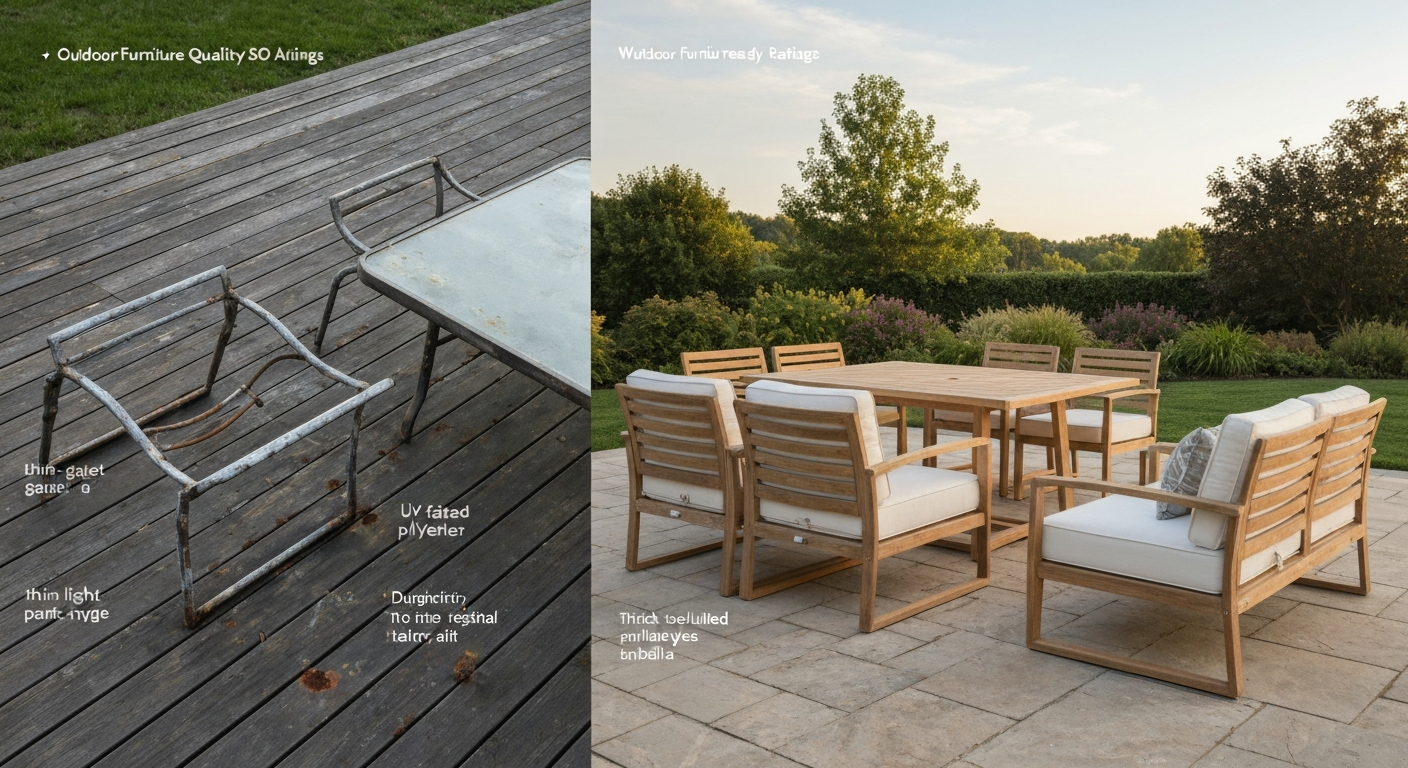
Decide when to splurge on patio furniture: cost-per-year, lifespans by material, climate tips, repair & resale guidance.
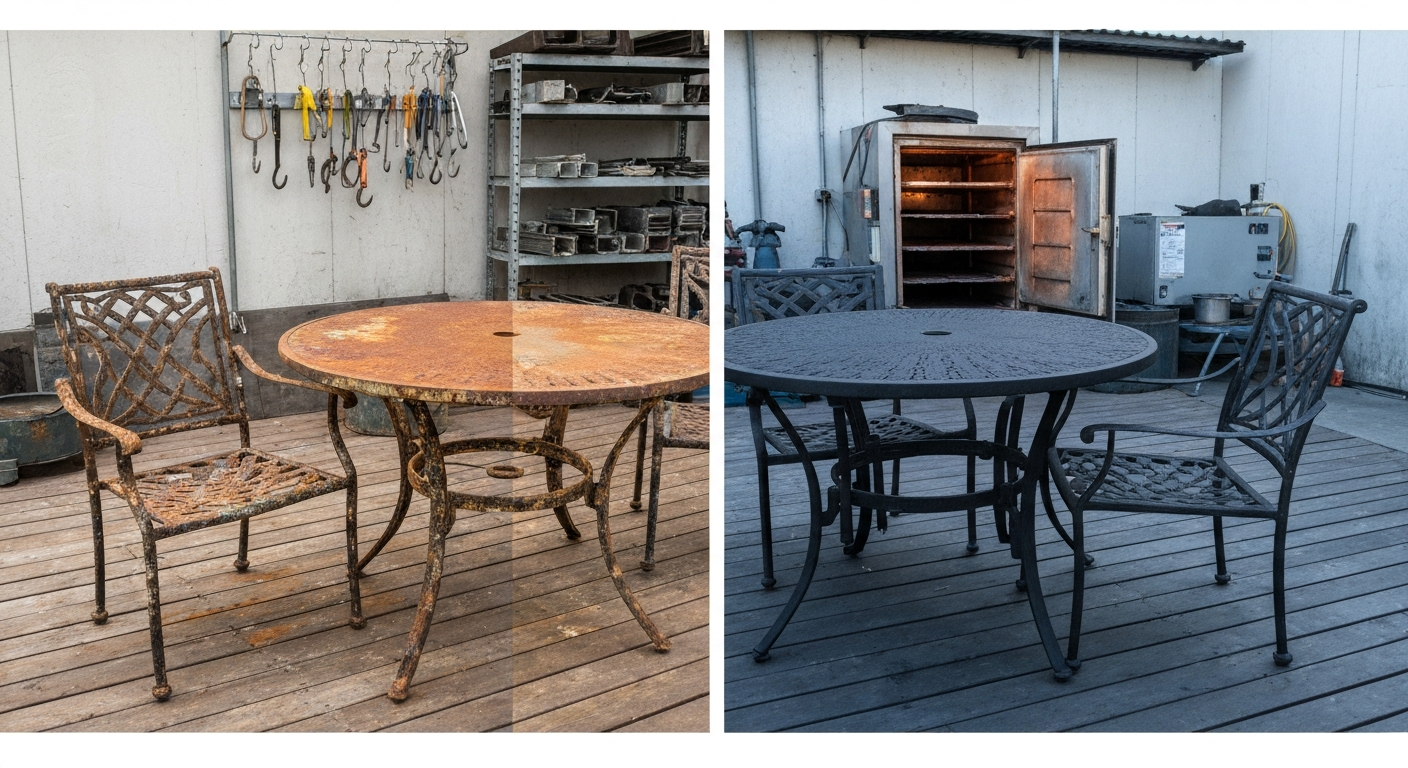
Exact powder-coat costs for patio furniture, national & regional ranges, per-item and per-ft/pound pricing, DIY vs pro
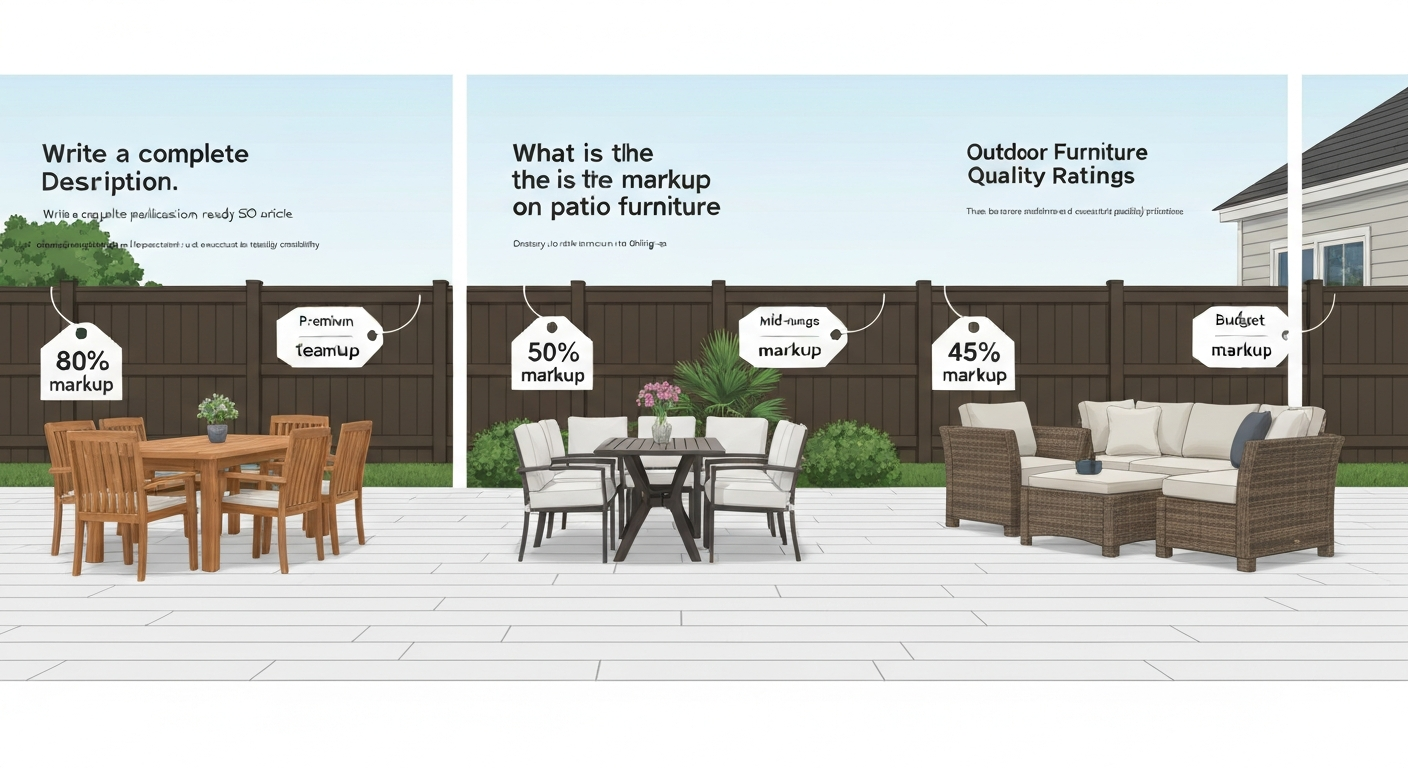
Understand patio furniture markup: what it means, who pays, typical ranges, cost drivers and smart buying tips.