
Yes, expensive patio furniture is worth it, but only under specific conditions. If you use your outdoor space heavily, live in a punishing climate, or plan to keep the furniture for a decade or more, spending $800 to $3,000+ on a quality set will almost always cost less per year than cycling through budget pieces every two to four seasons. If you use the patio twice a summer, store it under a tarp, or rent your home, a mid-range or even budget set is the smarter financial call. The answer lives in how you use the space, not in the price tag itself.
Is Expensive Patio Furniture Worth It? Cost, Lifespan & Buyer's Guide

Marcus Kellerman
28 Jul 2026
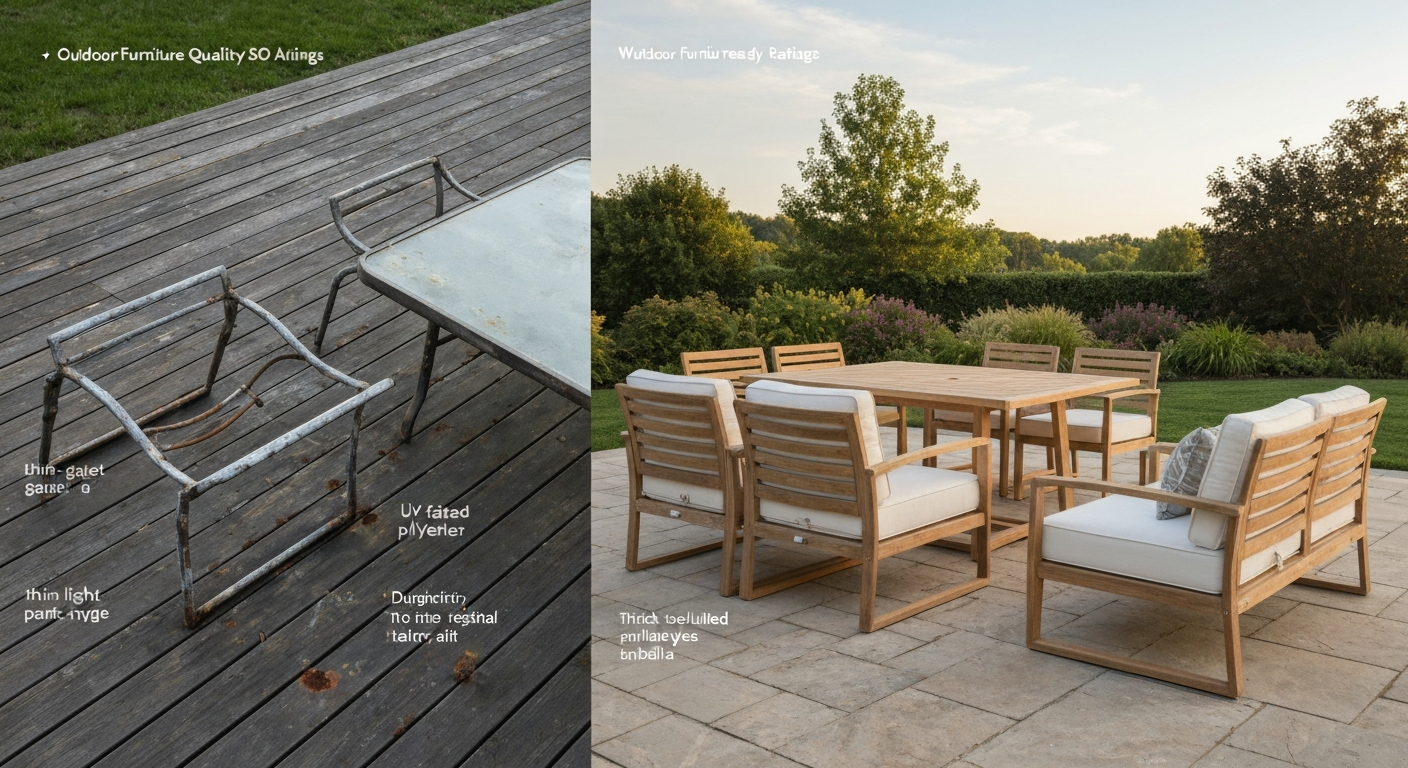
TL;DR: The one-line call for most homeowners and designers
Buy expensive if you use your patio at least weekly from spring through fall and want to keep the furniture for 10-plus years. Save if your use is occasional, your climate is mild, or you're furnishing a rental. For designers specifying commercial or high-turnover entertaining spaces, quality materials pay back through lower replacement frequency and better resale on used-furniture markets.
When to splurge and when to save
Four factors drive this decision: how often you actually use the space, what climate the furniture faces, how much maintenance you're willing to do, and whether resale or staging value matters to you. Get honest about each one before you open a catalog.
Usage: honest hours per season matter most
A family that eats outside four nights a week from May through October puts real stress on furniture. Cushions compress, frames flex under daily weight, and UV exposure accumulates fast. Budget frames and low-thread-count cushion covers typically show visible fatigue within two to three years of that kind of use. A premium commercial-grade aluminum frame with Sunbrella-fabric cushions, by contrast, is engineered to absorb that load and still look good at the ten-year mark. If you open the patio a dozen times a year, that investment is overkill.
Climate: coastal, humid, and high-UV zones change the math
Coastal salt air, sustained humidity, and intense UV are multiplicative stressors on outdoor materials. Academic materials research confirms that salt-laden atmospheres and repeated wet/dry cycles accelerate localized corrosion on aluminum and steel and degrade thin organic coatings faster than inland exposure does. This means a frame that might last 15 years in Denver can look rough in five years on a beachfront deck in Tampa if it wasn't made for that environment. If you're in a coastal or humid subtropical climate, the case for buying premium materials (Grade-A teak, marine-grade aluminum with a thick powder coat, or HDPE poly lumber) gets significantly stronger.
Maintenance commitment: be realistic about what you'll actually do
Teak, for example, delivers an extraordinary lifespan, well-documented at 25 to 50-plus years for Grade-A structural pieces, but it needs cleaning and re-oiling every 3 to 12 months to retain its golden color. If you want to let it go silver-gray naturally, you can skip the oil, but you still need to clean it annually. Be honest: if you're not going to do that, teak's price premium partly goes to waste. Powder-coated aluminum, on the other hand, needs almost nothing, a wipe-down once or twice a season and that's it. The maintenance burden should factor into your total cost calculation, not just the purchase price.
Resale and staging goals
Quality outdoor furniture from recognizable brands does hold resale value, particularly teak and POLYWOOD/recycled poly pieces. Used-market listings on platforms like Craigslist and Facebook Marketplace show branded used sets selling for $500 to $2,500, while unbranded budget sets often fetch $50 to $150 or go unsold. If you're staging a home for sale, a well-chosen premium set adds visible outdoor living value. For rental properties, the calculus flips: durability matters, but the aesthetic premium of a $5,000 teak dining set will not show up in rent, so a durable midrange set is the smart play.
Total cost of ownership: what to actually add up
Sticker price is only one input. A complete total cost of ownership (TCO) calculation for patio furniture should include purchase price, annual maintenance supplies and labor, cushion replacement, frame repair or refinishing, storage costs, and eventual replacement. When you spread those costs across the realistic lifespan of a set, expensive furniture often wins on a per-year basis.
| Cost Category | Budget Set (~$300) | Midrange Set (~$1,200) | Premium Set (~$3,000) |
|---|---|---|---|
| Purchase price | $300 | $1,200 | $3,000 |
| Expected frame lifespan | 2–4 years | 7–12 years | 15–30+ years |
| Annual maintenance supplies | $0–$10 | $15–$50 | $20–$80 (teak/fabric) |
| Cushion replacement (full set, 1x) | $100–$200 | $200–$600 | $400–$1,200+ |
| Frame repair/refinishing (1x) | Rarely worth it | $75–$300 | $100–$600 if needed |
| Estimated 10-year total spend | $900–$1,500 (2–3 sets) | $1,600–$2,200 | $3,200–$4,500 |
| Approximate cost per year (10-yr) | $90–$150 | $160–$220 | $100–$200 (longer life lowers this) |
The budget set looks cheap until you factor in replacing it every two to four years. A $300 set replaced three times over a decade costs $900 in frames alone, plus repeated cushion purchases. A quality premium teak or aluminum set bought once for $3,000, maintained responsibly, and kept for 20 years works out to $150 per year or less, cheaper per year than the budget option. Powder-coating a worn metal frame typically runs $75 to $600 depending on size and complexity, which is far less than buying a new set.
How price maps to what you actually get
Durability
This is where higher price most reliably delivers. Grade-A teak, commercial-grade powder-coated aluminum (two-coat systems), and high-density polyethylene (HDPE) lumber all have documented lifespans in the 15 to 50-year range under normal outdoor exposure. Budget sets typically use lower-grade steel with thin paint, light-gauge aluminum, or fast-grown softwood that won't survive more than a few seasonal cycles without degrading. The durability gap between a $300 and a $1,500 set is real and material-science-backed, not just marketing.
Comfort
Comfort differences between price tiers show up most clearly in cushion quality and ergonomic frame geometry. Premium outdoor cushions use high-resilience foam rated for outdoor use, wrapped in solution-dyed acrylic fabric like Sunbrella (which carries a 5-year manufacturer warranty and a realistic 7 to 10-year service life for color and strength). Budget cushions use lower-density foam that flattens within a season and covers that fade noticeably after one summer. Frame ergonomics also differ: premium manufacturers invest in seat-depth and back-angle design; budget pieces are often sized to pack into a flat box, not to support a human body for a three-hour dinner.
Aesthetics over time
An expensive set bought in 2026 should look presentable in 2036 with normal care. A budget set typically starts showing UV fade, frame oxidation, and cushion deformation within two to four years. This matters if your outdoor space is visible from inside the home, photographed for listings, or part of a high-end renovation, the visual payoff of quality materials compounds over years, while cheap materials detract from the rest of the space.
Resale value
Premium outdoor furniture from recognized brands (POLYWOOD, Telescope, Brown Jordan, Gloster, Kingsley Bate) holds meaningful secondary-market value. Teak sets in good condition from known manufacturers regularly sell secondhand for 30 to 60 percent of original retail. Budget sets have essentially no resale market, they sell for $50 to $100 at garage sales if they sell at all. For homeowners who rotate furniture with major renovations, this recovered value is a real financial offset worth calculating.
Retail pricing and markup: what you're actually paying for
Understanding how retail markup works helps you spot genuine quality versus inflated branding. Home-furnishings retail is a high-margin business. Mass-market and upscale retailers like La-Z-Boy report gross margins around 40 percent, while premium vertically integrated retailers like Ethan Allen operate closer to 60 percent gross margin, meaning a piece wholesaling for $600 retails for $1,000 to $1,500. Specialty outdoor retailers and luxury brands sit in that upper band, reflecting showroom costs, distribution infrastructure, and brand positioning.
That markup isn't pure profit extraction, it funds the warranty infrastructure, customer service, replacement-parts programs, and curated retail experiences that differentiate premium brands. But it also means some of what you're paying for at a designer outdoor showroom is addressable perception rather than material cost. Knowing the typical 40 to 60 percent gross-margin band helps you evaluate whether a $4,000 dining set is priced for its materials and engineering, or mostly for its zip code. The related topic of what drives markup in outdoor furniture is worth understanding before you shop. For community discussions and buyer anecdotes on pricing, see why is patio furniture so expensive reddit for real-world threads and complaints.
Price tiers and what they realistically buy
The U.S. market runs from roughly $175 for a basic big-box dining set up to $5,000-plus for individual premium lounge pieces. RH SEC filings & retail catalog references show RH lounge and sofa listings frequently priced in the $1,000–$5,000+ range RH SEC filings & retail catalog references show RH lounge and sofa listings frequently priced in the $1,000–$5,000+ range.. Here's what each tier actually delivers.
| Tier | Typical Price Range (full set) | Frame Material | Cushion Quality | Expected Lifespan | Best For |
|---|---|---|---|---|---|
| Budget | $175–$600 | Thin steel, light aluminum, softwood | Polyester, low-density foam | 2–4 years with regular use | Occasional use, rentals, starter homes |
| Midrange | $600–$2,000 | Powder-coated aluminum, hardwood, synthetic wicker on steel | Better foam, partial solution-dyed fabrics | 7–12 years | Regular family use, moderate climates |
| Premium | $2,000–$5,000+ | Grade-A teak, commercial aluminum, HDPE poly | High-resilience foam, full Sunbrella covers | 15–30+ years | Year-round use, coastal/harsh climates, design-forward spaces |
The midrange tier, roughly $800 to $2,000 for a complete dining or seating set, is where most homeowners get the best balance of value and durability. Sets like the POLYWOOD Lakeside 7-piece (listed around $1,849 to $1,949 at major retailers) use HDPE lumber that genuinely doesn't rust, splinter, or need painting, and they carry multi-year warranties. That's a fundamentally different product from a $350 steel dining set, not just a more expensive version of the same thing. If you're trying to figure out how much to spend overall, there's a straightforward framework worth working through based on your specific usage and climate. For a quick rule of thumb on how much to spend on patio furniture, see our dedicated buying guide. For exact price ranges and itemized breakdowns, see our guide on how much does patio furniture cost to compare typical budget, midrange, and premium sets.
What actually makes patio furniture expensive
Price is driven by a stack of factors, and not all of them add equal value. Here's what's actually going into the cost. For a deeper look at why patio furniture so expensive, see our detailed breakdown.
- Materials: Grade-A teak, HDPE poly lumber, marine-grade aluminum alloys, and Sunbrella-class fabrics all cost significantly more raw than fast-grown softwood, light steel, and polyester. The material cost difference is real.
- Joinery and construction: mortise-and-tenon joints, welded (not bolted) aluminum frames, and hand-tied cushion stitching cost labor time that flat-pack assembly lines don't spend. These construction choices directly affect longevity.
- Protective coatings: commercial two-coat powder systems that pass ISO 9227 salt-spray and ISO 6270 humidity testing cost more to apply than a single thin spray coat. The coating quality is often the single biggest determinant of frame lifespan in coastal environments.
- Cushion engineering: high-resilience open-cell foam, solution-dyed acrylic covers with UV inhibitors, and water-drainage channel designs are more expensive to produce than standard furniture cushions and deliver measurably longer service life.
- Warranty and parts infrastructure: a brand that offers a 5-to-15-year frame warranty and stocks replacement parts for discontinued models is absorbing real cost. Budget brands that disappear or discontinue lines after two years have no such liability.
- Brand and distribution premium: designer labels, showroom networks, and catalog photography add 15 to 30 percent to retail price with no direct performance benefit. This is the part worth being skeptical about.
- Certifications: FSC-certified teak, GREENGUARD-certified finishes, or CA 117 fire-safety-rated fabrics involve third-party audits that add cost but provide independently verified performance claims.
Material-by-material comparison: how to read this matrix
Each material has a different performance profile across the dimensions that actually matter for outdoor furniture: structural lifespan, weather resistance, maintenance demand, repairability, regional suitability, and price tier. Use this matrix to match material to your climate and usage pattern, not just your aesthetic preference. Deep dives on individual materials, teak vs. eucalyptus, aluminum vs. powder-coated steel, are covered separately on this site, but the matrix gives you the comparative starting point.
| Material | Typical Frame Lifespan | Weather Resistance | Annual Maintenance | Repairability | Best Regional Fit | Typical Price Tier |
|---|---|---|---|---|---|---|
| Grade-A Teak | 25–50+ years | Excellent (naturally oily, resists rot) | Low-medium (clean + oil/seal 1–2x/yr) | High (sandable, repairable) | All climates; exceptional in humid/coastal | Premium |
| Powder-coated Aluminum | 10–20+ years (quality coat) | Very good inland; good coastal with marine-grade alloy | Very low (wipe clean) | Medium (powder coat repair $75–$300) | All climates; top pick for low maintenance | Midrange–Premium |
| HDPE Poly Lumber | 20–50 years | Excellent (won't rot, rust, splinter) | Very low (soap and water) | Low-medium (scratches visible, hard to touch up) | All climates including harsh coastal | Midrange–Premium |
| Synthetic Wicker (PE resin on aluminum) | 7–15 years | Good (UV-stable resin; frame matters) | Low (rinse and wipe) | Low (resin strands hard to repair) | Mild-moderate climates; avoid extreme coastal | Midrange |
| Wrought/Cast Iron | 20–50 years (with paint) | Good if maintained; rusts if coating fails | Medium (inspect/repaint every few years) | High (weld, grind, repaint) | Dry inland climates; poor coastal fit | Midrange–Premium |
| Powder-coated Steel | 5–15 years | Moderate (rusts faster than aluminum if coat chips) | Medium (monitor for chips, touch up) | Medium (powder coat or touch-up paint) | Dry climates; avoid coastal and humid zones | Budget–Midrange |
| Teak-alternative Hardwoods (e.g., eucalyptus, ipe) | 10–25 years | Good-very good depending on species | Medium (oil annually) | Medium (sand and refinish) | All climates; eucalyptus good in humid zones | Midrange |
| Natural Rattan | 3–7 years outdoors | Poor (moisture degrades fibers) | High (cover or store when wet) | Low (hard to source repair materials) | Covered patios in dry climates only | Budget–Midrange |
A few patterns stand out. Teak and HDPE poly deliver the longest lifespans with the least structural anxiety, but they represent opposite aesthetics, one warm and natural, one synthetic and virtually indestructible. Powder-coated aluminum is the best all-around value for most homeowners: low maintenance, solid lifespan, light weight, and available across midrange and premium tiers. Wrought iron is beautiful and extremely repairable, but it's a poor choice for coastal or permanently humid climates unless you're committed to regular inspections and repainting. Natural rattan belongs indoors or under deep cover, full outdoor exposure shortens its life to a few years regardless of price. Synthetic wicker on a quality aluminum frame is a reasonable midrange choice in mild climates, but the resin strands will eventually degrade from UV regardless of what you paid.
Climate-based buying recommendations
Climate is the single most powerful modifier of furniture lifespan, and it should drive your material selection before anything else. Here are direct recommendations by zone.
- Coastal/salt air (within 1–2 miles of ocean): Grade-A teak, HDPE poly lumber, or marine-grade aluminum with verified thick powder coat. Avoid bare steel, natural rattan, and lower-grade aluminum. Salt spray accelerates corrosion of coated metals dramatically faster than inland air.
- Hot and humid (Gulf Coast, Southeast, Florida): Teak, HDPE poly, or quality synthetic wicker on aluminum. Prioritize mildew-resistant fabrics (solution-dyed acrylic). Avoid iron without diligent repainting; avoid natural rattan outdoors entirely.
- High-UV/dry desert (Southwest, high altitude): Powder-coated aluminum or HDPE are top picks. UV degrades most organic coatings and fabrics faster here; solution-dyed acrylics outperform piece-dyed fabrics significantly. Teak can dry out faster and may need more frequent sealing.
- Cold winter/freeze-thaw cycles (Midwest, Mountain, Northeast): Look for frames that won't crack in freezing temps (aluminum and HDPE handle freeze-thaw well; cast iron can crack under severe impact when frozen). Seasonal storage of cushions is essential in these climates regardless of price tier.
- Mild temperate (Pacific Coast, much of the Pacific Northwest): Most quality materials perform well here. This is the easiest climate for furniture longevity, which means you have more flexibility to optimize for aesthetics or comfort rather than pure durability.
Maintenance and repair costs: the ongoing bill
Maintenance costs are real but manageable if you choose the right material for your commitment level. Annual teak care (cleaning plus oil or sealer) takes one to two hours and costs $20 to $80 in consumables. Sunbrella fabric cleaning supplies run $10 to $25 per season. See Sunbrella, care & cleaning guidance (cleaning frequency & consumables) for manufacturer-recommended cleaning frequency and product guidance Sunbrella — care & cleaning guidance (cleaning frequency & consumables). Powder-coated aluminum needs almost nothing: half an hour with a mild soap solution and you're done. These are small numbers compared to replacement costs, but they compound over the life of a set.
Cushion replacement is the bigger wildcard. When cushions wear out before the frame, replacing them runs roughly $80 to $300 per cushion depending on size and fabric choice, Sunbrella-grade covers push toward the upper end. A full outdoor sectional re-cushioning can run $800 to $2,000 or more. This is still usually cheaper than replacing the whole set, especially if the frame is quality aluminum or teak that has decades of life left.
For metal frames showing wear, professional powder coating is the most durable refinishing option. Expect to pay roughly $75 to $300 to powder-coat a chair or small table, and $300 to $600 or more for a full sectional frame after proper prep and stripping. For detailed pricing and what to expect when refinishing, see our guide on how much to powder coat patio furniture. That's worth doing for a cast-iron or quality steel piece with good bones; it's rarely worth it for a budget frame that's structurally weakening. DIY touch-up paint is a reasonable interim fix for minor chips on powder-coated aluminum, it won't match perfectly but it blocks moisture from reaching the metal.
Brand quality signals worth trusting (and a few to question)
Certain signals genuinely indicate a premium product, and certain signals are marketing noise. Trustworthy indicators include: a multi-year frame warranty (5 years minimum, 15-plus years for top brands), availability of replacement parts for discontinued lines, FSC certification for wood products, Sunbrella or equivalent solution-dyed acrylic fabric specifications, and documented powder-coating specifications that reference ISO/ASTM test compliance. Skeptical signals include: "resort-quality" language without specifications, warranties that cover only manufacturing defects for 90 days, "all-weather wicker" with no mention of what the frame underneath is made of, and prices that cluster at round numbers like $999 or $1,499 without any published material specifications. The markup on patio furniture can be substantial at any tier, and branding alone can add 20 to 30 percent to the price of an otherwise identical product.
Practical shopping tactics
Timing and sourcing strategy can significantly reduce what you pay for quality furniture. End-of-season sales (August through October in most U.S. markets) routinely take 30 to 50 percent off full retail at big-box and specialty retailers. Early spring (February through March) is when new inventory arrives and older floor models are discounted. Pre-owned premium furniture is often the single best value available: a five-year-old teak or HDPE set from a known brand at 40 percent of original retail outperforms a new budget set at the same price by every measurable dimension. For community-driven recommendations and real-world user reviews, see popular best patio furniture reddit threads that collect hands-on experiences, brand pros/cons, and local resale tips. Negotiating with local specialty retailers on floor models or display sets is also underutilized, floor models are often discounted 20 to 35 percent and are already past the initial surface-scratch phase.
A practical decision checklist
Run through these questions before you buy. If you answer yes to most of the left column, buy premium. If you answer yes to most of the right column, buy midrange or skip the premium tier entirely.
| Signals to Buy Premium | Signals to Stay Midrange or Budget |
|---|---|
| You use the patio 3+ times per week in season | You use it fewer than once a week on average |
| You're in a coastal, humid, or high-UV climate | You're in a mild temperate or low-humidity climate |
| You plan to keep the furniture 10+ years | You expect to move, renovate, or upgrade in under 5 years |
| Resale value or home staging matters to you | It's for a rental or low-traffic secondary space |
| You want to pass it on or it's a forever-home purchase | You're testing whether you'll actually use the space |
| You'll maintain it (oil, cover, clean seasonally) | You won't do maintenance beyond occasional hosing off |
If you're split on several of these, the midrange tier, roughly $800 to $2,000 for a quality set, is usually the right answer. It delivers a meaningful lifespan step up from budget furniture without requiring the full premium price commitment. From there, the material you choose within that tier (HDPE poly vs. powder-coated aluminum vs. synthetic wicker) should be driven by your climate and how much maintenance you're actually willing to do. The material guides on this site go deeper on each comparison so you can match the right one to your specific situation.
FAQ
Is expensive patio furniture generally worth it?
It depends on your priorities and use case. Higher-priced pieces commonly buy better materials, construction, longer warranties, and lower maintenance over time — which can be worth it for year‑round use, coastal or high‑humidity climates, rentals, or high‑traffic entertaining. For occasional seasonal use or tight budgets, midrange or well-chosen budget options can deliver good performance if you match material to climate and practice proper maintenance.
How does price map to durability, comfort, and resale?
Price often correlates with material quality (solid teak, heavy-gauge powder‑coated aluminum, high‑density cast frames), better cushions/fabrics (solution‑dyed acrylics), tighter joinery, and more rigorous finishing. That yields longer life, better comfort, and higher resale. But markup and branding also inflate price; two similarly durable items can have different retail prices based on distribution, showroom costs, and brand positioning.
Which materials justify a higher price?
Materials that commonly justify spending more: grade‑A teak (multi‑decade structural life if maintained), commercial powder‑coated aluminum with thick two‑coat systems (10–20+ years in many climates), high‑grade wrought/cast iron when properly finished (very durable but heavy and prone to rust if coatings fail), and premium solution‑dyed acrylic fabrics (Sunbrella) for cushions. Synthetic wicker and quality hardwoods can be midpriced choices; low‑grade woods and untreated steel often don’t justify premium prices.
When should you splurge vs save?
Splurge when furniture will be used heavily (daily seating, entertaining, rentals), expected to remain in use for many years, located in harsh climates (coastal salt air, high humidity, intense sun), or when resale/curated design value matters (spec homes, designers). Save when use is sporadic, items will be stored seasonally, budget is constrained, or you can accept shorter lifespans and periodic replacement.
How do lifespans compare by material?
Typical realistic service-life ranges (with regular care): grade‑A teak: 25–50+ years; commercial powder‑coated aluminum: 10–20+ years inland (less on coasts); wrought/cast iron (well coated): 15–30 years but vulnerable where coatings chip; synthetic/resin wicker on quality frames: 7–15 years; softer woods or low‑grade teak: 5–15 years; untreated steel: <10 years outdoors without heavy maintenance. Actual life varies with exposure and care.
How should climate affect material choice?
Coastal/salt‑air: prefer teak, powder‑coated marine‑grade aluminum, or stainless components; avoid poorly coated steel and low‑grade metals. Hot/UV‑intense areas: choose UV‑stable synthetic wicker, solution‑dyed acrylic fabrics, and UV‑stable finishes. Humid or rainy climates: favor rot‑resistant materials (teak, synthetic wicker, powder‑coated aluminum) and elevated storage. Snow/ice climates: store indoors or use covers; robust frames are fine but cushions should be removed.
Next Articles
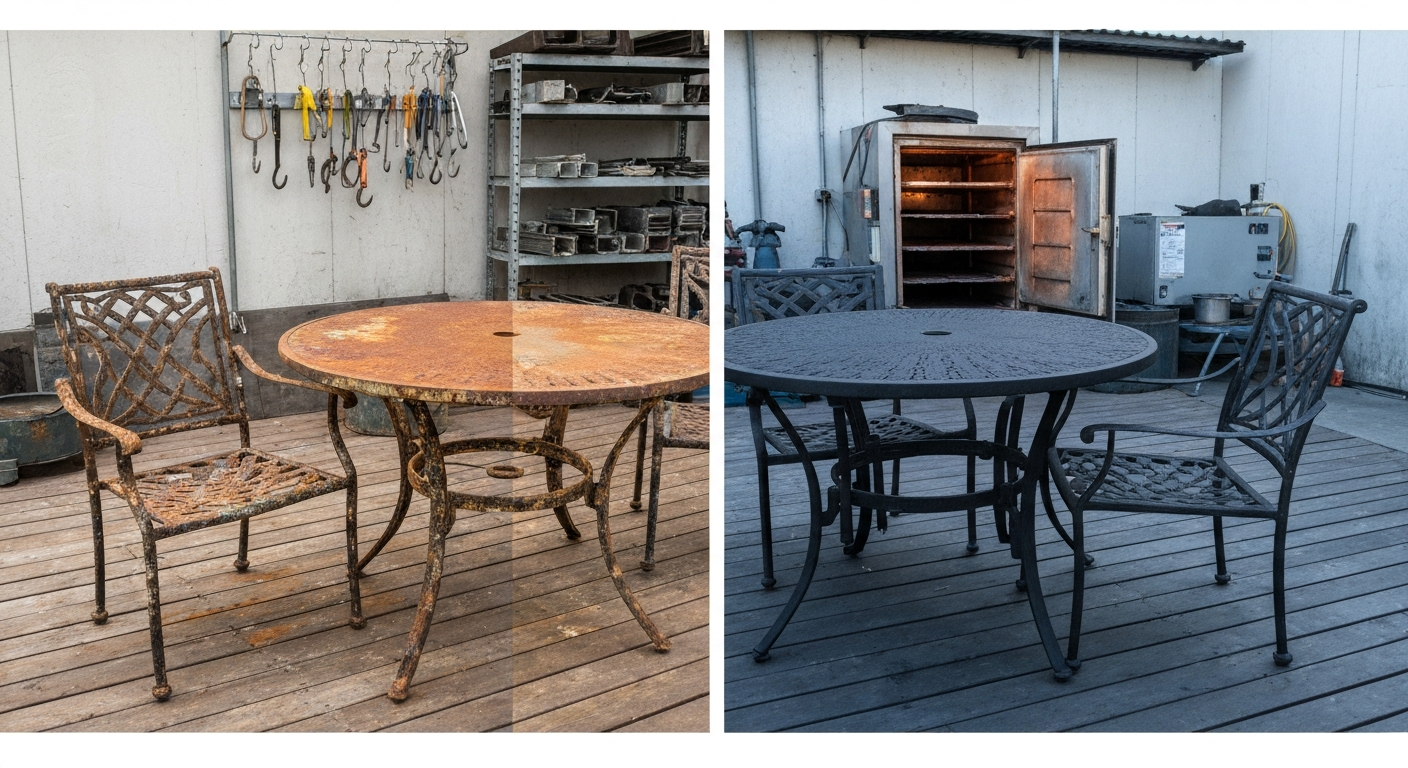
How Much to Powder Coat Patio Furniture: Complete Cost Guide
Exact powder-coat costs for patio furniture, national & regional ranges, per-item and per-ft/pound pricing, DIY vs pro
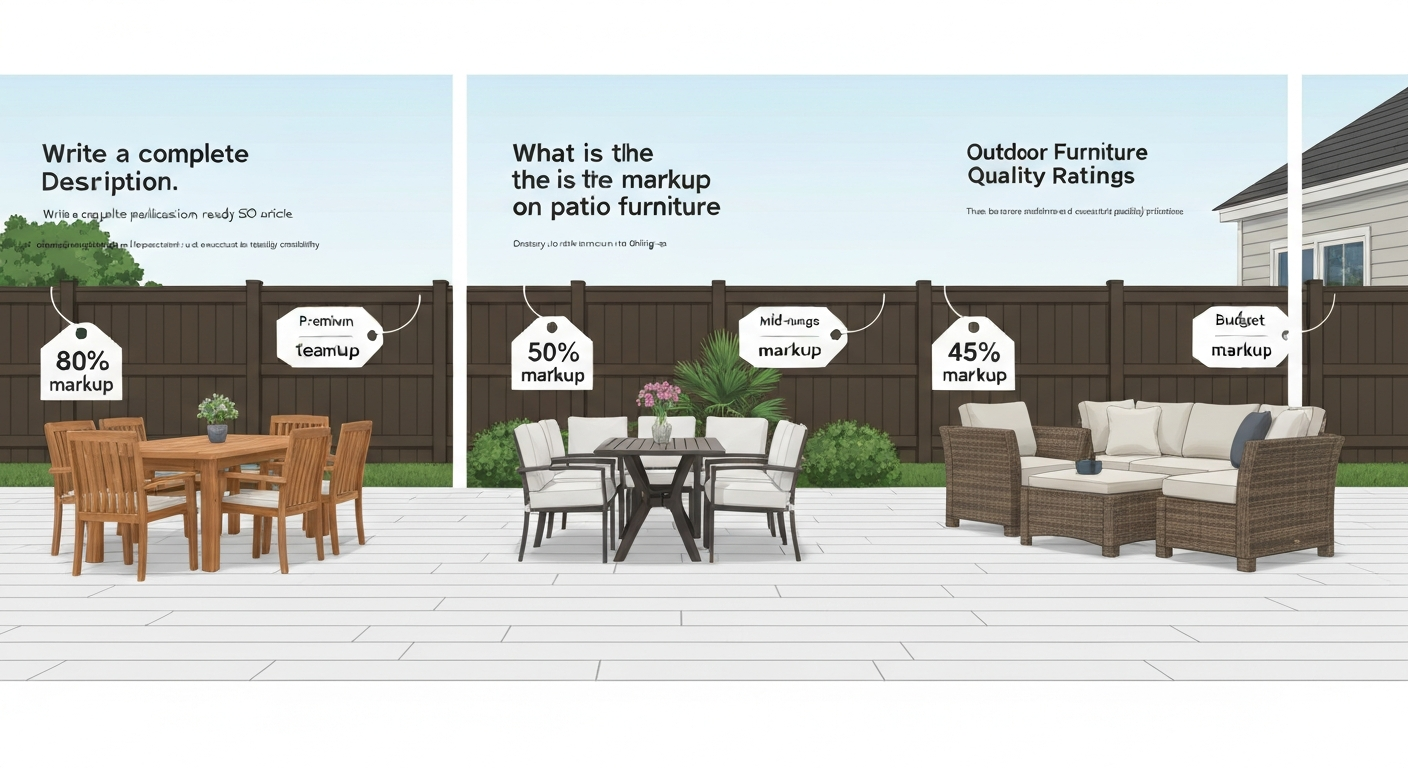
What Is the Markup on Patio Furniture, How Much to Pay
Understand patio furniture markup: what it means, who pays, typical ranges, cost drivers and smart buying tips.
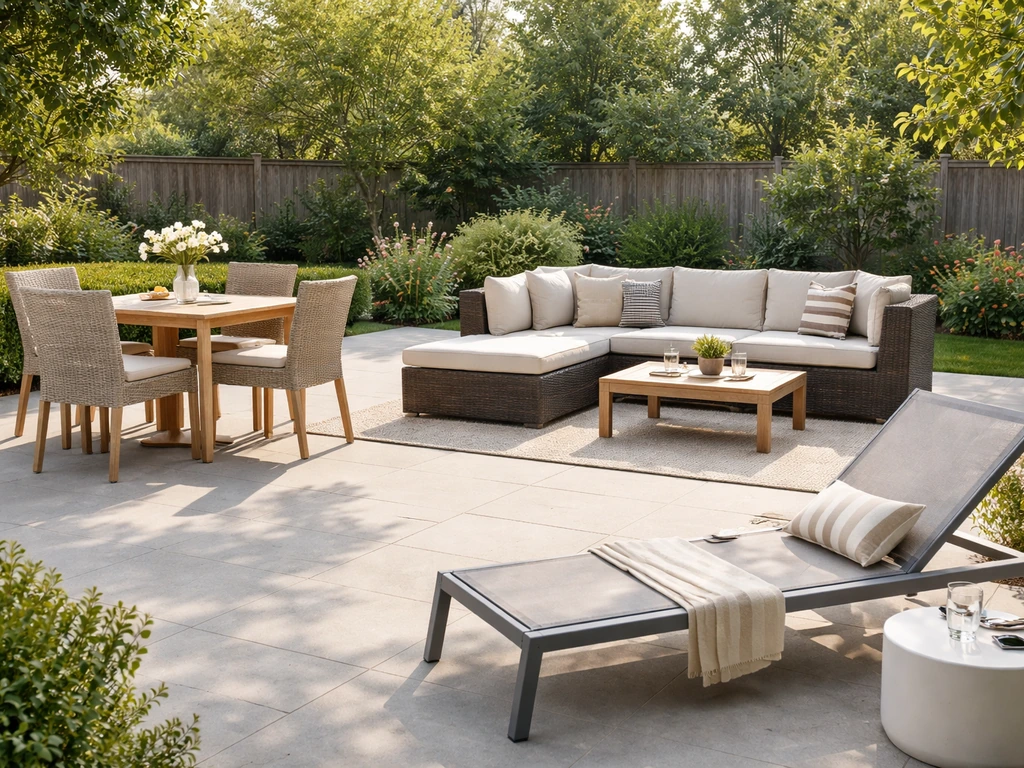
How Much Does Patio Furniture Cost? Prices by Type
Patio furniture cost by type, materials, and quality, plus tips to budget delivery, cushions, covers, and long-term valu