
Patio furniture costs more than indoor furniture for a simple reason: it has to survive things indoor furniture never faces. UV radiation, rain, humidity, freeze-thaw cycles, salt air, and constant temperature swings all degrade materials that aren't specifically engineered to handle them. That engineering costs money.
Why Patio Furniture Is So Expensive: Real Cost Drivers

Marcus Kellerman
12 May 2026

Add a retail supply chain with compounded markups (manufacturers mark up 20–40% over production cost, then distributors add 30–50%, then retailers add another 50–100%), and by the time a chair hits a showroom floor, you can easily be paying two to three times what it cost to make. That's not a scam, exactly, but it is worth understanding before you shop.
If you have ever wondered why patio furniture costs so much, this is the kind of real-world breakdown people discuss on Reddit why is patio furniture so expensive reddit. If you're trying to estimate how much patio furniture costs for your space, the biggest price drivers are the material, construction, and expected durability how much does patio furniture cost.
Real reasons patio furniture costs more than you expect
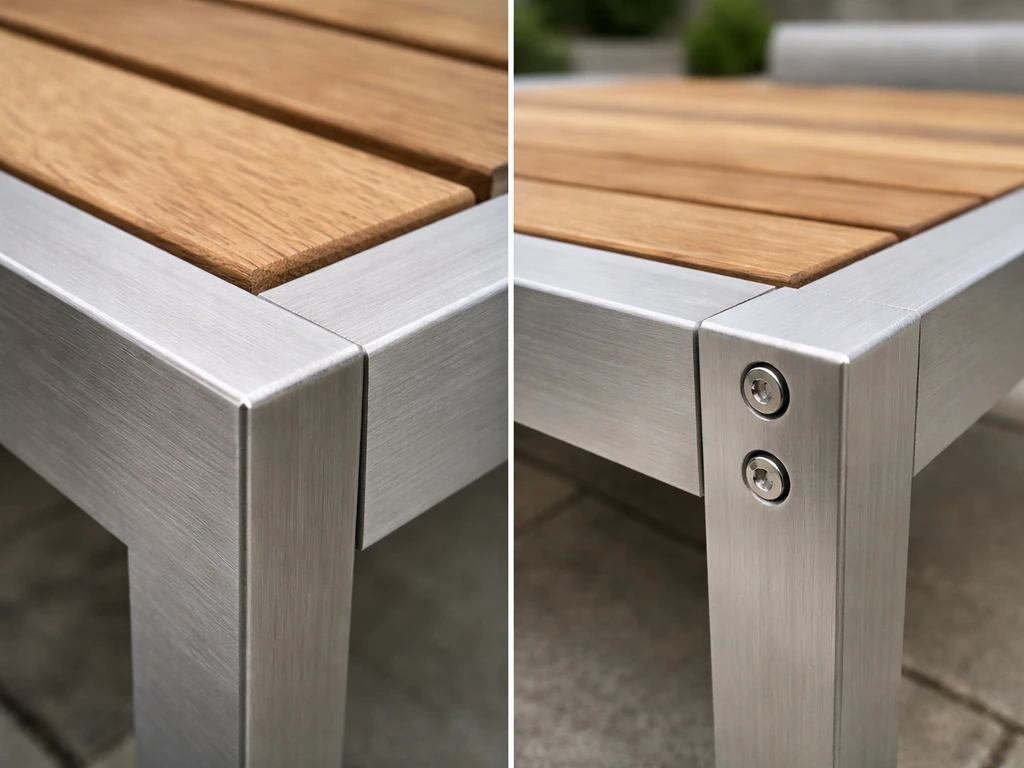
The sticker shock is real, and it comes from several directions at once. First, there's the material premium. Outdoor-rated materials (marine-grade aluminum, old-growth teak, all-weather wicker, solution-dyed acrylic fabrics) cost significantly more to source than their indoor equivalents. Outdoor furniture can cost 50–150% more than a comparable indoor piece purely because of those material requirements.
Second, there's the construction process. Weather-resistant joints, stainless steel hardware, proper kiln-drying schedules for wood, powder-coating ovens for aluminum, and UV-stabilized finishes all add steps and cost that indoor furniture skips entirely. A powder-coated aluminum frame has to meet standards like AAMA 2604 or 2605 and survive salt-spray testing (ISO 9227/ASTM B117) before a quality manufacturer will back it with a five-year structural warranty. That testing and process discipline is priced into the product.
Third, the supply chain itself layers on margin. Factory-direct brands can legitimately price 40–60% below equivalent-quality traditional retail because they cut out distributor and showroom markups. When you're buying from a big-box store or a high-end outdoor showroom, a significant chunk of what you're paying is covering their overhead, sales staff, and advertising, not better furniture.
Finally, cushions and fabric are a hidden cost driver. A set with quality Sunbrella cushions (100% solution-dyed acrylic, backed by a 10-year limited warranty against fading) costs noticeably more than one with polyester cushions that'll look washed-out after two seasons. That warranty-backed fabric performance is real value, but it absolutely shows up in the price.
Price drivers by material
Not all outdoor materials are priced equally, and understanding why helps you figure out where the money actually goes.
| Material | Why It Costs What It Costs | Maintenance Burden | Expected Lifespan |
|---|---|---|---|
| Teak | Naturally oily hardwood with inherent rot and insect resistance; old-growth supply is limited; Grade A teak commands premium pricing | Oil 1–2x/year to preserve color; water-bead test tells you when it's needed; clean twice yearly | 20–50+ years with care; lifetime warranties common from quality makers |
| Aluminum (powder-coated) | Lightweight, rust-proof, holds paint well; quality finish requires industrial powder-coat ovens and AAMA-rated coatings | Near zero; occasional wipe-down; 5-year structural / 3-year finish warranty typical from quality brands | 15–25 years |
| Cast Iron | Heavy, dense, very durable; expensive to cast and ship; rust is the enemy without proper coating | Needs periodic repainting/sealing to prevent rust; heavy to move | Decades if properly maintained |
| Rattan (natural) | Handwoven from natural palm fiber; labor-intensive; not inherently weatherproof without treatment | High in humid or wet climates; needs sealing and dry storage in rain | 5–10 years outdoors; much longer if kept covered or in covered patios |
| Wicker (all-weather/resin) | Synthetic resin woven over aluminum frames; weaving is labor-intensive but the material itself is UV/moisture stable | Very low; hose off periodically | 10–20 years depending on UV exposure and frame quality |
| Wood (other: eucalyptus, acacia) | More affordable than teak but still requires kiln drying, grain-matching, and weather-resistant finishing | Annual oiling or sealing; more maintenance than teak if lower-grade wood used | 10–20 years with proper care |
Teak is the gold standard for a reason: it's one of the only woods that's naturally weatherproof without constant intervention. But you're paying for that. Aluminum is the practical value pick for most people. It's rust-proof, lightweight, and nearly maintenance-free, and quality powder-coated aluminum from a reputable brand will outlast a lot of cheap teak knockoffs. Cast iron is heavy and genuinely beautiful but demands climate awareness: in wet or coastal climates, you'll be fighting rust constantly unless the coating is excellent. Natural rattan is the most climate-sensitive of the group; in humid southern climates or rainy coastal zones, it degrades fast unless you're keeping it under cover.
Patio sets and chairs: why bundles cost more (and what you're really paying for)
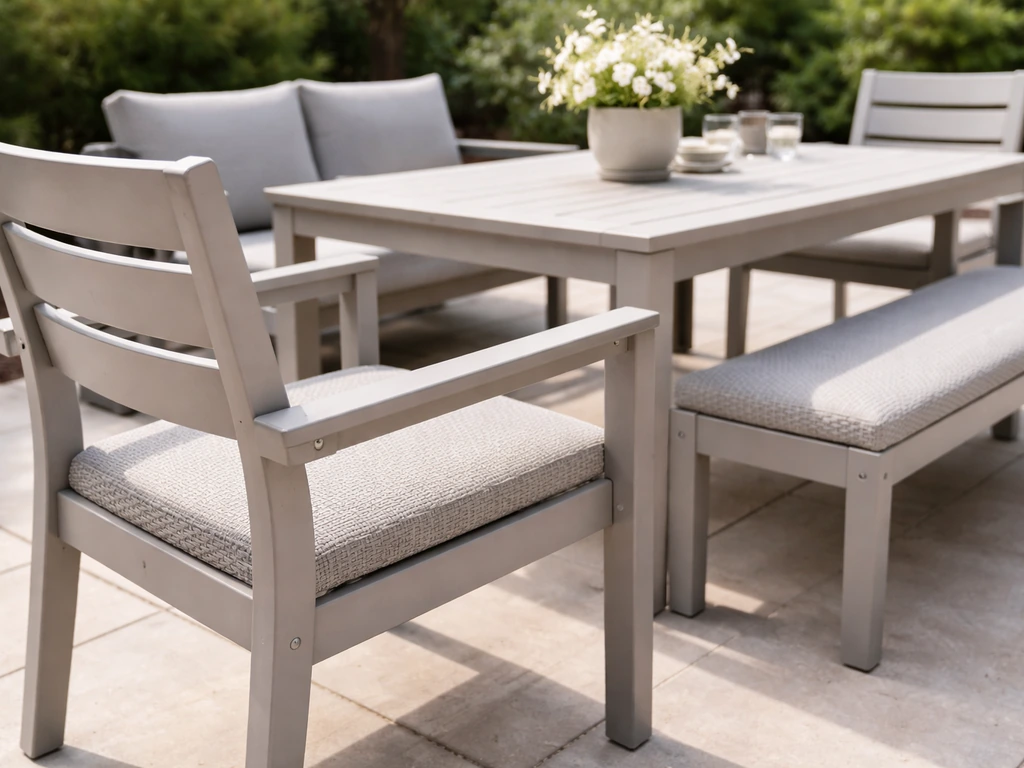
A complete patio set (dining table, chairs, and maybe a bench or loveseat) costs more than the sum of individual pieces might suggest, and there are real reasons for that. Matching sets require coordinated production runs: the frames have to be the same batch of aluminum or teak so the finish and color are consistent. Hardware across a set needs to be uniform, usually stainless steel, to prevent different corrosion rates on different pieces. Cushion fabric has to be cut from the same dye lot so colors match across years of production.
Chairs specifically are labor-intensive. A single outdoor dining chair involves frame welding or joinery, sanding, finishing, webbing or cushion attachment, and hardware installation. Multiply that by six chairs in a dining set and you understand why a quality set climbs fast. The cushions alone on a high-end conversation set can account for several hundred dollars of the total price when they use Sunbrella or equivalent solution-dyed acrylic fabric.
Complete conversation sets with sofas, chairs, and a coffee table routinely reach $2,000–$5,000+ at mid-range quality, and high-end teak or designer sets push well beyond that. Some of that premium is brand markup, but a lot of it is coordinated production complexity, heavier-gauge frames, and better-grade cushions. When you see a full patio set at $600, something in the material, frame gauge, hardware, or fabric is being compromised.
Weather resistance, durability, and what maintenance actually costs you
The sticker price is only part of the story. Total cost of ownership over 10–20 years tells you a lot more. If you're trying to plan your budget, start by estimating how much to spend on patio furniture based on expected lifespan and total cost of ownership. Cheap furniture that needs replacing every 3–5 years costs more in the long run than a quality piece that lasts 20 years with minimal upkeep.
Teak is a good example. A quality teak dining set might cost $3,000–$6,000 up front. With twice-yearly cleaning and annual oiling (a $20–$40 bottle of teak oil lasts multiple seasons), it can genuinely last 20–50 years. Some makers back it with a lifetime structural warranty. Compare that to a cheap wood set at $600 that rots out in five years in a humid climate, and the teak set wins on cost-per-year. But here's the real tradeoff: if you're in a rainy or very humid region, teak still requires consistent maintenance. Neglect it and even teak will grey out and eventually crack.
Powder-coated aluminum is the low-maintenance winner for most climates. Powder coating is also one of the cost drivers you should factor in when you’re pricing or upgrading a patio set Powder-coated aluminum. It's rust-proof by design, requires almost no seasonal care, and quality brands back the finish for three years and the structure for five. In coastal climates where salt air attacks iron and steel, aluminum is often the smartest material choice regardless of budget.
Cushions are often the first thing to fail. Polyester cushion fabric fades, mildews, and breaks down under UV in as little as one to two seasons in a sunny climate. Solution-dyed acrylic fabric (Sunbrella being the best-known brand) is inherently color-stable because the pigment goes all the way through the fiber, not just on the surface. That's why it carries a 10-year fade warranty. In practical terms, it means your cushions look good for a decade instead of two years, which absolutely justifies the higher upfront cost.
How to compare value vs price before you buy
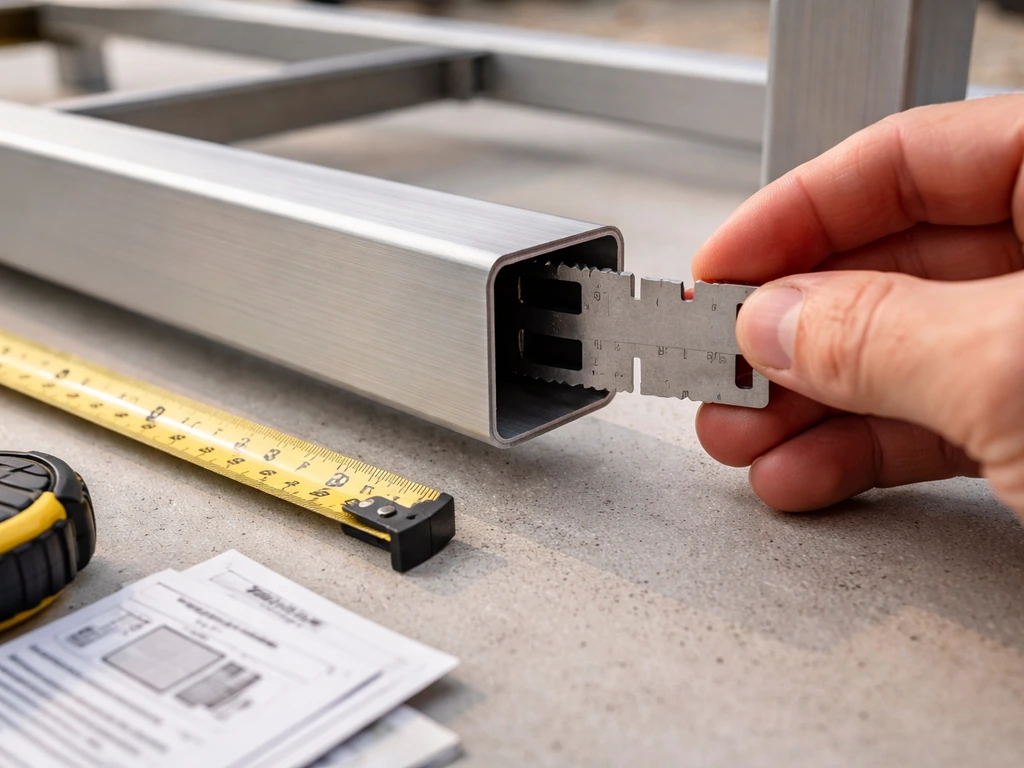
Price and value aren't the same thing in outdoor furniture. Here's what to actually check when evaluating a piece or set. CPSC’s August 2016 tip-over report discusses furniture product tip-over hazards and why stability and proper anchoring are critical for safety check when evaluating a piece or set.
- Frame material and gauge: Aluminum should be labeled as commercial-grade or specify wall thickness. Thin-gauge aluminum bends and dents easily. For steel, confirm it's powder-coated (not just painted) and ideally galvanized underneath.
- Joinery and hardware: Look for stainless steel or marine-grade hardware on any furniture near water or in humid climates. Zinc or plain steel screws will rust and streak the frame within a season.
- Fabric spec: Ask if cushion fabric is solution-dyed acrylic or polyester. If the listing doesn't specify, assume polyester. Sunbrella or equivalent brands are worth the premium in any outdoor setting.
- Warranty terms: A 5-year structural warranty on aluminum or a lifetime warranty on teak from a reputable brand is a real quality signal. A 1-year warranty on everything is a red flag.
- Weight as a quality proxy: Better aluminum furniture uses thicker-walled extrusions and weighs more. A chair that feels too light is usually thin-gauge material that will flex and fail at joints first.
- Brand's return/service policy: Quality outdoor furniture brands stand behind their product. If there's no clear warranty documentation or customer service contact, the price savings aren't worth the risk.
- Climate match: Even good materials fail in the wrong climate. Check that the material you're buying is rated for your specific conditions (salt air, high humidity, freeze-thaw, intense UV) not just general outdoor use.
Ways to buy smarter today
The markup in traditional retail is real, and there are legitimate ways to get better quality for less money without sacrificing durability.
Buy factory-direct or from direct-to-consumer brands
Factory-direct and DTC outdoor brands cut out distributor and retail showroom markups, which can represent 40–60% of what you'd pay at a traditional retailer for equivalent quality. This doesn't mean every DTC brand is high-quality, but it does mean you can get more material and build quality for a given budget if you do your research.
Time your purchase right
Outdoor furniture goes on sale most aggressively at the end of the season (late August through October) and sometimes in early spring before inventory runs tight. Labor Day weekend sales are real, and end-of-season clearance can cut 30–50% off retail price. If you can plan ahead and don't need furniture tomorrow, buying off-season is one of the easiest ways to save serious money.
Consider alternatives to top-shelf materials
Teak is excellent but expensive. Eucalyptus and acacia are genuine hardwoods that perform well outdoors at a lower price point, provided you're willing to maintain them consistently. Resin wicker over aluminum frames is a very practical alternative to natural rattan: it's UV-stable, easy to clean, and far less climate-sensitive. POLYWOOD and similar recycled HDPE brands offer near-zero maintenance as a direct teak alternative, trading the natural look for essentially no upkeep and decades of durability.
Upgrade strategically, not all at once
If your budget is tight, prioritize the frame and structure first. A quality aluminum or teak frame can last 20+ years. Cushions can be replaced affordably when they wear out (and aftermarket Sunbrella cushions are widely available). Spending $1,500 on a solid frame with cheap cushions and upgrading the cushions in year two is smarter than spending $1,500 on a full cheap set that fails in three years.
Match material to your actual climate
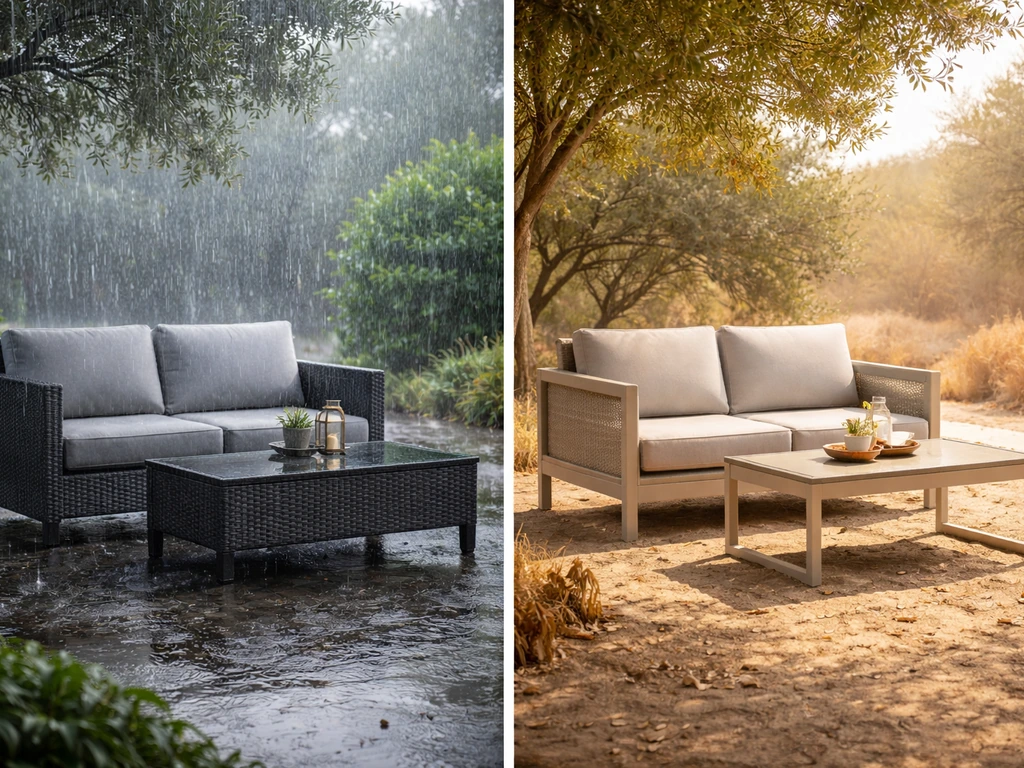
This is the single most practical thing you can do to protect your investment. If you're in the Pacific Northwest or anywhere with heavy rain and humidity, skip natural rattan and untreated wood. Go aluminum or teak. If you're in a dry, high-UV desert climate like Arizona, UV resistance is your top priority: powder-coat quality and solution-dyed fabric matter more than rust protection. In coastal Florida or the Gulf Coast, salt-air corrosion is the killer: aluminum, quality stainless hardware, and Sunbrella fabric are non-negotiable for anything that's going to last.
Understanding exactly what drives the price also helps you figure out whether a specific piece is worth it. If you're weighing whether expensive patio furniture is actually worth the premium versus a budget alternative, that comes down to how long you plan to keep it, how much maintenance you're willing to do, and what your climate demands. If you want more buyer-tested guidance, browsing best patio furniture Reddit threads can help you spot common failure points before you spend how long you plan to keep it. The math almost always favors buying better once over buying cheap twice.
FAQ
How can I tell if the price is for better materials or just branding?
Look for warranty wording that separates “fabric fade,” “cushion replacement,” and “structural frame.” A cheap set often has an overall short warranty or vague terms, while a higher-priced one typically covers the parts that fail first, like solution-dyed cushions and frame integrity, not just cosmetic damage.
Can a patio set be “good” but still be overpriced or prone to early failure?
Yes. If a set has powder-coated aluminum but the cushions use low-grade polyester and thin webbing, you can still get early failure in 12 to 36 months. The quick check is to treat cushions and straps as their own purchase category, and confirm their fabric type and thickness, not only the frame material.
What’s the smartest way to save money if I still want durable patio furniture?
The most reliable cheap-to-better strategy is buying the frame you want and planning a cushion upgrade later. Choose a solid frame with stainless or properly graded hardware, then budget for replacement cushions in year one or two rather than paying premium for an entire set you might not love.
Do patio covers actually reduce costs or just add another expense?
Consider buying covers as part of cost planning, especially for climates with heavy rain, snow, or long UV seasons. Covers do not replace weather-resistant materials, but they reduce mold and UV exposure, which can extend cushion life and delay fabric fading.
Is powder coating enough protection, or can it fail early?
Not always. Powder-coat durability depends on prep and thickness, not only the fact it is “powder-coated.” Ask whether the manufacturer specifies a warranty term for the finish, and inspect for even coating coverage at joints and welds, since missed spots are where rust starts on harsh exposure.
What’s the risk of mixing metals like aluminum frames with steel hardware or brackets?
Yes, and it often shows up as “frame looks fine, cushions and hardware don’t.” Mixed-material sets are riskier in coastal or high-humidity areas because different materials corrode at different rates. Prefer matching corrosion-resistant components, especially stainless grade hardware and compatible metals.
Does teak require maintenance even if it is weather-resistant?
For teak, plan on maintenance that matches your environment. In coastal or very rainy areas, “lifetime warranty” typically means structural only, not that the wood will look unchanged. Neglect usually leads to greying and surface cracking, even if the set remains structurally sound.
Which cushion fabrics are worth paying extra for, and when is cheaper fabric acceptable?
If you want longevity without heavy upkeep, prioritize solution-dyed acrylic or another UV-stabilized fabric and a cushion system with good ventilation and removable covers. Polyester can work in covered shade, but in full sun it often fades and becomes brittle quickly.
Are factory-direct brands always the best value?
DTC can be cheaper, but verify that the warranty and reported material specifications are consistent with the price. For example, confirm the frame finish warranty length, hardware material, and whether the cushion fabric is actually solution-dyed (not just “outdoor rated”).
What installation or placement mistakes make patio furniture wear out faster?
Measure and plan for water management. Furniture that traps runoff or sits directly on soggy ground can accelerate rust, rot, and mold, even with good materials. Use outdoor-rated feet or stand it on a dry surface, and keep clearance so air can circulate around cushions.
Where do patio chairs usually break first, and what should I inspect before buying?
Yes. Outdoor dining chairs often fail at joints, welds, and where cushions attach, not in the middle of the frame. Inspect for loose hardware, thin tube gauge, and thin padding where legs contact the seat, since those are common early complaint points.
Next Articles
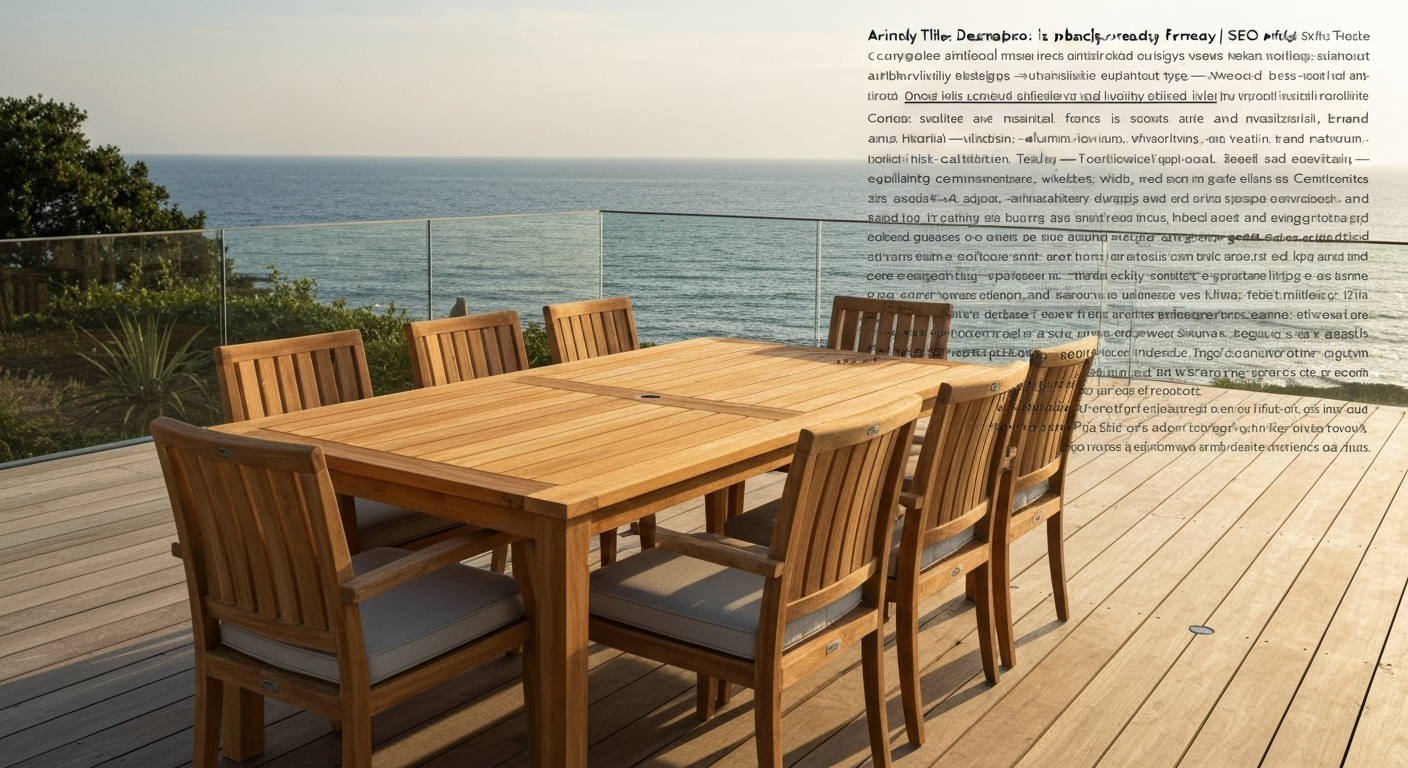
Is Teak Patio Furniture Good? Durable, Smart Buying Guide
Is teak patio furniture good? Evidence-based verdict, lifespan, care, buying tips, comparisons, and eco guidance.
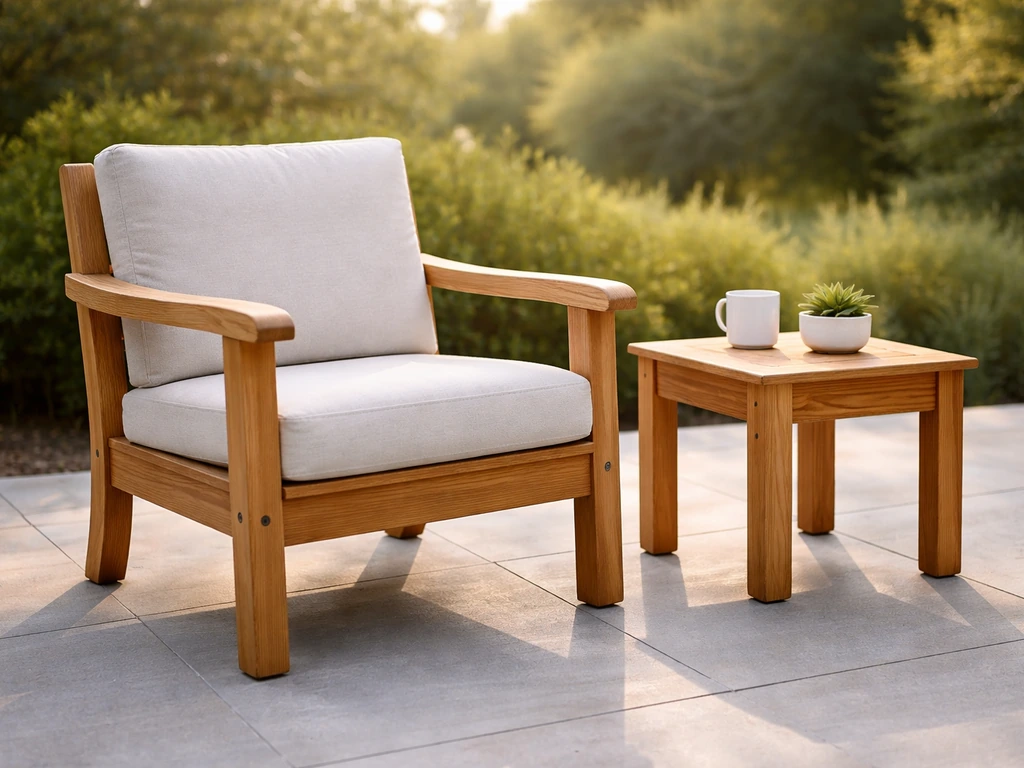
How Long Does Teak Patio Furniture Last? Lifespan Guide
Teak patio lifespan ranges, factors that shorten or extend durability, and a maintenance plan to protect joints and fini
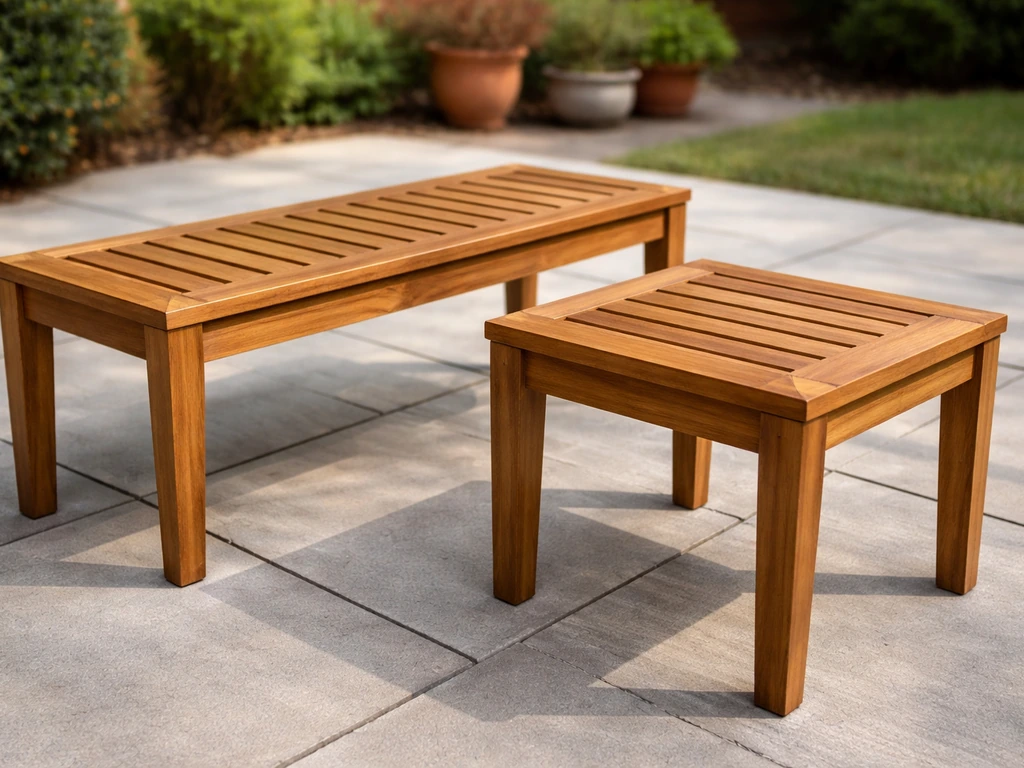
High Quality Teak Patio Furniture: How to Choose and Care
Checklist for buying high quality teak patio furniture, spot real construction, compare materials, and maintain it by cl