
For most patios, wrought iron is the better long-term pick between the two: it's tough, workable, repairable, and holds a protective finish well. If you want to know whether it’s a smart choice, focus on whether it’s truly wrought iron, how it’s finished, and how well it holds up in your weather wrought iron patio furniture good. Cast iron is heavier and more brittle, which makes it a niche choice for benches and decorative accent pieces rather than full dining sets. And if you're shopping today and see something labeled 'wrought iron' at a mainstream retailer, there's a good chance it's actually mild steel formed to look like wrought iron, which changes the rust conversation considerably. Here's how to sort all of that out and make a decision you won't regret in five years.
Cast Iron vs Wrought Iron Patio Furniture: Practical Comparison

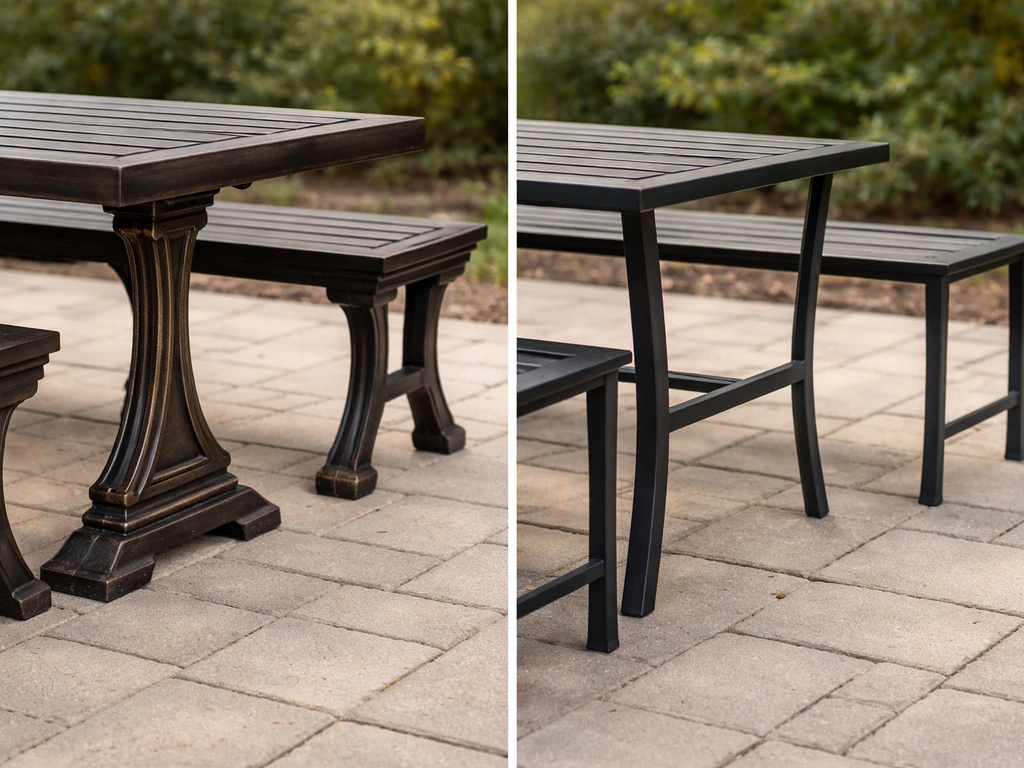
What these materials actually are (and why the labels get confusing)
Cast iron, wrought iron, and steel are all iron-based, but the differences in how they're made produce dramatically different physical properties. Cast iron is made by melting iron and pouring it into a mold to cool and solidify. It's a relatively high-carbon alloy (typically 2–4% carbon), which is why it's hard but brittle, it doesn't bend before it breaks. In the Fe, C system, blank" rel="noopener noreferrer">white cast iron has carbon mostly as cementite (Fe3C), which is hard but brittle. Wrought iron sits at the other extreme: it has less than 0.10% carbon and contains a small percentage of silicate slag (usually under 2% by weight). That slag gets worked into stringers throughout the metal during hot-working and hammering, giving wrought iron a fibrous grain that makes it malleable, tough, and very resistant to fatigue.
Steel lands in between. It's produced by refining iron and adjusting carbon and alloying elements to hit target properties. Mild steel, what most 'wrought iron style' patio furniture is actually made from today, is cheap, weldable, and easy to form into decorative shapes. The problem is that true wrought iron hasn't been commercially produced at scale since the mid-20th century, so virtually everything sold today as 'wrought iron patio furniture' is mild steel shaped to look like traditional wrought iron work. If you want the best wrought iron patio furniture results, focus on the actual metal, not the label, and match the finish to your climate. That's not necessarily bad, but it changes your expectations around rust and maintenance.
For practical purposes when shopping: if you see 'wrought iron' at a big-box store, assume it's steel unless the seller can prove otherwise. Genuine antique wrought iron pieces do exist at estate sales and specialty dealers, and they're worth the premium if you can verify provenance. But most of this comparison comes down to cast iron vs. steel in the real market.
Outdoor performance: rust, corrosion, and weather resistance
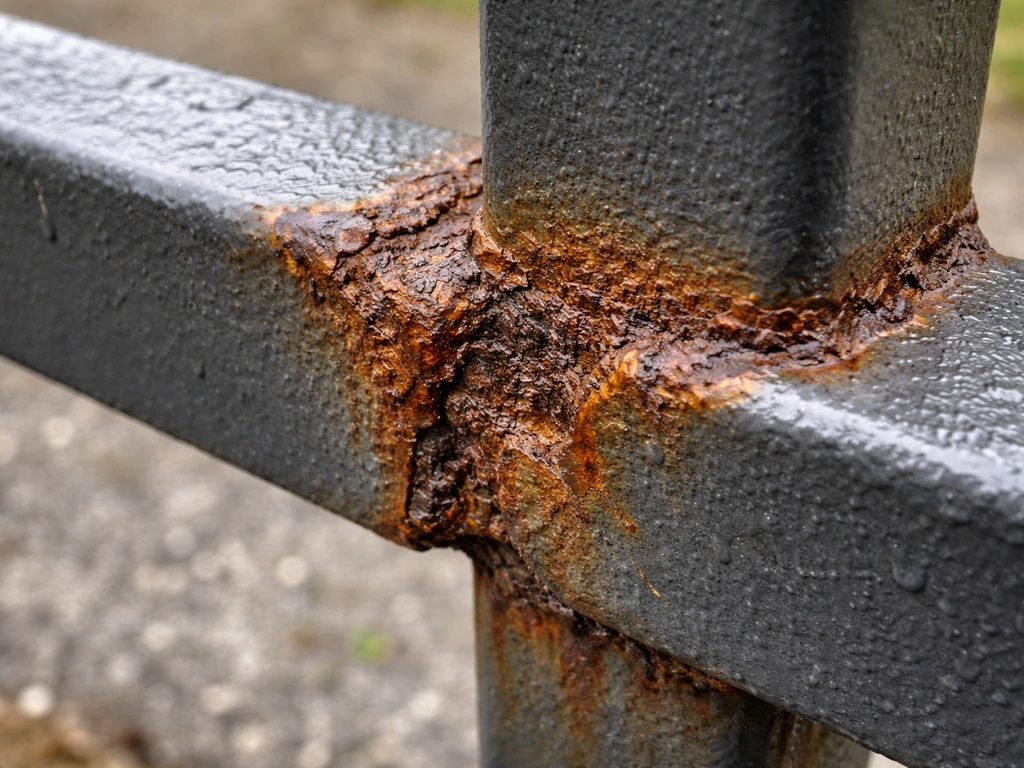
All three materials, cast iron, wrought iron, and steel, will rust when bare metal is exposed to oxygen and moisture. Rust is iron oxide formed when iron reacts with oxygen in the presence of water, and chloride-rich salt air speeds that process up dramatically. This means coastal environments are the hardest test for any iron-based furniture, and the finish system on the metal matters far more than whether it's cast, wrought, or steel.
Cast iron has a somewhat counterintuitive relationship with corrosion. Gray cast iron (the most common type for furniture and hardware) has graphite flakes dispersed throughout its structure. Long-term corrosion studies, including observations from marine immersion environments like the Panama Canal Zone, show that cast iron loses metal to corrosion at rates that depend heavily on exposure conditions. In calm inland environments with a good paint coat, cast iron holds up reasonably well. In coastal or frequently wet conditions, its porous surface and complex microstructure mean moisture can penetrate through surface defects and rust from below the coating, often invisibly until a chunk breaks off.
Steel (including what's sold as wrought iron) is the most corrosion-vulnerable of the three if left uncoated, but it also responds best to modern protective finishes. Powder coating over a properly prepared steel surface provides a solid barrier, and a duplex system, powder coating over hot-dip galvanizing, provides synergistic protection that can extend service life by a factor of roughly 1.5 to 2.5 compared to either method alone. For coastal locations, galvanizing guidelines suggest that structures within about 250 feet of the ocean should be evaluated for aggressive salt spray exposure, and a duplex system is the right call in those zones. A review by the Australian Steel Institute summarizes coastal field research and concludes that hot-dip galvanized steel can provide robust long protection in coastal applications when location corrosivity and design considerations are properly evaluated galvanizing guidelines suggest that structures within about 250 feet of the ocean should be evaluated for aggressive salt spray exposure. Inland, a quality powder coat alone is typically sufficient for 10 to 15 years before you need to touch it up.
True wrought iron, where you can find it, has a natural edge in corrosion resistance because its slag inclusions act as barriers to moisture penetration through the metal matrix. But that benefit is marginal if the surface finish is damaged, any iron-based metal will rust once bare metal is exposed.
Strength, weight, stability, and comfort tradeoffs
Weight is the defining practical difference between cast iron and everything else. Cast iron patio furniture is extremely heavy, individual chairs can weigh 30 to 50 pounds or more, which gives it exceptional wind stability. You're not moving it around much, but it's also not going anywhere in a storm. That works well for permanent garden installations, benches along a wall, or accent pieces that stay put.
Steel (wrought iron style) furniture is heavy compared to aluminum but manageable compared to cast iron. A wrought-iron-style steel dining chair typically runs 15 to 25 pounds. The weight still provides good stability without the 'anchor' quality of cast iron, which is useful if you rearrange your patio layout or need to move chairs under an umbrella.
The brittleness issue with cast iron is worth taking seriously. Cast iron doesn't bend, it fractures. A dropped cast iron chair arm doesn't dent, it cracks or snaps. In high-traffic situations (kids, frequent moving, uneven surfaces), that brittleness is a real safety and longevity concern. Steel is ductile by comparison: it bends before it breaks, and a damaged section is far less likely to produce sharp fracture edges. For comfort, steel can be formed into ergonomic curves more easily than cast iron, which tends toward thicker, heavier profiles.
Maintenance and repair: what's actually realistic long-term
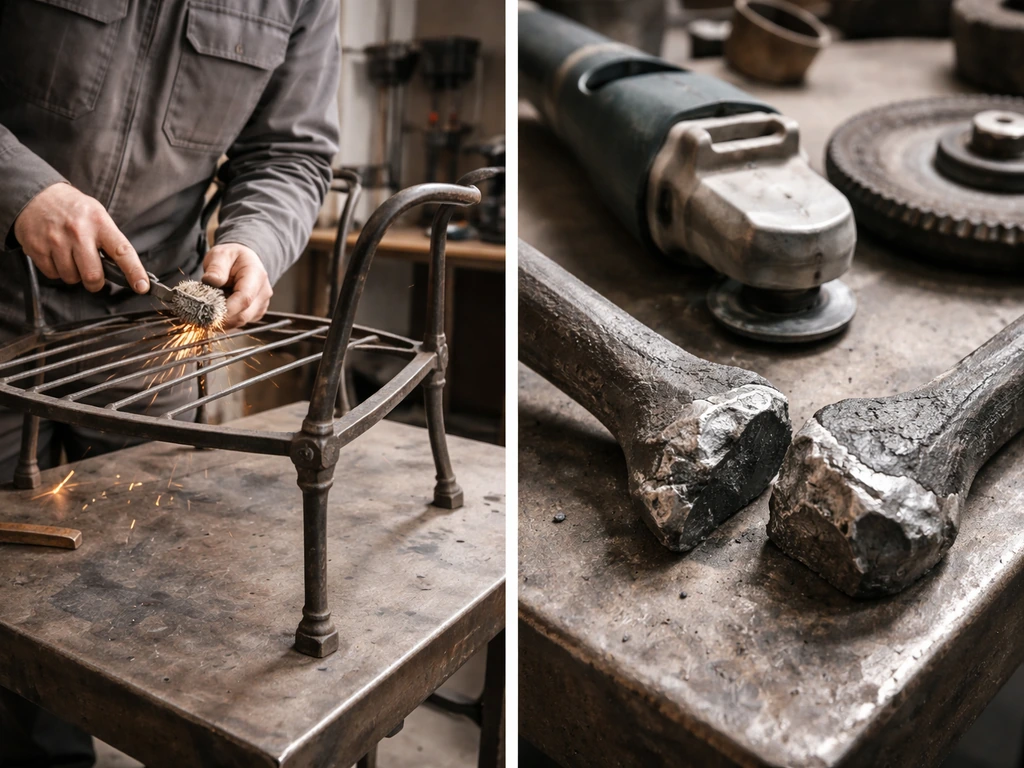
Steel (wrought iron style) furniture is the clear winner for repairability and long-term maintenance. It welds cleanly, accepts paint and powder coating readily, and a damaged section can be patched or replaced with standard metalworking tools. The standard refinishing workflow is: remove rust mechanically or chemically, apply a rust-inhibiting metal primer, then repaint or have it powder coated professionally. Professional shops can also sandblast to bare metal, spot-weld separated joints, apply an iron phosphate pretreatment, and then powder coat, bringing a tired set back to near-new condition.
Cast iron is much harder to repair. It can be welded, but it requires preheating, a careful filler selection, and slow controlled cooling to avoid cracking, skills that most fabricators either don't have or charge a premium for. Cast iron breaks rather than bends, so damage tends to be catastrophic rather than cosmetic. A cracked cast iron chair arm usually means replacement rather than repair.
True wrought iron welding is its own challenge. The Welding Institute notes that outcomes depend heavily on factors like carbon and sulfur content and how the slag stringers are distributed, and that mechanical properties can vary widely between production lots, making repair reliability inconsistent. That said, well-executed wrought iron repairs are possible and durable when done by an experienced metalworker.
For ongoing maintenance on any iron or steel furniture, the routine is simple but non-negotiable: inspect annually for chips and scratches, touch up exposed metal immediately with a rust-inhibiting primer, clean off any rust spots with a wire brush before they spread, and keep water from pooling in joints and tube ends. Moisture trapped inside tubular steel frames is one of the most common corrosion drivers, it's worth checking hollow sections for open ends where water can collect. Powder coatings do eventually chip and wear, typically losing significant gloss after 8 to 10 years of outdoor exposure, even when the underlying protection is still doing its job.
Cost and value: what you're paying for and how long it lasts
Cast iron furniture is expensive to produce because of the mold-making and weight of material involved, but its decorative complexity can be achieved in a single pour, which is why intricate Victorian-style benches and tables are almost always cast iron rather than wrought. Expect to pay a premium for genuine cast iron outdoor furniture, typically $200 to $600 for a single bench and significantly more for full sets. If you want the best price wrought iron patio furniture, compare total cost after considering finish quality and expected maintenance. The lifespan in a protected inland environment with annual maintenance can easily exceed 30 to 50 years, making the per-year cost reasonable over time. The caveat is brittleness: one bad impact or freeze-thaw crack and you may be looking at a costly replacement rather than a repair.
Steel (wrought iron style) furniture spans a wide price range, from $80 to $150 for budget chairs at big-box stores up to $400 to $800 per chair for high-quality powder-coated or galvanized pieces from specialty outdoor brands. If you want a quick budget range for pricing, most wrought-iron patio sets are listed by chair or set and vary a lot based on whether they are true wrought iron or the more common wrought-iron-style steel. The key pricing driver at the quality end is the finish system and the wall thickness of the steel. A quality powder-coated steel set with thick-gauge tubing and proper welds will realistically last 15 to 25 years with maintenance. A budget set with thin gauge and a spray-painted finish might show rust within 2 to 3 seasons in a humid climate. When you're comparing prices, divide by expected lifespan, a $1,200 set that lasts 20 years is $60 per year; a $400 set that needs replacing in 5 years is $80 per year.
Which material fits your climate and how you actually use your patio
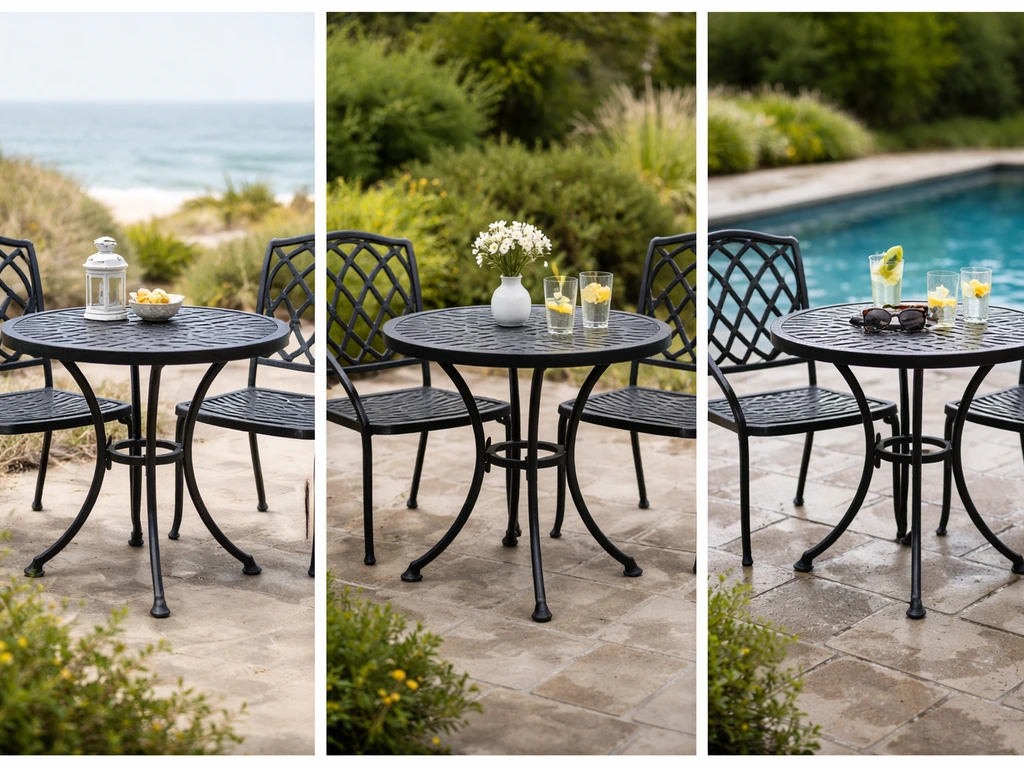
Climate and usage pattern should be the primary filter in your decision. Here's how the materials stack up across the most common scenarios:
| Situation | Best Choice | Why |
|---|---|---|
| Coastal (within 250 ft of ocean) | Powder-coated + galvanized steel | Duplex protection handles salt spray; cast iron corrodes aggressively in marine environments |
| Humid inland (Southeast US, Pacific Northwest) | Quality powder-coated steel | Good finish system and annual touch-ups handle humidity; lighter weight easier to store seasonally |
| Dry inland climate (Southwest, Mountain West) | Cast iron or steel, either works | Low humidity means corrosion is slow; cast iron's permanence and aesthetics shine here |
| Covered patio / roofed pergola | Cast iron or steel | Reduced UV and rain exposure extends finish life on both materials significantly |
| Uncovered, heavy use (kids, frequent movement) | Steel (wrought iron style) | Ductility prevents shattering on impact; easier to move and repair |
| Decorative/accent pieces (benches, urns, planters) | Cast iron | Intricate designs achievable; low movement means brittleness is less of a concern |
| Freeze-thaw climates (Midwest, Northeast) | Steel | Cast iron can crack when frozen water expands in surface voids; steel handles thermal stress better |
If you're in a coastal environment and committed to the traditional iron look, a quality steel set with a duplex finish system is the most practical route. Raw or lightly coated cast iron near the ocean is a recipe for expensive rust problems within a few years. For a dry, sheltered patio where you want permanent, ornate furniture that won't blow over in a desert windstorm, cast iron makes a lot of sense, and the quality of wrought iron patio furniture options from specialty makers in that space is worth exploring if budget allows. Even if you like the classic look, many homeowners worry about whether wrought iron patio furniture is out of style and want a choice that stays relevant.
How to inspect furniture quality and finish before you buy
Whether you're buying new or picking up a used set, a quick inspection takes about five minutes and can save you from a bad investment. Here's what to actually check:
- Welds and joints: Look at every weld point under good light. Clean welds should be smooth and fully fused with no visible gaps, porosity, or cracking. Wobbling, shifting, or flexing at connection points when you apply hand pressure is a red flag for structural weakness, regardless of how good the surface looks.
- Finish adhesion and coverage: Run your fingernail along edges, curves, and undersides — areas where coatings thin out during application. Peeling, bubbling, or bare metal patches indicate a poor finish job that will rust quickly. A properly applied powder coat should feel uniformly thick even on complex geometry.
- Gauge and thickness: Flex a straight section of the frame gently. Quality steel furniture should feel rigid with no flex under moderate hand pressure. Thin-gauge budget pieces will deflect noticeably, and that flexing will eventually crack welds and the coating.
- Tube ends and drainage: On hollow tubular steel, check whether tube ends are open or plugged. Open ends trap water and rust from the inside out. Plugged or capped ends, or properly drained drain holes, are signs of a manufacturer who thought about corrosion.
- Casting quality on cast iron: Look for cracks, pits, or cold-shut lines (wavy surface lines where poured metal met cooling metal). These indicate casting defects that concentrate stress and accelerate corrosion. Run your hand along surfaces — rough, porous textures suggest less dense castings with more moisture-trapping surface area.
- Rust on used pieces: Surface rust (red-brown discoloration on the finish) is often treatable. Large rust patches, pitting, or sections where metal has visibly thinned or flaked away indicate structural compromise. Per Tom's Guide, larger rust patches can mean the furniture is substantially weakened — don't buy it unless the price reflects the full cost of professional restoration.
- Coating system identification: Ask the seller whether the finish is powder coat, wet paint, or galvanized plus powder coat. A duplex system (galvanizing plus powder coat) is the most durable and worth a price premium. Wet paint alone over bare steel is the least durable option for outdoor use.
One practical tip for used furniture: bring a small magnet. Both cast iron and steel are strongly magnetic, which won't tell you much on its own, but it helps confirm you're looking at an iron-based material and not aluminum that's been powder coated to look like wrought iron, a common budget-market substitution. Aluminum is entirely non-magnetic.
The bottom line on cast iron vs wrought iron (vs steel)
For most homeowners buying new furniture today, you're really choosing between cast iron and steel (marketed as wrought iron). Steel wins on flexibility, repairability, weight management, and coastal/humid-climate performance, especially with a quality duplex finish. Cast iron wins on permanence, decorative detail, and wind stability in dry, sheltered settings where you want furniture that never moves and can handle a generation of outdoor life without maintenance headaches. True antique wrought iron, where you can find and verify it, is a step above both for toughness and longevity, but it's a specialty purchase, not a mainstream one.
Whatever you end up with, the finish system is the thing. If you want the best iron patio furniture, prioritize durable coatings and a finish that will keep rust at bay over time the finish system is the thing. Two pieces of identical steel, one with a quality duplex coating, one with cheap spray paint, will have completely different 10-year outcomes in the same backyard. Spend your decision-making energy on coating quality and maintenance commitment first, material type second.
FAQ
If I buy iron patio furniture, can I rely on a cover to prevent rust?
Yes, but only if water cannot sit and react with the metal. Use a furniture cover that is breathable (vents or fabric that won’t trap condensation), and avoid tight plastic wraps that create a humid microclimate. Also check that the legs and any joints do not hold puddles, because trapped moisture accelerates rust even under “covered” areas.
How can I tell whether “wrought iron” labeled patio furniture is actually true wrought iron?
Look for proof of true wrought iron rather than trusting branding. In practice, ask the seller for manufacturing details (materials spec, COA, or at least documentation from the original maker), and be cautious with “wrought iron” labels on big-box sets. If provenance cannot be confirmed, treat it as steel and evaluate it by coating quality and steel thickness instead.
What hidden damage should I inspect for on cast iron pieces before buying?
Casting damage can be hidden. Inspect all high-stress points (chair arms, table corners, leg attachments, and any thin decorative elements) for star cracks, hairline fractures, and rust that looks like it’s starting from beneath the paint. If you see flaking around an impact spot, that often means the crack is progressing under the finish.
Is touch-up paint enough if I only see small rust spots?
Do not plan on “touch-up paint” alone for severely rusted spots. For rust bubbles, sanding and mechanical cleaning matter first, then apply a rust-inhibiting primer and a compatible topcoat. If the rust has eaten into the metal or is recurring quickly, replacement or professional refinishing is usually cheaper than repeated spot repairs.
What finish system should I prioritize for coastal versus inland patios?
Choose the finish system based on your salt exposure level and schedule. In coastal areas or locations with frequent mist, prioritize a duplex approach (for example, galvanizing plus powder coating) and treat any chipped coating as an urgent repair. If you are farther inland and can maintain touch-ups promptly, a high-quality powder coat on properly prepared steel typically holds up for many years.
How do I know if my steel patio furniture is trapping moisture inside?
It can, and it’s easy to miss. If the frame or tubing has trapped water paths (open ends, seams, capped sections without drainage), rust can start inside and later show up as bulging paint or sudden flaking. When inspecting, look for open ends, check for drain holes where applicable, and after rain or washing confirm it dries quickly.
When should I stop DIY touch-ups and switch to professional refinishing?
Sandblast and strip-down are usually the turning point. For maintenance, annual inspection plus prompt priming is the goal, but when coatings are failing, professional surface prep (often sandblasting to near-bare metal) and then priming and recoating usually provide a far longer life than repainting directly over deteriorated rust or peeling paint.
Does freeze-thaw weather change the cast iron vs wrought iron decision?
Yes, because energy and water exposure combine. Salt air and freezing conditions create rapid cycles of corrosion and expansion, and cast iron’s brittleness makes freeze-thaw cracking more likely if there are existing microfractures or corrosion under the surface. If you experience hard freezes, budget for tighter inspections after winter and treat any early cracking or coating breaks as immediate repair items.
Will cast iron always be more stable in wind than steel?
Avoid a common mistake: assuming weight automatically means stability. Cast iron’s heaviness helps in wind, but heavy furniture can still be knocked if it has narrow feet or if the base sits on slippery surfaces. For any iron piece, make sure feet are intact and consider non-slip pads or anchoring for high-wind zones, especially if the furniture is on decking or smooth stone.
Which material is easier to live with if I rearrange my patio or move it for storage?
If you plan to rearrange furniture often or store it seasonally, steel’s manageable weight and ductility are practical advantages. Cast iron can be extremely heavy and less forgiving of drops or impacts during moving or storage, so it’s better for permanent placements where it rarely gets bumped.
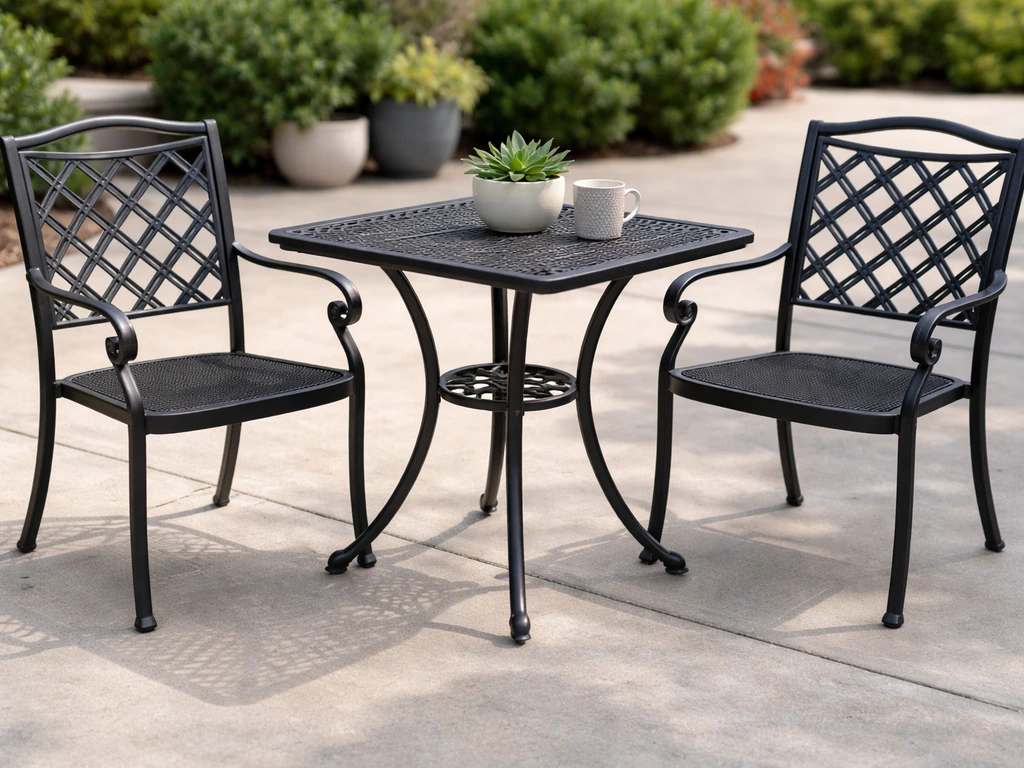
Buy the best wrought iron patio furniture: quality checks, rustproof finishes, and care steps for long-lasting outdoor u
Is teak patio furniture good? Evidence-based verdict, lifespan, care, buying tips, comparisons, and eco guidance.
Teak patio lifespan ranges, factors that shorten or extend durability, and a maintenance plan to protect joints and fini