
The best wrought iron patio furniture is the set that combines a thick, properly prepped powder-coat finish with full-circumference welds, a structural warranty of at least 10 years, and a frame weight heavy enough that it stays put in wind. Brands like O.W. Lee and Homecrest consistently clear that bar. Darlee offers solid value at a lower price point but with a shorter finish warranty. What separates genuinely great pieces from overpriced mediocrity comes down to four things: how the metal is prepped before coating, how the joints are welded, what the warranty actually covers, and whether the design handles your specific climate.
Best Wrought Iron Patio Furniture: Buying Guide and Care Checklist

Marcus Kellerman
27 May 2026
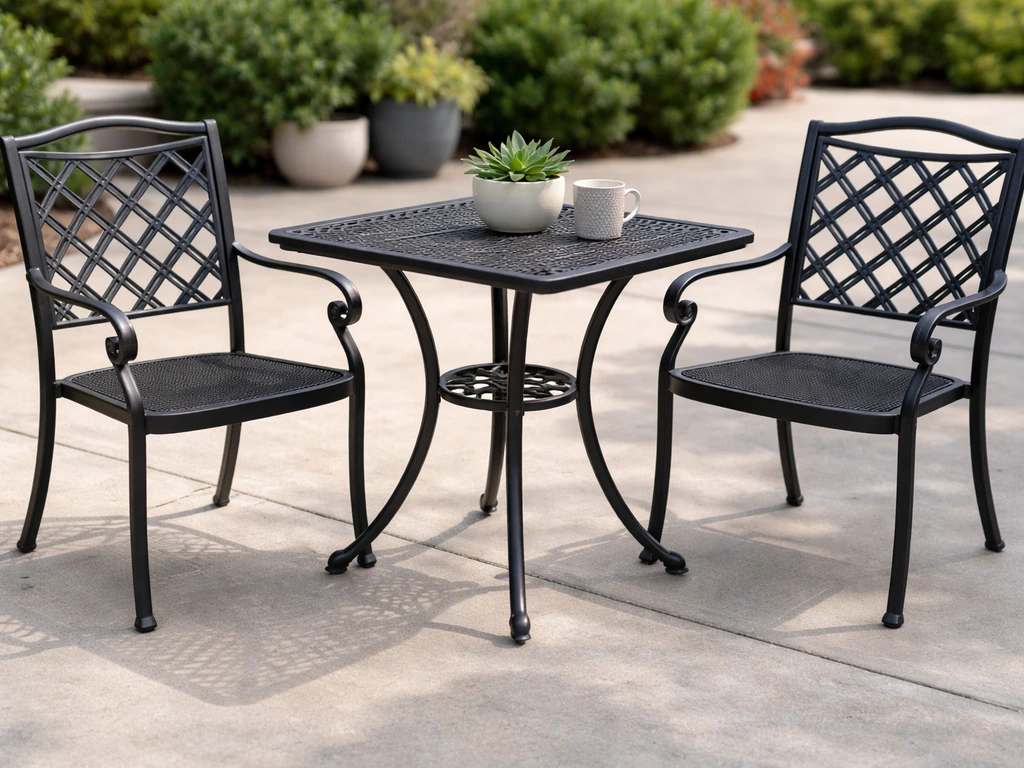
What 'best' actually means for wrought iron patio furniture
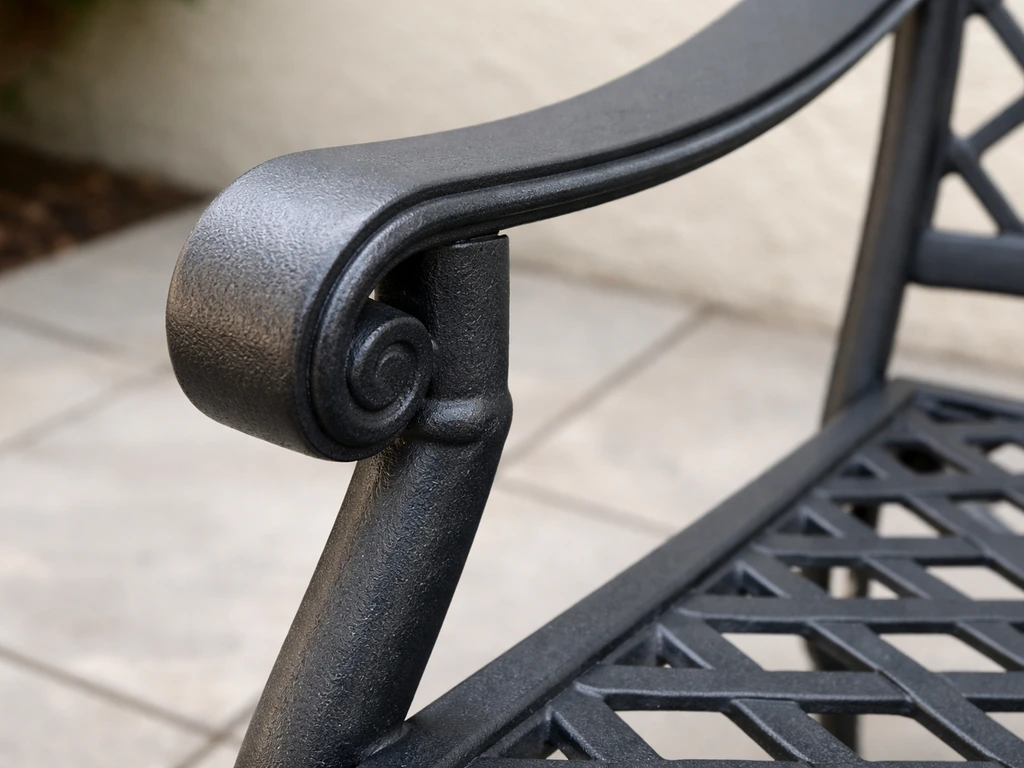
When most people search for the best wrought iron patio furniture, they are really asking two questions at once: which pieces will not rust out in three years, and which ones are worth the premium price? So, if you are wondering whether “wrought iron” patio furniture is worth it, the durability markers below are the real deciding factors wrought iron patio furniture. The answer to both comes from understanding what makes wrought iron furniture durable rather than just heavy and good-looking.
True wrought iron is increasingly rare in modern outdoor furniture. Most pieces sold today as 'wrought iron style' are made from mild steel that has been shaped, welded, and coated to mimic the look. That is not necessarily a problem, because the coating system and construction quality matter far more than the base metal label. What you are actually buying is a combination of frame engineering and corrosion protection, and 'best' means both are done right.
Best also means long-term value, not just sticker price. A set that costs $1,800 and lasts 20 years with minimal maintenance is a far better deal than a $700 set that needs replacing in five. That math should anchor every comparison you make.
How to spot high-quality construction and coatings
This is where you can filter out bad furniture before it ever arrives on your patio. There are three things to look at: the welds, the frame thickness, and the coating process.
Welds and frame joints
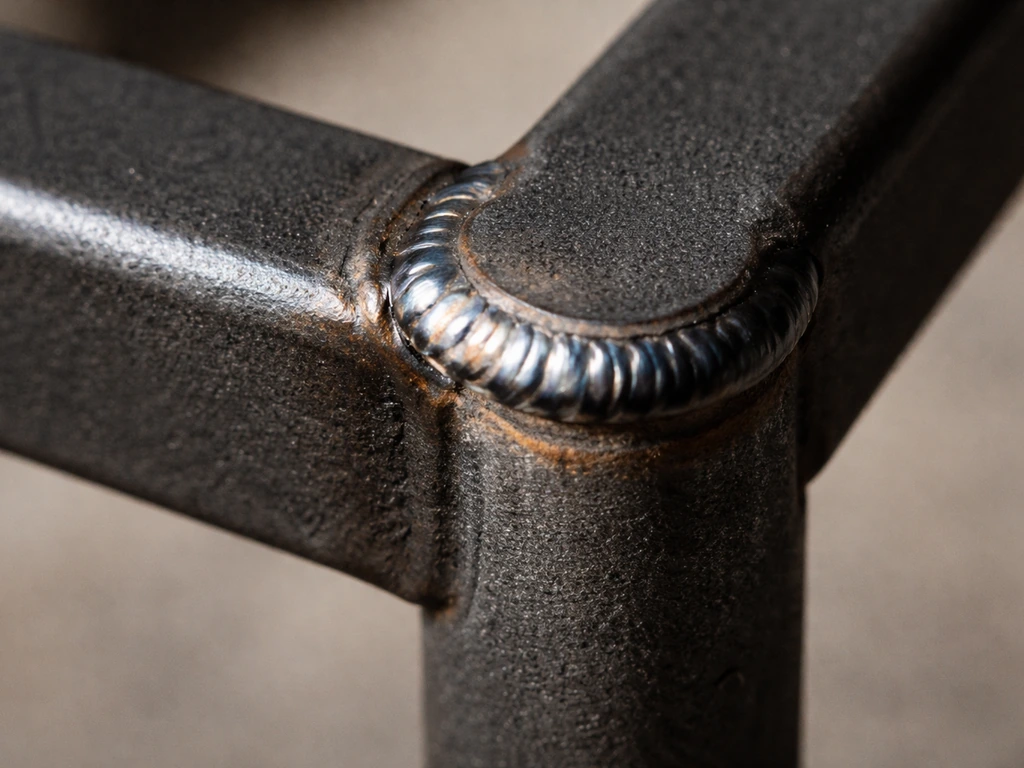
Quality wrought iron furniture uses full-circumference weld coverage at every joint intersection. That means the weld completely surrounds the connection point with no gaps. Gaps are moisture entry points, and moisture sitting inside a metal frame is how rust starts from the inside out. When you read product descriptions or look at close-up photos, check that welds look continuous and smooth, not spotted or tacked. If a brand does not mention weld quality at all in its specs or care materials, treat that as a yellow flag.
Frame thickness and weight
Frame weight is a practical proxy for wall thickness and overall rigidity. A quality wrought iron lounge chair should weigh somewhere in the range of 60 to 90 pounds. The O.W. Lee Monterra lounge chair, for example, comes in at 80 lbs, which is a useful benchmark. If a 'wrought iron' lounge chair is listed at 25 lbs, it is either very small or very thin. Heavier pieces are also more stable in wind, which matters on exposed patios.
The coating process
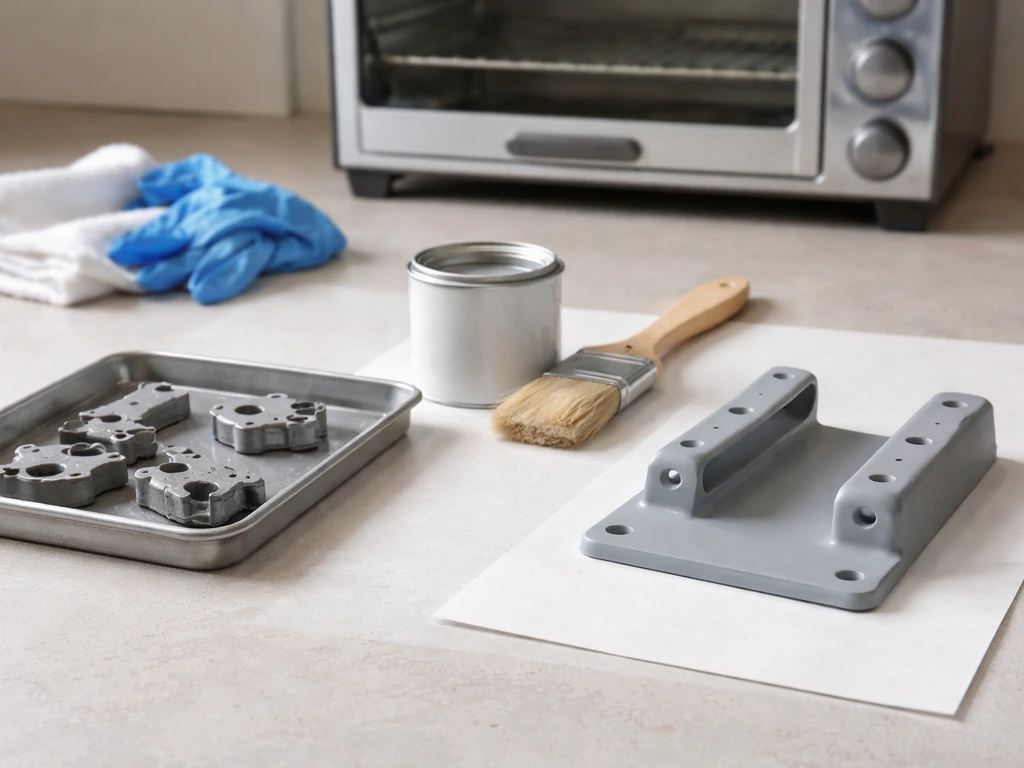
This is the single most important quality differentiator. A good corrosion-resistant finish is not just powder coat slapped on bare metal. The multi-step process that separates durable furniture from disposable furniture looks like this: chemical surface treatment to remove mill scale and contaminants, then an epoxy primer or undercoat, then a thick polyurethane powder coat as the topcoat. Some high-end brands add zinc plating on hardware before the powder coat goes on. O.W. Lee, for instance, zinc-plates its swivel rocker undercarriages before powder-coating them. Zinc sacrifices itself preferentially to steel at any damage point, slowing rust formation even when the coating gets nicked.
When evaluating listings, look for sellers who describe this multi-step process rather than just saying 'powder-coated finish.' Film thickness is measurable (ASTM D7091 and ISO 2178 are the standards), and some brands will provide thickness specs on request. ASTM D3359 measures coating adhesion, the metric that tells you whether the finish will stay bonded under weather stress. You will rarely see these standards mentioned in consumer listings, but knowing they exist lets you ask the right questions to brand customer service before buying.
Top brands and what they tend to do well
There is no single 'best' brand for every buyer, but a few names consistently show up at the top for legitimate reasons. Here is how the main players compare.
| Brand | Structural Warranty | Finish Warranty | Strengths | Watch Out For |
|---|---|---|---|---|
| O.W. Lee | 20-year limited | 5-year (blistering, peeling, fading) | Zinc-plated hardware, full weld coverage, detailed care/warranty documentation | Premium price; verify maintenance requirements to keep warranty valid |
| Homecrest | Varies by line | Varies by line | Thorough care guidance, good freeze-thaw awareness, strong dealer network | Less transparent about exact coating process in online listings |
| Darlee | Varies by line | 3-year finish warranty | Good value for the price, wide style selection, widely available | Shorter finish warranty signals less coating confidence; inspect welds carefully |
| Woodard | Varies by line | Varies by line | Long history, traditional styling, solid construction | Harder to verify current specs; check current warranty terms directly |
O.W. Lee's 20-year structural warranty and 5-year finish warranty are the clearest benchmarks in this category. The fact that they separate structural coverage from finish coverage in their warranty documentation is itself a signal of confidence. Darlee's 3-year finish warranty is not a dealbreaker, but it tells you something about their coating system compared to O.W. Lee's. When comparing any two brands, pull up their actual warranty documents and look for exactly that split: what does structural cover, what does finish cover, and what maintenance conditions apply?
Sizing, style, and comfort: choosing the right pieces for your patio
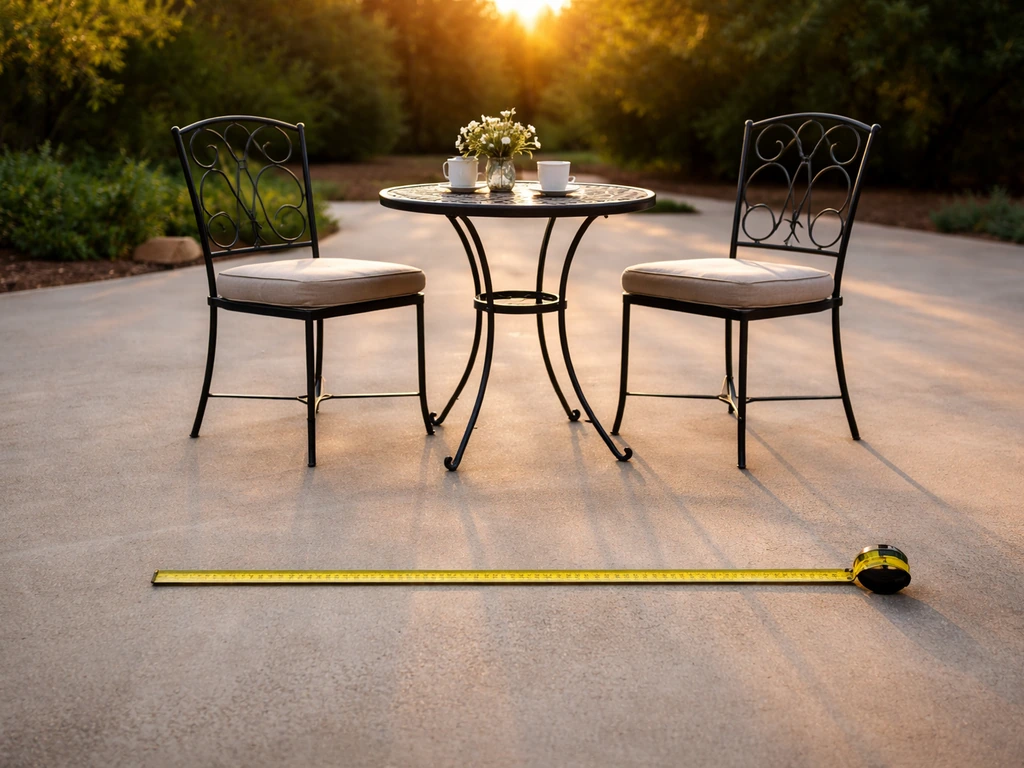
Wrought iron furniture is heavy, which affects both comfort and layout planning. Before you commit to any set, measure your patio and account for pull-out clearance around dining chairs (allow at least 36 inches behind each chair when pulled out). Heavy pieces do not rearrange easily, so your first layout is likely your permanent layout.
For seat height, Homecrest pegs standard outdoor dining seat height at about 17.5 inches, and that is a reasonable baseline to check against. The O.W. Lee Classico-W dining arm chair sits at 18 inches, which is comfortable for most adults at a standard 29- to 30-inch dining table. Lounge chairs sit lower: the Monterra lounge chair from O.W. Lee has a 20-inch seat height with a 38.5-inch depth, which is appropriate for cushioned lounging but means getting up requires some effort. If you or your guests have mobility concerns, prioritize higher seat heights (20 inches or more) even in lounge configurations.
Style-wise, wrought iron is a strong visual statement. Whether wrought iron patio furniture feels dated often comes down to construction quality, finish performance, and how well the style suits your space. Traditional scrollwork and ornate designs suit Mediterranean, French country, and classic formal patio styles. If you want a cleaner, more contemporary look, look for brands offering simpler geometric frames, which several mid-range and premium brands now produce in the same iron construction. The iron itself does not dictate the style, the fabrication does.
- Dining sets: confirm table height (28–30 in standard) and seat height (17–19 in) are compatible before buying
- Lounge sets: check seat depth and arm height together; for the Monterra, arm height is 25.25 in, seat depth 38.5 in
- Cushions: iron frames are typically sold with or without; cushions add comfort but need their own storage or weather-resistance plan
- Bistro sets: 2-chair plus small table formats are ideal for tight spaces; iron bistro sets are especially stable on uneven stone or tile
- Swivel rockers and gliders: look for zinc-plated or stainless hardware in the undercarriage, as these moving parts rust first
Weather resistance and rust risk by climate and exposure level
Wrought iron (and its steel equivalents) will rust if the coating fails and water reaches bare metal. Your climate and exposure level determine how aggressively you need to manage that risk.
Coastal and high-humidity climates
Salt air is the most aggressive environment for any metal furniture. Salt deposits on the frame accelerate coating breakdown and encourage rust formation at any nick or scratch in the finish. If you are within a few miles of the ocean, clean your iron furniture every one to two weeks to remove salt residue before it has time to work under the coating. Maintenance intervals for high-marine environments should be approximately every three months for a full inspection and touch-up check. Alumatex’s care guidance also uses exposure categories to recommend maintenance intervals, such as more frequent inspection and touch-up in coastal and very high marine conditions maintenance intervals for high-marine environments should be approximately every three months. In these climates, a zinc-rich primer layer under the powder coat is not a nice-to-have, it is the difference between furniture that lasts a decade and furniture that starts showing rust in two years.
Cold climates with freeze-thaw cycles
Moisture that gets inside hollow frame tubing can freeze, and freezing water expands. Homecrest explicitly warns that this can crack or distort frame tubing, which is a structural failure mode most buyers never think about. If you live in a climate with hard winters, store iron furniture indoors or cover it completely and keep it dry from fall through spring. Check your frame joints and any areas where water might pool after rain; those are the spots most at risk when temperatures drop below freezing.
Dry or mild climates
Dry heat is the most forgiving environment for iron furniture. UV exposure can degrade powder coat over time, causing fading and eventually micro-cracking, but the rust progression is much slower without humidity. Monthly cleaning and an annual inspection for coating damage is typically sufficient. Even here, though, do not ignore chips and scratches: touch them up promptly because bare metal will rust regardless of climate if it stays exposed.
Covered vs. uncovered patios
A covered patio dramatically extends the life of iron furniture regardless of climate. Less direct rain means less moisture cycling into joints and welds. Less UV exposure means the powder coat holds its color longer. If your patio is fully exposed, your maintenance schedule needs to be more aggressive, your coating quality needs to be higher, and your budget for touch-up paint needs to be factored in from day one.
Care, maintenance, and repair to maximize lifespan
Iron furniture rewards consistent, simple maintenance. Neglect it for a couple of seasons and you are doing rust remediation instead of prevention, which is much harder.
Routine cleaning
Clean frames with warm water and a drop of dish soap, then rinse and dry promptly. Do not let water sit on the surface or pool in crevices. In coastal areas, clean weekly or biweekly specifically to remove salt deposits. Avoid abrasive scrubbers that can scratch the powder coat and create new entry points for moisture.
Dealing with rust spots
If you spot rust forming at a scratch or chip, treat it immediately rather than waiting for the next seasonal cleanup. Homecrest recommends rust neutralizers like Loctite Extend Rust Neutralizer or Naval Jelly Rust Dissolver, applied per the product instructions. These convert iron oxide into a more stable compound that stops further spread. After neutralizing, touch up the area with a compatible primer (ideally zinc-rich for steel substrates) and then a color-matched outdoor paint or powder-coat-compatible touch-up. Do not skip the primer step, the touch-up paint alone will not give you lasting protection.
Re-coating and longer-term refurbishment
Powder coating is not field-repairable the way paint is, because it requires an oven cure. For significant coating failure across a large area, you have two options: have the piece professionally stripped and re-powder-coated (a legitimate service, often economical for high-quality frames), or use a high-quality rust-inhibiting enamel paint as a field repair. The enamel approach is less durable than factory powder coat but extends the furniture's life at low cost. Most quality iron furniture will not need this for 10 to 15 years if the original coating was done correctly and maintenance was kept up.
Storage and seasonal prep
In cold climates, store furniture indoors or in a garage before the first freeze. If storage is not possible, use fitted furniture covers and position pieces so water cannot pool inside hollow sections. In any climate, end-of-season cleaning before storage prevents salt, pollen, and debris from sitting on the coating all winter.
Shopping checklist and quick next steps today
Here is how to move from research to purchase efficiently. Use this as a filter when you are looking at specific products and brands. . For a final sanity check, compare what you find against the best iron patio furniture in our buyer guide.
- Check the structural warranty: look for 10 years minimum, 20 years for premium. If no structural warranty is listed, ask the retailer before buying.
- Check the finish warranty separately: 5 years is strong, 3 years is adequate, under 3 years is a red flag for coating quality.
- Look for multi-step coating language in the product description: chemical prep, primer or epoxy undercoat, and powder topcoat. Single-step 'powder-coated' claims with no process detail deserve skepticism.
- Check zinc plating on moving parts: swivel rockers, glider mechanisms, and any hardware. These rust first and are hardest to fix.
- Verify frame weight against the piece size: a full lounge chair under 40 lbs is likely thin-walled. Heavy is good for iron furniture.
- Confirm seat height and depth fit your use case: 17.5–19 in for dining, 18–20 in for general seating comfort, check depth for lounge chairs.
- Read the warranty maintenance conditions: most warranties require documented care to remain valid. Know what you are agreeing to.
- Ask about touch-up paint availability: quality brands provide color-matched touch-up paint or direct you to compatible products. If a brand cannot answer this question, that tells you something.
- Match your maintenance plan to your climate: coastal buyers commit to biweekly cleaning; cold-climate buyers plan for indoor storage or complete waterproof covering before first freeze.
- Factor in long-term cost: a $1,500 set with a 20-year structural warranty costs less per year than a $700 set that needs replacing in five.
If you are comparing wrought iron against cast iron options, the core questions are the same but cast iron brings different weight and brittleness trade-offs worth understanding before you decide. If you are also considering cast iron patio furniture, see does cast iron patio furniture rust for how that material handles moisture and corrosion over time. If you are deciding between materials, the best cast iron patio furniture is typically chosen for its style and stability while balancing weight and cracking risk. If you are weighing cast iron vs wrought iron patio furniture, pay close attention to corrosion risk and how each material handles impacts and outdoor moisture cast iron options. Similarly, if price is your primary constraint, there are meaningful differences between entry-level and premium wrought iron pricing that affect which features you can realistically expect at each budget tier. Using these benchmarks helps you find the best price wrought iron patio furniture that still has a durable coating and solid warranty entry-level and premium wrought iron pricing. The key is to never let price be the only number you look at. Weight, warranty, and coating process are the specs that predict whether your furniture is still on your patio in 15 years or heading to the curb in five.
FAQ
Is “wrought iron” on patio sets actually real wrought iron, or just marketing?
Not exactly. What most people buy as “wrought iron style” is usually mild steel shaped and welded, then powder-coated. The label matters less than whether the welds are continuous and the coating system is multi-step (surface treatment, primer, thick topcoat). If a listing does not clearly describe construction or coating quality, treat it as a higher risk purchase.
How often should I inspect and clean best wrought iron patio furniture in my weather?
Use your own climate to set maintenance frequency. As a rule of thumb, inspect monthly, but in salt-air areas clean every 1 to 2 weeks and do a full check and touch-up about every 3 months. If you are in heavy rain, check joints and any pooled-water spots right after storms.
What coating details should I ask about before buying, beyond “powder-coated”?
Do not rely on a single “powder-coated” claim. Ask the seller whether they include an epoxy primer or undercoat, what the topcoat system is, and whether hardware is zinc-plated (or otherwise protected) before coating. Warranty language is also a clue, look for separate coverage for structural components versus finish.
What is the correct way to repair chips or scratches on wrought iron patio furniture?
Touch up only the damaged area, but do it in the right order: clean and dry, neutralize rust if any is present, apply the correct primer (zinc-rich for steel substrates when appropriate), then apply a compatible outdoor topcoat or touch-up paint. Skipping primer is a common reason rust returns quickly through the patch.
When should I re-coat or re-powder-coat, instead of doing a DIY touch-up?
If rust is widespread or the coating has failed across a large section, expect a longer-lasting fix to require professional stripping and re-powder-coating (the piece usually goes back to an oven-cured finish). For small localized failures, field repair with rust-inhibiting enamel and proper primer can extend life, but it will not match factory powder durability.
What should I look for in the warranty fine print for wrought iron patio furniture?
A “10-year structural” warranty still may exclude certain damage types. Before purchasing, confirm whether the warranty is tied to use conditions (covered vs uncovered), maintenance requirements, and whether it covers rust originating from coating failure at welds or only specific components. Also check if you must provide proof of regular cleaning and touch-ups.
Is frame weight the best indicator of quality, or are there exceptions?
Heavier can be a stability advantage, but it must still be the right frame design and finish system. A very light set listed as “wrought iron” is often either small, thin, or underbuilt, and that can mean weaker joints or thinner walls that make the coating less resilient at stress points.
What measurements should I take to avoid buying best wrought iron patio furniture that does not fit my patio?
Yes, fit matters for comfort and safety. Measure from the table edge or walkway clearance and plan for chair pull-out room (commonly at least 36 inches behind dining chairs when they are pulled out). Also confirm seat height versus your table height so arms clear and you do not end up with awkward posture.
How do I choose between dining-height and lounge-height wrought iron seating?
Choose seat height based on how you want people to get up. If your household includes anyone with mobility concerns, prioritize higher seat heights (roughly 20 inches or more), even for lounge-style seating. Lower lounge seats are comfortable for lounging but can be harder to stand from.
How can I tell from product photos whether the welds are strong enough to prevent inside rust?
Weld gaps are a high-risk rust entry point. When viewing photos, look for full, continuous weld coverage around each joint intersection, and be cautious if welds are described only as “tacked” or if close-up images look patchy, pitted, or uneven. If weld quality is not mentioned at all, treat it as an uncertainty that could show up as early rust.
Is it safe to leave wrought iron furniture outside during winter?
It depends. If the set is stored outdoors uncovered in freezing conditions, water can get into hollow tubing, freeze, and expand, which can crack or distort tubing. In hard-winter climates, store indoors or in a garage, or use fitted covers and positioning so water cannot pool in hollow sections.
Do cushions and covers affect the durability of wrought iron patio furniture?
Cushions and fabric can trap moisture against the frame. Use breathable, outdoor-rated cushion covers and remove or dry cushions after rain, especially in humid or coastal areas. If water stays trapped against the frame for long periods, you increase the chance of coating breakdown at seams and weld edges.
Next Articles
Is Teak Patio Furniture Good? Durable, Smart Buying Guide
Is teak patio furniture good? Evidence-based verdict, lifespan, care, buying tips, comparisons, and eco guidance.
How Long Does Teak Patio Furniture Last? Lifespan Guide
Teak patio lifespan ranges, factors that shorten or extend durability, and a maintenance plan to protect joints and fini
High Quality Teak Patio Furniture: How to Choose and Care
Checklist for buying high quality teak patio furniture, spot real construction, compare materials, and maintain it by cl