
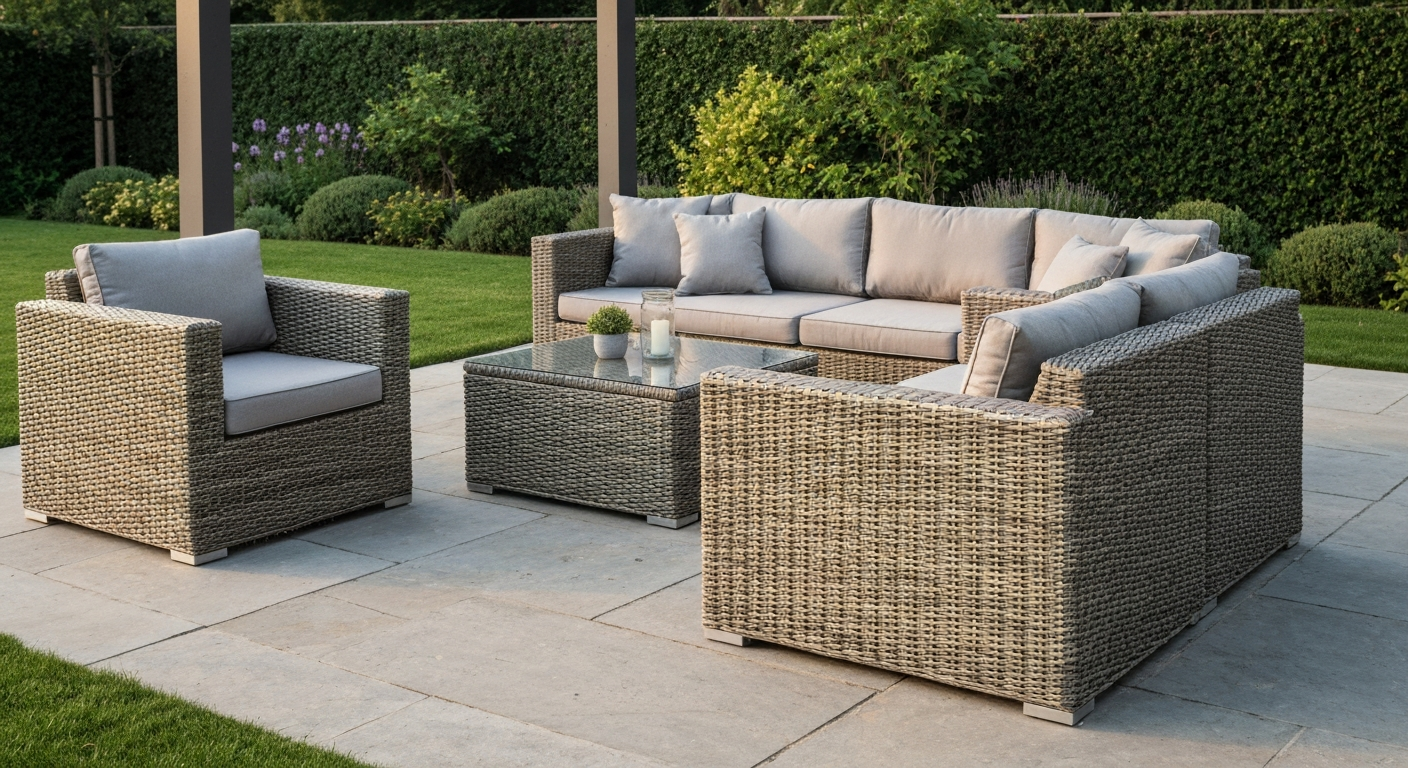
The best wicker patio furniture for most homeowners in 2026 is high-density polyethylene (HDPE) resin wicker woven over a powder-coated aluminum frame. For a focused buying guide and top picks, see our roundup of the best resin wicker patio furniture. It lasts 10 to 15-plus years in moderate inland climates, handles rain and sun without rotting or fading, and costs less per year of use than almost any alternative. Natural rattan wicker looks beautiful but degrades outdoors in one to three years without serious protection. If you are choosing for a coastal home, the same HDPE weave applies, but the frame and hardware specs need to be tighter, more on that below.
What Is the Best Wicker Patio Furniture for Homeowners & Designers

Marcus Kellerman
9 Aug 2026
Who this guide is for and how to use it
This guide is built for two kinds of readers: homeowners buying their first real patio set and those who have already burned through a cheap set and want to avoid repeating the mistake. It walks through everything that separates durable wicker furniture from furniture that looks great in the showroom and falls apart in three seasons. The sections are ordered by decision priority. Start with the quick summary if you already know your climate and budget. If you are less sure, read through the materials and construction sections first, they will make the product comparisons make far more sense.
Best wicker options by homeowner need and climate
No single set is best for everyone, so here is a condensed breakdown by situation. These recommendations assume you prioritize durability and long-term value over the lowest possible sticker price.
| Homeowner situation | Recommended wicker type | Recommended frame | Expected lifespan |
|---|---|---|---|
| Inland, covered patio, moderate climate | HDPE resin wicker | Powder-coated aluminum | 12–15+ years |
| Inland, uncovered patio, full sun | HDPE resin wicker with UV-stabilized strands | Powder-coated aluminum (≥60 µm coat) | 10–12 years |
| Coastal, salt air, covered or screened | HDPE resin wicker | Powder-coated aluminum + 316 stainless hardware | 8–12 years |
| Coastal, exposed, heavy salt spray | HDPE resin wicker (tight weave) | 316 stainless or duplex-coated steel, marine hardware | 5–10 years |
| Covered porch, decorative indoor-outdoor use | Natural rattan or wicker (treated/lacquered) | Hardwood or powder-coated steel | 3–6 years outdoors with maintenance |
| Budget buyer, covered or seasonal storage | Entry-level resin wicker over steel frame | Galvanized steel with powder coat | 5–8 years with care |
If you are specifically shopping for sets marketed as 'all-weather,' that term is worth scrutinizing closely. The best all-weather wicker patio furniture earns that label through documented UV-stabilized HDPE strands, verified frame alloy grades, and hardware rated for salt exposure, not just marketing copy on the hangtag.
What 'best' actually means for wicker furniture
The word 'best' gets applied to furniture at every price point, which makes it nearly useless without criteria. Here is how I evaluate wicker patio furniture across the metrics that matter over a 10-plus-year ownership window.
Durability
Durability is mostly a frame and weave-material question. A high-quality HDPE weave over a solid aluminum frame will outlast a mediocre weave over any frame. The weave strand thickness, UV-stabilizer package, and frame wall gauge all determine how long the set holds up before strands snap, fade, or become brittle.
Comfort
Comfort in wicker furniture comes from two places: seat geometry (seat depth, back angle, armrest height) and cushion quality. The weave itself contributes some flex in the seat, but unless it is a sling-style woven chair with meaningful give, cushions are doing most of the comfort work. A set with poor-quality cushions is uncomfortable within one season regardless of how well-built the frame is.
Maintenance and repairability
Resin wicker needs less maintenance than natural wicker but it is not zero-maintenance. Routine washing, cushion storage in winter (or replacement covers), and hardware checks once a year are the baseline. What matters for long-term ownership is whether replacement cushions and covers are available from the manufacturer years after purchase, this is where many brands fail.
Value: cost per year, not sticker price
A $900 set that lasts 5 years costs $180 per year. A $1,800 set that lasts 14 years costs $129 per year. This is the only honest way to compare patio furniture pricing. Premium HDPE wicker over aluminum almost always wins this calculation against budget steel-frame sets, especially once you factor in replacement cushion costs.
Aesthetics and style range
Modern resin wicker comes in a wide variety of weave patterns, colors, and frame finishes. The range has expanded considerably in recent years, so the old complaint that synthetic wicker looks 'plasticky' is largely outdated when applied to premium-grade strands. Natural rattan still has a warmth and texture that resin cannot fully replicate, but that advantage disappears quickly when it starts to degrade outdoors.
Sustainability
Natural rattan is a fast-growing vine that, when responsibly sourced, is one of the more sustainable furniture materials available. HDPE resin is a petroleum-derived plastic, though recycled HDPE (rHDPE) versions are increasingly available from manufacturers targeting sustainability-conscious buyers. Aluminum frames score well here because aluminum is indefinitely recyclable. If sustainability is a priority, look for manufacturers who specify rattan sourcing certifications or recycled-content HDPE.
Wicker, rattan, and resin: what you are actually buying
These three terms are used interchangeably in retail but they describe different things. Getting them straight matters because the material determines nearly everything about outdoor performance.
Wicker
Wicker is a weaving technique, not a material. Rattan vs Wicker: What's the Difference?, BobVila notes that 'wicker' describes the weaving technique while 'rattan' is a botanical vine often used to make traditional wicker, and that 'resin wicker' refers to synthetic polymer strands woven in the wicker style Rattan vs Wicker: What's the Difference? — BobVila. Anything woven in the wicker style, rattan, willow, sea grass, paper rush, or synthetic polymer strands, can technically be called wicker. When a retailer sells 'wicker furniture,' they are describing the construction method, not specifying the strand material. Always ask or read the spec sheet to find out what the strands are actually made of.
Rattan
Rattan is a specific botanical material: a climbing palm vine native to tropical regions of Africa, Asia, and Australasia. It is lightweight, naturally strong, and bends well, which is why it became the dominant natural material for traditional wicker furniture. The problem outdoors is that rattan is an organic material. Exposed to repeated rain, UV radiation, and humidity cycling, unprotected rattan typically shows significant cracking, splitting, and mold within one to three years. Lacquered or covered natural rattan can last longer on a protected porch, but it is not a material for uncovered outdoor use.
Resin wicker (HDPE)
Most outdoor wicker sold today is resin wicker: extruded polymer strands (usually high-density polyethylene, or HDPE) woven over a metal frame. HDPE is compounded with pigments and UV-stabilizer packages before extrusion, and the best-grade strands use combinations of UV absorbers (such as benzotriazoles or benzophenones) and hindered amine light stabilizers (HALS). HALS work by scavenging photo-oxidation radicals in the polymer matrix rather than simply blocking UV light, and research confirms that HALS combined with UV absorbers significantly extend tensile property retention in HDPE under accelerated weathering. See Comparison of UV resistance of HDPE added with hindered amine light stabilizers with different molecular structures, Journal/Pat. (Wiley) for peer‑reviewed evidence that combining HALS with UV absorbers is a standard and effective stabilizer package for HDPE blank" rel="noopener noreferrer">Comparison of UV resistance of HDPE added with hindered amine light stabilizers with different molecular structures — Journal/Pat. (Wiley). In plain terms: quality UV-stabilized HDPE holds its color and stays flexible far longer than unstabilized or poorly stabilized resin. See our guide to the best resin patio furniture for curated recommendations and model comparisons. Budget resin wicker often skips proper stabilizer packages, which is one reason it gets brittle and snaps within a few years.
| Material | Outdoor durability | Maintenance level | Best placement | Typical outdoor lifespan |
|---|---|---|---|---|
| Natural rattan | Poor — degrades in moisture and UV | High — needs sealing, covers, indoor storage | Covered, protected porch only | 1–3 years unprotected, 3–6 years with care |
| Other natural wicker (willow, sea grass) | Poor to moderate depending on species | High | Covered/indoor-outdoor transition spaces | 1–4 years |
| Resin wicker (budget/PVC) | Moderate — UV and cold brittleness issues | Low-medium | Covered patios, seasonal climates | 4–7 years |
| Resin wicker (HDPE, UV-stabilized) | Good to excellent | Low | All patio environments, most climates | 10–15+ years (inland), 5–10+ years (coastal) |
Frame materials and construction quality: what holds the weave together
The frame is the skeleton of wicker furniture, and it is almost completely hidden under the weave once the set is assembled. That invisibility is exactly why so many buyers underestimate its importance. I have seen sets where the HDPE weave was still in good shape but the steel frame had rusted through the powder coat and started to push rust stains through the strands. The weave only lasts as long as the frame.
Aluminum frames
Powder-coated aluminum is the best general-purpose frame material for wicker patio furniture. Aluminum forms a natural protective oxide layer that resists corrosion without sacrificial coatings, so even if the powder coat gets scratched, the bare metal underneath is not going to rust out. It is also lightweight, which matters when you are rearranging a sectional. For the powder coat specifically, look for a minimum thickness of around 60 microns (60 µm), this is roughly the commercial specification for durable outdoor parts, and thinner coats tend to chip and peel sooner under UV and thermal cycling.
Steel frames
Steel frames are heavier and less inherently corrosion-resistant than aluminum, but they are common in mid-range and budget wicker furniture because steel is cheaper to fabricate. A properly treated steel frame uses either hot-dip galvanizing (a zinc coating that sacrificially protects the steel), a powder coat applied over pretreatment, or the best approach: a duplex system combining galvanizing and a powder-coat topcoat. Duplex-coated steel frames resist corrosion far longer than powder coat alone because the zinc layer continues to protect even if the topcoat is breached. For coastal environments, galvanized steel with a thick powder coat is the minimum acceptable spec.
Stainless steel frames and hardware
316 stainless steel (marine grade) contains molybdenum, which reduces pitting and crevice corrosion from chloride attack, the mechanism that destroys regular 304 stainless in salt air environments. For coastal buyers, 316 stainless hardware (bolts, screws, brackets) is a meaningful specification to ask about, not just a premium upsell. Using 304 fasteners on an otherwise solid frame is a common cost-cutting measure that causes real problems in salt spray environments, where pitting can start within a season.
Joinery, welds, and fasteners
Welded joints are preferable to bolted joints for long-term structural integrity in wicker furniture frames. Full-penetration welds with smooth, even beads indicate quality fabrication. Irregular, pitted, or visibly cold welds are a red flag. For high-stress joints (armrest-to-frame connections, leg-to-seat frame corners), look for through-bolts or clamped brackets rather than pop rivets, pop rivets under repeated load will work loose and eventually fail. This is not something most buyers check, but it separates sets that hold up for 15 years from ones that start wobbling in year three.
Weave types and weave density: how the pattern affects performance
The weave is what most people see first and evaluate last. It should be the other way around. Weave pattern and density affect structural performance, comfort, drainage, and long-term appearance.
Common weave patterns
- Close-weave (tight): Strands woven very close together with minimal gaps, producing a smooth surface. Common on lounge chairs and sofas where a clean aesthetic is the priority.
- Half-round weave: Uses strands with a flat inner face and rounded outer face, common in mid-range and premium sets for a traditional, rounded appearance.
- Flat-strand weave: Uses flat ribbon-like strands for a more contemporary or woven-mat look. Common in modern Scandinavian-influenced outdoor furniture.
- Open-weave / lattice: Larger gaps between strands. Provides better drainage and airflow but can be less comfortable without cushions and may collect debris.
- Bohemian/twisted weave: Decorative pattern common in accent chairs and occasional pieces, often less structurally uniform than standard close or half-round weaves.
Strand density and its tradeoffs
Engineering data and furniture patents describe tightly woven seat membranes on quality chairs at roughly 7 to 10 strands per inch. At this density, the seat provides meaningful support with some flex, and the surface is smooth enough to be comfortable without a cushion for short periods. Tighter weaves produce a smoother, firmer surface with less sag over time, but they reduce airflow and hold more surface water between strands. More open weaves dry faster after rain and circulate air better in hot weather, but they provide less inherent support and can sag under repeated load if the strand material is not high-quality HDPE. In practice, a close-weave set used with quality cushions is almost always more comfortable and longer-lasting than a very open weave without cushions.
What to look for in weave quality
- Consistent strand spacing with no visible gaps or missed wraps
- Tight terminations at frame edges — loose ends that are simply tucked and not anchored will unravel over time
- Even tension across the entire seat and back surface — press on the center and edges; significant variation in firmness indicates uneven weaving
- No visible stress-whitening on strands at bend points around frame bars — this indicates the strand material is already under strain
Cushions and outdoor fabrics: where comfort sets go wrong
Cushions are the component most likely to fail first, cost the most to replace, and do the most to determine whether you actually enjoy sitting on the furniture. A premium frame with mediocre cushions is a frustrating combination.
Foam cores: quick-dry and reticulated
Standard upholstery foam holds water for days after rain, which promotes mildew and compresses the cushion over time. Outdoor cushions should use either reticulated (open-cell) foam or a dedicated quick-dry foam with a hydro-blast reticulated structure. These foams are engineered with open interconnected cells that allow water to drain through and air to circulate, so a cushion left out after a rain shower dries in hours instead of days. Better outdoor cushions also use a mesh backing on the cushion base to help airflow from below. If a manufacturer does not specify the foam type and simply calls it 'outdoor foam,' that is worth questioning.
Cover fabrics: solution-dyed acrylic is the benchmark
Solution-dyed acrylic fabric, with Sunbrella being the most widely referenced brand, remains the outdoor upholstery standard for a good reason: the color is added to the fiber during extrusion rather than applied to the surface, so it does not fade, bleed, or wash out with UV exposure or bleach cleaning. Colorfastness is tested under AATCC TM16 (xenon-arc light exposure) and accelerated UV testing via ASTM G154. Mildew resistance is assessed under AATCC TM30 protocols. When comparing cushion fabrics, look for these test references in the product spec or ask the retailer whether the fabric is solution-dyed. Piece-dyed or printed fabrics will fade significantly faster, regardless of what the marketing says.
Zippers and replacement cover availability
Cushions with removable, zipper-closed covers are far more practical than sewn-shut covers. You can clean the cover separately, replace it without replacing the entire cushion, and swap colors over time. The zipper should be a marine-grade or UV-stabilized plastic or coated metal, standard metal zippers corrode outdoors. More importantly, check whether the manufacturer offers replacement covers as a separate purchase. Many brands discontinue cushion covers within two to three years of a set's release, leaving buyers with a choice between living with worn covers or replacing the entire cushion set.
Cleaning cushion covers
For solution-dyed acrylic covers, Sunbrella's published cleaning guide (which is the industry reference) recommends a mixture of approximately 1 cup of household bleach plus 1/4 cup of mild soap per gallon of water for heavy mildew staining on the cover while it is still on the cushion. For spot cleaning, a diluted ratio of roughly 1 teaspoon dish soap plus 1 teaspoon bleach per cup of water is commonly used. Always follow the specific manufacturer instructions for your fabric rather than assuming all outdoor fabrics tolerate bleach equally.
All-weather performance: what year-round use actually looks like
High-quality HDPE resin wicker over a powder-coated aluminum frame is the closest thing to a genuinely low-maintenance outdoor furniture option across most North American climates. But 'all-weather' does not mean 'indestructible in all conditions,' and the gap between covered and uncovered placement is significant enough to affect buying decisions.
Covered and semi-covered placement
A covered patio, pergola, or screened porch dramatically extends the life of every component: HDPE strands experience less cumulative UV load, powder-coat finishes are not subject to direct rain erosion, and cushion fabrics stay cleaner and drier. Sets placed under cover regularly hit the high end of lifespan estimates, 12 to 15-plus years for quality HDPE-over-aluminum sets. This is the placement I recommend to anyone who has the option.
Uncovered, full-sun placement
Full sun and rain exposure does not disqualify resin wicker, but it compresses the lifespan and raises the quality bar. UV-stabilized HDPE strands (with documented HALS-plus-absorber packages) are not optional in full-sun applications, they are the baseline. For the powder coat, thicker application (≥60 µm) reduces the likelihood of UV-induced chalking and chipping. Expect 10 to 12 years for a quality set in full sun rather than 15-plus, and plan for cushion replacement around year 5 to 7 even with solution-dyed acrylic covers.
Coastal and salt-air environments
Salt air accelerates corrosion through chloride attack on metal surfaces, and this is where frame and hardware specifications move from background details to critical selection criteria. ASTM B117 salt spray testing is the standard accelerated corrosion test for coatings and hardware, and contract-grade specifications for coastal environments commonly require 3,000 hours or more of salt spray resistance on qualifying components. For practical buyers: look for furniture brands that specify salt-spray test results, 316 stainless fasteners, and powder-coat or duplex-coated frames rather than furniture that simply claims to be 'coastal friendly.' The HDPE weave itself performs well in salt air since it is non-metallic and non-porous, but every metal component on a coastal set needs to be specified to match. Resin wicker specifically designed for salt environments is sometimes described in the context of high quality wicker patio furniture for coastal regions, where these frame and hardware details are make-or-break.
Winter storage and cold-weather performance
Quality HDPE resin wicker handles freeze-thaw cycling better than natural wicker, which can crack and split in repeated freeze cycles. That said, cushions should always come indoors or into weather-tight storage during winter in freeze-prone climates, no outdoor fabric holds up well to months of ice and freeze-thaw. The frame and weave can stay outside with a breathable furniture cover, but covers that trap moisture against the frame can actually accelerate corrosion more than leaving the frame exposed. Breathable polyester covers are preferable to solid plastic tarps for winter storage.
How resin wicker compares to other patio materials
Teak and aluminum are the main alternatives worth comparing for buyers choosing between material categories. Teak is denser, heavier, and requires annual oiling to maintain its appearance (though it weathers gracefully to silver-gray without oil). Teak's cost-per-year calculation often comes out comparable to or higher than premium HDPE wicker over a 15-year horizon once maintenance costs are factored in. Cast iron is durable and heavy but corrodes without maintenance in wet climates and is impractical to move. Pure aluminum furniture (no weave) is lightweight and rust-free but often lacks the visual warmth that makes wicker furniture appealing in the first place. For buyers who want the look of woven texture, all-weather durability, and manageable weight, HDPE resin wicker fills a gap that none of these alternatives quite match. Best resin wicker patio furniture selections, and broader comparisons against best resin patio furniture materials, are worth exploring separately if you are narrowing between wicker and solid-cast alternatives. For a curated list of the best outdoor wicker patio furniture, see our detailed recommendations.
Buying checklist: what to verify before you purchase
Use this checklist when reviewing product specs or standing in a showroom. Any item you cannot get a clear answer on is a yellow flag worth investigating before committing.
- Weave material confirmed as HDPE (not generic 'resin' or unspecified polymer)
- UV-stabilizer package documented (look for 'UV inhibitors,' 'HALS,' or UV hours test result in spec sheet)
- Frame alloy specified (aluminum alloy grade or steel with galvanize/duplex coat details)
- Powder-coat thickness at or above 60 µm for outdoor durability
- Welded joints at stress points, not pop-riveted
- Hardware specified as stainless (316 grade for coastal applications)
- Cushion foam confirmed as reticulated or quick-dry open-cell construction
- Cushion covers identified as solution-dyed acrylic or equivalent tested outdoor fabric
- Zipper type specified as marine-grade or UV-stabilized plastic
- Replacement covers available as a separate purchase from the manufacturer
- Warranty covers frame and weave for minimum 3 years (5+ years indicates manufacturer confidence)
- Salt-spray test result available if purchasing for coastal use (look for ASTM B117 hours rating)
FAQ
What exactly is "wicker" and how does it differ from rattan or resin wicker?
Wicker describes a weaving technique, not a material. Rattan is a natural vine used in traditional wicker. Resin or synthetic wicker (commonly called HDPE wicker) is extruded polymer strands (usually high‑density polyethylene) woven to look like natural wicker and formulated with UV/mildew stabilizers for outdoor use.
Which wicker type is best for outdoor patio furniture?
For most homeowners and designers the best choice is UV‑stabilized extruded HDPE (resin) wicker woven over a durable metal frame. It offers the best balance of weather resistance, low maintenance, and realistic synthetic‑wicker aesthetics. Natural rattan can be attractive in covered or indoor‑outdoor spaces but performs poorly if exposed to sun and rain.
What frame material should I prioritize?
Powder‑coated aluminum is the top general‑purpose choice: lightweight, corrosion‑resistant and compatible with HDPE wicker. For coastal or high‑salt environments, choose 316 stainless steel hardware or a duplex system (hot‑dip galvanize + quality powder coat) on steel parts to minimize pitting and undercut corrosion.
How can I tell if the construction quality is good?
Inspect or ask about: frame alloy and wall thickness (gauge), powder‑coat thickness (~≥60 μm desirable for commercial pieces), welded joints (smooth full welds preferred over pop rivets), stainless fasteners (316 coastal), tight and uniform weave tension, and whether strands are extruded HDPE compounded with UV stabilizers rather than printed or hollow low‑grade tape.
What weave type and density should I choose?
Weave selection is a tradeoff: tighter/denser weaves (~7–10 strands/inch used in many designs) create a smoother, more refined look and less sag but can retain more water and dry slower. More open weaves drain and ventilate faster, drying quickly after rain. Match weave to your climate and desired look: dense for formal seating, open for quick‑dry performance.
What cushions and fabrics are best for durability and outdoor performance?
Choose quick‑dry/reticulated foam cores and solution‑dyed acrylic covers (Sunbrella is the industry benchmark) for UV colorfastness and mildew resistance. Look for sealed seams, mesh backing for drainage, and removable covers. Follow manufacturer cleaning ratios (bleach + mild soap formulas exist) for tough mildew stains.
Next Articles
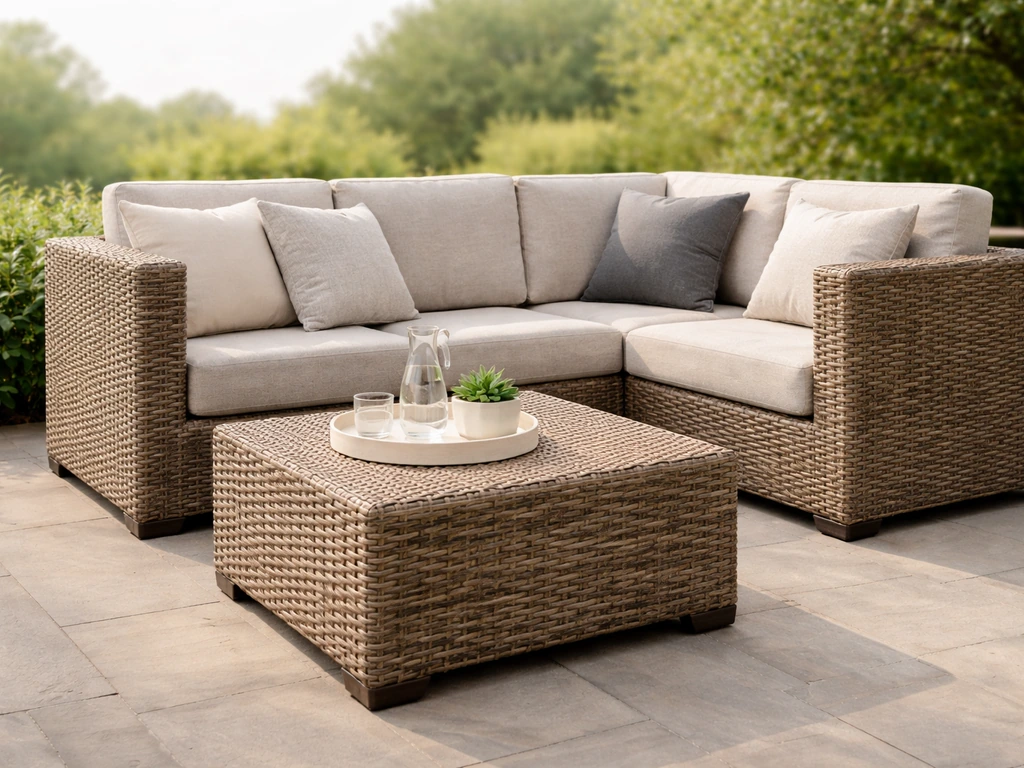
Best Resin Wicker Patio Furniture: Buyer Guide & Reviews
Buyer guide and reviews for the best resin wicker patio furniture: durability, UV, cushions, hardware, and fit for your
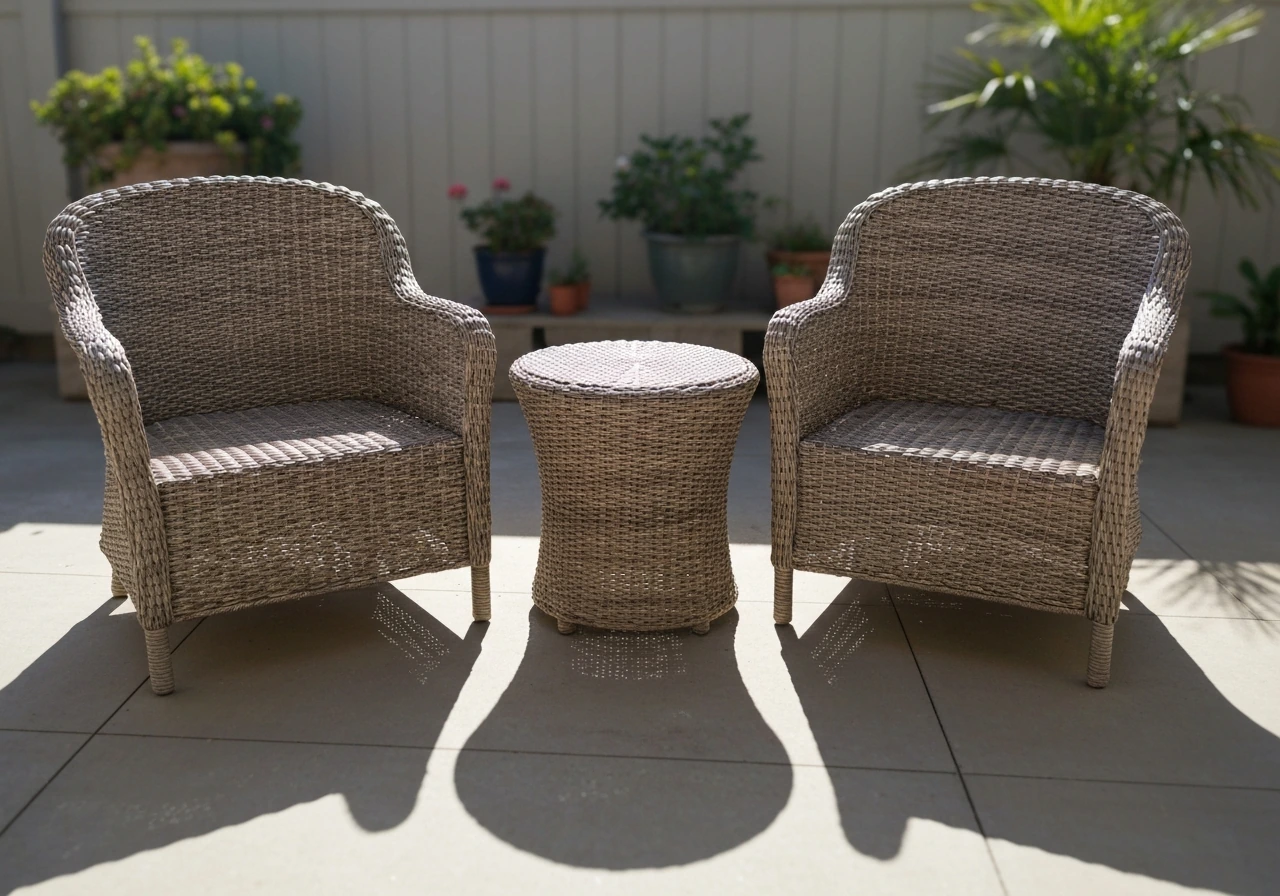
Best Resin Patio Furniture Guide: How to Choose and Care
Choose the best resin patio furniture for your climate with buying criteria, material comparisons, and care tips.
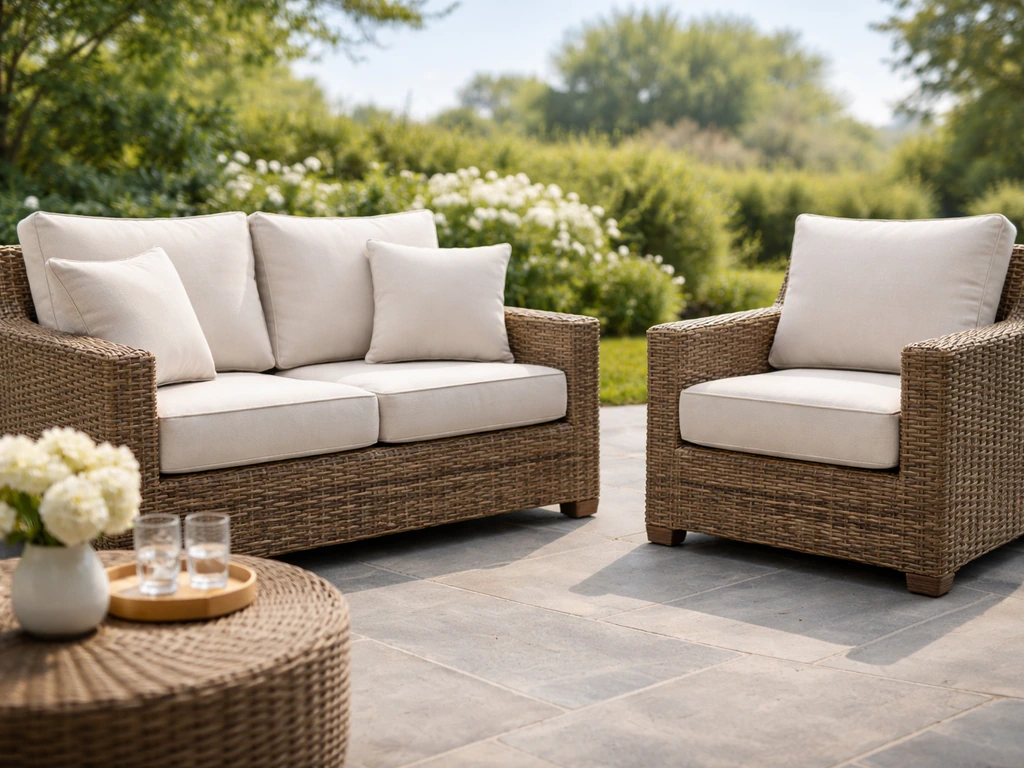
Best All Weather Wicker Patio Furniture Buyer’s Guide
Buyer’s guide to truly all-weather wicker: resin vs natural, frame durability, cushions, care tips, and long-life value