
Cast aluminum patio furniture will almost always outlast extruded aluminum in harsh outdoor conditions, and it holds more intricate detail with better long-term structural integrity. Extruded aluminum is lighter, cheaper, and perfectly fine for covered patios or mild climates where pieces rarely move. If you're investing for a decade-plus lifespan in a coastal, freeze-thaw, or full-sun environment, cast aluminum is the better buy. But the right answer really does depend on how you use your outdoor space, your climate, and what you're willing to spend, so here's the full breakdown.
Cast Aluminum vs Extruded Aluminum Patio Furniture: Which Wins?

Marcus Kellerman
9 Jul 2026
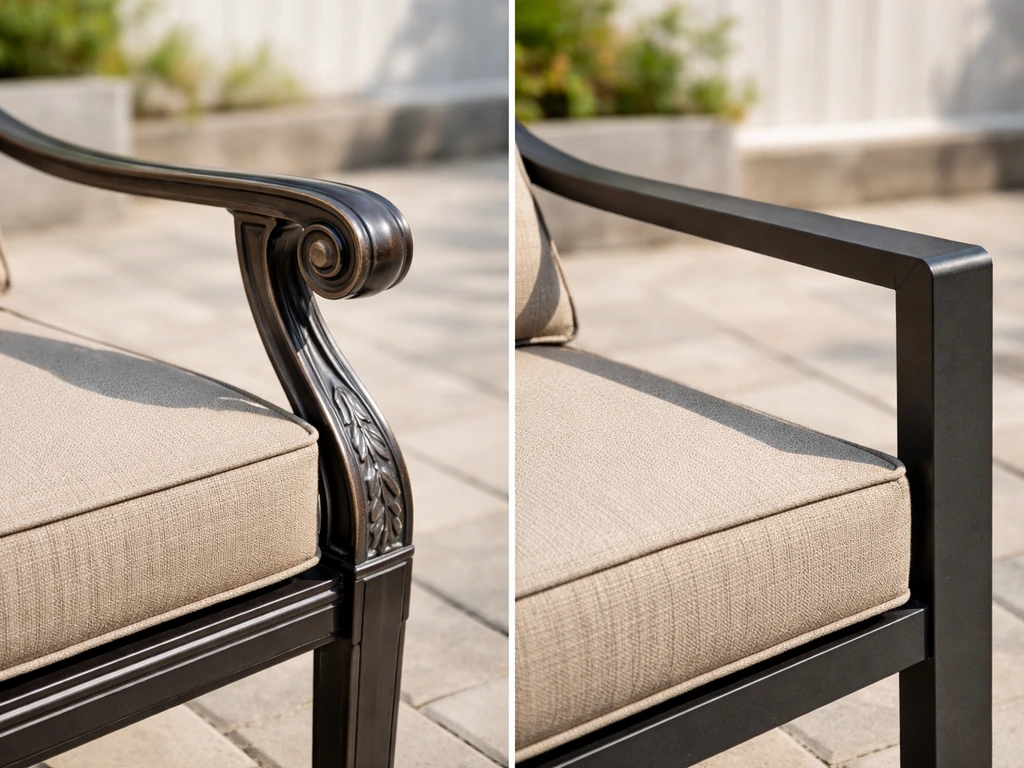
What cast aluminum actually is (and why manufacturers use it)
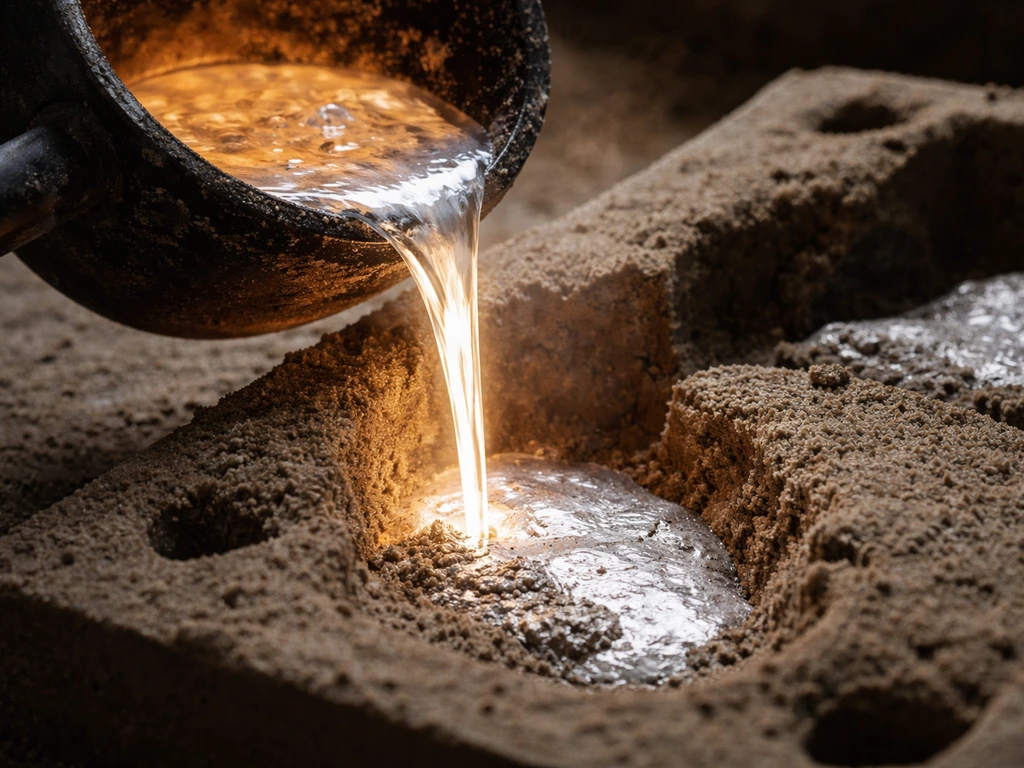
Cast aluminum furniture is made by pouring molten aluminum alloy into a mold and letting it solidify into a finished shape. The mold can be sand-cast (the traditional method used on most patio furniture) or die-cast (a higher-pressure process more common in industrial parts). For patio furniture, sand casting is the norm, and it's why cast pieces can have those ornate scrollwork, floral, or lattice patterns that look like old wrought iron. The molten metal fills every corner of the mold, so you get complex shapes in a single pour.
The alloy used matters. Most outdoor cast aluminum furniture uses alloys in the 3xx.x series (silicon-aluminum), which pour well and resist corrosion. Better manufacturers use tighter alloy control and post-cast treatments to reduce porosity, small voids inside the casting that can trap moisture and compromise long-term strength. A high-quality cast piece is dense, smooth when you knock on it, and noticeably heavy for its size. That weight is a feature, not a flaw: it tells you the walls are thick and the pours were controlled.
What extruded aluminum actually is (and why manufacturers use it)
Extruded aluminum starts as a solid billet of aluminum alloy (almost always a 6xxx-series alloy like 6061 or 6063) that gets pushed through a shaped die under high pressure, producing a continuous profile, tubes, channels, flat bars, hollow sections. Think of it like squeezing toothpaste through a shaped nozzle. The profiles are then cut to length, bent if needed, and welded or screwed together to build a furniture frame. This is how most modern, minimalist patio furniture is made: those clean-lined sectional sofas, dining frames, and lounge chairs all run on extruded aluminum construction.
The 6xxx alloys used in extrusion are actually stronger in tensile terms than typical casting alloys, and the extrusion process aligns the grain structure of the metal in a way that adds directional strength. Manufacturers often heat-treat extruded pieces to a T5 or T6 temper (solution heat treatment, quench, then precipitation aging) to push yield strength even higher. The trade-off is that extruded aluminum can only make shapes the die allows, which limits design complexity. Those clean straight lines aren't just an aesthetic choice, they're a manufacturing constraint.
Strength, stiffness, and how each holds up over years outside
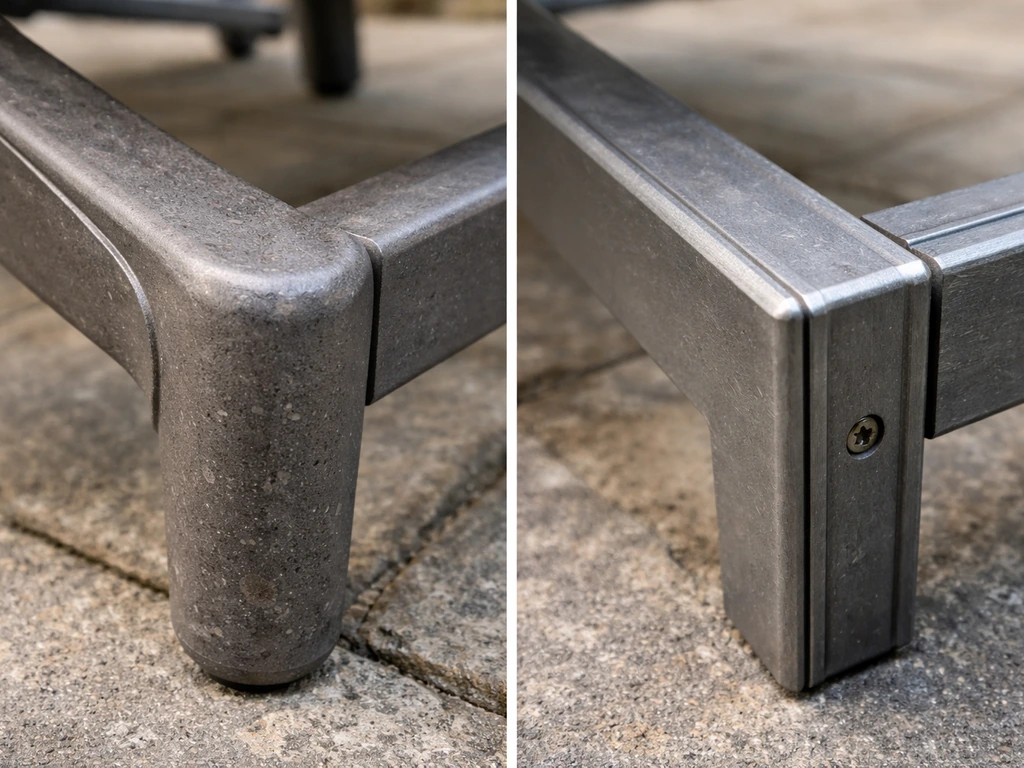
This is where the comparison gets nuanced, because raw alloy strength and real-world furniture durability aren't the same thing. In a rattan vs aluminum patio furniture comparison, the aluminum choice often comes down to how much maintenance you're willing to do versus how long you want the finish to last cast and extruded aluminum. Yes, extruded 6061-T6 aluminum has a yield strength around 40,000 psi, which beats most casting alloys. But furniture doesn't fail because the aluminum itself yields, it fails at joints, welds, wall sections, and mounting points. And that's where casting pulls ahead for complex structural pieces.
A cast chair leg or arm is a single continuous piece of metal from bottom to top. There are no welds, no mechanical fasteners in the primary structure, no seams where water can wick in and freeze. An extruded chair frame is assembled from multiple cut profiles joined together, and every joint is a potential failure point. With a quality MIG or TIG weld and proper joint design, an extruded frame is absolutely strong enough, but cheaper extruded furniture often uses screwed brackets or pop-rivet construction, which loosens over freeze-thaw cycles, under UV exposure to the plastic spacers, and with repeated moving.
Over a 10-to-15-year lifespan outdoors, cast aluminum tends to remain structurally intact longer, especially on chairs and tables that see repeated loading and movement. The legs don't develop wobble, the arms don't flex, and there's nothing to come apart at the seams, literally. Extruded frames that are fully welded (not bracketed) close this gap significantly, but you have to check the construction before you buy.
Powder coating, corrosion resistance, and what maintenance actually looks like
Both cast and extruded aluminum are protected primarily by powder coating, and the coating quality matters more than most buyers realize. Powder coating is applied electrostatically as a dry powder and then cured in an oven, which fuses it into a hard, continuous film. For outdoor patio furniture, a good coating runs between 2.5 and 3.5 mils of dry film thickness (DFT) for a single-coat system, that's roughly 65 to 90 microns. For one-coat systems specified for outdoor use, a common powder-coating dry film thickness target is about 2.5 to 3.5 mils, with thicker requirements on edges and corners when specified 2.5 and 3.5 mils of dry film thickness (DFT) for a single-coat system. Below 2 mils and you're getting a cosmetic finish that won't hold up to UV and abrasion for long. Some premium manufacturers apply primer plus topcoat systems that exceed 4–5 mils total, which is worth paying for in coastal or high-UV environments.
Here's the important difference between cast and extruded when it comes to coating adhesion: cast surfaces are rougher and more porous at a microscopic level, which gives powder coat more mechanical bite. Extruded aluminum is smoother and denser, which means adhesion relies more on chemical pretreatment (usually a chromate or zirconium conversion coating) before powder is applied. Both can achieve excellent adhesion with proper prep, but if a manufacturer is cutting corners, it's more likely to show up as peeling on an extruded piece than on a cast one, because the smooth surface gives the coating less to hold onto.
Aluminum itself doesn't rust. What you do see over time is oxidation (a dull, chalky white surface), galvanic corrosion at steel fasteners, and coating failure that exposes the base metal to pitting. The galvanic risk is real: if your cast or extruded aluminum furniture is assembled with steel screws or stainless steel hardware, those dissimilar metals create a galvanic couple, and in wet or salty conditions the aluminum at the contact point will corrode faster. Quality manufacturers use stainless 316 hardware with nylon washers to break the electrical contact, or they use aluminum fasteners throughout. Check this before you buy, it's a detail that separates $300 furniture from $1,500 furniture.
Realistic maintenance for either type: wash with mild soap and water twice a year, inspect the coating for chips or scratches and touch up with matching powder-coat paint or a metal primer, and check fasteners annually. If you're in a coastal environment, rinse salt off monthly. Neither cast nor extruded aluminum needs sealing, oiling, or any seasonal treatment the way teak or other wood furniture does, which is a big part of why aluminum is such a popular outdoor material. The real trade-off compared with teak is maintenance and weathering, since aluminum avoids the wood’s regular cleaning, sealing, and aging concerns teak vs aluminum patio furniture.
Comfort, weight, and how the two designs behave in daily use
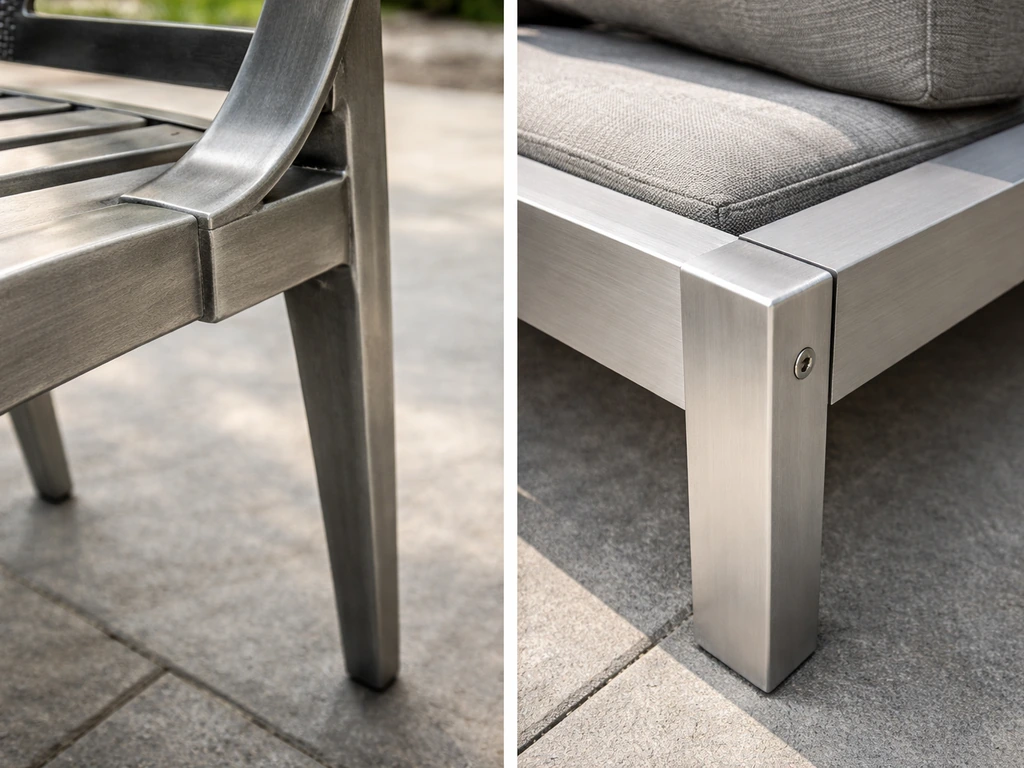
Cast aluminum dining chairs and lounge pieces typically weigh 15 to 30 pounds each, sometimes more for large sectional pieces. That weight is stable in wind (important if you don't want chairs blowing into your pool) but makes rearranging a chore. If you regularly move furniture around for parties, store pieces seasonally, or load them into a truck for a vacation home, cast aluminum gets old fast. Extruded aluminum furniture can run 8 to 18 pounds per chair, genuinely light enough to grab with one hand.
Cast aluminum chairs and benches are rigid in a way that either feels solid and premium or uncomfortably stiff, depending on the design. The best cast pieces have contouring and slight flex built into the seat or back geometry, but they'll never give you the gentle bounce of a sling-back extruded frame. Extruded aluminum furniture, especially frames with fabric or mesh slings, tends to be more ergonomically forgiving because the frame is thinner and the seat material does the comfort work. For a dining chair you'll sit in for a two-hour dinner, this matters.
Over time, cast pieces don't develop creaks or wobble, the structural integrity is basically fixed at manufacture. Extruded frames, especially screwed construction, can develop minor looseness that shows up as a slight flex or creak under load after a few years. This is more annoying than dangerous, and it's usually correctable with a torque of the fasteners. Fully welded extruded frames avoid this almost entirely.
Cast aluminum vs steel patio furniture: rust, upkeep, weight, and real value
Steel comes up often in this comparison because powder-coated steel furniture is priced in the same range as mid-grade cast aluminum and looks nearly identical at first glance. The difference in long-term performance is significant, especially outdoors. If you're weighing aluminum vs steel patio furniture, the key difference is how each material handles long-term outdoor wear.
| Factor | Cast Aluminum | Powder-Coated Steel |
|---|---|---|
| Rust risk | None (aluminum oxidizes but doesn't rust) | High if coating chips; bare steel rusts rapidly |
| Weight | Moderate (15–30 lbs per chair) | Heavier (25–40+ lbs per chair for solid steel) |
| Coating adhesion | Good; rough cast surface helps mechanical bite | Good initially; chips expose bare metal to rust |
| Maintenance frequency | Low; rinse, inspect coating annually | Higher; chips must be treated quickly to prevent rust spread |
| Lifespan outdoors | 15–25+ years with basic care | 5–12 years depending on climate and coating quality |
| Typical price range | Mid to premium ($150–$600+ per chair) | Budget to mid ($60–$300 per chair) |
| Cost per year (rough estimate) | Lower long-term despite higher upfront cost | Lower upfront but replacement cycles add up |
Steel's main practical problem outdoors is that the powder coat will eventually chip, from a dropped tool, a dragged chair, a hailstone, and once bare steel is exposed to rain or humidity, rust starts within days. Powder-coated steel can be an excellent option when you want that steel rigidity, but it depends heavily on how well the coating holds up to chips and scratches. In a coastal or humid climate, a chipped steel leg can develop visible rust in a season. Cast aluminum under the same chip just oxidizes to a dull grey and holds there. You can touch it up and move on. With steel, you have to catch chips immediately and prime them before rust gets under the surrounding coating and causes it to bubble and peel.
Steel furniture does have genuine advantages: it's heavier (actually good in windy spots), it's typically cheaper, and for a covered patio or a sunroom where weather exposure is minimal, a quality steel piece can last a long time. But for year-round outdoor exposure, especially in coastal, rainy, or freeze-thaw climates, cast aluminum wins on long-term value even at twice the upfront price. That long-term value is why people often debate polywood vs aluminum patio furniture before choosing. The comparison to cast iron is also worth noting: cast iron is dramatically heavier and rusts aggressively if not maintained, while cast aluminum gives you similar heft and visual weight without the corrosion liability.
Which one to choose for your climate and situation
Climate and usage pattern are the real deciding factors here. Here's how to think through it:
| Your Situation | Best Choice | Why |
|---|---|---|
| Coastal (salt air, humidity) | Cast aluminum | No rust, coating holds better, no structural joints to corrode |
| Freeze-thaw climate (Midwest, Northeast) | Cast aluminum | No joints to loosen from thermal cycling; single-piece structural members |
| Hot, high-UV climate (Southwest, Florida) | Either, with quality coating | UV degrades coating not metal; prioritize thick powder coat over material type |
| Covered patio, mild climate | Extruded aluminum | Weight and cost savings make sense; lower exposure reduces durability gap |
| Frequent moving or seasonal storage | Extruded aluminum | Much lighter; easier to stack, carry, and transport |
| Permanent installation, infrequently moved | Cast aluminum | Weight is an asset; designed for long-term placement |
| Tight budget, short-term use | Extruded aluminum (welded) | Lower cost; still corrosion-resistant with proper coating |
| Long-term investment, high-use space | Cast aluminum | Higher upfront, lower cost per year over a 15+ year lifespan |
Quick buying checklist before you order
- Check the construction method: does the listing say sand-cast, die-cast, or welded extruded? If it just says 'aluminum,' ask the brand directly.
- Look for powder-coat thickness specs: 2.5 mils DFT minimum for outdoor use; 3.5+ mils or a two-coat primer/topcoat system is better.
- Inspect joint construction: fully welded extruded frames are far better than screwed or bracketed construction.
- Check fastener materials: stainless 316 hardware with nylon isolation washers is the right spec for outdoor use.
- Knock on a cast piece: a solid, dull thunk means dense walls; a hollow ring means thin walls or high porosity.
- Ask about alloy grade: for extruded aluminum, 6061-T6 or 6063-T5 are solid specs; avoid unspecified 'commercial grade' claims.
- For coastal or pool-side use, confirm the brand tests to a minimum of 1,000 hours in a salt-spray chamber (ASTM B117 is the standard test).
- Weigh the piece per the listing specs: a cast dining chair under 12 lbs is probably thin-walled; over 20 lbs suggests solid construction.
What to do right now if you already own one of these
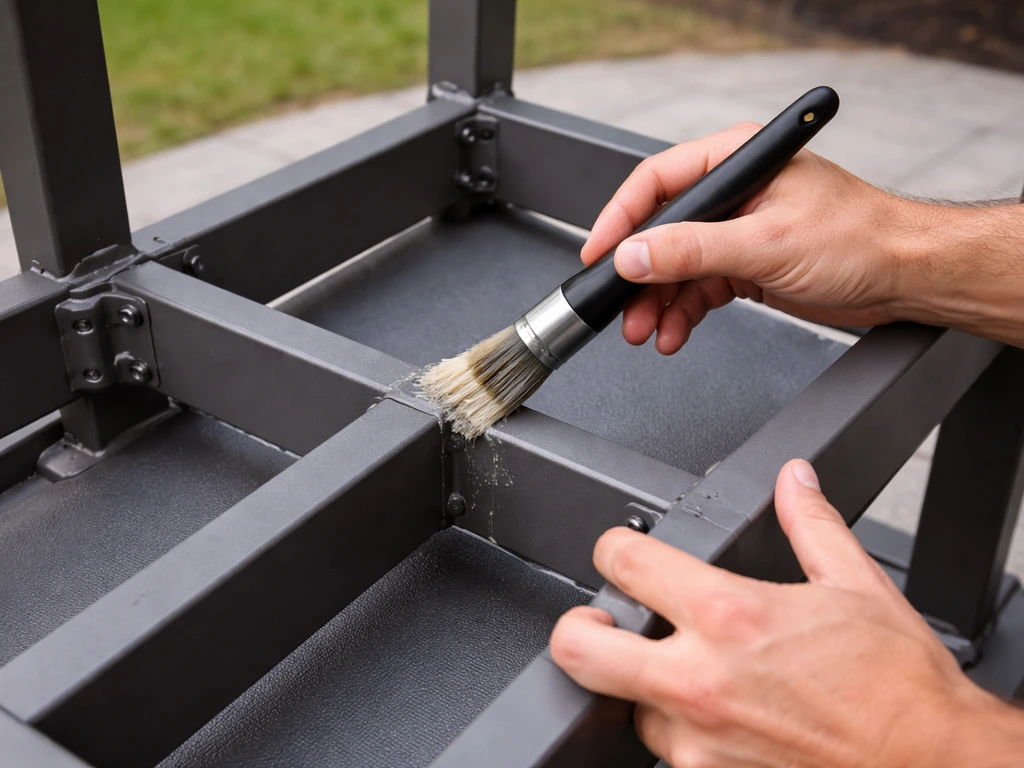
If you already have cast or extruded aluminum furniture and want to extend its life, start with a physical inspection. Run your hand along every joint, underneath table aprons, and around leg bases, these are the first places coating fails and moisture collects. Any spot where you feel roughness, see white chalky residue (oxidation), or notice bubbling paint needs to be addressed now, not next season. Sand the affected area with 220-grit, prime with a zinc-rich or aluminum-compatible metal primer, then touch up with a color-matched powder-coat spray (several brands make rattle-can versions that cure to a reasonable match). It's not as durable as a factory coat, but it stops the degradation.
For extruded furniture with any looseness at the joints, flip the piece upside down and check every fastener. Tighten anything that's turned with a screwdriver and shows no thread resistance. If screws are spinning freely, the hole has stripped, fill with an aluminum-compatible thread insert or epoxy-set a slightly larger fastener. Don't leave loose joints, because they flex under load and accelerate fatigue at the surrounding metal.
If you're shopping now and still deciding between cast and extruded, the most practical next step is to handle the piece in person if at all possible. When you are deciding on wicker vs aluminum patio furniture, type and construction matter as much as the finish. Pick it up, sit in it, push on the joints. A quality cast aluminum chair feels inert and rock-solid. A quality extruded frame feels precise and light. A cheap piece of either type tells you immediately through flex, rattle, or thin wall sections. If you're buying online, use the weight spec as your quality proxy, and don't hesitate to email the brand and ask for the powder-coat DFT spec and alloy grade. Brands that can answer those questions confidently are the ones worth buying from.
FAQ
Can extruded aluminum be as durable as cast aluminum if the extruded frame is welded and high quality?
Yes, welded extruded frames can be very close in long-term performance, but you still need to verify joint design. Look for full penetration or properly formed welds, and confirm the brand avoids bracketed or mostly-screwed structural construction. Also check the wall thickness at the legs and the way the seat attaches, because failures usually happen at those connection points, not in the straight rail profiles.
What’s the best way to tell if a piece has good powder coating before buying?
Inspect for a uniform, non-glossy even finish and run your fingernail lightly across hidden edges and underside corners (paint misses commonly appear there). A second practical test is to look at cut ends of tubes and any factory-drilled holes, if they are not coated or have bare metal exposed, corrosion risk rises quickly once chips happen.
Do I need to worry about aluminum joints loosening on extruded furniture more than cast?
Often, yes. Cast pieces usually have fewer primary seams, while extruded frames typically rely on joints and fasteners. If you choose extruded, check how the joints are made, bracketed and screw-based designs are more likely to develop play under freeze-thaw and UV degradation of plastics, even if they feel solid at delivery.
Is 316 stainless hardware always required for coastal areas?
316 stainless is the safest expectation in salt air, but the key is the whole fastener stack and insulation. If hardware is stainless or aluminum but there are no nylon or non-conductive washers, galvanic corrosion can still accelerate at contact points. Ask what hardware grade is used and whether dissimilar-metal contact is isolated.
How often should I touch up chips on aluminum furniture, and what should I use?
Touch up as soon as you see coating failure, especially after hailstorms or sharp impacts. Use an aluminum-compatible primer and a product meant for powder-coat systems, then match the color as closely as possible. Don’t just apply generic paint, poor adhesion at the edges can cause peeling that spreads outward after a few wet cycles.
Does cast aluminum weigh more, and does that actually matter for wind stability or comfort?
Cast aluminum typically weighs substantially more per chair, and that extra mass helps prevent movement in wind. However, comfort can be a trade-off, heavier cast chairs can feel stiffer if the seat geometry is flat, while extruded frames often support slings or mesh that add give without relying on thick metal.
Will freezing temperatures damage aluminum patio furniture?
Aluminum itself is fine in freeze-thaw, the bigger risk is moisture trapped under failed coating or at seams and fastener holes. That’s why you should prioritize early inspection of joint areas and leg bases, since trapped water can cause coating blistering and pitting once metal is exposed.
What should I ask the brand if I’m buying online and want cast vs extruded clarity?
Ask for the alloy grade, the powder-coat system details, including total DFT or at least whether it’s single coat or primer plus topcoat, and the hardware grade. Also ask whether the extruded frame is fully welded versus bracketed at structural points. Brands that can answer these without vague marketing terms are usually more reliable.
Is extruded aluminum a better choice for covered patios where pieces stay dry?
Often, yes. If your furniture is under a roof most of the time and won’t see frequent moisture and freeze-thaw, extruded aluminum can offer excellent value because its smooth profiles and precision joinery are durable when coating adhesion stays intact.
What’s the most common mistake people make when comparing cast aluminum vs extruded aluminum?
They compare only the metal type and ignore construction details. Two pieces can both be aluminum but differ dramatically in joint method, hardware grade, weld quality, and coating thickness. Prioritize those factors first, then choose cast for fewer seams and extruded for lighter, cleaner designs.
Next Articles
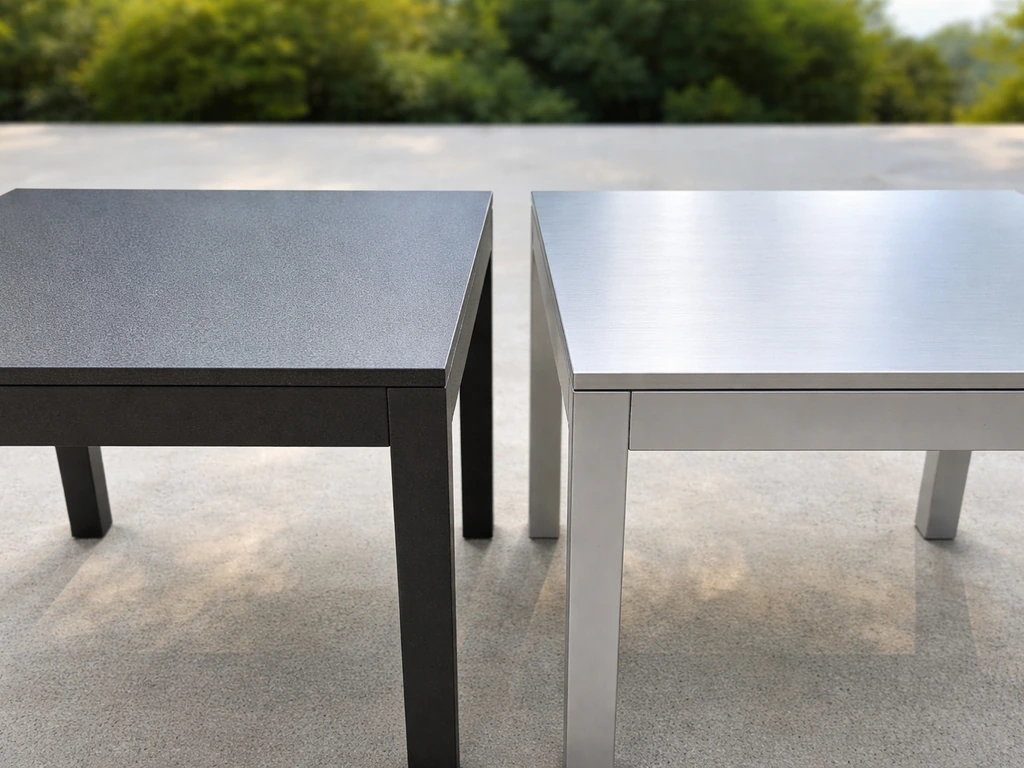
Powder-Coated Steel vs Aluminum Patio Furniture: Which Wins?
Compare powder-coated steel vs aluminum patio furniture for rust, UV fade, coastal durability, maintenance, comfort, and
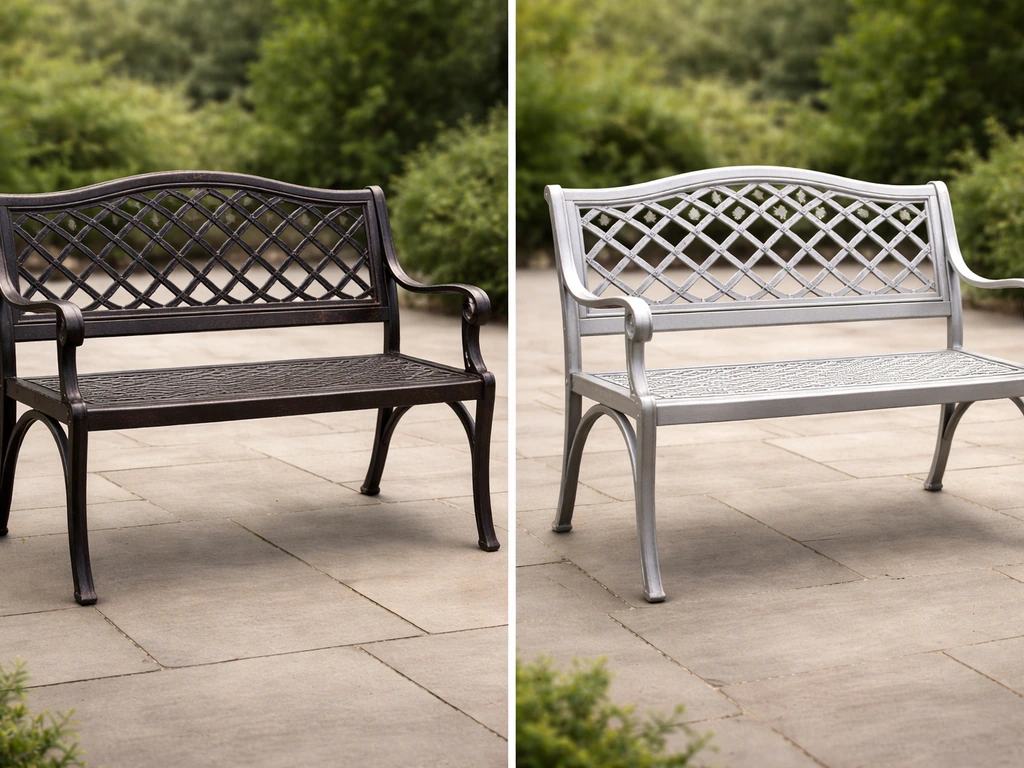
Cast Iron vs Cast Aluminum Patio Furniture: Which Lasts Longer?
Cast iron vs cast aluminum patio furniture durability, rust, weight, maintenance, lifespan by climate, and a quick buyin
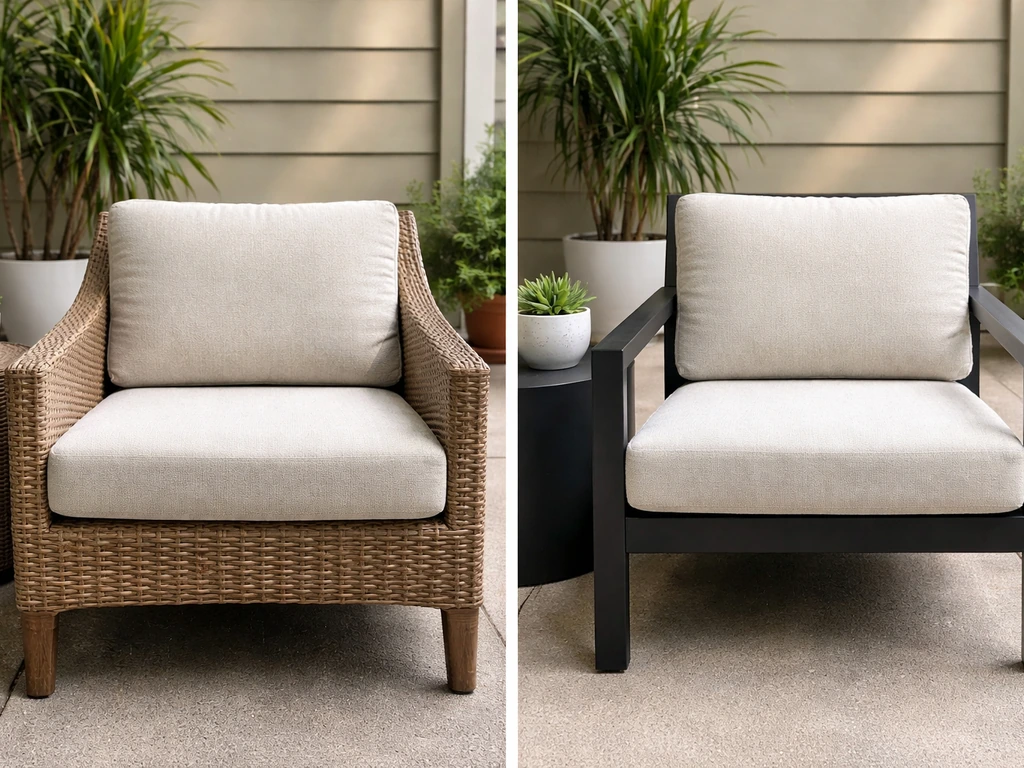
Wicker vs Aluminum Patio Furniture: Which Is Better?
Compare wicker and aluminum patio furniture for weather, durability, maintenance, comfort, and how to choose by climate