
If you want furniture that can sit outside for decades, weather gracefully with minimal intervention, and still look intentional doing it, teak is the better long-term pick. If you want something lightweight, easy to move, color-consistent year after year, and as close to zero-maintenance as outdoor furniture gets, quality powder-coated aluminum wins. Neither is universally better, the right call depends on your climate, how much upkeep you're actually willing to do, and whether you care more about the warm character of wood or the clean lines of metal.
Teak vs Aluminum Patio Furniture: Durability, Care, Value

Marcus Kellerman
8 Jun 2026
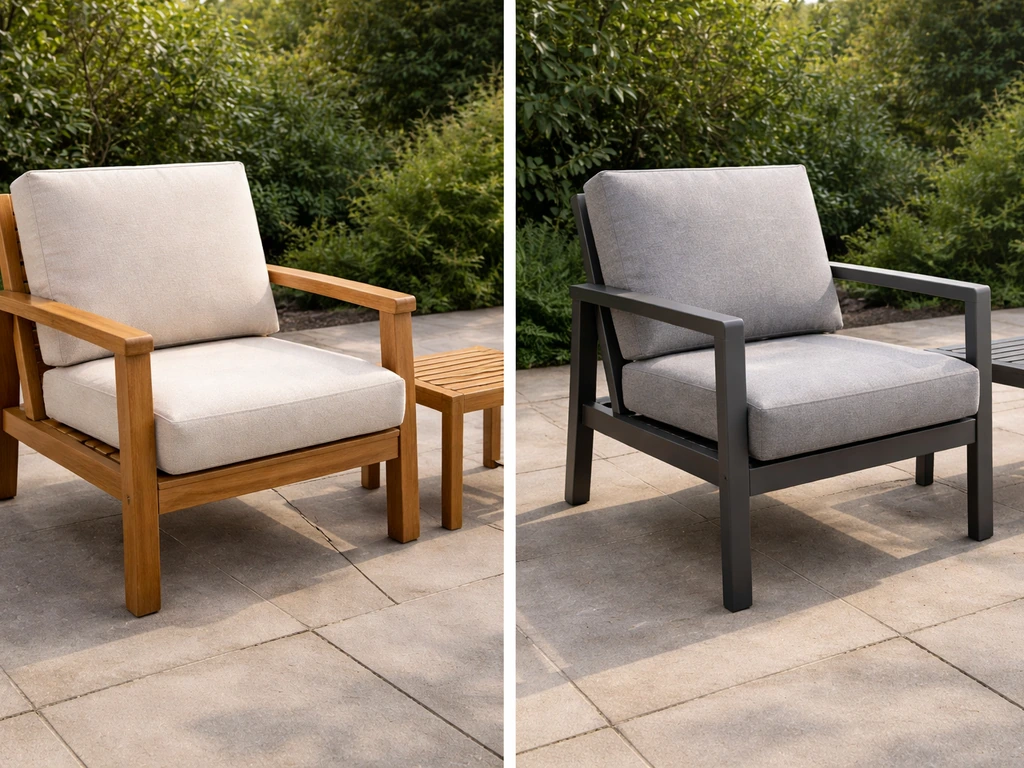
Quick verdict: when teak beats aluminum and vice versa
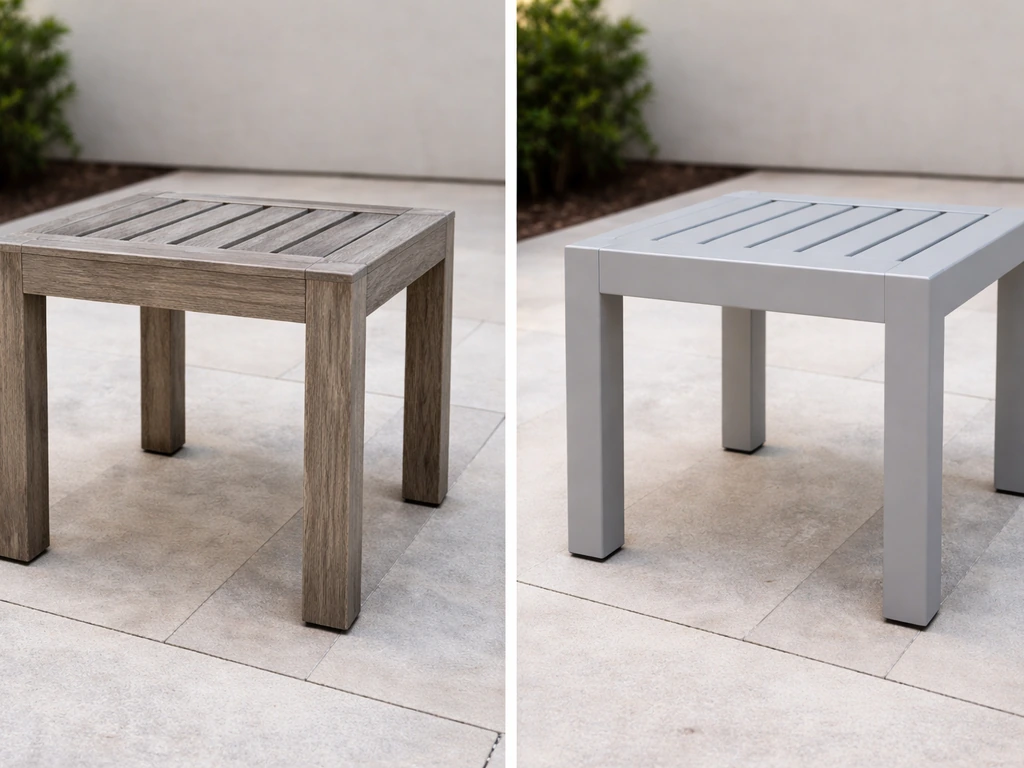
Teak is the right call when you want a long-term, heirloom-grade piece that earns its looks over time. It has natural oils baked into the wood that resist moisture, rot, and insects without needing an annual protective coating. Left alone, it shifts from warm honey-brown to a handsome silvery-gray patina, a look many people actively want. If you're furnishing a permanent outdoor space and plan to keep the furniture for 25 to 50-plus years, teak's long-term economics are hard to beat.
Aluminum makes more sense when your priorities are portability, consistent appearance, and minimal seasonal labor. A quality powder-coated aluminum frame won't rust the way steel does, doesn't need oiling, and can be touched up with a can of spray paint when the coating chips. Powder-coated steel vs aluminum patio furniture mostly comes down to how you value rust resistance, coating longevity, and maintenance over time. You're looking at a realistic lifespan of 15 to 20 years from a well-made piece, less than teak, but often at a lower upfront cost and with fewer annual chores. If you're also weighing aluminum vs steel patio furniture, note that aluminum's powder coat is key for rust resistance, while steel relies more heavily on coatings and upkeep.
| Factor | Teak | Aluminum |
|---|---|---|
| Expected lifespan | 25–50+ years | 15–20 years |
| Maintenance frequency | Annual cleaning; oil every 6–12 months if preserving color | Annual cleaning; touch-up paint as needed |
| Rust/rot resistance | Natural oils resist rot and insects | Doesn't rust like steel; coating protects against corrosion |
| Weight | Heavy (keeps it stable) | Lightweight (easy to move) |
| Aesthetic aging | Warm honey to silver-gray patina | Finish fades/chalks if coating degrades |
| Repairability | Sand, re-oil, refinish | Touch-up paint, re-coat, or replace parts |
| Upfront cost | Higher | Low to high depending on grade |
How teak and aluminum actually behave outdoors
Teak's durability comes from its biology. The heartwood is dense and loaded with natural oils and silica, which is why it resists moisture, rot, and insects without any help from you. Rain, sun, and temperature swings do affect it, UV light and water break down the surface layer over time, driving that color transition from warm brown to silver-gray, but they don't compromise the structural core the way they would with cheaper woods. This is what makes teak genuinely different from, say, eucalyptus or acacia outdoor furniture marketed with similar claims.
Aluminum's outdoor performance is almost entirely about the coating, not the metal underneath. The aluminum itself doesn't rust the way steel does, it oxidizes, but that oxidation layer is actually self-protective at the surface level. The real vulnerability is the powder-coat finish. That coating is what shields the metal from UV degradation, salt, and moisture. As long as it's intact, aluminum holds up extremely well. Once it chips, scratches, or starts to chalk and lose adhesion, you have an entry point for accelerated corrosion, especially at hardware contact points. That's the failure mode to watch.
Maintenance and care: what you'll actually do each season
Teak care routine
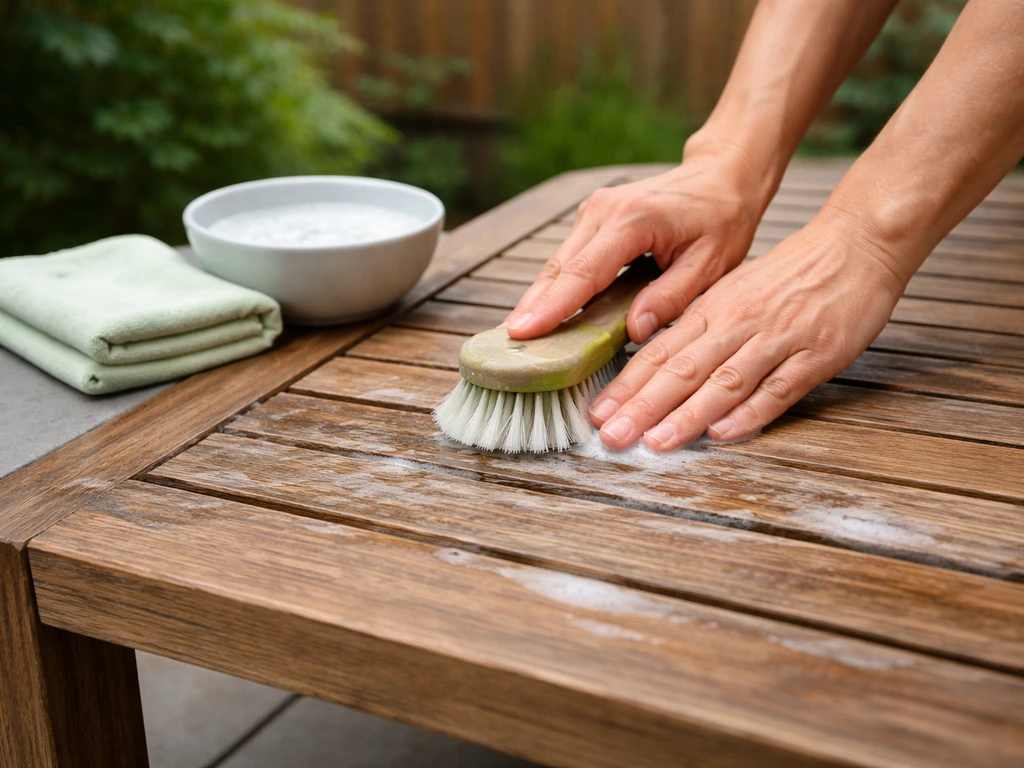
The honest teak maintenance story depends entirely on whether you want to preserve the warm color or let it go gray. If you're fine with silver-gray, and a lot of people genuinely love it, your job is simple: rinse it off when it gets dirty, scrub with mild soap and a soft brush once or twice a season, and let nature do the rest. If you want to hold onto the honey-brown color, you're committing to cleaning the surface first, then applying a teak oil or protector roughly every 6 to 12 months. Skipping prep and oiling an already-dirty surface locks in grime, so the sequence matters. One thing worth noting: teak's natural oils can bleed onto cushions, especially when the furniture is new, so store cushions separately at first.
If your teak develops gray patches, spots, or light surface cracks over time, a light sanding with fine-grit paper will refresh the surface before you re-oil. You don't need to strip and refinish the whole piece, targeted sanding and a fresh coat of protector gets most teak back to looking good. This is genuinely repairable furniture.
Aluminum care routine
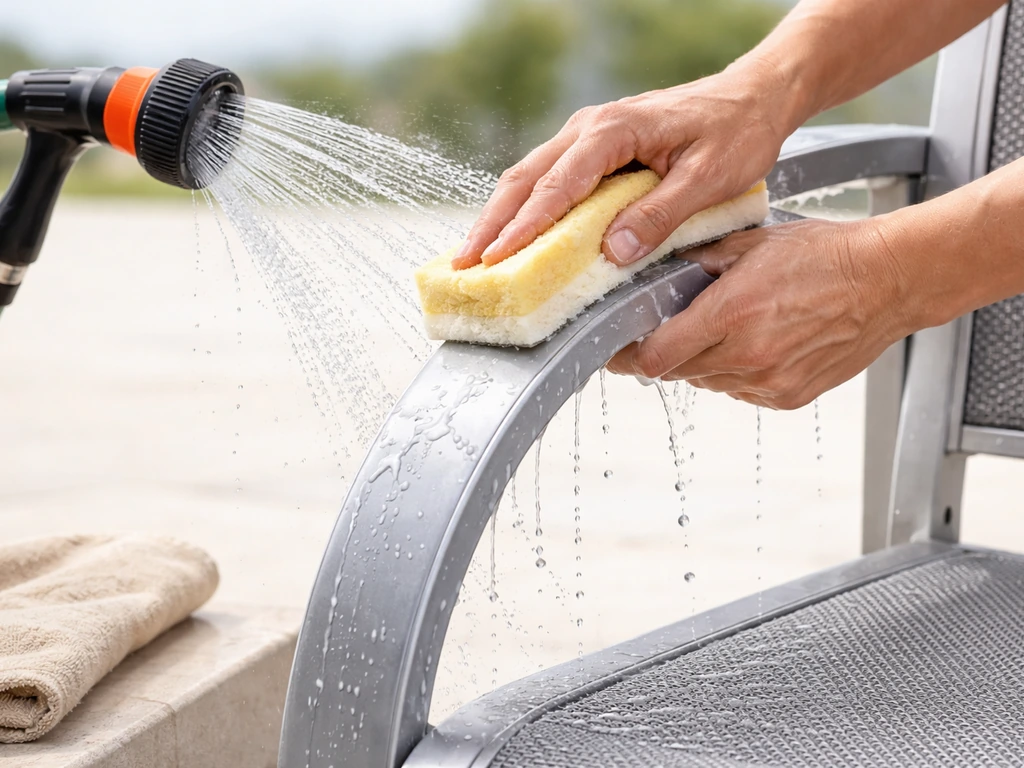
For powder-coated aluminum, the routine is straightforward: wash with mild dish soap and water, rinse thoroughly, and dry if you're in a humid or coastal environment where moisture can linger in joints and hardware gaps. The critical habit is inspecting the finish annually for chips and scratches, then hitting those spots immediately with touch-up paint. That one step, catching coating damage early, is what separates aluminum that looks good at year 15 from aluminum that's fading and pitting at year 7. Polishing or waxing the finish occasionally also helps slow UV degradation of the top coat layer.
Durability and lifespan: wear, failure points, and how to fix them
Well-built teak furniture from Grade A heartwood can genuinely last 25 to 50 years or more, long enough to blank" rel="noopener noreferrer">pass down. The failure points are mostly cosmetic: surface graying, light cracking or splitting in low-quality or sapwood-heavy pieces, and warping if the wood was poorly kiln-dried before sale. Structural collapse on quality teak is rare. The repairs, sanding, oiling, occasional hardware replacement, are DIY-friendly and don't require professional intervention.
Quality powder-coated aluminum realistically lasts 15 to 20 years before meaningful finish wear becomes an issue, and the coating's condition is the main lifespan lever. Common failure signs in order of appearance: gloss loss, chalking, color fading, then film breakdown and localized corrosion at exposed metal. Once the coating fails broadly, your options are professional re-coating (which adds cost) or replacing the piece. Fasteners and hardware, especially in cheaper pieces, often fail before the frame itself does. Look for stainless or marine-grade hardware in any aluminum furniture you're considering for a coastal or humid setting.
Climate fit: coastal, humid, freeze-thaw, and high-UV guidance
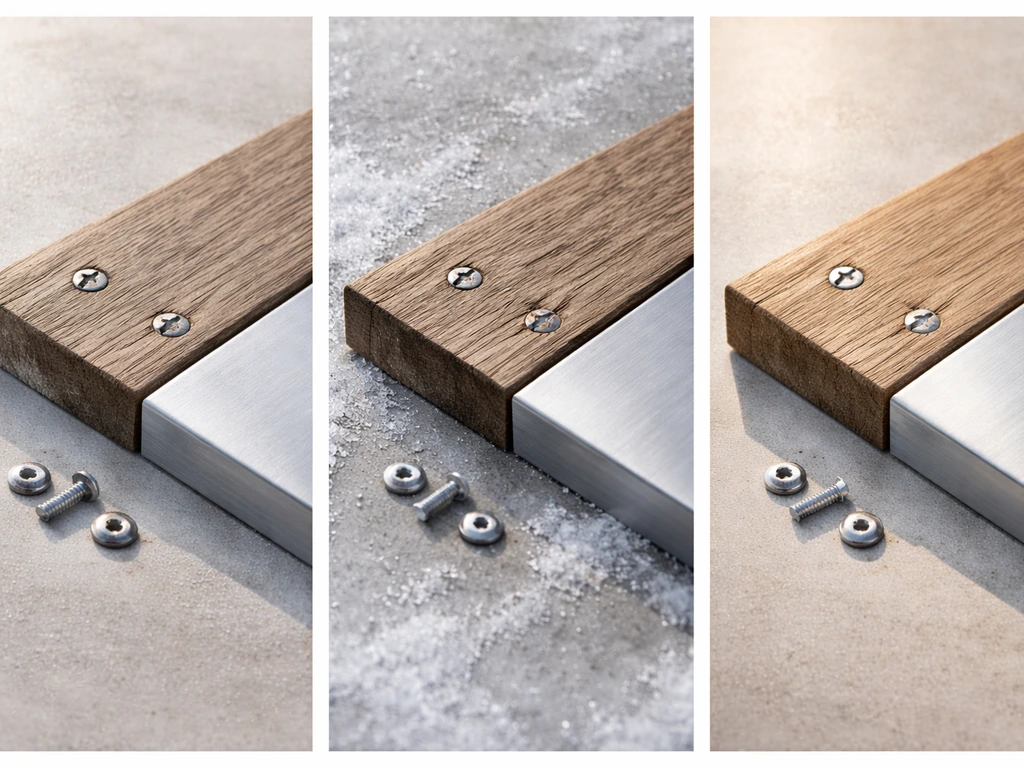
Climate is where the comparison gets specific and where most buyers should spend their decision-making energy.
| Climate | Teak | Aluminum |
|---|---|---|
| Coastal/salt air | Performs well; use 304 or 316 marine-grade stainless fasteners to prevent staining and corrosion | Risk at coating chips/scratches; rinse salt off frequently and touch up paint immediately when damaged |
| High humidity | Natural oils handle moisture well; watch for surface mold/mildew on untreated pieces | Fine if coating is intact; humidity accelerates corrosion at coating damage points |
| Freeze/snow cycles | Temperature swings can cause surface cracking, especially in lower-grade or improperly dried teak; cover or store in extreme climates | Dimensionally stable through freeze cycles; coating and fasteners are the maintenance focus, not wood movement |
| Intense sun/UV | UV accelerates the gray patina transformation; oil/protect if you want to preserve color | UV degrades the polymer top layer of powder coat over time; chalking and fading are early signs |
For coastal environments specifically, teak is often the more forgiving choice because salt doesn't attack the wood itself, it's the hardware you need to spec correctly. Aluminum in a coastal setting needs more vigilant coating maintenance. If you're comparing aluminum to other metals for coastal use, it still far outperforms steel, the aluminum vs. steel distinction matters a lot in humid, salty air.
In climates with serious freeze-thaw cycles, aluminum has an edge. It doesn't absorb moisture, so it doesn't crack or split the way wood can when temperature swings are dramatic. Teak handles cold better than most woods, but if you're in a region with harsh winters and don't plan to store or cover furniture, aluminum's dimensional stability is a real advantage.
Comfort, style, and how each material ages
Teak feels warmer in every sense. Wood doesn't conduct heat the way metal does, so a teak chair sitting in summer sun isn't going to scorch the backs of your legs the way an aluminum one can. In cold mornings, teak isn't shockingly cold to the touch either. That thermal comfort difference is real and noticeable, especially on dining chairs or benches where skin contact is direct.
Stylistically, teak ages in a way that feels intentional, the silver-gray patina reads as sophisticated and natural, and it's consistent. Aluminum finishes age less gracefully if not maintained: chalking and fading tend to look like neglect rather than character. That said, aluminum's range of powder-coat colors, matte black, slate gray, deep navy, gives you more upfront design flexibility, and when the finish is fresh and maintained it can look genuinely sharp.
Weight is another practical comfort factor. Teak is heavy, which is a feature in windy climates (no chasing chairs across the yard) but a frustration if you rearrange your patio frequently. Aluminum's lightness is a genuine convenience for seasonal moves, apartment balconies, or setups where you shift furniture often. If weight and portability matter to you, this is one of the clearest reasons to lean aluminum, something wicker and rattan furniture shares in appeal, though for different reasons. Rattan vs aluminum patio furniture often comes down to whether you want the natural, cozy look of rattan or the easier, lower-maintenance durability of aluminum frames wicker and rattan furniture. Wicker vs aluminum patio furniture is a common matchup when you want comfort and style without constant upkeep.
What to look for when buying
Shopping for teak
- Grade A teak is non-negotiable for outdoor longevity. It comes from the dense heartwood, has rich even tone, straight grain, no defects, and high natural oil content. Grade B and C teak uses outer sapwood with lower oil content and is far more prone to splitting and cracking.
- Ask about kiln drying. Properly dried teak should be at roughly 10% moisture content (plus or minus 2%). Furniture built from wood that's too wet will move, crack, and warp as it adjusts.
- Inspect the joinery. Mortise-and-tenon construction is stronger than dowels or screws alone. Stainless steel fasteners (304 minimum, 316 marine-grade for coastal use) are essential — galvanized or zinc hardware will stain the wood and fail faster.
- Be skeptical of 'plantation teak' claims that don't specify grade. The label alone doesn't tell you whether you're getting heartwood or sapwood.
- Check the surface finish. Some pieces come with a factory oil or protector applied; others are raw. Either is fine, but know which you're getting so your first maintenance cycle is correct.
Shopping for aluminum
- Look for thicker-gauge aluminum frames. Thin-wall extrusions flex and dent more easily; cast aluminum sections at high-stress joints add structural strength.
- Powder-coat finish should be uniform with no thin spots, bubbles, or orange-peel texture — these indicate adhesion problems that will fail faster under UV and moisture.
- Hard anodized finishes can outperform standard powder coat for longevity (15 to 30 years vs. 5 to 20 years for powder coat, depending on climate and maintenance), though they offer fewer color options.
- Check hardware material. Stainless fasteners matter here too, especially for coastal or humid settings where zinc or galvanized screws corrode and stain the frame.
- Ask whether touch-up paint is available from the manufacturer. Brands that sell matching touch-up kits are signaling that they expect you to maintain the finish — and that the repair pathway exists.
- Multi-year structural and finish warranties (5 years is a reasonable floor) suggest the manufacturer stands behind the coating's durability. Treat a missing warranty as a yellow flag.
Cost of ownership and how to make your final call
Teak costs more upfront, but when you divide that price across 30 to 50 years of use, the cost-per-year math often comes out ahead of cheaper alternatives you replace every decade. Add in the relatively low labor cost (cleaning supplies, a bottle of teak oil once a year if you choose), and teak's total ownership cost is genuinely competitive. The tradeoff is the time investment, annual oiling isn't hard, but it is a recurring commitment.
Aluminum typically costs less to buy and has lower annual maintenance labor, you're mostly cleaning and occasionally touching up chips. The coating has a finite life, though. After 15 to 20 years, you're likely looking at replacement rather than restoration, which resets your cost clock. For buyers who prefer to upgrade or change styles every 10 to 15 years anyway, that's not a downside, it's actually a fit.
Use this checklist to land your decision:
- Do you want furniture that lasts 30+ years and builds character over time? Choose Grade A teak.
- Do you want furniture that needs zero oiling and can be hosed down season after season? Choose powder-coated aluminum.
- Are you in a coastal or salt-air environment? Both can work, but teak requires less vigilance about coating integrity — just spec stainless fasteners.
- Do you have harsh freeze-thaw winters and won't store or cover furniture? Aluminum handles dimensional stress better than wood.
- Do you rearrange your patio frequently or need to move furniture for storage? Aluminum's lighter weight is a real practical advantage.
- Is direct skin contact comfort important (dining chairs, loungers)? Teak stays closer to ambient temperature; aluminum frames can get uncomfortably hot in full sun.
- Are you willing to oil annually to preserve warm color? If yes, teak rewards that effort. If no, either go aluminum or accept that your teak will silver-gray — which is a perfectly valid choice.
- What's your budget horizon? Teak's higher upfront cost amortizes well over decades. Aluminum costs less now but may need replacement within 15 to 20 years.
If you're still on the fence between material categories more broadly, it's worth knowing that aluminum sits in a larger comparison landscape, polywood vs. aluminum, wicker vs. aluminum, and cast aluminum vs. extruded aluminum all bring different tradeoffs into the mix. But when the choice is specifically teak vs. If you're also looking at metal options in the same family, cast iron vs cast aluminum patio furniture is another helpful comparison for what to expect from durability, weight, and maintenance. aluminum, the core question is really about time horizon and temperament: do you want heirloom wood with natural aging, or a clean-lined metal frame with lower ongoing effort? If you're weighing polywood vs aluminum patio furniture, focus on upkeep, heat feel, and how each material holds up to sun and moisture. Both are good answers. They're just answers to different questions.
FAQ
Can I refinish teak if I don’t like the silvery-gray patina?
Yes, but do it only if the furniture is true outdoor grade teak or has an exterior finish intended for outdoor use. Sanding through a coating or using harsh strippers can remove oils and make the surface dry and uneven. For simple maintenance, rinse, mild soap cleaning, then oil or protector is usually the safest path.
Should I oil teak before cleaning if it looks dirty?
In most cases, avoid starting teak maintenance on a surface that’s already caked with dirt or grime. The sequence matters because oils and protectors can trap debris, leading to darker blotches. Clean first, let it fully dry, then apply oil or protector to the dry wood.
What should I do if powder-coated aluminum starts peeling or chalking?
Power-coated aluminum is generally not compatible with routine “re-oiling” like wood. If the coating chips, the right repair is touch-up paint made for powder-coated finishes, then keeping the area clean and dry so adhesion stays strong. For widespread peeling or chalking film breakdown, professional re-coating is typically more cost-effective than repeated spot fixes.
Can I use pressure washing on aluminum patio furniture to speed up cleaning?
Keep it off the frame and especially away from joints and hardware gaps. Solvent-heavy cleaners can attack the powder coat and accelerate dulling. Use mild dish soap and water, then rinse thoroughly, drying if you live where moisture lingers after rain.
What’s the safest way to sand teak before re-oiling?
For teak, avoid steel wool or aggressive sanding pads that can embed metal particles and cause dark spotting. Use fine-grit sandpaper only when you’re refreshing gray patches or light cracks, then follow with a proper protector or oil after the wood is clean and dry.
How do I touch up scratches on powder-coated aluminum so they do not stand out later?
The biggest risk is aluminum touch-up mismatch. Use the same sheen and color family as the original powder coat if possible, and lightly feather the edges rather than building a heavy layer in the center of a chip. Touch up early, because the first exposed metal is where localized corrosion can start at hardware contact points.
Do I need to worry about corrosion from mixed metals on aluminum patio sets?
Mixing mismatched metals can be a corrosion accelerant, but it depends on hardware. If fasteners are stainless or marine-grade, galvanic corrosion risk is lower. If you have low-grade mixed metals in coastal air, look for replacement hardware made for outdoor or marine conditions.
How often should I oil teak if I want it to stay honey-brown?
Teak can keep its appearance with more frequent light care, but heavy annual oiling is not always better. If your goal is to preserve honey-brown color, plan regular treatment and keep steps consistent. If you want gray patina, you can simplify to periodic cleaning and let aging happen.
Should I cover teak patio furniture during winter, and what about the cushions?
If you want to store teak indoors or under a cover, let it dry completely first and store cushions separately, especially when new. Covers trap moisture and can create mildew staining or dark spots, particularly in humid or coastal climates.
Which material holds up better if I get repeated freeze-thaw cycles?
For freeze-thaw regions, aluminum is usually more stable because it does not absorb water like wood. Teak can still work well, but plan for movement from expansion and drying, and consider covering or storing to reduce repeated wetting cycles, which can increase cosmetic cracking in lower-quality stock.
What should I inspect on the product label before buying teak or aluminum?
You can often choose performance without going fully bare-metal. Look for aluminum designs that use quality sealed joints, good powder coat thickness, and marine-grade fasteners, then prioritize touch-up accessibility so you can repair chips quickly. For teak, prioritize Grade A heartwood and kiln-dried quality to reduce warping risk.
Next Articles
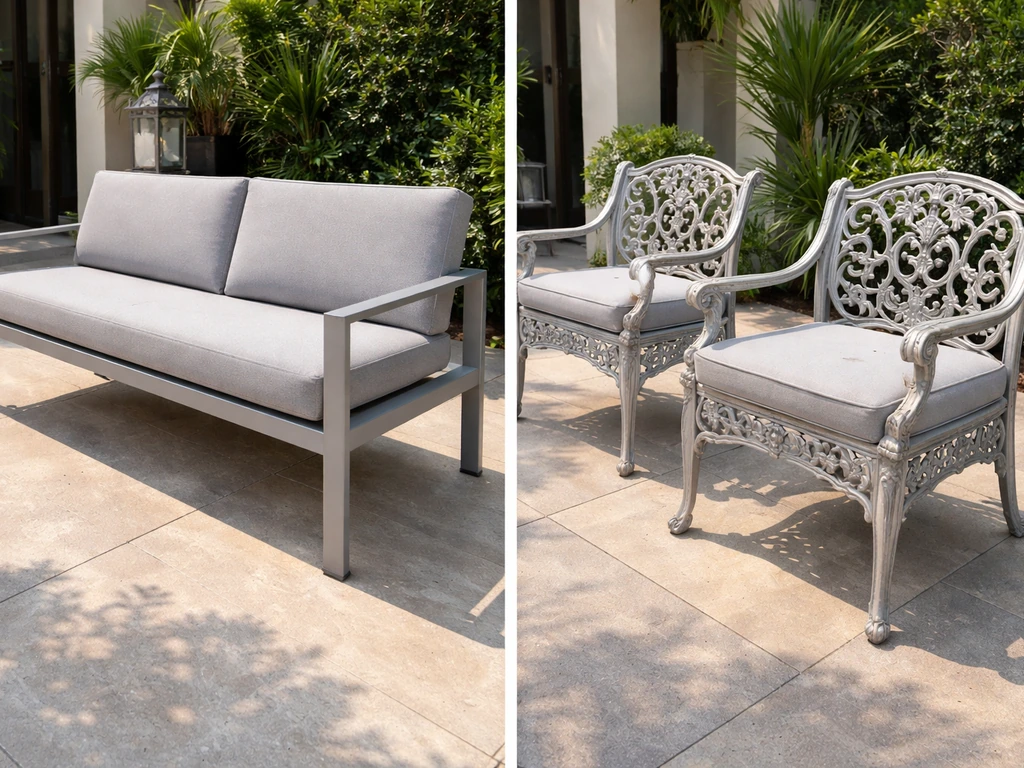
Aluminum vs Cast Aluminum Patio Furniture: Differences
Compare aluminum vs cast aluminum patio furniture by strength, weight, corrosion, durability, maintenance, and cost for
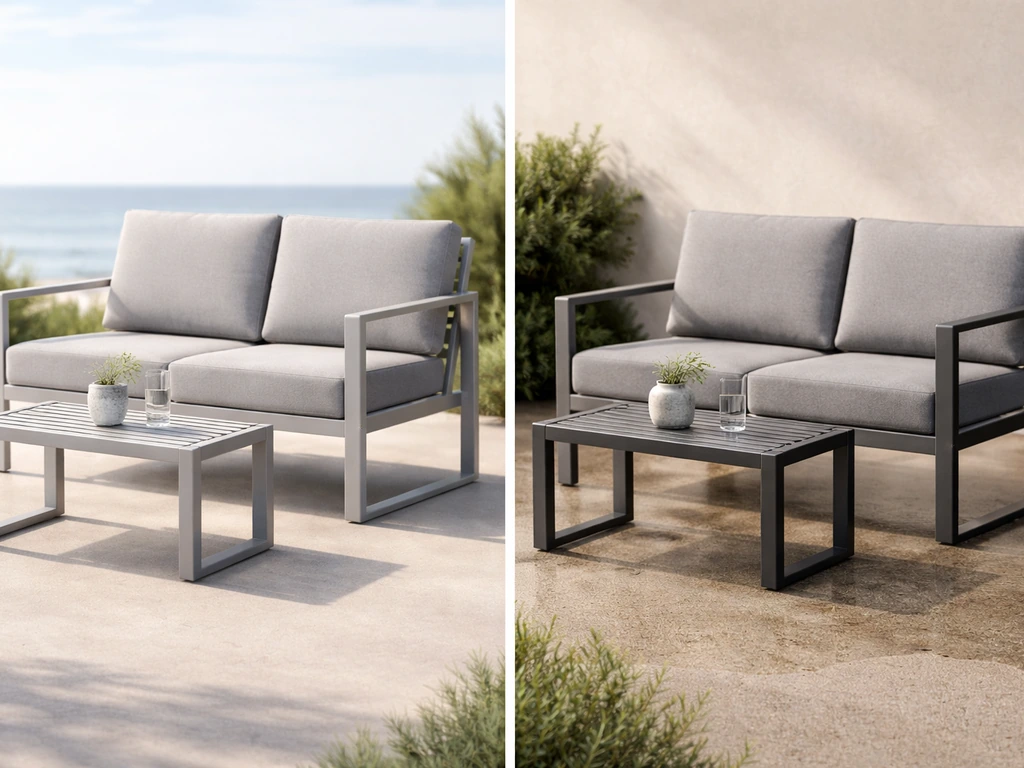
Aluminum vs Steel Patio Furniture: Best Choice Guide
Aluminum vs steel patio furniture: choose by rust resistance, dent risk, maintenance, weight, and climate for lasting va
Is Teak Patio Furniture Good? Durable, Smart Buying Guide
Is teak patio furniture good? Evidence-based verdict, lifespan, care, buying tips, comparisons, and eco guidance.