
For most exposed patios, aluminum wins on durability and low maintenance, while synthetic (PE/resin) rattan wins on comfort, aesthetics, and casual living spaces that get some protection from the elements. Natural rattan belongs indoors or in covered, dry lanais only. That is the short version. The longer version depends on your climate, how much you want to spend over five to ten years, and what you actually want your outdoor space to feel like. For a direct comparison of outdoor wicker and aluminum patio furniture, see our wicker vs aluminum patio furniture guide.
Rattan vs Aluminum Patio Furniture: Climate Buying Guide 2026

Marcus Kellerman
13 Jul 2026
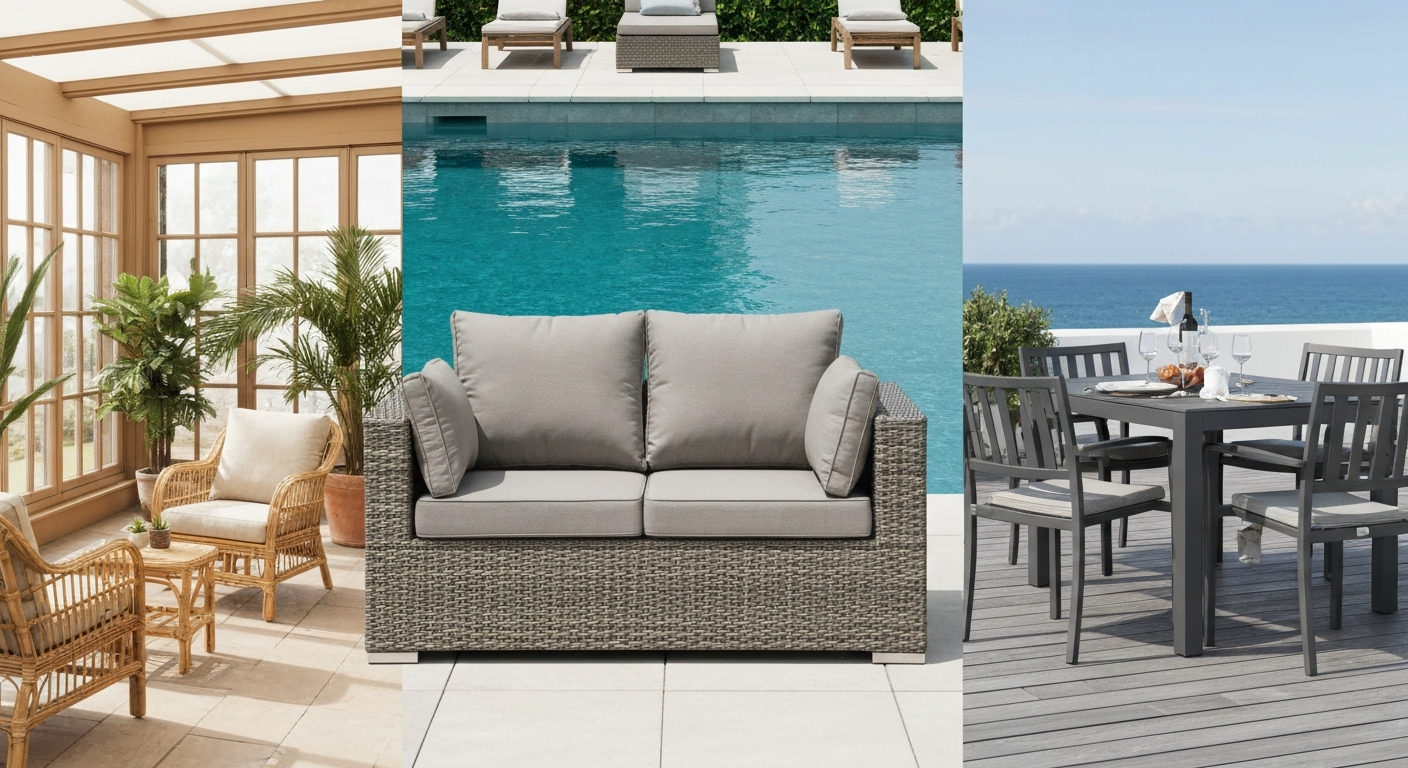
At-a-Glance: Rattan vs Aluminum Pros and Cons
Before going deep on materials and construction, here is a direct side-by-side overview. I have split rattan into its two very different forms because natural and synthetic rattan perform almost nothing alike outdoors.
| Attribute | Natural Rattan | Synthetic (PE/Resin) Rattan | Aluminum (Cast or Extruded) |
|---|---|---|---|
| Best setting | Indoor / covered, dry patio | Covered or semi-exposed patio | Fully exposed patio, any climate |
| Weather resistance | Poor — moisture, UV, and frost cause rapid failure | Good to very good with UV stabilizers | Excellent — rust-free by nature |
| Typical service life | 3–8 yrs indoors; 1–3 yrs exposed | 5–10 yrs mid-grade; 10+ yrs premium | 15–25+ yrs with good powder coat |
| Weight | Light (easy to move) | Light to moderate | Light (extrusions) to moderate (cast) |
| Structural strength | Moderate — joints and wrapping are failure points | Frame-dependent (usually steel or aluminum core) | High — especially extruded 6061/6063 alloy frames |
| UV resistance | Poor — fades, dries, cracks | Good — color compounded through strand | Excellent with powder coat or anodize |
| Moisture/mold resistance | Poor — absorbs water, molds | Good — non-porous PE strand | Excellent — no organic material to mold |
| Salt/coastal resistance | Poor | Good (frame material matters) | Good to excellent with marine-grade finish |
| Freeze/thaw resistance | Poor — cracking and loosening joints | Good — PE is flexible at low temps | Excellent — aluminum does not rust or crack from freeze/thaw |
| Maintenance effort | High outdoors; moderate indoors | Low to moderate | Very low |
| Repairability | Moderate — professional reweaving possible | Moderate — reweaving kits available | High — chips touchable; structural welding possible |
| Typical price range (set) | $300–$1,200 (indoor grade) | $400–$2,500 | $500–$4,000+ |
| Aesthetic feel | Warm, organic, artisanal | Relaxed, textured, casual | Clean, modern or traditional, versatile |
Material Types and How They Are Built
Natural Rattan: What It Actually Is
Natural rattan is not a wood. It is a climbing palm vine harvested from roughly 600 species in the Calamus genus and related genera. The cane is peeled, steamed, and bent into furniture frames, then woven with split rattan or cane strips. The result is lightweight and genuinely beautiful, but it is fundamentally an organic plant material with all the vulnerabilities that implies. Museum conservators treat rattan the same way they treat other plant-fiber artifacts: control relative humidity, keep it away from direct sun, and never let it stay wet. Those are indoor conditions, not patio conditions. Outdoors, the fibers dry, crack, loosen at joints, and start molding within one or two seasons if exposed to rain and direct sun. I have seen natural rattan sets marketed as 'outdoor' furniture, and the sellers are being generous with that label.
Synthetic (PE/Resin) Rattan: The Real Outdoor Wicker
Synthetic rattan, also called resin wicker or PE wicker, is made from polyethylene (usually HDPE) or occasionally PVC extruded into flat or round strands and woven over a metal frame. The key difference from natural rattan is that UV stabilizers and color pigments are compounded directly into the material during manufacturing, so the color goes all the way through. A surface scratch on good PE wicker does not reveal a different color underneath. The frame underneath the weave matters enormously: quality sets use powder-coated aluminum or steel subframes; cheaper sets use plain steel, which will rust through the weave within a few years. If you're deciding between powder-coated steel vs aluminum patio furniture for wicker subframes, consider that aluminum resists corrosion better in exposed conditions. Mid-grade PE wicker lasts roughly 5 to 10 years; premium UV-stabilized HDPE constructions with aluminum subframes can exceed 10 years with basic care. Testing labs use ASTM G154 and ISO 4892 accelerated UV protocols to validate those claims, and it is worth asking manufacturers which standard they reference when making longevity statements.
Extruded Aluminum: Lightweight and Consistent
Extruded aluminum furniture frames are formed by pushing solid aluminum billet through a shaped die, creating profiles with uniform grain flow and very low internal porosity. The most common alloys are 6063 (favored for its surface finish quality and anodizing performance) and 6061 (chosen when higher tensile and yield strength is needed). A 6063-T6 extrusion is entirely adequate for most dining and lounge furniture; 6061-T6 adds structural margin for heavier-duty pieces or high-traffic commercial settings. Because extruded parts have consistent grain flow, they tend to show better ductility and more predictable impact behavior than cast parts of the same nominal alloy, which is why structural frames are nearly always extruded rather than cast.
Cast Aluminum: Decorative Weight with Trade-offs
Cast aluminum, typically A356 or similar family alloys, is poured into molds and used for ornate decorative elements like chair backs, table aprons, and accent pieces. See Hypoeutectic Alloy (ScienceDirect topics), discusses A356/A357 cast alloy properties for details on A356/A357 composition and typical strength and porosity behavior blank" rel="noopener noreferrer">Hypoeutectic Alloy (ScienceDirect topics) — discusses A356/A357 cast alloy properties. A356-T6 (heat-treated) can reach ultimate tensile strength in the 230 to 310 MPa range depending on casting method, but as-cast porosity means fatigue and impact behavior is less predictable than extruded material. Cast pieces are heavier than extruded equivalents, which feels substantial and sturdy but makes large cast-aluminum sets harder to rearrange. Most quality outdoor furniture mixes both: extruded frames with cast decorative inserts. For a focused comparison of cast aluminum vs extruded aluminum patio furniture, see our detailed guide on cast aluminum vs extruded aluminum patio furniture. Fully cast sets tend to be heavier, pricier, and longer-lived; fully extruded sets are lighter and often easier to store.
Powder Coatings, Marine Finishes, and Anodize
The aluminum itself does not rust, but the finish determines how long the aesthetic holds up and how well the frame resists salt and abrasion. A proper outdoor powder coat is applied at 60 to 100 micrometres film thickness. At 60 µm you have adequate protection; at 80 to 100 µm you get meaningfully better abrasion resistance and a finish life worth warrantying. For coastal environments, look for coatings that meet AAMA 2604 (high-performance super-durable polyester, roughly a 5-year Florida exposure rating) at minimum. AAMA 2605-rated fluoropolymer coatings meet a 10-year Florida exposure standard and are worth the premium if you live within a mile or two of saltwater. Anodizing is a different route entirely: it is an electrochemical conversion of the aluminum surface into an oxide layer, typically 5 to 25 µm thick for architectural grades, and it provides excellent wear resistance but is covered by different standards than AAMA paint specs. Both salt spray testing (ASTM B117, ISO 9227) and scribe/creep testing are used to qualify these finishes for exterior service.
Aesthetics, Design Styles, and Pairing Options
Natural rattan has a warm, handcrafted look that nothing synthetic quite replicates. The irregular texture and honey-toned cane give it an artisanal quality that works beautifully in covered patios, sunrooms, and conservatories. It pairs naturally with linen cushions, rattan or jute rugs, and tropical foliage. If authenticity and indoor-to-outdoor aesthetic flow matter to you for a protected space, natural rattan is hard to beat visually.
Synthetic PE rattan has closed that visual gap considerably over the last decade. Premium flat-weave HDPE products with tight weave density can look very close to natural rattan from a few feet away. Color options have expanded beyond the original brown and beige to include grey, black, white, and two-tone combinations. The relaxed, textural quality makes it the go-to for casual bohemian, coastal, and transitional outdoor spaces. It pairs easily with thick cushions (look for solution-dyed acrylic fabrics like Sunbrella for best UV and moisture resistance), and it transitions naturally from a pool deck to a covered lounge area.
Aluminum furniture spans a wider style range than either rattan type. Extruded aluminum lends itself to clean contemporary and mid-century modern designs with slim profiles and precise geometry. Cast aluminum handles ornate traditional and French country styles, with detailed scrollwork and curved legs that would be impractical to weld from extrusions. Powder coating means color flexibility is essentially unlimited: matte charcoal, gloss white, bronze, forest green, and custom colors are all achievable. Aluminum frames pair with sling fabric, upholstered cushions, glass or porcelain tile tabletops, and teak slats depending on the style direction. For a cohesive look, the finish color of the frame should align with accessories, planters, and architectural trim colors.
How These Materials Actually Perform
Durability and Structural Strength
Aluminum frames, whether extruded or cast, are structurally the most durable option for outdoor furniture. Weld quality matters: look for continuous MIG or TIG welds at joints rather than spot welds or mechanical fasteners alone. European standard EN 581-2 and EN 581-3 cover mechanical load testing for outdoor seating and tables, and quality brands will reference compliance with these standards. Natural rattan joints are the weakest point in the system: they are bound and glued rather than welded, and moisture cycling causes loosening. PE rattan's structural performance depends almost entirely on the subframe, not the weave.
Weight and Movability
Natural rattan is genuinely lightweight, which is one reason it was popular for casual furniture before synthetics existed. PE rattan over an aluminum frame sits in a similar light-to-moderate weight range depending on frame gauge and weave density. Extruded aluminum furniture is also light, often surprisingly so: a quality extruded aluminum dining chair can weigh under 10 lbs. Cast aluminum is noticeably heavier; a cast aluminum dining chair typically runs 15 to 25 lbs. That weight is an advantage in wind-prone areas and a disadvantage if you reconfigure your layout often.
UV and Color Retention
Natural rattan fades and turns brittle in direct sun within one to two seasons outdoors. It is simply not designed for UV exposure. Premium PE/HDPE wicker with UV stabilizers performs far better, validated by ASTM G154 and ASTM D4329 fluorescent UV testing protocols; look for manufacturers who specify the test standard and hours of exposure when making fade resistance claims. Powder-coated aluminum is arguably the most UV-stable option: a quality AAMA 2604 or 2605 finish retains color and gloss reliably for years without fading to the degree organic or plastic materials do.
Moisture, Mold, and Rot
Natural rattan absorbs water, swells, shrinks, and molds. Full stop. Synthetic PE wicker is non-porous and does not mold itself, but water can pool inside the hollow frame if drain holes are absent or blocked, and a steel subframe will corrode from the inside out. Aluminum has no organic content and does not rust; the main moisture risk is standing water under non-draining cushions or in hollow sections that lack drainage. Always choose seat cushions with drain-hole inserts and outdoor-rated foam that does not retain water.
Salt and Corrosion Resistance
Salt is the enemy of anything with ferrous metal or an organic fiber. Natural rattan fails quickly in coastal salt air. PE wicker with a steel subframe will show rust bleeding through the weave within two to three years near the coast. PE wicker on an aluminum subframe does significantly better. Bare aluminum (without any coating) is naturally more salt-tolerant than steel due to its passive oxide layer, but a quality powder coat or AAMA 2605 fluoropolymer finish is what you want near the ocean. Salt spray testing per ISO 9227 and ASTM B117 is how coatings are qualified for these environments, and the best coastal-grade aluminum furniture will have test documentation.
Freeze/Thaw and Wind
Aluminum handles freeze/thaw cycles without degradation. PE wicker is also reasonably flexible at low temperatures and survives winters better than natural rattan, though the subframe material still matters. Natural rattan becomes brittle in cold, dry winters and the glued joints loosen with repeated freeze/thaw cycling. For wind resistance, weight and anchor points matter more than material: heavy cast aluminum or furniture with weighted bases handles gusty conditions better than lightweight extruded sets or PE wicker. Any furniture left out in high-wind areas should be secured or stored.
Which Material Fits Your Climate and Use Case
| Scenario | Best Choice | Why |
|---|---|---|
| Coastal / saltwater within 1 mile | Aluminum with AAMA 2605 or marine-grade powder coat | Rust-free material plus the most salt-resistant finish system available |
| Rainy / humid (Pacific Northwest, Southeast US) | Aluminum or PE rattan on aluminum subframe | No organic material to mold; drainage design matters |
| Hot and sunny (Southwest US, Arizona, Florida sun) | Aluminum with AAMA 2604/2605 finish; premium UV-stabilized PE rattan | Powder coat resists fade; PE rattan needs UV stabilizers confirmed by testing |
| Snowy / freezing (upper Midwest, Mountain West) | Aluminum (store or cover cushions); avoid natural rattan outdoors | Aluminum is unaffected by freeze/thaw; rattan joints fail in cold cycling |
| Poolside (chlorine splash, constant moisture) | Aluminum or PE rattan on aluminum subframe with drainage | Chlorine is hard on finishes; aluminum handles it better than steel; avoid organic materials |
| Covered patio or sunroom (low UV, low rain) | Natural rattan or premium PE rattan | Either works; natural rattan is fine in protected conditions and looks beautiful |
| High-traffic (commercial, rental, frequent use) | Cast aluminum or heavy-gauge extruded aluminum | Structural durability and repairability favor aluminum in hard-use settings |
| High-wind area (exposed rooftop, open hillside) | Heavy cast aluminum; anchor lightweight sets; avoid light PE wicker | Weight and anchoring prevent furniture from becoming projectiles |
Lifespan and Real Cost Over Time
Sticker price is a poor way to compare these materials. A $600 natural rattan set that lasts three outdoor seasons actually costs $200 per year. A $1,200 premium PE wicker set on an aluminum subframe that lasts twelve years costs $100 per year. A $2,500 cast aluminum set with a quality powder coat that lasts twenty-five years costs $100 per year and can be touched up and repaired rather than replaced. By that math, the cheapest long-term outdoor option is usually quality aluminum, and the most expensive per year is often mid-grade PE wicker or natural rattan placed outdoors.
Resale value follows the same logic. Aluminum outdoor furniture, especially known brands with clean welds and intact powder coats, holds secondhand value reasonably well because buyers know it will keep performing. PE wicker that has faded or has broken strands is nearly unsellable. Natural rattan loses value quickly outdoors.
Maintenance Basics
Routine Cleaning
For aluminum furniture, mild dish soap and warm water with a soft brush or cloth is all you need for routine cleaning. Rinse well and dry to avoid water spots and mineral deposits. Do not use abrasive pads or steel wool on powder-coated surfaces; you will scratch through the finish. For PE rattan, a soft brush and soapy water work well; flush water through the weave to clear trapped debris, then let it dry fully before covering. For natural rattan indoors, wipe with a damp cloth only and allow to dry; never soak it.
Seasonal Care and Storage
- Remove and store cushions indoors or in a storage box during off-season months or extended wet periods regardless of material
- For aluminum in snowy climates, storage is optional but covers extend finish life; stack lightweight extrusions carefully to avoid denting corners
- For PE rattan sets, cover or store during winter to protect the weave from UV degradation and freeze/thaw stress on the strands
- Natural rattan should always be stored in a dry, climate-controlled space during any season with rain or frost
- Apply a light coat of furniture wax or protectant to aluminum powder coat once a year to extend gloss life, similar to car wax application
- Inspect welds, joints, and hardware at the start of each season and address any chips or corrosion immediately before they spread
Cushion and Sling Care
Solution-dyed acrylic fabrics (Sunbrella is the most recognized name, but other manufacturers use the same process) are the right choice for outdoor cushions regardless of frame material. They resist UV fade and mildew far better than polyester alternatives. Spot clean with a mild soap solution; for heavier mold or mildew, a diluted bleach solution (roughly 1 cup bleach per gallon of water) applied with a soft brush, left for 15 minutes, and rinsed thoroughly is effective on solution-dyed acrylics without damaging the color. Sling fabric on aluminum dining and lounge chairs should be inspected for UV brittleness annually; replacement slings are available from most manufacturers and many third-party suppliers, and replacing the sling is far less expensive than replacing the chair.
Repair and Restoration Guide
Reweaving Synthetic Rattan
PE rattan strands break or unravel over time, typically at corners, arm rests, and high-wear contact points. Replacement PE strand in matching colors is widely available online; the repair involves threading new strand through the existing weave pattern and securing with clips or by tucking ends under adjacent strands. The most important step before reweaving is identifying whether your original strand is flat, round, half-round, or a specific gauge, because mismatched strand looks worse than the original break. Many brands sell color-matched strand as an accessory. A full re-weave of a chair is a half-day project with patience; small repairs take under an hour.
Reweaving and Repairing Natural Rattan
Natural rattan repair is more specialized. Loose joints can be re-glued with waterproof wood glue or epoxy and clamped while drying. Broken cane strands in cane webbing can be replaced by soaking new cane to make it pliable, then re-routing it through the existing webbing holes and re-stapling or re-binding at the frame. For significant structural repair of bent or broken cane poles, steaming the cane allows limited reshaping. For anything beyond minor repairs, a professional wicker and rattan restorer is the practical choice; the material is unforgiving of amateur mistakes.
Touch-Up Coatings for Aluminum
Chips in powder coat should be addressed promptly because bare aluminum, while corrosion-resistant, will oxidize and the chip will spread if left exposed in harsh environments. For small chips, the most practical fix is a color-matched spray paint in a self-etching primer plus topcoat, applied in thin coats after light sanding and cleaning. This will not replicate the hardness of the original powder coat but will prevent corrosion and maintain appearance. For large areas of coating failure, professional re-powder-coating is the right answer: the piece is stripped, pre-treated, and recoated at the same 60 to 100 µm spec as original. This is cost-effective on quality cast or heavy extruded pieces but probably not worth the expense on thin-gauge budget frames.
Structural Repairs and Welding
Aluminum can be TIG welded by a qualified welder, which means cracked or broken frames on quality pieces are actually repairable rather than disposable. Bring the piece to a local welding shop with experience in aluminum (not all steel welders are comfortable with aluminum's different heat management requirements). After welding, the repaired area will need refinishing. For PE rattan furniture where the subframe has failed, the repair path depends on the subframe material: aluminum subframe failures can be welded; steel subframe rust usually means the set has reached end of life unless the rust is limited to one small section that can be cut out and patched.
Corrosion Treatment
Surface oxidation (white powdery bloom) on bare aluminum is treated by cleaning with a mild acid wash or a commercial aluminum brightener, rinsing thoroughly, and applying a protective coating. For powder-coated surfaces with corrosion creep at a chip or scratch, sand back to clean metal, apply a self-etching primer, and topcoat. If corrosion has penetrated a weld or joint, evaluate structurally before reusing: cosmetically restored but structurally compromised furniture is a liability, especially chairs supporting body weight.
Replacing Cushions, Slings, and Hardware
Cushion foam for outdoor use should be open-cell, quick-dry foam rated for exterior use (Dryfast-style foam), not standard indoor polyurethane which holds water and molds. When replacing cushion covers, stick to solution-dyed acrylic fabric. For sling replacement, measure the original sling dimensions precisely (height, width, and the amount of overlap at the rail), order a pre-sewn replacement or cut and sew your own, and use proper sling clips or rail inserts to secure it. Hardware replacement, specifically stainless steel or aluminum bolts, screws, and glides, should match the original spec; mixing metals in fasteners can create galvanic corrosion in coastal environments, so keep like metals together or use stainless steel throughout.
Quality Signals to Look For When Buying
Regardless of which material you choose, there are construction details that separate durable furniture from disposable furniture. For aluminum: look for continuous welds (not spot welds) at all joints, frame wall thickness of at least 1.5 mm for extruded dining furniture, powder coat at or above 60 µm film thickness, and AAMA 2604 or 2605 coating compliance for coastal or sun-intense environments. For PE rattan: confirm the subframe is aluminum (not plain steel), ask about the weave density and strand gauge (tighter weaves and thicker strands last longer), and verify UV stabilizer inclusion with a reference to ASTM G154 or ISO 4892 testing. For natural rattan: confirm it is intended for indoor or covered dry use only, and look at joint construction quality since loose or poorly wrapped joints indicate a short service life. EN 581-2 and EN 581-3 compliance for load testing is a useful quality signal for any outdoor seating or table from European or European-compliant manufacturers.
How Rattan and Aluminum Compare to Related Materials
Aluminum frequently comes up in comparisons across the patio furniture category. Versus steel, aluminum has the corrosion advantage in exposed conditions, though powder-coated steel can compete on price for sheltered settings. For a focused comparison of corrosion, weight, and cost between aluminum and steel patio furniture, see our guide on aluminum vs steel patio furniture. Versus teak, aluminum requires far less maintenance but lacks teak's warm natural character. For a side-by-side look at teak vs aluminum patio furniture, see our dedicated comparison on teak vs aluminum patio furniture. Versus polywood (HDPE lumber), aluminum is lighter and structurally stronger but polywood is nearly indestructible in UV and moisture and has a very different aesthetic. For a focused look at performance, maintenance, and long-term cost trade-offs, see our detailed comparison of polywood vs aluminum patio furniture. Versus cast iron, aluminum wins on weight and rust resistance while cast iron offers greater mass stability in wind. For a focused comparison of cast iron vs cast aluminum patio furniture, see our guide. Within aluminum itself, cast versus extruded is a meaningful construction distinction: cast aluminum suits decorative, ornate pieces while extruded aluminum suits structural frames and contemporary designs. If you are specifically evaluating aluminum subframe options for PE rattan, the cast vs extruded distinction matters because extruded subframes are lighter and less prone to porosity-related corrosion at welds.
Your Buying Decision: A Practical Checklist
- Define your setting first: fully exposed, semi-covered, or fully covered/indoor. Natural rattan is only appropriate for the third option.
- Identify your climate challenge: salt air, heavy rain, intense sun, freezing winters, or high wind. Aluminum addresses all of them; PE rattan handles most with the right subframe.
- Calculate cost per year, not just sticker price. A $2,500 aluminum set lasting 25 years is $100/year; a $700 PE rattan set lasting 7 years is $100/year. Quality aluminum often wins this math.
- For coastal buyers within two miles of saltwater: require AAMA 2605-rated powder coat on aluminum, or an aluminum subframe on PE rattan. Do not accept plain steel subframes.
- Inspect or ask about weld quality, powder coat thickness, and subframe material before purchasing. Ask for spec sheets or test references if the seller cannot answer basic construction questions.
- Choose cushion fabric carefully: solution-dyed acrylic for any exposed outdoor use. Budget for replacement cushion covers every 5 to 8 years regardless of frame lifespan.
- Plan for storage or covers if you are in a freeze/thaw or high-UV climate. Even aluminum benefits from cushion storage and occasional waxing.
- For PE rattan, verify strand gauge and weave density, and ask whether replacement strand is available from the manufacturer. Repairability matters for long-term value.
FAQ
Which is better for my patio: natural rattan, synthetic (PE/resin) rattan, or aluminum?
It depends on use and climate. Natural rattan is attractive but is best for indoor or fully sheltered outdoor spaces because it degrades with direct sun, moisture and freeze/thaw. Synthetic (PE/resin) rattan is designed for outdoors—UV‑stabilized options give good moisture and UV resistance and suit most climates except extreme heat/abrasion without care. Aluminum (extruded or cast) offers the best all‑weather durability, low maintenance, and structural strength for exposed patios, coastal locations and high‑use areas. Choose natural rattan for aesthetic indoor/sheltered settings, synthetic rattan for casual outdoor style in moderate climates, and aluminum for exposed, coastal, poolside or heavy‑use situations.
What are the main material and construction types I should know about?
Natural rattan: cane/vine (organic) used for handwoven furniture—sensitive to moisture and UV. Synthetic rattan/resin wicker: typically HDPE/PE (occasionally PVC) strands woven over metal frames—formulated with UV stabilizers. Aluminum frames: extruded (6063 commonly used; good surface finish) or wrought alloys (6061 when higher strength needed) and cast parts (A356 family common for decorative pieces). Finishes: powder coat (thicker film for wear resistance), fluoropolymer or AAMA‑rated coatings for long life, and anodizing for a different wear profile. Note: frame joinery, weld quality, weave density and backing materials affect performance.
How do cast and extruded aluminum compare?
Extruded aluminum (common for frame profiles) has uniform grain flow, low porosity and consistent mechanical properties—good for structural members. Alloys like 6063 are common; 6061 used when higher strength is required. Cast aluminum allows complex shapes (decorative legs/arms) but has higher porosity and different fatigue behavior; cast alloys (A356/A357) can be strong when heat‑treated but are more variable. For heavy structural loads prefer welded/extruded/wrought sections; cast parts are fine for decorative components if quality castings and heat treatment are specified.
What finish options for aluminum should I look for?
Powder coating with a film thickness of ~60–100 µm gives durable protection—higher thickness improves abrasion and corrosion resistance. Look for AAMA paint performance ratings: AAMA 2603 (entry), AAMA 2604 (high performance) and AAMA 2605 (top tier/fluoropolymer). Anodized finishes offer a different, hard oxide layer (typically 5–25 µm) with good wear resistance but different color/repair characteristics. For coastal exposure prefer marine‑grade coatings or AAMA 2605 level finishes and corrosion‑resistant design details (drainage, sacrificial fasteners).
How do rattan and aluminum compare for durability and weather resistance?
Natural rattan: poor in direct outdoor exposure—prone to UV damage, cracking, mold and dimensional changes. Synthetic rattan: good UV and moisture resistance when made from UV‑stabilized HDPE; typical mid‑market lifespans ~5–10 years, premium constructions 10+ years. Aluminum: excellent corrosion resistance when properly alloyed and finished—resists rot, UV and freeze/thaw. Failure modes differ: resin strands can fade/abrade, cushions and straps fail sooner; aluminum failures are usually finish wear, scratches or localized corrosion at damaged coatings.
Which material handles coastal (salt) environments best?
Aluminum with a high‑quality powder coat or AAMA 2605/ marine‑grade finish and stainless fasteners is the best choice for coastal salt spray exposure. Synthetic rattan over a properly finished aluminum or stainless frame can work well if the frame and fasteners are corrosion‑resistant and drain paths are provided. Avoid natural rattan and avoid plain steel frames near salt air unless properly hot‑dip galvanized and coated.
Next Articles
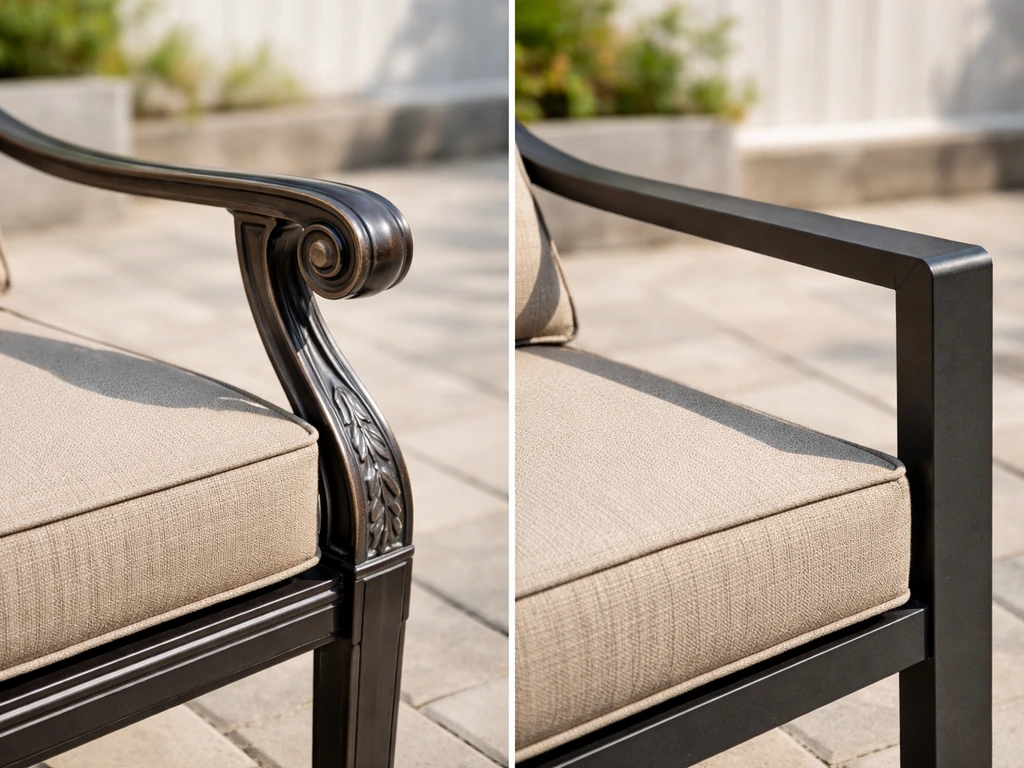
Cast Aluminum vs Extruded Aluminum Patio Furniture: Which Wins?
Compare cast vs extruded aluminum patio furniture and steel, with real outdoor durability, corrosion, and maintenance gu
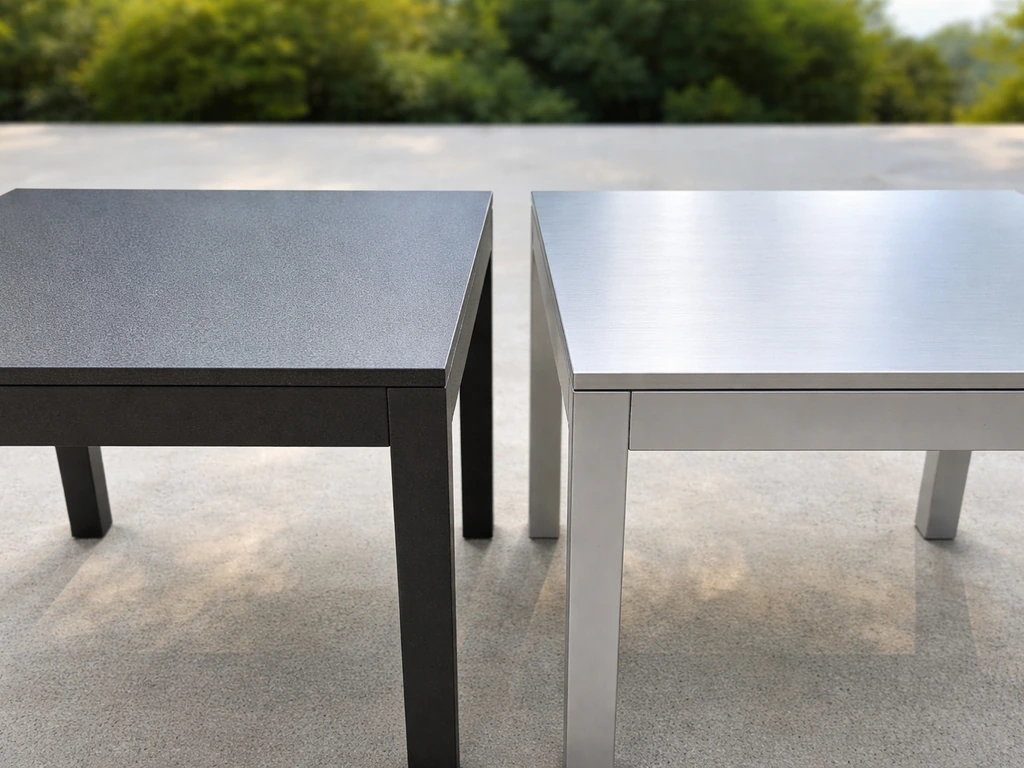
Powder-Coated Steel vs Aluminum Patio Furniture: Which Wins?
Compare powder-coated steel vs aluminum patio furniture for rust, UV fade, coastal durability, maintenance, comfort, and
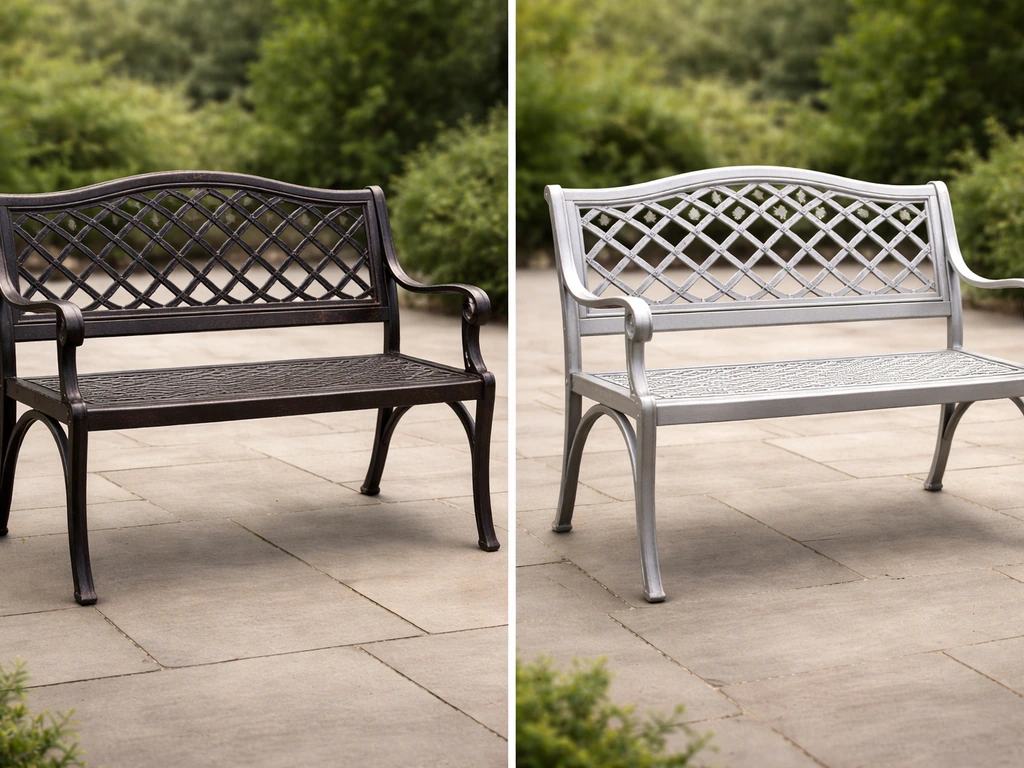
Cast Iron vs Cast Aluminum Patio Furniture: Which Lasts Longer?
Cast iron vs cast aluminum patio furniture durability, rust, weight, maintenance, lifespan by climate, and a quick buyin