
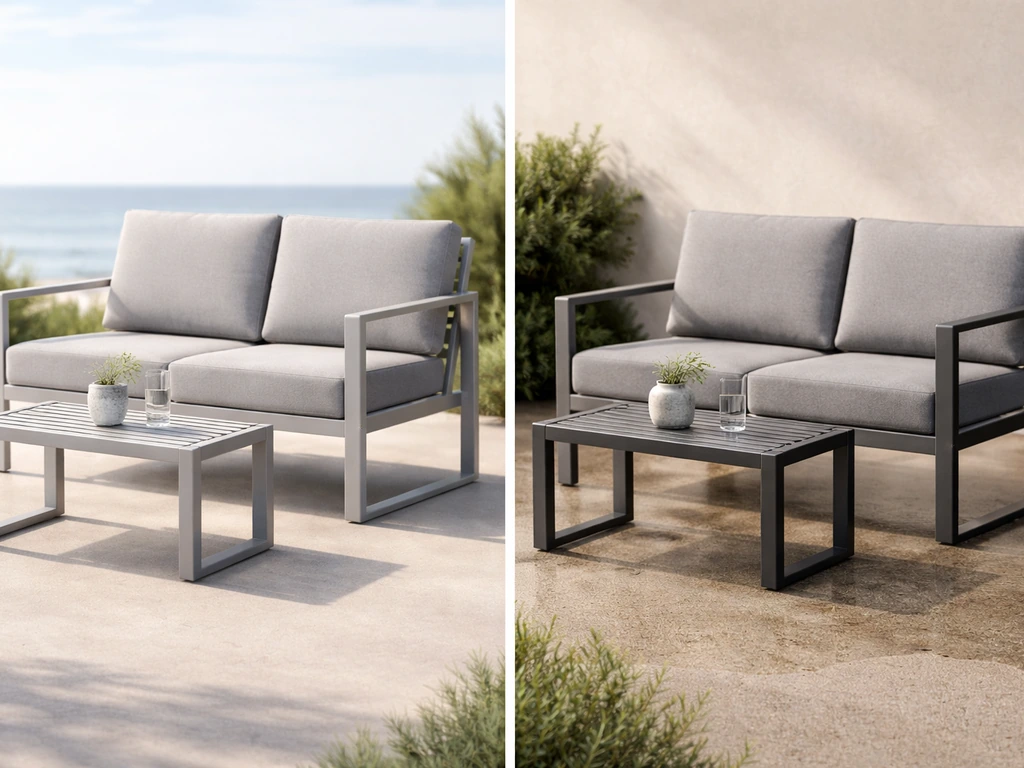
For most homeowners, aluminum is the better choice. It does not rust, weighs a fraction of what steel does, and with a good powder-coat finish it can last 15 to 20 years outdoors with almost no intervention. Steel is stronger and stiffer, and it can look great, but it rusts, and managing that rust over time costs you money, effort, or both. Unless you specifically want the heft and rigidity of steel and are prepared to maintain it, aluminum wins on practical grounds for the vast majority of patios and climates.
Aluminum vs Steel Patio Furniture: Best Choice Guide

Marcus Kellerman
19 May 2026
Corrosion and Rust: Where the Real Difference Lives
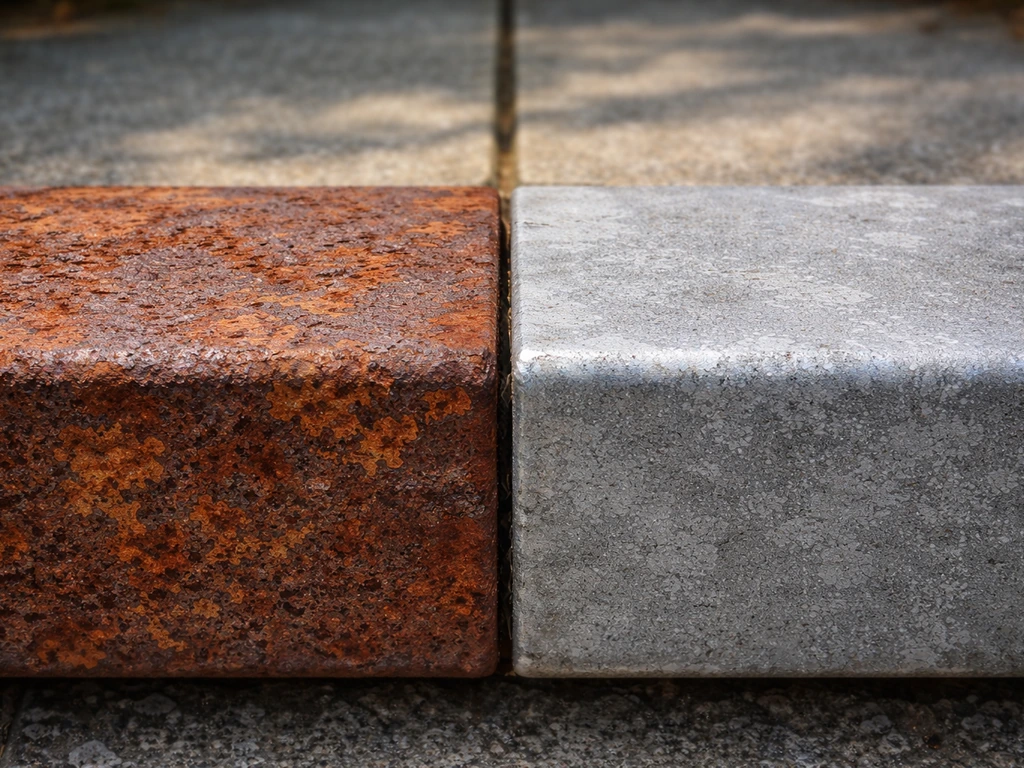
This is the biggest practical difference between the two metals, and it is not close. Steel rusts. When moisture, oxygen, and steel meet, which happens on any outdoor patio, you get iron oxide, the familiar reddish-brown rust that spreads and eats into the metal over time. One scratch through the paint or powder coat and that spot becomes a rust initiation point. In a coastal environment with salt air, or anywhere with frequent rain and humidity, that process speeds up considerably.
Aluminum corrodes too, but the behavior is completely different. When aluminum oxidizes it produces a white or gray powdery surface film (aluminum oxide) that actually acts as a passive barrier, slowing further corrosion rather than accelerating it. You will see this as a chalky or dull appearance rather than structural damage.
In salt air or around pool chemicals, aluminum can tarnish and pit more aggressively, but that is a surface problem, not the metal failing from the inside out the way steel rust can. A clear sealer or a quality powder-coat finish handles this well. Companies like POLYWOOD market their frames as "All-Weather Aluminum" specifically because of this corrosion resistance, and they back it with a powder-coat finish warranty against peeling.
Powder-coated steel is a real category worth knowing about. A thick, intact powder coat significantly slows rust on steel, and some manufacturers produce powder-coated steel furniture that holds up for years. But the coating is the entire protection plan, once it chips, you need to act fast. Powder-coated aluminum has the same coating advantage plus a metal underneath that resists corrosion on its own. That layered defense is why aluminum consistently outperforms steel in humid and coastal environments over time.
Strength, Denting, and Long-Term Durability
Steel is genuinely stronger and stiffer than aluminum. A steel frame will resist bending under load better, feels more planted, and is harder to dent from impact. If you have kids who climb on furniture, or you're hosting larger guests on chairs regularly, a well-built steel frame has a physical advantage. This is one reason commercial outdoor furniture (restaurant patios, hotel pools) has historically leaned on steel, it handles abuse.
Aluminum, especially extruded aluminum tubing used in most residential furniture, can dent if something heavy is dropped on it or if a thin-walled tube takes a direct impact. Cast aluminum is a different story, it is much denser and more resistant to denting, though it can crack under enough stress rather than bend. For everyday residential use, though, denting is rarely a real issue. The furniture sits on a patio, not a construction site. Where aluminum does show structural limits is in very thin, cheap tubing, that is a manufacturing quality problem more than a material problem.
Neither material warps under normal outdoor temperature swings the way wood does. Metal expansion and contraction is minimal at typical patio temperatures. What you do see with steel over time is rust-driven pitting that can weaken joints and weld points. Aluminum joints can crack or break if welds are poor or if the furniture is stressed repeatedly, POLYWOOD specifically warrants aluminum welds and joints not to crack for 5 years, which tells you this is something manufacturers track. Good construction matters more than the raw metal choice when it comes to joint longevity.
What Maintenance Actually Looks Like Year After Year
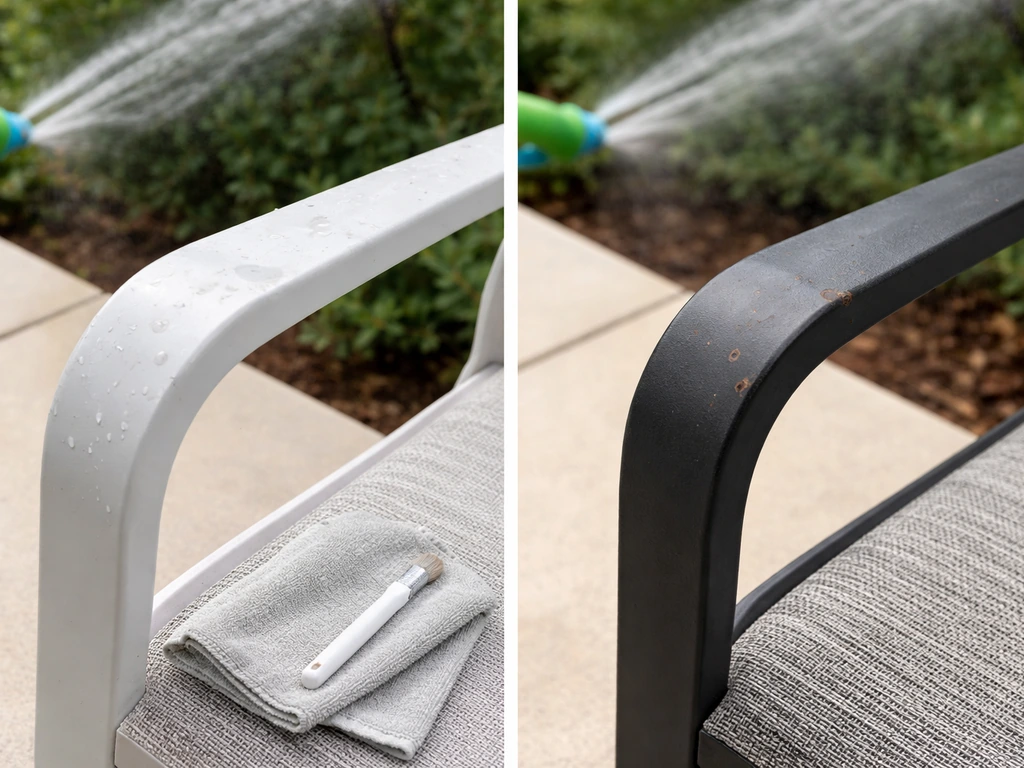
Aluminum is genuinely low maintenance. Wash it with mild soap and water a couple of times a season, rinse off debris, and touch up any chips in the powder coat with a matching paint pen before moisture can find bare metal. That is essentially the full maintenance program. Homecrest, which warranties both aluminum and steel frames for 15 years residential, describes frame care as "very important and exceptionally easy", and that description is accurate for aluminum. In areas with salt air or pool chemistry exposure, an occasional application of a clear aluminum sealer (products like Everbrite are made for this) adds an extra layer of protection and keeps the finish from tarnishing.
Steel demands more attention. You need to inspect it regularly for chips, scratches, and early rust spots, ideally every spring before the season starts and again mid-season. Rust spots need to be sanded, treated with a rust converter or primer, and repainted. If you skip a season of this, a small surface spot becomes a deeper problem. High-quality steel furniture with a thick powder coat and proper drainage holes (so water does not pool inside hollow tubes) can reduce how often you are doing this work, but you will always be doing more maintenance on steel than on comparable aluminum.
Winter storage matters for both materials in cold climates. Aluminum handles freeze-thaw cycles well. Steel does too from a structural standpoint, but if any rust is already in progress, freeze-thaw can accelerate damage. Covering or storing either material over winter extends its life, but it is much more consequential for steel.
Weight and Moving the Furniture Around
Aluminum is dramatically lighter. A typical aluminum dining chair weighs somewhere in the 8 to 12 pound range. A comparable steel chair often weighs 15 to 25 pounds or more depending on construction. That gap matters more than people expect, when you are moving furniture off a deck before a storm, rearranging for a party, or hauling pieces into storage for winter, lighter is a real quality-of-life advantage.
In very windy areas, though, that lightness works against you. Aluminum chairs can become projectiles in a strong windstorm unless you store them or have a way to secure them. Heavy steel furniture, or cast aluminum (which is significantly heavier than extruded aluminum), stays put better. This is why cast iron vs cast aluminum patio furniture comparisons often come down to maintenance needs and how the finish holds up outdoors. If you live somewhere with regular high winds, coastal areas, exposed hillside properties, regions with afternoon thunderstorms, the extra weight of steel can be a genuine benefit, not just a drawback.
Cost, Lifespan, and What You Actually Spend Over Time
At the retail level, steel and aluminum furniture overlap considerably in price at the entry and mid range. You can find basic steel sets and basic aluminum sets in the same $300 to $800 range for a dining set. This kind of long-term value is exactly why choosing between wicker vs aluminum patio furniture often comes down to maintenance and lifespan, not just the initial price. At the higher end, cast aluminum and premium extruded aluminum furniture climbs well above steel in price, partly because of manufacturing complexity and partly because of the material's reputation for longevity.
The better way to think about this is cost per year of use. A well-made aluminum set that lasts 15 to 20 years with minimal maintenance spend is a much better value than a steel set that looks good for 5 years and then requires annual rust remediation or replacement. The math shifts the longer your time horizon. Homecrest's 15-year residential structural warranty on aluminum frames is a meaningful benchmark, that is a manufacturer staking real money on the lifespan of the product.
On resale, aluminum furniture holds its value better for the same reason: used aluminum furniture in good condition (no rust, clean finish) is straightforward to evaluate and sell. Used steel furniture with any rust history is a hard sell, even if the rust has been treated. Buyers correctly read surface rust as a question mark about structural integrity.
| Factor | Aluminum | Steel |
|---|---|---|
| Rust resistance | Does not rust; oxidizes as a protective film | Rusts when coating is compromised |
| Weight (typical chair) | 8 to 12 lbs | 15 to 25 lbs |
| Strength and stiffness | Good; cast aluminum approaches steel | Higher; resists bending under load |
| Maintenance level | Low: wash, touch up chips | Moderate to high: inspect, treat rust spots |
| Typical lifespan (residential) | 15 to 20+ years with basic care | 8 to 15 years depending on climate and upkeep |
| Wind stability | Can blow over; lighter pieces need securing | Heavier; stays put better in wind |
| Long-term value | Strong; holds up and resells well | Variable; rust history hurts resale |
| Best climate fit | All climates, especially coastal and humid | Dry inland climates with covered storage |
Which One to Buy Based on Your Climate and Setup
Climate is where this decision gets specific, so here is how I would break it down by situation.
Coastal and High-Humidity Environments
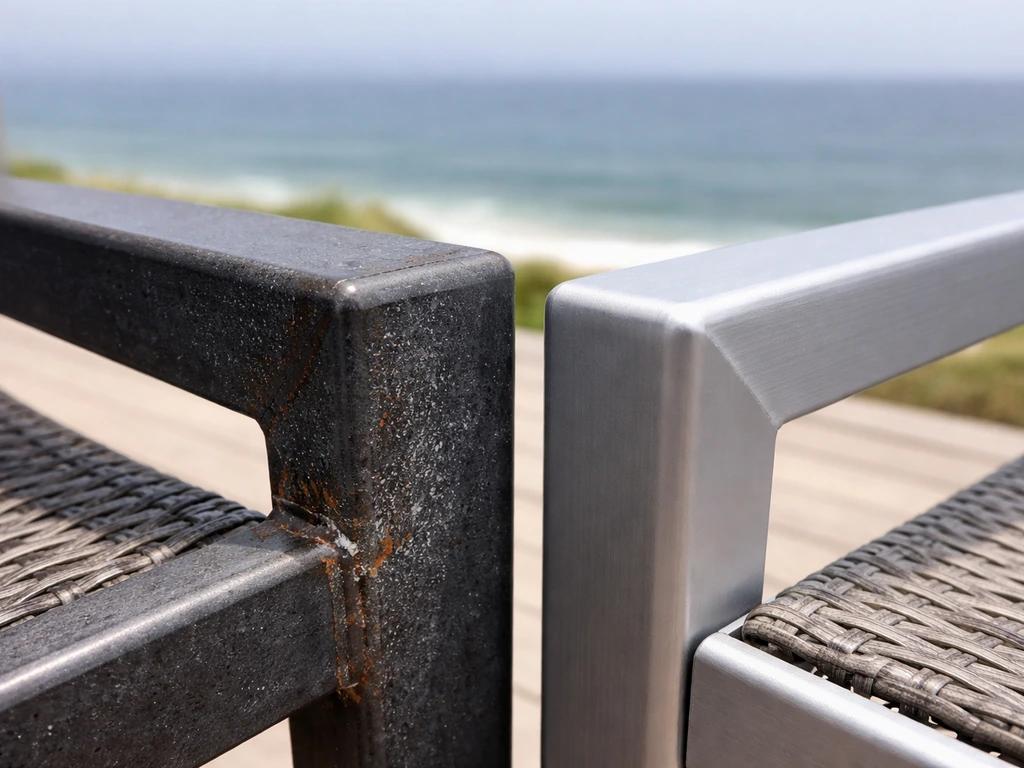
Aluminum, no question. Salt air is aggressive toward steel even under a powder coat. If you are within a mile or two of the ocean, or anywhere with consistently high humidity and salt exposure, steel furniture is going to cost you real effort to maintain and will likely need replacement sooner. Go with aluminum and apply a clear protective sealer once a season if you are right on the water.
Dry Inland Climates
This is where steel becomes a more reasonable option. In a dry climate with low humidity, think the desert Southwest or high-altitude inland areas, steel furniture is under far less corrosion stress, and a quality powder coat can last for years without significant touch-up. If you are drawn to the look and heft of steel and have covered patio storage, a dry climate is the environment where steel performs closest to aluminum.
Four-Season Climates with Snow and Rain
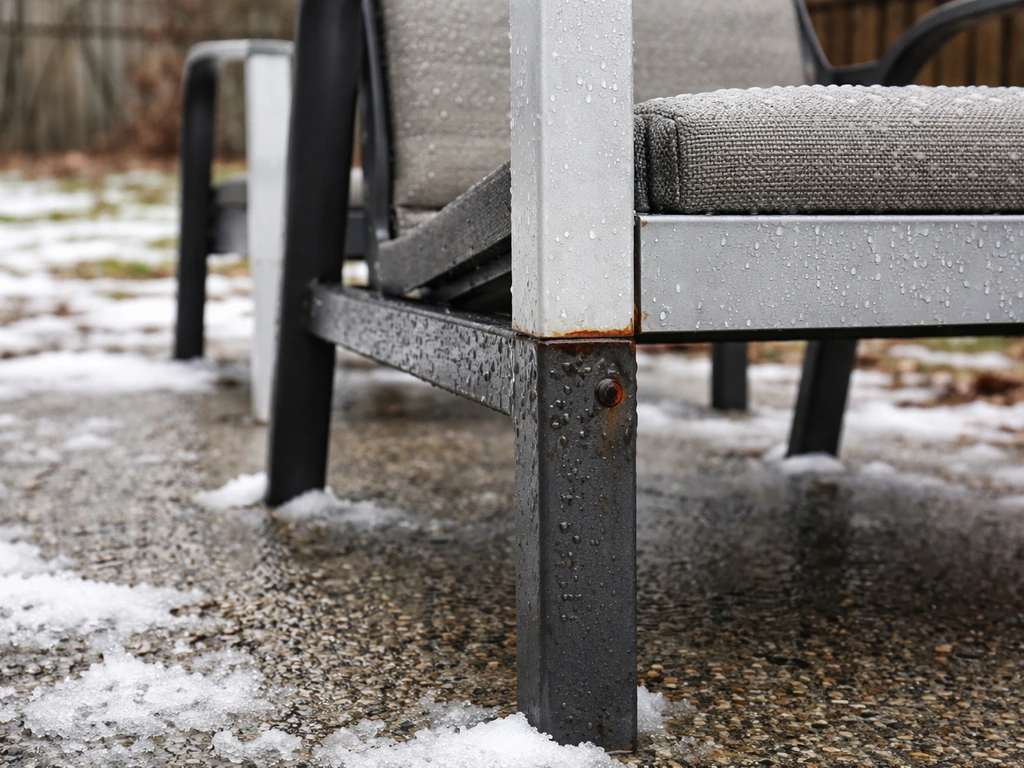
Aluminum is the safer pick. The combination of rain, snowmelt, freeze-thaw cycles, and seasonal temperature swings gives steel plenty of opportunities to start rusting. Aluminum handles all of that without the same vulnerability. Store or cover both materials over winter, but know that if you forget one year, aluminum will forgive you much more readily than steel will.
High-Wind Patios and Exposed Decks
If wind is your main concern, consider cast aluminum rather than choosing steel. Cast aluminum is heavy enough to resist blowing over in most conditions, gives you the corrosion resistance of aluminum, and is available in high-quality furniture lines. If you go with steel for its weight, pair it with a covered storage plan or have tie-downs ready for storm season. Standard extruded aluminum chairs on a windy deck will need to be stored or stacked when conditions get rough.
Heavy-Use Family Patios
For families with kids, frequent entertaining, and hard daily use, aluminum from a quality manufacturer is still the right call for most climates. Focus on thicker-walled tubing or cast aluminum construction rather than thin extruded pieces. If you are in a dry climate and want the extra sturdiness, a heavy-gauge steel frame with a quality powder coat and regular maintenance can absolutely work, but budget time for it, because you will need to stay on top of the finish.
Covered or Screened Patios
A covered patio meaningfully extends the lifespan of either material by cutting down on direct rain and UV exposure. Under a roof, steel is a viable option in more climates than it would be otherwise, because the constant moisture exposure driving rust is reduced. That said, humidity and condensation still reach covered furniture, especially in warm months, so aluminum still has the edge on long-term maintenance even here.
A Few Things to Know Before You Shop
Not all aluminum furniture is the same. If you are deciding between polywood vs aluminum patio furniture, the key is comparing how each material handles weather exposure and long-term upkeep. Extruded aluminum (hollow tubes) is lighter and less expensive. Cast aluminum is denser, heavier, and more detailed in appearance, and it is a category of its own when it comes to durability and cost.
If you are comparing aluminum to steel and leaning toward aluminum, knowing which type you are buying matters. Similarly, the difference between steel and powder-coated steel is significant, and the quality of that coating, its thickness, coverage, and whether the furniture has drainage holes to prevent pooling, affects how well a steel piece holds up.
When you are evaluating specific pieces, look for warranty terms that cover structural failures and finish peeling separately, those two items tell you a lot about how much confidence the manufacturer has in both the frame and the coating. A 15-year structural warranty is a strong signal. A one-year warranty on a steel piece should prompt questions about long-term durability.
If you are also weighing other material types against aluminum, the comparisons shift again depending on what you are looking for. Teak and other wood options bring a completely different maintenance profile. If you are choosing between teak and metal for your patio, teak vs aluminum patio furniture usually comes down to maintenance, weather resistance, and long-term value. Wicker and rattan involve fabric or resin weaves over metal frames.
If you are also considering rattan vs aluminum patio furniture, the metal choice usually comes down to durability and maintenance in your specific climate. Wicker furniture is also commonly compared against aluminum for patio durability and maintenance trade-offs Wicker and rattan. And within the aluminum category itself, the extruded versus cast comparison is worth understanding in depth before spending on higher-end pieces.
If you are choosing within the aluminum category, cast aluminum vs extruded aluminum patio furniture is one of the biggest construction differences to understand before you buy. The aluminum category has a lot of internal variation, and the best piece of furniture for your patio depends on matching the right construction type to your climate, budget, and how much time you actually want to spend on upkeep.
FAQ
Can I mix aluminum and steel patio pieces on the same set without issues?
Yes, but plan for different care routines. Aluminum needs occasional cleaning and quick touch-ups, while steel requires periodic inspection for chips and early rust, especially at welds and under chair legs. If you store mixed sets together, keep water from trapping against the steel (for example, avoid stacking that blocks airflow).
What happens if powder coating on steel gets scratched and I do nothing?
A scratch breaks the barrier and can start localized rust under or around the damaged spot. Over time that rust can expand and creep, including into seams and under powder edges. The practical step is to address chips promptly with touch-up primer or paint, then recoat to seal the metal before moisture continues the cycle.
Does aluminum furniture need touch-up paint the same way as steel?
You may need fewer repairs, but not zero. Aluminum oxide normally protects the metal, yet if the powder coat is chipped down to bare metal, moisture can still attack that exposed area and worsen discoloration or pitting. Touch up chips quickly with an aluminum-compatible finish to keep the protective layer intact.
Is rust on steel always a dealbreaker for resale or structural safety?
Not automatically, but the buyer typically looks for patterns. Surface rust that was treated and does not return is less concerning than rust around joints, under cushions, or at welds, where corrosion can reduce thickness and weaken connections. If rust ever reappears after treatment, that is a sign the underlying coating or prep work was insufficient.
How can I tell if my steel furniture has drainage or water-trapping problems?
Look for drainage holes at tube ends and low points, and check whether water sits inside after rain. If hollow legs or frames have sealed bottoms with no weep holes, moisture can pool and accelerate internal rust. Choosing designs with drainage provisions and keeping furniture elevated or covered during storms helps reduce this risk.
Are stainless steel fasteners enough to prevent steel-frame rust?
They help in specific areas, but they do not stop rust from the steel frame itself. Also, consider galvanic effects and coating coverage, if stainless hardware is mixed with carbon steel and the coating is damaged at contact points. The real protection still depends on an intact powder coat plus good touch-up behavior when chips occur.
What is the safest way to clean aluminum and steel so I do not damage the finish?
Use mild soap and water and avoid abrasive pads that cut through powder coat. For steel, do not leave acidic cleaners or harsh chemicals sitting on the finish, because they can strip coatings or alter corrosion behavior. After cleaning, rinse thoroughly and dry, especially in coastal humidity.
Is it worth buying a protective sealer for aluminum, and how often should I apply it?
In salt air or around pool chemicals, an extra clear sealer can reduce tarnish and make maintenance easier. Apply it after cleaning and drying, then reapply on a schedule based on exposure, often seasonally in aggressive environments and less frequently in inland regions. If your furniture has a warranty, confirm the product is compatible with the manufacturer’s finish system.
How should I store patio furniture to minimize freeze-thaw damage to steel?
If any rust is present, treat it before winter. For storage, prioritize airflow and avoid tight, fully sealed wrapping that traps condensation. Even with good covers, condensation can form under the cover during temperature swings, so periodic checks in thaw periods can prevent trapped moisture from extending corrosion.
In high winds, are there specific aluminum choices that reduce the risk of blow-over?
Yes, cast aluminum is typically heavier and more stable than thin-wall extruded aluminum. For extruded aluminum chairs and tables, use stacking practices, storage, or tie-downs during storm season, because lightweight pieces can shift and become impact hazards. Also check that feet have sufficient grip on the surface, slippery decks increase the problem.
Which matters more for steel longevity, the frame material or the quality of the powder coat?
The powder coat quality matters more in practice, because the coating is what delays rust. Look for uniform thickness, full coverage over welds and edges, and a warranty that covers more than cosmetic fading. If a product warranty has weak terms or only covers defects for a short window, treat it as a sign the finish and prep work may not be built for long-term outdoor exposure.
What warranty details should I compare when choosing aluminum vs steel patio furniture?
Compare structural coverage and finish coverage separately. A longer structural warranty signals confidence in frame integrity, while finish-peeling coverage indicates the coating system is expected to hold up outdoors. Also watch for exclusions related to coastal exposure or improper maintenance, because those can narrow real-world protection.
Can I leave patio furniture uncovered year-round in my climate?
You can, but uncovered use accelerates maintenance needs, especially for steel. Even in climates where corrosion is slower, UV exposure can degrade finishes, and repeated rain cycles increase the chance of coating chips becoming rust initiation points. If you must leave furniture outside, use a breathable cover and inspect after storms for damage.
Next Articles
Is Teak Patio Furniture Good? Durable, Smart Buying Guide
Is teak patio furniture good? Evidence-based verdict, lifespan, care, buying tips, comparisons, and eco guidance.
How Long Does Teak Patio Furniture Last? Lifespan Guide
Teak patio lifespan ranges, factors that shorten or extend durability, and a maintenance plan to protect joints and fini
High Quality Teak Patio Furniture: How to Choose and Care
Checklist for buying high quality teak patio furniture, spot real construction, compare materials, and maintain it by cl